Žemaičių Kalvarija Basilica (Samogitian Calvary)
Where four centuries of Samogitian hymns echo across forested hills on the Way of the Cross
Understand sacred places, explore living traditions, and learn how to engage respectfully with Pilgrim Map.
Access has not been verified. Check current local guidance before planning a visit.
Žemaičių Kalvarija, Plungė, Lithuania
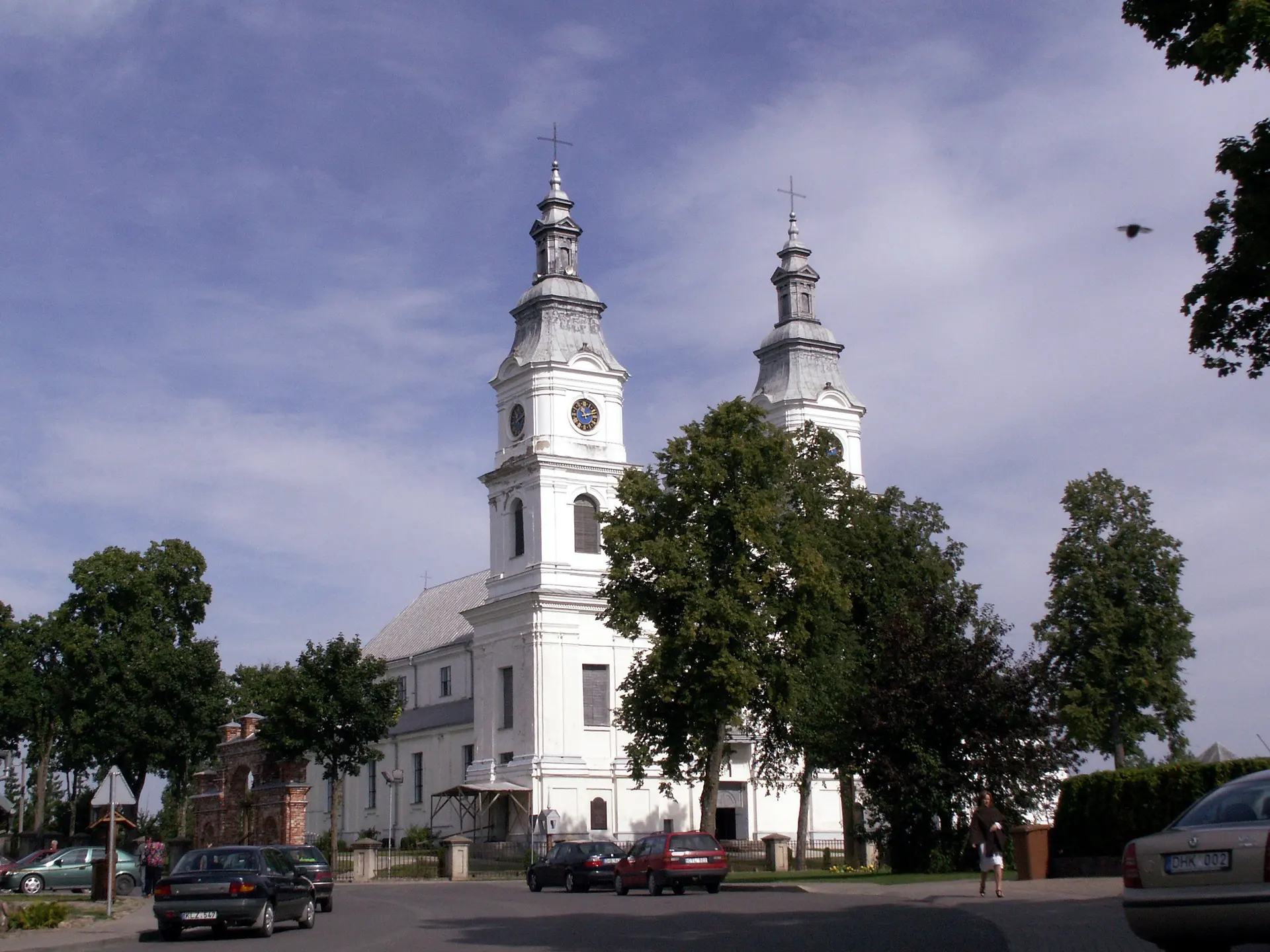
Image of Žemaičių Kalvarija Basilica (Samogitian Calvary). Image source · CC-BY-SA-3.0
Visit essentials
A quick read before you go
- Duration
- Walking the full 7-kilometre Way of the Cross with stops at all 19 chapels takes approximately 3…
- Access
- Located in Plunge district, Telsiai County, western Lithuania, approximately 25 km northeast of…
Overview
On the hills above the Varduva River, people have been singing their way through Christ's suffering for nearly four hundred years. The Samogitian Calvary hymns, composed by Dominican friars in the 17th century and adapted through six liturgical editions since 1968, accompany pilgrims along a 7-kilometre path that winds through 19 chapels set into the forested landscape of western Lithuania. The distances between stations were measured by Bishop Jurgis Tiskevicius himself to correspond precisely to the Via Dolorosa in Jerusalem.
This is not a symbolic correspondence. The bishop walked the distances by step, calibrating each interval to match the path Christ walked to Golgotha. The result is a Way of the Cross where the physical experience of walking, climbing, descending, and walking again mirrors the original pilgrimage, transposed from the stony streets of Jerusalem to the green hills of Samogitia.
The basilica at the center holds two objects of extraordinary veneration. The first is a fragment of the Holy Cross, 3.2 centimetres long, brought from the Dominican monastery in Lublin in 1649, the largest such relic in the Baltic states. The second is a painting of the Blessed Virgin Mary with Infant, brought from Rome around 1642-1643 by Dominican friar Petras Pugacevsikis, credited with numerous miracles over the centuries.
In 2006, Pope Benedict XVI sent crowns for the painting, conferring the title 'Queen of Christian Families.'
Each July, over 70,000 pilgrims converge on this small town for the Great Calvary Festival, a ten-day celebration that fills the hills with processions, singing, prayer, and Communion. The festival survived tsarist suppression, endured through Soviet persecution, and continues today as one of Lithuania's most powerful expressions of living faith. The hymns that echo across the hills during the festival carry four centuries of accumulated devotion in their melodies.
Why this place is sacred
Bishop Tiskevicius understood something about the relationship between physical movement and spiritual transformation when he measured the distances between stations by step. The 7-kilometre path through 19 chapels does not merely represent the Via Dolorosa; it reproduces its spatial experience in a landscape that intensifies the encounter. The hills of Samogitia, rising and falling along the Varduva River, create a topography of effort and rest that mirrors the narrative of Christ's suffering.
The hymns add a dimension that few pilgrimage sites can match. The Samogitian Calvary Hill songs, composed in the distinctive Samogitian dialect of Lithuanian, create an acoustic environment that wraps around the walker during procession. Hearing hundreds or thousands of voices rising from the forested hills, echoing off chapel walls, and fading along the river, pilgrims describe an experience that transcends individual devotion and becomes collective encounter.
The relics concentrate devotional energy within the basilica. The Holy Cross fragment, at 3.2 centimetres one of the largest in the region, connects this Samogitian hilltop to Golgotha itself. The miraculous painting of the Virgin Mary, credited with graces over nearly four centuries, draws pilgrims who seek intercession for their families, a significance reinforced by the 2006 papal coronation with the title 'Queen of Christian Families.'
The natural setting contributes in ways that are harder to articulate. Sixteen of the nineteen chapels stand on the left bank of the Varduva, three on the right, creating a path that crosses water as it crosses between stations. The forested hills, the river, the chapels set into the landscape rather than imposed upon it, produce a quality that pilgrims consistently describe as enveloping. The sacred geography here does not compete with the natural landscape but emerges from it.
The Calvary was established in 1637 by Bishop Jurgis Tiskevicius as part of the broader Counter-Reformation effort to deepen Catholic devotion in Samogitia, the last region of Europe to be Christianized. The Dominican friars who administered the site were charged with creating a sacred landscape that could make the Holy Land accessible to Lithuanian pilgrims. The precise measurement of distances and the careful selection of hilltop sites for chapels reflect a deliberate programme of sacred geography making.
The site evolved from a simple arrangement of wooden chapels in 1637-1639 to a mature pilgrimage complex centered on the stone basilica built between 1780 and 1822. The hymns underwent their own evolution, from the 1681 'Old Hills' tradition through six editions of 'New Hills' liturgical books since 1968. The Dominican administration ended in 1889 when tsarist authorities expelled the order, but the pilgrimage tradition proved more durable than any institution.
The Great Calvary Festival continued through Soviet persecution, when it served as one of Lithuania's most visible acts of religious defiance. Pope John Paul II elevated the church to minor basilica status in 1988, and Pope Benedict XVI's 2006 coronation of the miraculous painting added a further layer of papal recognition.
Experience and orientation
The Way of the Cross at Zemaiciu Kalvarija is not experienced from a single vantage point but unfolds over hours of walking. The 7-kilometre path passes through forested hills, across the Varduva River, and past 19 chapels, each set into the landscape at intervals that correspond to the distances of Christ's path through Jerusalem. The walking is moderately strenuous, the terrain natural, the footing uneven. Comfortable shoes are essential.
At each chapel, pilgrims pause for prayer, meditation on Christ's Passion, and singing. The Samogitian Calvary Hill hymns, sung in the distinctive Samogitian dialect, create an acoustic experience that defines the pilgrimage. During the Great Calvary Festival, when tens of thousands walk together, the sound of voices rising from multiple points across the hills produces an effect that visitors struggle to describe adequately. Some speak of being carried by the singing. Others describe a sense of the landscape itself participating.
The chapels themselves are intimate spaces, their small scale creating a contrast with the vast forested landscape. Entering a chapel after walking through open hillside shifts the experience from panoramic to concentrated, from the wide sky to the enclosed presence of a single station. The seventh chapel contains two stations, a detail that pilgrims discover as they walk, giving the path a rhythm that resists mechanical repetition.
The basilica anchors the experience. Inside, the miraculous painting of the Virgin Mary, now wearing papal crowns, and the Holy Cross relic provide focal points for devotion that is both personal and connected to the wider Catholic tradition. The painting's 2006 coronation as 'Queen of Christian Families' gives it particular significance for pilgrims who come seeking intercession for their households.
Outside the festival period, the Way of the Cross is quieter but no less powerful. Walking the path alone or in a small group, without the acoustic envelope of thousands of voices, allows a more intimate encounter with the landscape and the chapels. The silence between stations becomes its own form of devotion.
Begin at the basilica, where the miraculous painting and Holy Cross relic can be venerated before setting out on the Way of the Cross. The 7-kilometre path takes 3 to 4 hours with stops at all 19 chapels. Wear comfortable walking shoes suitable for natural terrain. Carry water. During the Great Calvary Festival, follow the procession and allow the communal singing to set the pace.
Outside the festival, walk at whatever rhythm feels right, pausing at each chapel for as long as the station holds your attention.
Context and lineage
The sacred landscape originated when Bishop Jurgis Tiskevicius of Samogitia invited the Dominican Order to the settlement of Gardai in 1637. The bishop personally selected the sites for the Stations of the Cross, measuring the distances by steps to correspond exactly to the Via Dolorosa in Jerusalem. In 1639, 19 chapels were built across the hilly terrain on both banks of the Varduva River.
The Dominican monks composed special hymns and prayers for the devotional walk, creating the distinctive musical tradition that defines the pilgrimage. Shortly after the chapels were established, around 1642-1643, Dominican friar Petras Pugacevsikis brought a painting of the Virgin Mary from Rome, which immediately began to be associated with miraculous graces. The settlement's identity was transformed; it became known not as Gardai but as Zemaiciu Kalvarija, the Calvary of Samogitia.
In 1649, a relic of the Holy Cross, 3.2 centimetres long, was brought from the Dominican monastery in Lublin, adding a direct physical connection to Golgotha. The convergence of measured sacred geography, miraculous painting, and Holy Cross relic established the site as the premier pilgrimage destination in Samogitia.
The Dominican Order administered the Calvary for over 250 years, from 1637 until their expulsion by tsarist authorities in 1889. During this period, they composed the distinctive Calvary Hill hymns, maintained the chapels, and nurtured the pilgrimage tradition. After the Dominican departure, diocesan clergy continued the traditions.
The Great Calvary Festival survived tsarist restrictions and Soviet persecution, serving during the occupation as one of Lithuania's most visible expressions of religious defiance. Pope John Paul II elevated the church to minor basilica status in 1988, recognizing the site's significance to Lithuanian Catholicism. Pope Benedict XVI's 2006 coronation of the miraculous painting with the title 'Queen of Christian Families' added a further layer of papal recognition.
Bishop Jurgis Tiskevicius
historical
Bishop of Samogitia who founded the Calvary in 1637, personally measuring the distances between stations to correspond to the Via Dolorosa. He also consecrated the Church of St. Mary Queen of Angels at Tytuvenai, linking two of Lithuania's most significant sacred sites.
Dominican Friar Petras Pugacevsikis
historical
The Dominican friar who brought the miraculous painting of the Virgin Mary from Rome around 1642-1643. The painting has been credited with miraculous graces for nearly four centuries.
Architect Augustinas Kosakauskas
artistic
Architect who designed the current basilica, built between 1780 and 1822, providing the permanent stone structure that anchors the pilgrimage complex.
Pope Benedict XVI
religious_authority
Sent papal crowns for the miraculous painting in 2006, conferring the title 'Queen of Christian Families' and adding the highest level of Catholic institutional recognition to the centuries-old devotion.
The Blessed Virgin Mary
deity
The basilica is dedicated to the Visitation of the Virgin Mary. The miraculous painting, now crowned as 'Queen of Christian Families,' is the primary object of Marian devotion at the site.
Traditions and practice
The heart of the tradition is the processional walk along the Way of the Cross, accompanied by the Samogitian Calvary Hill hymns. These hymns, first composed by Dominican friars and formalized in the 1681 'Old Hills' collection, create the distinctive acoustic experience that defines pilgrimage here. The walk through 19 chapels with 20 stations, stopping at each for prayer, meditation, and singing, takes 3 to 4 hours.
The seventh chapel contains two stations, a detail that subtly disrupts the expected rhythm.
The veneration of the miraculous painting of the Virgin Mary and the Holy Cross relic constitute the basilica-centered devotions. Pilgrims come seeking intercession, particularly for family concerns since the painting's 2006 coronation as 'Queen of Christian Families.'
Daily Mass is celebrated in the basilica. Monthly Atlaidai (indulgenced feasts) take place on the 2nd of every month, honoring the Visitation of the Blessed Virgin Mary. Saturday devotions to the Virgin Mary are regular practice. The annual Great Calvary Festival begins around July 2 and lasts approximately ten days, featuring processions along the Way of the Cross, Mass, confessions, and communal singing.
Since 1968, a 'New Hills' version of the devotional hymns has been in use alongside the older tradition, representing a living evolution of the musical practice. Many Lithuanian Catholic parishes organize group trips to the festival, making it a communal rather than purely individual pilgrimage.
Walk the full Way of the Cross. The 7-kilometre path through 19 chapels is the essential experience of this site, and it cannot be abbreviated without losing what makes it distinctive. Wear comfortable shoes suitable for natural terrain. Carry water. Allow 3 to 4 hours.
If you visit during the Great Calvary Festival in July, join one of the organized processions and allow the communal singing to carry you. The experience of walking among thousands of pilgrims, hearing the Samogitian hymns rise from the forested hills, is what has drawn people here for four centuries.
If you visit outside the festival period, walk the path in whatever silence or prayer feels appropriate. The chapels, set into the hillsides along the Varduva River, create intimate spaces for meditation at each station. Notice how the landscape participates in the devotion, how the hills require effort and the descents offer relief, mirroring the narrative arc of the Passion.
Inside the basilica, spend time with the miraculous painting. Regardless of whether the concept of miraculous intercession fits your own understanding, the painting has been the focus of four centuries of devoted prayer. That accumulated intention has its own quality, tangible to those who approach with attention.
Roman Catholicism — Samogitian Pilgrimage
ActiveZemaiciu Kalvarija is one of the most important Catholic pilgrimage destinations in the Baltic states, elevated to minor basilica status by Pope John Paul II in 1988. It houses the largest relic of the Holy Cross in the Baltics and a miraculous painting crowned by Pope Benedict XVI in 2006 with the title 'Queen of Christian Families.' The annual Great Calvary Festival draws over 70,000 pilgrims.
Daily Mass, monthly Atlaidai devotions on the 2nd of each month, Saturday Marian devotions, annual Great Calvary Festival beginning around July 2 lasting ten days, walking the 7-kilometre Way of the Cross through 19 chapels with 20 stations while singing the distinctive Samogitian Calvary Hill hymns.
Dominican Devotional Tradition
HistoricalThe Dominicans established the Calvary in 1637-1639 and administered the site for over 250 years until their expulsion by tsarist authorities in 1889. They created the distinctive hymns and prayers used on the Way of the Cross, brought the miraculous painting from Rome and the Holy Cross relic from Lublin, and shaped the devotional programme that persists in adapted form today.
Dominican-style Way of the Cross with 20 stations rather than the standard 14, composition and singing of Calvary Hill hymns, veneration of the Holy Cross relic, and administration of the pilgrimage complex.
Samogitian Folk Catholic Heritage
ActiveThe Samogitian Calvary Hill hymns, sung in the distinctive Samogitian dialect of Lithuanian, represent a unique fusion of Catholic devotion and regional cultural identity. The hymns have been recognized as significant intangible cultural heritage. Multi-generational family pilgrimage traditions connect contemporary Samogitians to their ancestors' faith.
Singing the Calvary Hill hymns in the Samogitian dialect during processions, family pilgrimage traditions passed across generations, participation in the Great Calvary Festival as an expression of both faith and Samogitian identity.
Perspectives and open questions
Zemaiciu Kalvarija can be understood as Counter-Reformation sacred landscape, as the living heart of Samogitian Catholic identity, as an acoustic tradition preserved in hymn, and as a natural pilgrimage landscape where terrain and devotion merge. Each perspective reveals dimensions the others cannot fully capture.
Scholarly perspective
Historians recognize Zemaiciu Kalvarija as one of the earliest and most significant examples of Counter-Reformation sacred landscape design in the Grand Duchy of Lithuania. The Dominican establishment of a Jerusalem-modeled Way of the Cross in 1637 was part of a broader European Catholic movement to create replicated holy geographies.
Academic studies from Vilnius University and Lituanistika have documented the evolution of the Calvary Hill hymns from the 1681 'Old Hills' tradition through six editions of 'New Hills' liturgical books since 1968. The 20-station format (with the seventh chapel holding two stations) represents a distinctive devotional programme that differs from the standard Catholic 14 stations.
Living and traditional perspectives
For Samogitian Catholics, the Calvary represents the spiritual heart of their region, a place where Samogitian linguistic and cultural identity fused with Catholic devotion to create something distinctive. The Samogitian dialect hymns are considered irreplaceable cultural heritage, carriers of both faith and language. Many Lithuanian families have multi-generational traditions of pilgrimage to the Great Calvary Festival. The miraculous painting is venerated as a living source of grace, especially for families since its 2006 papal coronation as 'Queen of Christian Families.'
The site's survival through persecution is understood not as historical accident but as providential protection.
Alternative interpretations
Some researchers note that the pre-Christian Samogitian landscape around the original settlement of Gardai may have held sacred significance before the Dominican Calvary was established. The hilly terrain along the Varduva River may have had earlier ritual associations. The convergence of natural landscape features with the imposed Christian sacred geography creates what some observers describe as a layered spiritual landscape where the power of the place may predate its Christian identity.
Open questions
The exact provenance and artist of the miraculous painting brought from Rome remain uncertain. The nature and extent of miracles attributed to the painting over nearly four centuries have not been systematically catalogued in accessible sources. The pre-Christian sacred significance of the Gardai landscape, if any, remains archaeologically unexplored. The number of stations is variously reported as 19 chapels with 20 stations, or 21 stations in some sources, reflecting inconsistencies in the documentation.
Plan your visit
Access and arrival
Located in Plunge district, Telsiai County, western Lithuania, approximately 25 km northeast of Plunge and about 300 km from Vilnius. Accessible by car; limited public transport. The Way of the Cross path is mostly on natural terrain through hilly landscape. Comfortable walking shoes are essential. Sixteen chapels stand on the left bank of the Varduva River, three on the right bank.
Mobile phone signal may be unreliable along portions of the wooded Way of the Cross path; signal is available in the town itself. For current visiting hours and festival schedules, check the official parish website at zemaiciukalvarija.lt.
Zemaiciu Kalvarija is a small town with limited accommodation. During the Great Calvary Festival, many pilgrims camp or find accommodation in surrounding villages. Plunge, 25 km southwest, offers more options. For current accommodation information, check visitplunge.com or local tourism offices.
Respectful visit
Modest dress appropriate for a Catholic basilica. Covered shoulders and knees when entering the church. For the Way of the Cross, dress practically for a 7-kilometre walk on natural terrain.
Photography is generally permitted outside and along the Way of the Cross. Discretion advised during services inside the basilica. Flash photography should be avoided near the miraculous painting. Do not photograph pilgrims at prayer or during processions without permission.
Candles may be lit in the basilica. Donations accepted for the maintenance of the basilica and chapels along the Way of the Cross.
Quiet and respectful behavior in the basilica and at the chapel stations. Do not disturb pilgrims during processions, especially during the Great Calvary Festival. No loud music or disruptive behavior on the Way of the Cross path.
The Way of the Cross traverses natural terrain through hilly landscape. Comfortable walking shoes are essential. Weather can change quickly in western Lithuania; carry rain protection in summer. The path is mostly on natural ground and may be muddy after rain. During the Great Calvary Festival, the sheer number of pilgrims (70,000+) means that portions of the path can be very crowded.
Current practical details
Address
Gardų a. 11, 90443 Žemaičių Kalvarija, Lithuania
Phone
Hours
Hours, fees, and access can change — verify on the official source before you travel. Practical details last checked Jun 2026.
Location
Map loads as you approach this section.
Pilgrim reflections
A portrait of encounter, not a score
Pilgrims describe what they felt, how present they could become, and whether the place would shape a journey. There are no stars and no ranking of traditions.
No reviewed reflections yet
The first pilgrims can help describe the character of being here.
Share a reflection
Available after an account-backed “Been there.” Every reflection is reviewed before publication.
Nearby sacred places
Explore other sacred places in the region. Proximity does not establish access or travel time; check each place’s guidance.

Church of the Immaculate Conception, Alsėdžiai
Alsėdžiai, Alsėdžiai, Plungė District Municipality, Lithuania
9.1 km away
Church of St. Stanislaus, Berzoras
Beržoras, Plungė, Lithuania
15.5 km away

Telsiai Cathedral
Telšiai, Telšiai, Lithuania
20.4 km away

Šatrija Hill
Pašatrija, Pašatrija, Telšiai District Municipality, Lithuania
43.0 km away
Share a photo
Help visitors recognize Žemaičių Kalvarija Basilica (Samogitian Calvary). Every submission is reviewed before publication.