Chiesa di Nostra Signora di Tergu
A millennium of Romanesque perfection in wine-red stone
Understand sacred places, explore living traditions, and learn how to engage respectfully with Pilgrim Map.
Access has not been verified. Check current local guidance before planning a visit.
Zelgu/Tergu, Sassari, Italy
Read the sources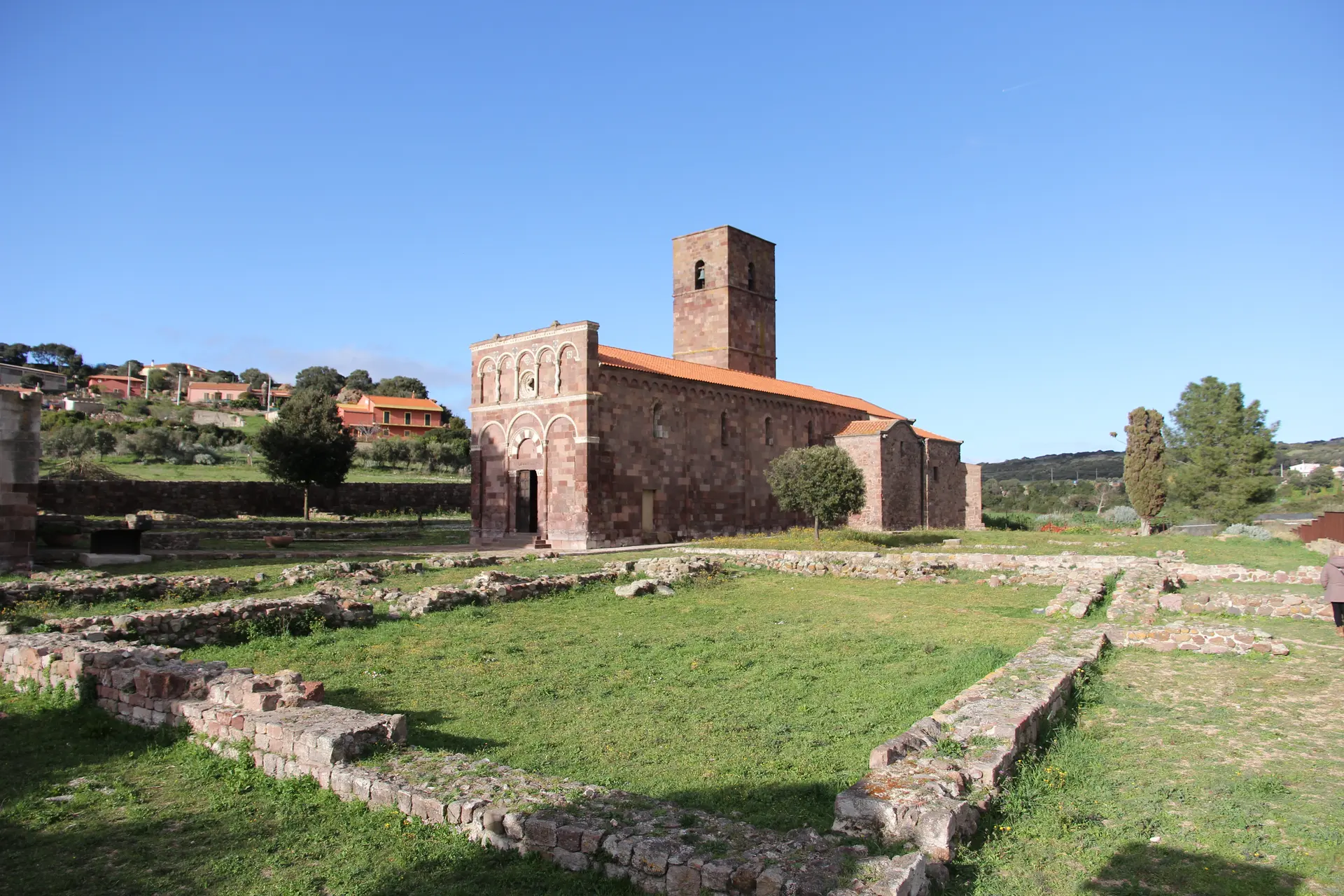
Image of Chiesa di Nostra Signora di Tergu. Image source · CC-BY-SA-4.0
Visit essentials
A quick read before you go
- Duration
- 30 minutes to 1 hour
- Access
- By car from Castelsardo (10km).
Overview
The facade catches the light like a jewel. Red trachyte and white limestone alternate in geometric patterns that have remained virtually unchanged for a millennium. A rose window pierces the upper level. Zigzag decorations add visual rhythm. This is Romanesque architecture at its most refined, and it stands not in Tuscany or Lombardy but in the Sardinian countryside, ten kilometers south of Castelsardo.
The church of Nostra Signora di Tergu was built between 1065 and 1082 by Giudice Mariano I de Lacon-Gunale, ruler of the Giudicato of Torres. In 1122, it became a possession of the Abbey of Montecassino—the heart of Western monasticism—and the seat of a Benedictine priory that would become Sardinia's most important. At its peak, the monastery housed 100 monks. Ten other monasteries across the island depended on Tergu.
Pisan and Lombard craftsmen rebuilt the church in the 12th century, giving it the facade that survives today.
The monastery fell to ruin after its incorporation into the Archdiocese of Torres in 1444. The remains are visible in the garden surrounding the church—fragments of what was once a center of learning, spirituality, and Sardinian identity. But the church itself endures, still functioning as a parish, still the destination of the Lunissanti procession on the Monday before Easter.
Why this place is sacred
The Romanesque facade of Nostra Signora di Tergu represents an extraordinary survival. Built of red trachyte with white limestone decorations, the two-tone stonework creates a visual effect unique in Sardinia. Arches, columns, geometric patterns, and a rose window compose a facade of mathematical precision. Though the upper portion has crumbled over the centuries, what remains demonstrates craftsmanship of the highest order.
The church was not an isolated monument but the heart of a monastic empire. When the Abbey of Montecassino—Saint Benedict's own foundation, the fountainhead of Western monasticism—extended its reach to Sardinia in 1122, Tergu became its seat. The priory that developed here administered ten dependent monasteries across the island. One hundred monks lived in community, following the Benedictine Rule, maintaining the liturgical cycle, preserving and copying manuscripts, shaping Sardinian religious life.
This was not marginal territory. The Giudice of Torres, whose ruling family built the original church, controlled one of the four Sardinian kingdoms. The location on the site of the Roman settlement of Cericum indicates continuity of occupation stretching back far before the medieval period. When Giudice Mariano I chose this place for his church, he was building on deep foundations.
The monastery's decline began with its incorporation into the Archdiocese of Torres in 1444. Without the Benedictine presence, the buildings fell to ruin. Today, fragments of the monastery surround the church in a pleasant garden—walls, foundations, hints of the scale that once was. The church itself, however, survived. It continues to function as a parish.
The Lunissanti procession keeps the pilgrimage tradition alive. Each year on the Monday before Easter, confraternity members and faithful depart Castelsardo at dawn, walking the road to Tergu. The evening return by torchlight transforms the landscape into a river of fire. The church that received Benedictine monks for three centuries still receives pilgrims today.
Church built 1065-1082 by Giudice of Torres. Became Benedictine abbey 1122 under Montecassino. Seat of Cassinese priory administering 10 dependent monasteries. At peak housed 100 monks.
1065-1082: Initial construction. 1117: Consecrated. 1122: Becomes Montecassino possession. 12th century: Rebuilt by Pisan and Lombard craftsmen. 1444: Incorporated into Archdiocese of Torres; monastery begins decline. Modern era: Parish church, destination of Lunissanti procession.
Experience and orientation
The approach to Nostra Signora di Tergu leads through the Sardinian countryside south of Castelsardo. The church appears on a rise at the outskirts of the village—red stone against green landscape, a form unchanged for centuries. The setting is peaceful, removed from traffic and urban noise.
The facade commands attention. Red trachyte and white limestone alternate in patterns of geometric precision. Arches frame columns in careful proportion. The rose window pierces the upper level where the original construction has partially crumbled. Zigzag decorations add visual rhythm. Even without entering the church, the facade repays extended contemplation—the proportions, the color interplay, the craftsmanship of Pisan and Lombard masons working in medieval Sardinia.
The garden surrounding the church contains the visible remains of the monastery that once housed 100 Benedictine monks. Walls and foundations hint at the scale of what was. Walking among these ruins, visitors can sense the community that lived here—the liturgical hours, the scriptoria, the administration of ten dependent monasteries across Sardinia. The ruins speak of both achievement and loss.
Interior access may depend on finding a caretaker. Some visitors have been fortunate to encounter Angelo, who tends the church and offers informal tours, pointing out features and illuminating the altar and paintings. If the interior is accessible, it offers continuation of the Romanesque experience—though simpler than the facade, it maintains the atmosphere of medieval devotion.
The best time to experience the church's living significance is the Monday before Easter, when the Lunissanti procession arrives from Castelsardo. Departing at dawn, confraternity members and faithful walk the road linking the two communities, arriving at Tergu for ceremonies before returning by torchlight.
The church of Nostra Signora di Tergu stands on the outskirts of Tergu village, approximately 10km south of Castelsardo in the Province of Sassari. The church sits in a garden containing monastery ruins, in a countryside setting.
Context and lineage
Between 1065 and 1082, Giudice Mariano I de Lacon-Gunale of the Giudicato of Torres built a church on the site of the Roman settlement of Cericum. This foundation, recorded in the Libellus Judicum Turritanorum (a 12th-century document in Logudorese Sardinian), marked the beginning of one of Sardinia's most important religious centers. In 1122, the church became a possession of the Abbey of Montecassino—Saint Benedict's own foundation. The Benedictine presence transformed Tergu into the seat of Sardinia's most prestigious priory.
Pisan and Lombard craftsmen rebuilt the church in the 12th century, giving it the Romanesque facade that survives today. At its peak, 100 monks lived in community here, and 10 monasteries across the island depended on Tergu.
Founded by the Giudice of Torres. Became Benedictine abbey under Montecassino 1122. Incorporated into Archdiocese of Torres 1444. Continues as parish church.
Giudice Mariano I de Lacon-Gunale
Traditions and practice
Benedictine liturgical life (12th-15th centuries). Community of up to 100 monks. Administration of 10 dependent monasteries.
Parish services. Lunissanti procession (Monday before Easter). Pilgrimage visitation.
Contemplate the Romanesque facade—the proportions, the two-tone stonework, the geometric patterns. Walk among the monastery ruins. If the caretaker is available, ask to see the interior. If visiting during Holy Week, join the Lunissanti procession from Castelsardo.
Roman Catholicism
ActiveOne of Sardinia's finest examples of Romanesque architecture. Seat of Sardinia's most important Benedictine monastery (12th-15th centuries), connected to Montecassino. At peak housed 100 monks with 10 dependent monasteries. Destination of Lunissanti Holy Week procession from Castelsardo.
Parish services, Lunissanti procession (Monday before Easter).
Perspectives and open questions
The church of Nostra Signora di Tergu offers encounter with medieval Sardinia at its most refined—Romanesque architecture of exceptional quality, the history of Benedictine monasticism, and continuing pilgrimage tradition.
Scholarly perspective
The church is recognized as one of Sardinia's finest examples of Romanesque architecture. The construction under Giudice Mariano I (1065-1082), the Montecassino connection (1122), the 12th-century rebuilding by Pisan and Lombard craftsmen, and the monastery's importance as Sardinia's principal Benedictine center are documented.
Living and traditional perspectives
Catholic tradition maintains the church as a parish and destination for the Lunissanti procession. The connection to Castelsardo through this annual Holy Week pilgrimage keeps medieval devotional patterns alive.
Alternative interpretations
The site of the Roman settlement Cericum suggests pre-Christian occupation. The choice of location by the Giudice of Torres may have recognized existing sacred geography.
Open questions
The extent of pre-Christian use. The full history and fate of the 10 dependent monasteries. The monastery's manuscripts and treasures.
Plan your visit
Access and arrival
By car from Castelsardo (10km). Limited public transport; car recommended.
Accommodations in Castelsardo (10km) and surrounding area. Agriturismos in the countryside.
Respectful visit
Modest dress if entering the church.
Exterior photography permitted. Interior restrictions may apply.
None specified.
Free admission | Interior access may be limited | Find caretaker if available
Interior access may be limited. Find the caretaker for admission if possible. The evening return of Lunissanti procession by torchlight is particularly atmospheric.
Current practical details
Address
Via Chiesa, 1, 07030 Tergu SS, Italy
Hours, fees, and access can change — verify on the official source before you travel. Practical details last checked Jun 2026.
Location
Map loads as you approach this section.
Pilgrim reflections
A portrait of encounter, not a score
Pilgrims describe what they felt, how present they could become, and whether the place would shape a journey. There are no stars and no ranking of traditions.
No reviewed reflections yet
The first pilgrims can help describe the character of being here.
Share a reflection
Available after an account-backed “Been there.” Every reflection is reviewed before publication.
Nearby sacred places
Explore other sacred places in the region. Proximity does not establish access or travel time; check each place’s guidance.

Altare prenuragico di Monte d’Accoddi
Sassari, Sassari, Italy
19.2 km away
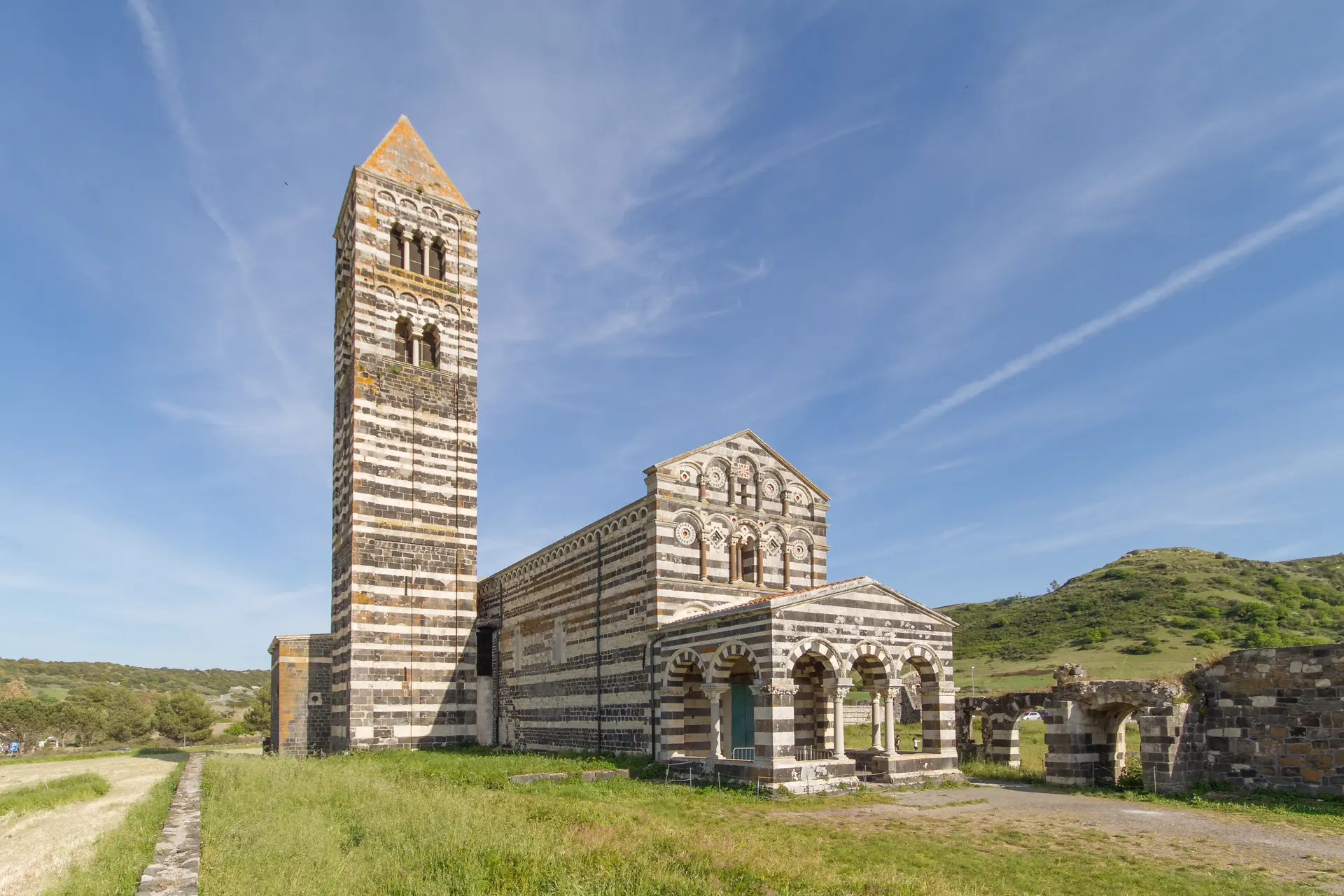
Church of the Holy Trinity Saccargia (Basilica della Santissima Trinita de Saccargia)
Codronzanu/Codrongianos, Sassari, Italy
24.4 km away

Complesso Prenuragico di Monte Baranta
Alghero, Sassari, Italy
33.3 km away

Altare Rupestre di Santo Stefano
Oscheri/Oschiri, Sassari, Italy
38.1 km away
References
Sources consulted for this page. Source categories describe the publication, not a guarantee that every claim is verified. Traditional accounts and outside interpretations may differ.
- 01Nostra Signora di Tergu | SardegnaTurismo — Regione Sardegna TourismofficialOfficial Sardinia tourism information
- 02Nostra Signora di Tergu – Fondazione Romanico Sardegna — Fondazione Romanico SardegnaSource contextSpecialized Romanesque architecture documentation
- 03Tergu, Church of Nostra Signora di Tergu - Chiese Romaniche Sardegna — Chiese Romaniche SardegnaSource contextDetailed architectural and historical information
- 04Church of Nostra Signora di Tergu - Idese — Italian Ministry of CultureofficialOfficial heritage documentation
- 05Nostra Signora di Tergu - Wikipedia — Wikipedia contributorsencyclopediaComprehensive historical overview
Share a photo
Help visitors recognize Chiesa di Nostra Signora di Tergu. Every submission is reviewed before publication.