Chapelle Notre-Dame de Bonne Délivrance
A convent chapel holding Paris's oldest continuous Marian devotion
Understand sacred places, explore living traditions, and learn how to engage respectfully with Pilgrim Map.
Access has not been verified. Check current local guidance before planning a visit.
Neuilly-sur-Seine, Hauts-de-Seine, France
Read the sources
Visit essentials
A quick read before you go
- Duration
- Thirty minutes to one hour for prayer and devotion.
- Etiquette
- This chapel is the private space of a religious community that generously opens its doors to…
Overview
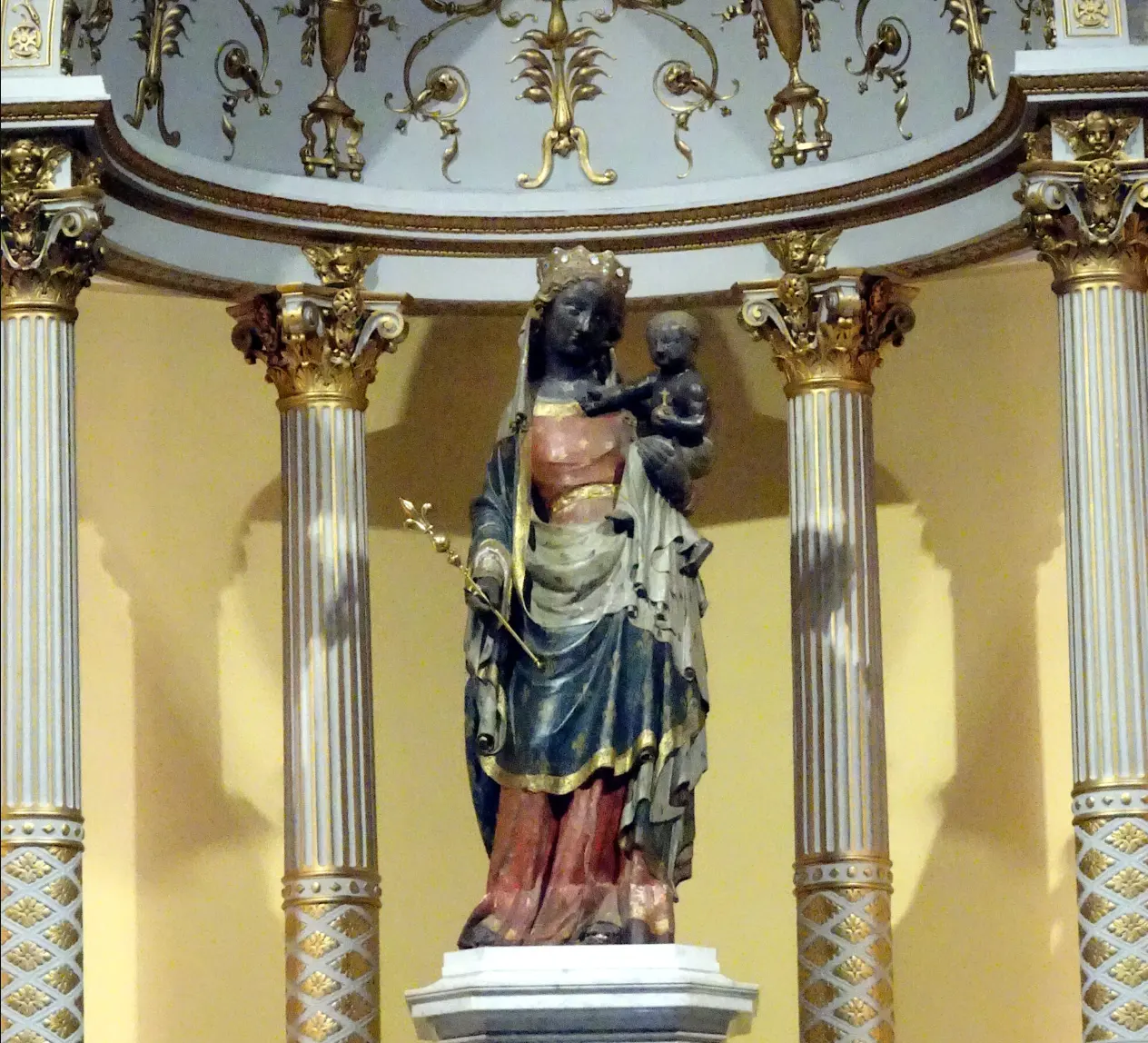
In Neuilly-sur-Seine west of Paris, an unassuming convent chapel holds one of France's most significant Black Madonnas, continuously venerated since the eleventh century. Good Deliverance first meant safe childbirth for medieval women; over time it expanded to release from suffering, bondage, and whatever imprisons the soul. The Royal Confraternity founded in 1533 reached twelve thousand members, including Louis XIII and Anne of Austria.
Originally at Saint-Étienne-des-Grès on the Montagne Sainte-Geneviève, the statue survived the Revolution when Madame de Carignan bought and hid it, then passed to the Sisters of Saint Thomas of Villeneuve, who built this chapel for it in 1910. In 1587, young Francis de Sales knelt here after six weeks of torment over supposed predestination to damnation, recited the Memorare, and received immediate relief in a conversion leading to priesthood, episcopacy, and canonization.
Sites inside
Why this place is sacred
What makes a statue into a site of pilgrimage? The theological answer involves grace and intercession; the phenomenological answer has to do with accumulated presence. This Black Madonna has been the focus of human seeking for nearly a thousand years. Each prayer has left something; each answered intention has added to the web of meaning surrounding the image.
The chapel itself is modest—a convent chapel, not a grand sanctuary. This intimacy serves the devotion. Pilgrims do not lose themselves in architectural spectacle; they come face to face with the Madonna in her dark simplicity.
The story of Francis de Sales provides the most dramatic account of the Madonna's power. A brilliant young scholar, he fell into despair after encountering Calvinist teaching about predestination. For six weeks he could not eat, sleep, or function, convinced that God had already damned him. Kneeling before this statue, he recited the Memorare—a prayer beginning 'Remember, O most gracious Virgin Mary, that never was it known that anyone who fled to thy protection was left unaided.'
The relief was immediate and complete. He rose healed and spent the rest of his life serving the Church.
The Madonna's title invites this kind of encounter. 'Good Deliverance' names what pilgrims seek: release from whatever binds them. The original association with childbirth—deliverance in its most literal sense—grounds the devotion in bodily reality. The expansion to spiritual deliverance follows naturally.
The devotion began at Saint-Étienne-des-Grès in the eleventh century, centered on prayers for safe childbirth. The current chapel was built in 1908-1910 specifically to house the statue after the Sisters of Saint Thomas of Villeneuve received it.
The devotion has survived the destruction of its original church, the French Revolution, and multiple relocations. The Sisters of Saint Thomas of Villeneuve, who received the statue in 1806, built this chapel to provide a permanent home. The congregation continues to maintain the shrine and welcome pilgrims.
Experience and orientation
The chapel stands on the boulevard d'Argenson in Neuilly, its facade modest among residential buildings. Step inside and the change is immediate—the silence of a place where prayer is the primary activity.
The interior is simple, appropriate to a convent chapel. Light filters through windows; candles flicker in their holders. The Black Madonna occupies the place of honor, her dark face visible behind the altar. Unlike statues lost in the dimness of vast cathedrals, she is present, close, accessible.
Sisters of Saint Thomas of Villeneuve may be at prayer. Join them or find a seat and let the silence work. The chapel offers no spectacle; what it offers is a place where centuries of pilgrims have brought their needs and received what they came for.
The Memorare, the prayer that healed Francis de Sales, remains particularly associated with this Madonna. Its words acknowledge what pilgrims have always known: no one has ever been refused who sought her help.
Enter during published visiting hours. The chapel is small; orientation is immediate. The Black Madonna is behind the main altar. Candles may be lit; seats are available for prayer.
Context and lineage
In the eleventh century, a chapel at the church of Saint-Étienne-des-Grès on the Montagne Sainte-Geneviève became known for a Black Madonna who granted safe deliveries to pregnant women. The devotion grew. The Royal Confraternity of Notre Dame de Bonne Délivrance was established in 1533; by its height it counted twelve thousand members including French royalty.
The French Revolution destroyed Saint-Étienne-des-Grès. But before the church fell, Madame de Carignan Saint Maurice purchased the statue and hid it, saving it from destruction. In 1806, she gave it to the Sisters of Saint Thomas of Villeneuve, who had themselves survived the Revolution's dispersal.
The Sisters moved to Neuilly in 1908, bringing the Madonna with them. The chapel was completed in 1910, blessed by Archbishop Amette of Paris. For over a century, it has served as the permanent home of this ancient devotion.
The Sisters of Saint Thomas of Villeneuve, founded in 1661, have been the custodians of the statue since 1806. The congregation continues to maintain the chapel and welcome pilgrims.
Madame de Carignan Saint Maurice
Savior of the statue
Saint Francis de Sales
Famous pilgrim
Saint Vincent de Paul
Famous pilgrim
Traditions and practice
Medieval pilgrims came particularly for prayers during pregnancy and childbirth. The Memorare became associated with the devotion after Francis de Sales' healing. Novenas to Our Lady of Good Deliverance were a common practice.
The chapel continues to offer daily Mass. Individual pilgrims visit to pray before the Madonna, seeking deliverance from whatever troubles them. The Sisters maintain the tradition of prayer that has surrounded the statue for centuries.
Approach the chapel as pilgrimage, not tourism. Allow time for silence. Consider reciting the Memorare before the Madonna, as Francis de Sales did. Light a candle if you wish. Let your intentions be simple and honest.
Roman Catholicism
ActiveThis chapel houses one of France's most historically significant Black Madonnas, with a devotion stretching back nearly a thousand years. The statue has been associated with the conversion of Saint Francis de Sales and the prayers of other canonized saints.
Daily Mass, veneration of the Black Madonna, recitation of the Memorare, prayers for deliverance from suffering, novenas to Our Lady of Good Deliverance.
Perspectives and open questions
For the faithful, this chapel offers encounter with a Madonna of proven power. For students of Marian devotion, it represents one of France's most significant Black Madonna traditions. For seekers of any background, it offers a place of stillness and intention.
Scholarly perspective
The devotion to Our Lady of Good Deliverance represents one of the oldest continuous Marian pilgrimage traditions in Paris. The survival of the statue through the Revolution demonstrates the persistence of popular Catholic piety.
Living and traditional perspectives
Within Catholic tradition, the Black Madonna is venerated as a miraculous image of the Virgin Mary with particular intercessory power for those seeking deliverance. The healing of Francis de Sales is the most famous of countless reported graces.
Alternative interpretations
Some researchers connect Black Madonnas to pre-Christian goddess traditions, particularly earth mother figures associated with fertility and childbirth. The original association with safe delivery supports such interpretations.
Open questions
The origins and meaning of the statue's dark coloration remain debated. Some scholars attribute it to the darkening of materials over time; others see intentional symbolism. The full historical record of miracles attributed to the Madonna is not publicly available.
Plan your visit
Access and arrival
Neuilly is a residential suburb; accommodations in central Paris are more practical, with easy Metro access.
Respectful visit
Modest dress appropriate for a religious house. Cover shoulders and knees.
Photography is likely restricted. Ask permission if you wish to photograph.
Candles may be lit. Donations support the congregation's work.
Convent areas are closed to visitors. The chapel is accessible only during published hours.
This is an active convent; respect the community's life of prayer. Visit during published hours. Photography may be restricted.
Current practical details
Address
5 Bd de la Saussaye, 92200 Neuilly-sur-Seine, France
Phone
Hours
Hours, fees, and access can change — verify on the official source before you travel. Practical details last checked Jun 2026.
Location
Map loads as you approach this section.
Pilgrim reflections
A portrait of encounter, not a score
Pilgrims describe what they felt, how present they could become, and whether the place would shape a journey. There are no stars and no ranking of traditions.
No reviewed reflections yet
The first pilgrims can help describe the character of being here.
Share a reflection
Available after an account-backed “Been there.” Every reflection is reviewed before publication.
Nearby sacred places
Explore other sacred places in the region. Proximity does not establish access or travel time; check each place’s guidance.
Our Lady of Good Deliverance, Paris
Neuilly-sur-Seine, Hauts-de-Seine, France
0.0 km away
La Madeleine (Church of Saint Mary Magdalene)
Paris, Paris, France
4.4 km away
Relic of Mary Magdalene at La Madeleine
Paris, Paris, France
4.4 km away

Basilica of the Sacré-Cœur, Montmartre
Paris, Paris, Paris / Île-de-France, France
5.4 km away
References
Sources consulted for this page. Source categories describe the publication, not a guarantee that every claim is verified. Traditional accounts and outside interpretations may differ.
- 01La Chapelle Notre-Dame de Bonne Délivrance — Congregation of Sisters of Saint Thomas of VilleneuveofficialOfficial congregation website
- 02Notre-Dame-de-Bonne-Délivrance - En Pèlerinage — Diocese of NanterreofficialOfficial diocesan pilgrimage resource
- 03Notre-Dame de Bonne Délivrance - Nominis — Conference of French BishopsofficialOfficial Catholic saints database
- 04Saint-Étienne-des-Grès, Paris - Wikipedia — Wikipedia contributorsencyclopediaHistorical background on original site
- 05The Black Virgin of Paris - Seraphim — SeraphimacademicDetailed devotional article
Share a photo
Help visitors recognize Chapelle Notre-Dame de Bonne Délivrance. Every submission is reviewed before publication.