Chapel of the Apparition — Holy Sepulchre
The Franciscan chapel of the Risen Christ's first appearance, within the Holy Sepulchre
Understand sacred places, explore living traditions, and learn how to engage respectfully with Pilgrim Map.
Access has not been verified. Check current local guidance before planning a visit.
Old City, Jerusalem, Jerusalem District, Israel
Read the sources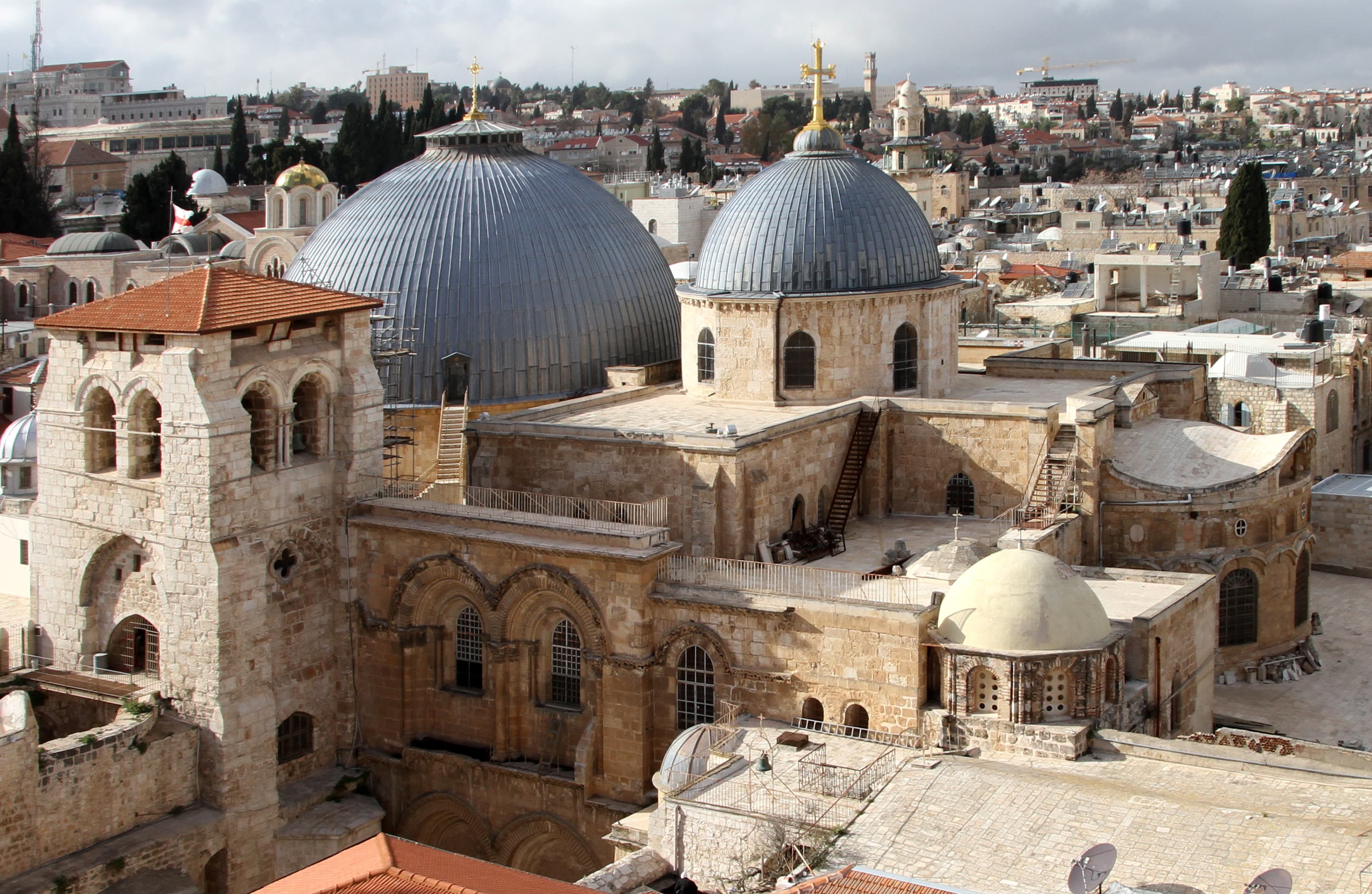
Visit essentials
A quick read before you go
- Duration
- 20–40 minutes for the Chapel of the Apparition and the nearby Magdalene altar.
- Access
- Inside the Church of the Holy Sepulchre, Christian Quarter of the Old City of Jerusalem.
Overview
Inside the Church of the Holy Sepulchre, the modest Chapel of the Apparition occupies the north transept beside the Rotunda and Aedicule.
It commemorates Easter encounters with the Risen Christ: Latin Catholic tradition holds that he first appeared privately to Mary his mother, an apparition absent from the canonical Gospels but venerated for more than a millennium, while John 20:14–17 records the first public appearance to Mary Magdalene, the Noli me tangere commemorated at a separate altar a few metres south. Principally Marian, the chapel honours both.
It is the Holy Sepulchre's principal Catholic chapel, the Franciscan Custody's Blessed Sacrament chapel, and the origin of the daily Holy Sepulchre procession, one of Christianity's longest-continuously-performed liturgies. Within the six-community Status Quo, it is one of the few unambiguously Catholic-administered spaces.
Why this place is sacred
The thinness of the Chapel of the Apparition is, in a sense, geographical: it sits inside the Church of the Holy Sepulchre, which holds the traditional sites of both Christ's crucifixion at Calvary and his burial and resurrection at the Aedicule. Pilgrims walking the Stations of the Cross arrive at this chapel after the heavier weight of the Stone of Unction and Calvary; it is the architectural enactment of Easter morning.
Catholic liturgical custody here goes back at least to the 14th century, when the Franciscan Custody of the Holy Land was formally constituted (1342) — though the Franciscan presence in the region dates to 1217. The chapel is the site of the daily Sepulchre procession, twice each day, when Franciscan friars in white surplices process through the basilica's Catholic stations chanting and incensing each shrine. Pilgrims may follow with lit candles.
The procession has been performed in something close to this form for several centuries; in a building shared by six communities under the Status Quo, it is a daily reaffirmation of Catholic custodianship and a moment of stillness that draws even non-Catholic pilgrims to stop and watch.
Experience and orientation
Enter the Holy Sepulchre through the south parvis and the heavy 12th-century doors. Inside, the Stone of Unction lies directly ahead, often surrounded by kneeling pilgrims. Continue past the Aedicule of the Tomb in the centre of the Rotunda; the Catholic Chapel of the Apparition is to the left, in the north transept. It is unassumingly small — most visitors walking briskly miss it entirely.
Inside, the altar holds the reserved Blessed Sacrament; this is the Catholic tabernacle of the Holy Sepulchre. To the left of the altar, a fragment of column traditionally associated with the Flagellation of Christ is integrated into the chapel furnishings; the same column is the focus of Magdalene devotion within the chapel.
The separate Magdalene altar — marking the Noli me tangere encounter described in John 20 — stands a few metres south, in the ambulatory between this chapel and the Rotunda. English-language guidebooks sometimes conflate the two; the distinction matters for understanding what each space commemorates. If you can be present for the Holy Sepulchre procession (typically 16:00–17:00, varies by season), follow it. The procession originates and ends at this chapel.
Candles can be obtained from the Franciscan sacristan; pilgrims fall in behind the friars and accompany them through the basilica's Catholic stations.
Inside the Church of the Holy Sepulchre, north transept, to the left as you face away from the Rotunda. The Magdalene altar is a few metres south in the ambulatory.
Context and lineage
Western devotional tradition holds that the Risen Christ first appeared to Mary his mother. The earliest attested writers in this tradition are Ambrose of Milan (4th century), Sedulius (5th century), and Anselm of Canterbury (11th century); Ignatius of Loyola made the apparition the first contemplation of the Fourth Week of his Spiritual Exercises (16th century).
The Gospel of John records the first public appearance as the meeting with Mary Magdalene in the garden — the Noli me tangere of John 20:14–17. Both commemorations were fixed within the rebuilt Holy Sepulchre by Crusader-era Catholic devotion: the Marian apparition at the chapel now known as the Chapel of the Apparition, and the Magdalene apparition at the separate altar in the adjacent ambulatory.
The chapel's present arrangement dates to the 19th century, following the destructive 1808 fire in the basilica. The wider Church of the Holy Sepulchre was first built by Constantine and his mother Helena around 326–335 AD over the traditional sites of Calvary and Christ's tomb, destroyed in 1009 under al-Hakim, rebuilt by Constantine IX Monomachos (1042–48), and substantially rebuilt by the Crusaders, who consecrated the present plan in 1149.
Roman Catholic, Latin Rite, under the Franciscan Custody of the Holy Land. The wider basilica is shared under the Status Quo with the Greek Orthodox, Armenian Apostolic, Coptic Orthodox, Ethiopian Orthodox Tewahedo, and Syriac Orthodox communities.
Constantine I and Empress Helena
Built the original Constantinian rotunda and martyrium over Calvary and the Tomb (c. 326–335)
Franciscan Custody of the Holy Land
Has held custodianship of the Chapel of the Apparition since c. 1342; runs the daily Holy Sepulchre procession
Saint Ambrose, Sedulius, and Saint Anselm
Early and medieval Western writers who attested the tradition of the Risen Christ's first appearance to his mother
Saint Ignatius of Loyola
Made the Marian apparition the first contemplation of the Fourth Week of his Spiritual Exercises (16th century), shaping Catholic devotional emphasis on the encounter
Crusader Kingdom of Jerusalem
Consecrated the substantially rebuilt basilica in 1149 and fixed the present arrangement of Catholic commemorations
Traditions and practice
The Holy Sepulchre procession is the central traditional rite associated with the chapel. Franciscan friars in white surplices process twice each day through the basilica's Catholic stations — the Chapel of the Apparition, the Stone of Unction, Calvary, the Aedicule of the Tomb — chanting and incensing each. Pilgrims with candles obtained from the Franciscan sacristan may accompany the procession. It is one of the longest-continuously-performed liturgies in Christianity.
The Confraternity prayer cycles and stational devotion of the Catholic chapels in the basilica all draw from this hub.
Daily Conventual Mass is celebrated by the Franciscan Custody at the chapel altar; the reserved Blessed Sacrament makes the chapel the Catholic tabernacle of the Holy Sepulchre. Confession is available in multiple languages. The Franciscan Sacristan receives pilgrim groups by arrangement. The feast of the Apparition on Easter Monday and the feast of Mary Magdalene on 22 July bring particular devotion to the chapel.
If you have only a short visit to the Holy Sepulchre, pass through Calvary and the Aedicule first; then make the Chapel of the Apparition the still point of the visit. Sit. The chapel is small and busy, but the Blessed Sacrament tabernacle changes its acoustic quality.
If you can stay for the afternoon procession, do — candles are available from the Franciscan sacristan, and following the procession through the Catholic stations is the most coherent way to experience the basilica's Catholic devotional layout. Distinguish the Chapel of the Apparition (Marian) from the separate Magdalene altar (Noli me tangere) in the ambulatory; both reward attention.
Roman Catholic (Latin Rite, Franciscan Custody of the Holy Land)
ActiveThe Chapel of the Apparition commemorates the Risen Christ's first apparition — held by Latin devotional tradition to be to his mother Mary, and (according to John 20) also to Mary Magdalene at the nearby column. It is the liturgical heart of the Franciscan presence in the Holy Sepulchre and the origin point of the daily Sepulchre procession.
Daily Conventual Mass; daily Holy Sepulchre procession; veneration of the column-fragment; feast of the Apparition (Franciscan, Easter Monday); feast of Mary Magdalene (22 July); reserved Blessed Sacrament; multilingual confession.
Perspectives and open questions
The Chapel of the Apparition holds together several distinct traditions and commemorations. Clarity helps: the chapel is principally Marian in its Latin Catholic dedication, with secondary Magdalene devotion at the integrated column; the separate Magdalene altar in the adjacent ambulatory commemorates the Noli me tangere encounter described in John 20.
Scholarly perspective
The Chapel of the Apparition is a Franciscan-administered space within the Status Quo arrangement; its modern furnishings date from 19th-century reconstructions following the 1808 fire. The location is liturgical-traditional rather than archaeological — no specific historical claim is made about a precise spot of apparition. The Status Quo itself was formalised by Ottoman firman in 1757 and reaffirmed in 1852; its mechanisms continue to govern access, custody, and the timing of liturgies among the six Christian communities sharing the basilica.
Living and traditional perspectives
Latin Catholic tradition holds the Risen Christ's first appearance to be to his mother — a tradition attested by Ambrose, Sedulius, Anselm, and Ignatius of Loyola, even though it is not recorded in the canonical Gospels. Eastern Christian tradition emphasises the apparition to Mary Magdalene, commemorated nearby at a separate altar; Orthodox liturgy more broadly hymns the women at the tomb, the Myrrh-bearers, as the first witnesses of the Resurrection.
The Franciscan Custody's liturgical understanding accommodates both: the chapel principally commemorates the Marian apparition, and the column to its left is also the focus of Magdalene devotion within the chapel itself.
Alternative interpretations
Devotional and esoteric literature on Mary Magdalene increasingly treats the Noli me tangere site as a centre of 'sacred feminine' pilgrimage. Some of this conflates spaces within the basilica — the Marian Chapel of the Apparition and the separate Magdalene altar — in ways that obscure both the architectural reality and the Status Quo arrangements. Approach with care and clarity.
Open questions
The earliest layout of the Constantinian basilica's commemorative chapels is partly conjectural; archaeological evidence is fragmentary. The present arrangement of Catholic chapels reflects medieval Crusader and later Franciscan choices rather than 4th-century evidence. Published Status Quo timetables shift with feast cycles; pilgrims should expect minor variations from any single published schedule.
Plan your visit
Access and arrival
Inside the Church of the Holy Sepulchre, Christian Quarter of the Old City of Jerusalem. Enter the basilica via the south parvis; the Chapel of the Apparition is to the left (north transept) past the Aedicule. Step-free entrance to the basilica; the chapel itself is at floor level. No charge. Mobile signal is generally available in the Christian Quarter but can drop inside the basilica; check current visiting advisories with the Custody (custodia.org) before going during major feast days.
The Christian Quarter offers a range of pilgrim houses and hotels — Franciscan, Greek Orthodox, and ecumenical houses among them. Book ahead for Holy Week and major feasts.
Respectful visit
Shoulders and knees covered throughout the basilica. No swimwear, beach attire, athletic clothing, or short skirts. Hats removed by men inside.
Permitted without flash in most areas. Strictly forbidden during liturgies and during the Holy Sepulchre Procession within the Chapel of the Apparition itself.
Candles can be obtained from the Franciscan sacristan for the procession. Donation boxes in the chapel support Franciscan custody and pilgrim ministry.
Silence within the chapel; avoid loud commentary anywhere in the basilica. Do not cross liturgical processions of other communities. Do not touch the Magdalene-Flagellation column except in the manner permitted by the Franciscan custodians.
Communion is reserved to Catholics in good standing. Do not cross or interfere with the liturgical processions of other communities elsewhere in the basilica — the Status Quo is maintained partly by careful mutual deference, and visitors who break this can cause real friction. Easter Triduum and especially Holy Fire Saturday are the most spiritually charged and the most operationally tense days in the basilica's calendar.
Current practical details
Address
Jerusalem
Hours, fees, and access can change — verify on the official source before you travel. Practical details last checked Jun 2026.
Location
Map loads as you approach this section.
Pilgrim reflections
A portrait of encounter, not a score
Pilgrims describe what they felt, how present they could become, and whether the place would shape a journey. There are no stars and no ranking of traditions.
No reviewed reflections yet
The first pilgrims can help describe the character of being here.
Share a reflection
Available after an account-backed “Been there.” Every reflection is reviewed before publication.
Nearby sacred places
Explore other sacred places in the region. Proximity does not establish access or travel time; check each place’s guidance.


References
Sources consulted for this page. Source categories describe the publication, not a guarantee that every claim is verified. Traditional accounts and outside interpretations may differ.
- 01Custody of the Holy Land — Basilica of the Holy Sepulchre — Franciscan Custody of the Holy Land (Custodia Terrae Sanctae)officialOfficial Franciscan source for the Catholic chapels within the Holy Sepulchre, including the Chapel of the Apparition. Liturgical schedule, daily procession, custodianship details.
- 02Chapel of the Apparition — Custodia Terrae Sanctae — Franciscan Custody of the Holy LandofficialCustody material describing the chapel's dedication to the Risen Christ's apparition to his Mother and its function as the Catholic Blessed Sacrament chapel within the Sepulchre.
- 03Church of the Holy Sepulchre — Wikipedia — Wikipedia contributorsencyclopediaComprehensive overview of the church, Status Quo, the Catholic Chapel of the Apparition, and the adjoining Magdalene altar.
- 04Status Quo (Holy Land sites) — Wikipedia — Wikipedia contributorsencyclopedia1757/1852 Ottoman firmans regulating possession of the Holy Sepulchre and other shared shrines. Essential context for any visit.
- 05Noli me tangere — Wikipedia — Wikipedia contributorsencyclopediaBiblical episode (John 20:14–17), iconographic tradition, and the location's commemoration within the Holy Sepulchre.
- 06Church of the Holy Sepulchre — Encyclopædia Britannica — Encyclopædia Britannica editorsencyclopediaStandard encyclopedic summary of the basilica's history and shared custodianship.
- 07Old City of Jerusalem and its Walls — UNESCO World Heritage CentreofficialUNESCO Ref. 148 (1981), on the World Heritage in Danger List. The Holy Sepulchre is the principal Christian monument within this inscription.
- 08The Church of the Holy Sepulchre: Christ's Tomb in Pilgrimage History — Martin Biddle and others (Oxford handbooks / Boydell)academicStandard academic treatments of the basilica's archaeology and devotional layout.
- 09Church of the Holy Sepulchre — See the Holy Land — Pat McCarthy, See the Holy LandguideDetailed pilgrim guide identifying each chapel within the basilica; clearly distinguishes Chapel of the Apparition from the Magdalene altar.
Photo gallery
4 curated photos
Share a photo
Help visitors recognize Chapel of the Apparition — Holy Sepulchre. Every submission is reviewed before publication.