Cathedral of Our Lady of Amiens
France's largest Gothic cathedral, built to house a prophet's relic
Understand sacred places, explore living traditions, and learn how to engage respectfully with Pilgrim Map.
Access has not been verified. Check current local guidance before planning a visit.
Amiens, Somme, France
Read the sources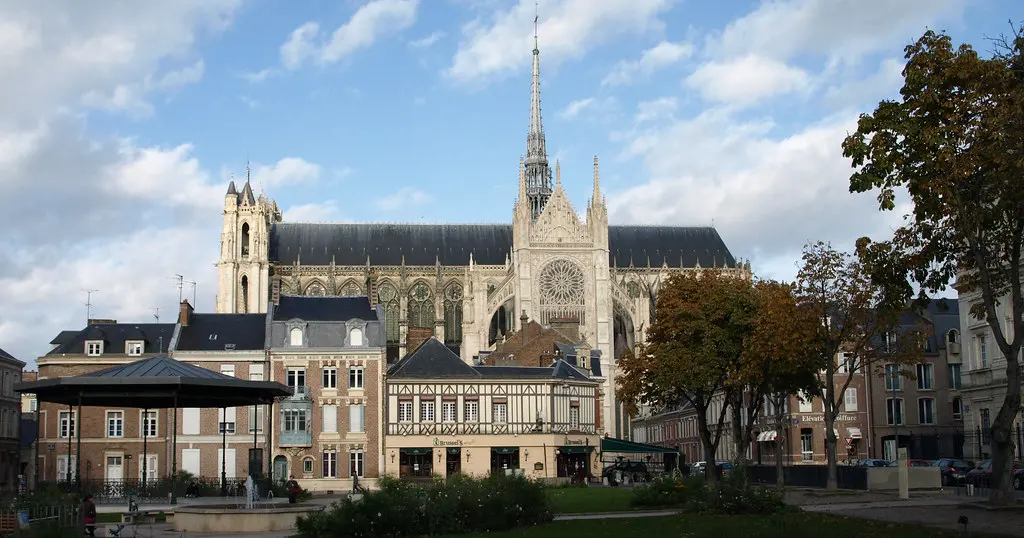
Image of Cathedral of Our Lady of Amiens. Image source
Visit essentials
A quick read before you go
- Duration
- One to two hours for the cathedral itself.
- Etiquette
- Amiens welcomes visitors but asks that the devotional atmosphere be respected.
Overview
Stand in the nave of Amiens Cathedral and look upward. The vault rises 42 meters above the pavement—higher than any other completed Gothic church in France. This was not architectural ambition for its own sake. The builders of the thirteenth century believed they were creating a dwelling place for God on earth, and they built accordingly.
What drew them to this effort was a relic: the front portion of a human skull, encased in crystal, bearing a Greek inscription identifying it as the head of John the Baptist. A Crusader brought it from Constantinople in 1206. Within fourteen years, construction began on a cathedral worthy of receiving it. The builders worked with remarkable speed and coherence, completing the structure in just over sixty years—an astonishing pace that gave the cathedral its unusual unity of style.
The labyrinth embedded in the floor invites a different kind of pilgrimage. Medieval visitors walked its 234-meter path on their knees, a substitute for the journey to Jerusalem. Today's pilgrims more often walk upright, but the meditative quality persists. Something in the space encourages slowness, the turning inward that labyrinths have always invited.
The Weeping Angel statue, a masterpiece of naturalistic medieval sculpture, became an unexpected symbol during the First World War, when soldiers sent postcards of it home from the nearby trenches. In summer and at Christmas, the Chroma light show illuminates the facade with the vivid colors that medieval worshippers would have seen—a reminder that these stone surfaces were never meant to be gray.
Why this place is sacred
Gothic architecture is sometimes described as theology in stone. At Amiens, this description becomes literal. Every element serves the purpose of creating a space where the distance between human and divine seems to collapse.
The vault's height is calculated to inspire awe—not merely impressiveness but the specific awe that prepares the soul for encounter. The stone skeleton reduces walls to frames for windows; light becomes structure. The surviving medieval glass transforms sunshine into something that feels sacramental.
The labyrinth operates on a different principle. Where the vault lifts the spirit, the labyrinth centers it. The path is unicursal—there are no choices to make, no dead ends, only the steady progression toward center and back. Medieval pilgrims walked it as a substitute for the dangerous journey to Jerusalem. The practice invited a turning inward, a pilgrimage that required no travel beyond the floor beneath one's feet.
At the heart of it all lies the relic. The head of John the Baptist—or what has been venerated as such for eight centuries—gives the cathedral its reason for existing. Whether the relic is authentic matters less than what it has meant: a physical connection to the prophet who baptized Christ, drawing pilgrims to this place across generations.
The cathedral was built explicitly to house the relic of John the Baptist, brought from Constantinople in 1206. Bishop Evrard de Fouilloy commissioned a church that would be worthy of receiving such a treasure, and worthy of God himself.
The cathedral has remained remarkably intact since its completion, escaping significant damage during both World Wars despite heavy fighting around Amiens. The original medieval polychrome has faded, but the Chroma light show reconstructs it. The labyrinth was removed during the 19th century but reconstructed in 1894.
Experience and orientation
Approach the cathedral from the plaza and the western facade commands attention—three portals dense with sculpture, the stone once painted in colors that the Chroma show restores. The central portal depicts the Last Judgment; entering, one symbolically passes through that threshold.
Inside, the scale registers first. Then the quiet. Amiens receives visitors but has not been consumed by tourism; the devotional atmosphere persists. Find a seat in the nave and let the space work. The eye will climb the columns, follow the ribs of the vault, rest in the pools of colored light cast by the windows.
The labyrinth lies in the floor of the nave, an octagonal path that takes about fifteen minutes to walk. The center once held a brass plate depicting the master builders; it was melted during the Revolution. Walking the labyrinth requires attention to foot placement, which draws attention away from distraction. The path turns and turns again, approaching the center, moving away, finally arriving.
The relic of John the Baptist occupies a chapel in the north transept. The reliquary is displayed at certain hours; check locally for current schedule. The Weeping Angel stands in the ambulatory, her face a masterpiece of carved sorrow. Soldiers in the trenches of the Somme, knowing they might die, sent her image home to families—a link between the medieval and the modern that gives her presence additional weight.
Enter through the west portal to experience the full impact of the interior. The labyrinth lies in the nave. The relic chapel is in the north transept. The Weeping Angel is in the south ambulatory. Tower access, when open, provides views over the city and surrounding landscape.
Context and lineage
In 1204, the Fourth Crusade diverted to Constantinople and sacked the Christian city. Among the treasures carried west was a crystal reliquary containing the front portion of a skull, identified by Greek inscription as the head of John the Baptist. Crusader Wallon de Sarton brought it to Amiens in 1206.
The existing cathedral was inadequate to house such a relic. Bishop Evrard de Fouilloy commissioned a new structure in 1220. Master builder Robert de Luzarches began work immediately, followed by Thomas de Cormont and his son Renaud. Within sixty-eight years, the cathedral was essentially complete—a remarkably short time for such an ambitious project.
This speed gave Amiens its distinctive unity. Most cathedrals show the evolution of Gothic style across centuries of construction; Amiens shows High Gothic at its moment of fullest development, nearly complete before tastes changed.
Amiens Cathedral belongs to the great flowering of French Gothic architecture in the thirteenth century, alongside Chartres, Reims, and Notre-Dame de Paris. It pushed the style to its limits, achieving the highest Gothic vault ever completed. The cathedral has been the seat of the Bishop of Amiens continuously since its consecration.
Bishop Evrard de Fouilloy
Commissioner
Robert de Luzarches
Master builder
Thomas and Renaud de Cormont
Master builders
Traditions and practice
Medieval pilgrims came to venerate the relic of John the Baptist and walked the labyrinth on their knees as a substitute pilgrimage to Jerusalem. The Feast of St. John the Baptist on June 24 drew particular crowds. The Order of Malta has long been associated with the celebration.
Daily Mass continues in the cathedral. The relic is displayed at specific hours. The labyrinth may be walked at any time the cathedral is open. The Chroma light show, offered free on summer evenings and during Christmas season, illuminates the facade with reconstructed medieval colors—an encounter with the building as medieval worshippers knew it.
Allow time for silence in the nave before exploring. Walk the labyrinth slowly, treating it as meditation rather than tourism. Visit the relic chapel during display hours if possible. If visiting in summer or December, the evening Chroma show offers a genuinely different experience of the building.
Roman Catholicism
ActiveAmiens Cathedral has served as the seat of the Bishop of Amiens since its consecration. The relic of John the Baptist has drawn pilgrims for eight centuries. Daily Mass continues the tradition of worship that gave the building its reason for existence.
Daily Mass, veneration of relics, labyrinth walking as pilgrimage practice, liturgical celebrations particularly on the Feast of St. John the Baptist (June 24).
Perspectives and open questions
Amiens Cathedral holds different meanings for different observers. Art historians see it as the purest expression of High Gothic style. Pilgrims come for the relic of John the Baptist. Visitors who know nothing of architecture or relics often find themselves unexpectedly moved by the space itself.
Scholarly perspective
Academic consensus ranks Amiens among the supreme achievements of Gothic architecture. Its unusual unity of style—the result of rapid construction—makes it invaluable for understanding the High Gothic moment. The sculptural program is considered among the finest and most complete of the period.
Living and traditional perspectives
Within Catholic tradition, the cathedral fulfills its original purpose: housing the relic of John the Baptist and providing a space for divine encounter through liturgy, prayer, and pilgrimage. The relic continues to be venerated as authentic.
Alternative interpretations
Some researchers have explored the cathedral's labyrinth and sculptural program for esoteric symbolism, connecting it to sacred geometry and initiatic traditions. These interpretations remain outside mainstream scholarship.
Open questions
The authenticity of the John the Baptist relic cannot be verified; multiple churches claim to possess his head. The full original polychrome appearance of the cathedral—partially revealed by the Chroma show—is still being reconstructed. The complete symbolic program of the medieval labyrinth design remains subject to interpretation.
Plan your visit
Access and arrival
Amiens offers accommodations at various price points within walking distance of the cathedral. Day trips from Paris are easily manageable.
Respectful visit
Modest dress appropriate for a place of worship. Cover shoulders and knees. Remove hats inside.
Generally permitted, but flash disrupts both atmosphere and other visitors. Do not photograph worshippers without permission.
Donations support the preservation of this UNESCO World Heritage site. Candles may be lit in side chapels.
Tower access closes on Tuesdays and certain holidays. Some areas may be restricted during services or special events.
The cathedral remains an active place of worship. Services take precedence over sightseeing. Tower access closes on Tuesdays and certain holidays.
Current practical details
Address
30 Place Notre Dame, 80000 Amiens, France
Phone
Hours
Hours, fees, and access can change — verify on the official source before you travel. Practical details last checked Jun 2026.
Location
Map loads as you approach this section.
Pilgrim reflections
A portrait of encounter, not a score
Pilgrims describe what they felt, how present they could become, and whether the place would shape a journey. There are no stars and no ranking of traditions.
No reviewed reflections yet
The first pilgrims can help describe the character of being here.
Share a reflection
Available after an account-backed “Been there.” Every reflection is reviewed before publication.
Nearby sacred places
Explore other sacred places in the region. Proximity does not establish access or travel time; check each place’s guidance.

Black Madonna of Pontoise
Pontoise, Val-d'Oise, France
95.2 km away

Eglise Notre-Dame de Pontoise
Pontoise, Val-d'Oise, France
95.2 km away
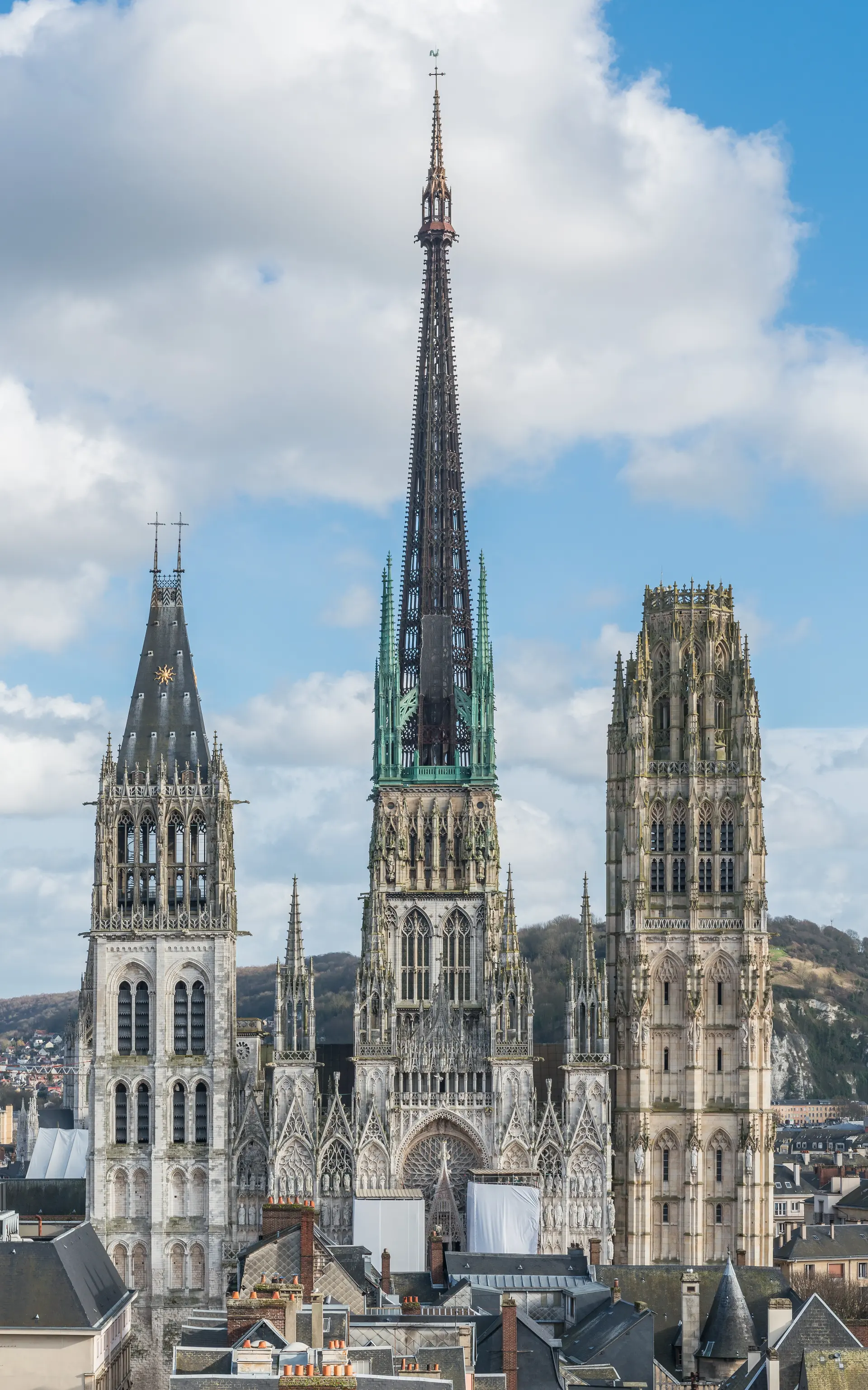
Cathédrale Notre-Dame de Rouen (Rouen Cathedral)
Rouen, Rouen, Normandie (Seine-Maritime), France
100.5 km away

Basilica Cathedral of Saint-Denis
Saint-Denis, Saint-Denis, Seine-Saint-Denis / Île-de-France, France
106.7 km away
References
Sources consulted for this page. Source categories describe the publication, not a guarantee that every claim is verified. Traditional accounts and outside interpretations may differ.
- 01Amiens Cathedral - UNESCO World Heritage Centre — UNESCOofficialOfficial UNESCO listing
- 02Amiens Cathedral | Gothic architecture, 13th century, UNESCO — BritannicaencyclopediaAcademic encyclopedia
- 03Notre Dame d'Amiens Cathedral — Amiens TourismofficialOfficial tourism website
- 04The relic of the head of Saint John the Baptist — Amiens CathedralofficialOfficial cathedral website
- 05Amiens Cathedral - Wikipedia — Wikipedia contributorsencyclopediaWell-referenced article
- 06Amiens Cathedral - Sacred Destinations — Sacred DestinationsacademicSpecialist sacred sites resource
Photo gallery
3 curated photos
Share a photo
Help visitors recognize Cathedral of Our Lady of Amiens. Every submission is reviewed before publication.