Blanca Peak, Colorado
Eastern boundary of the Navajo homeland, fastened to earth with lightning by the Holy People
Fort Garland, Colorado, United States
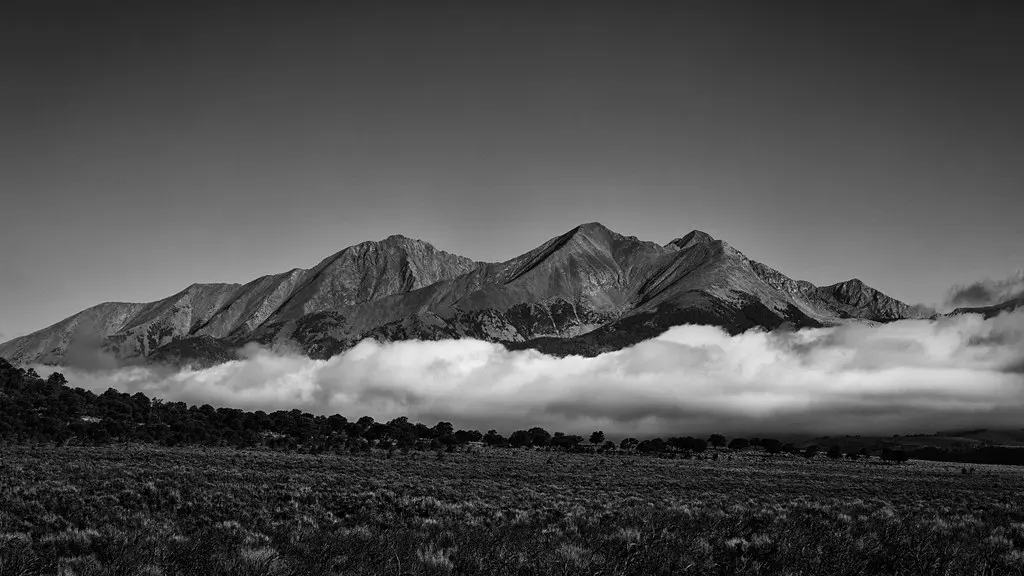
Image of Blanca Peak, Colorado. Image source
Visit essentials
Before you go
- Access
- Lake Como Road from near Fort Garland is the standard approach.
- Address
- Gardner, CO 81040, USA
- Duration
- Full day with early start
- Etiquette
- Respect the mountain's status as a Navajo deity.
Overview
In Diné tradition, four sacred mountains mark the cardinal boundaries of Dinétah, the traditional homeland. Blanca Peak, 14,351 feet in Colorado's Sangre de Cristo Range, is the eastern mountain, Sisnaajini, “Black Belted Mountain,” named for the dark tree-line band against snow and rock.
Sisnaajini is not merely a marker or symbol but a divine being. The four mountains are named sunwise: Sisnaajini (white/east), Tsoodził (blue/south), Doko'oosłííd (yellow/west), and Dibéntsaa (black/north), each joined to a direction, color, and sacred materials.
According to Navajo cosmology, the Holy People dressed Sisnaajini in perfect white shell for positive thought, then fastened it to Mother Earth with lightning: “Covered in Daylight and Dawn and Fastened to the Ground with Lightning!” Its eastern placement follows sunrise. It should be thought of as the “north arrow on a map,” determining a person's mental and physical orientation on earth; traditional hogans face it.
As a corner of the third or yellow world in Diné Bahane', the “Story of the People,” it defines sacred geography and Diné identity.
Why this place is sacred
Western “thin place” language suggests a permeable boundary between ordinary and sacred reality. Diné understanding is different: Sisnaajini is itself sacred, an ongoing divine presence rather than a site where divinity once acted.
Its sacredness is not metaphor. The Holy People dressed this deity in white shell and fastened it to Mother Earth with lightning. Here, “thinness” is orientation: facing east toward Sisnaajini aligns mind and body with the sacred geography of the Diné world, as traditional hogans do.
The mountain is also cosmic structure, a corner of the third world in the creation narrative. Dinétah's four boundaries are cosmological, not arbitrary. Sisnaajini remains what it is whether visitors recognize it; understanding changes the approach, not the mountain.
Sisnaajini marks the eastern boundary of Dinetah, the traditional Navajo homeland. It serves as a deity defining the orientation of Navajo life and as a corner of the third world in the creation narrative.
The mountain's purpose and significance have remained constant since the creation narratives. What has changed is access and context: the mountain now lies outside Navajo Nation boundaries, within national forest and wilderness areas. However, its role in Navajo cosmology and identity is undiminished.
Experience and orientation
Blanca Peak is 14,351 feet high, the Rocky Mountains' fourth-highest summit and the Sangre de Cristo Range's highest point. The usual Lake Como Road approach is a rough 4WD track that tests vehicles before the climb begins.
On clear days from the San Luis Valley, the tree-line “black belt” behind the Navajo name can appear against snow and bare rock; this visual feature has named the mountain across centuries. The summit route requires at least Class 2 scrambling and route-finding skills.
Most visitors come for mountaineering without knowing that this is Dinétah's eastern sacred boundary and, in Navajo cosmology, a deity dressed in white shell by the Holy People. With that knowledge, the physical difficulty takes on meaning as an approach to a divine being. At dawn, the peak's eastern orientation becomes visible in the rising light.
Blanca Peak lies in the Sangre de Cristo Range of south-central Colorado. Access is typically via Lake Como Road from near Fort Garland. The Great Sand Dunes National Park lies adjacent to the northwest.
Context and lineage
According to Navajo cosmology, the Holy People dressed Sisnaajini with a perfect white shell for positive thoughts and thinking. Then they ran a bolt of lightning through the sacred mountain to fasten it to Mother Earth. The mountain is described as 'Covered in Daylight and Dawn and Fastened to the Ground with Lightning!'
Blanca Peak was placed in the eastern direction because the sun rises there at the start of each day. It forms a corner of the third or yellow world in Diné Bahane', the Navajo creation narrative ('Story of the People'). The mountain's placement and the materials used to dress it are not arbitrary but cosmologically significant.
The four sacred mountains define the boundaries of Dinetah in sunwise order: Sisnaajini (white/east), Tsoodził/Mount Taylor (blue/south), Doko'oosłííd/San Francisco Peaks (yellow/west), and Dibéntsaa/Hesperus Peak (black/north). Each mountain holds supernatural power and is considered a deity.
The mountain's significance derives from the creation narratives themselves. There is no historical moment when Sisnaajini became sacred; it was established as such by the Holy People. The Navajo relationship with the mountain is as old as the people's existence in this world.
The Holy People
Divine beings who dressed Sisnaajini with white shell and fastened it to Mother Earth with lightning, establishing the mountain's sacred character and its role as the eastern boundary of Dinetah.
Traditions and practice
Sisnaajini's primary role in Navajo practice is orientation. Traditional hogans face east, toward this mountain, aligning the dwelling with sacred geography. The mountain determines the orientation of a person's mind and physical presence on earth.
As one of the four sacred mountains, Sisnaajini is associated with dawn, white shell, and positive thinking. The materials used to dress the mountain in the creation narrative, perfect white shell, carry ongoing significance in Navajo understanding.
The mountain is venerated as a deity rather than visited as a pilgrimage site in the manner of some other sacred mountains. Recognition of its existence and orientation toward it are the primary practices.
The four sacred mountains remain central to Navajo cosmology and identity. The eastern orientation toward Sisnaajini continues in traditional hogan construction. The mountain's significance as a boundary of Dinetah has not diminished despite the fact that its physical location lies outside contemporary Navajo Nation boundaries.
Navajo people who visit the mountain do so with awareness of its sacred status. The challenge of the climb is understood within the context of approaching a deity.
Approach Blanca Peak with awareness of its significance to the Navajo people. This is one of the four most sacred mountains in their cosmology, a deity dressed by the Holy People and fastened to earth with lightning.
If you attempt the summit, consider what it means to climb a mountain that is understood as divine. The physical challenge takes on different character when approached with this awareness.
Note the eastern direction and the dawn. Sisnaajini's placement marks the direction of sunrise, of new beginnings, of positive thoughts. Traditional hogans face east for a reason. Consider what eastern orientation means as you approach and climb.
Navajo (Diné)
ActiveSisnaajini (Blanca Peak) is the Sacred Mountain of the East, one of four mountains marking the cardinal directions of Dinetah, the traditional Navajo homeland. The mountain is a deity, dressed in white shell by the Holy People and fastened to earth with lightning.
Traditional hogans face east toward Sisnaajini. The mountain determines the orientation of a person's mind and physical presence on earth. It is associated with dawn, white shell, and positive thinking.
Perspectives and open questions
Blanca Peak's status as one of the four Navajo sacred mountains is well documented in anthropological literature. The mountain's significance is understood primarily through Navajo traditional knowledge.
Scholarly perspective
The four sacred mountains' significance to the Navajo is extensively documented in anthropological and religious studies literature. The mountains' role in defining Dinetah, their association with colors and directions, and their status as deities are well-established scholarly understandings.
The creation narratives (Diné Bahane') are recorded in multiple sources, including Navajo oral tradition shared with researchers over decades. The specifics of how the Holy People dressed and fastened the mountains are part of this documented tradition.
Living and traditional perspectives
The Navajo (Diné) understand Sisnaajini as a deity, dressed in white shell by the Holy People and fastened to Mother Earth with lightning. The mountain marks the eastern boundary of their homeland and determines the orientation of traditional life, including the eastern-facing doors of hogans.
The mountain's significance is not historical but eternal. It was established by the Holy People in the creation narratives and remains what it was established to be.
Open questions
The full range of traditional practices associated with Sisnaajini may not be comprehensively documented in public sources. Some aspects of the mountain's significance may remain within Navajo private knowledge. This is appropriate and should be respected.
Plan your visit
Access and arrival
Lake Como Road from near Fort Garland is the standard approach. High-clearance 4WD vehicle strongly recommended; the road is notoriously rough and damages many vehicles. Alternative approaches exist but are longer.
Camping near trailheads (dispersed camping in national forest). Lodging in Alamosa, Fort Garland, and San Luis Valley communities.
Respectful visit
Appropriate high-altitude mountaineering attire with layers for rapidly changing weather. Be prepared for cold, wind, and potential snow at any time of year.
Permitted. Be respectful of the sacred nature of the peak.
Not traditional for non-Navajo visitors. Leave no trace.
Standard wilderness regulations apply. The mountain lies within San Isabel National Forest.
Blanca Peak is a technical fourteener requiring mountaineering experience. The approach road (Lake Como) is one of the roughest 4WD roads in Colorado; many vehicles have been damaged attempting it. Do not underestimate the physical challenge.
Weather can change rapidly at altitude. Snow is possible year-round at the summit. Be prepared for conditions appropriate to high-altitude mountaineering.
The mountain's sacred status deserves respect regardless of your personal beliefs. You are approaching a site of profound significance to a living Indigenous tradition.
Current practical details
Address
Gardner, CO 81040, USA
Hours
Hours, fees, and access can change — verify on the official source before you travel. Practical details last checked Jun 2026.
Location
Map loads as you approach this section.
Pilgrim reflections
A portrait of encounter, not a score
Pilgrims describe what they felt, how present they could become, and whether the place would shape a journey. There are no stars and no ranking of traditions.
No reviewed reflections yet
The first pilgrims can help describe the character of being here.
Share a reflection
Available after an account-backed “Been there.” Every reflection is reviewed before publication.
Nearby sacred places
Explore other sacred places in the region. Proximity does not establish access or travel time; check each place’s guidance.

References
Sources consulted for this page. Source categories describe the publication, not a guarantee that every claim is verified. Traditional accounts and outside interpretations may differ.
- 01Mount Blanca (Sisnaajini) Navajo Sacred Mountain — Navajo PeopleSource contextTribal perspective
- 02Blanca Peak — WikipediaencyclopediaGeneral reference
- 03Four Sacred Mountains of the Navajo — WikipediaencyclopediaContextual reference
- 04Tsisnaasjiní ~ Sacred Blanca Peak — Where Eagles FlyspiritualCultural documentation
Share a photo
Help visitors recognize Blanca Peak, Colorado. Every submission is reviewed before publication.