Bhaskareswara Temple, Bhubaneswar, Odisha
A two-storeyed Bhubaneswar shrine built around one of Odisha's tallest lingams, named for the radiance of the sun
Understand sacred places, explore living traditions, and learn how to engage respectfully with Pilgrim Map.
Access has not been verified. Check current local guidance before planning a visit.
Bhubaneswar Municipal Corporation, Odisha, India
Read the sources
Visit essentials
A quick read before you go
- Duration
- 30–60 minutes; combine with nearby temples for a half-day.
- Access
- On Tankapani Road, Bhubaneswar, near the Brahmeswara Temple; about 5.5 km from Bhubaneswar…
Overview
Bhaskareswar is a living Shiva shrine built around an exception: a lingam about nine feet tall and roughly twelve feet in circumference, among Odisha's largest. Instead of the jagamohana assembly hall typical of Odishan temples, a two-storey Kalinga deul lets worshippers approach and see the towering form across both levels. The name Bhaskara means “sun,” linking Shiva here with solar radiance and divine light.
Set in a well-kept garden away from Lingaraj's heavier pilgrim flow, the temple joins this monumental form with active daily worship and an unusually quiet setting.
Why this place is sacred
Bhaskareswar's density comes from three things held together. First, the sheer scale of its lingam — a near-aniconic form of Shiva so large that the temple had to be reinvented to house it, rising through two storeys. Standing before it is a different experience from the usual darshan of a modest linga; the monumentality itself becomes the encounter.
Second, the layering of sacred time. Beneath the living Shaiva shrine lies a Mauryan-period substratum, signalled by a nearby Buddhist stupa railing pillar and lion capital, and by the tradition that the lingam itself derives from an Ashokan pillar. Whether or not that origin is literally true, the site carries a felt sense of one sacred order resting on another.
Third, its quiet. As a less-crowded counterpoint to the grand Lingaraj complex nearby, Bhaskareswar offers contemplative space — a well-kept garden, an uncrowded sanctum, room to stand with a monumental form of Shiva and a tangible sense of historical depth.
A Shaiva temple built to enshrine an exceptionally large Shiva lingam, worshipped as Bhaskareswara, the Lord of the sun's radiance.
Commonly attributed to the Eastern Ganga period (c. 12th–14th century CE), with some sources proposing a 7th–8th-century date, the temple was built in an unusual two-tiered Kalinga form without a jagamohana to house its towering linga. The underlying site shows Mauryan-period antiquity, and tradition holds the lingam to be a fragment of an Ashokan pillar.
Worship has continued to the present, and the temple's ritual bond with the great Lingaraj, through the Magha Saptami procession, embeds it in Bhubaneswar's living Shaiva geography.
Experience and orientation
The nearly nine-foot, near-aniconic lingam dominates first encounter. Bhaskareswar's rare two-tiered Kalinga deul, lacking the usual assembly hall, lets visitors take in the form across both storeys. A second impression is calm: its well-kept Tankapani Road garden sits apart from Lingaraj's crowds and offers room to contemplate a Shaiva present on ground with a possible Mauryan past.
Maha Shivaratri and the Magha Saptami procession—when Lingaraj's image is brought here—animate the temple; during the rest of the year, the garden is quiet.
Find the temple on Tankapani Road in Bhubaneswar, near the Brahmeswara Temple. Remove footwear before stepping onto the temple platform. Take darshan of the monumental lingam, and use the two-storey structure to view it fully. Exterior photography is generally fine; ask locally before photographing worship or the inner sanctum. Unlike the inner sanctum of nearby Lingaraj, this temple generally welcomes non-Hindu visitors. Combine it with the nearby Brahmeswara, Rajarani and Mukteshvara temples for a half-day.
Context and lineage
The temple is attributed to the Eastern Ganga dynasty, the kings of Kalinga, though its date is debated — commonly placed in the twelfth to fourteenth century, with some sources proposing the seventh to eighth century. The underlying site shows Mauryan-period antiquity, signalled by a nearby Buddhist stupa railing pillar and lion capital.
A widely repeated tradition holds that the great lingam is a fragment of an Ashokan pillar, broken or remodelled around the eleventh century and re-consecrated as Shiva — a scholarly hypothesis, not a proven fact. The name Bhaskara, the sun, associates the deity with solar radiance and the divine light of Shiva. Whether the lingam genuinely derives from an Ashokan pillar, and the temple's true date of construction, both remain unresolved.
Shaivism within Hinduism, in the Kalinga temple tradition of Bhubaneswar, with a historical (now inactive) Buddhist/Mauryan substratum beneath the living shrine.
Shiva (as Bhaskareswara)
Presiding deity
The Eastern Ganga dynasty
Attributed builders
Emperor Ashoka
Mauryan antecedent (traditional)
Lingaraja (Chandrasekhar, processional image)
Visiting deity
Traditions and practice
Daily puja and abhisheka of the lingam, with the Maha Shivaratri night vigil and offerings of bilva leaves, water and milk forming the core Shaiva observance.
Active daily worship continues. Magha Saptami (January–February) is the temple's biggest event, when the processional image of Lingaraj (Chandrasekhar) is brought, bathed, clothed, worshipped and feasted before returning to its own temple.
Stand a while with the scale of the lingam rather than passing quickly; let the monumental form and the quiet garden setting slow you down. Offer bilva, flowers, water or milk if you wish. Visitors who are not Hindu are generally welcome here, unlike at the inner sanctum of nearby Lingaraj, so this can be a place to encounter Shaiva worship directly and respectfully.
Hinduism (Shaivism)
ActiveHouses one of the largest Shiva lingams in Bhubaneswar (about 9 feet tall, around 12 feet in circumference), worshipped as Bhaskareswara, the Lord of the sun's radiance. A focal point of Shaiva devotion during Maha Shivaratri.
Daily puja and abhisheka; Maha Shivaratri vigil and offerings; the Magha Saptami festival when the movable image of Lingaraj (Chandrasekhar) is brought, bathed, clothed and worshipped before returning.
Buddhism (historical site association)
HistoricalThe site's deep antiquity is signalled by nearby finds of a Buddhist stupa railing pillar and a lion capital, suggesting Mauryan-era activity and possibly an Ashokan pillar later repurposed as the lingam.
No active Buddhist worship at the site today; the significance is archaeological and historical.
Perspectives and open questions
Bhaskareswar is read as an architectural anomaly, a potent living Shiva shrine, and a possible site of Mauryan absorption; the perspectives below sit together.
Scholarly perspective
Recognised as an architecturally unusual Kalinga-style Shiva temple — a two-tiered deul without a jagamohana, built to enshrine an exceptionally large lingam. Datings vary; the Eastern Ganga attribution is common.
Living and traditional perspectives
Venerated locally as a potent Shiva shrine, Bhaskareswara, and ritually linked to the great Lingaraj temple through the Magha Saptami procession.
Alternative interpretations
The tradition that the lingam derives from an Ashokan pillar is popularly retold as a symbol of one sacred order — the Mauryan and Buddhist — being absorbed into another, the Shaiva.
Open questions
The temple's true date of construction and whether the lingam genuinely derives from an Ashokan pillar remain unresolved.
Plan your visit
Access and arrival
On Tankapani Road, Bhubaneswar, near the Brahmeswara Temple; about 5.5 km from Bhubaneswar Railway Station and 15–20 minutes by taxi or auto from Biju Patnaik International Airport. (Daily darshan timings are not consistently published across sources; verify locally.)
Bhubaneswar offers a full range of accommodation within a short distance.
Respectful visit
Modest dress covering shoulders and knees; footwear removed before entering the temple platform.
Exterior photography is generally permitted; sanctum/inner photography may be restricted — ask locally before photographing worship.
Bilva leaves, flowers, water and milk are customary Shaiva offerings.
Maintain silence and decorum during rituals; follow the priests' guidance near the lingam.
Current practical details
Address
6VV3+Q4R, Tankapani Rd, Badagada Brit Colony, Pandav Nagar, Bhubaneswar, Odisha 751018, India
Phone
Hours
Hours, fees, and access can change — verify on the official source before you travel. Practical details last checked Jun 2026.
Location
Map loads as you approach this section.
Pilgrim reflections
A portrait of encounter, not a score
Pilgrims describe what they felt, how present they could become, and whether the place would shape a journey. There are no stars and no ranking of traditions.
No reviewed reflections yet
The first pilgrims can help describe the character of being here.
Share a reflection
Available after an account-backed “Been there.” Every reflection is reviewed before publication.
Nearby sacred places
Explore other sacred places in the region. Proximity does not establish access or travel time; check each place’s guidance.

Brahmeswara Temple, Bhubaneshwar, Odisha
Bhubaneswar Municipal Corporation, Odisha, India
0.5 km away

Ananta Vasudeva Temple, Bhubaneswar, Odisha
Bhubaneswar Municipal Corporation, Odisha, India
1.8 km away

Bharateswar Temple, Odisha
Bhubaneswar Municipal Corporation, Odisha, India
2.0 km away
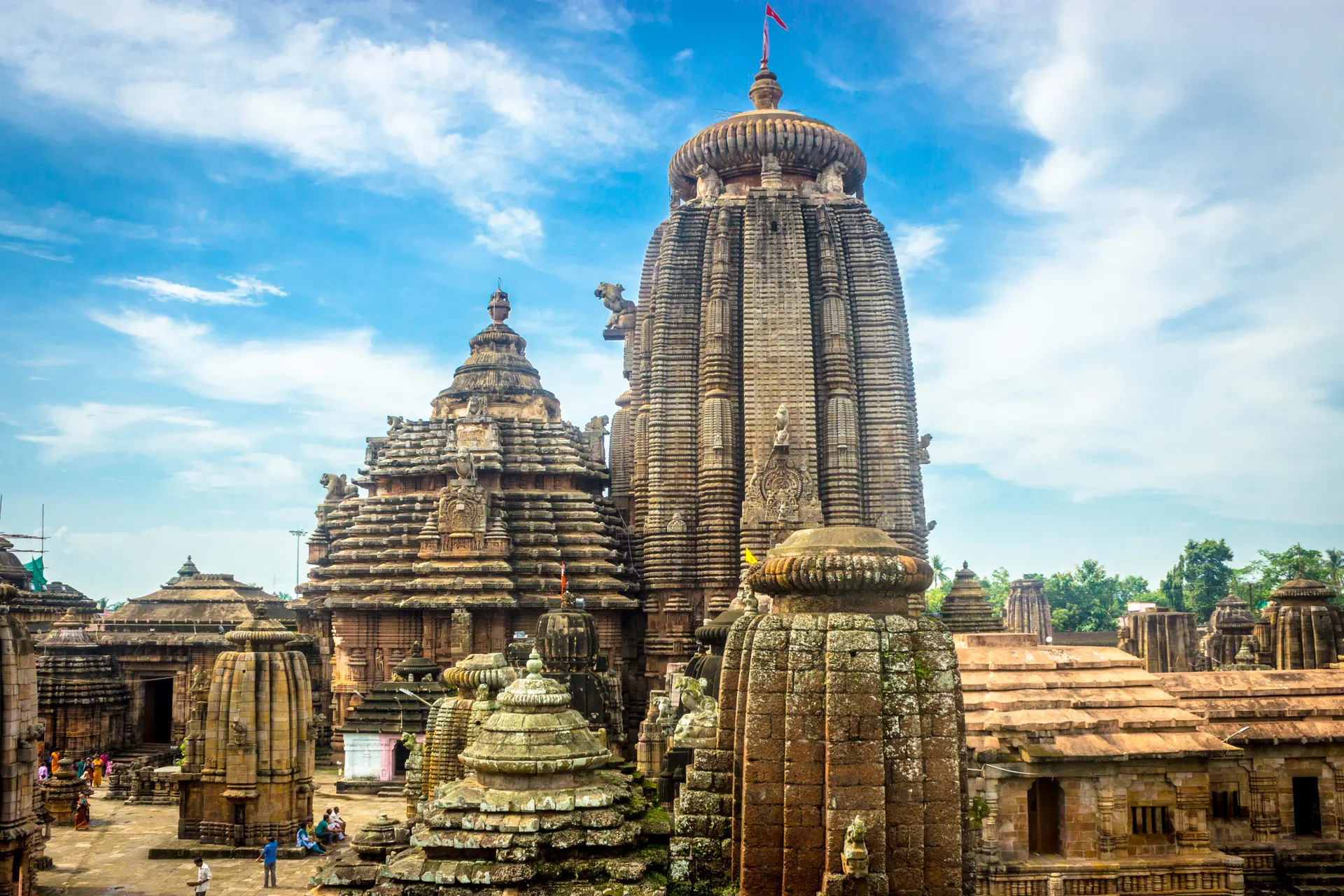
Lingaraj Temple, Bhubaneswar, Odisha
Bhubaneswar Municipal Corporation, Odisha, India
2.1 km away
References
Sources consulted for this page. Source categories describe the publication, not a guarantee that every claim is verified. Traditional accounts and outside interpretations may differ.
- 01Bhaskaresvara Temple – A Debated Shrine | Puratattva — Puratattva (Indian heritage research site)academicDetailed architectural and historiographic analysis; discusses absence of jagamohana, two-tier bada, and Ashokan-pillar lingam debate.
- 02Lingaraja Temple — Wikipedia — Wikipedia contributorsacademicContext for Bhubaneswar's Shaiva temple complex and the Lingaraj (Chandrasekhar) processional tradition.
- 03Bhaskareswara Temple, Bhubaneswar - Timings, History, Architecture, Best Time to Visit — Trawell.inSource contextConfirms location near Brahmeswara Temple, Ganga-period attribution, best-time-to-visit Oct-Mar.
- 04Bhaskareswar Temple – The largest Shiva Linga of Bhubaneswar — East Indian TravellerSource contextConfirms 9 ft lingam, two-storey structure, 48 ft square platform, Magha Saptami Lingaraj visit ritual.
- 05Bhaskareswar Temple: A Historical and Architectural Marvel in Bhubaneswar — Odishan TemplesSource contextConfirms Maha Shivaratri as the major festival, name meaning (Bhaskara = sun), Kalinga style.
- 06Bhaskareswar / Bhaskaresvara Temple, Bhubaneswar, Odisha — Kevin StandageSource contextPhotographic documentation; notes Buddhist stupa railing pillar and lion capital found nearby, Mauryan antiquity.
- 07Bhaskareswar Temple, Bhubaneswar, Odisha, History, Timings — KiomoiSource contextLocation and access details: Tankapani Road, ~5.5 km from railway station, west-facing temple.
Photo gallery
3 curated photos
Pilgrim glossary
- Stupa
- A dome-shaped Buddhist monument that holds relics or marks a sacred place.
Share a photo
Help visitors recognize Bhaskareswara Temple, Bhubaneswar, Odisha. Every submission is reviewed before publication.