Bharateswar Temple, Odisha
Among the earliest temples of Bhubaneswar, where Odishan sacred architecture takes its first breath
Understand sacred places, explore living traditions, and learn how to engage respectfully with Pilgrim Map.
Access has not been verified. Check current local guidance before planning a visit.
Bhubaneswar Municipal Corporation, Odisha, India
Read the sources
Visit essentials
A quick read before you go
- Duration
- About 30–60 minutes, ideally combined with the neighbouring temples.
- Access
- In the old town of Bhubaneswar, in a row east of (opposite) the Rameswar temple, on the road…
Overview
Every great tradition has a beginning, and the Bharateswar Temple stands very near the beginning of one of India's most accomplished. It is the central shrine of a trio — Lakshmaneswar to the north, Bharateswar in the middle, Shatrughneswar to the south — named after the brothers of Rama, and together they count among the earliest surviving temples in Bhubaneswar, the sacred Ekamra kshetra.
Built in the later sixth century under Sailodbhava rule, they represent the first standing expressions of the Odishan, or Kalinga, style of temple architecture that would later flower into the soaring forms of Parsurameswar and the great Lingaraja.
The temple is compact and early. Its rekha vimana — the curvilinear tower of the early Kalingan order — is in sandstone, west-facing on a tri-ratha plan, with a Shivalinga set within a circular yonipitha at its heart. On the raha, the central projecting face, carved chaitya windows hold Ravananugraha below and Nataraja above: Shiva's grace and his cosmic dance, expressed at the very dawn of Odishan temple iconography.
The structure has been heavily reconstructed by the Archaeological Survey of India and State Archaeology, so that original and restored fabric now stand together, and the date within the sixth century cannot be precisely fixed.
It is a place of mixed life. As a protected monument it is studied and conserved; as a shrine it still receives worship, with Shivratri observed and the city's living devotion reaching it each year when the movable image of Lingaraja visits the neighbouring Rameshwara temple at Ashokashtami, honouring this row of shrines as the oldest sacred ground in the town.
Why this place is sacred
Bharateswar's significance is that of an origin point. To stand before it is to stand before the earliest surviving temples of one of India's great temple cities, at the moment when a whole architectural language was first being spoken in stone. The early Kalingan rekha vimana, the carved chaitya windows with Ravananugraha and Nataraja, the linga in its circular yonipitha — these are first words of a tradition that would grow into the masterpieces nearby.
The sanctity is not only architectural. As the oldest temple site of the Ekamra kshetra, its continuing holiness is reaffirmed each year when Lord Lingaraja's image is brought to the adjacent Rameshwara temple at Ashokashtami. That living link binds the city's grandest temple to its oldest, and keeps the trio from becoming mere ruins. For one who cares about how the sacred takes form, this quiet row of shrines opposite the Rameswar temple holds an unusual weight.
A Shiva temple built under Sailodbhava rule in the later sixth century, the central shrine of a trio dedicated to Shiva and named for the Ramayana heroes, among the first temples of the Ekamra kshetra.
Constructed in the early Kalingan rekha-vimana style in sandstone, the temple is among the earliest extant in Bhubaneswar. Over the centuries it fell partly to ruin and was extensively reconstructed by the Archaeological Survey of India and State Archaeology, so that original and restored fabric now coexist. It remains a protected monument where Shaiva worship continues, and its antiquity is honoured each year through Lingaraja's Ashokashtami procession to the neighbouring Rameshwara temple.
Experience and orientation
The temple is modest in scale and quiet in setting, standing in a row east of the Rameswar temple on the old-town road that leads toward the great Lingaraja. Visitors note its compact early Kalingan sandstone form and the carved chaitya windows on the raha — Ravananugraha below, where Ravana shakes Mount Kailasa and Shiva presses it down in grace, and Nataraja above, Shiva in his cosmic dance.
For anyone drawn to sacred architecture, the felt experience is one of witnessing origins: these are the first temples of a tradition that produced some of the finest religious building in India.
The atmosphere rewards slow looking. Approach the trio together — Lakshmaneswar, Bharateswar and Shatrughneswar — read the early carvings, and notice how much of the later Odishan grammar is already present in seed. If you come during Maha Shivratri the linga receives worship; the rest of the year the place is largely quiet, a monument to study and a small shrine to touch.
Find the temple in the old town of Bhubaneswar, in a row opposite the Rameswar temple, on the road from Kalpana Chowk toward the Lingaraja temple. View the three shrines of the group together and study the early carvings on the raha. Do not touch the ancient sandstone surfaces. If entering the sanctum to worship the linga, remove footwear.
Allow time to walk on to the neighbouring Parsurameswara and Lingaraja temples to see how the tradition that begins here later developed.
Context and lineage
The temple was constructed in the later half of the sixth century CE under Sailodbhava rule, with no single named builder, as part of a trio of shrines named after the Ramayana heroes Lakshmana, Bharata and Shatrughna. As the oldest temple site in the town, its continuing sanctity is marked by Lingaraja's annual Ashokashtami visit to the neighbouring Rameshwara temple.
The group is variously called the Shatrughneswar group or the Bharateswar/Lakshmaneswar/Shatrughneswar group, and is described both as ruined and as extensively reconstructed by the ASI and State Archaeology — the precise construction date within the sixth century, and the extent of original versus restored fabric, remain partly uncertain.
Shaivism within Hinduism, in the early Kalingan temple tradition, at the foundational moment of Odishan sacred architecture; carried forward through conservation and continuing Shaiva observance.
The Sailodbhava dynasty
Founding patrons
Shiva (as the linga)
Presiding deity
Lingaraja (processional image)
Visiting deity
Archaeological Survey of India / State Archaeology
Conservators
Traditions and practice
Shaiva worship of the linga continues, with Maha Shivratri observed at the site. The movable image of Lingaraja is brought to the nearby Rameshwara temple at Ashokashtami (March–April), honouring the group as the oldest sacred site of the town.
The temple is maintained as a protected monument with continuing Shaiva observance. Visitors come both as worshippers, who may quietly worship at the linga, and as students of sacred architecture drawn by the early carvings.
Approach the trio slowly and attentively, reading the raha carvings of Ravananugraha and Nataraja and letting the early forms register as the beginnings of a great tradition. If you worship, do so quietly at the linga. Visit during Maha Shivratri or Ashokashtami to see the living devotion that still touches these ancient stones.
Shaivism (Hinduism)
ActiveDedicated to Shiva, enshrined as a Shivalinga set within a circular yonipitha. Bharateswar is the central shrine of a trio — Lakshmaneswar (north), Bharateswar (centre) and Shatrughneswar (south) — named after the Ramayana heroes and counted among the earliest surviving temples in Bhubaneswar, the sacred Ekamra kshetra.
Observance of Shivratri; the movable image of Lingaraja is brought to the nearby Rameshwara temple at Ashokashtami (March–April), honouring this as the oldest sacred site of the town.
Perspectives and open questions
Bharateswar is approached at once as an art-historical origin point and as a living link to the city's oldest sanctity; both readings stand together.
Scholarly perspective
Art historians regard the Bharateswar/Lakshmaneswar/Shatrughneswar group as the earliest extant temples of Bhubaneswar, built under Sailodbhava rule in the sixth century in the early Kalingan rekha-vimana style, foundational to the development of Odishan temple architecture; the structures have been extensively reconstructed by the ASI and State Archaeology.
Living and traditional perspectives
Devotees honour the temples named for the Ramayana heroes as the oldest sanctity of the Ekamra kshetra, a status reaffirmed by Lingaraja's annual Ashokashtami visit to the adjacent Rameshwara temple.
Alternative interpretations
The pairing of Ravananugraha and Nataraja on the raha is read as expressing Shiva's grace and his cosmic dance at the very dawn of Odishan temple iconography.
Open questions
The precise construction date within the sixth century and the extent of original versus reconstructed fabric remain partly uncertain.
Plan your visit
Access and arrival
In the old town of Bhubaneswar, in a row east of (opposite) the Rameswar temple, on the road leading from Kalpana Chowk toward the Lingaraja temple; easily reached within the temple city.
Bhubaneswar offers a full range of accommodation; the old-town temple cluster is central and easily reached.
Respectful visit
Modest dress; footwear removed if entering the sanctum.
Generally permitted of the monument; avoid touching carved surfaces.
Simple offerings during Shivratri and ordinary worship.
Do not touch or deface the ancient sandstone carvings; respect conservation rules and ASI/State Archaeology signage.
This is an archaeologically significant early temple under protection; do not touch or deface the ancient sandstone carvings, and respect conservation rules.
Current practical details
Address
7R3P+8H8, Bhubaneshwar Marg, Nageswar Tangi, Old Town, Bhubaneswar, Odisha 751002, India
Hours, fees, and access can change — verify on the official source before you travel. Practical details last checked Jun 2026.
Location
Map loads as you approach this section.
Pilgrim reflections
A portrait of encounter, not a score
Pilgrims describe what they felt, how present they could become, and whether the place would shape a journey. There are no stars and no ranking of traditions.
No reviewed reflections yet
The first pilgrims can help describe the character of being here.
Share a reflection
Available after an account-backed “Been there.” Every reflection is reviewed before publication.
Nearby sacred places
Explore other sacred places in the region. Proximity does not establish access or travel time; check each place’s guidance.

Ananta Vasudeva Temple, Bhubaneswar, Odisha
Bhubaneswar Municipal Corporation, Odisha, India
1.4 km away
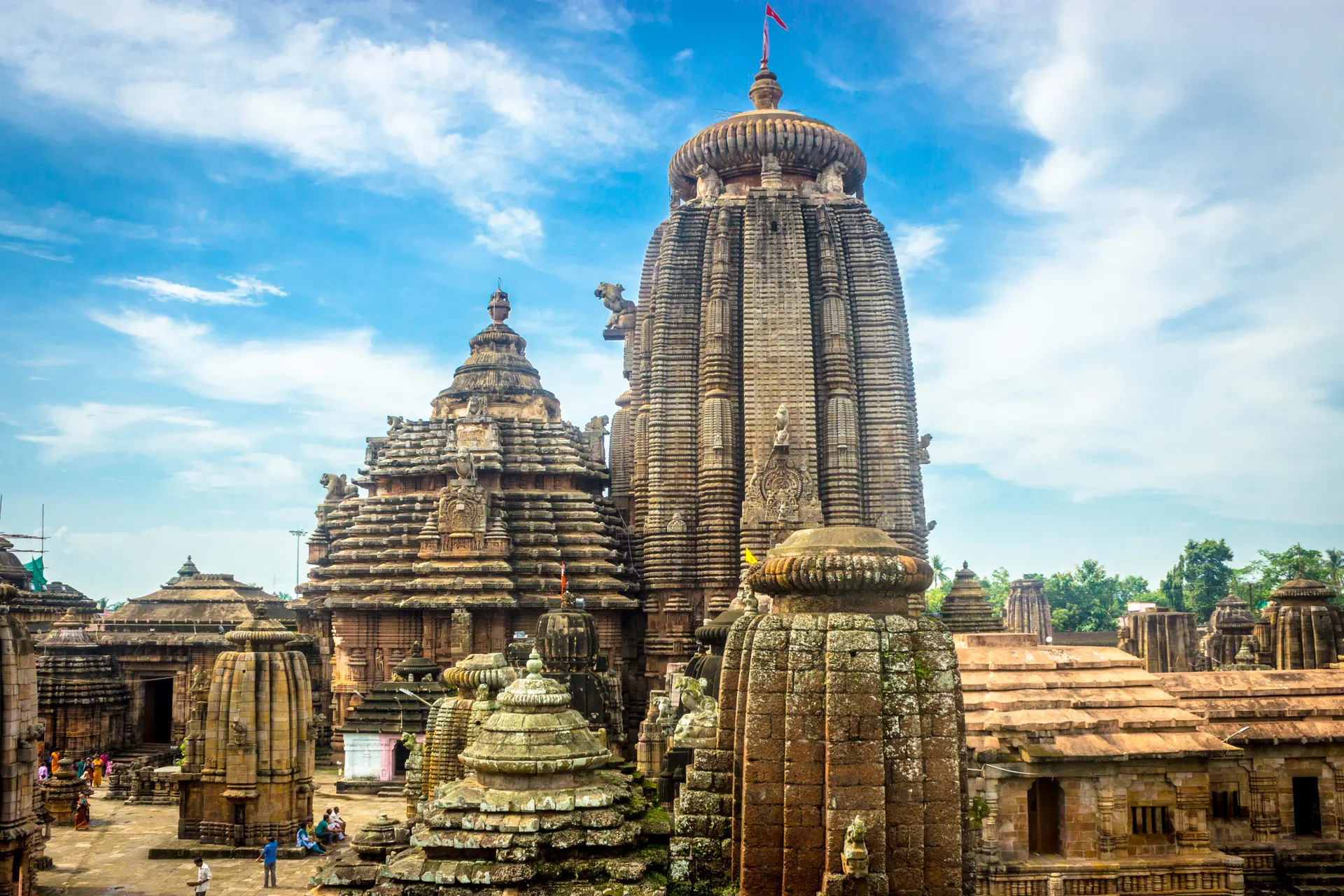
Lingaraj Temple, Bhubaneswar, Odisha
Bhubaneswar Municipal Corporation, Odisha, India
1.7 km away

Bhaskareswara Temple, Bhubaneswar, Odisha
Bhubaneswar Municipal Corporation, Odisha, India
2.0 km away

Brahmeswara Temple, Bhubaneshwar, Odisha
Bhubaneswar Municipal Corporation, Odisha, India
2.2 km away
References
Sources consulted for this page. Source categories describe the publication, not a guarantee that every claim is verified. Traditional accounts and outside interpretations may differ.
- 01Bharateswar Temple — Wikipedia — Wikipedia contributorsacademic6th-century Shiva temple in Bhubaneswar built under Sailodbhava rule; rekha vimana of early Kalingan order in sandstone; raha carved with Ravananugraha (lower) and Nataraja (upper) chaitya windows; west-facing tri-ratha plan; Shivalinga in a circular yonipitha; Shivratri observed.
- 02Shatrughneswara Group of Temples — Puratattva — Puratattva (Indian art & archaeology)academicArt-historical account of the trio of 6th-century Sailodbhava temples — the earliest extant temples in Bhubaneswar — and the early evolution of Odishan (Kalinga) architecture culminating in Parsurameswar.
- 03Bharateswar, Lakshmaneswar, Shatrughneswar Temple — Odisha Tour — OdishaTour.inSource contextDescribes the three temples standing in a row east of Rameswar temple, north-south aligned, and the Ashokashtami connection with Lingaraja.
- 04Bharateswar Temple Bhubaneswar, Odisha — TourMyIndia — TourMyIndiaSource contextLocation near Lingaraja temple, history and visitor information for the Bharateswar temple.
- 05Bharateswar, Lakshmaneswar & Shatrughneswar Temple, Bhubaneswar — Pravase — PravaseSource contextDescribes the group opposite Rameswar temple and its place in Bhubaneswar's temple heritage.
- 06Bharateswar Temple, Bhubaneswar, Odisha — Orissa Guide — Orissa GuideSource contextHistory, architecture and location of the Bharateswar Shiva temple.
Photo gallery
3 curated photos
Share a photo
Help visitors recognize Bharateswar Temple, Odisha. Every submission is reviewed before publication.