Lingaraj Temple, Bhubaneswar, Odisha
The Harihara of Ekamra Kshetra — Shiva and Vishnu in one lingam, apex of Kalinga temple architecture
Understand sacred places, explore living traditions, and learn how to engage respectfully with Pilgrim Map.
Access has not been verified. Check current local guidance before planning a visit.
Bhubaneswar Municipal Corporation, Odisha, India
Read the sources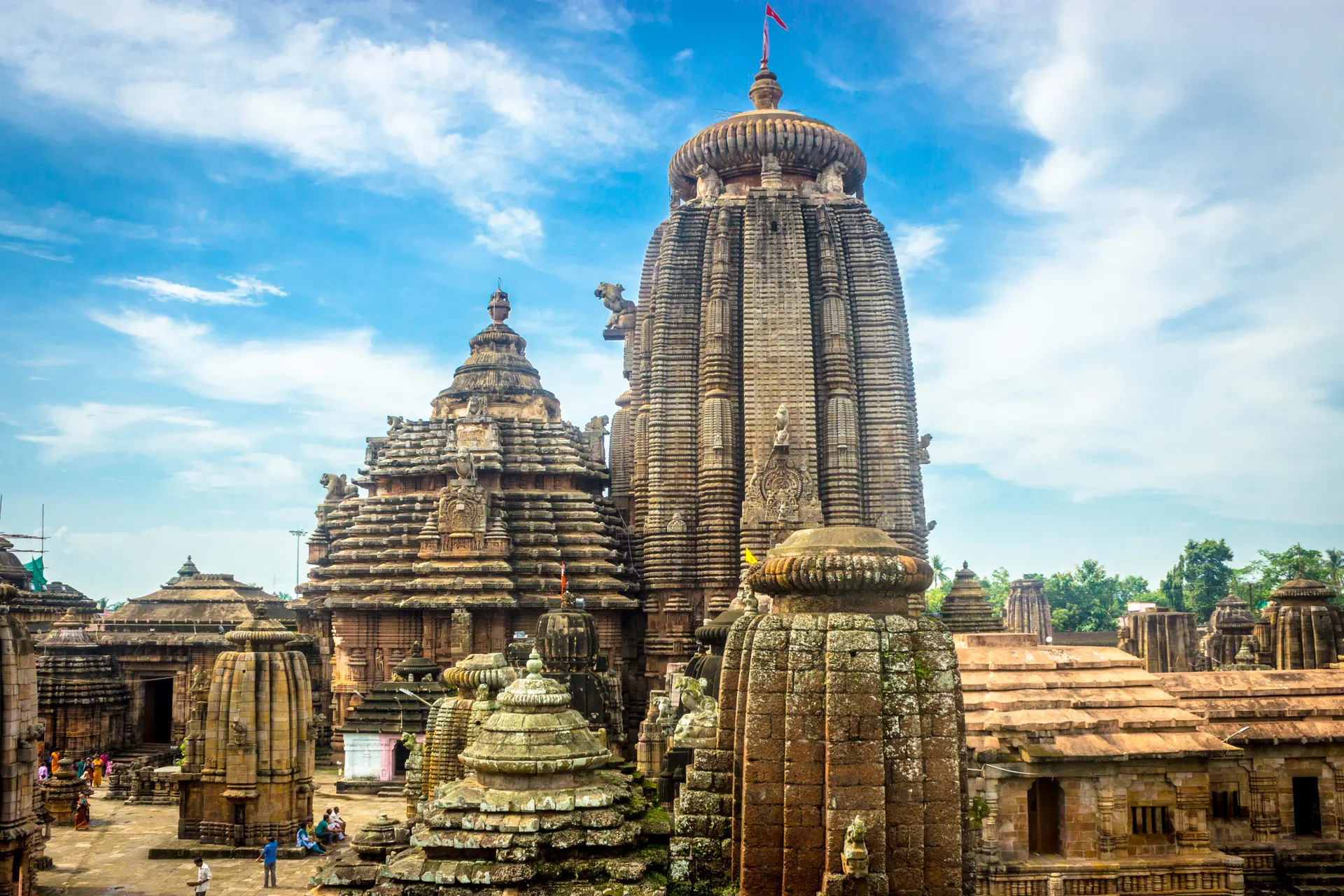
Visit essentials
A quick read before you go
- Duration
- Allow 2–3 hours at the temple for Hindu visitors (or 30–45 minutes from the viewing platform for…
- Access
- Old Town Bhubaneswar, near Bindusagar tank.
Overview
Bhubaneswar is the Temple City of India: more than 700 medieval Hindu shrines stand within an old urban core that the Puranas call Ekamra Kshetra — the realm of the single mango grove where Shiva is said to have resided. At its centre rises Lingaraj.
Its approximately 55-metre vimana (sanctum tower), built in the late eleventh century under the Somavamshi Keshari king Jajati II, is the apex of mature Kalinga (Odisha) temple architecture and the immediate precursor of the Jagannath Temple at Puri and the Sun Temple at Konark — together forming Odisha's Golden Triangle of medieval temple-building.
The presiding deity is unusual: a self-manifest (svayambhu) lingam approximately eight feet across, worshipped as Harihara — half Shiva, half Vishnu. Daily ritual brings the lingam mahasnana (great bath) with milk and Bindusagar water, panchamrita and sandalwood paste, bhang preparation (a tantric overlay common to Odisha and Bengal Shaivism), and bilva-patra. Six-time bhoga offerings flow through the day. The lingam is dressed in fresh garments and flowers at each session.
Like the rare Shaiva-Vaishnava combination it embodies, the temple's annual cycle includes both Mahashivratri and Ashokashtami — a Rukuna Ratha Yatra that mirrors, in smaller scale, the great Jagannath chariot festival at Puri.
One practical particularity sets Lingaraj apart from most other major Indian temples on this list: non-Hindus are not permitted inside the compound. A raised platform built outside the north wall — constructed for Indira Gandhi's visit in the 1970s — allows non-Hindu visitors to view the temple and the vimana clearly. The restriction is strictly enforced.
Why this place is sacred
Lingaraj concentrates several distinct elements. The svayambhu lingam — approximately eight feet across, broader than most jyotirlingams — is bathed daily and dressed in textile and flower through the day; pilgrims describe the unusual scale and presence of the deity as the temple's most striking feature. The aroma inside the inner sanctums (for those permitted entry) is a layered compound of bhang preparation, sandalwood, and camphor — a sensory signature distinct from other major Shaiva temples.
The Bindusagar tank, ~1.3 km in perimeter immediately north of the temple, is said in tradition to contain water from every sacred river of India; a bath there is treated as a microcosmic pilgrimage to all sacred waters. And the surrounding ring of contemporary 10th–13th-century temples — Mukteshwar, Rajarani, Parasurameshwar, Vaital Deula, Brahmeshwar — forms the densest cluster of medieval Hindu temples in India, with Lingaraj at its devotional and architectural centre.
The centre of the Ekamra Kshetra Shaiva sacred zone — Shiva as Harihara, self-manifest in a svayambhu lingam in the mango grove of Bhubaneswar.
The site was already a sacred Shaiva centre — the precursor shrine is referenced in earlier Puranic and inscriptional sources as Kirtivasa or Tribhubaneswar. The present temple was built in the late 11th century, principally under the Somavamshi Keshari king Jajati II, with possible earlier elements under Jajati I (10th c.). Additions (the natamandira and bhogamandapa) were made under the Eastern Ganga dynasty in the 12th–13th centuries.
The four-part Pancharatha temple (vimana + jagamohana + natamandira + bhogamandapa) becomes the template for the later Jagannath at Puri (12th c.) and the Sun Temple at Konark (13th c.).
Experience and orientation
Lingaraj rewards careful approach. Hindu devotees typically begin with a bath at Bindusagar tank before entering the compound — the tank's claim to hold water from every sacred river of India makes the bath itself a small pilgrimage. Inside, the svayambhu lingam is approached closely; its unusual breadth, the layered dressing of textile and flower that builds through the day, and the distinctive aroma of bhang preparation mixed with sandalwood and camphor are the sensory features most pilgrims comment on.
The aarti rhythm — with the moveable utsava murti carried out for procession at major festivals — is one of the more spacious in Odisha Shaivism.
Non-Hindu visitors are directed to the raised viewing platform outside the north wall. The platform offers a clear elevated view of the ~55-metre vimana and the temple compound's main axis, though obviously not of the inner ritual. For visitors familiar with Hindu architectural vocabulary, the platform view is sufficient to read the mature Kalinga style — the curvilinear shikhara, the deep horizontal courses, the relationship between the vimana and the adjoining jagamohana.
The platform is open during temple hours; photography from the platform is permitted (unlike inside the compound, where it is strictly prohibited). Many non-Hindu visitors pair the platform view with a walking circuit of the surrounding Ekamra Kshetra temples — Mukteshwar, Rajarani, Parasurameshwar, Vaital Deula — all of which are fully open to all visitors.
For Hindu visitors: allow 2–3 hours at the temple, including the Bindusagar bath. For non-Hindu visitors: 30–45 minutes from the viewing platform. The full Ekamra Kshetra walking circuit through Bhubaneswar's medieval temples takes a full day on foot. Early-morning mahasnana (5–6 AM) is the most peaceful darshan; for the most distinctive Lingaraj festival, visit during Ashokashtami / Rukuna Ratha Yatra (March–April) when the utsava murti processes in a chariot.
Context and lineage
Odisha Shaiva tradition tells of Shiva's residence in the Ekamra mango grove. Two demons, Litti and Vasa, harassed the goddess Parvati, who took the form of an old woman, defeated them, and asked Shiva for water; he caused the Bindusagar tank to appear — a great pool said to contain water from every sacred river of India.
Shiva then chose to remain at Bhubaneswar as Tribhubaneswar (lord of the three worlds) in the form of a svayambhu lingam in the mango grove. The Lingaraj's combined Harihara identity is explained by Shiva's invitation to Vishnu to dwell with him in the same lingam to reconcile a Shaiva-Vaishnava dispute.
Shaiva Hinduism (Harihara form) within the Odisha Shaiva-Vaishnava synthesis of Ekamra Kshetra; tantric Shakta-Shaiva overlay common to Odisha and Bengal Shaivism.
Jajati Keshari (Jajati II, late 11th c.)
The Somavamshi Keshari king under whom the present temple was principally built — the apex of mature Kalinga temple architecture
Eastern Ganga dynasty (12th–13th c.)
Added the natamandira and bhogamandapa, completing the four-part Pancharatha temple plan
K. C. Panigrahi (1909–1992)
Archaeologist whose 'Archaeological Remains at Bhubaneswar' (1961) established the modern scholarly understanding of the Somavamshi-Keshari sequence at Ekamra Kshetra
Thomas Donaldson
Art-historian whose three-volume 'Hindu Temple Art of Orissa' (1985–87) is the authoritative scholarly treatment of Lingaraj's place in mature Kalinga style
Lingaraj Temple Managing Committee
Current administering body under the Odisha Endowments Department
Traditions and practice
Daily mahasnana of the lingam at dawn with milk, Bindusagar water, panchamrita, bhang preparation, sandalwood paste, vibhuti, and bilva-patra; six-time bhoga (food offerings) through the day including the famous dahi-pakhala (curd-rice) prasad; daily aarti morning and evening; lingam dressed in fresh garments and flowers at each session.
Temple open 5 AM–9 PM (subject to ritual schedule, with closures during specific abhishekams). Major festivals: (1) Mahashivratri (Feb/Mar) — overnight jagran, multi-prahara Rudri-path. (2) Ashokashtami / Rukuna Ratha Yatra (March–April, the eighth day after Chaitra Shukla) — utsava murti of Lingaraja processed in a chariot to Rameshwar Deula and back four days later. (3) Chandan Yatra (April–May) — utsava murti bathed in sandal paste in a boat at Bindusagar through 22 days.
(4) Shravan Month (July–August) — Mondays heavily attended.
For Hindu pilgrims completing the Ekamra Kshetra circuit, walking from Lingaraj through Mukteshwar, Rajarani, Parasurameshwar, and Vaital Deula in a single afternoon traces the development of Kalinga temple architecture across three centuries. For non-Hindu visitors, the viewing platform plus the surrounding Ekamra Kshetra temples — all fully open — offers the same architectural reading. For the most distinctive ritual experience, visit during Ashokashtami / Rukuna Ratha Yatra (March–April).
Shaiva Hinduism (Harihara — combined Shiva-Vishnu form)
ActiveLingaraj is the principal temple of Bhubaneswar and the architectural and spiritual centre of the Ekamra Kshetra. The presiding deity is a self-manifest svayambhu lingam approximately 8 ft in diameter, worshipped as Harihara — half Shiva and half Vishnu — a rare combined form.
Daily mahasnana of the lingam with milk, Bindusagar water, bhang preparation, and bilva-patra; recitation of Shiva Mahimna Stotra and Rudri-path; daily six-time bhoga; procession of the utsava murti at major festivals.
Odisha Shaiva-Vaishnava synthesis (Ekamra Kshetra)
ActiveBhubaneswar — historically Ekamra Kshetra — is one of the few Indian sacred zones where Shaiva and Vaishnava devotion are formally fused at the deity level. The Lingaraja's Harihara identity is the most prominent of these fusions; ritual cycles include both Shaiva (Mahashivratri) and Vaishnava (Ashokashtami, Rukuna Ratha Yatra) festivals. Bhang offerings reflect a tantric overlay common in Odisha and Bengal Shaivism.
Ashokashtami (March–April) — Rukuna Ratha Yatra (chariot festival) mirroring the much larger Jagannath Ratha Yatra at Puri; Mahashivratri night vigil; Chandan Yatra during summer.
Perspectives and open questions
Lingaraj is read in art-historical scholarship as the apex of mature Kalinga architecture; in Odia Shaiva tradition as the chosen residence of Shiva in Ekamra Kshetra; and in tantric Shaiva-Shakta readings as the centre of a microcosmic mandala that includes the Bindusagar tank and the surrounding ring of temples.
Scholarly perspective
Art-historians and archaeologists treat Lingaraj as the apex of mature Kalinga (Odisha) temple architecture — the four-part Pancharatha temple (vimana + jagamohana + natamandira + bhogamandapa) becomes the template for the later Jagannath at Puri (12th c.) and the Sun Temple at Konark (13th c.). The Bhubaneswar temple city is among the densest concentrations of medieval Hindu temples in India and is on UNESCO's tentative World Heritage list as Ekamra Kshetra.
Living and traditional perspectives
Odia Shaiva tradition treats Bhubaneswar as Ekamra Kshetra, the chosen residence of Shiva, with Lingaraj as the centre. The svayambhu nature of the lingam — its self-manifestation rather than human installation — gives it exceptional ritual sanctity. The Harihara identity makes the temple uniquely welcoming to both Shaiva and Vaishnava pilgrims.
Alternative interpretations
Tantric Shaiva readings interpret the Bindusagar tank, with its claim of containing water from every sacred river of India, as a microcosmic mandala of Bharatavarsha — a single bath becomes a pilgrimage to all sacred waters. The Harihara form is read in Vedantic and tantric traditions as a non-dual teaching device — the apparent duality of Shiva and Vishnu resolved in one body. The bhang offering tradition reflects an old Shakta-Shaiva tantric overlay in Odisha and Bengal.
Open questions
The pre-Somavamshi history of the Lingaraj site is poorly documented; the precursor Kirtivasa shrine is attested only in inscriptions and traditional accounts. The exact dating between Jajati I (10th c.) and Jajati II (late 11th c.) is debated. The non-Hindu entry restriction's origin in living memory is uncertain — it is enforced as a long-standing tradition but its formal codification is not documented in early sources.
Plan your visit
Access and arrival
Old Town Bhubaneswar, near Bindusagar tank. Nearest railway: Bhubaneswar station (~5 km, the principal Odisha rail hub). Nearest airport: Biju Patnaik International Airport, Bhubaneswar (~7 km). Frequent autorickshaw, taxi, and city-bus service. Bhubaneswar is on the Howrah-Chennai trunk route.
Bhubaneswar has the full range of accommodation, from Odisha Tourism's Pantha Niwas guest houses to mid- and upper-range hotels. The city is the principal Odisha rail and air hub, making it a natural base for the Bhubaneswar–Puri–Konark Golden Triangle.
Respectful visit
Traditional dress strongly preferred: men in dhoti or kurta-pyjama (some priests may ask men to remove shirts before sanctum entry); women in sari, salwar-kameez, or modest western clothing with shoulders and knees covered.
Strictly prohibited inside the temple compound. Permitted from the viewing platform north of the temple and around Bindusagar tank.
Bilva leaves, lotus, bhang preparation (traditional but optional), milk, Bindusagar water, panchamrita, sandalwood paste, and traditional Odia sweets. Offerings through the temple priests or into the official hundi.
Non-Hindus not permitted inside the compound — strictly enforced. Use the viewing platform outside the north wall. Inside, no leather (belts, wallets deposited), no shoes, no cameras or videography, and mobile phones often deposited at the entrance.
Non-Hindus are not permitted inside the temple compound — strictly enforced. Use the viewing platform outside the north wall. Photography is strictly prohibited inside the compound; permitted from the platform and around Bindusagar tank. Bhang preparation is a traditional ritual offering — pilgrims unfamiliar with this should simply be aware of it rather than concerned.
Current practical details
Address
Lingaraj Temple Rd, Lingaraj Nagar, Old Town, Bhubaneswar, Odisha 751002, India
Hours
Hours, fees, and access can change — verify on the official source before you travel. Practical details last checked Jun 2026.
Location
Map loads as you approach this section.
Pilgrim reflections
A portrait of encounter, not a score
Pilgrims describe what they felt, how present they could become, and whether the place would shape a journey. There are no stars and no ranking of traditions.
No reviewed reflections yet
The first pilgrims can help describe the character of being here.
Share a reflection
Available after an account-backed “Been there.” Every reflection is reviewed before publication.
Nearby sacred places
Explore other sacred places in the region. Proximity does not establish access or travel time; check each place’s guidance.

Ananta Vasudeva Temple, Bhubaneswar, Odisha
Bhubaneswar Municipal Corporation, Odisha, India
0.3 km away

Bharateswar Temple, Odisha
Bhubaneswar Municipal Corporation, Odisha, India
1.7 km away

Brahmeswara Temple, Bhubaneshwar, Odisha
Bhubaneswar Municipal Corporation, Odisha, India
1.9 km away

Bhaskareswara Temple, Bhubaneswar, Odisha
Bhubaneswar Municipal Corporation, Odisha, India
2.1 km away
References
Sources consulted for this page. Source categories describe the publication, not a guarantee that every claim is verified. Traditional accounts and outside interpretations may differ.
- 01Lingaraja Temple — Wikipedia — Wikipedia contributorsencyclopediaComprehensive overview: 11th-century Somavamshi foundation, Kalinga / Nagara architectural style, ~55 m vimana, four-part structure (vimana, jagamohana, natamandira, bhogamandapa), Harihara identity, non-Hindu entry restriction with viewing platform built for Indira Gandhi's visit.
- 02K. C. Panigrahi, 'Archaeological Remains at Bhubaneswar' (1961) — K. C. Panigrahi / Orient LongmanacademicFoundational archaeological study of the Bhubaneswar temple city (Ekamra Kshetra), the Somavamshi-Keshari dynastic patronage, and the Lingaraj-Mukteshwar-Rajarani sequence.
- 03Thomas Donaldson, 'Hindu Temple Art of Orissa' (3 vols, 1985-87) — Thomas E. Donaldson / E. J. BrillacademicAuthoritative scholarly treatment of Orissan temple architecture; places Lingaraj at the centre of mature Kalinga style and connects it to the later Jagannath at Puri and Sun Temple at Konark.
- 04Archaeological Survey of India — Bhubaneswar circle, Lingaraj Temple — Archaeological Survey of IndiaofficialASI-protected monument; the surrounding Bhubaneswar temple city forms one of India's densest concentrations of medieval Hindu temples.
- 05Odisha Tourism — Lingaraj Temple — Odisha Tourism DepartmentofficialOfficial tourism description: location, Bindusagar tank, Rukuna Ratha Yatra (chariot festival), darshan timings, viewing platform for non-Hindu visitors.
- 06Bhubaneswar — Wikipedia — Wikipedia contributorsencyclopediaContext on Bhubaneswar as the Temple City of India, the Ekamra Kshetra sacred zone, and the Somavamshi capital.
- 07Vidya Dehejia, 'Indian Art' (Phaidon, 1997) — Vidya Dehejia / Phaidon PressacademicStandard art-history textbook treating Lingaraj as the apex of mature Kalinga architecture and a key precursor of the Konark Sun Temple.
- 08Lingaraj Temple — Tripadvisor visitor reviews and notes — Tripadvisor / Indian travel communityguideReported logistics: non-Hindu viewing platform north of the compound, festival crowd patterns, Bindusagar bathing context, dress and photography rules.
Photo gallery
4 curated photos
Pilgrim glossary
- Mandala
- A symbolic diagram of the cosmos used in meditation and ritual.
Share a photo
Help visitors recognize Lingaraj Temple, Bhubaneswar, Odisha. Every submission is reviewed before publication.