Ananta Vasudeva Temple, Bhubaneswar, Odisha
Bhubaneswar's one great Vaishnava temple, where Krishna stands complete by the holy Bindu Sagar
Understand sacred places, explore living traditions, and learn how to engage respectfully with Pilgrim Map.
Access has not been verified. Check current local guidance before planning a visit.
Bhubaneswar Municipal Corporation, Odisha, India
Read the sources
Visit essentials
A quick read before you go
- Duration
- 30–60 minutes; longer if combined with the surrounding Old Town temple cluster.
- Access
- Old Town, Bhubaneswar, on the eastern bank of the Bindu Sagar tank, about 4.5 km from…
Overview
In Bhubaneswar’s predominantly Shaiva sacred landscape, Ananta Vasudeva is the one major Vaishnava temple: an Eastern Ganga sanctuary raised by Princess Chandrika Devi in 1278 CE on holy Bindu Sagar’s eastern bank. Unlike Puri’s abstract, unfinished Jagannath trinity, Krishna as Vasudeva, Balarama, and Subhadra appear here in complete black-granite iconographic form; the name evokes infinite Vishnu reclining on Ananta-Shesha. Its quieter living devotion centres on a kitchen that still cooks prasad in the Jagannath manner.
Pilgrims traditionally seek Ananta-Vasudeva’s sanction before religious duties in the town, and non-Hindus are generally welcomed, unlike at the more restrictive Puri temple.
Why this place is sacred
The thinness of Ananta Vasudeva gathers around three things: its place on the sacred Bindu Sagar tank, the ritual heart of Old Town Bhubaneswar; the complete black-granite trinity of Krishna, Balarama and Subhadra, reflecting the cosmic serpent Ananta on whom Vishnu reclines; and more than seven centuries of continuous living worship.
As the one Vaishnava sanctuary in an overwhelmingly Shaiva landscape, it offers a contemplative counterpoint to the bustle of the Lingaraj nearby — a quieter presence by still water, where the shared prasad meal gives communal devotion a tangible form.
A Vaishnava temple built in 1278 to enshrine Hari (Vishnu) beside the Bindu Sagar, recorded by its founder Chandrika Devi in her own 23-verse inscription.
Raised under the Eastern Ganga dynasty in 1278 and later renovated in the Maratha era, the temple is today maintained as a protected monument by the Archaeological Survey of India, including steel reinforcement of its Jagamohana, while continuing as a functioning Vaishnava temple with daily worship and a large prasad kitchen.
Experience and orientation
Visitors often describe Ananta Vasudeva as a calmer counterpoint to the nearby Lingaraj Temple — less crowded, more contemplative, set by the still water of the Bindu Sagar tank. The black-granite trinity stands complete in the sanctum, and the Kalinga carvings of Vaishnava scenes reward close looking.
Much of the temple's living character is in its kitchen: the aroma and bustle of the earthen-pot prasad fills the precinct, and its distribution around midday draws a steady flow of devotees and locals. Sharing in that meal gives a tangible sense of communal devotion.
The temple stands in Bhubaneswar's Old Town on the eastern bank of the Bindu Sagar tank. Observe the usual etiquette on entry. Time a visit around midday (roughly 12–2 PM) to share in prasad, or early morning for a serene darshan.
Context and lineage
The temple was built in 1278 CE (Saka 1200), during the reign of Bhanudeva I, by Chandrika Devi, a daughter of Anangabhima Deva III of the Eastern Ganga dynasty, to enshrine Hari beside the Bindu-saras — as recorded in her own 23-verse Sanskrit foundation inscription. An earlier image of Vishnu is believed to have been venerated on the site before the 13th-century temple was raised over it.
Earlier scholarship had attributed the foundation to the Bhatta Bhavadeva inscription, until the scholar K. N. Mahapatra established the Chandrika inscription as the genuine foundation record.
Vaishnava Hinduism, distinct within the predominantly Shaiva sacred landscape of Bhubaneswar; built under Eastern Ganga royal patronage in mature Kalinga style.
Chandrika Devi
Founder and patron
Bhanudeva I
Eastern Ganga king
K. N. Mahapatra
Epigraphist
Maratha-era renovators
Later patrons
Traditions and practice
Eight daily bhog aratis, with food cooked in stacked earthen pots over wood fires in the manner of the Jagannath Temple at Puri, without onion or garlic.
Daily darshan and prasad distribution; the prasad is commonly purchased by locals for home rituals and functions, and Janmashtami draws large crowds and grand celebration.
Take darshan unhurriedly and let the kitchen be part of the experience — the earthen-pot prasad, served around midday, carries deep communal meaning, and sharing in it is a quiet way to participate. Sitting by the Bindu Sagar afterwards extends the contemplative mood.
Vaishnava Hinduism
ActiveThe only Vishnu/Krishna temple in predominantly Shaiva Bhubaneswar; it enshrines Krishna, Balarama and Subhadra in complete iconographic form, and pilgrims traditionally seek darshan here before beginning religious duties in the temple-town.
Daily bhog (eight aratis); prasad cooked in earthen pots without onion or garlic; Janmashtami celebrations.
Perspectives and open questions
Ananta Vasudeva is read both as a securely dated work of Kalinga architecture and as the living Vaishnava heart of a Shaiva town.
Scholarly perspective
A 13th-century Eastern Ganga Vaishnava temple in mature Kalinga (Nagara-Kalinga) style, securely dated to 1278 CE by the Chandrika foundation inscription; its plan and elevation echo the Lingaraj Temple but with Vaishnava iconography. The ASI maintains the structure, including steel reinforcement of the Jagamohana.
Living and traditional perspectives
Devotees regard the enshrined trinity as the living presence of Vishnu whose prior sanction is sought before pilgrimage in Bhubaneswar; the temple kitchen and prasad carry deep devotional and communal meaning.
Alternative interpretations
The name 'Ananta Vasudeva' evokes Vishnu in his infinite (ananta) form reclining on the cosmic serpent Ananta-Shesha.
Open questions
The precise nature of the pre-13th-century Vishnu image believed to have stood on the site, and the full original program of the now partly obscured carvings, remain uncertain.
Plan your visit
Access and arrival
Old Town, Bhubaneswar, on the eastern bank of the Bindu Sagar tank, about 4.5 km from Bhubaneswar Railway Station; easily reached by auto-rickshaw or taxi.
Bhubaneswar offers a full range of hotels and guesthouses across the city, with options near both the Old Town and the railway station.
Respectful visit
Modest or traditional clothing; head-covering customary before entering.
Not permitted inside the main sanctum; exterior architecture may generally be photographed.
Bhog/prasad offerings; flowers and devotional items are common.
Footwear removed before entry; respect ongoing rituals.
Cameras are not permitted in the main sanctum; respect ongoing rituals and the flow of prasad distribution.
Current practical details
Address
Gouri Nagar, Old Town, Bhubaneswar, Odisha 751002, India
Hours
Hours, fees, and access can change — verify on the official source before you travel. Practical details last checked Jun 2026.
Location
Map loads as you approach this section.
Pilgrim reflections
A portrait of encounter, not a score
Pilgrims describe what they felt, how present they could become, and whether the place would shape a journey. There are no stars and no ranking of traditions.
No reviewed reflections yet
The first pilgrims can help describe the character of being here.
Share a reflection
Available after an account-backed “Been there.” Every reflection is reviewed before publication.
Nearby sacred places
Explore other sacred places in the region. Proximity does not establish access or travel time; check each place’s guidance.
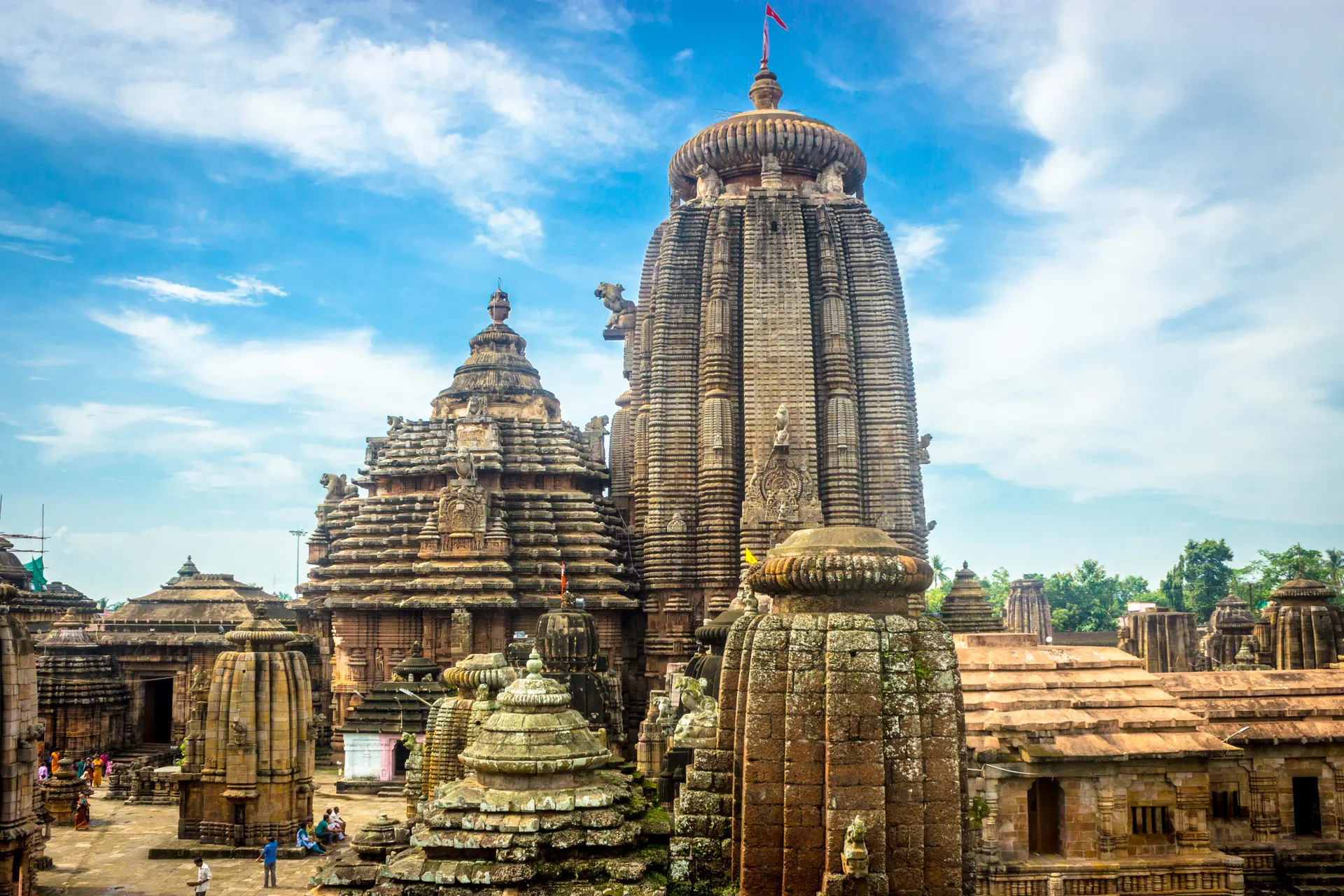
Lingaraj Temple, Bhubaneswar, Odisha
Bhubaneswar Municipal Corporation, Odisha, India
0.3 km away

Bharateswar Temple, Odisha
Bhubaneswar Municipal Corporation, Odisha, India
1.4 km away

Brahmeswara Temple, Bhubaneshwar, Odisha
Bhubaneswar Municipal Corporation, Odisha, India
1.7 km away

Bhaskareswara Temple, Bhubaneswar, Odisha
Bhubaneswar Municipal Corporation, Odisha, India
1.8 km away
References
Sources consulted for this page. Source categories describe the publication, not a guarantee that every claim is verified. Traditional accounts and outside interpretations may differ.
- 01Ananta Vasudeva Temple — Wikipedia — Wikipedia contributorsSource contextConfirms 1278 CE construction by Chandrika Devi, dedication to Krishna/Balarama/Subhadra, only Vaishnava temple in Shaiva Bhubaneswar, complete murtis vs. Puri Jagannath.
- 02Explore the Ananta-Vasudeva Temple in Bhubaneswar — Incredible India — Ministry of Tourism, Government of IndiaofficialOfficial tourism portal: Kalinga architecture, four chambers, black-granite idols.
- 03Ananta Vasudev temple inscription of Chandrika Devi — Odisha State Museum — Odisha State MuseumofficialGovernment museum record of the 23-verse Saka 1200 (1278 CE) Chandrika foundation inscription.
- 04Ananta-Vasudeva Temple — Misadventure of Inscriptions — PuratattvaacademicDiscusses K. N. Mahapatra's correction distinguishing Bhatta Bhavadeva inscription from the genuine Chandrika foundation inscription.
- 05Ananta Vasudeva Temple Bhubaneswar: Location, Timings, History, Entry Fee & Prasadam — Puri TourismSource contextTemple kitchen detail, prasad timing 12-2 PM, daily bhog, no onion/garlic, eight bhog arati.
- 06Ananta Vasudeva Temple, Bhubaneswar — Timings, History, Architecture, Best Time to Visit — Trawell.inSource contextVisiting hours 6 AM-8 PM daily, Kalinga shikharas, ASI maintenance.
- 07Ananta Vasudeva Temple — Bhubaneswar — Kevin StandageSource contextPhotographer's field notes; Jagamohana steel-girder reinforcement observation (epistemic marker).
Share a photo
Help visitors recognize Ananta Vasudeva Temple, Bhubaneswar, Odisha. Every submission is reviewed before publication.