Basilica di Santa Maria in Trastevere, Rome, Italy
Where oil once flowed as prophecy and golden mosaics crown the Queen of Heaven
Understand sacred places, explore living traditions, and learn how to engage respectfully with Pilgrim Map.
Access has not been verified. Check current local guidance before planning a visit.
Rome, Rome, Italy
Read the sources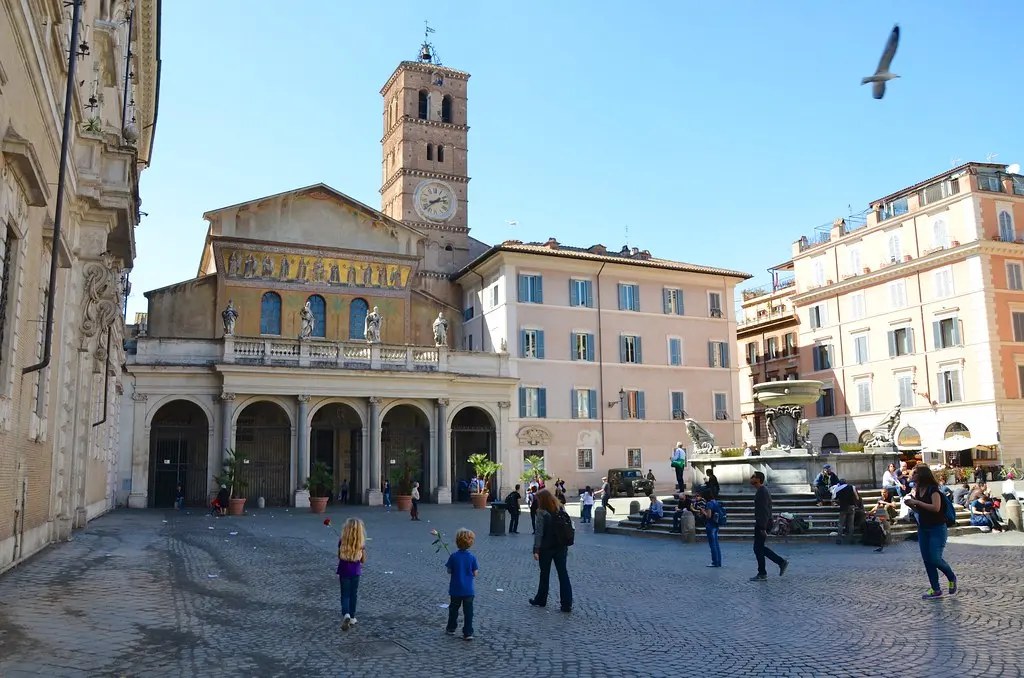
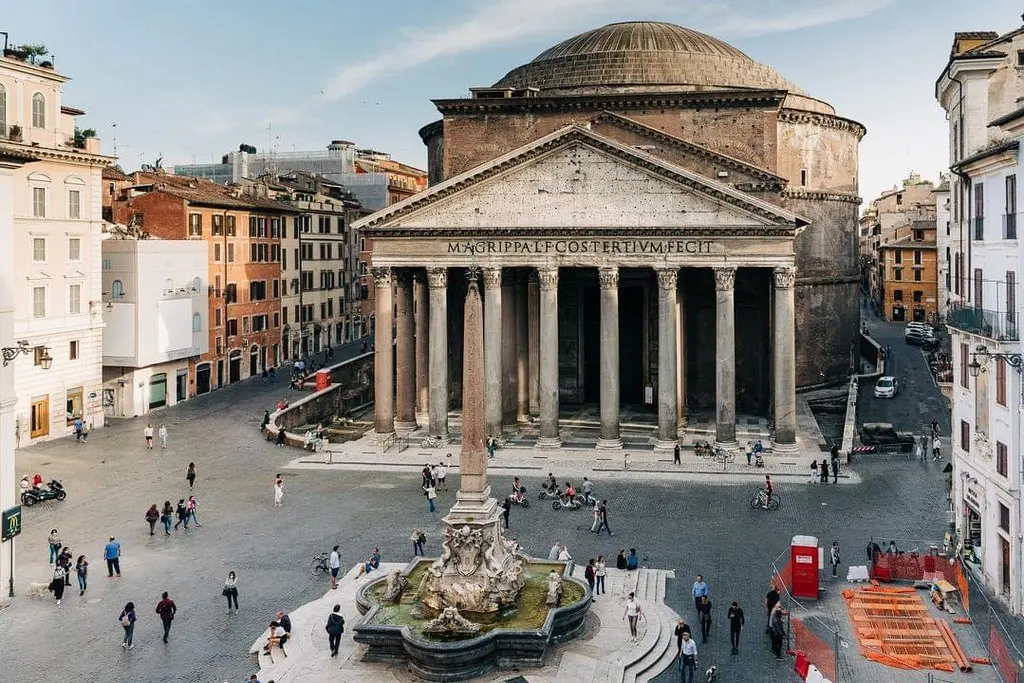
Image of Basilica di Santa Maria in Trastevere, Rome, Italy. Image source
Visit essentials
A quick read before you go
- Duration
- 30 minutes to 1 hour for the basilica.
- Access
- Tram 8 from Largo di Torre Argentina to Belli stop.
Overview
Santa Maria in Trastevere's piazza hums with families at the fountain, evening restaurants, and neighbourhood life. Beyond the portico and ancient columns, candlelit quiet, golden apse mosaics, and eighteen centuries of prayer create another world.
This may be Rome's first official Christian worship site and is certainly its oldest church dedicated to Mary. According to tradition, before any church stood here a spring of oil erupted in 38 BCE. Trastevere's Jewish community read it as the coming of the Anointed One; Christians later claimed the prophecy. A Cosmati column near the altar marks where the fons olei flowed.
The mosaics date from Pope Innocent II's twelfth-century rebuilding. Christ and Mary share the apse throne, she crowned Queen of Heaven in an image that shaped Marian iconography for centuries. Below, Cavallini's Life of the Virgin panels move from Byzantine formalism toward weighted, emotional figures and spatial depth, a naturalism Giotto would carry further. The possibly sixth-century Madonna della Clemenza is among Christianity's oldest surviving Marian images.
Why this place is sacred
Few sites in Rome offer such visible continuity across ages. The fons olei legend places sacred recognition at this location before Christ's birth. When oil allegedly flowed from the ground in 38 BCE, the Trastevere Jewish community—one of the oldest in Europe—understood it as messianic sign. The name itself became symbolic: fons olei, fountain of oil; Christos, the Anointed.
Early Christians gathered here, perhaps as early as the 220s under Pope Callixtus I, making this possibly the first place in Rome where Christian worship could occur openly. The present structure retains the floor plan and walls of the fourth-century church completed by Pope Julius I. Twenty-two granite columns, hauled from the ruins of the Baths of Caracalla, divide nave from aisles.
But what stops visitors is the apse. Gold tessarae catch light and scatter it. Christ and Mary sit enthroned on a single seat, she crowned, he wrapping an arm around her shoulders in remarkable intimacy. The inscription below reads: 'His left hand is under my head and his right hand embraces me'—words from the Song of Songs. This coronation image, among the earliest known, would ripple through Western Marian iconography.
Cavallini's mosaics below, added in 1291, tell Mary's story from birth to dormition. The figures move and breathe; the architecture recedes in something approaching perspective; the faces express emotion. Art historians see here the seeds of Renaissance naturalism, a revolution occurring in mosaic rather than fresco.
The Madonna della Clemenza, kept in a side chapel, may date from the sixth century. If so, it ranks among Christianity's oldest surviving Marian icons. Her face, grave and tender, has drawn prayers for fifteen hundred years.
This weight of history receives contemporary expression through Sant'Egidio. Their evening prayer—chant rising in candlelight, silence holding the ancient space—makes the basilica something more than museum. The oil that once prophesied continues, metaphorically, to flow.
The site's sacred recognition predates Christianity. With the fons olei and early Christian worship, it became possibly the first official Christian gathering place in Rome. Pope Callixtus I founded the first church around 220 CE; Pope Julius I completed the basilica in 340 CE.
The basilica underwent restorations in the fifth and eighth centuries before Pope Innocent II completely rebuilt it in 1140-1143, using materials from the ancient Baths of Caracalla. Cavallini added his mosaic cycle in 1291. Domenichino painted the ceiling Assumption in 1617. Carlo Fontana added the portico in 1702. Major restorations occurred in the nineteenth century. The Community of Sant'Egidio made the basilica its home in 1968, adding living contemplative practice to historical treasure.
Experience and orientation
The piazza di Santa Maria in Trastevere serves as neighborhood living room. Locals sit on steps around the fountain. Restaurants fill with diners. Street musicians perform. Children run. The basilica facade, with its twelfth-century mosaic of Mary nursing Christ flanked by ten virgins, rises above the bustle.
Entry through Carlo Fontana's eighteenth-century portico brings immediate transition. Ancient stone fragments and medieval inscriptions line the walls. The nave opens ahead, columns from the Baths of Caracalla marching toward the blaze of the apse.
The mosaics demand extended viewing. In the apse vault, the coronation scene dominates—Christ and Mary enthroned together against gold. Surrounding them stand saints and Pope Innocent II, who holds a model of the church he rebuilt. The intimacy of Christ's arm around Mary, the shared throne, the mutual crowning suggested by their proximity—all communicate theological meaning through visual rhetoric.
Below, six panels tell Mary's story: her birth, the Annunciation, Christ's nativity, the Magi's adoration, the Presentation in the Temple, and her dormition. Cavallini's naturalism appears especially in the Nativity, where the fons olei legend finds visual expression—oil flowing from ground, the very earth participating in incarnation's mystery.
The Cosmati pavement leads the eye forward to the main altar, near which the fons olei column still stands. The Madonna della Clemenza resides in a side chapel, requiring separate attention—a grave-faced Mary whose ancient age demands contemplation of what has been lost and what endures.
Domenico's ceiling Assumption (1617) adds Baroque drama above. The campanile, twelfth century, rises outside. Throughout, the space maintains devotional atmosphere despite heavy tourist traffic—the scale and beauty commanding a certain respect.
Evening brings Sant'Egidio's prayer. Candles multiply. Chant rises. Silence holds. The community's practice transforms the ancient space into contemporary contemplative vessel.
Santa Maria in Trastevere faces onto its eponymous piazza, the heart of the Trastevere neighborhood. The approach from anywhere in Rome leads through characteristic narrow streets that open suddenly onto this gathering place. The basilica dominates the piazza's eastern side.
Context and lineage
In 38 BCE, according to tradition, a spring of oil erupted from the ground at this location. The Trastevere Jewish community interpreted the phenomenon as a sign of the coming Messiah—the Anointed One, from the Hebrew word for oil. An inscription in the church preserves the tradition: 'In this, the first shrine of the Mother of God, formerly a noted tavern, a fountain of oil erupting from the ground predicted Christ's birth.'
Early Christians adopted the prophecy as pointing to Christ. A Cosmati column near the altar marks where the oil reportedly flowed. This legend established the site's sacred significance before any church was built.
The basilica has served as a cardinal titular church since the third century. The Community of Sant'Egidio, a Catholic lay movement founded by Roman students in 1968, adopted Santa Maria in Trastevere as its spiritual home, adding contemporary contemplative practice to historical significance.
Pope Callixtus I
Pope Julius I
Pope Innocent II
Pietro Cavallini
Traditions and practice
Worship at this site may date to the early third century. Veneration of the fons olei location and the Madonna della Clemenza icon has continued for centuries. The basilica's Marian dedication made it a focus for feast days celebrating Mary, particularly the Assumption (August 15).
Daily Mass is celebrated. The Community of Sant'Egidio gathers each evening for prayer services that blend chant, scripture, and extended silence. These services are open to all and draw participants from across the world. The community is also known for peace initiatives, service to the poor, and interfaith dialogue.
Enter through the portico, allowing eyes to adjust from piazza brightness. Move slowly toward the apse, letting the mosaics reveal themselves. Take time with the Cavallini panels, noting their naturalistic treatment. Locate the fons olei column near the altar. Visit the Madonna della Clemenza in her side chapel. If possible, return for Sant'Egidio evening prayer to experience the space transformed by candlelight and contemplative practice.
Roman Catholicism
ActivePossibly Rome's first official Christian worship site and certainly its oldest church dedicated to Mary. The twelfth-century apse mosaics present one of the earliest coronation of Mary images. The fons olei legend connects the site to messianic prophecy.
Daily Mass, veneration at the fons olei site and Madonna della Clemenza icon, celebration of Marian feasts.
Community of Sant'Egidio
ActiveThis Catholic lay movement, founded by Roman students in 1968, adopted Santa Maria in Trastevere as its spiritual home. Known for peace initiatives, service to the poor, and interfaith dialogue, the community adds contemporary contemplative practice to historical significance.
Evening prayer services open to all, incorporating chant, scripture, silence, and candlelight. The community also engages in peace negotiations, refugee assistance, and advocacy against the death penalty.
Perspectives and open questions
Santa Maria in Trastevere gathers multiple significances: the fons olei prophecy, the earliest Roman Christian worship, spectacular medieval mosaics, and contemporary contemplative practice. Different visitors engage different layers.
Scholarly perspective
Art historians recognize the apse mosaics as among the finest surviving examples of twelfth-century Roman mosaic art. The coronation of Mary image is considered one of the earliest known depictions of this theme, influential for centuries of subsequent Marian iconography. Cavallini's Life of the Virgin series is studied as a transitional work anticipating Renaissance naturalism—figures with volume, space with depth, faces with expression. The Madonna della Clemenza, if indeed from the sixth century, ranks among Christianity's oldest surviving Marian icons.
Living and traditional perspectives
Catholic tradition holds this as Rome's oldest church dedicated to Mary and possibly the first place of official Christian worship in the city. The fons olei—oil flowing from earth as prophecy of the Anointed One—is understood as divine preparation of the site. The mosaics' coronation of Mary alongside Christ expresses her role as Queen of Heaven. The Madonna della Clemenza is venerated as particularly ancient and powerful.
Alternative interpretations
The fons olei legend has attracted interpretation as evidence of the site's sacred recognition predating Christian appropriation—perhaps a geological phenomenon that multiple traditions understood as significant. The combination of oil miracle, Marian dedication, and nearly two millennia of worship suggests recognition of inherent sacred geography. Some interpret the Community of Sant'Egidio's adoption of this ancient site as evidence that new spiritual movements naturally seek places of accumulated power.
Open questions
The precise dating of the Madonna della Clemenza remains debated (sixth to eighth century). Whether the fons olei reflects an actual geological phenomenon or is purely legendary cannot be determined. The original third-century church's appearance and extent are uncertain. The facade mosaic's ten virgins iconography continues to generate interpretive debate.
Plan your visit
Access and arrival
Tram 8 from Largo di Torre Argentina to Belli stop. Multiple bus routes serve Trastevere. A 15-minute walk from Campo de' Fiori, 20 minutes from Piazza Venezia.
Trastevere offers abundant hotels, B&Bs, and apartments. The neighborhood maintains local character while being well-served by restaurants and nightlife.
Respectful visit
Shoulders and knees must be covered, as in all Roman churches. No hats for men.
Photography for personal use is permitted. Flash may be restricted. Tripods are not allowed.
Standard church offerings. Candles may be lit.
Quiet especially during services | Appropriate dress required | No hats for men
The basilica is heavily visited, especially in summer. Morning hours offer relative quiet. Evening prayer requires arriving early for seating. The piazza remains active late; the basilica closes earlier than the neighborhood.
Current practical details
Address
Piazza di Santa Maria in Trastevere, 00153 Roma RM, Italy
Phone
Hours
Hours, fees, and access can change — verify on the official source before you travel. Practical details last checked Jun 2026.
Location
Map loads as you approach this section.
Pilgrim reflections
A portrait of encounter, not a score
Pilgrims describe what they felt, how present they could become, and whether the place would shape a journey. There are no stars and no ranking of traditions.
No reviewed reflections yet
The first pilgrims can help describe the character of being here.
Share a reflection
Available after an account-backed “Been there.” Every reflection is reviewed before publication.
Nearby sacred places
Explore other sacred places in the region. Proximity does not establish access or travel time; check each place’s guidance.
References
Sources consulted for this page. Source categories describe the publication, not a guarantee that every claim is verified. Traditional accounts and outside interpretations may differ.
- 01The Basilica of Santa Maria in Trastevere - Turismo Roma — Roma Capitale Tourism OfficeofficialOfficial Rome tourism information
- 02Santa Maria in Trastevere - Wikipedia — Wikipedia contributorsencyclopediaComprehensive overview with historical and architectural detail
- 03Mosaics in the Church of Santa Maria in Trastevere — Walks in RomeSource contextDetailed analysis of the mosaics
- 04Santa Maria in Trastevere - Sacred Destinations — Sacred DestinationsSource contextPilgrimage-focused information
- 05Santa Maria in Trastevere - Churches of Rome Wiki — Churches of Rome WikiSource contextDetailed architectural information
- 06Looking at the Masters: Santa Maria in Trastevere and Pietro Cavallini — Talbot SpySource contextArt historical analysis of Cavallini's mosaics
- 07Basilica of Santa Maria in Trastevere: Mass Times, Opening Hours — Rome.usguidePractical visitor information
Photo gallery
3 curated photos
Share a photo
Help visitors recognize Basilica di Santa Maria in Trastevere, Rome, Italy. Every submission is reviewed before publication.