Basarbovo Monastery
Bulgaria's only active cave monastery, carved from limestone above a flowing river
Understand sacred places, explore living traditions, and learn how to engage respectfully with Pilgrim Map.
Access has not been verified. Check current local guidance before planning a visit.
Basarbovo, Ruse, Bulgaria
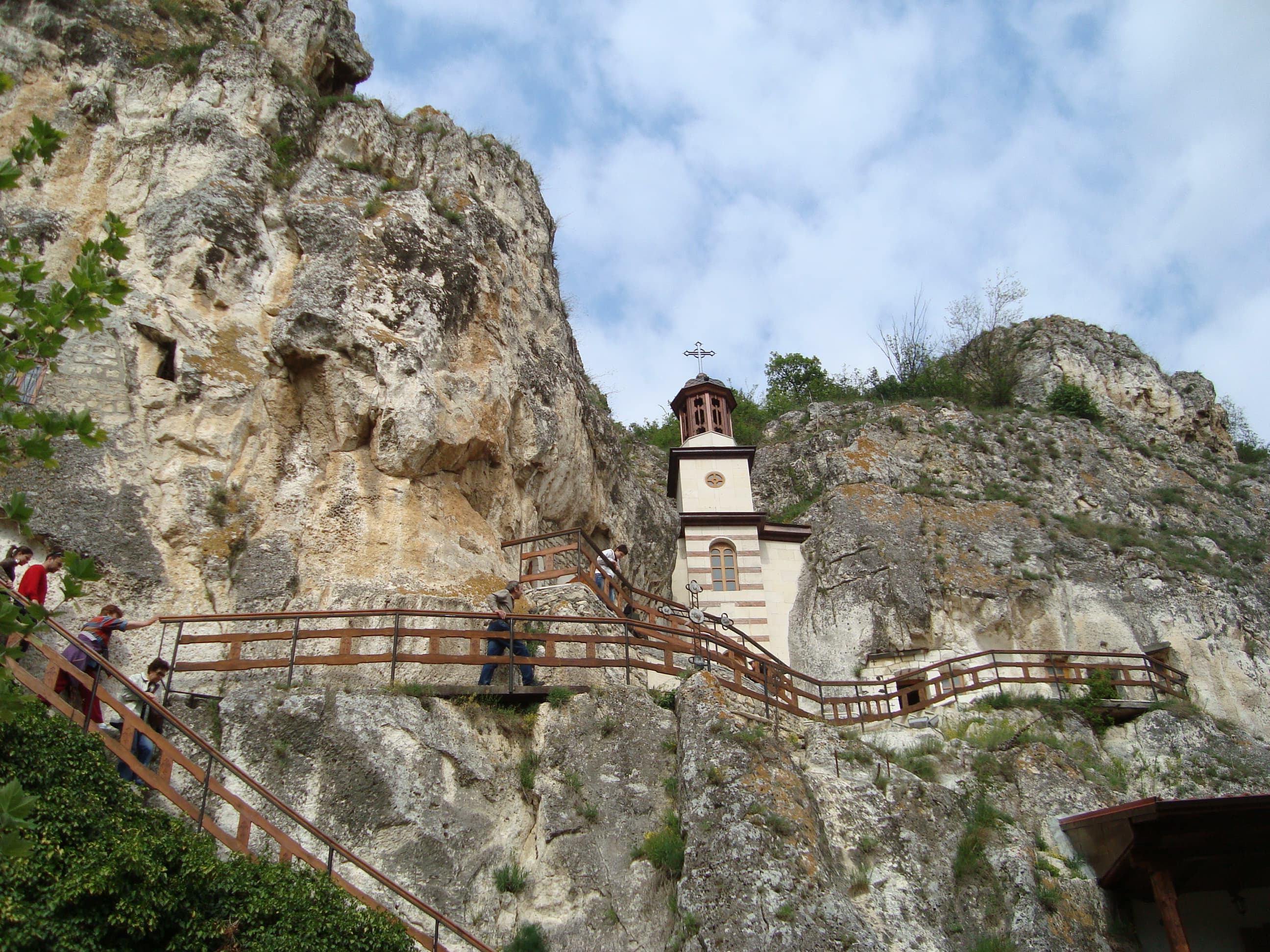
Image of Basarbovo Monastery. Image source · CC-BY-SA-3.0
Visit essentials
A quick read before you go
- Duration
- One to two hours to explore the monastery, church, holy spring, and surrounding cliff area.
- Etiquette
- Modest dress required.
Overview
Some monasteries declare themselves through scale. Basarbovo declares itself through compression. Carved into a limestone cliff rising thirty-five meters above the Rusenski Lom river, this monastery replaces grandeur with intimacy. The rock-hewn church measures roughly four and a half by nine meters. Inside, the ceiling is the living rock itself, and the icons glow in a darkness that feels like the interior of the earth.
The monastery predates its own records. It first appears in a 1431 Ottoman tax register, but the rock-hewn cells and worship spaces belong to the older tradition of the Rusenski Lom valley, where medieval Bulgarian monks carved entire communities into the cliff faces. Of those communities, Basarbovo alone remains active. Monks still live here. Services still echo off the stone.
The site's spiritual center is the memory of St. Dimitar Basarbovski, born around 1685 in the village below. He lived as a shepherd and an ascetic, tending sheep while maintaining an interior life of prayer. After his death, his body was found to be incorrupt. During the Russo-Turkish War of 1768-1774, Russian soldiers transferred his relics to Bucharest, where, according to tradition, a plague devastating the city ceased upon their arrival.
His relics remain in Bucharest, but his spirit inhabits this cliff.
A monk named Dimitrii dug a well within the monastery that produced a spring believed to have curative properties. Pilgrims still come to drink. The act is simple: climb the stairs cut into the cliff, enter the narrow church, light a candle, drink from the spring. The simplicity is the point. St. Dimitar was a shepherd. The monastery is a cave. The spring flows from rock.
What draws people here is not ornamentation but the stripped-down encounter between faith and stone.
Why this place is sacred
The approach to the monastery is itself a passage. You climb stairs carved into the cliff face, the Rusenski Lom flowing below, the limestone rising above. The transition from open river valley to enclosed rock chapel happens gradually, and by the time you enter the church, the world you left feels distant.
The church is small enough that your breathing becomes audible. The ceiling is not built but carved, the rock overhead bearing the marks of the tools that shaped it. Icons line the walls. Candles burn. The effect is not of entering a building but of entering the earth and finding holiness inside it. This is the principle of the cave monastery: the sacred is not above but within.
The holy spring occupies a modest niche. Pilgrims drink from it with quiet focus. The water has been attributed with healing properties for generations, and whether or not one accepts that attribution, the act of drinking water that has risen through stone in a monastery carved from the same stone creates a coherent symbolic experience. Everything here is continuous: the rock becomes the church becomes the spring becomes the offering.
St. Dimitar Basarbovski lived as a shepherd. He did not build a monastery or lead a movement. He prayed while he tended sheep. The Orthodox tradition holds that his body was found incorrupt after death, and his relics stopped a plague. These are stories about holiness arising from simplicity. Basarbovo Monastery embodies the same principle. It is not grand, not ornate, not imposing.
It is a hole in a cliff where people have prayed for centuries, and the thinness of the boundary here comes from the accumulation of that prayer in a space too small to contain anything else.
The monastery was established by medieval Bulgarian monks as part of the Rusenski Lom valley's tradition of rock-hewn monasticism. Monks chose to carve their cells and churches directly from the limestone cliffs, seeking communion with God through ascetic withdrawal into the stone itself.
The monastery's history between its founding and the 1431 Ottoman tax register remains largely undocumented. After the 1768-1774 transfer of St. Dimitar's relics to Bucharest, the monastery experienced decline. Father Hrisant revived the community in 1937, restoring both the physical structures and the monastic life. The site was designated a historical landmark in 1978 and is now one of Bulgaria's 100 Tourist Sites.
Experience and orientation
The road from Ruse follows the Rusenski Lom river south through a valley of increasing beauty. Limestone cliffs rise on either side, pocked with the dark openings of caves and medieval rock-hewn cells. Basarbovo village appears, modest and quiet, and the monastery announces itself as a series of stairs ascending the cliff face.
Climb. The stairs are cut from the same limestone that forms the cliff, and the ascent is neither arduous nor trivial. The river drops away below. The cliff rises above. You are between, climbing toward a door in the rock.
The church is a revelation of compression. Four and a half meters wide, nine meters long, with a semicircular apse carved from the cliff. The ceiling bears the texture of the stone from which it was hollowed. Icons and frescoes line the walls. Candles provide the primary light. The space holds perhaps a dozen people comfortably, which means that when you are inside, you are not a spectator but a participant. The intimacy is inescapable.
The holy spring is nearby, its water collected in a basin. Pilgrims drink with deliberation. Some wash their faces or hands. The tradition of healing attributed to this water is old enough to have no documented beginning. You may drink or not. The gesture itself, in this setting, carries its own weight.
After the church and the spring, walk the exterior passages and cells. The cliff face around the monastery bears traces of the broader monastic community that once inhabited this valley. Look across to the opposite bank. The Rusenski Lom valley was once crowded with monks living in the rock, and the UNESCO-listed Ivanovo Rock-Hewn Churches, ten kilometers away, preserve the frescoes of that tradition. Basarbovo is the last of them still alive.
Approach from the parking area near Basarbovo village. Climb the stairs to the monastery entrance. The rock-hewn church is the central worship space. The holy spring is accessible within the monastery complex. Monastic cells and passages extend along the cliff face. The courtyard and residential buildings are at the same level as the church.
Context and lineage
The monks who first carved into these cliffs chose a tradition as old as the desert fathers: withdrawal from the world into the raw material of creation. In the Rusenski Lom valley, that material was limestone, soft enough to work with iron tools, hard enough to endure. They hollowed out cells, corridors, and churches from the living rock, creating monasteries that were part of the cliff itself.
Basarbovo emerged from this tradition at a date no one can pin precisely. By the time it appears in the 1431 Ottoman tax register, it is already established. But the monastery's spiritual identity crystallized around a man born centuries later. Dimitar was born around 1685 in the village of Basarbovo. He lived as a shepherd, tending his flock while maintaining an interior life of prayer so deep that his contemporaries recognized him as holy.
After death, his body was found incorrupt. When Russian soldiers transferred the relics to Bucharest during the Russo-Turkish War, a plague that had been devastating the city reportedly ceased. The relics remain in Bucharest's Church of St. Constantine and Elena, but the saint's spiritual home is the cliff above the river.
Basarbovo belongs to the medieval Bulgarian tradition of rock-hewn monasticism that flourished in the Rusenski Lom valley. This tradition shares architectural and spiritual kinship with the famous Ivanovo Rock-Hewn Churches (UNESCO World Heritage Site) ten kilometers away. The broader tradition of cave monasticism connects Basarbovo to similar communities across the Balkans, Cappadocia, and the early Christian desert tradition. As the only active cave monastery in Bulgaria, Basarbovo is the living end of a lineage that once included many communities.
St. Dimitar Basarbovski
Patron saint
Father Hrisant
Reviver
Monk Dimitrii
Well-digger
Traditions and practice
The monastery has maintained Orthodox monastic worship since the medieval period, adapted to the unique constraints and atmosphere of its rock-hewn setting. The intimate church creates an intensely focused liturgical environment where chanting resonates off stone walls and ceiling. Veneration of St. Dimitar Basarbovski is central to the monastery's identity. Pilgrims have drunk from the holy spring for generations, seeking healing for physical and spiritual ailments.
Regular Orthodox services are held in the rock-hewn church. The feast of St. Dimitar Basarbovski on October 26 draws significant pilgrimage. The monastic community maintains the site and welcomes visitors during posted hours. The holy spring remains in active use. The monastery participates in the 100 Tourist Sites of Bulgaria program, maintaining accessibility while preserving its contemplative character.
Enter the rock-hewn church when no service is in progress and sit in the darkness for several minutes. Allow your eyes to adjust. Notice how the sound of your breathing changes in the enclosed stone space. Drink from the holy spring with attention to the act itself. If you can time your visit for a service, the experience of Orthodox chanting within this stone chamber is unlike any other.
Visit on or near October 26 to witness the pilgrimage at its most concentrated.
Bulgarian Orthodox Christianity
ActiveBasarbovo is venerated as the spiritual home of St. Dimitar Basarbovski, one of Bulgaria's most beloved saints. As the only active cave monastery in the country, it represents the living continuation of a medieval Bulgarian monastic tradition. The holy spring and the memory of the shepherd-saint draw pilgrims seeking healing and spiritual renewal.
Regular Orthodox services in the rock-hewn church. Feast of St. Dimitar Basarbovski on October 26. Pilgrims drink from the holy spring for healing. Candle lighting and icon veneration in the intimate stone church.
Perspectives and open questions
Basarbovo Monastery invites reading as a site of living Orthodox monasticism, a unique example of rock-hewn architecture, a pilgrimage destination centered on a folk saint, and a place where the intimacy of enclosed stone space creates conditions for contemplation that differ fundamentally from those of conventional churches.
Scholarly perspective
Scholars study Basarbovo as part of the broader tradition of rock-hewn monasticism in the Rusenski Lom valley. The monastery's first documentation in a 1431 Ottoman tax register places its origins in the Second Bulgarian Empire or earlier. The cult of St. Dimitar Basarbovski is studied as an example of how local saints' cults spread across national borders. His relics in Bucharest represent a shared Bulgarian-Romanian devotional heritage.
The rock-hewn architecture is examined as an adaptation of monastic life to the natural landscape.
Living and traditional perspectives
For Bulgarian Orthodox believers, Basarbovo is a place of healing and encounter with the holy. The story of St. Dimitar, a humble shepherd whose sanctity was proven by incorrupt relics and the cessation of plague, exemplifies the Orthodox understanding that holiness arises from simplicity and prayer rather than learning or status. The holy spring is experienced as a tangible channel of divine grace.
Alternative interpretations
The rock-hewn setting attracts visitors drawn to earth-based spirituality and the idea of sacred caves as liminal spaces between worlds. The Rusenski Lom valley's concentration of rock monasteries is sometimes interpreted as evidence of the landscape's inherent spiritual properties. The monastery's position high on a cliff above flowing water resonates with traditions about the spiritual significance of elevated sites near water.
Open questions
The exact founding date and circumstances of the original monastery remain unknown. How the medieval monks selected this particular cliff face has not been explained. The full history between 1431 and the 18th century is largely undocumented. Whether the holy spring predates the Christian monastery and was sacred to earlier inhabitants is an open question.
Plan your visit
Access and arrival
Ruse (10 km) provides a full range of accommodation. The monastery's remote valley setting makes it best visited as a day trip from Ruse or as part of a tour of the Rusenski Lom valley.
Respectful visit
Shoulders and knees covered. Headscarves for women may be appreciated inside the church. No shorts or revealing clothing.
Photography generally permitted in exterior areas. Photography inside the rock-hewn church may be restricted. No flash photography. Ask permission before photographing monks.
Candles may be purchased and lit. Monetary donations welcome. Visitors may leave small offerings at the holy spring.
Maintain silence inside the church. Do not touch frescoes or icons. Respect the intimate scale of the space. Follow posted visiting hours strictly. October-March: 8:00-17:00; April-September: 8:00-19:00.
The church is very small. During busy periods, visitors may need to wait their turn. The stairs to the monastery are carved from rock and can be slippery when wet. The monastery is an active place of worship; reverent behavior is expected at all times.
Current practical details
Address
Basarbovo Monastery, 7071 Basarbovo, Bulgaria
Hours, fees, and access can change — verify on the official source before you travel. Practical details last checked Jun 2026.
Location
Map loads as you approach this section.
Pilgrim reflections
A portrait of encounter, not a score
Pilgrims describe what they felt, how present they could become, and whether the place would shape a journey. There are no stars and no ranking of traditions.
No reviewed reflections yet
The first pilgrims can help describe the character of being here.
Share a reflection
Available after an account-backed “Been there.” Every reflection is reviewed before publication.
Nearby sacred places
Explore other sacred places in the region. Proximity does not establish access or travel time; check each place’s guidance.

Rock-Hewn Churches of Ivanovo
Ivanovo, Ruse Province, Bulgaria
8.2 km away

Demir Baba Teke, near the village of Sveshtari, Bulgaria
Malak Porovets, Razgrad, Bulgaria
63.3 km away
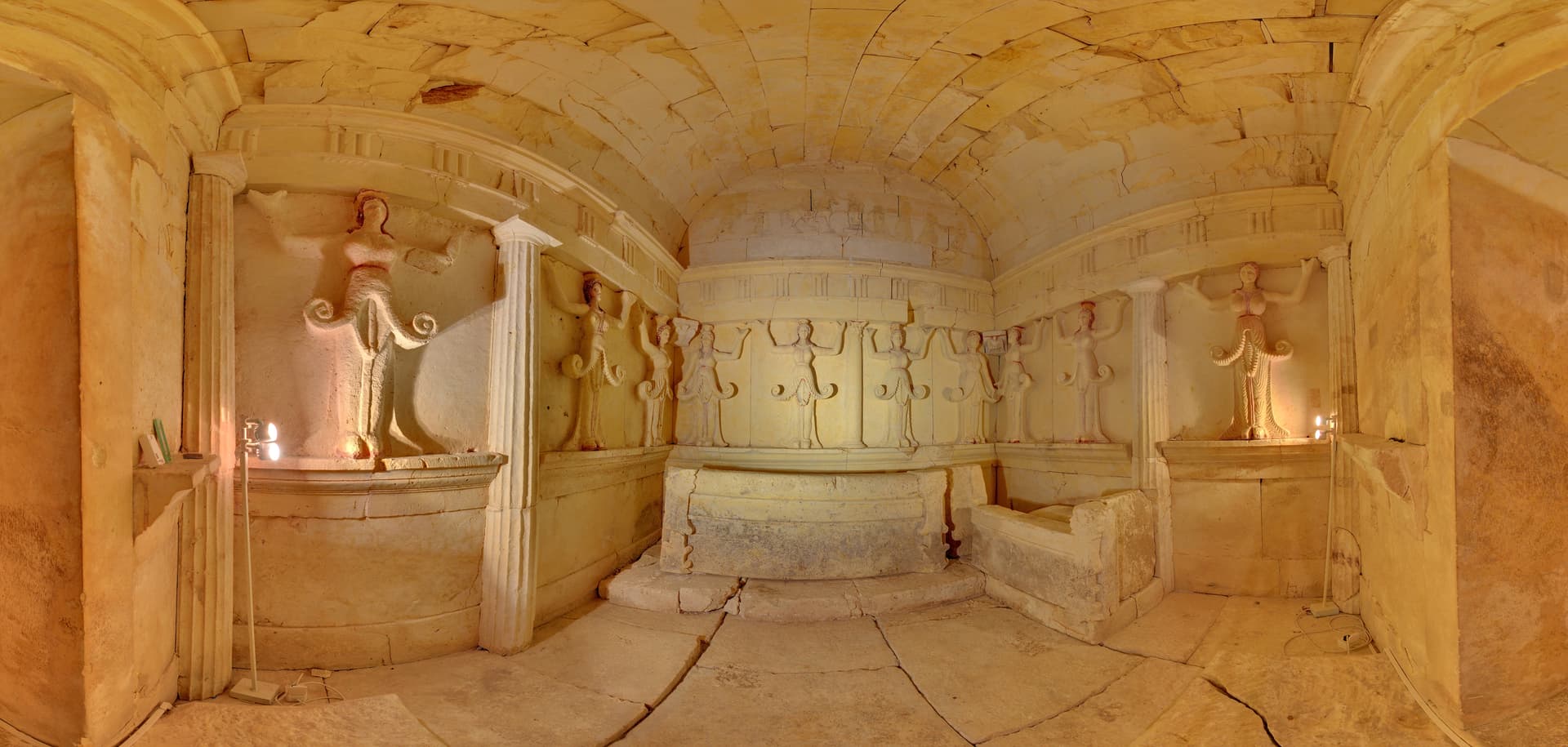
Thracian Tomb of Sveshtari
Sveshtari / Isperih, Razgrad Province, Bulgaria
64.5 km away
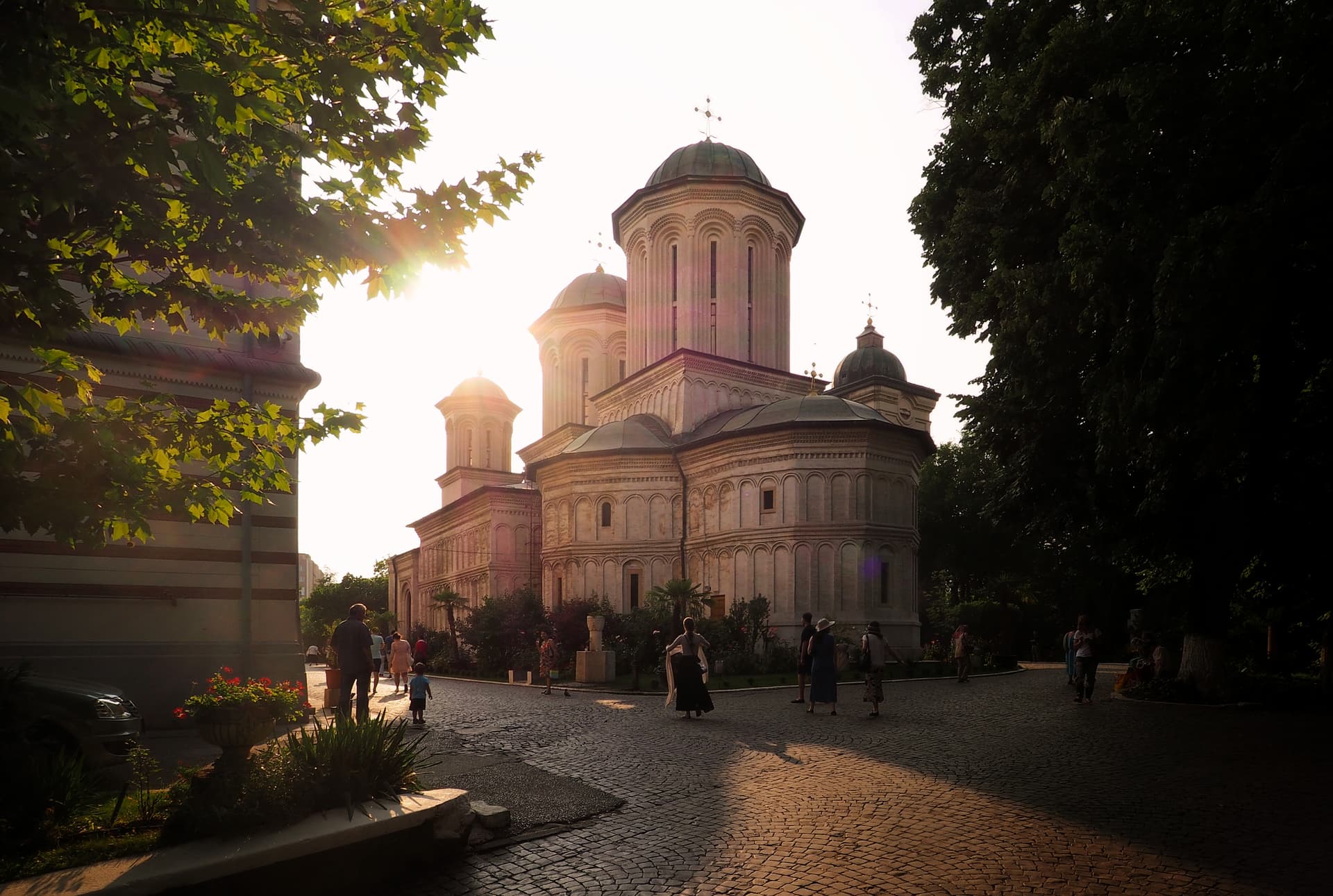
Radu Voda Monastery, Romania
Bucharest, Bucharest, Romania
74.0 km away
Photo gallery
3 curated photos
Share a photo
Help visitors recognize Basarbovo Monastery. Every submission is reviewed before publication.