Radu Voda Monastery, Romania
Bucharest's healing monastery, where a Greek saint found a second home above the Dambovita River
Understand sacred places, explore living traditions, and learn how to engage respectfully with Pilgrim Map.
Access has not been verified. Check current local guidance before planning a visit.
Bucharest, Bucharest, Romania
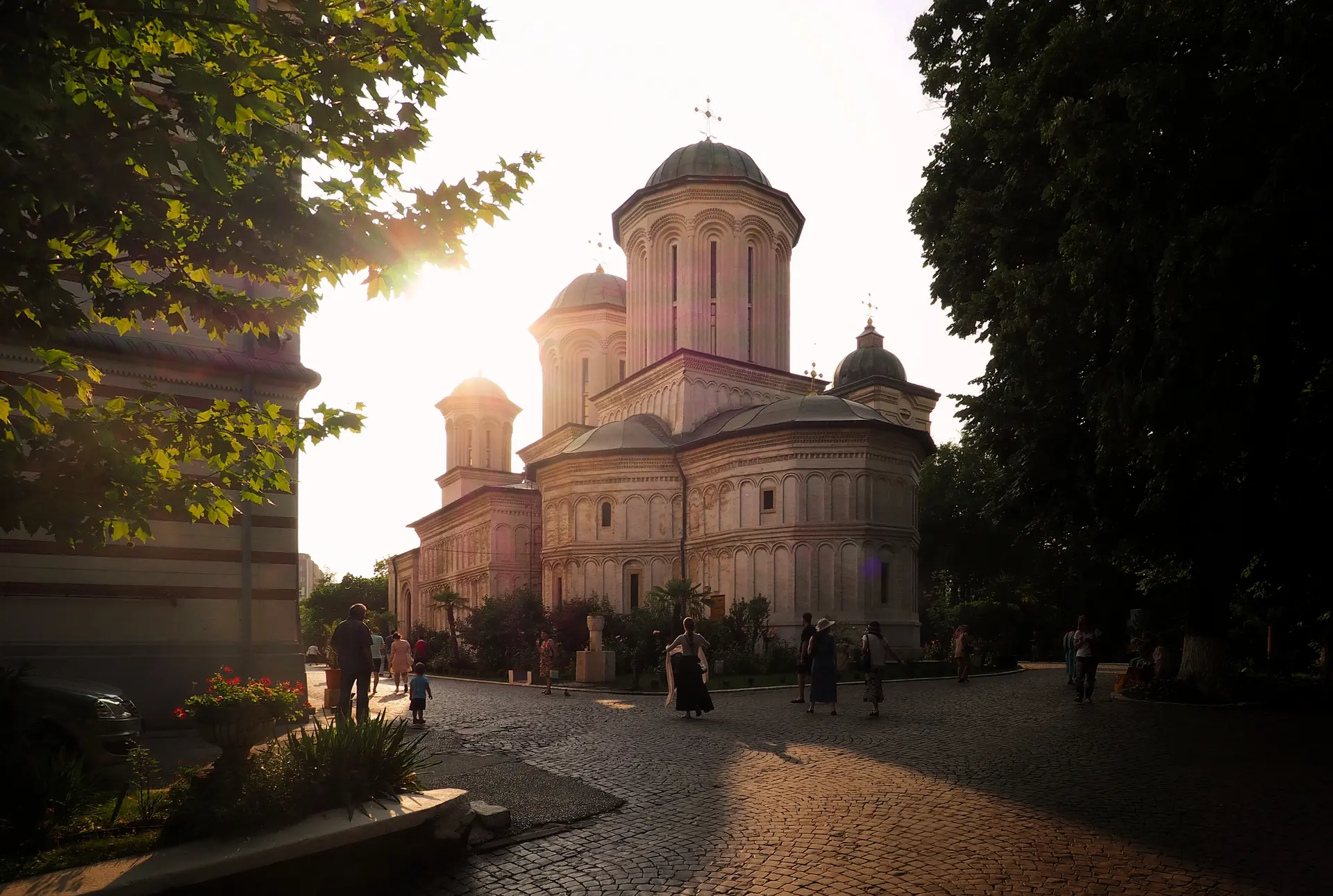
Image of Radu Voda Monastery, Romania. Image source · CC-BY-2.0
Visit essentials
A quick read before you go
- Duration
- A visit of 45 minutes to 1.5 hours allows time to see the church, bell tower, garden, and…
- Access
- Located in central Bucharest on a hill on the right bank of the Dambovita River.
Overview
On a hilltop above the Dambovita River, in the dense urban fabric of Bucharest, a monastery has been praying for over four and a half centuries. Radu Voda is easy to miss if you are not looking for it. The city presses close on every side. But step through the gate and something shifts. The garden absorbs the noise of traffic.
The 53-meter bell tower — the tallest in Bucharest, its exterior covered in detailed frescoes — draws the eye and then the attention upward.
The church dates to 1613-1614, rebuilt by Prince Radu Mihnea after Ottoman forces burned the original 1568 foundation. Inside, the bright frescoes painted by Gheorghe Tattarescu in the 19th century create an interior of unusual luminosity. The triconch plan, modeled on the episcopal church at Curtea de Arges, gives the space a formal elegance that belies the monastery's turbulent history of fires, earthquakes, demolitions, and Communist-era pressures.
But what draws most visitors today is not the architecture. In 2002, Radu Voda received relics of Saint Nectarios of Aegina, a Greek Orthodox bishop who died in 1920 and was canonized for healing miracles. The relics transformed the monastery from a significant historical site into what some now call the Romanian Aegina. Daily, pilgrims arrive to venerate the reliquary, seeking the saint's intercession for healing, especially from cancer and infertility.
The devotion has grown so rapidly that Nectarios has become one of the most popular names given to children in Romania.
The monastery operates simultaneously as a functioning monastic community of approximately 22 monks, the chapel for the Orthodox Theological Seminary, and one of Bucharest's most visited pilgrimage sites. This convergence of monasticism, education, and healing devotion gives Radu Voda a quality of layered purpose that few sites in the capital can match.
Why this place is sacred
Thin places sometimes appear where you least expect them. In the middle of a capital city of two million people, on a hill that could easily have been claimed for development, a monastery persists. Radu Voda's thinness derives partly from this very improbability — the survival of contemplative space in the heart of modern Bucharest.
The hilltop position above the Dambovita River gives the monastery a sense of elevation that is both physical and psychological. Looking down from the grounds, the city stretches in every direction. Looking up, the 53-meter bell tower frames the sky. This vertical axis creates a felt sense of transition between worlds that the garden and walls reinforce.
The relics of Saint Nectarios concentrate the monastery's devotional energy with unusual intensity. Unlike saints who lived centuries ago, Nectarios died in 1920. His life is well documented. The healing miracles attributed to him are reported by people who are alive today, in this city, in this neighborhood. The proximity of the miraculous to the contemporary gives the devotion a rawness that more ancient cults sometimes lack.
Pilgrims arrive daily. Their sincerity is visible in their faces, their postures, the attention with which they approach the reliquary. Many are carrying burdens — illness, fear, hope for loved ones. This concentrated human need, repeated day after day for over two decades since the relics arrived, has left its mark on the space. The atmosphere around the reliquary is not theatrical but quietly intense, shaped by the accumulated weight of genuine prayer.
Beneath this contemporary layer, the foundation laid in 1568 provides historical depth. The scriptorium and library that once operated here, among the first in Bucharest, added intellectual weight. The church survived Ottoman burning, earthquake damage, and a 19th-century demolition order. Each survival deepened its hold on the site, each reconstruction renewed the commitment to prayer on this particular hilltop.
Alexandru II Mircea founded the monastery in 1568 as a votive offering of thanksgiving for victory in battle, dedicating it to the Holy Trinity and intending it to serve as the metropolitan church of the Wallachian capital. The foundation expressed the Wallachian tradition of sacral kingship, in which military success was understood as divinely granted and returned through the building of sacred architecture.
The monastery's trajectory has been marked by cycles of destruction and renewal. Ottoman forces burned it in 1595 after converting it to a mosque. Prince Radu Mihnea rebuilt it in 1613-1614. Earthquakes in 1829 and 1838 caused severe damage. In 1875, a significant portion was demolished by ministerial order. The 1968-1974 restoration under architect Stefan Bals, sponsored by Patriarch Justinian Marina, returned the building to its 17th-century appearance.
Reactivation as a functioning monastery in 1999, followed by the arrival of Saint Nectarios's relics in 2002 and Saint Ephrem the New's relics in 2014, opened the site's current chapter as a healing pilgrimage destination.
Experience and orientation
The first surprise at Radu Voda is the quiet. Bucharest is not a quiet city, and the monastery's central location suggests proximity to traffic, crowds, and urban noise. But the hilltop garden absorbs much of this, and passing through the gate creates a shift in atmosphere that visitors consistently describe with the same word: oasis.
The bell tower commands attention immediately. At 53 meters, it is the tallest in Bucharest, and its exterior frescoes reward extended looking. The tower functions as a landmark and a spiritual marker — a vertical axis that draws the eye up and out of the horizontal plane of the city.
Inside the church, Tattarescu's frescoes create an interior of surprising brightness. The painter's Italian-influenced technique gives the sacred figures a warmth and immediacy that differs from the darker, more formal approach of earlier Byzantine-influenced work. The triconch plan — modeled on the episcopal church at Curtea de Arges — provides a spatial elegance that organizes the visual experience.
But the reliquary of Saint Nectarios is where the emotional weight concentrates. Watching pilgrims approach — some with tears, some with the fixed attention of people holding a specific intention, some simply present and open — is an experience that transcends the visitor's own beliefs. The devotion is not performed for an audience. It is raw and sincere, and witnessing it changes the quality of attention you bring to the rest of the visit.
The monastery garden offers a different mode of encounter: walking, sitting, breathing in a space shaped by centuries of monastic care. The contrast between the garden's stillness and the city visible beyond the walls makes the boundary between sacred and secular feel less like a concept and more like a physical threshold.
Radu Voda is easily accessible and asks only awareness from visitors. If you arrive during a service, find a place at the back of the church and observe. If you arrive between services, take time with the Tattarescu frescoes before approaching the reliquary.
The pilgrims around you may be in distress. Illness, grief, and desperate hope bring many people to this place. Be mindful that your visit, however respectful, occurs within a space where others are engaged in prayer that may carry life-or-death significance for them.
The November 9 feast of Saint Nectarios offers the most intense spiritual atmosphere, with processions of relics and thousands of pilgrims. If communal devotion is what you seek, this is the day.
Context and lineage
Alexandru II Mircea, Prince of Wallachia, and his wife Ecaterina founded the monastery in 1568 as a votive offering of gratitude for victory in battle against rival boyars. They dedicated the church to the Holy Trinity and intended it to serve as the metropolitan church of Bucharest. The foundation included not only the church but defensive walls and a Princely Palace — a complex that expressed both spiritual and political authority.
In 1595, Ottoman troops under Sinan Pasha occupied the monastery and converted the church into a mosque. When Michael the Brave forced the Ottomans to retreat, they burned the complex. It lay in ruins until Prince Radu Mihnea rebuilt the church in 1613-1614, following the original triconch design but using brick instead of stone. The monastery has borne his name ever since.
The 17th century brought a scriptorium that served other ecclesiastical establishments and one of the first libraries in Bucharest. Earthquakes in 1829 and 1838 caused severe damage. In 1875, much of the monastery was demolished, with only the church and bell tower preserved. A theological school was built on the grounds in the 1890s.
The defining moment of the monastery's modern history came in 2002, when relics of Saint Nectarios of Aegina were received from the Greek island where the saint lived and died. The relics established what some call a second founding — transforming Radu Voda from a significant but quiet historical site into one of Bucharest's most visited pilgrimage destinations.
The lineage at Radu Voda traces two distinct arcs. The first is architectural and institutional: from Alexandru's foundation through Ottoman destruction, Radu Mihnea's rebuilding, the 17th-century scriptorium, earthquake damage, partial demolition, and the comprehensive restoration of 1968-1974. The second is devotional: the centuries of worship on the hilltop, the theological education that has continued since the 1890s, and the transformative arrival of Saint Nectarios's relics in 2002, which inaugurated a new era of healing pilgrimage that continues to grow.
Alexandru II Mircea
historical
Prince of Wallachia who founded the monastery in 1568 as a votive offering of thanksgiving for military victory. He intended it to serve as the metropolitan church of the Wallachian capital.
Radu Mihnea
historical
Prince of Wallachia who rebuilt the monastery church in 1613-1614 after its destruction by Ottoman forces. The monastery bears his name. He followed the original triconch plan modeled on the episcopal church of Curtea de Arges.
Saint Nectarios of Aegina
saint
Greek Orthodox bishop and miracle-worker (1846-1920) whose relics were received by the monastery in 2002. He has become the monastery's second patron and the center of a rapidly growing healing devotion in Romania, known for intercessions in cases of cancer and infertility. His feast day on November 9 draws thousands of pilgrims to Radu Voda.
Gheorghe Tattarescu
historical
Prominent Romanian painter who created the bright frescoes visible inside the church during the 19th century. His Italian-influenced technique gives the interior an unusual luminosity.
Traditions and practice
The daily liturgical cycle follows the Romanian Orthodox rite, with the Divine Liturgy and the canonical hours structuring the monastic day. As both a monastery and the chapel for the Orthodox Theological Seminary, the church serves a double community of monks and seminarians.
The Feast of the Holy Trinity, falling on Pentecost Monday, is the patronal feast. The Feast of Saint Nectarios on November 9 has grown into the monastery's most significant celebration since the relics arrived in 2002, featuring a festive Divine Liturgy, an all-night vigil, and a solemn procession of the relics of both Saint Nectarios and Saint Ephrem the New. Processions with the holy relics also occur at other points in the liturgical year.
Daily veneration of the relics of Saint Nectarios has become the defining practice of the monastery's current life. Pilgrims arrive throughout the day to pray before the reliquary, seeking the saint's intercession particularly for healing from cancer and infertility. Holy oil blessed on the relics is distributed to pilgrims.
The Orthodox Theological Seminary continues to form students on the monastery grounds, maintaining the educational dimension that has been present since the theological boarding school was built in the 1890s.
Approaching the relics of Saint Nectarios requires only sincerity. Whether or not you share the belief that the saint intercedes for healing, the act of standing before the reliquary, witnessing the devotion of others, and offering your own quiet intention engages you with something authentic.
Attend a service if timing allows. The church interior, with its bright Tattarescu frescoes and triconch plan, comes fully alive during the liturgy.
Spend time in the monastery garden. The hilltop setting offers views across Bucharest, and the garden provides a contemplative space that draws its quality from the contrast with the city pressing close on every side. The threshold between secular and sacred is rarely so physically immediate.
Romanian Orthodox Christianity
ActiveRadu Voda is one of Bucharest's most renowned monastic establishments, with origins dating to 1568. Originally intended as the metropolitan church of Bucharest, it has served as a center of Orthodox worship, theological education, and literary culture for over 450 years. The monastery's survival through Ottoman occupation, earthquake, demolition, and Communism makes it a testament to Orthodox resilience in Romania's capital.
Daily Divine Liturgy and canonical hours. Celebration of the Holy Trinity as the patronal feast. Monastic cenobitic community life. Theological education through the Orthodox Theological Seminary. Veneration of icons and holy relics.
Veneration of Saint Nectarios of Aegina
ActiveSince receiving relics in 2002, Radu Voda has become the center of the rapidly growing cult of Saint Nectarios in Romania, sometimes called the Romanian Aegina. Saint Nectarios is venerated as a healing saint, particularly powerful in cases of cancer and infertility. The devotion has grown to the point where Nectarios has become one of the most popular names given to children in Romania. The growth of this cult has been studied academically as a case of transnational saint migration.
Daily veneration of the relics with prayers and candle offerings. Feast of Saint Nectarios on November 9 with festive Divine Liturgy, all-night vigil, and solemn procession. Healing prayers and intercessions before the reliquary. Distribution of holy oil blessed on the relics. Processions with relics of both Saints Nectarios and Ephrem the New.
Perspectives and open questions
Radu Voda Monastery invites reading from several vantage points: as an example of Wallachian sacred architecture, as a case study in the transnational migration of a saint's cult, as a living monastery and educational institution, and as a healing pilgrimage site whose growth shows no sign of slowing. These perspectives illuminate different dimensions of a place that continues to evolve.
Scholarly perspective
Architectural historians classify Radu Voda as a significant example of the triconch church plan executed in brick, reflecting the transfer of Wallachian architectural forms to the capital. The 1968-1974 restoration by Stefan Bals, which removed neo-Gothic additions and restored the 17th-century appearance, is studied as an important example of conservation during the Communist period.
Scholars of religion have examined the rapid growth of the cult of Saint Nectarios at Radu Voda as a case of transnational saint migration — a Greek saint whose devotion has been enthusiastically adopted in Romania, transforming a historic monastery into a pilgrimage center within a single generation. Academic analysis explores how the cult crossed national and linguistic boundaries, how healing narratives circulate among believers, and what the phenomenon reveals about contemporary Orthodox religiosity.
Living and traditional perspectives
Within Romanian Orthodox tradition, Radu Voda is understood as a place sanctified by princely devotion, centuries of prayer, and the miraculous presence of Saint Nectarios. The monastery's founding as a votive offering connects it to the deep Wallachian tradition of sacral kingship, where princes built churches to return God's favor for military success.
The arrival of Saint Nectarios's relics is understood as providential — the saint chose Romania as his second home. The healing miracles attributed to his intercession are received by believers as signs of divine favor operating through the saint's prayers. The monastery's survival through Ottoman occupation, earthquakes, demolition orders, and Communist pressure is understood as evidence of God's sustained protection over this place of prayer.
Alternative interpretations
Radu Voda does not attract significant alternative spiritual attention. Its significance is firmly rooted in Orthodox devotion, architectural heritage, and the healing cult of Saint Nectarios. Some visitors note the monastery's elevated hilltop position as creating a natural sense of sacred geography within Bucharest's urban landscape — a spatial hierarchy that mirrors the spiritual hierarchy the monastery represents.
Open questions
The extent of the original 16th-century Princely Palace complex associated with the monastery is not fully documented, and archaeological remains may exist beneath the current grounds. What survived of the 17th-century library and scriptorium holdings has not been fully catalogued. The exact circumstances surrounding the arrival of Saint Nectarios's relics from Aegina in 2002 involve elements of faith narrative that have not been fully documented historically.
The nature and extent of reported healing miracles are documented primarily through believers' testimonies rather than formal investigation.
Plan your visit
Access and arrival
Located in central Bucharest on a hill on the right bank of the Dambovita River. Near the Unirii metro station, approximately 10 to 15 minutes walk. Free admission. Within walking distance of many Bucharest landmarks including the Patriarchal Cathedral and the Old Town. Mobile phone signal is reliable throughout the area. No current opening hours information was available at time of writing; check the official monastery website for details.
Bucharest offers accommodation at every price point, from hostels to luxury hotels. The monastery's central location means many hotels are within walking distance. The area around Unirii Square and the Old Town provides the most convenient options.
Respectful visit
Modest dress is required. Women should wear skirts below the knee and cover their shoulders. Head coverings are appreciated inside the church. Men should wear long trousers. As a working monastery, stricter standards apply than at a typical church.
Photography is generally permitted in exterior areas and the garden. Restrictions apply inside the church during services. Do not photograph pilgrims at prayer without their explicit permission. Ask before photographing monks or seminary students.
Visitors may purchase and light candles. Donations are welcomed. The monastery may sell religious items, icons, and blessed oil.
Maintain calm and reverent behavior, especially during services and when pilgrims are venerating relics. Do not touch icons, frescoes, or reliquaries without guidance. Respect areas reserved for the monastic community and seminary students. Silence mobile phones inside the church.
Be aware that many pilgrims at the reliquary are carrying illness, grief, or acute hope. Their devotion deserves uninterrupted respect. The monastery is a working community of monks and seminary students; respect areas that are not open to the public.
Current practical details
Address
Strada Radu Vodă 24A, 040275 București, Romania
Phone
Hours
Hours, fees, and access can change — verify on the official source before you travel. Practical details last checked Jun 2026.
Location
Map loads as you approach this section.
Pilgrim reflections
A portrait of encounter, not a score
Pilgrims describe what they felt, how present they could become, and whether the place would shape a journey. There are no stars and no ranking of traditions.
No reviewed reflections yet
The first pilgrims can help describe the character of being here.
Share a reflection
Available after an account-backed “Been there.” Every reflection is reviewed before publication.
Nearby sacred places
Explore other sacred places in the region. Proximity does not establish access or travel time; check each place’s guidance.
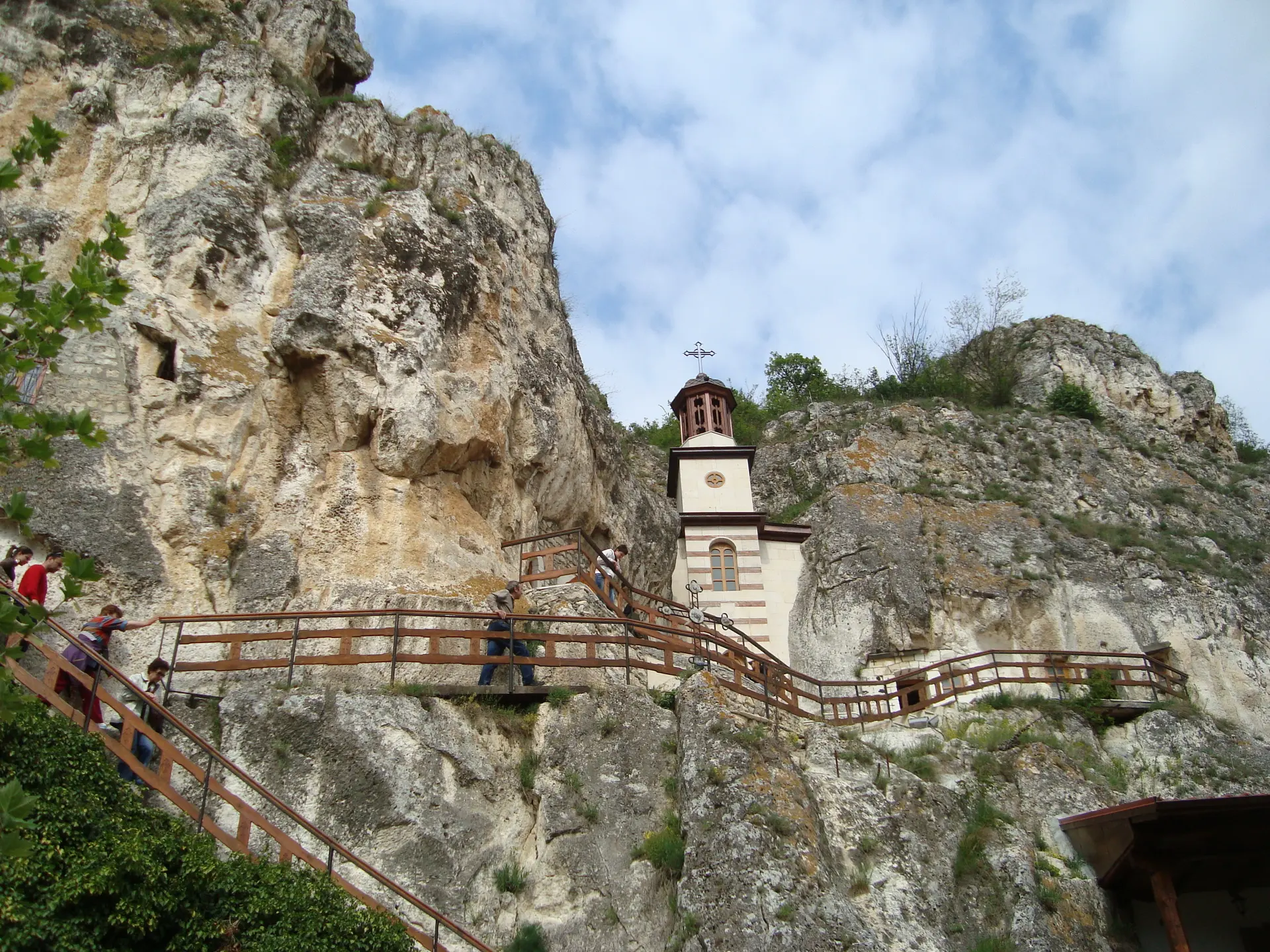
Basarbovo Monastery
Basarbovo, Ruse, Bulgaria
74.0 km away

Rock-Hewn Churches of Ivanovo
Ivanovo, Ruse Province, Bulgaria
81.7 km away

Demir Baba Teke, near the village of Sveshtari, Bulgaria
Malak Porovets, Razgrad, Bulgaria
91.9 km away
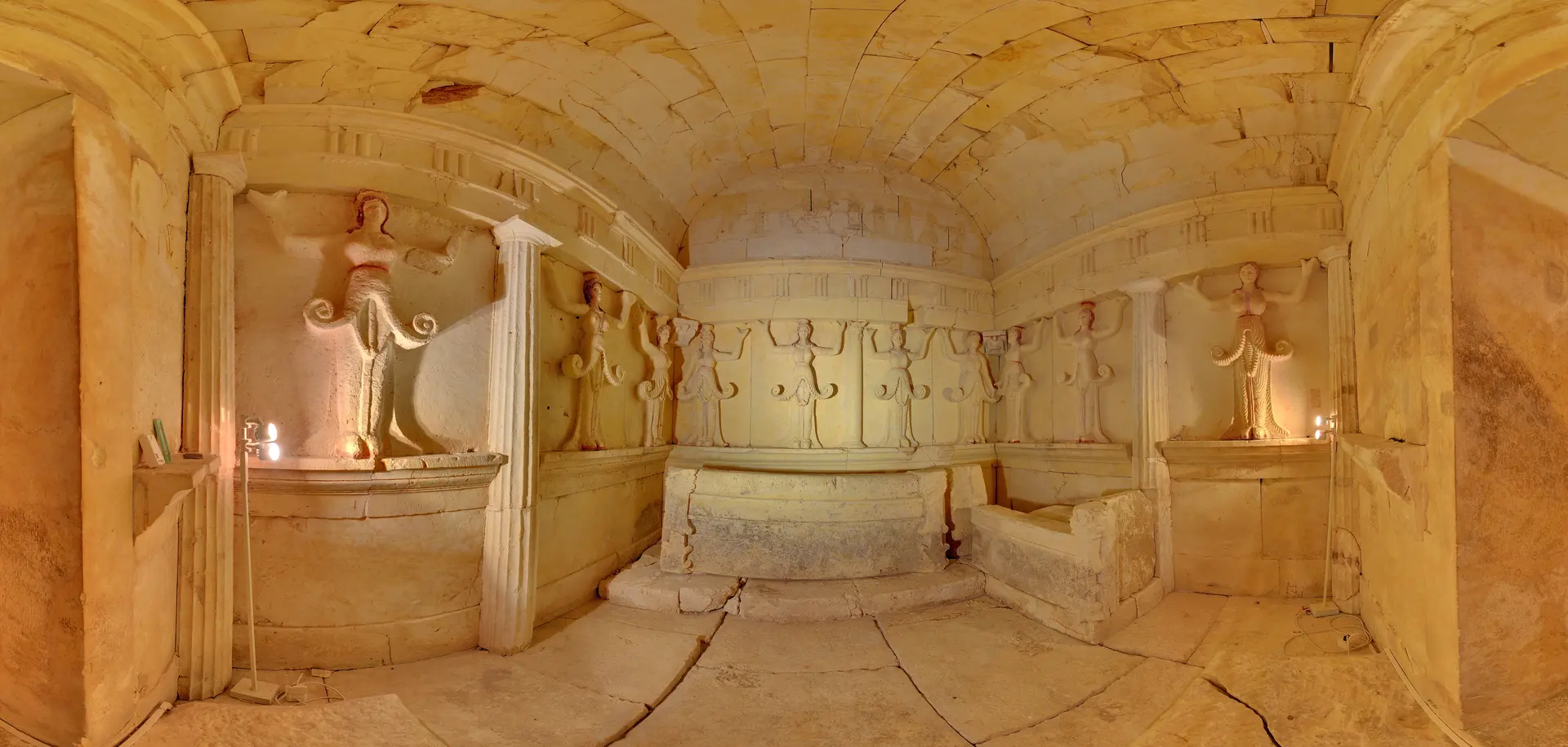
Thracian Tomb of Sveshtari
Sveshtari / Isperih, Razgrad Province, Bulgaria
92.1 km away
Share a photo
Help visitors recognize Radu Voda Monastery, Romania. Every submission is reviewed before publication.