Saint Sarah
InsideÉglise Notre-Dame-de-la-Mer, Saintes-Maries-de-la-Mer
Patron saint of the displaced, carried to the sea by her people
Understand sacred places, explore living traditions, and learn how to engage respectfully with Pilgrim Map.
Access has not been verified. Check current local guidance before planning a visit.
Saintes-Maries-de-la-Mer, Bouches-du-Rhône, France
Read the sources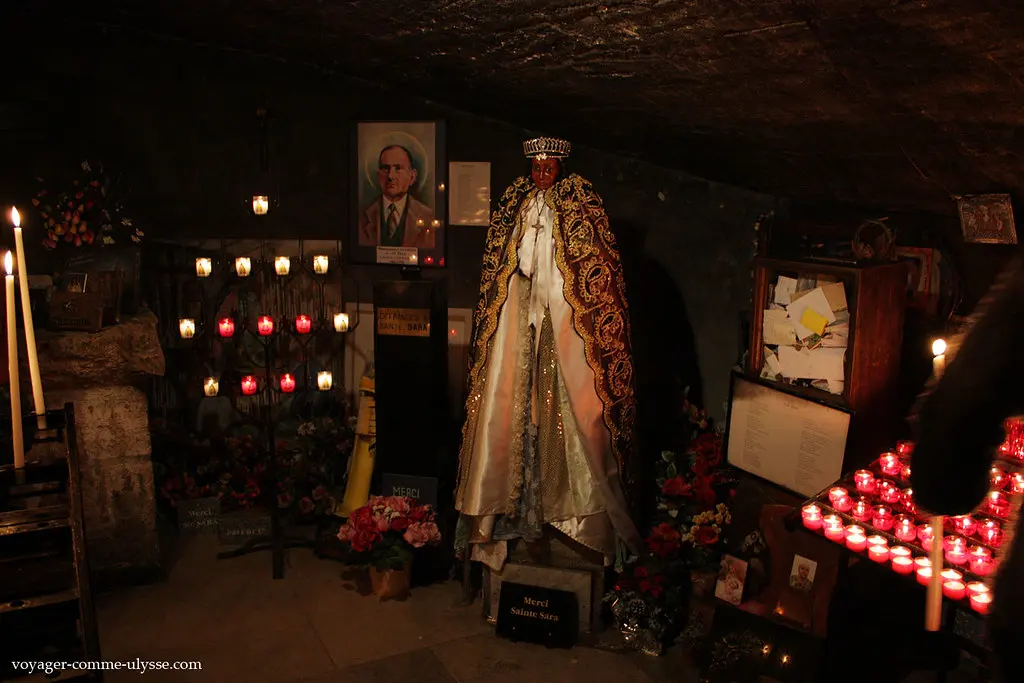
Image of Saint Sarah. Image source
Visit essentials
A quick read before you go
- Duration
- Variable; part of church visit.
- Etiquette
- Approach with profound respect for Roma tradition.
Overview
In the crypt of the Church of Saintes-Maries-de-la-Mer, a small dark statue covered in cloaks receives distant pilgrims' prayers amid candles. This is Sara-la-Kali—Sara the Black—patron saint of the Roma people.
Her origin is disputed. One tradition calls her the Egyptian servant of the Three Marys who arrived from the Holy Land after the Resurrection. Another remembers a local woman whose visions led her to welcome their boat from shore. Some scholars hear in 'Kali' an echo of the Hindu goddess, carried by Roma from their original Indian homeland. The uncertainty is part of her power.
Each May 24, thousands of Roma gather in the Camargue from Spain, Germany, Eastern Europe, and elsewhere. Sara's statue rises from the crypt and passes through town to the Mediterranean, where it is immersed in a ritual echoing Indian practices of placing divine images in water. Singing, flowers, and the devotion of a people marginalized for centuries converge when their saint touches the sea.
For Roma worldwide, Sara represents divine understanding of wandering, displacement, and the search for a home that may exist only in the sacred. The Roman Catholic Church does not officially recognize her as a saint, yet her cult is vigorous and growing. She belongs to her people regardless of official documents.
Why this place is sacred
Sara-la-Kali is thin in the way that focused devotion is thin—a small statue in a small crypt, carrying the weight of a people's prayers. The Roma have been scattered across Europe for centuries, marginalized and persecuted in nearly every country they have entered. Sara represents something that cannot be taken from them: a saint of their own, a patron who understands wandering.
The crypt amplifies this intensity. Below the church, in candlelit darkness, Sara receives visitors one by one or in small groups. Her statue is covered in cloaks left by devotees—tangible evidence of prayers offered and received. The atmosphere is intimate, charged, different from the church above.
The annual procession transforms private devotion into public affirmation. Thousands gather. The statue is lifted. The procession moves through streets lined with Roma who have traveled from across the continent. At the sea, Sara is immersed—a ritual that scholars connect to Indian practices, to the Roma's origins in a homeland left centuries ago.
The immersion is the thin moment. Water touches the statue; the sacred meets the elemental; past and present merge in ritual action that has been performed for generations. For those who participate, the thinness is palpable—the sense that in this moment, in this place, heaven and earth are not separate.
Sara's unofficial status adds to her power. She belongs to her people, not to an institution. Her cult persists because her people persist. The devotion is not sanctioned; it is lived.
Sara's cult developed alongside the Christian devotion to the Three Marys but remained distinct. Her origin in medieval devotion is documented but mysterious.
The Roma pilgrimage was formalized in 1935 when the Marquis Folco de Baroncelli-Javon won the right for Roma to hold their own public procession. Before this, Sara's veneration was private. After 1935, it became one of Europe's major pilgrimages.
Experience and orientation
You will find Sara in the crypt beneath the Church of Saintes-Maries-de-la-Mer. Descend the stairs and enter a different world: candlelit, close, charged with accumulated prayer.
Sara's statue stands in this underground space, smaller than some might expect but radiating presence. She is covered in cloaks left by devotees—layers of fabric that represent layers of prayer. The ex-votos around her testify to answered petitions. Candles burn constantly.
The Roma who come here do not simply visit; they pray. They touch the statue. They speak to Sara in their own languages. They keep vigil through the night before the procession. If you visit outside pilgrimage season, you may find the crypt quiet, but the intensity remains. If you visit during the pilgrimage, you will witness devotion at full power.
The procession on May 24 is the climax of the pilgrimage. Sara's statue is lifted from the crypt by those designated to carry her. The procession moves through streets crowded with Roma from across Europe. At the shore, Sara is carried into the Mediterranean and immersed. The moment when she touches the water is the moment when centuries of displacement, persecution, and survival converge in sacred action.
Witnessing this is a privilege. Approach as respectful observer, not as cultural tourist. The procession is not performance; it is prayer. If you are invited to participate, accept with humility. If you are not, keep appropriate distance while honoring what you are seeing.
Sara's statue is in the crypt beneath the Church of Saintes-Maries-de-la-Mer. The crypt has specific hours and a small admission fee. The procession to the sea occurs May 24.
Context and lineage
Sara's origin is uncertain. One tradition holds that she was the Egyptian servant who accompanied the Three Marys from the Holy Land to Provence. Another says she was a local woman, perhaps a tribal leader, who had visions and went to the shore to meet the arriving boat of the Marys.
Her cult developed alongside the Christian devotion but remained distinct. The name 'Sara-la-Kali' has been interpreted as connecting her to the Hindu goddess Kali—an interpretation supported by the Roma people's documented Indian origins. The ritual immersion in water echoes Indian practices of immersing divine images.
For centuries, Sara's veneration was private, unofficial, tolerated but not celebrated. In 1935, the Marquis Folco de Baroncelli-Javon—a local figure devoted to preserving Camargue traditions—won the Roma the right to hold their own public procession. This transformed private devotion into one of Europe's major pilgrimages.
Sara is not officially recognized as a saint by the Roman Catholic Church. This has not diminished her cult; if anything, her unofficial status strengthens her connection to her people, who have themselves often been unofficial, marginal, persecuted.
Sara's cult is unofficial within the Roman Catholic Church but vigorous among the Roma people. The pilgrimage is recognized as an important cultural and religious phenomenon.
Sara-la-Kali
Patron saint
Marquis Folco de Baroncelli-Javon
Pilgrimage advocate
Traditions and practice
Night vigil in the crypt before the procession. Immersion of the statue in the Mediterranean. Touching and kissing the statue. Dressing the statue in new cloaks.
The annual pilgrimage on May 24-25 continues. Individual visits to the crypt occur year-round. Candles, flowers, and clothing are left as offerings.
Approach with deep respect for what Sara means to the Roma people. Spend time in the crypt if the atmosphere allows. Light a candle. If present during the pilgrimage, witness with humility—this is sacred to others even if not to you.
Roma Spirituality
ActiveSara-la-Kali is the patron saint of the Roma people. The annual pilgrimage is one of Europe's most significant minority religious traditions, drawing thousands from across the continent and affirming community identity.
Night vigil in crypt, procession to the sea, immersion in the Mediterranean, touching and dressing the statue.
Perspectives and open questions
Sara can be understood as a survival of Hindu goddess worship, as a medieval Christian saint of uncertain origin, as the focus of one of Europe's most significant minority religious traditions, or as a patron of all displaced peoples.
Scholarly perspective
Sara's historical identity remains uncertain. The Roma pilgrimage is recognized as an important cultural phenomenon. The connection to the Hindu goddess Kali, while speculative, reflects the documented Indian origins of the Roma.
Living and traditional perspectives
Within Roma tradition, Sara is a powerful patron saint whose intercession protects and blesses. Her darkness is a mark of identification for a people often marginalized for their appearance.
Alternative interpretations
Some researchers see Sara as a survival of goddess worship, connecting her to Kali, Isis, or other dark mother figures. The ritual immersion in the sea supports these interpretations.
Open questions
Sara's historical identity. The origin of the Roma devotion to her. The connection to the Hindu goddess Kali. Why the Roma adopted this particular figure as their patron.
Plan your visit
Access and arrival
In Saintes-Maries-de-la-Mer. Book far in advance during the May pilgrimage.
Respectful visit
Modest dress in the crypt.
Be extremely respectful. Never photograph Roma pilgrims without explicit permission.
Candles, flowers, and clothing for the statue are traditional offerings.
Do not intrude on devotees. Give space to those keeping vigil or at prayer.
Do not photograph Roma devotees without explicit permission. Do not treat the pilgrimage as spectacle or entertainment. Give space to those at prayer.
Current practical details
Address
12 Pl. de l'Église, 13460 Saintes-Maries-de-la-Mer, France
Phone
Hours, fees, and access can change — verify on the official source before you travel. Practical details last checked Jun 2026.
Location
Map loads as you approach this section.
Pilgrim reflections
A portrait of encounter, not a score
Pilgrims describe what they felt, how present they could become, and whether the place would shape a journey. There are no stars and no ranking of traditions.
No reviewed reflections yet
The first pilgrims can help describe the character of being here.
Share a reflection
Available after an account-backed “Been there.” Every reflection is reviewed before publication.
Nearby sacred places
Explore other sacred places in the region. Proximity does not establish access or travel time; check each place’s guidance.

Église Notre-Dame-de-la-Mer, Saintes-Maries-de-la-Mer
Saintes-Maries-de-la-Mer, Bouches-du-Rhône, France
0.0 km away

Saint-Gilles Abbey Church
Saint-Gilles, Occitanie, France
25.0 km away
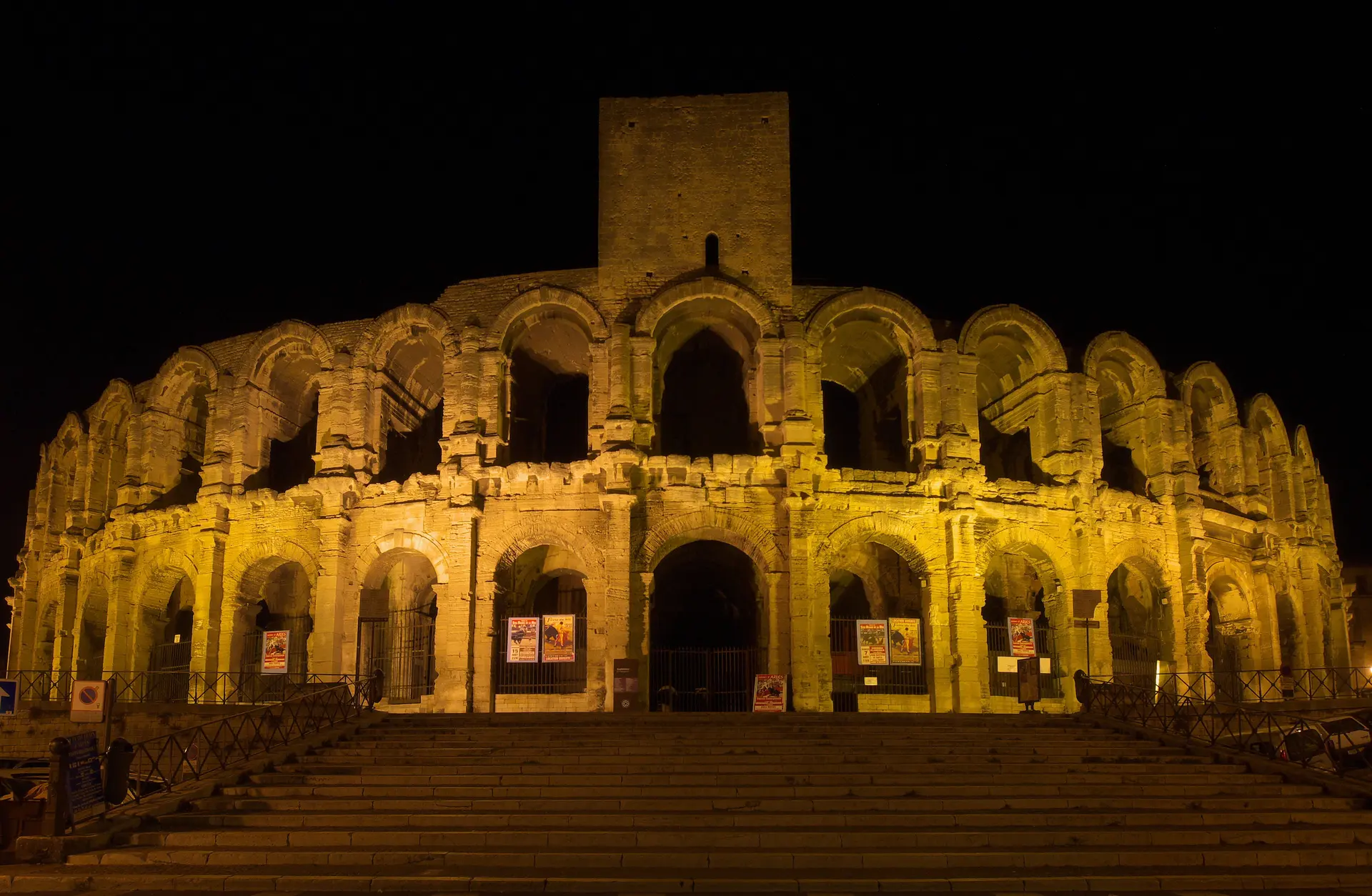
Arles
Arles, Bouches-du-Rhône, France
29.6 km away

Église Sainte-Marie-Madeleine, Martigues
Martigues, Bouches-du-Rhône, France
50.8 km away
References
Sources consulted for this page. Source categories describe the publication, not a guarantee that every claim is verified. Traditional accounts and outside interpretations may differ.
- 01Meet Sara-la-Kali, the patron saint of displaced people — National GeographicacademicDetailed coverage of Sara tradition
- 02Gypsy Pilgrimage in Les Saintes Maries de la Mer — Avignon et ProvenceacademicPilgrimage details
- 03Saintes-Maries-de-la-Mer - Wikipedia — Wikipedia contributorsencyclopediaBackground on Sara
Share a photo
Help visitors recognize Saint Sarah. Every submission is reviewed before publication.