Amisos Hill
A Pontic hilltop where royal gold met the Black Sea sky
Understand sacred places, explore living traditions, and learn how to engage respectfully with Pilgrim Map.
Access has not been verified. Check current local guidance before planning a visit.
Samsun, Turkey
Read the sources
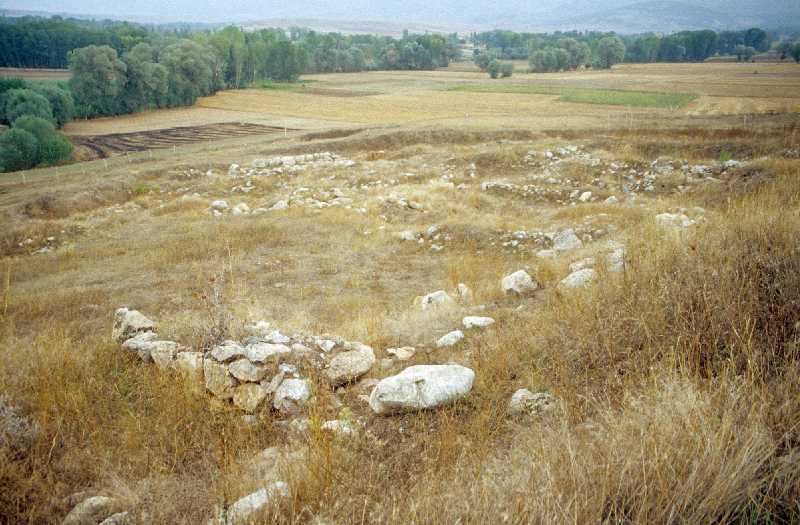
Image of Amisos Hill. Image source
Visit essentials
A quick read before you go
- Duration
- 1–2 hours at the hill including cable car ride and hilltop walk.
- Access
- Amisos Hill is approximately 4 km northwest of Samsun city centre, near the Samsun–Sinop…
Overview
Above Samsun, Amisos Hill kept a Pontic royal secret for two thousand years. In 1995 road workers broke into burial chambers of the Hellenistic ruling class associated with Mithridates VI's kingdom, which challenged Rome. Their Amisos Treasure—crowns, jewelry, vessels, and other grave provisions among the Black Sea region's finest Hellenistic goldwork—is now in Samsun Archaeology and Ethnography Museum.
The public hill park is reached by cable car. Preserved tumuli rise above an observation platform overlooking Samsun and the sea. Their elevation was deliberate: placing royal dead above inhabited ground and the water horizon made sky and sea witnesses to passage beyond the living.
Why this place is sacred
The thinness of Amisos Hill is the thinness of funerary high places — that persistent human practice of burying the significant dead at the highest point, where the boundary between the earthly and whatever lies beyond it seems thinnest. The Pontic royal family chose this hill above Amisos for reasons that archaeology can only partially reconstruct: the panoramic command of the sea, the visibility of the burial mounds from the city below, the sense that elevated placement marked elevated status.
The gold objects placed with the dead were not merely gifts — they were equipment for the afterlife, reflecting Hellenistic beliefs in which death was a continuation of social reality rather than an erasure of it. A golden crown in the grave is a claim that the wearer's royal identity persists past the boundary of breath. The hill kept these claims intact for two thousand years.
The Amisos Treasure was underground while Rome rose and fell, while Byzantines and Ottomans built over the ancient city below, while the Black Sea trade routes shifted and Samsun grew into a modern port city. What the hill preserved was not merely objects but a specific moment of Hellenistic funerary belief — the conviction that gold and elevation could secure a passage worth making.
The hilltop was selected as a prestige funerary landscape for senior members of the Pontus Kingdom ruling class, reflecting both the Hellenistic tradition of elaborate burial mounds (tumuli) and the Anatolian practice of elevated sacred burial.
Hellenistic funerary site (c. 300–30 BCE) → obscured and partially damaged by 20th-century radar installation construction → rediscovered 1995 during road work → excavated 2004–2005 → developed as a public archaeological park with cable car access and viewing platforms.
Experience and orientation
The cable car ride to Amisos Hill takes about three minutes and deposits visitors on a hilltop that combines the archaeological and the scenic with unusual directness: you step from the gondola into a landscape where ancient burial mounds rise from park grass, the Black Sea fills the northern horizon, and the city of Samsun spreads below in all directions. The tumuli are substantial — earthen mounds of a scale that makes the ambition of their construction legible.
The burial chambers themselves are closed to visitors, but the exterior dimensions and the interpretive panels explain what the 2004–2005 excavation found inside. The Amisos Treasure is no longer here — it lives in the Samsun Archaeology and Ethnography Museum in the city below — and the hill has the quality of a site from which its most eloquent content has departed, leaving behind the geography that gave the content its meaning.
What the hill retains is the view and the scale: the long arc of the Black Sea coast, the green hills receding westward toward Sinop, the city clustered below. Standing here, it is possible to understand why the Pontic rulers chose this particular hill — not only as a burial place but as a statement about where they believed their dead belonged: at the point where land met the sea met the sky.
Amisos Hill is approximately 4 km northwest of Samsun city centre. The cable car (Samsun Amisos Hill Gondola, 320 m) departs from the Baruthane area base station. City buses serve the Baruthane area from the city centre. Samsun is connected by train, intercity bus, and air (Samsun Çarşamba Airport, 25 km east).
Context and lineage
Amisos itself — the ancient name of modern Samsun — was originally a Milesian Greek colony on the Black Sea coast, later incorporated into the Pontic Kingdom that Mithridates I established in 301 BCE. The kingdom that grew from this foundation became, under Mithridates VI Eupator (r.
120–63 BCE), Rome's most dangerous eastern adversary — a king who spoke twenty-two languages, who was believed to have built immunity to poisons by taking small doses throughout his life, and who fought three wars against Rome before his final defeat.
The tumuli on Amisos Hill predate Mithridates VI; they were built for earlier members of the ruling family, probably between the 3rd and 1st centuries BCE, during the period when Pontus was consolidating its power across the Black Sea world.
The Pontus Kingdom (301–63 BCE) was founded by Mithridates I, a Persian noble who established an independent kingdom on the Black Sea coast in the power vacuum after Alexander the Great's death. The dynasty combined Persian Achaemenid ancestry with Greek cultural aspirations, producing a hybrid Hellenistic court culture whose material expression is visible in the Amisos Treasure's goldsmithing.
Traditions and practice
Hellenistic funerary rites included the careful placement of gold grave goods — crowns, jewelry, decorated vessels — within the burial chambers as provisions for the dead's ongoing status and wellbeing. The scale of the objects found at Amisos suggests elaborate preparation: goldsmiths producing work of the highest quality for burials that were intended to be permanent and inviolable.
The elevated location of the tumuli, visible from the city below, was itself part of the funerary statement — a visible claim that the dead continued to preside over the living landscape.
Amisos Hill is now a public archaeological park. The cable car excursion is a popular local outing. The Amisos Treasure at the Samsun Archaeology and Ethnography Museum is the primary destination for those seeking engagement with the site's historical significance.
Begin at the Samsun Museum, where the Amisos Treasure is displayed, before ascending the hill. Encountering the gold objects first — their fineness, their scale, the care of their making — prepares a different quality of attention for the hilltop itself. On the hill, stand with the burial mounds behind you and face the sea.
Try to hold the distance between what was found underground and what the hilltop offers above: the gold and the horizon, the sealed chamber and the open sky. The juxtaposition is what the Pontic rulers constructed deliberately. Bring binoculars for the coastal views westward.
Pontus Kingdom Royal Funerary Cult
HistoricalThe tumuli at Amisos Hill were burial places of the Pontic ruling class. The elaborate gold grave goods reflect Hellenistic funerary beliefs in which the dead were honoured with fine objects ensuring status in the afterlife. The elevated hilltop setting reflects a tradition of prestigious burial on high ground common across Anatolia.
Tumulus construction; placement of gold grave goods including crowns, jewelry, and decorated vessels; funerary ceremonies at the burial mound
Perspectives and open questions
Amisos Hill can be encountered as a funerary monument, as a window into the Pontic Kingdom that came closest to halting Roman expansion in the east, or as a meditation on the human desire to place the dead where they can watch the horizon.
Scholarly perspective
The Amisos tumuli are Hellenistic-period royal or aristocratic burials of the Pontic Kingdom, dated to c. 300–30 BCE. The Amisos Treasure is a key artefact collection for understanding Hellenistic goldsmithing and funerary customs in the Black Sea region. The site was discovered accidentally in 1995 during road construction — a reminder of how much ancient material remains beneath modern Anatolian cities.
Living and traditional perspectives
Samsun residents identify strongly with the Pontus Kingdom heritage. The Amisos Treasure is a major civic symbol. The 1995 discovery sparked local pride and led directly to the hilltop park's development. The Pontic Greek diaspora (communities of Black Sea Greek descent) regard the site with particular significance as part of their ancestral heritage.
Alternative interpretations
The hilltop's prominence above the sea and the richness of the buried offerings have led some commentators to suggest a pre-Hellenistic sacred function, possibly connected to Anatolian hilltop sanctuaries. No Bronze Age or earlier material has been documented at the site, but the possibility has not been archaeologically investigated.
Open questions
The specific individuals buried in the tumuli remain unidentified. Whether earlier ritual activity occurred on the hilltop before the Hellenistic period has not been established. The full extent of the ancient necropolis around Amisos Hill has not been surveyed.
Plan your visit
Access and arrival
Amisos Hill is approximately 4 km northwest of Samsun city centre, near the Samsun–Sinop highway. Accessible by city bus to the Baruthane area, then cable car (320 m). Samsun is connected by intercity bus, train (Samsun railway station), and air (Samsun Çarşamba Airport, approximately 25 km east).
Samsun city centre (4 km east) offers the full range of accommodation — business hotels, midrange options, and guesthouses. The city is a provincial capital with developed tourism infrastructure.
Respectful visit
No specific requirements.
Permitted outdoors. Check museum regulations for artifact photography at the Samsun Archaeology and Ethnography Museum.
Not applicable.
Do not climb on or disturb the tumulus mounds. Interior tomb chambers are permanently closed to the public.
Do not climb on the tumulus mounds. The interior burial chambers are permanently closed. Check cable car operating hours before visiting — the gondola does not run at all hours and may have seasonal closures.
Location
Map loads as you approach this section.
Pilgrim reflections
A portrait of encounter, not a score
Pilgrims describe what they felt, how present they could become, and whether the place would shape a journey. There are no stars and no ranking of traditions.
No reviewed reflections yet
The first pilgrims can help describe the character of being here.
Share a reflection
Available after an account-backed “Been there.” Every reflection is reviewed before publication.
Nearby sacred places
Explore other sacred places in the region. Proximity does not establish access or travel time; check each place’s guidance.


References
Sources consulted for this page. Source categories describe the publication, not a guarantee that every claim is verified. Traditional accounts and outside interpretations may differ.
- 01Amisos Hill | KÜRE Encyclopedia — KÜRE EncyclopediaencyclopediaTurkish encyclopaedic entry with historical detail
- 02Amisos Treasure - Wikipedia — Wikipedia contributorsencyclopediaDetails of the gold treasure found in the tumuli
- 03Amisos Hill, Samsun – Tour Maker Turkey — Tour Maker TurkeyguideVisitor-focused guide with historical background
- 04Amisos Hill & Royal Tumulus Tombs: The 2 Most Magnificent Ancient Mounds — Go Explore TurkeyguideDetailed overview of tumuli and Amisos Treasure
- 05Where is Amisos Hill? History and Story — RaillyNewsSource contextHistorical overview sourced from Turkish archaeological literature
- 06Take the Cable Car Up to Amisos Hill | Samsun Travel Guide — Yerel RehberguideCurrent visitor access information including cable car
- 07The Stunning Ancient Greek Treasures of the Pontus Kingdom — Greek ReporterSource contextRecent (2025) article on Pontus Kingdom archaeological heritage
Share a photo
Help visitors recognize Amisos Hill. Every submission is reviewed before publication.