Altamira Cave
The Sistine Chapel of Ice Age art, painted over 20,000 years by hands now unknown
Understand sacred places, explore living traditions, and learn how to engage respectfully with Pilgrim Map.
Access has not been verified. Check current local guidance before planning a visit.
Santillana del Mar, Cantabria, Spain
Read the sources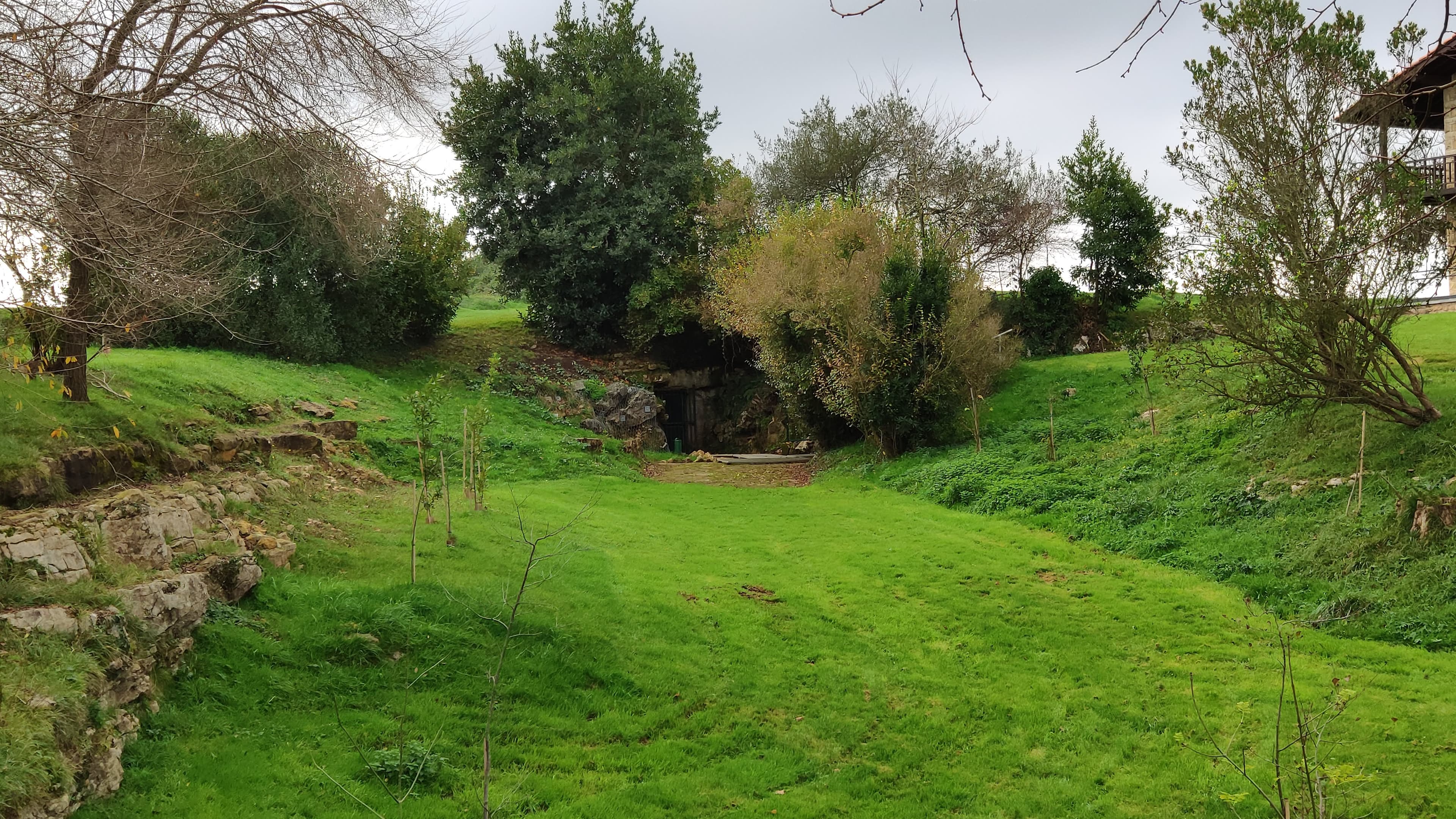
Image of Altamira Cave. Image source
Visit essentials
A quick read before you go
- Duration
- A full museum and Neocueva visit typically runs a few hours, though no source specifies an exact…
- Access
- Located near Santillana del Mar, Cantabria, in northern Spain.
Overview
Altamira brings together two encounters: a protected cave ceiling painted and repainted across tens of thousands of years, and the exact Neocueva replica through which almost everyone experiences it. The red-and-black bison gain volume from the rock's natural bulges, making that long human return visible, while entry to the original remains an exceptionally scarce, tightly controlled privilege.
Why this place is sacred
What sets Altamira apart from other painted caves is not any single image but the sheer duration compressed into one ceiling. Uranium-series dating published in 2012 established that a claviform, club-shaped symbol near the cave's entrance is at least 35,600 years old — among the oldest confirmed rock art anywhere in Europe. The Polychrome Ceiling's famous bison, by contrast, belong to the Magdalenian period, roughly 14,820 to 13,130 years ago.
A subsequent peer-reviewed study extended this further, establishing that Altamira's art was produced across a long, repeated sequence of painting episodes rather than a single creative event — successive generations of people returning to add to, or paint over, what earlier hands had left.
The imagery itself concentrates around large fauna: bison rendered with volumetric shading that follows the ceiling's natural rock bulges, horses, a doe, and what some readings identify as a boar, though no source consulted compiles a fully itemized inventory of every motif present. The technique — using the rock's own contours to suggest an animal's shoulder or haunch — is part of why the ceiling reads, even to untrained eyes, as something more than outline drawing.
What the imagery meant to the people who made it is where certainty ends. Archaeologists and rock-art scholars increasingly read Franco-Cantabrian cave art, Altamira included, through frameworks involving shamanic trance, hunting magic, fertility or animal-increase ritual, and therianthropic (human-animal hybrid) symbolism found elsewhere in the same cultural sphere.
None of these readings is universally accepted as definitive, and no oral tradition or written record survives to confirm any of them, since no continuous cultural lineage connects the Solutrean and Magdalenian peoples who painted here to anyone alive today.
The cave's own physical qualities — total darkness, acoustic resonance, isolation from daylight and sound — are cited by shamanism-oriented scholars as conditions historically associated with altered states of consciousness, a widely discussed but not conclusively proven interpretive lens on why this particular chamber, rather than some other space, became the one worth returning to for tens of thousands of years.
The question of who painted the earliest symbols carries its own unresolved edge. The 2012 dating study that established the claviform's minimum age also raised, as one hypothesis among several, the possibility that Europe's oldest cave symbols could be attributable to Neanderthals rather than anatomically modern humans — a claim more firmly associated with other Spanish caves like La Pasiega in later research, but one that is sometimes popularly conflated with Altamira itself.
Mainstream authorship attribution for Altamira remains modern humans of the Solutrean and Magdalenian cultures; the Neanderthal question is noted here as a live but unsettled thread in the broader dating debate, not a finding specific to this cave.
The cave's earliest dated marks were made by Upper Paleolithic hunter-gatherers at least 35,600 years ago; its most famous imagery, the Polychrome Ceiling bison, dates to the Magdalenian period roughly 14,820 to 13,130 years ago. There is no single founding purpose to recover, since the evidence points to repeated returns across an enormous span rather than one act of creation or consecration — whatever motivated the first mark-maker likely differed from what motivated the last.
Painting activity appears to have ceased sometime after the Magdalenian phase, after which the cave passed out of use and out of memory for millennia. Its 1868 rediscovery and 1879 identification of the paintings led first to public ridicule — the scientific establishment rejected Sautuola's claims at the 1880 Lisbon Prehistoric Congress — and only in 1902, following further discoveries elsewhere in France, did the leading skeptic Émile Cartailhac publish a formal retraction.
Altamira was inscribed as a UNESCO World Heritage Site in 1985 and, in 2008, became the anchor site of an 18-cave grouping across northern Spain. Since 2014, public access has run almost entirely through the Neocueva replica, with the original cave reserved for a strictly limited number of supervised visits per week.
Experience and orientation
For nearly everyone who travels to Santillana del Mar, 'visiting Altamira' means visiting the Neocueva — a meticulously reconstructed section of the cave built beside the National Museum, reproducing the Polychrome Ceiling and surrounding passages at full scale. Visitors describe being struck less by any single image than by the accumulated effect of standing beneath a ceiling of bison rendered with real dimensional presence, and by the museum's broader exhibits on Ice Age life that contextualize what the replica shows.
It is, by design, an experience built for reflection rather than urgency — there is no lottery, no time limit, no protective suit.
The minority who do enter the actual cave describe something categorically different. Limited to five people a week, minimum age sixteen, for a supervised visit of exactly thirty-seven minutes, wearing protective suits and museum-provided footwear to keep humidity, heat, and particulates from entering the cave's controlled microclimate, visitors report an experience heightened as much by its scarcity and ritualized protocol as by the paintings themselves.
Several accounts describe the visit in explicitly reverent terms — not because any religious practice occurs, but because the sheer improbability of being one of five people that week, standing before marks made tens of thousands of years ago, produces something close to it.
Both encounters, replica and original, are commonly framed by visitors and writers less as a religious experience than as an encounter with deep time itself — a direct confrontation with how far back human symbolic and artistic consciousness reaches, even for visitors arriving with no interest in Paleolithic archaeology specifically.
Most travelers should plan around the Neocueva and museum, which require no advance lottery and reward a few unhurried hours. Those hoping to see the actual cave should check the current-year application procedure directly with the museum well before traveling, since the access system — open lottery versus a waitlist that reportedly closed in 2022 — has changed more than once since 2014 and should not be assumed stable year to year.
Context and lineage
The cave's entrance was found in 1868, commonly linked to a local dog owned by a hunter falling into a hole on the hillside, though this circumstantial account of discovery is treated by some sources as folklore-adjacent rather than fully documented. The more substantively recorded event came in 1879, when landowner Marcelino Sanz de Sautuola explored the cave with his young daughter Maria, who first noticed the bison painted across the ceiling.
Sautuola published his findings in 1880 with the geologist Juan Vilanova y Piera, proposing the paintings were genuinely prehistoric. The claim was ridiculed at the 1880 Lisbon Prehistoric Congress, where French prehistorians Gabriel de Mortillet and Émile Cartailhac led the rejection, arguing the paintings were too well-preserved and technically accomplished to be authentically Paleolithic — implying fraud, possibly Sautuola's own. Sautuola died in 1888 without seeing his claim accepted.
Vindication came gradually through the discovery of similar art in French caves through the 1890s, culminating in Cartailhac's own 1902 essay, pointedly titled 'Mea culpa d'un sceptique' ('A Skeptic's Mea Culpa'), formally reversing his position.
No continuous ritual, religious, or oral lineage connects the Solutrean and Magdalenian peoples who painted the ceiling to any community living today; the record of their beliefs survives only through the images themselves, read by later scholars without benefit of language or testimony. What continues instead is a lineage of scientific study and state stewardship — from Sautuola's contested first claim through the 2012 dating campaigns to the museum's current conservation regime.
Marcelino Sanz de Sautuola
discoverer
Landowner and amateur archaeologist who explored the cave in 1879 and published the first claim, in 1880, that its paintings were genuinely prehistoric; died in 1888 without seeing his claim vindicated.
Maria Sanz de Sautuola
discoverer
Marcelino's young daughter, traditionally credited as the first to notice the bison painted across the cave ceiling during their 1879 exploration.
Juan Vilanova y Piera
scholar
Geologist who co-published Sautuola's 1880 findings, lending early scientific credibility to the claim of prehistoric authorship.
Émile Cartailhac
scholar
French prehistorian who led the initial rejection of Sautuola's claim in 1880, then formally retracted his skepticism in a 1902 essay after comparable French discoveries confirmed the paintings' authenticity.
Alistair Pike
scholar
University of Bristol archaeologist who led the 2012 uranium-series dating study establishing Altamira's earliest symbols at over 35,600 years old and its long, multi-phase painting sequence.
Traditions and practice
Some archaeologists interpret Franco-Cantabrian cave art broadly, Altamira included, through frameworks of shamanic trance, hunting magic, fertility or animal-increase ritual, and therianthropic symbolism, proposing that darkness, isolation, and cave acoustics were used deliberately to induce altered states of consciousness.
This shamanic framework has gained increasing scholarly traction but is not universally accepted, and no specific ritual sequence for Altamira itself is documented — the interpretation is drawn from the broader Upper Paleolithic corpus rather than confirmed textual or oral evidence tied to this cave.
None. The cave and Neocueva function exclusively as a scientific and museum heritage site under the Spanish Ministry of Culture, with no ceremonial or devotional activity offered or implied.
In the Neocueva, visitors seeking more than a walkthrough might stand still beneath the reproduced Polychrome Ceiling long enough to trace how the painters used the rock's own bulges to give a bison's shoulder its weight — a technique easy to miss on a first pass.
Those fortunate enough to enter the real cave might use the fixed thirty-seven minutes deliberately: resisting the urge to move quickly between panels, and letting the total absence of outside light and sound register as its own kind of information about how the space might once have been used.
Upper Paleolithic (Solutrean–Magdalenian) ritual/cosmological art practice
HistoricalScholars increasingly interpret Altamira's Polychrome Ceiling through frameworks involving shamanic trance imagery, hunting magic, fertility or animal-increase ritual, and initiation, though no single interpretation is universally accepted as definitive.
Hypothesized practices include trance-induction through darkness, isolation, and cave acoustics, alongside the painting techniques themselves — using rock contours for volumetric shading of bison and other fauna. None of this is confirmed specifically for Altamira rather than inferred from the broader Franco-Cantabrian cave-art corpus.
Archaeological, museological, and conservation stewardship
ActiveAltamira remains the subject of ongoing scientific study — including the uranium-series dating campaigns that established its long painting sequence — and is actively managed by the Spanish Ministry of Culture as a UNESCO World Heritage anchor site, with the Neocueva replica sustaining public engagement while the original cave is preserved under strict conservation protocol.
Scientific dating and imaging research, a lottery or waitlist system severely limiting physical access to the original cave, protective-suit protocols for the rare permitted visits, and full-scale public replica access through the Neocueva and National Museum.
Perspectives and open questions
Altamira asks visitors to hold two different kinds of certainty apart: the settled scientific record of its authenticity and long painting sequence, and the genuinely open question of what the imagery meant to the people who made it.
Scholarly perspective
Mainstream archaeology accepts Altamira's paintings as authentic Upper Paleolithic art produced across a long sequence, from at least 35,600 years ago for the earliest symbols through the Magdalenian Polychrome Ceiling bison at roughly 14,820 to 13,130 years ago, following the resolution of the nineteenth-century authenticity controversy in 1902. Interpretation of the art's purpose — hunting magic, fertility ritual, shamanic or trance-related cosmology, group identity marking — remains actively debated, with the shamanic framework gaining increasing acceptance without achieving universal consensus.
Living and traditional perspectives
No continuous indigenous or folk tradition connects contemporary communities to the Paleolithic culture that created the art; there is no living oral tradition specific to Altamira for scholars or visitors to draw on, since the population that painted it left no direct cultural descendants who can speak to its meaning.
Alternative interpretations
Some popular and esoteric writers frame the ceiling's imagery as evidence of shamanic 'journeying,' cosmological mapping, or proto-religious vision-questing tied to altered states of consciousness. This overlaps with the academic shamanic-interpretation literature but goes further in its specificity and certainty than peer-reviewed scholarship supports, and should be read as one interpretive lens among several rather than an established finding.
Open questions
The precise meaning and function of the imagery — whether specific rituals were performed beneath the ceiling, who exactly created each phase of painting across its tens of thousands of years, the unresolved question of possible Neanderthal authorship raised for Europe's oldest cave symbols generally, and why painting activity recurred across such an enormous span rather than happening once and stopping — all remain open questions with no consensus answer.
Plan your visit
Access and arrival
Located near Santillana del Mar, Cantabria, in northern Spain. The National Museum and Research Center of Altamira, including the Neocueva, is open to the general public with standard ticketed admission and no advance lottery required. Mobile signal and general services are reliable in and around Santillana del Mar, a well-established tourist town; this is not a remote-access site in the way some rural megalithic or cave sites are.
Access to the actual prehistoric cave is separately and severely restricted — see best_times and restrictions above — and intending applicants should contact the museum directly for current-year procedure rather than assume a standing open lottery.
Santillana del Mar itself offers a range of lodging suited to travelers visiting the museum, being a well-developed heritage tourism town; no accommodation exists at the cave site beyond the town's own offerings.
Respectful visit
No special dress is required for the Neocueva or museum. For the small number of lottery winners visiting the actual cave, protective suits and footwear are provided by museum staff and must be worn to prevent contamination of the cave's controlled microclimate.
Not confirmed in detail from available sources for either the Neocueva or the real cave; museum photography policy should be verified directly with the official museum before a visit, since Spanish national museums vary in their rules and no Altamira-specific policy was located in research.
None; there is no offerings tradition associated with this site.
Real cave access is capped at five people per week via a lottery or waitlist system, minimum age sixteen, for a strictly time-limited visit of approximately thirty-seven minutes under full supervision, with no touching of surfaces permitted. The Neocueva and museum operate under standard visitor conduct expected at any national museum.
There is no offering or ritual practice to observe or avoid at Altamira. In the real cave, protective suit and footwear protocols exist purely to protect a fragile microclimate that has preserved pigment for tens of thousands of years — treat these as non-negotiable conservation measures, not ceremonial dress.
Location
Map loads as you approach this section.
Pilgrim reflections
A portrait of encounter, not a score
Pilgrims describe what they felt, how present they could become, and whether the place would shape a journey. There are no stars and no ranking of traditions.
No reviewed reflections yet
The first pilgrims can help describe the character of being here.
Share a reflection
Available after an account-backed “Been there.” Every reflection is reviewed before publication.
Nearby sacred places
Explore other sacred places in the region. Proximity does not establish access or travel time; check each place’s guidance.



References
Sources consulted for this page. Source categories describe the publication, not a guarantee that every claim is verified. Traditional accounts and outside interpretations may differ.
- 01Cave of Altamira and Paleolithic Cave Art of Northern Spain — UNESCO World Heritage CentreofficialOfficial UNESCO World Heritage listing; confirms 1985 inscription (extended 2008 to 17 additional caves for 18 total), criteria (i) and (iii), geographic spread across Asturias, Cantabria, and the Basque Country, and dating range of ~35,000-11,000 BC for the overall property.
- 02Visit to the cave of Altamira - Museo Nacional y Centro de Investigación de Altamira — Ministerio de Cultura (Spain)officialOfficial Spanish Ministry of Culture museum page; source for real-cave access/lottery structure, conservation rationale, and the Neocueva replica concept.
- 03The cave of Altamira, World Heritage — Ministerio de Cultura (Spain)officialOfficial museum page on the UNESCO status and heritage significance of the cave.
- 04Cave of Altamira - Wikipedia — Wikipedia contributorsacademicConfirms discovery history (1868 initial find, 1879 Sautuola/Maria discovery of ceiling paintings), 1880 publication, the authenticity controversy through 1902, and the Polychrome Ceiling's contents (bison, horses, doe, possible boar).
- 05Cave of Altamira and Paleolithic Cave Art of Northern Spain - Wikipedia — Wikipedia contributorsacademicCorroborates the 18-cave UNESCO grouping and geographic/chronological scope.
- 06Altamira | Cave in Spain, Prehistoric Art — Encyclopaedia BritannicaacademicGeneral encyclopedic overview corroborating location, discovery, and significance.
- 07Marcelino de Sautuola | Discovery of Altamira, Paleolithic Art, Cave Paintings — Encyclopaedia BritannicaacademicBiographical detail on Sautuola, his 1880 publication with Juan Vilanova y Piera, and the skepticism/forgery accusations that followed.
- 08Uranium-series dating reveals Iberian paintings are Europe's oldest cave art — ScienceDaily (reporting University of Bristol research led by Dr. Alistair Pike)academicSummarizes the 2012 peer-reviewed uranium-series dating study of Altamira and 10 other northern Spanish caves; source for the >35,600-year-old claviform symbol at Altamira and the Neanderthal-authorship hypothesis raised by Pike's team.
- 092012: Europe's oldest rock art — University of Bristol News and featuresacademicUniversity press release on the Pike et al. uranium-series dating study; corroborates methodology and findings.
- 10Uranium series dating reveals a long sequence of rock art at Altamira Cave (Santillana del Mar, Cantabria) — Journal of Archaeological Science (ScienceDirect)academicPeer-reviewed study establishing that Altamira's art was produced across a very long sequence spanning tens of thousands of years, not a single episode.
- 11Art and Shamanism: From Cave Painting to the White Cube — Arts (MDPI journal)academicPeer-reviewed article discussing the shamanic interpretation of Paleolithic cave art as an increasingly accepted (though not universally settled) framework in archaeology and depth psychology.
- 12How the Altamira Cave Paintings Divided the 19th-Century Scientific World — Artnet NewsSource contextConfirms the 1880 Lisbon Prehistoric Congress ridicule, the roles of Gabriel de Mortillet and Émile Cartailhac in leading the rejection, and Cartailhac's 1902 retraction essay 'Mea culpa d'un sceptique.'
- 13The Cave of Altamira — Bradshaw FoundationSource contextSpecialist rock-art research foundation resource; used for general narrative and cross-checking discovery/controversy details.
- 14National Museum and Research Center of Altamira Tickets — Wonderful MuseumsSource contextTravel-guide source on the Neocueva replica and current lottery/waitlist system for real-cave access (5 visitors/week, minimum age 16, ~37-minute visit, protective suits); cross-check specific procedural details against the official museum site.
- 15Shamanistic and Visionary Experience (Cave Art: An Intuition of Eternity) — Bradshaw FoundationacademicOverview of the shamanic/altered-states interpretive framework applied broadly to European Paleolithic cave art (not Altamira-specific), including trance-state imagery and therianthropic figures such as 'The Sorcerer.'
Share a photo
Help visitors recognize Altamira Cave. Every submission is reviewed before publication.