Abbazia di Casamari
A Gothic-Cistercian abbey where monks still chant the hours and sell the liqueurs they make
Understand sacred places, explore living traditions, and learn how to engage respectfully with Pilgrim Map.
Access has not been verified. Check current local guidance before planning a visit.
Veroli, Frosinone, Italy
Read the sources
Image of Abbazia di Casamari. Image source
On this pilgrimage
Cammino di San BenedettoVisit essentials
A quick read before you go
- Duration
- 1-2 hours for the church, cloister, museum, and shop; longer for pilgrims attending an Office or…
- Access
- About 10 km east-southeast of Veroli, Province of Frosinone, roughly 1.5-2 hours southeast of…
Overview
Casamari's church and cloister, rebuilt between 1203 and 1217, turn Cistercian theology into an austere Burgundian idiom: no gilding or crowded fresco cycles, but proportion and repetition. Alongside Fossanova, the complex is regarded as Italy's finest surviving expression of Gothic-Cistercian building.
It remains a working monastery rather than a museum: the resident community, shaped by the Trappist-influenced reform introduced in 1717, sings the full Divine Office in Gregorian chant, maintains a pharmacy and shop of handmade liqueurs and remedies, and receives overnight pilgrims. Its roughly thousand-year monastic line survived the killing of six monks in 1799 and the Napoleonic suppression from 1811 to 1814; Bernard of Clairvaux's personal 12th-century Cistercian incorporation still reaches into the community's living prayer.
Why this place is sacred
Cistercian spirituality holds that architecture itself can be a form of prayer, and Casamari's 1203-1217 rebuilding was explicitly conceived to embody that conviction: geometric proportion, restrained ornament, and repeated form standing in for the crowded iconography common to other medieval Italian churches. Art and architectural historians regard the result, alongside Fossanova, as the finest surviving example of early Italian Gothic in the Cistercian Burgundian idiom — a building meant to focus attention on order and humility rather than decoration.
What distinguishes Casamari from many architecturally comparable sites is that the community the building was built to house never fully left. Interrupted only by the Napoleonic suppression of 1811-1814, Cistercian monastic life has continued here since Bernard of Clairvaux arranged the abbey's incorporation into the Order of Cîteaux in 1140-1152, making it the 29th Cistercian foundation.
The 1717 introduction of Trappist-influenced observance, brought by monks from Buonsollazzo in Tuscany under commendatory abbot Annibale Albani, intensified rather than interrupted that continuity, reinforcing the community's commitment to manual labor and silence alongside the choral office.
A harder thread runs through the same history: in 1799, six monks of Casamari were killed, an episode the Church has since advanced toward canonization. Visitors and pilgrims consistently describe the combination of the building's austere geometry, the sound of chant in the church, and the still-working monastic economy — pharmacy, gardens, library — as creating an atmosphere of lived, embodied spirituality rather than a static monument.
The continuity is the point: this is not a place remembering what monks once did here, but one where they are doing it now.
The site began under Benedictine monks from nearby Veroli, who built a church here around 1005 and a monastery around 1036 — sources vary on the precise sequence and are not fully reconciled in available research. Its purpose from the outset was ordinary cenobitic monastic life: communal prayer, agricultural labor, and hospitality, following the Rule of St.
Benedict before the community's incorporation into the stricter Cistercian reform in the mid-12th century redirected that same purpose toward Cistercian ideals of simplicity and manual work.
Cistercian incorporation under Bernard of Clairvaux (1140-1152) was followed by the Gothic rebuilding of 1203-1217 that gives the abbey its present form. The community survived a sacking in 1417, the 1799 killing of six of its monks, and the Napoleonic suppression of 1811-1814, resuming monastic life afterward each time. The 1717 Trappist-influenced reform shaped the community's modern character, and Pope Pius XII's 1957 elevation of the church to basilica minor status formalized its standing within the wider Church.
Today the abbey combines that continuous liturgical life with a heritage and museum function — prehistoric and Roman artifacts, seventeenth-century paintings, and a library of more than 500,000 volumes — alongside its working pharmacy and liqueur production.
Experience and orientation
Time a visit around one of the daily Offices and the abbey stops being primarily an architectural destination. The chant arrives unamplified, filling a church built with exactly this kind of sound in mind — plain stone surfaces that carry voice rather than absorb it.
Visitors who arrive expecting a museum experience often describe recalibrating mid-visit, once they realize the monks in the choir are not a demonstration staged for tourists but the actual daily practice of the actual resident community.
Outside the liturgy, the cloister and chapter room reward slow attention: repeated arches, careful proportion, almost nothing to look at in the way a fresco cycle gives you something to look at, which is itself the point of Cistercian design. The museum galleries — prehistoric and Roman artifacts, a substantial library, seventeenth-century paintings — extend the visit into more conventional heritage-tourism territory, useful but secondary to the church itself.
The shop and pharmacy close the visit on a practical note that several visitor accounts describe as oddly moving rather than merely transactional: buying the abbey's honey, liqueurs, or herbal remedies is, in a small way, participating in the same manual-labor economy the monks have sustained here for centuries, funding the community directly rather than simply observing it.
Check the Office and Mass schedule before you go, and plan your visit around one of them rather than around opening hours alone — this is the single biggest difference between a good visit and a merely adequate one. Arrive early enough to sit in the church before the Office begins, letting the space settle around you rather than walking in mid-chant.
After the service, take the cloister and chapter room slowly; there is little to read on placards, so give the architecture time to do its own explaining. If you are walking the Cammino di San Benedetto from Trisulti, arriving in the late afternoon often lines up naturally with Vespers.
Context and lineage
Benedictine monks from Veroli established the first church on this site around 1005 and a monastery around 1036, following the Rule of St. Benedict. In the mid-12th century, Bernard of Clairvaux personally arranged the community's incorporation into the Cistercian order as the 29th foundation of Cîteaux, redirecting its life toward the stricter Cistercian emphasis on manual labor, simplicity, and communal prayer.
The church and cloister standing today were built between 1203 and 1217, replacing the earlier Benedictine structures with the Gothic-Cistercian design historians regard as one of the finest examples of the style in Italy.
The community has weathered several severe disruptions across its history: a sacking in 1417; the killing of six of its monks in 1799, an episode now under consideration for canonization; and the Napoleonic suppression of 1811-1814, which closed the monastery entirely before monastic life resumed. In 1717, commendatory abbot Annibale Albani brought monks from the Trappist monastery of Buonsollazzo in Tuscany to introduce a stricter, Trappist-influenced observance that continues to shape the community's character.
Pope Pius XII elevated the church to basilica minor status in 1957.
From the Benedictine monks of Veroli who first settled the site, through Bernard of Clairvaux's 12th-century Cistercian incorporation, to the 1717 Trappist-influenced reform and the present-day Cistercian Congregation of Casamari, the abbey's monastic life traces a single, largely unbroken line across roughly a thousand years, interrupted only by the 1811-1814 Napoleonic suppression.
The same congregation today extends beyond this one abbey to communities in Ethiopia, Brazil, and the United States, though the precise current number of monks resident at Casamari itself is not documented with precision in available sources.
Saint Bernard of Clairvaux
founder
Arranged Casamari's incorporation into the Cistercian order in the mid-12th century, making it the 29th foundation of Cîteaux and redirecting its monastic life toward Cistercian ideals of simplicity and manual labor.
Annibale Albani
reformer
Commendatory abbot who in 1717 brought monks from the Trappist monastery of Buonsollazzo in Tuscany to introduce the stricter, Trappist-influenced observance the community follows to this day.
Traditions and practice
The community follows the Cistercian observance, intensified by the Trappist-influenced reform introduced in 1717, of daily Mass and the full cycle of the Divine Office sung in Gregorian chant, using the choir stalls within the Gothic-Cistercian church.
Daily liturgical offices are open to visitors and available online. Production of liqueurs, including the secret-recipe Tintura Imperiale, nocino, licorice liqueur, and the honey-based Gran Liquore Casamari, continues alongside chocolates, cosmetics, jams, and honey as part of the monastic economy. Visitors and pilgrims may attend Mass and the Offices in the church, tour the cloister, chapter room, refectory, and museum, and stay in the abbey's guesthouse with advance booking.
Attend one of the daily Offices, ideally Vespers or the principal conventual Mass, rather than visiting only during open museum hours. Tour the cloister and chapter room afterward, when the building's silence after the chant tends to feel different than it would beforehand. Support the community directly by purchasing liqueurs, honey, or remedies from the shop rather than treating the abbey purely as a sight to see.
Pilgrims on the Cammino di San Benedetto arriving from Trisulti often plan the stage to arrive in time for an afternoon Office.
Roman Catholic (Cistercian Order)
ActiveCasamari has been a Cistercian house since 1140-1152, when St. Bernard of Clairvaux personally arranged its incorporation as the 29th foundation of Cîteaux. Its Gothic-Cistercian church and cloister, rebuilt 1203-1217, are considered — alongside Fossanova — the finest and best-preserved example of this architectural style in Italy, embodying Cistercian ideals of geometric austerity and humility.
Daily Mass and Divine Office sung in Gregorian chant; monastic manual labor including pharmacy, liqueur, and food production; guesthouse hospitality for pilgrims and retreatants.
Roman Catholic (Benedictine, historical)
HistoricalThe site's monastic life began under the Benedictine rule, with a church dated c. 1005 and monastery c. 1036 established by monks from nearby Veroli, before the community's incorporation into the Cistercian order in the mid-12th century.
Benedictine monastic office and rule, historical.
Perspectives and open questions
Casamari's history is unusually well documented and largely uncontested; what is worth holding is less a scholarly dispute than the difference between visiting it as an architectural landmark and encountering it as a still-functioning religious community.
Scholarly perspective
Art and architectural historians regard Casamari's 1203-1217 church and cloister as the finest surviving example of early Italian Gothic in the Cistercian Burgundian idiom, paralleled in Italy only by Fossanova Abbey; historians of the order confirm its formal incorporation by Bernard of Clairvaux as the 29th foundation of Cîteaux.
Living and traditional perspectives
Within Catholic tradition, and specifically within the Cistercian community itself, the abbey's ongoing prayer life and continuity since the 12th century, barring the 1811-1814 Napoleonic interruption, are regarded as a direct spiritual inheritance from Bernard of Clairvaux's reform, made present daily through the chanted Office rather than treated as historical memory alone.
Alternative interpretations
Some popular and toponymic accounts emphasize the abbey's location atop the ancient Roman town of Cereatae and its association with the cult of Ceres and Mars and the birthplace of the Roman general Gaius Marius; sources present this as historical and antiquarian color rather than a claim of continuous esoteric significance.
Open questions
The exact date and circumstances of the earliest Benedictine settlement — whether ninth-century occupation, an 1005 church, or an 1036 monastery building marks the true founding — remain imprecisely reconciled across sources.
Plan your visit
Access and arrival
About 10 km east-southeast of Veroli, Province of Frosinone, roughly 1.5-2 hours southeast of Rome by car; on the Cammino di San Benedetto walking route, reachable on foot from Collepardo/Trisulti or onward from Isola del Liri/Sora.
The abbey's own guesthouse takes overnight pilgrims and retreatants by advance phone booking; Veroli and nearby Frosinone offer additional hotel options for those not staying on-site.
Respectful visit
Modest dress is required for church and liturgical spaces, consistent with active Catholic monastic settings — covered shoulders and knees, and silence expected during services.
Photography is generally permitted in the museum, cloister, and public visiting areas, but is discouraged or prohibited during active liturgical services out of respect for the monks at prayer.
No formalized pilgrim offering ritual is documented; visitors commonly support the community by purchasing liqueurs, foodstuffs, or cosmetics from the monastery shop, which directly funds the monastic community.
Enclosed monastic living quarters are not open to visitors; guesthouse stays and tours should be arranged or confirmed in advance (phone +39 0775 332 371), and opening hours and liturgy times should be verified directly with the abbey before visiting.
Guesthouse stays and group tours should be arranged or confirmed in advance by phone, and opening hours and liturgy times should be verified directly with the abbey before visiting, as schedules can shift around feast days and community needs.
Location
Map loads as you approach this section.
Pilgrim reflections
A portrait of encounter, not a score
Pilgrims describe what they felt, how present they could become, and whether the place would shape a journey. There are no stars and no ranking of traditions.
No reviewed reflections yet
The first pilgrims can help describe the character of being here.
Share a reflection
Available after an account-backed “Been there.” Every reflection is reviewed before publication.
Nearby sacred places
Explore other sacred places in the region. Proximity does not establish access or travel time; check each place’s guidance.
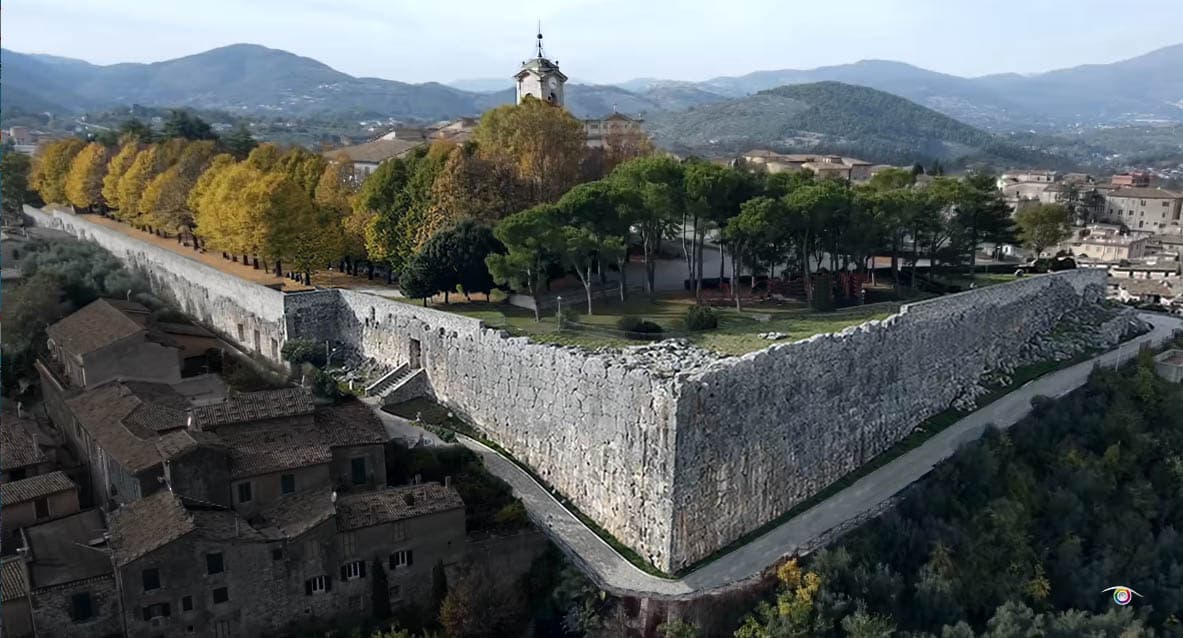


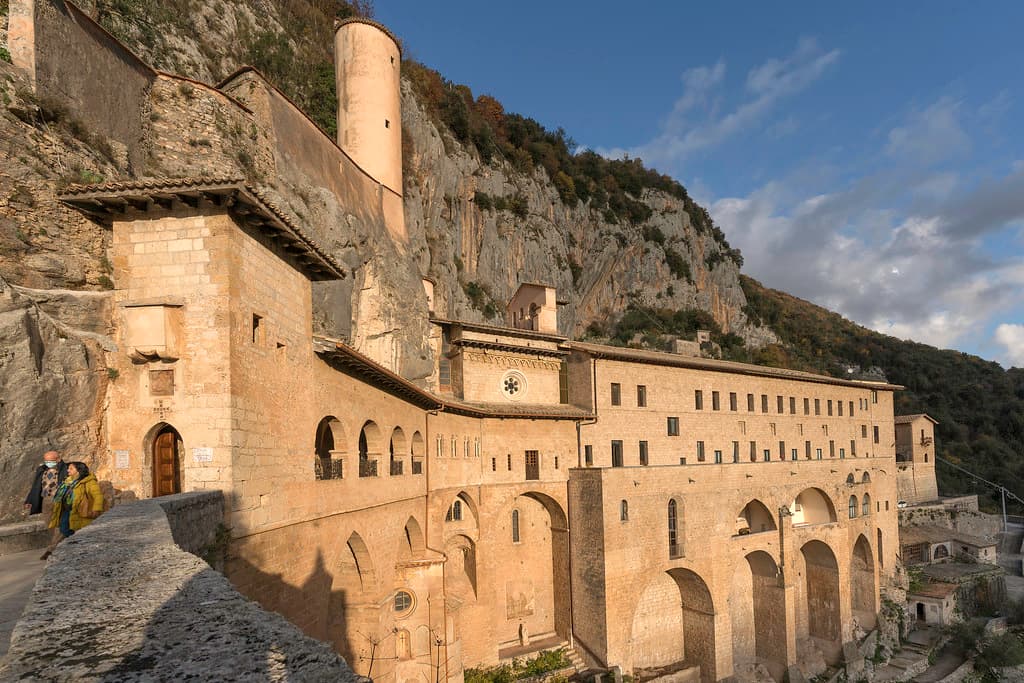
References
Sources consulted for this page. Source categories describe the publication, not a guarantee that every claim is verified. Traditional accounts and outside interpretations may differ.
- 01Casamari Abbey — Wikipedia — Wikipedia contributorsacademicConfirms Cistercian incorporation via St. Bernard of Clairvaux (29th foundation of Cîteaux), 1203-1217 Gothic-Cistercian rebuilding, 1417 sacking, 1799 martyrdom of six monks (canonization process approved 2020), Napoleonic suppression 1811-1814, basilica minor status since 1957.
- 02Abbazia di Casamari — Wikipedia (Italian) — Wikipedia contributorsacademicItalian-language article corroborating founding narrative and site history in greater local detail.
- 03Abbazia di Casamari — Ministero della Cultura — Ministero della CulturaofficialOfficial Italian heritage authority listing confirming National Monument status (1874) and site significance.
- 04Abbazia di Casamari — Direzione regionale Musei nazionali Lazio — Ministero della CulturaofficialConfirms museum/gallery holdings (prehistoric artifacts, Roman antiquities, 17th-century paintings), National Library of over 500,000 volumes, and continued active monastic presence.
- 05Abbazia di Casamari — official abbey website — Abbazia di CasamariofficialPrimary institutional source for the resident Cistercian community, liturgical schedule, and guesthouse/shop information.
- 06Casamari Abbey — Lazio, Italy — Sacred DestinationsspiritualDescribes ongoing liturgical life, Gregorian chant offices, and the abbey's role as an active place of pilgrimage and spiritual visitation.
- 07Casamari Abbey: Cistercian art, ancient remedies, and praying monks — Catholic News AgencySource contextJournalistic feature on the community's pharmacy, liqueur production, and daily prayer life; corroborates 200,000-300,000 annual visitor estimate reported elsewhere.
- 08Products of the Abbey of Casamari — Terra in CieloSource contextCommercial retailer page corroborating the abbey's historic liqueur line, including the secret-recipe 'Tintura Imperiale', nocino, licorice liqueur, and Gran Liquore Casamari.
- 09Il percorso del cammino — Cammino di San Benedetto — Cammino di San Benedetto (official trail association)Source contextConfirms Casamari's place as a major stage/destination on the 300km, 16-stage Cammino di San Benedetto linking Norcia, Subiaco, and Montecassino.
- 10The Abbey of Casamari, nestled in the Ciociaria region — Around RomeSource contextConfirms the Roman-era origin of the site name (Cereatae, associated with the goddess Ceres and general Gaius Marius) and visitor experience of the Gothic-Cistercian complex.
Share a photo
Help visitors recognize Abbazia di Casamari. Every submission is reviewed before publication.