Aathmanatha Swamy temple, Avudaiyarkoil, Thiruperunthurai, Tamil Nadu
A temple to the formless God — where Shiva is worshipped as the soul itself, not as an image
Understand sacred places, explore living traditions, and learn how to engage respectfully with Pilgrim Map.
Access has not been verified. Check current local guidance before planning a visit.
Avudaiyarkoil, Tamil Nadu, India
Read the sources
Visit essentials
A quick read before you go
- Duration
- An hour and a half to three hours to appreciate the sculptures, mandapams and stone roofing.
- Access
- In Avudaiyarkoil village near Aranthangi, Pudukkottai district, Tamil Nadu; reachable by road…
Overview
Most Shiva temples center a lingam with Nandi before it; Tirupperunturai has neither. Shiva is worshipped as formless Atmanathar, Lord of the soul, through only the Avudaiyar pedestal where a lingam would stand. In Saiva Siddhanta this absence teaches nirguna Brahman, the Absolute without form, drawing mature devotion from form toward the formless.
Tradition says Manikkavasagar, prime minister to Varaguna Pandya II, came with royal funds for war-horses, met Shiva disguised as a teacher beneath a kurundai tree, and instead built the temple. From that transformation came the Tiruvasagam, among Tamil Saiva bhakti's most loved texts; the saint is venerated here as virtually one with Shiva. Architecture gives abstraction stone form: a granite roof carved like timber, the kodungai, musical pillars, a thousand-pillar mandapam, and the Kanaka Sabha.
Revered as Jnana Sabha, Hall of Wisdom, it is one of five sacred halls of Shiva's cosmic dance. Six daily poojas follow the Shaiva Agamas, with ten-day Margazhi Thiruvadirai and Aani festivals. The construction sequence remains uncertain: ninth- or tenth-century Pandya origins blend with later work, much surviving from around the fifteenth century, while the Manikkavasagar legend's historical core remains traditional.
Why this place is sacred
Tirupperunturai's thinness is theological as much as atmospheric. Worship here is of the formless Absolute rather than an icon — a rare and contemplative theology in which the absence of lingam and Nandi guides attention from external form to inner consciousness.
The temple is bound to the composition of the Tiruvasagam, one of the most loved texts of Tamil bhakti, and its architectural marvels — the granite roof carved to imitate timber, the musical pillars — materialize abstract ideas in stone. Devotees report that worshipping the formless Atmanathar shifts attention from external form to inner consciousness, in keeping with the Saiva Siddhanta theology of the soul's union with the Absolute.
A Shaiva temple built, by tradition, by the saint Manikkavasagar for the worship of Shiva as the formless Atmanathar, the Lord of the soul.
Traditional origins lie in the Pandya period, around the ninth or tenth century, associated with Manikkavasagar; much of the surviving granite structure dates to later periods, with significant work by the fifteenth century. It remains a living, actively worshipped Shaiva temple in Tamil Nadu.
Experience and orientation
Visitors often arrive expecting a familiar Shiva temple and find something quietly disorienting: darshan before a formless pedestal rather than an image. The Avudaiyar stands where a lingam would, and there is no Nandi to greet it — an absence that asks the worshipper to look inward rather than at an icon.
Around this center the temple displays extraordinary craft: granite roofing, the kodungai, carved to imitate timber, musical pillars that sound when struck, a thousand-pillar mandapam, and a rich sculptural programme.
The building is oriented so that the setting sun reaches the sanctum despite three enclosing corridors, which makes late afternoon a particularly atmospheric time to be present. Devotees report that the formless worship reorients attention from outward form to inner consciousness, in keeping with the temple's theology of the soul's union with the Absolute. During the great festivals, processions, music and the recitation of the Tiruvasagam fill the precincts.
In Avudaiyarkoil village near Aranthangi, Pudukkottai district, Tamil Nadu. The visit centers on the sanctum with its formless Avudaiyar, the carved granite roofing, the musical pillars and the mandapams. Inner-sanctum access and photography may be restricted; follow temple rules and the priests' guidance.
Context and lineage
By tradition, Manikkavasagar — prime minister to Varaguna Pandya II — was sent with royal funds to buy war-horses but, meeting a guru who was Shiva in disguise at Tirupperunturai, spent the money building this temple and was transformed into a saint-poet. Shiva is said to have appeared as a teacher under a kurundai tree and initiated him, after which he composed the Tiruvasagam in ecstatic devotion.
The temple's origin is dated variously to the ninth or tenth century in the Pandya period, with much of the surviving structure built later.
Shaivism in the Saiva Siddhanta tradition, with profound veneration of the Nayanar saint-poet Manikkavasagar and the Tiruvasagam.
Shiva as Atmanathar
The deity, worshipped in formless aspect
Manikkavasagar
Ninth-century saint-poet and temple founder by tradition
Varaguna Pandya II
Pandya patron-king of the foundation legend
Pandya- and later-period builders
Architects and craftsmen
The temple priests (Shaiva Agama tradition)
Living ritual officiants
Traditions and practice
Worship follows six daily poojas conducted per the Shaiva Agamas, including abhishekam — the ritual anointing, with herbal oils during festivals — and the recitation of the Tiruvasagam and Tiruvembavai.
Active daily worship continues alongside festival processions and offerings of music and dance; the Margazhi Thiruvadirai (Tiruvembavai) and Aani Tirumanjanam festivals each run about ten days.
Approach the sanctum aware that there is no image to fix the eye on — the formless Avudaiyar invites attention to turn inward rather than outward, which is the temple's whole intent. Sit with the sculptures and the timber-imitating granite roof, and if you can, come in late afternoon when the setting sun reaches the sanctum. A festival visit brings the recitation of the Tiruvasagam vividly to life.
Shaivism (Saiva Siddhanta)
ActiveOne of the rarest Shiva temples in India: Shiva is worshipped not as a lingam but as the formless Atmanathar, 'Lord of the soul', represented only by the Avudaiyar pedestal, with no Nandi — a deliberate expression of nirguna Brahman in Saiva Siddhanta. It is revered as the Jnana Sabha, the Hall of Wisdom, among the five halls of Shiva's cosmic dance.
Six daily poojas per the Shaiva Agamas, abhishekam with herbal oils, recitation of the Tiruvasagam, and festival processions and music.
Manikkavasagar / Nayanar devotion
ActiveTirupperunturai is where the ninth-century saint-poet Manikkavasagar, prime minister to the Pandya king, is said to have met Shiva and composed the Tiruvasagam, a foundational text of Tamil Saiva bhakti; he is venerated here as virtually identical with Shiva.
Veneration of Manikkavasagar during festivals, particularly the Margazhi Thiruvadirai festival commemorating his visit and Shiva's cosmic dance.
Perspectives and open questions
Tirupperunturai is read as a major Dravidian monument, as the source of the Tiruvasagam in Shaiva tradition, and as an esoteric path from form to formlessness.
Scholarly perspective
Art historians regard the temple as a major Dravidian monument blending Pandya and later workmanship, notable for its granite roofing carved to imitate timber and its sculptural programme; its formless Avudaiyar worship is recognised as a distinctive Saiva Siddhanta expression.
Living and traditional perspectives
Shaiva tradition holds the temple was founded by Manikkavasagar after his transformative meeting with Shiva, and venerates it as the source of the Tiruvasagam and the Jnana Sabha of Shiva's cosmic dance.
Alternative interpretations
The formless worship is read esoterically as guiding the soul from saguna, with-form, devotion toward nirguna, formless, realisation of Brahman.
Open questions
The precise original construction sequence and the historical core of the Manikkavasagar foundation legend remain partly uncertain, blending hagiography with later building campaigns; origin dates are given variously as the ninth or tenth century, with much surviving fabric around the fifteenth.
Plan your visit
Access and arrival
In Avudaiyarkoil village near Aranthangi, Pudukkottai district, Tamil Nadu; reachable by road from Pudukkottai, Karaikudi and Aranthangi. Precise current darshan and pooja hours are not confirmed from an official source; check locally.
Respectful visit
Traditional modest dress; many South Indian temples expect men to remove footwear and shirts in inner areas and women to dress conservatively.
Photography is typically restricted, especially in the inner sanctum; ask and follow temple signage.
Customary offerings include abhishekam materials, flowers and donations; prasadam is distributed during festivals.
Inner-sanctum access may be limited; maintain silence and reverence; follow priests' instructions.
Inner-sanctum access may be limited, and as at many major South Indian temples, non-Hindus may face restrictions in inner areas. Photography is typically restricted, especially in the sanctum. Maintain silence and reverence and follow the priests' instructions.
Current practical details
Address
Avudaiyarkoil-Mimisal Rd, Avudaiyarkoil, Tamil Nadu 614618, India
Hours
Hours, fees, and access can change — verify on the official source before you travel. Practical details last checked Jun 2026.
Location
Map loads as you approach this section.
Pilgrim reflections
A portrait of encounter, not a score
Pilgrims describe what they felt, how present they could become, and whether the place would shape a journey. There are no stars and no ranking of traditions.
No reviewed reflections yet
The first pilgrims can help describe the character of being here.
Share a reflection
Available after an account-backed “Been there.” Every reflection is reviewed before publication.
Nearby sacred places
Explore other sacred places in the region. Proximity does not establish access or travel time; check each place’s guidance.
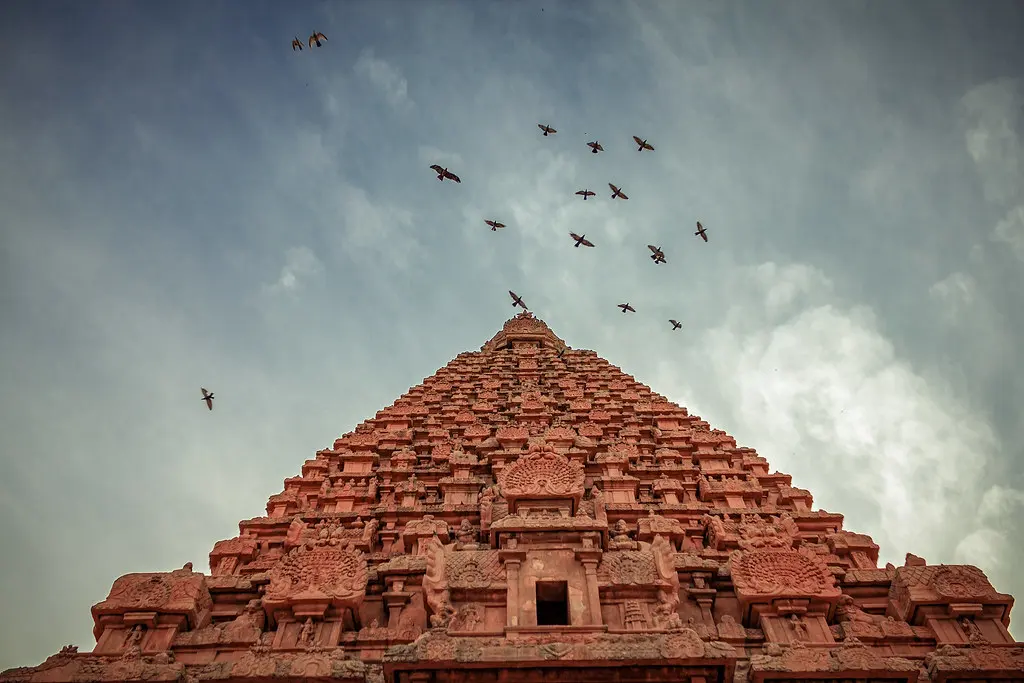
Brihadeeswara Temple, Thanjavur, Tamil Nadu
Thanjavur, Tamil Nadu, India
79.2 km away

Punnainallur Mariamman Temple
Punnainallur, Thanjavur, Tamil Nadu, India
80.5 km away

Garbharakshambigai Temple, Thirukkarugavur
Thirukkarugavur, Tamil Nadu, India
91.7 km away

Arulmigu Uchi Pillaiyar Temple, Tiruchirappalli, Tamil Nadu
Tiruchirappalli, Tamil Nadu, India
91.8 km away
References
Sources consulted for this page. Source categories describe the publication, not a guarantee that every claim is verified. Traditional accounts and outside interpretations may differ.
- 01Avudaiyarkoil | Pudukkottai District, Government of Tamil Nadu — Government of Tamil Nadu (Pudukkottai District)officialOfficial district tourism listing of the Avudaiyarkoil Athmanathar temple, location and significance.
- 02Tirupperunturai — Wikipedia — Wikipedia contributorsacademicFormless Avudaiyar pedestal (no lingam, no Nandi); built by Manikkavasagar with horse-money from Varaguna Pandya II; Tiruvasagam composed here; south-facing 10-acre plan; Aani and Margazhi festivals.
- 03Athmanathar Swamy Temple: Ode to a Formless God — Sarmaya — Sarmaya Arts FoundationacademicTheological reading of formless (nirguna) worship of Shiva as Atmanathar, the Lord of the soul; absence of lingam and Nandi as deliberate Saiva Siddhanta statement.
- 04Atmanathar, Avudaiyar Kovil, Pudukkottai — TN Temples Project — TN Temples ProjectacademicArchitectural documentation: granite 'wooden' roofing (kodungai), musical pillars, thousand-pillar mandapam, Kanaka Sabha, sculptural programme.
- 05Athmanatha Swamy Temple, Avudaiyarkoil — Tamilnadu Tourism (blog) — Tamilnadu FavtourismSource contextPancha Sabha as Jnana Sabha; six daily poojas per Shaiva Agama; Aani Tirumanjanam and Margazhi Thiruvadirai ten-day festivals.
- 06Avudaiyarkoil Aathmanatha Swamy Temple — Trawell.in — Trawell.inSource contextVisitor-oriented overview: location near Aranthangi, Pudukkottai district; festivals, darshan and pooja timings, history.
- 07The Unique Shiva Temple at Avudaiyar Koil-Thiruperunthurai — Megha SenSource contextDetailed travel account of formless worship, theology of progressing from form to formlessness, sculptures and architecture.
Photo gallery
3 curated photos
Share a photo
Help visitors recognize Aathmanatha Swamy temple, Avudaiyarkoil, Thiruperunthurai, Tamil Nadu. Every submission is reviewed before publication.