Arulmigu Uchi Pillaiyar Temple, Tiruchirappalli, Tamil Nadu
On the Trichy rock, Shiva is venerated as the god who became a mother—an ascent of 437 steps past three shrines
Understand sacred places, explore living traditions, and learn how to engage respectfully with Pilgrim Map.
Access has not been verified. Check current local guidance before planning a visit.
Tiruchirappalli, Tamil Nadu, India
Read the sources
Visit essentials
A quick read before you go
- Duration
- 1.5 to 3 hours including the climb and the three shrines.
- Access
- In central Tiruchirappalli (Trichy), Tamil Nadu, atop the Rockfort (Malaikottai), a 273-foot…
Overview
Among Shaiva temples, where Shiva appears as ascetic, dancer, destroyer, and lord, the form venerated on the Trichy Rockfort is rare and tender: Thayumanavar, the God who became mother. The name comes from a legend in which Shiva took the form of the mother of a pregnant devotee, Rathnavathi, to attend her at her delivery when her own mother could not arrive in time.
To find the maternal aspect of Shiva enshrined as the presiding deity is unusual, and it gives the temple its particular gentleness.
The shrine sits within and atop the Malaikottai, a 273-foot monolith of some of the oldest rock on earth, rising abruptly above the city and the Kaveri river. Its rock-cut origins go back to the Pallava king Mahendravarman I in the sixth or seventh century, and it is one of the Paadal Petra Sthalams—the 276 Shiva temples hymned in the Tamil Tevaram, praised here in eleven verses by Sambandar and ten by Appar. The consort is Mattuvar Kuzhalammai.
The Rockfort is a vertical pilgrimage. Some 437 rock-cut steps lead up past three shrines: Manikka Vinayakar at the base, Thayumanavar midway, and—at the summit—Uchi Pillaiyar, the Ganesha temple tied to the Srirangam legend.
As the Sri Ranga Mahatmya tells it, the devas asked Ganesha to stop the demon-king Vibhishana from carrying the Ranganatha idol to Lanka; disguised as a Brahmin boy, Ganesha set the idol down at Srirangam and fled up this rock, where Vibhishana struck his forehead—a mark still shown on the Uchi Pillaiyar idol. The summit opens onto sweeping views over Trichy, Srirangam, and the confluence of the Kaveri and Kollidam.
Why this place is sacred
The Rockfort gathers its sense of the sacred along a vertical line. The monolith itself—ancient, abrupt, rising 273 feet above the flat city—reads as a natural axis, and the climb of some 437 steps becomes a graded ascent past Vinayaka at the base, Shiva midway, and Ganesha at the peak. Devotional reading treats this as a spiritual climb crowned by the obstacle-remover.
What deepens the place is the tenderness at its center. Shiva as Thayumanavar—the god who took a mother's form—draws those seeking protection and comfort, an aspect of the divine unusually maternal for a Shaiva shrine. The summit views over the rivers and over Srirangam complete the sense of having climbed from the dense human world to a wide, quiet vantage.
Experience and orientation
Visitors describe the climb of carved rock steps as steep but rewarding, opening onto sweeping summit views over Trichy, Srirangam, and the confluence of the Kaveri and Kollidam. The Thayumanavar shrine midway is calm; the Uchi Pillaiyar idol at the summit, with the mark on its forehead said to be where Vibhishana struck, is a point of fascination.
The maternal Shiva draws devotees seeking protection, comfort, and help in childbirth and family matters, and the ascent itself is framed as a step-by-step approach to the divine.
Begin at Manikka Vinayakar at the base, climb past the Thayumanavar (Shiva) shrine midway, and continue to the Uchi Pillaiyar (Ganesha) summit, reached by some 437 rock-cut steps. Remove footwear before climbing, carry water, and avoid the midday heat; the summit shrine is generally open around 6 AM–8 PM.
Context and lineage
The temple's name comes from a legend in which Shiva appeared in the form of the mother of a pregnant devotee, Rathnavathi, to assist at her delivery—hence Thayumanavar, 'the God who became mother.'
The summit Ganesha temple carries a separate story: per the Sri Ranga Mahatmya, the devas asked Ganesha to stop Vibhishana from carrying the Ranganatha idol to Lanka; disguised as a Brahmin boy, Ganesha set the idol down at Srirangam and fled up this rock, where Vibhishana struck his forehead—a mark still shown on the Uchi Pillaiyar idol.
Tamil Shaiva tradition (Thayumanavar) joined with Ganapatya worship (Uchi Pillaiyar), within the Paadal Petra Sthalam canon of Tevaram-sung Shiva temples.
Shiva as Thayumanavar (Mathrubootheshwarar)
Presiding deity
Uchi Pillaiyar (Ganesha)
Summit deity
Mahendravarman I
Pallava king (6th–7th c.)
Sambandar and Appar
Tevaram poet-saints (7th c.)
Madurai Nayak and Vijayanagara rulers
Later patrons
Traditions and practice
Daily abhishekam and pujas to Thayumanavar; recitation of the Tevaram; the fifteen-day Chittirai festival, with the car festival on day nine, enacting temple legends; Karthigai Deepam, lit with a three-ton-ghee cauldron lamp atop the hill; and the Theppam float festival at the Teppakulam.
Pilgrims climb the roughly 437 steps past Manikka Vinayakar at the base, Thayumanavar midway, and Uchi Pillaiyar at the summit; festival processions and the great Karthigai lamp are the major draws.
If the three-shrine ascent appeals to you, climb it as a single contemplative sequence rather than three separate stops—pausing at the base, the middle, and the peak to mark the passage from the world below to the wide summit, with Shiva's maternal form at the heart of the climb.
Shaiva (Thayumanavar)
ActiveShiva is worshipped as Thayumanavar—'the one who became mother'—from the legend of the deity who took the form of a devotee's mother to attend her childbirth. A Paadal Petra Sthalam venerated in the Tevaram by Sambandar (eleven verses) and Appar (ten verses), counted among the 276 Shiva temples of the Saiva canon. Consort: Mattuvar Kuzhalammai.
Daily pujas and abhishekam to the lingam; recitation of the Tevaram; the Chittirai festival, Karthigai Deepam, and the Theppam float festival.
Ganapatya (Uchi Pillaiyar)
ActiveThe summit Ganesha temple commemorates the legend of Ganesha who, as a Brahmin boy, set down the Ranganatha idol at Srirangam to thwart Vibhishana and fled up this rock; the mark on the idol's forehead is shown as where Vibhishana struck him.
Ganesha worship at the summit shrine, reached by steep rock-cut steps.
Perspectives and open questions
The Rockfort is read as an early Pallava architectural landmark, as a living Shaiva and Ganapatya pilgrimage, and as a graded devotional ascent.
Scholarly perspective
An early Pallava rock-cut temple complex (6th–7th c.) on the Trichy monolith, sung in the 7th-century Tevaram and developed by successive Pandya, Nayak, and Vijayanagara dynasties; a key Paadal Petra Sthalam.
Living and traditional perspectives
Tamil Shaiva tradition reveres Thayumanavar as the God who became mother, while Vaishnava and Ganapatya lore tie the summit to the Srirangam Ranganatha and Ganesha legend.
Alternative interpretations
The threefold ascent—Vinayaka at the base, Shiva midway, Ganesha at the peak—is read devotionally as a graded spiritual climb crowned by the obstacle-remover.
Open questions
The precise dating of the earliest cave shrines and the historical kernel of the maternal-Shiva and Vibhishana legends remain matters of tradition rather than record.
Plan your visit
Access and arrival
In central Tiruchirappalli (Trichy), Tamil Nadu, atop the Rockfort (Malaikottai), a 273-foot monolith; the summit is reached by some 437 rock-cut steps. Well connected by road and rail.
Respectful visit
Modest, traditional clothing is preferred; avoid shorts and sleeveless.
Customary restrictions apply inside the sanctums; follow signage and staff direction.
Archana and abhishekam; standard temple offerings.
Remove footwear for the climb; carry water; the long step ascent is demanding in midday heat.
Remove footwear for the climb and carry water; the long step ascent is demanding in midday heat. Inner shrines follow customary practice.
Current practical details
Address
RMHW+CR8, Theppakulam, Tiruchirappalli, Tamil Nadu 620002, India
Hours
Hours, fees, and access can change — verify on the official source before you travel. Practical details last checked Jun 2026.
Location
Map loads as you approach this section.
Pilgrim reflections
A portrait of encounter, not a score
Pilgrims describe what they felt, how present they could become, and whether the place would shape a journey. There are no stars and no ranking of traditions.
No reviewed reflections yet
The first pilgrims can help describe the character of being here.
Share a reflection
Available after an account-backed “Been there.” Every reflection is reviewed before publication.
Nearby sacred places
Explore other sacred places in the region. Proximity does not establish access or travel time; check each place’s guidance.

Samayapuram Mariamman Temple
Samayapuram, Tamil Nadu, India
11.1 km away
Gunaseelam Prasanna Venkatachalapathy Temple
Gunaseelam, Tamil Nadu, India
16.3 km away
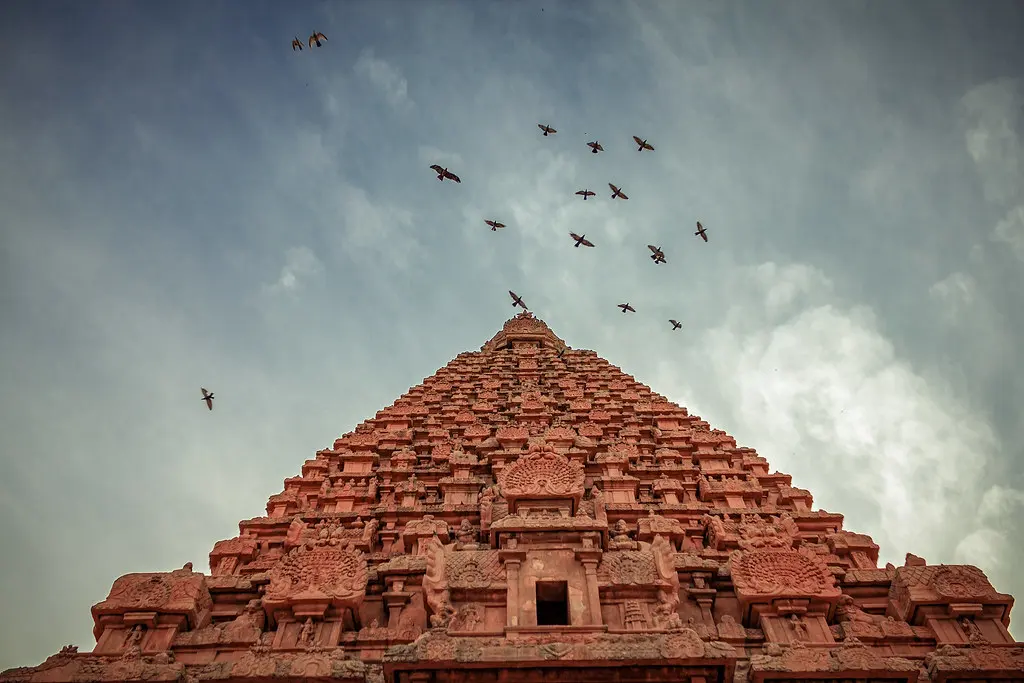
Brihadeeswara Temple, Thanjavur, Tamil Nadu
Thanjavur, Tamil Nadu, India
47.8 km away

Punnainallur Mariamman Temple
Punnainallur, Thanjavur, Tamil Nadu, India
54.0 km away
References
Sources consulted for this page. Source categories describe the publication, not a guarantee that every claim is verified. Traditional accounts and outside interpretations may differ.
- 01Thayumanaswami Temple, Rockfort — Wikipedia — Wikipedia contributorsacademicConfirms Shiva as Thayumanavar (lingam) and consort Mattuvar Kuzhalammai, Rathnavathi 'mother' legend, Pallava Mahendravarman I 6th-c. origin, Paadal Petra Sthalam status, Tevaram verses by Sambandar (11) and Appar (10), three shrines (two Ganesha + Thayumanavar), 273 ft rock.
- 02Ucchi Pillayar Temple, Rockfort — Wikipedia — Wikipedia contributorsacademic7th-c. Ganesha temple at the summit; Vibhishana–Ranganatha–Ganesha legend tied to Srirangam; steep rock-cut steps with views of Kaveri and Kollidam.
- 03Arulmigu Thayumanaswamy Temple, Rock Fort, Tiruchirappalli — HR&CE — Hindu Religious and Charitable Endowments Dept., Govt. of Tamil NaduofficialOfficial temple administration; deities Mathrubootheshwarar (Thayumanaswamy) and Mattuvarkulalammai, pincode 620002.
- 04Rock Fort Temple, Tiruchirappalli — Timings, History & Darshan Guide — Tamil Nadu TourismofficialState tourism overview of the three-temple complex (Manikka Vinayakar base, Thayumanaswamy midway, Uchi Pillaiyar summit), ~437 steps.
- 05The Rock Fort Temple, Tiruchirappalli — Timings, History, Architecture — Trawell.inSource contextChittirai 15-day festival with car festival on day 9; Karthigai Deepam with a three-ton-ghee cauldron lamp; Theppam float festival at the Teppakulam tank.
- 06Ucchi Pillayar Temple — Visiting Hours, Tickets & Visitor Guide — AudialaSource contextSummit Ganesha temple timings (~6 AM–8 PM, free entry), step climb, panoramic views, dress and footwear etiquette.
- 07Thayumanaswami Temple, Rockfort — Legends & Importance — HinduPadspiritualDevotional account of the Rathnavathi/'God who became mother' legend and Shaiva significance.
Photo gallery
3 curated photos
Share a photo
Help visitors recognize Arulmigu Uchi Pillaiyar Temple, Tiruchirappalli, Tamil Nadu. Every submission is reviewed before publication.