Brihadeeswara Temple, Thanjavur, Tamil Nadu
Where a thousand-year empire built the cosmic mountain in granite and worship has never ceased
Understand sacred places, explore living traditions, and learn how to engage respectfully with Pilgrim Map.
Access has not been verified. Check current local guidance before planning a visit.
Thanjavur, Tamil Nadu, India
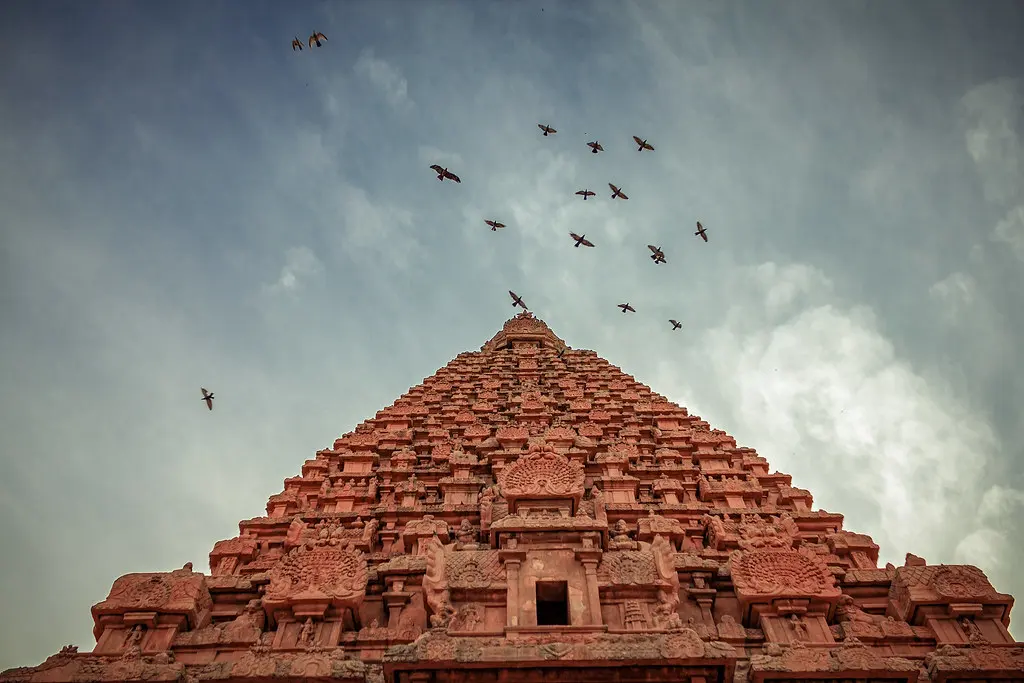
Image of Brihadeeswara Temple, Thanjavur, Tamil Nadu. Image source · CC-BY-NC-2.0
Visit essentials
A quick read before you go
- Duration
- 1.5-2 hours for the temple.
- Etiquette
- Remove footwear, dress modestly, no photography inside the sanctum.
Overview
Brihadeeswarar Temple's 216-foot, mortarless granite tower bears an 80-ton capstone raised by a four-mile ramp. In the sanctum, one of India's largest lingas—29 feet of stone—manifests Shiva beyond human scale.
Chola emperor Rajaraja I commissioned it in 1003 CE and completed it in seven years: 130,000 tons of granite came from quarries 60 kilometers away, fitted by calculations reportedly leaving no noon shadow. Named Dakshina Meru, the southern Mount Meru, it recreated the universe's central cosmic mountain in stone.
Scale is matched by continuity. Daily worship still follows thousand-year-old Agamic rites: dawn and dusk prayers and lamps before the same linga. Pilgrims follow a millennium of footsteps toward the same presence Rajaraja approached. Engineering astonishes, but the deeper achievement is devotion unbroken across forty generations.
Why this place is sacred
What makes Brihadeeswarar thin is the convergence of cosmic geography and unbroken devotion. In Hindu cosmology, Mount Meru stands at the center of the universe, the axis around which creation turns, the abode of Shiva. The Cholas built its southern manifestation—Dakshina Meru—and made it accessible to pilgrims who could not travel to the Himalayas. The vimana rising 216 feet is not merely a tower; it is the cosmic mountain made present in Tamil Nadu.
The massive linga within is Shiva himself, dwelling in the mountain's heart. To enter the temple is to approach the center of the universe. But cosmic geography alone does not make a place thin. What distinguishes Brihadeeswarar is continuity. For over a thousand years, priests have performed the same rituals prescribed by Agamic texts—the same sequence of prayers, the same offerings, the same waving of lamps. The chain of worship has never broken.
The words spoken at dawn today were spoken at dawn in 1010 CE when Rajaraja himself stood before the linga. This continuity creates a compression of time: past and present exist simultaneously in the ritual moment. The visitor entering the temple enters not just a space but a tradition that has held this space sacred for forty generations. The engineering was extraordinary, but the maintenance of presence across a millennium is the greater achievement.
Imperial temple expressing Chola devotion to Shiva and representing Mount Meru, the cosmic center, as Dakshina Meru. Endowed for perpetual worship.
Temple completed 1010 CE by Rajaraja I. Maintained by subsequent dynasties: Pandyas, Vijayanagara Empire, Madurai Nayaks. Continuous worship throughout. UNESCO inscription 1987, extended 2004. Daily rituals continue unchanged.
Experience and orientation
Approach the temple from the east, where the massive gopuram frames the first view of the vimana rising behind. Even at a distance, the scale is disorienting: the tower seems too large, too high, impossibly substantial. Pass through the outer enclosure and enter the courtyard where the granite Nandi waits—Shiva's bull, 12 feet high and 20 feet long, carved from a single block weighing 25 tons, facing the sanctum with eternal patience.
The Nandi appears to float slightly above its base, an optical effect created by the precision of the carving. Walk the circumambulatory path around the sanctum's exterior. The walls are carved with life-size figures: forms of Shiva, goddesses, guardians, dancers. In the lower ambulatory, Chola-period murals survive—faded but visible, some of the finest examples of their era, painted in the same decades when the stone was being raised.
The quality of observation in these paintings suggests artists working from living models. Enter the main shrine. The ceiling rises above you, and there, in the dim sanctum lit by oil lamps, the linga emerges from shadow. It is 29 feet high, occupying two storeys of the inner chamber—one of the largest monolithic representations of Shiva in India.
Standing before it, the scale is almost overwhelming: this is not a symbol of the divine but a presence that requires the viewer to look upward, that fills the field of vision, that makes the body aware of its smallness. Priests perform abhishekam—ritual anointing with milk and honey—and the ancient words of Agamic worship echo in a space designed to receive them. Outside again, look up at the vimana.
The 80-ton capstone sits at the summit, placed there by workers using a ramp that extended four miles. At noon, the tower reportedly casts no shadow on the ground—an engineering or astronomical achievement that scholars still debate. The temple is not merely visited; it is experienced as the Cholas intended: as an approach to Mount Meru, the center of the universe, where Shiva dwells.
Brihadeeswarar Temple is in central Thanjavur. Enter from the east through the main gopuram. The Nandi pavilion is in the outer courtyard. The main sanctum contains the linga. The circumambulatory path passes the murals. Allow 1.5-2 hours. The temple closes midday (12:30-4:00 PM). Early morning offers cooler temperatures and fewer crowds.
Context and lineage
The Chola dynasty at its height controlled most of South India, Sri Lanka, and the Maldives. Rajaraja I, born Arulmozhi Varman, was among the most powerful of its emperors—a military commander who expanded the empire, a patron of arts who commissioned some of the finest bronze sculptures in Indian history, and a devotee of Shiva who sought to build the supreme temple. He began construction in 1003 CE and completed it in approximately seven years.
The scale was unprecedented: 130,000 tons of granite transported from quarries 60 kilometers away, a vimana rising 216 feet, a capstone weighing 80 tons raised to the summit. Rajaraja named the temple Rajarajesvaram after himself and the deity—but the name that endured was Brihadeeswarar, 'the Great Lord,' a title worthy of the scale. The emperor personally oversaw the project, endowing it with lands and resources for perpetual worship.
Extensive inscriptions document the administration: the names of donors, the schedules of rituals, the allocations for priests and musicians and dancers. When Rajaraja died, the temple continued. Subsequent dynasties—Pandyas, the Vijayanagara Empire, the Madurai Nayaks—maintained the worship and made their own contributions. The chain never broke. Today, the rituals follow the same Agamic texts that governed worship a thousand years ago.
Tamil Shaivism with roots in the Agamic tradition. Chola imperial patronage (1003-1010 CE). Maintained by Pandyas, Vijayanagara Empire, Madurai Nayaks. Continuous worship for over 1,000 years. UNESCO World Heritage Site 1987, 2004.
Rajaraja I (Rajaraja Chola)
Builder and patron
Shiva as Brihadeeswarar
Presiding deity
Traditions and practice
The temple follows the Agamic worship tradition of Tamil Shaivism. Six daily worship services (kalams) are performed, each involving a prescribed sequence: abhishekam (ritual bathing of the linga with milk, water, sandalwood, and honey), alamkaram (adornment with flowers and sacred ornaments), naivedhyam (offering of food), and deepa aradhanai (waving of oil lamps).
The Ardhajama Pooja, the night ceremony beginning around 8 PM, includes the procession of the utsava murthy—a smaller bronze image of the deity—through the temple complex, accompanied by drums, conch shells, and Vedic chanting. The ritual schedule established by the Cholas has continued without significant alteration for over a thousand years.
The temple maintains the traditional ritual calendar while hosting contemporary cultural events. The Brahan Natyanjali classical dance festival takes place annually in February around Maha Shivaratri, featuring major Indian classical dance artists performing in the temple precincts. Major religious festivals include Maha Shivaratri (the great night of Shiva, observed with all-night worship), Arudra Darshanam (celebrating Shiva's cosmic dance), Aipasi Brahmotsavam (October-November), and annual kumbabhishekam (ritual consecration of the vimana). The temple provides free meals (annadanam) for pilgrims daily.
Visit during the early morning puja (6:00-7:00 AM) to experience the temple waking. The smoke of incense, the sound of bells, the chanting of priests create an atmosphere continuous with a thousand years of dawn worship. Return in the evening for the Ardhajama Pooja to witness the processional deity carried through the temple. Stand before the linga and allow the scale to register—this is Shiva present at a magnitude that exceeds human comprehension.
Walk the circumambulatory path and observe the Chola murals, painted by hands that also saw the temple rise. If visiting during Maha Shivaratri, join the all-night vigil and experience the temple at its most intense.
Tamil Shaivism (Shaiva Siddhanta)
ActiveThe temple is a supreme expression of Tamil Shaivism, the devotional tradition centered on Shiva as the supreme reality. The massive linga—one of the largest in India—represents Shiva's presence in aniconic form. The vimana symbolizes Mount Meru, Shiva's cosmic abode. The temple's designation as Dakshina Meru identifies it as the southern manifestation of the universe's center.
Daily worship follows the Agamic tradition: six pujas including abhishekam (ritual bathing), alamkaram (adornment), naivedhyam (food offerings), and deepa aradhanai (waving of lamps). The Ardhajama Pooja (night ceremony) includes procession of the utsava murthy. Major festivals include Maha Shivaratri, Arudra Darshanam, and annual brahmotsavams. Worship has continued unbroken for over a thousand years.
Perspectives and open questions
Brihadeeswarar invites engagement with devotion expressed at the limits of the possible—with what happens when an empire consecrates its resources to making the cosmic mountain present in stone.
Scholarly perspective
Art historians consider the Brihadeeswarar Temple 'a landmark in the evolution of building art in south India' and its vimana 'a touchstone of Indian architecture as a whole.' The engineering achievements—moving 130,000 tons of granite, raising an 80-ton capstone without modern machinery—represent sophisticated understanding of materials and mechanics. The temple inscriptions are invaluable documents for understanding Chola administration, economics, and religious practice.
UNESCO recognizes the Great Living Chola Temples as testimony to 'the brilliant achievements of the Chola in architecture, sculpture, painting and bronze casting.'
Living and traditional perspectives
For Tamil Shaivas, the temple is Dakshina Meru—the cosmic mountain made present in the south. To enter is to approach the center of the universe where Shiva dwells. The massive linga is not a representation of Shiva but Shiva himself, present in stone. The unbroken chain of worship—daily pujas performed according to thousand-year-old Agamic texts—creates a continuous connection between present devotees and the original consecration.
The temple is not historical; it is alive, and the same presence that Rajaraja worshipped awaits those who approach with devotion.
Alternative interpretations
Some visitors are drawn by the temple's engineering mysteries: how was the 80-ton capstone raised? What astronomical or mathematical knowledge produced the shadowless phenomenon? The interlocking construction without mortar, the precision of the carvings, the scale of the undertaking invite speculation about techniques and knowledge that may not have survived in documented form.
Open questions
Significant questions remain. The precise method of raising the 80-ton capstone is debated; the four-mile ramp theory is traditional but not archaeologically confirmed. The shadowless phenomenon—whether optical illusion, astronomical calculation, or engineering design—has not been definitively explained. The full ritual practices of the devadasis (temple dancers) who served here historically are incompletely documented. What texts or calculations guided the temple's proportions and orientation remains unknown.
Plan your visit
Access and arrival
Thanjavur has hotels ranging from budget to heritage properties. The Tamil Nadu Tourism hotel is near the temple. For pilgrims, the temple provides simple facilities.
Respectful visit
Modest clothing covering shoulders and knees. Traditional Indian attire (dhoti, saree) appropriate and respected. Socks recommended for hot stone floors.
Permitted in exterior areas and courtyard. Strictly prohibited inside the sanctum and mural galleries.
Flowers, coconuts, and other traditional offerings available at shops outside the temple. May be offered during puja with the assistance of priests.
Footwear must be removed. No photography inside sanctum. Temple closes 12:30-4:00 PM. Respect ongoing worship.
The temple is an active place of worship. Visitors should observe etiquette appropriate to a living Hindu shrine. The stone floors become extremely hot in midday sun—socks are advisable. The temple closes midday; plan accordingly.
Current practical details
Address
Balaganapathy Nagar, Thanjavur, Tamil Nadu 613001, India
Phone
Hours
Hours, fees, and access can change — verify on the official source before you travel. Practical details last checked Jun 2026.
Location
Map loads as you approach this section.
Pilgrim reflections
A portrait of encounter, not a score
Pilgrims describe what they felt, how present they could become, and whether the place would shape a journey. There are no stars and no ranking of traditions.
No reviewed reflections yet
The first pilgrims can help describe the character of being here.
Share a reflection
Available after an account-backed “Been there.” Every reflection is reviewed before publication.
Nearby sacred places
Explore other sacred places in the region. Proximity does not establish access or travel time; check each place’s guidance.

Punnainallur Mariamman Temple
Punnainallur, Thanjavur, Tamil Nadu, India
6.3 km away

Garbharakshambigai Temple, Thirukkarugavur
Thirukkarugavur, Tamil Nadu, India
18.3 km away
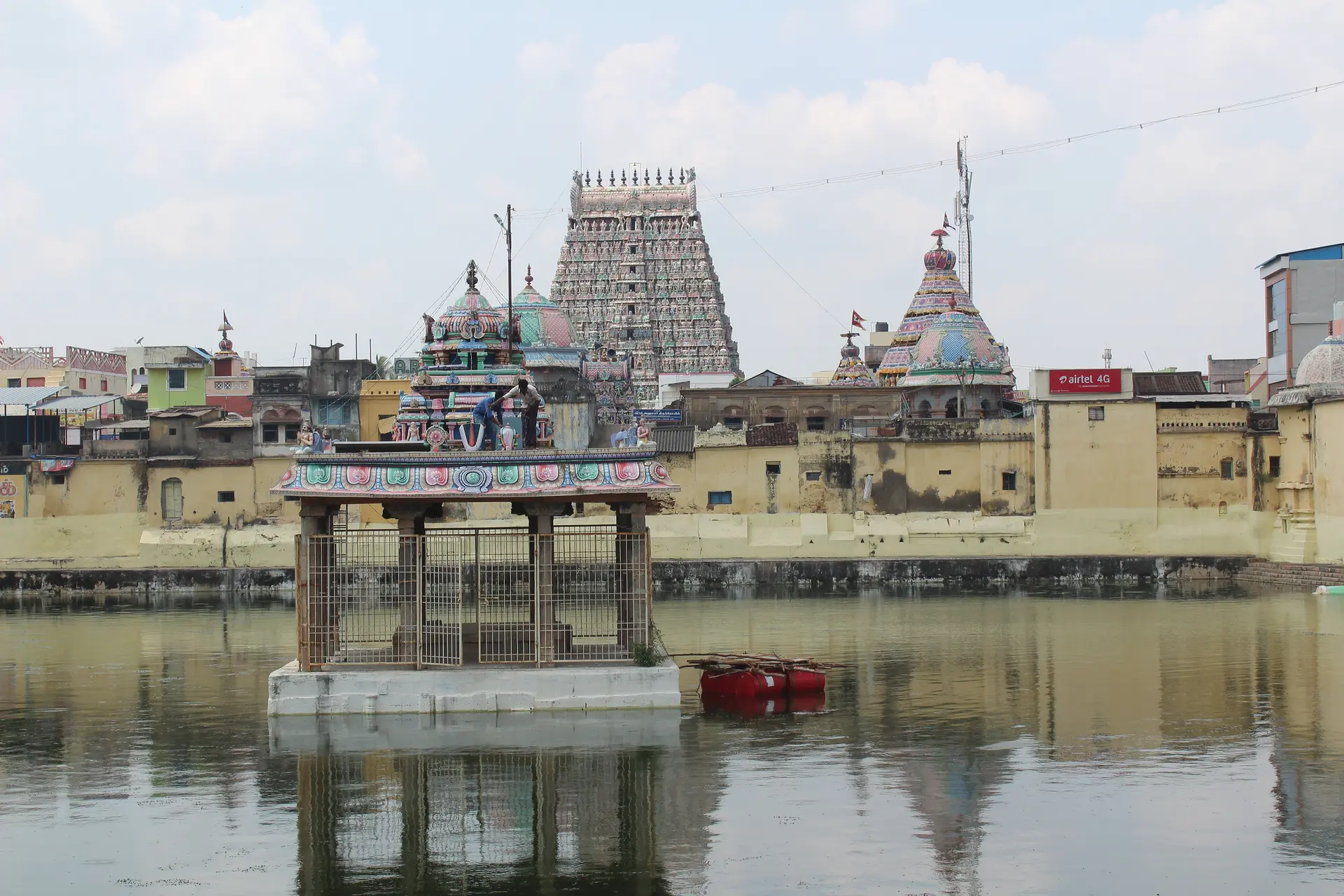
Adi Kumbeswarar Temple, Kumbakonam, Tamil Nadu
Kumbakonam, Tamil Nadu, India
32.6 km away

Kalahasteeswarar Temple, Kumbakonam, Tamil Nadu
Kumbakonam, Tamil Nadu, India
33.7 km away
Photo gallery
6 curated photos
Share a photo
Help visitors recognize Brihadeeswara Temple, Thanjavur, Tamil Nadu. Every submission is reviewed before publication.