Wearyall Hill & Holy Thorn
Where Joseph of Arimathea's staff took root, a thorn blooms at Christmas against all odds
Understand sacred places, explore living traditions, and learn how to engage respectfully with Pilgrim Map.
Access has not been verified. Check current local guidance before planning a visit.
Glastonbury, England, United Kingdom
Read the sources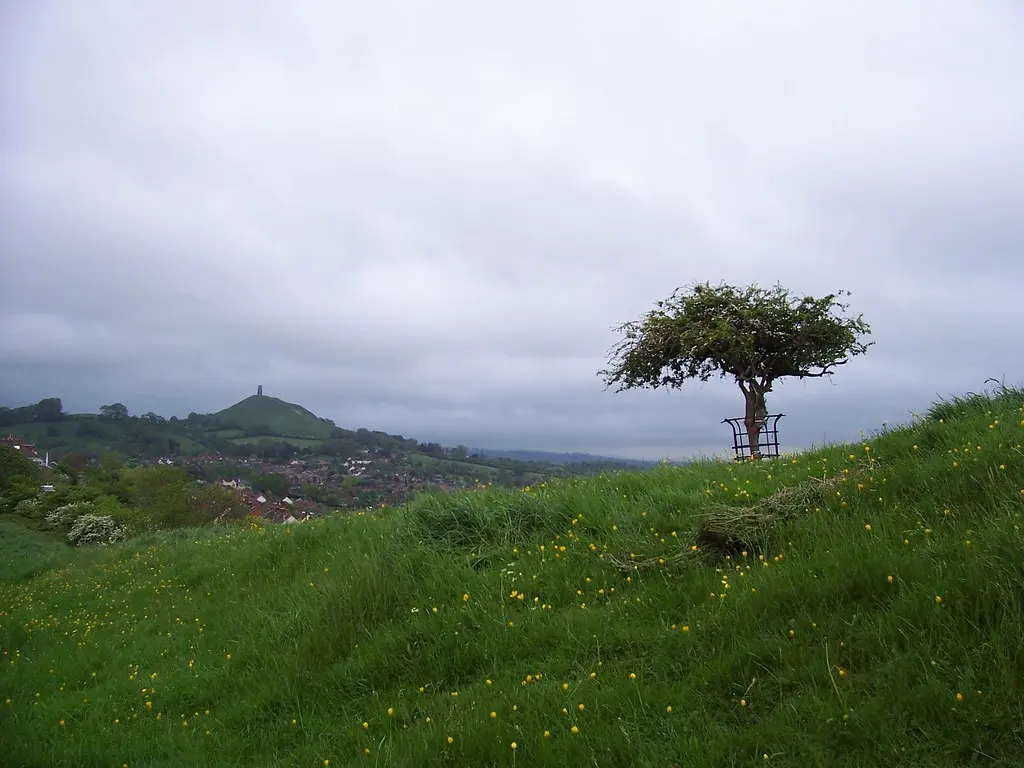
Glastonbury Holy Thorn on Wearyall Hill. Image source · CC BY-NC-SA 2.0
Visit essentials
A quick read before you go
- Duration
- Allow thirty to forty-five minutes minimum: ten to fifteen minutes walking from Glastonbury…
- Access
- From central Glastonbury, walk along Magdalene Street to the A361.
Overview
Wearyall Hill rises sixty-five meters from the Somerset Levels, a grass-covered ridge with one of the finest views of Glastonbury Tor. Visitors come chiefly for a story and a tree.
Legend says that Joseph of Arimathea arrived in AD 63 with twelve followers after traveling from the Holy Land to the western edge of the known world. Climbing the hill, he declared “We are weary all,” giving it its name, then planted his walking staff; by morning it had rooted and bloomed. The Holy Thorn flowers once in spring and again at Christmas. Medieval observers saw miracle, while botanists identify Crataegus monogyna 'Biflora,' a variety found elsewhere.
Whether divine intervention or natural anomaly, it became inseparable from Glastonbury's identity as the place where Christianity first touched British soil.
The original thorn survived Puritan attempts to cut it down during the English Civil War. A 1951 Festival of Britain replacement was severed by vandals in 2010; a new thorn was planted in 2022 for King Charles III, followed in August 2023 by a thriving tree from anonymous benefactors. Destruction and regrowth have become part of the sacred story.
Why this place is sacred
The quality of Wearyall Hill differs from Glastonbury's other sacred sites. There is no architecture here, no defined sacred space, no threshold to cross. The hill is simply itself—grass, sky, wind, and view. The thinness comes not from the place itself but from what people bring to it.
For those who know the legend, climbing the hill becomes a re-enactment. Each footstep follows Joseph's. The view from the top is the view he saw—though Glastonbury was then an island rising from marshland, and the Tor would have appeared surrounded by water. The act of arriving, of standing where he stood, creates connection across two thousand years.
The thorn itself functions as a living monument. Unlike the ruins of the Abbey or the ancient springs, the tree is continuously present—budding, flowering, dropping leaves, and flowering again at Christmas. Its vulnerability has deepened its significance. The 2010 vandalism provoked grief across the Glastonbury community and beyond. The regrowth and replanting represent hope, persistence, and the refusal of sacred things to stay destroyed.
Visitors report that the combination of physical effort, the widening view, and the arrival at the thorn site creates a pilgrimage quality even for those who make no particular religious claims. The hill offers what many sacred sites offer: a reason to walk with intention, a destination that rewards the walking, and a story that transforms the mundane into the meaningful.
Natural hilltop that became associated with the Joseph of Arimathea legend, likely by the early sixteenth century. The legend may have been promoted to enhance Glastonbury's pilgrimage appeal during the medieval period.
The site has evolved through cycles of veneration and destruction. The original thorn survived attempts to cut it down during the English Civil War. The 1951 planting connected the site to national celebration during the Festival of Britain. The 2010 vandalism and subsequent replantings demonstrate how the site's significance persists despite—or perhaps because of—its vulnerability. Today, the hill functions as one stop on a Glastonbury pilgrimage circuit that connects multiple sacred sites.
Experience and orientation
The approach to Wearyall Hill begins in unremarkable surroundings. The path leaves the A361, crosses through residential areas, and emerges onto the ridge. The climb is steady but not strenuous—most visitors manage it in ten to fifteen minutes.
What changes as you climb is the view. Glastonbury Tor, visible throughout much of the town, takes on new drama from this angle. You see it as Joseph would have seen it—rising from what was once marshland, unmistakably significant. The tower of St. Michael's chapel on its summit catches light and shadow as clouds move overhead.
The thorn site itself is modest. There is no grand monument, no visitor center, no interpretation panel. The tree—whichever generation of it currently stands—is simply there, often with flowers or ribbons left by previous visitors despite guidelines asking people not to attach anything to the branches. The simplicity is part of the experience. This is not a curated heritage site but a pilgrimage destination in its raw form.
Many visitors report that the combination of the climb, the view, and the story creates a contemplative quality. The hill is quieter than the Tor, less visited, more open to solitude. Those who come as part of a broader Glastonbury pilgrimage often describe Wearyall as the site that surprised them most—less dramatic than the Tor, less structured than the Abbey, but with a quality of openness that invites reflection.
The wind is often present at the top. The grass bends and recovers. The view shifts with weather and light. These ordinary phenomena take on different meaning in a place associated with miracle and persistence.
The path begins where a footpath leaves the A361 west of central Glastonbury, accessed via Magdalene Street. The walk takes roughly ten to fifteen minutes to the base of the hill, then another ten minutes up. The thorn site is at the top of the ridge, with panoramic views in all directions. The descent can be made by the same route or by continuing along the ridge and descending toward Bride's Mound.
Context and lineage
Joseph of Arimathea, according to the Gospels, was the wealthy man who provided a tomb for Christ's burial. Medieval tradition elaborated his story, eventually sending him to Britain with the Holy Grail. The Glastonbury version has him arriving at the island that was then Glastonbury, climbing the hill, and planting his staff—a staff cut from the very thorn that had formed Christ's crown. The staff took root and bloomed, demonstrating divine approval of his mission.
The legend explains the hill's name: 'We are weary all,' Joseph declared as he climbed. Whether this etymology is folk invention or preserves genuine memory cannot be determined. The name appears in historical records before the legend is documented, suggesting the story may have been created to explain an existing name.
The thorn's double flowering—at Christmas and Easter—connected it to the central events of Christian faith. Medieval pilgrims understood the winter blooming as evidence that the tree was not merely natural. Modern botany identifies the variety as Crataegus monogyna 'Biflora,' which flowers twice yearly without miraculous intervention. Whether this represents the naturalization of miracle or miracle's explanation is a matter of perspective.
The legend of Joseph at Glastonbury predates the Holy Thorn story by several centuries—the Joseph connection appears in twelfth-century sources, while the thorn legend is documented only from 1502. The connection between the two was elaborated in a 1520 pamphlet likely commissioned by Glastonbury Abbey for pilgrimage promotion. After the Dissolution, when the Abbey was destroyed, the thorn's survival was interpreted by Catholics as evidence that faith 'might flourish in persecution.'
The annual Christmas sprig ceremony, connecting the thorn to the British Crown, dates to the early twentieth century and continues from the thorn at St. John's churchyard.
Joseph of Arimathea
Legendary founder
Biblical figure who, according to medieval legend, brought Christianity to Britain and planted the Holy Thorn. The historical Joseph was a Jewish council member who buried Jesus; his journey to Britain is legendary, not historical.
King Charles III
Recipient of annual Christmas sprig
The British monarch receives a sprig of Holy Thorn each December 8th to grace the Christmas table, continuing a tradition established in the early twentieth century. The 2022 replanting was dedicated in his honor.
Traditions and practice
Medieval pilgrims to Glastonbury would have visited the Holy Thorn as part of their pilgrimage circuit, alongside the Abbey and its relics. The Christmas flowering was observed as evidence of the tree's miraculous origin. The thorn was understood as living proof connecting Glastonbury to Christ's passion through Joseph's staff.
The survival of the thorn through the Dissolution, when the Abbey was destroyed and Catholicism suppressed, gave it additional significance. Catholics interpreted its persistence as testimony to faith surviving persecution. Cuttings were taken and propagated, ensuring the lineage would continue even if individual trees were destroyed.
The annual ceremony on December 8th, when a sprig is cut for the monarch's Christmas table, now takes place from the thorn at St. John's churchyard rather than Wearyall Hill, due to the vandalism of the hilltop tree. The Path of Holy Thorns is an easy pilgrimage walk connecting the various thorn trees in Glastonbury—at the Abbey, St. John's Church, and the hill.
Pilgrims continue to climb Wearyall Hill throughout the year, often as part of a broader Glastonbury circuit. Some time their visits for the Christmas flowering. Others come on Imbolc (February 1st), connecting the hill to nearby Bride's Mound and the traditions of Saint Brigid.
The repeated vandalism and regrowth of the thorn has itself generated a kind of practice—the communal response to destruction, the replanting ceremonies, the ongoing care for the surviving trees.
Walk up the hill with intention, treating the climb as pilgrimage rather than mere exercise. Take time at the top to observe the view—the Tor, the levels, the sweep of landscape that Joseph would have seen (though the water that once surrounded Glastonbury is now drained). Approach the thorn with respect, recognizing it as both botanical specimen and sacred symbol. Do not attach anything to the tree or break any branches.
If visiting in December, time your visit for the Christmas flowering, though be aware that exact bloom timing varies with weather.
Consider connecting Wearyall Hill to other Glastonbury sites. The Path of Holy Thorns creates a meaningful circuit. From the top of Wearyall, both the Tor and the Abbey are visible—the hill offers perspective on how Glastonbury's sacred sites relate spatially.
Joseph of Arimathea / Christian
ActiveAccording to legend, Joseph of Arimathea arrived at Glastonbury with twelve followers, climbed Wearyall Hill exhausted, and planted his staff in the ground. The staff miraculously took root and blossomed, becoming the Holy Thorn. This legend connects Glastonbury to the earliest possible Christian presence in Britain and, through Joseph, to Christ himself. For Catholics, the thorn's survival through the Dissolution was testimony that religion 'might flourish in persecution.' The legend positions Glastonbury as the birthplace of British Christianity.
Pilgrims climb the hill to see the thorn and contemplate Joseph's legendary arrival. The Christmas flowering draws particular attention. The Path of Holy Thorns pilgrimage connects the various thorns in Glastonbury. Annual Catholic pilgrimages to Glastonbury include veneration of the Joseph tradition.
Royal / National
ActiveSince the early twentieth century, a sprig of Holy Thorn has been sent to the British monarch each December 8th to adorn the Christmas table. This tradition connects the Crown to Glastonbury's Christian legends and positions the thorn as a national symbol—not merely local Glastonbury heritage but part of Britain's spiritual identity. The 2022 replanting was dedicated in honor of King Charles III, continuing the association between monarchy and thorn.
The ceremony takes place annually on December 8th. Since the vandalism of the Wearyall Hill tree, the sprig is cut from the thorn at St. John's churchyard. Local dignitaries and clergy participate. The sprig travels to Buckingham Palace for the royal Christmas celebration.
Botanical / Natural
ActiveThe Glastonbury Thorn is a variety of hawthorn, Crataegus monogyna 'Biflora,' that genuinely flowers twice yearly—in winter and spring. This botanical fact provides the natural phenomenon that the legend interprets spiritually. The variety has been propagated from Glastonbury specimens and grown elsewhere. Royal Botanic Gardens at Kew took cuttings after the 2010 vandalism to preserve the genetic line. The tree demonstrates how natural phenomena can become sacred through interpretation and storytelling.
Horticulturalists propagate cuttings to preserve the variety. Scientific observation tracks the flowering patterns of various specimens. The botanical reality neither confirms nor denies the legend—it simply describes what the tree is and does. Multiple specimens throughout Glastonbury ensure the variety will survive even if individual trees are destroyed.
Perspectives and open questions
Wearyall Hill illustrates how a natural phenomenon—a tree that flowers in winter—can become evidence of sacred history. The scholarly view contextualizes the legend as medieval invention; traditional believers find in the thorn living testimony of Britain's apostolic connection; botanical science explains the double flowering without recourse to miracle. These perspectives need not conflict.
Scholarly perspective
Historians trace the Holy Thorn legend to written sources from 1502, with the Joseph of Arimathea connection elaborated in a 1520 pamphlet likely commissioned by Glastonbury Abbey to promote pilgrimage. The Joseph legend itself—his journey to Britain after Christ's death—dates to the twelfth century and is similarly viewed as medieval literary creation, though it drew on earlier traditions and served political purposes at ecclesiastical councils.
The botanical reality is that Crataegus monogyna 'Biflora' is a variety of hawthorn that naturally flowers twice yearly. Where this variety originated cannot be determined—whether it was brought from the eastern Mediterranean (which would support the legend) or arose as a natural variant in Britain is unknown. The Royal Botanic Gardens at Kew took cuttings after the 2010 vandalism to preserve the variety.
The 1191 'discovery' of King Arthur's tomb at Glastonbury Abbey, generally viewed as a medieval fundraising effort after a devastating fire, demonstrates that Glastonbury was actively cultivating pilgrimage-attracting legends in this period. The Holy Thorn story fits this pattern.
Living and traditional perspectives
For Christian pilgrims, the Holy Thorn represents physical evidence of Joseph of Arimathea's mission to Britain. The staff that took root was cut from the thorn that crowned Christ—making the tree a living link to the Crucifixion. The winter flowering at Christmas and spring flowering at Easter connect the tree to Christ's birth and resurrection.
The repeated destruction and regrowth of the thorn speaks to believers of faith persisting through persecution. The Puritan soldiers who tried to cut it down, the vandals of 2010—none succeeded in ending the tradition. New trees grow from cuttings; new plantings replace the destroyed. The thorn's resilience becomes evidence of the sacred's refusal to be eradicated.
The annual sprig sent to the monarch connects the British Crown to this tradition, acknowledging Glastonbury's place in national spiritual identity.
Alternative interpretations
Some interpret Glastonbury's sacred sites, including Wearyall Hill, through the lens of earth energies and ley lines. The hill's position relative to the Tor and other sites may have had sacred significance predating Christianity. The Joseph legend, in this view, represents Christianity overlaying older sacred geography.
The repeated vandalism of the thorn has generated various interpretations—from simple thuggery to deliberate attacks on sacred symbols by those hostile to the spiritual tourism economy or to religious sites generally. The identity of the 2010 vandals remains unknown.
Open questions
Where the 'Biflora' variety originated cannot be determined—genetic testing might reveal whether it was introduced from the eastern Mediterranean or arose independently in Britain. Why this particular hilltop became sacred is unclear—whether it had pre-Christian significance or became sacred only through the Joseph legend. The identity of those who repeatedly vandalized the tree, and their motivations, remains unknown. The exact status and health of the trees planted in 2022 and August 2023 continues to evolve.
Plan your visit
Access and arrival
From central Glastonbury, walk along Magdalene Street to the A361. Turn right (west) along the road until you reach the footpath sign for Wearyall Hill. The path leads through residential areas and then onto the ridge. The hill is not served by public transport and there is no dedicated parking—visitors typically walk from central Glastonbury or park in town. The path is rough and steep in places. Not wheelchair accessible.
Respectful visit
No specific dress code. Sturdy footwear with good grip is strongly recommended—the path is uneven and often muddy. Layered clothing for changeable weather is wise; the hilltop is exposed to wind.
Permitted throughout. The hilltop offers excellent panoramic views of the Tor and surrounding landscape. Respect others' space if they appear to be in contemplation.
Not traditional at this site. Do not attach anything to the thorn tree. If you feel moved to leave something, place it on the ground nearby and consider whether it will need collecting—natural materials only.
Do not damage, climb, or attach anything to the thorn tree. Stay on public rights of way. Use gates properly. Keep dogs under control, particularly during lambing season.
The path can be very muddy, especially in winter and after rain. Sturdy footwear is essential. The hilltop is exposed to wind and weather. There are no facilities on the hill. The site is not wheelchair accessible—the terrain is rough and the climb steep. Respect whatever thorn currently stands; do not touch, climb, or attach anything to it.
Current practical details
Address
Glastonbury BA6 9QT, UK
Hours
Hours, fees, and access can change — verify on the official source before you travel. Practical details last checked Jun 2026.
Location
Map loads as you approach this section.
Pilgrim reflections
A portrait of encounter, not a score
Pilgrims describe what they felt, how present they could become, and whether the place would shape a journey. There are no stars and no ranking of traditions.
No reviewed reflections yet
The first pilgrims can help describe the character of being here.
Share a reflection
Available after an account-backed “Been there.” Every reflection is reviewed before publication.
Nearby sacred places
Explore other sacred places in the region. Proximity does not establish access or travel time; check each place’s guidance.

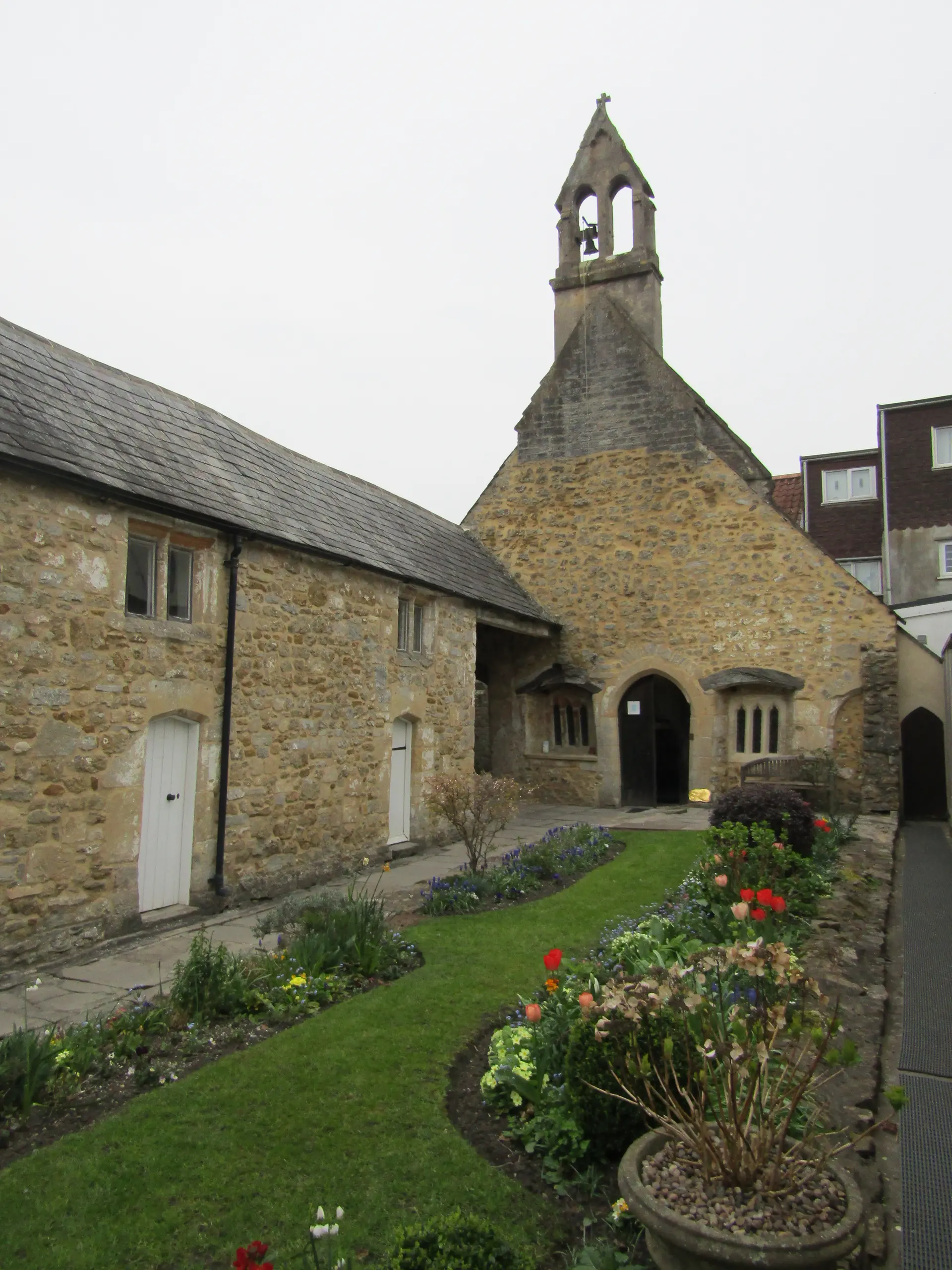
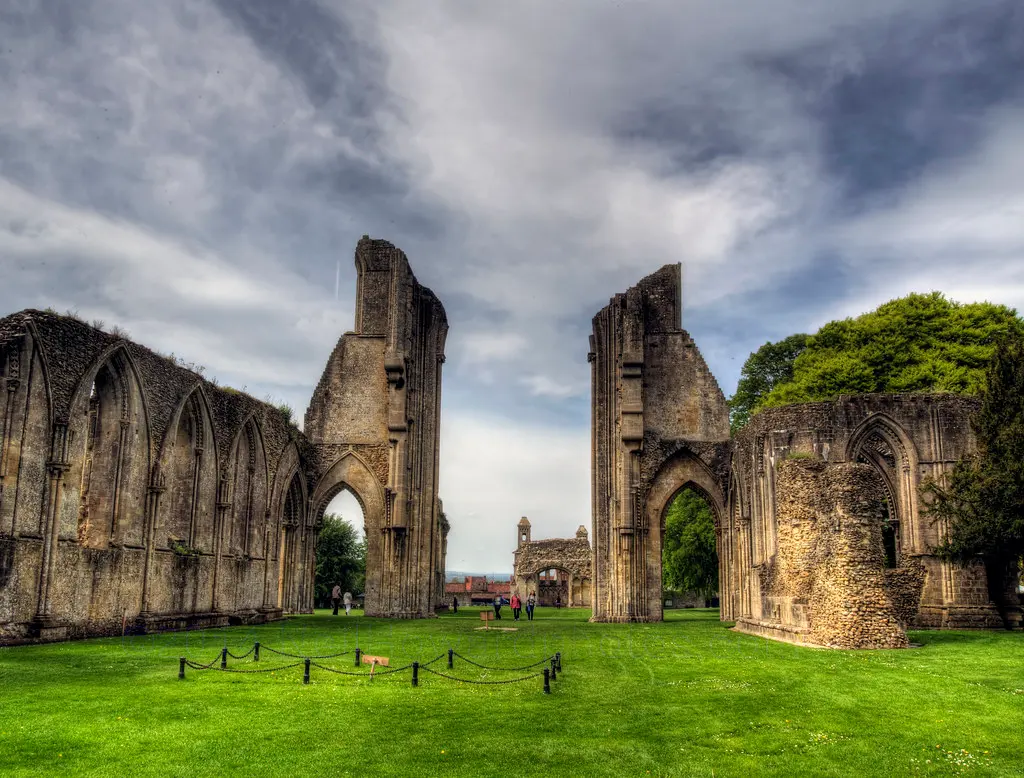
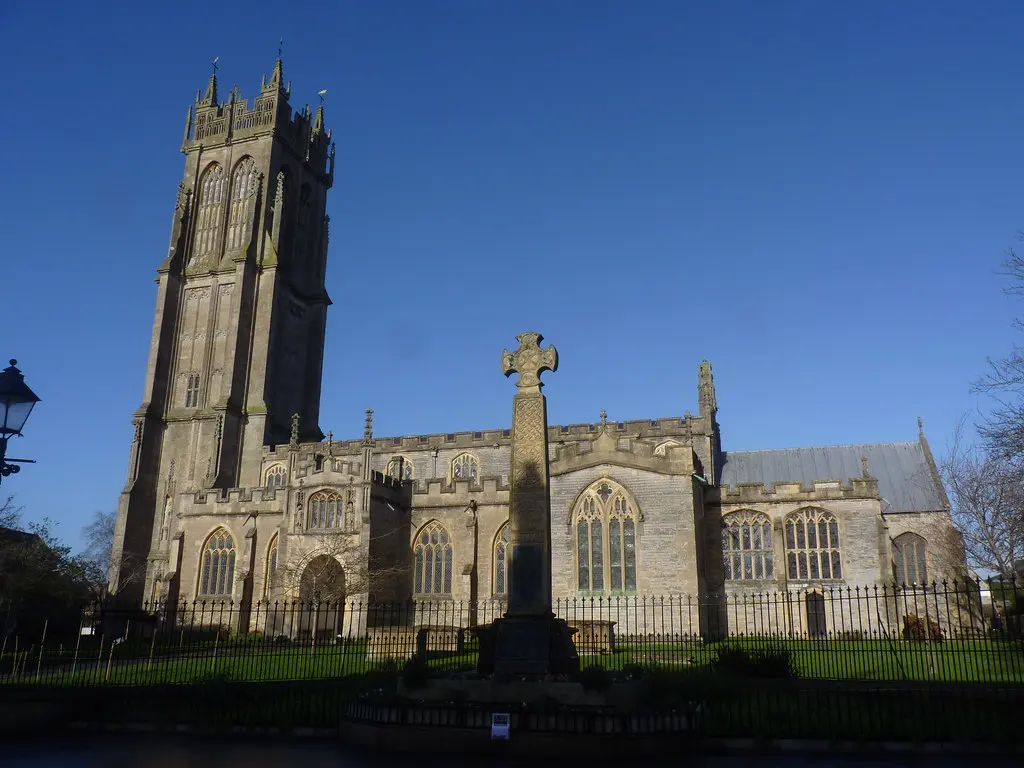
References
Sources consulted for this page. Source categories describe the publication, not a guarantee that every claim is verified. Traditional accounts and outside interpretations may differ.
- 01The Holy Thorn - Glastonbury Abbey Archaeology — University of ReadingacademicAcademic analysis of legend origins
- 02Myths & Legends - Glastonbury Abbey — Glastonbury AbbeyofficialOfficial abbey presentation of legend
- 03The Holy Thorn Ceremony: Revival, Rivalry and Civil Religion in Glastonbury — Taylor & FrancisacademicAcademic analysis of ceremony
- 04Glastonbury Thorn - WikipediaSource contextGood overview with citations
- 05The Holy Thorn: In Glastonbury, England, a special hawthorn tree blooms every year at Christmas — Catholic News AgencynewsRecent news article on replanting
- 06Wearyall Hill - Pilgrimage in Glastonbury — Unity Through DiversityspiritualMulti-faith pilgrimage guide
- 07Glastonbury Way Day Pilgrimage — British Pilgrimage TrustspiritualContemporary pilgrimage organization
Share a photo
Help visitors recognize Wearyall Hill & Holy Thorn. Every submission is reviewed before publication.