St Margaret's Chapel
A hidden chapel where pilgrims have found rest for nearly a thousand years
Understand sacred places, explore living traditions, and learn how to engage respectfully with Pilgrim Map.
Access has not been verified. Check current local guidance before planning a visit.
Glastonbury, England, United Kingdom
Read the sources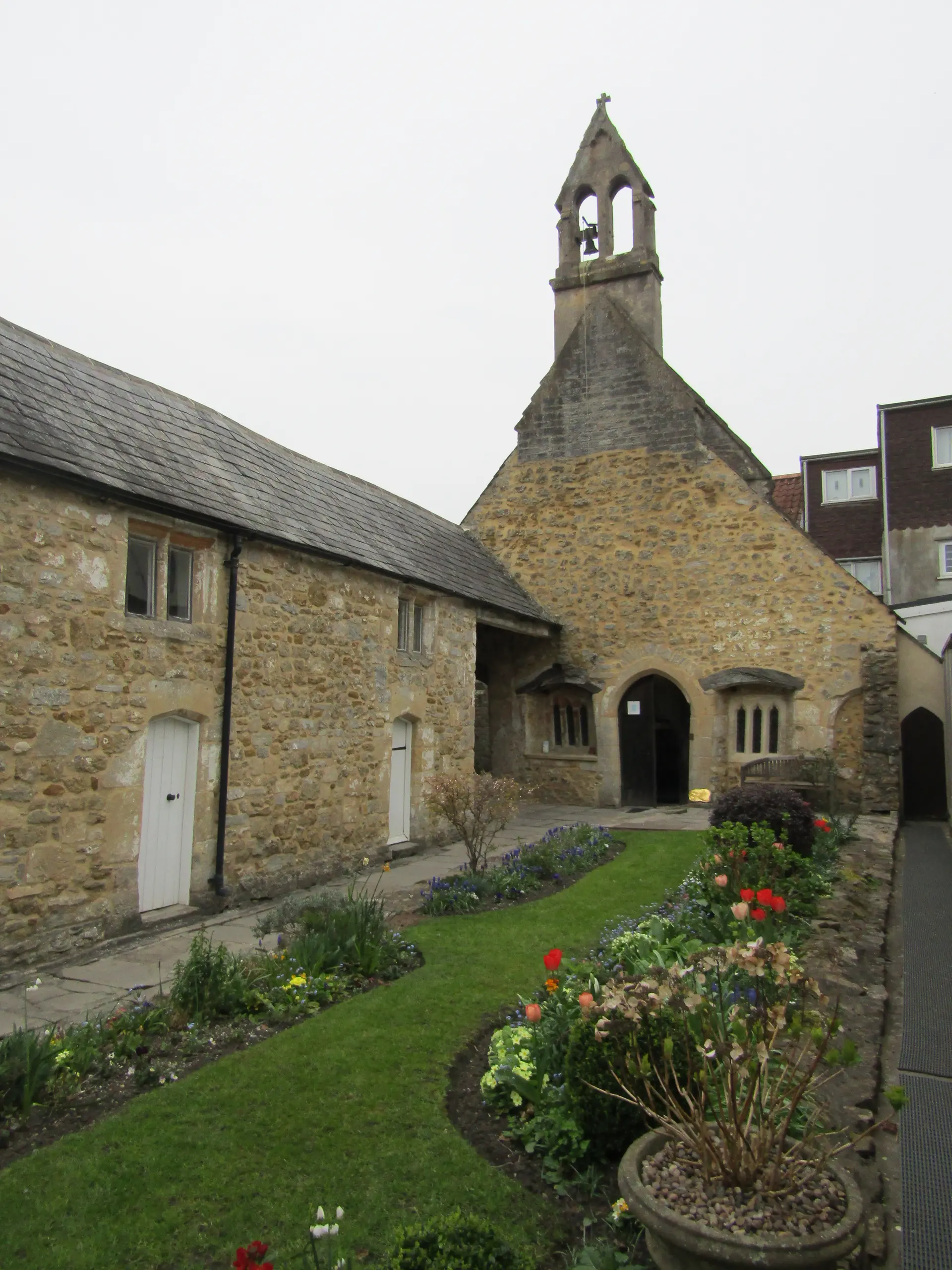
Visit essentials
A quick read before you go
- Duration
- A brief visit of 15-30 minutes allows time to walk through the garden and sit in the chapel.
- Access
- Located behind 38 Magdalene Street, Glastonbury BA6 9EL.
Overview
Glastonbury's Tor, Abbey ruins, Chalice Well, and White Spring command attention or gather devoted communities. Behind a nondescript Magdalene Street passage, however, St Margaret's Chapel—scarcely bigger than a living room—offers silence.
A small sign and narrow passage lead first to a green garden for sitting and breathing, then to stone walls and wooden pews that frame contemplation. No guide or schedule organizes the experience; the space asks for quiet.
For nearly a thousand years, this place has offered hospitality to pilgrims. It began as a medieval hospital for travelers too sick or exhausted to complete their journey and has become a contemporary Quiet Garden, while preserving the same essential gift: rest.
Why this place is sacred
St Margaret's does not announce itself. The entrance hides behind number 38 Magdalene Street, marked only by a modest sign that casual passersby easily miss. This hiddenness belongs to the site's essential character. Unlike Glastonbury's more famous sacred places, St Margaret's does not seek you out. You must choose to find it.
The passage between buildings functions as a threshold. One moment you walk among shops selling crystals and tarot cards, the next you enter a garden where time moves differently. The Quiet Garden Movement, which has recognized this space, understands that such transitions matter. The garden prepares you for the chapel—a few steps among plants and birdsong before you enter a place of deeper stillness.
Inside the chapel, the thinness manifests as absence. Absent are the interpretive panels, the gift shop, the ambient music, the other visitors checking their phones. What remains is stone, wood, light through windows, and whatever you bring with you. The space strips away distraction and leaves you with yourself.
The knowledge that pilgrims have rested here for nearly a millennium adds temporal depth to the stillness. You sit where medieval travelers sat after their long journeys, too weak to continue to the Abbey. You occupy a space shaped by centuries of prayer and care. This accumulated intention does not require belief to sense. The walls hold something.
For those attuned to Glastonbury's energetic landscape, St Margaret's offers a different frequency entirely from the Tor's intensity or the springs' flowing vitality. Here the quality is rest—the hospitality of a place that asks nothing of you except your presence.
The site originated in the 11th century as a hospital for pilgrims journeying to Glastonbury Abbey. According to tradition, it was founded by Queen Margaret of Scotland, later canonized for her extraordinary care of the poor and pilgrims. The hospital provided accommodation, nursing care, and spiritual comfort for travelers too sick, elderly, or impoverished to complete their pilgrimage without assistance. In medieval understanding, such hospitality constituted sacred duty—to care for the stranger was to care for Christ himself.
The 1444 chapel that stands today replaced earlier structures, and the site's purpose shifted after the Dissolution of the Monasteries ended Glastonbury's era as a major pilgrimage center. The 16th-century almshouses, dedicated to Mary Magdalene, continued the charitable mission by providing housing for those in need—a function the Mary & Margaret Charity maintains to this day. The 2012 restoration revitalized the chapel as a contemplative space, and its recognition as a Quiet Garden gave new language to its ancient vocation.
The thread of hospitality has never broken.
Experience and orientation
The experience of St Margaret's Chapel begins with the search. Walking along Magdalene Street, you look for the passageway that most people miss. When you find it—the narrow entrance beside number 38—you feel the small satisfaction of discovery. You have found what was hidden.
The passage opens into a garden that seems larger than the narrow entrance suggests. Green grows here, genuine growing things rather than the crystals and candles that fill Glastonbury's shop windows. Benches invite sitting. The Quiet Garden Movement names what you sense: this is a place for being rather than doing.
The chapel waits beyond the garden. Small—you could count the pews—and simple, with stone walls that have seen centuries. Light enters through windows without trying to create atmosphere. There is no music. No attendant welcomes or instructs you. You enter, and the space receives you.
Visitors report that what happens next depends entirely on what they need. Some sit briefly and leave refreshed. Others stay an hour, finding in the silence a quality they cannot find elsewhere in Glastonbury. A few weep, surprised by emotion they did not expect to surface. The chapel makes no promises about what will occur. It simply holds space.
The contrast with Glastonbury's other sacred sites is striking. At the Abbey, tours move through the ruins explaining what happened here and when. At Chalice Well, a philosophy of the sacred waters shapes the experience. At the Tor, the climb and the view organize the visit. St Margaret's offers none of this structure. The lack of program is the program.
For those who have overdosed on Glastonbury's spiritual marketplace—the workshops, the healings, the readings, the ceremonies—St Margaret's provides an antidote. Here no one will tell you what to believe or how to experience the sacred. The Anglican tradition in which the chapel rests holds quiet as a legitimate form of devotion. You need not perform anything. You need only be present.
The entrance lies behind 38 Magdalene Street—look for a small sign and the narrow passageway between buildings. The garden appears first; take time here before entering the chapel. Inside, you may sit in any pew. Candles are available for lighting. Silence is maintained throughout. The almshouses surrounding the garden are private residences; please respect the privacy of those who live there.
Context and lineage
According to tradition, Queen Margaret of Scotland founded the pilgrimage hospital in the 11th century. Margaret, born a princess and later queen through her marriage to King Malcolm III, was renowned throughout medieval Christendom for her personal care of the poor. She washed the feet of pilgrims with her own hands. She fed orphans from her own table. When she died in 1093, her reputation for holiness was already established, and she was formally canonized in 1250.
Whether Margaret herself established the Glastonbury hospital or whether her name became attached to an existing foundation cannot be historically verified. What can be documented is that a hospital for pilgrims existed here during the medieval period, providing care for those who had traveled to Glastonbury Abbey—one of England's most important pilgrimage destinations—but who were too sick, old, or poor to manage without help.
The hospital embodied a medieval understanding of sacred duty. Christ had identified himself with the stranger and the suffering: 'I was a stranger and you welcomed me.' To care for pilgrims was to care for Christ. The hospital did not merely house travelers; it participated in the work of salvation.
The lineage of St Margaret's Chapel flows through multiple streams. The medieval pilgrimage hospital belongs to the great European tradition of hospitaller care—the same spirit that built hospitals along the Camino de Santiago and throughout the routes to Rome and Jerusalem. The 1444 chapel was built under the patronage of Glastonbury Abbey, then at the height of its medieval power. The Dissolution of the Monasteries (1539) ended the abbey's authority but did not entirely sever the site's sacred purpose.
The almshouses continued the charitable mission under new auspices.
In the 20th and 21st centuries, the site has found new frameworks for its ancient vocation. The Quiet Garden Movement, founded in 1992, creates contemplative spaces within reach of ordinary life—not remote monasteries but gardens and chapels where busy people can find stillness. St Margaret's recognition as a Quiet Garden places it within this contemporary network while honoring its medieval roots.
The 2012 restoration by the Mary & Margaret Charity renewed the physical fabric and affirmed the commitment to continuing the work of hospitality into the future.
Queen Margaret of Scotland
Traditional founder
Mary Magdalene
Almshouse dedication
Traditions and practice
In the medieval period, the hospital chapel would have offered Mass for pilgrims and staff, as well as last rites for those who died before completing their journey. The care of souls accompanied the care of bodies. After the Reformation, the almshouse chapel continued to provide Church of England services for residents—a small congregation gathered in a small space, maintaining Christian worship through centuries of change.
Today, St Margaret's Chapel is open for private prayer and quiet contemplation during seasonal hours. Occasional services may be held, but the space primarily functions as what the Church of England calls a Chapel of Ease—not a parish church with Sunday duties but a place of prayer available to all. The Quiet Garden designation emphasizes the garden as well as the chapel, encouraging visitors to incorporate the green space into their time here.
The Mary & Margaret Charity continues to operate the adjacent almshouses, providing affordable accommodation to people in housing need. This charitable work, though not visible to casual visitors, represents the living continuation of the medieval hospital's mission. The thread of care has never broken.
Enter through the passageway slowly, allowing the transition from street to garden to register. Spend time in the garden before approaching the chapel—sit with the plants, notice what grows here. Enter the chapel quietly. Sit in any pew. You may light a candle if moved to do so. The space asks nothing of you but presence. Stay as long as feels right, whether five minutes or an hour. There is no correct practice here, only stillness offered and stillness received.
If you wish to support the chapel's work, donations to the Mary & Margaret Charity continue the tradition of hospitality. Your gift helps provide housing for those in need, echoing the care once offered to medieval pilgrims.
Medieval Pilgrimage Hospital
HistoricalThe site originated in the 11th century as a hospital for pilgrims traveling to Glastonbury Abbey. Tradition attributes its founding to Queen Margaret of Scotland, renowned for her personal care of the poor and pilgrims. The hospital provided accommodation, nursing, and spiritual comfort for travelers too sick, elderly, or impoverished to complete their journey unaided. In medieval understanding, such hospitality was sacred duty—caring for strangers was caring for Christ.
Medieval pilgrims stopped here before or after visiting Glastonbury Abbey. Those too ill or exhausted to continue received care until they could resume travel—or, if they could not recover, last rites and burial. The hospital functioned as both hospice and hostel, embodying the Christian imperative of welcome to the stranger.
Anglican Contemplative Tradition
ActiveThe current chapel, built in 1444 and dedicated to St Margaret, functions as a Chapel of Ease within the Church of England. Following the 2012 restoration, it serves primarily as a space for quiet prayer and contemplation rather than regular congregational worship. The chapel represents the Anglican commitment to maintaining sacred spaces for personal devotion alongside parish churches.
The chapel is open for private prayer and quiet reflection during seasonal hours. Occasional services may be held. The space is intentionally kept simple and uncluttered to facilitate contemplation. Visitors may light candles and sit in silence. No reservation or affiliation is required; all are welcome.
Quiet Garden Movement
ActiveSt Margaret's Chapel and its garden are recognized as part of the Quiet Garden Movement, an international network of contemplative spaces founded in 1992. The movement draws on ancient traditions of monastic gardens and cloister walks, creating accessible spaces for spiritual refreshment in the contemporary world. Recognition as a Quiet Garden places St Margaret's within this network while honoring its medieval roots.
The garden is available for quiet sitting, walking meditation, and contemplation. The Quiet Garden Movement emphasizes simplicity, hospitality, and the integration of nature and prayer. Visitors are encouraged to simply be present rather than engage in structured activities. The garden prepares you for the chapel; the chapel returns you to the garden.
Charitable Almshouse Tradition
ActiveThe almshouses, dedicated to Mary Magdalene and dating from the 16th century, continue their charitable purpose under the Mary & Margaret Charity. This unbroken tradition of providing accommodation for those in need represents nearly 500 years of Christian social care. The charity's name honors both the original hospital patron (St Margaret) and the almshouse dedication (Mary Magdalene).
The Mary & Margaret Charity provides affordable accommodation to people in housing need, continuing the medieval mission of care for the vulnerable. Residents are part of a small community connected to the chapel. The charity welcomes donations to support its ongoing work. Visitors to the chapel participate in this tradition through their financial support.
Perspectives and open questions
St Margaret's Chapel sits quietly within Glastonbury's landscape of sacred sites, neither announcing itself nor competing for attention. Understanding the site involves holding multiple perspectives: the historical record, the traditional narrative, and the contemporary experience of those who find their way here.
Scholarly perspective
Historical documentation confirms a medieval pilgrimage hospital on this site, though details of its founding remain uncertain. The attribution to Queen Margaret of Scotland rests on tradition rather than contemporary record—her involvement may be genuine, or her name may have been attached to the site later as a fitting patron. The 1444 chapel and 16th-century almshouses are historically attested and Grade II listed by Historic England.
The continuity of charitable purpose from medieval hospital to contemporary almshouse is genuine and unusual, representing nearly a thousand years of care for those in need.
Living and traditional perspectives
Within the tradition that has formed around St Margaret's Chapel, Queen Margaret of Scotland founded the hospital as an expression of her renowned charity toward pilgrims and the poor. The site inherits her spirit of humble, hands-on service—not grandeur but gentle care. The doubling of dedications—St Margaret for the chapel, Mary Magdalene for the almshouses—creates a feminine character often noted by visitors.
The chapel represents what the Church of England, at its best, has preserved: a space for contemplation available to all, maintained by faithful people across the centuries.
Alternative interpretations
Some contemporary visitors understand St Margaret's as a place where Glastonbury's 'thin veil' between worlds is particularly accessible due to centuries of accumulated prayer and care. The Mary Magdalene connection, through the almshouses dedication, resonates with current interest in the feminine divine and Magdalene mysteries. The chapel's location on Magdalene Street is seen by some as significant—part of a hidden Magdalene geography within Glastonbury. These interpretations, while not historically documented, represent living engagement with the site's spiritual potential.
Open questions
Several questions remain unanswered. Did Queen Margaret of Scotland actually found or fund the original hospital? Available sources do not definitively confirm or deny her involvement. Why were the almshouses dedicated to Mary Magdalene while the chapel honors St Margaret—two different saints for two adjacent structures? The relationship between these dedications is not clearly explained. What, exactly, did the original 11th-century hospital look like, and how did medieval pilgrims experience care here? These details have not survived.
Plan your visit
Access and arrival
Located behind 38 Magdalene Street, Glastonbury BA6 9EL. Look for a small sign marking a narrow passageway between buildings; the entrance is easy to miss. Using GPS or mapping applications helps locate the exact position.
The chapel is not wheelchair accessible due to steps. The garden and chapel are small spaces; those with mobility challenges should be aware of the limitations.
Opening hours: March through October, daily 10am-4pm. November through March, Friday through Sunday 10am-3pm. Free admission; donations to the Mary & Margaret Charity are welcome.
No public transportation serves the site directly, but it is within easy walking distance of central Glastonbury. Street parking is available on Magdalene Street and surrounding roads.
Glastonbury offers numerous accommodations from budget hostels to boutique guesthouses. St Margaret's itself cannot provide lodging—the almshouses serve those in long-term housing need rather than visitors. For a stay that echoes the pilgrimage hospital spirit, look for accommodations with quiet gardens or contemplative character.
Respectful visit
No specific dress code applies. Modest attire appropriate to a place of worship is appreciated but not enforced.
Photography is permitted discreetly within the chapel and garden. Be mindful of others seeking quiet—the flash of cameras and the posing for photographs can disrupt the contemplative atmosphere. Never photograph residents of the almshouses or their private spaces.
Donations to the Mary & Margaret Charity are welcomed and support the ongoing charitable work. Candles may be lit within the chapel. Do not leave physical offerings, crystals, or objects in the garden or chapel—the space maintains its character through simplicity.
Maintain quiet at all times. Mobile phones should be silenced or turned off. The almshouses are strictly private. Dogs are not permitted. The space cannot accommodate group visits, tours, or events.
St Margaret's Chapel requires nothing and offers nothing except quiet. If you come seeking dramatic experience, energetic activation, or spiritual teaching, you may be disappointed. The gift here is subtler: simply a place to be still, without demand or program. Accept the chapel on its own terms.
Current practical details
Address
Magdalene St, Glastonbury BA6 9EJ, UK
Hours
Hours, fees, and access can change — verify on the official source before you travel. Practical details last checked Jun 2026.
Location
Map loads as you approach this section.
Pilgrim reflections
A portrait of encounter, not a score
Pilgrims describe what they felt, how present they could become, and whether the place would shape a journey. There are no stars and no ranking of traditions.
No reviewed reflections yet
The first pilgrims can help describe the character of being here.
Share a reflection
Available after an account-backed “Been there.” Every reflection is reviewed before publication.
Nearby sacred places
Explore other sacred places in the region. Proximity does not establish access or travel time; check each place’s guidance.

References
Sources consulted for this page. Source categories describe the publication, not a guarantee that every claim is verified. Traditional accounts and outside interpretations may differ.
- 01Mary & Margaret Charity — Mary & Margaret CharitySource contextOfficial charity managing the almshouses and chapel
- 02Historic England Listing - St Margaret's Almshouses — Historic EnglandacademicGrade II listed building information
- 03St Margaret's Chapel - Glastonbury Information — Glastonbury OnlineSource contextLocal tourism information source
- 04Quiet Garden Movement - St Margaret's Chapel — Quiet Garden MovementspiritualOrganization recognizing the chapel garden as a contemplative space
- 05Churches of Somerset - St Margaret's Chapel — Somerset ChurchesSource contextRegional church heritage documentation
- 06British Pilgrimage Trust - Glastonbury — British Pilgrimage TrustspiritualContemporary pilgrimage organization perspective
Share a photo
Help visitors recognize St Margaret's Chapel. Every submission is reviewed before publication.