Viseu Cathedral
Eight centuries of Romanesque stone beneath a ceiling carved to look like knotted rope
Understand sacred places, explore living traditions, and learn how to engage respectfully with Pilgrim Map.
Access has not been verified. Check current local guidance before planning a visit.
Viseu, Viseu, Portugal
Read the sources
Visit essentials
A quick read before you go
- Duration
- Approximately 1.5 to 2 hours to see the church, cloister, and Sacred Art Museum in full.
- Access
- Located centrally on Sé Square (Adro da Sé) in Viseu's pedestrianized old town; free entry to…
Overview
Look up in Viseu Cathedral's nave and the ceiling seems woven rather than carved: stone ribs twist like ship's rope, an early-sixteenth-century Manueline signature added to a building already four hundred years old.
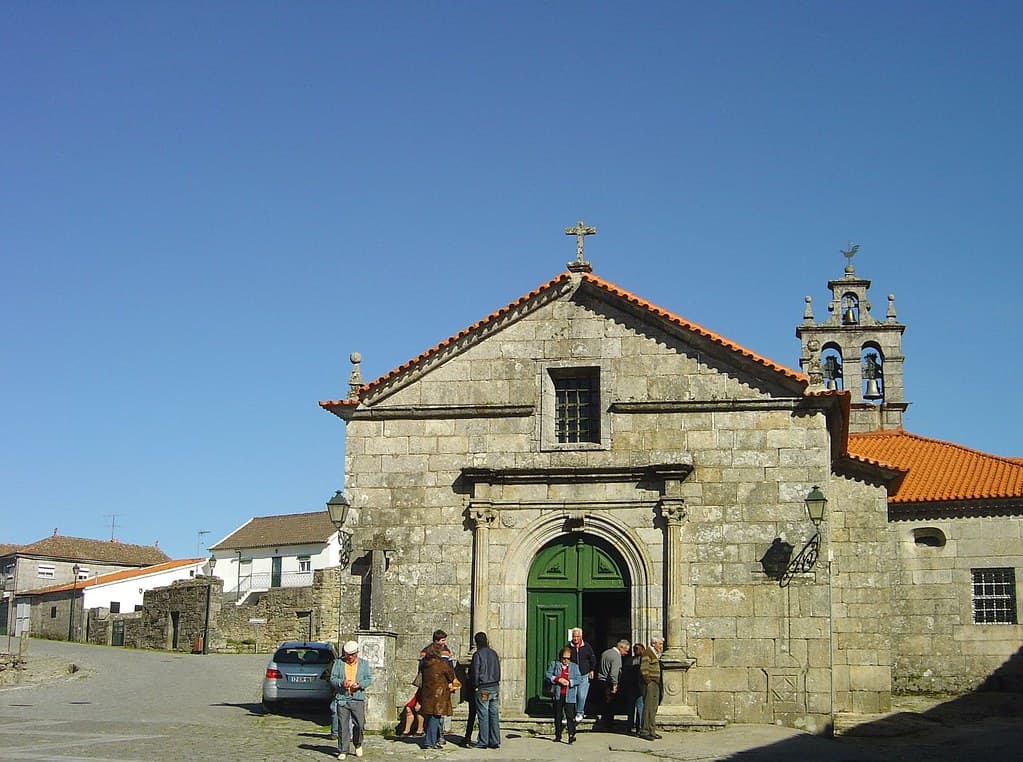
Christians have worshipped on this ground, with one long interruption, since the Suevic period. What survives is not one building but five: a Romanesque core, Gothic renovation, rope-carved Manueline vault, Renaissance cloister, and Mannerist façade rebuilt after a storm destroyed the original portal in 1635. Bishops who left marks seem to have chosen addition over demolition, making the nave a conversation across centuries.
Nothing sits behind glass. Viseu Cathedral remains an active diocesan seat and the city's principal parish church. Mass on any Sunday continues, however indirectly, worship reaching back well over a thousand years—broken only by the Moorish conquest and restored after the reconquest of 1058.
Why this place is sacred
What makes Viseu Cathedral sacred is not a single miracle or apparition but the sheer duration of the claim: worship on this site predates the Reconquista, was interrupted by conquest, and resumed without relocating so much as a stone's throw.
The building's fabric performs this continuity visibly — Romanesque walls holding up a Manueline ceiling, a Renaissance cloister opening onto a Gothic transept — so that standing inside is itself a way of encountering thirteen centuries of intention layered rather than replaced.
The cathedral's other claim to sacred weight is its Treasure: reliquaries, vestments, and devotional objects spanning the twelfth through twentieth centuries, now displayed in the Sacred Art Museum on the upper floor. Among them is a fourteenth-century statue of the Virgin Mary that anchors the cathedral's dedication to Our Lady of the Assumption, and an eighteenth-century Limoges-enameled reliquary noted by visitors for its craftsmanship. No single origin story dominates; the sacredness accrues from use rather than event.
Archaeological summaries point to an Early Christian basilica on this site during Suevic rule in the fifth or sixth century, making it one of the oldest continuously claimed sites of Christian worship in the region — though no detailed excavation report was available to confirm the basilica's scale or exact layout.
Christian use was disrupted by the Moorish conquest of the eighth century and did not resume until Ferdinand I of León retook Viseu in 1058. The bishopric was reestablished and the current cathedral begun in the mid-twelfth century under Bishop D. Odório, then substantially renovated in the thirteenth century under Bishop D. Egas. The building has been a Portuguese National Monument since 1910, and functions today as both heritage site and active parish church.
Experience and orientation
Enter from Sé Square, where the cathedral faces the Baroque Igreja da Misericórdia across an open plaza — one of the more striking building-to-building conversations in Portuguese church architecture. Inside, the eye goes up first: the nave's ribbed vault seems to writhe overhead, its Manueline carving evoking rope and knot rather than the usual foliage or geometry of Gothic vaulting elsewhere in Portugal.
The cloister rewards a slower pace. Its Renaissance arcades, added in the sixteenth century under Bishop D. Miguel da Silva, are quieter than the nave and better lit by natural daylight, particularly in the morning — a good place to sit rather than pass through. At the east end, the gilded Baroque-Rococo altarpiece, completed in the 1730s, houses the fourteenth-century Marian statue that gives the space its focal point.
The Sacred Art Museum on the upper floor requires a separate ticket and different hours, but visitors who make time for it encounter centuries of vestments, reliquaries, and liturgical objects rarely displayed together elsewhere.
Come on a bright morning if the cloister stonework and vault carving matter to you — the cathedral's small windows and stone construction leave the interior dim on overcast days. Weekday mornings or mid-afternoons, outside the local lunch rush, offer the fewest crowds; expect more visitors, and a busier square, during the Feira de São Mateus fair from mid-August through September 21.
Context and lineage
Viseu's Christian roots reach to the Suevic period, when an Early Christian basilica occupied this ground in the fifth or sixth century. That worship ended with the Moorish conquest of the eighth century and did not resume until Ferdinand I of León reconquered the city in 1058. The bishopric — first documented in the sixth century, when Bishop Remissol attended the Second Council of Braga in 572 — was reestablished, and construction of the current cathedral began under Bishop D.
Odório during the reign of D. Afonso Henriques, in the mid-twelfth century.
A major thirteenth-century renovation followed under Bishop D. Egas, during the reign of D. Dinis. The cathedral's most distinctive addition came in the early sixteenth century, when architect João de Castilho, working under Bishop Diogo Ortiz de Vilhena, added the stone roof, enlarged the building, and carved the rope-like Manueline vaulting. The Renaissance cloister followed under Bishop D. Miguel da Silva, designed around 1539 by the Italian architect Francisco Cremona.
When a storm destroyed the Manueline main portal in 1635, architect João Moreno rebuilt the façade in the Mannerist style seen today. The Baroque-Rococo main altarpiece, completed 1729-1733, houses a fourteenth-century statue of the Virgin Mary.
For over a millennium and a half, with one interruption during Moorish rule, bishops of Viseu have overseen worship on this site. The diocese remains a suffragan see of the Archdiocese of Braga, and the cathedral continues as both the bishop's seat and Viseu's principal parish church, its five architectural layers still in active liturgical use rather than preserved as static heritage.
D. Odório
historical
Bishop who oversaw the start of the current cathedral's construction in the mid-12th century, after the diocese was reestablished following the 1058 reconquest.
João de Castilho
historical
16th-century architect who enlarged the cathedral, added its stone roof, and carved the Manueline rib vaulting resembling knotted rope, under Bishop Diogo Ortiz de Vilhena.
D. Miguel da Silva
historical
Bishop who commissioned the Renaissance cloister, designed around 1539 by Italian architect Francisco Cremona.
Vasco Fernandes
historical
Painter associated with the cathedral's altarpieces, part of the broader Viseu school of religious art centered on the see.
Traditions and practice
Historic practice centered on the diocese's role in regional Church governance — Viseu's bishops attended councils at Braga and Toledo in the early medieval period — alongside the Marian devotion implied by the cathedral's dedication to Our Lady of the Assumption.
The cathedral functions as an active parish and diocesan church, with regular Sunday and weekday Mass open to the public. The Feira de São Mateus, Viseu's major annual fair running from mid-August through September 21, draws citywide attention to the historic center, though it is a civic rather than liturgical event.
Visitors seeking more than architecture might attend a weekday or Sunday Mass, sitting toward the back of the nave rather than treating the visit as a walkthrough. The cloister, less trafficked than the main church, offers a quieter place to sit with the space before or after a service.
Roman Catholicism
ActiveViseu Cathedral is the episcopal seat of a diocese documented since the sixth century and a suffragan see of the Archdiocese of Braga, anchoring Catholic worship and ecclesiastical authority in the Beira Alta region for well over a millennium.
Regular Sunday and weekday Mass, veneration of the Virgin Mary under the Assumption title, and stewardship of a Cathedral Treasure and Sacred Art Museum housing vestments, reliquaries, and devotional art from the twelfth through twentieth centuries.
Perspectives and open questions
Viseu Cathedral is read by architectural historians primarily as a record of accumulated patronage; the building itself offers little competing mythology to weigh against that reading.
Scholarly perspective
Architectural historians treat the cathedral as a layered example of Romanesque, Gothic, Manueline, Renaissance, and Mannerist building campaigns spanning the twelfth through seventeenth centuries, reflecting the diocese's sustained wealth and continuity of patronage across five centuries of successive bishops.
Open questions
The precise scale and layout of the underlying fifth- to sixth-century Sueve-era basilica remains only partially understood; no detailed excavation report was available to confirm its extent beneath the current building.
Plan your visit
Access and arrival
Located centrally on Sé Square (Adro da Sé) in Viseu's pedestrianized old town; free entry to the main church, with a small paid entry fee for the Sacred Art Museum.
Respectful visit
Modest dress is expected, as customary for an active Catholic place of worship — covered shoulders and no beachwear.
Generally permitted inside the main church and cloister without flash, to help preserve the artwork; avoid photographing during active Mass.
Silence and respectful behavior are expected, particularly during services. The Sacred Art Museum requires separate, timed entry and a small fee, distinct from the free main church.
Photography is discouraged during active Mass, and the Sacred Art Museum keeps separate, more limited hours from the main church — check both before planning a visit that includes both spaces.
Location
Map loads as you approach this section.
Pilgrim reflections
A portrait of encounter, not a score
Pilgrims describe what they felt, how present they could become, and whether the place would shape a journey. There are no stars and no ranking of traditions.
No reviewed reflections yet
The first pilgrims can help describe the character of being here.
Share a reflection
Available after an account-backed “Been there.” Every reflection is reviewed before publication.
Nearby sacred places
Explore other sacred places in the region. Proximity does not establish access or travel time; check each place’s guidance.



References
Sources consulted for this page. Source categories describe the publication, not a guarantee that every claim is verified. Traditional accounts and outside interpretations may differ.
- 01Sé de Viseu — Direção-Geral do Património Cultural — Direção-Geral do Património Cultural (Portuguese Ministry of Culture)officialOfficial Portuguese heritage-body listing confirming the cathedral's alternate names (Igreja Paroquial de Santa Maria, Igreja de Nossa Senhora da Assunção) and its status as a protected national monument.
- 02Catedral de Viseu / Sé de Viseu — SIPA (Sistema de Informação para o Património Arquitectónico) — Direção-Geral do Património Cultural / SIPAofficialOfficial Portuguese architectural heritage database entry cataloguing the cathedral under its full set of historical names.
- 03Sé Catedral de Viseu — Turismo de PortugalofficialNational tourism authority page; source for Manueline rib-vault ceiling knotted-rope motif, Cathedral Treasure spanning 12th-20th centuries, and reference to a Marian Shrine Route in the Centro region.
- 04Religious Art Museum — Center of Portugal — Turismo Centro de PortugalofficialRegional tourism authority source confirming the Religious Art Museum's collection of images, liturgical vestments, worship paraments, choir books, and furniture housed on the cathedral's second floor since 1932.
- 05Viseu Cathedral — Wikipedia — Wikipedia contributorsSource contextConfirms Early Christian basilica origins (5th-6th c. Sueve period), Moorish disruption, 1058 reconquest, mid-12th-century bishopric reestablishment and cathedral construction start, João de Castilho's 16th-century enlargement and façade, 1635 storm destruction of Manueline portal, João Moreno's Mannerist façade, cloister history, Latin cross plan, and Baroque-Rococo main altarpiece (1729-1733) with 14th-century Holy Mary statue.
- 06Sé de Viseu — Wikipédia, a enciclopédia livre — Wikipédia contributorsSource contextConfirms national monument classification (1910), 12th-century Romanesque origins under Bishop D. Odório during reign of D. Afonso Henriques, 13th-century renovation under Bishop D. Egas during reign of D. Dinis, and dedication pattern of Portuguese cathedrals to Saint Mary.
- 07Marian Shrine Route — Turismo de PortugalofficialConfirms existence of an official Marian pilgrimage/shrine route in Portugal; does not explicitly list Viseu Cathedral as a numbered stop, hence pilgrimages field left empty rather than fabricated.
- 08Roman Catholic Diocese of Viseu — Wikipedia — Wikipedia contributorsSource contextConfirms the diocesan see dates from the 6th century, lists Remissol (572-585) as an early bishop who attended the Second Council of Braga, notes bishops of Viseu attended multiple Councils of Toledo, and confirms the diocese is a suffragan of the Archdiocese of Braga.
- 09Viseu Cathedral Opening Hours 2026: Plan Your Visit Perfectly — tourismattractions.netSource contextSource for cathedral opening hours (8am-12pm, 2pm-7pm) and Sacred Art Museum hours (Tue-Fri 9am-12pm/2pm-5pm, Sat 2pm-5pm), plus visitor etiquette guidance on dress and photography.
- 10Holidays, Celebrations, and Festivals in Portugal — Our Portugal JourneySource contextConfirms the Feira de São Mateus, Viseu's major annual fair/festival (mid-August through Dia de São Mateus on September 21), a citywide event distinct from cathedral-specific liturgy but relevant to local seasonal visitor timing.
- 113 Things You Didn't Know About The Viseu Cathedral — A Portuguese AffairSource contextTravel blog corroborating details on the Limoges-school enameled copper reliquary vaults (18th century) and the 1533 monstrance commissioned under Bishop D. Miguel da Silva as notable treasury pieces; used only to corroborate facts already found in higher-reliability sources.
Share a photo
Help visitors recognize Viseu Cathedral. Every submission is reviewed before publication.