Vadstena Abbey
Where a medieval mystic's visions built a monastery, and nuns returned after three hundred years
Understand sacred places, explore living traditions, and learn how to engage respectfully with Pilgrim Map.
Access has not been verified. Check current local guidance before planning a visit.
Vadstena, Östergötland, Sweden

Visit essentials
A quick read before you go
- Duration
- One to two hours for the abbey church, relics, and grounds.
- Access
- Located in the town of Vadstena on the eastern shore of Lake Vattern in Ostergotland County.
Overview
Saint Birgitta of Sweden received approximately seven hundred visions. One commanded a new religious order, specifying its membership, governance, and church architecture: the entrance would face east and the altar west, contrary to every ecclesiastical convention. Birgitta insisted that divine instruction superseded human tradition.
King Magnus IV and Queen Blanche donated Vadstena's royal estate to fulfill that command. The Order of the Most Holy Savior followed the visionary blueprint as a double monastery of sixty nuns and twenty-five monks governed by an abbess—a form of female spiritual authority radical in its medieval setting and still notable.
In 1595, the Reformation drove out the last medieval nuns, and the church became a Lutheran parish. The Brigittine motherhouse stood without its community for 368 years. Nuns returned from the Netherlands in 1963, and autonomous abbey status returned in 1991. Today they pray behind convent walls while the austere Blue Church serves Catholic and Lutheran worship in an ecumenical arrangement inconceivable in Birgitta's time or the Reformation.
Birgitta's relics rest in a red casket in the church designed from her vision. The Birgitta Trail from Soderkoping reaches a destination that survived medieval foundation, Reformation destruction, and modern resurrection—an apparent answer to whether a place built on revelation can outlive the culture that received it.
Why this place is sacred
The foundation in divine revelation establishes the primary threshold. Birgitta did not choose Vadstena because it was convenient or beautiful; she founded the monastery because Christ commanded it in a vision that specified the site, the order's rule, and the church's design. Whether one accepts these visions as genuine divine communication or as the creative expressions of a profoundly spiritual mind, their effect on the physical landscape is undeniable.
The church stands as Birgitta dictated, its reversed orientation a permanent architectural testimony to the priority of revelation over convention.
The relics of Saint Birgitta provide a material point of contact with the visionary herself. The red casket containing her remains has rested in the church since the translation of her body from Rome in 1394. Medieval pilgrims came seeking healing, particularly women praying for safe childbirth. Modern visitors stand before the same relics, separated from Birgitta by seven centuries but connected by the materiality of bone and wood.
The return of the Brigittine nuns is perhaps the most powerfully thinning element. For 368 years, the monastery existed without its community. The buildings served other purposes; the devotional tradition survived in Brigittine houses elsewhere in Europe. When the nuns returned in 1963, they restored a continuity that the Reformation had severed but not destroyed. The sound of their prayers in the church Birgitta designed carries the weight of that resurrection.
Lake Vattern, stretching to the western horizon, contributes its own quality. Sweden's second-largest lake creates a vast reflective surface that changes with weather and season, providing a natural contemplative environment that amplifies the abbey's interior stillness. The combination of austere architecture, relics, living monastic prayer, and lakeside setting creates a layered experience that operates simultaneously on historical, spiritual, and sensory registers.
Vadstena Abbey was founded in 1346 as the motherhouse of the Order of the Most Holy Savior (Brigittine Order), a double monastery of nuns and monks governed by an abbess. Saint Birgitta's revelations specified every aspect of the foundation, from the number of community members to the church's architectural orientation. The abbey was designed as a center of contemplative prayer, scholarship, and spiritual authority under female leadership.
From its foundation in 1346 through the medieval period, Vadstena grew into one of northern Europe's most important religious centers, with daughter houses across Scandinavia and beyond. The Reformation closed the monastery in 1595, and the church became a Lutheran parish. The return of Brigittine nuns in 1963 and the restoration of autonomous abbey status in 1991 represent the most recent phase of a history that spans nearly seven centuries.
The establishment of the Pilgrim Center in 1997 and the St. Birgitta Ways pilgrimage network have revived the medieval pilgrimage tradition in ecumenical form.
Experience and orientation
The Blue Church earns its name. The interior is stripped of the ornamental excess that characterizes many medieval churches, presenting instead an austerity that focuses attention on essentials: stone, light, and the presence of the relics. Birgitta's vision specified simplicity, and the builders honored that specification. The effect is a space that calms rather than overwhelms, that invites inward attention rather than upward gazing.
The relics of Saint Birgitta, in their red casket, occupy a position of quiet centrality. The casket does not dominate the church; it sits within the larger architectural program as one element among others. But for those who know what it contains, the remains of a woman whose visions shaped European art, theology, and monastic practice, the casket becomes the emotional center of the space.
Standing before it, one stands before seven centuries of contemplative tradition compressed into a single object.
The medieval sculptures and artworks preserved in the church reward slow attention. Images of Saint Birgitta, Saint Anne, and the Blessed Virgin Mary carry the devotional weight of centuries. These are not museum pieces displayed for aesthetic appreciation; they are objects that were made for prayer and that continue to function in that capacity within the living worship of the church.
The sound of the Brigittine nuns at prayer, when it reaches the church, adds a dimension that no visual element can replicate. The knowledge that a community of women, following the rule that Birgitta received in revelation, has returned to the place where that rule was first enacted transforms the church from a historical site into a living expression of spiritual persistence.
Outside, the abbey grounds and the shores of Lake Vattern provide space for the contemplative overflow that the church generates. Walking along the lakeside, with the vast water stretching toward the horizon and the abbey at one's back, the inner and outer landscapes align.
Enter the Blue Church with awareness that you are entering a space designed by a visionary for a specific spiritual purpose. Allow the austerity to work on your attention; resist the impulse to rush through in search of highlights. Find the red casket and spend time with it. If the Brigittine community is at prayer, listen. After the church, walk the abbey grounds and then go to the lake.
The transition from enclosed sacred space to open waterscape completes the experience.
Context and lineage
Saint Birgitta received a vision from Christ commanding her to establish a new religious order. The revelation specified the number of members: sixty nuns and twenty-five monks. It specified governance under an abbess, an arrangement of female authority that was exceptional in its medieval context. It specified the church's orientation, with the entrance facing east and the altar west, reversing the conventional arrangement. King Magnus IV and Queen Blanche donated the royal estate at Vadstena to realize the vision.
Upon Birgitta's canonization in 1391, her remains were translated from Rome, where she had died in 1373, to the abbey church at Vadstena in 1394. The translation was a major event that established Vadstena as a pilgrimage center and fulfilled Birgitta's vision of a spiritual center in her Swedish homeland.
The Brigittine Order spread from Vadstena across Europe, establishing daughter houses in Scandinavia, Germany, England, Italy, and beyond. At its height, the order maintained houses in nineteen countries. The Reformation severed the Swedish connection, but the order survived in continental Europe. The return to Vadstena in 1963 restored the link between the order and its motherhouse. The Pilgrim Center, established in 1997 by the Church of Sweden Diocese of Linkoping, represents the latest institutional expression of Vadstena's spiritual vocation.
Saint Birgitta of Sweden (Brigida)
Founder of the Brigittine Order, mystic who received approximately 700 visions, canonized 1391, named patron saint of Europe 1999
King Magnus IV and Queen Blanche of Sweden
Royal patrons who donated the estate at Vadstena for the founding of the monastery
Saint Katarina of Vadstena
Birgitta's daughter, who worked to secure her mother's canonization and the establishment of the order
The returning Brigittine community
Nuns from the Netherlands who re-established monastic life at Vadstena in 1963, restoring the community after 368 years of absence
Traditions and practice
The medieval Brigittine liturgy included the distinctive Office of Our Lady, a form of the Divine Office adapted according to Birgitta's revelations. The double monastery structure, with monks and nuns sharing the same church but separated by walls, created a unique liturgical atmosphere. Pilgrims in the medieval period sought Birgitta's relics for healing, particularly women praying for safe childbirth, and the abbey granted indulgences to those who completed the pilgrimage.
The veneration of Saint Birgitta's relics and the medieval sculptures in the church connected devotional practice to the physical presence of sanctity. Stations of the Cross and seasonal liturgical celebrations anchored the community's prayer life to the cycle of the Christian year.
The Brigittine nuns follow the monastic rule dictated by Saint Birgitta's revelations, maintaining a life of prayer, contemplation, and simplicity. Their liturgy includes the Brigittine Office of Our Lady, continuing a tradition that was interrupted by the Reformation but never extinguished.
Lutheran Church of Sweden services are held in the abbey church, creating an ecumenical atmosphere that is unusual in European Christianity. Catholic and Lutheran worship share the same space, a practical arrangement that carries theological implications about the possibility of Christian unity.
The Pilgrim Center, operated since 1997 by the Church of Sweden Diocese of Linkoping, coordinates pilgrimage along the St. Birgitta Ways. The Birgitta Trail from Soderkoping covers approximately 130-148 kilometers and takes five to seven days on foot. The emphasis is on inner journey, sustainable living, simplicity, prayer, and service, values explicitly connected to Birgitta's own spiritual teaching.
The Feast of Saint Birgitta on July 23 is the most significant annual celebration, drawing pilgrims and visitors from across Scandinavia and beyond.
If walking the Birgitta Trail, allow the physical journey to establish the contemplative quality of the arrival. Five to seven days of walking through the Swedish countryside transforms the body's relationship to time and pace, and the arrival at Vadstena becomes not merely geographic but spiritual.
In the Blue Church, sit in silence before seeking the relics or the artworks. Allow the austere architecture to quiet your attention. Then find the red casket. Consider that the woman whose bones rest there received approximately seven hundred visions that shaped art, architecture, and theology across an entire continent. Whether those visions came from God, from the depths of Birgitta's own spiritual imagination, or from some other source, their effects surround you in this building.
If the Brigittine community is at prayer, listen. The sound of women praying a rule that was dictated in a vision seven centuries ago, in a building designed for that purpose, in a community that returned after 368 years of exile, carries a weight that no individual element can achieve alone.
Brigittine monastic tradition
ActiveVadstena is the motherhouse of the Order of the Most Holy Savior, founded by Saint Birgitta following divine revelations. The order was uniquely structured as a double monastery under an abbess, an arrangement of female spiritual authority exceptional in its medieval context. After the Reformation closed the monastery in 1595, Brigittine nuns returned in 1963, and the abbey regained autonomous status in 1991.
The community follows the monastic rule from Birgitta's revelations, emphasizing prayer, contemplation, and simplicity. The Brigittine Office of Our Lady structures the liturgical day. The nuns maintain a life of prayer behind convent walls while contributing to the church's spiritual atmosphere. Retreatants are welcomed in the area.
Ecumenical pilgrimage (St. Birgitta Ways)
ActiveThe Vadstena Pilgrim Center, established in 1997 by the Church of Sweden Diocese of Linkoping, coordinates a network of pilgrimage routes converging on Vadstena. The Birgitta Trail from Soderkoping covers approximately 130-148 km over five to seven days. The pilgrimage is explicitly ecumenical, welcoming people of all backgrounds and motivations.
Pilgrims walk designated routes, collecting stamps in their pilgrim passports. The Pilgrim Center offers guidance, reflection programs, and accommodation information. The emphasis is on inner journey, sustainable living, simplicity, prayer, and service. The program connects to Nordic pilgrimage destinations and the broader European pilgrimage network.
Relic veneration of Saint Birgitta
ActiveThe abbey church houses the relics of Saint Birgitta in a red casket. In the medieval period, these relics made Vadstena one of northern Europe's most important pilgrimage destinations. The translation of Birgitta's remains from Rome in 1394 transformed the site from a monastic house into a major relic shrine.
Pilgrims and visitors view the relics in the abbey church. Medieval sculptures of Saint Birgitta, Saint Anne, and the Blessed Virgin Mary are venerated alongside the relics. Candles are lit in devotion. The Feast of Saint Birgitta on July 23 draws particular attention to the relics and their significance.
Perspectives and open questions
Vadstena Abbey stands at the intersection of mystical experience, institutional religion, national history, and the contemporary search for spiritual meaning. Each perspective illuminates a different dimension of the site's seven-century story.
Scholarly perspective
Historians recognize Vadstena as the motherhouse of the Brigittine Order and one of medieval Scandinavia's most important religious centers. The abbey's international network of daughter houses demonstrates its pan-European significance. Birgitta's approximately seven hundred Revelations are studied as major contributions to medieval mystical literature and theological thought. The abbey's architectural specifications, dictated by vision, are examined as evidence of how mystical authority could override conventional ecclesiastical practice.
The ecumenical revival since the 1960s is studied as a model of post-Reformation reconciliation.
Living and traditional perspectives
The Catholic tradition venerates Saint Birgitta as one of the Church's greatest mystics and the founder of an order that continues in nineteen countries. Her revelations are regarded as genuine divine communications. The return of the Brigittine nuns to Vadstena in 1963 is understood as the fulfillment of a long-delayed promise, a restoration of the community that should never have been dissolved.
The Lutheran tradition in Sweden, while having closed the medieval monastery, has embraced the pilgrimage revival through the Pilgrim Center, acknowledging Birgitta's significance to Swedish spiritual identity regardless of denominational boundaries.
Alternative interpretations
Spiritual seekers are drawn to Birgitta as an example of direct mystical experience and feminine spiritual authority within a patriarchal religious framework. Her visions of the Nativity and the Passion have been analyzed through the lens of contemplative practice across traditions. The abbey's setting on Lake Vattern, one of Europe's largest lakes, has attracted attention from those who associate large bodies of water with contemplative qualities and spiritual receptivity.
Open questions
The precise nature of Birgitta's visionary experiences remains a subject of both theological and psychological inquiry. Whether her revelations reflect genuine transcendent encounter, creative spiritual imagination, or phenomena that current categories cannot adequately describe is understood differently within each interpretive framework. The fate of some of the abbey's medieval manuscripts and treasures during the Reformation is not fully documented.
The full extent of the medieval pilgrimage routes to Vadstena and the experiences of the thousands who walked them are only partially recoverable from historical sources.
Plan your visit
Access and arrival
Located in the town of Vadstena on the eastern shore of Lake Vattern in Ostergotland County. Accessible by bus from Linkoping (approximately 60 km) and Motala (approximately 15 km). No direct rail service; nearest railway stations are Motala and Mjolby. By car from Stockholm approximately 300 km (3 hours), from Gothenburg approximately 300 km (3.5 hours). Admission approximately 30 SEK. Mobile phone signal is available throughout Vadstena.
The abbey church is accessible to visitors with mobility needs on the ground floor; contact the church for specific arrangements.
Vadstena offers hotels, guesthouses, and bed-and-breakfast accommodations. The town is compact and walkable. For pilgrims walking the Birgitta Trail, accommodation and camping options are available along the route. The Pilgrim Center can provide guidance on lodging.
Respectful visit
Modest attire appropriate for a Christian place of worship. No specific requirements beyond general respectfulness.
Photography is permitted in the abbey church but should be done respectfully. Flash photography may be restricted near artworks and relics. Do not photograph the Brigittine nuns without their permission.
Candles can be lit in the abbey church. Donations are welcomed for the maintenance of the church and the work of the Pilgrim Center.
Silence and reverence expected inside the abbey church, particularly during services and prayer times. The Brigittine convent buildings are private. Respectful behavior expected throughout the abbey grounds.
The Brigittine convent buildings are private and not open to general visitors. The church has a small admission fee (approximately 30 SEK). Opening hours vary seasonally, with significantly reduced hours from October through April.
Current practical details
Address
Lasarettsgatan 5, 592 30 Vadstena, Sweden
Phone
Hours
Hours, fees, and access can change — verify on the official source before you travel. Practical details last checked Jun 2026.
Location
Map loads as you approach this section.
Pilgrim reflections
A portrait of encounter, not a score
Pilgrims describe what they felt, how present they could become, and whether the place would shape a journey. There are no stars and no ranking of traditions.
No reviewed reflections yet
The first pilgrims can help describe the character of being here.
Share a reflection
Available after an account-backed “Been there.” Every reflection is reviewed before publication.
Nearby sacred places
Explore other sacred places in the region. Proximity does not establish access or travel time; check each place’s guidance.
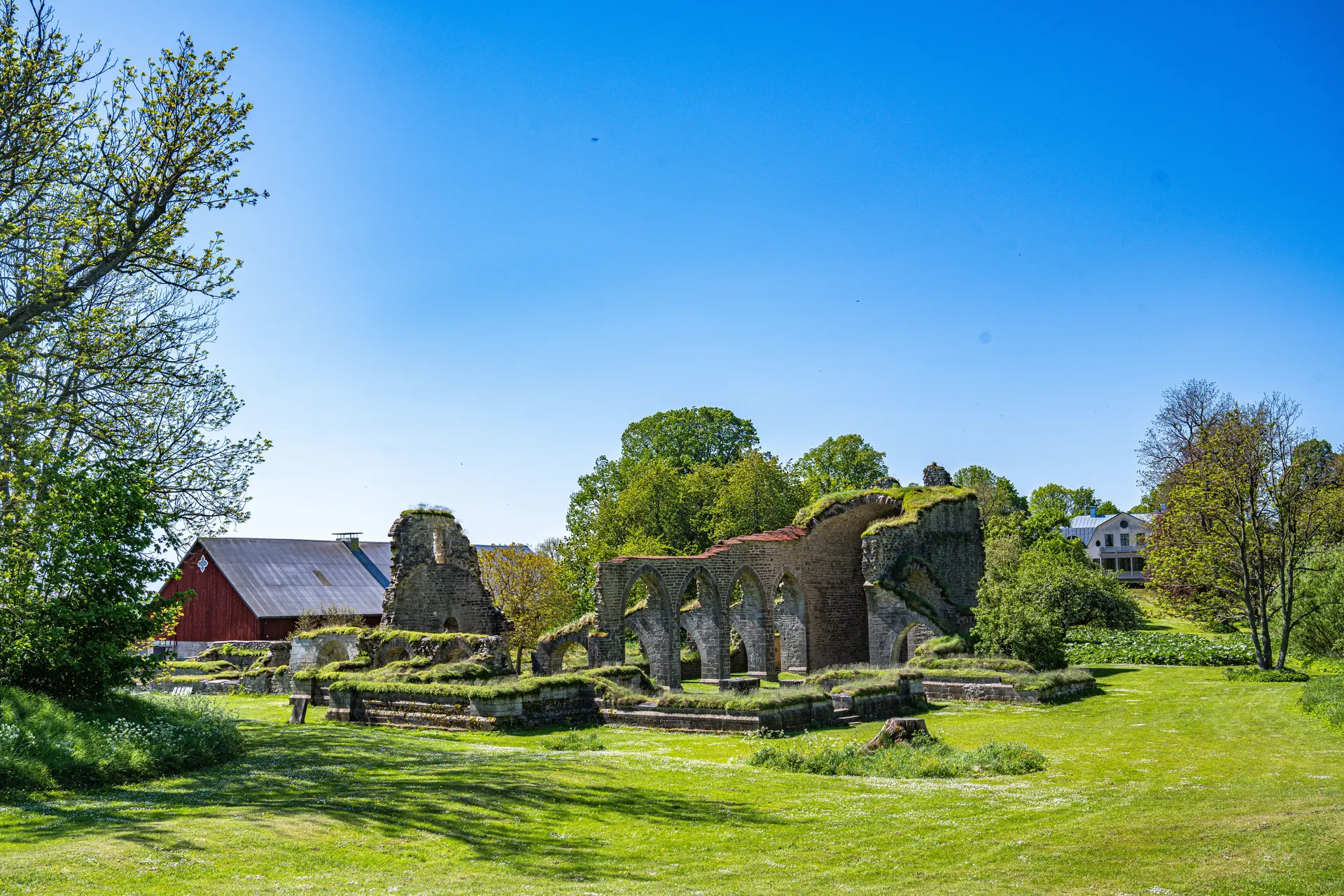


Photo gallery
3 curated photos
Share a photo
Help visitors recognize Vadstena Abbey. Every submission is reviewed before publication.