Taversoe Tuick Chambered Cairn
Orkney's only known two-storey tomb, where Neolithic builders stacked the worlds of the dead one above the other
Understand sacred places, explore living traditions, and learn how to engage respectfully with Pilgrim Map.
Access has not been verified. Check current local guidance before planning a visit.
Rousay, Scotland, United Kingdom
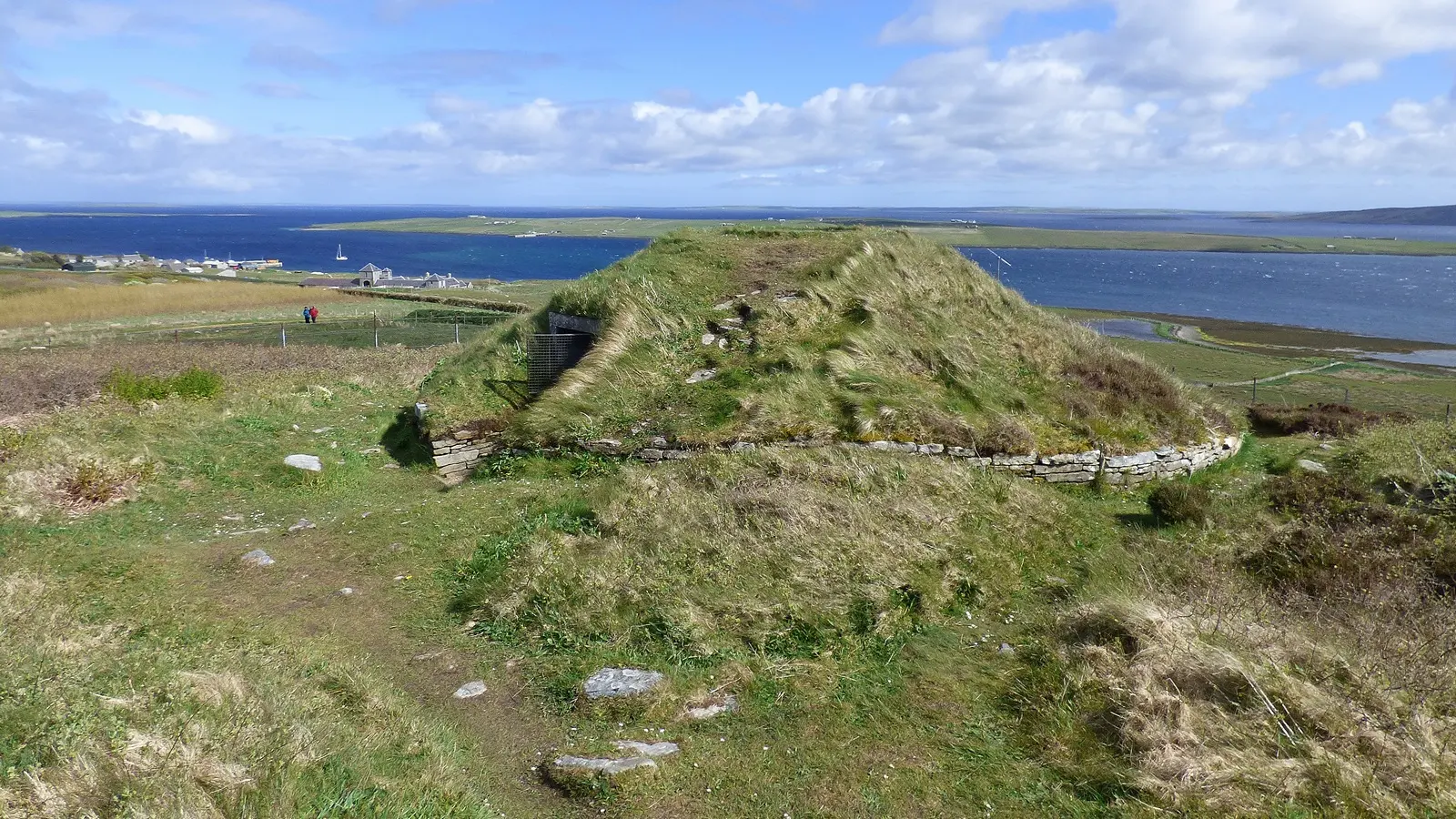
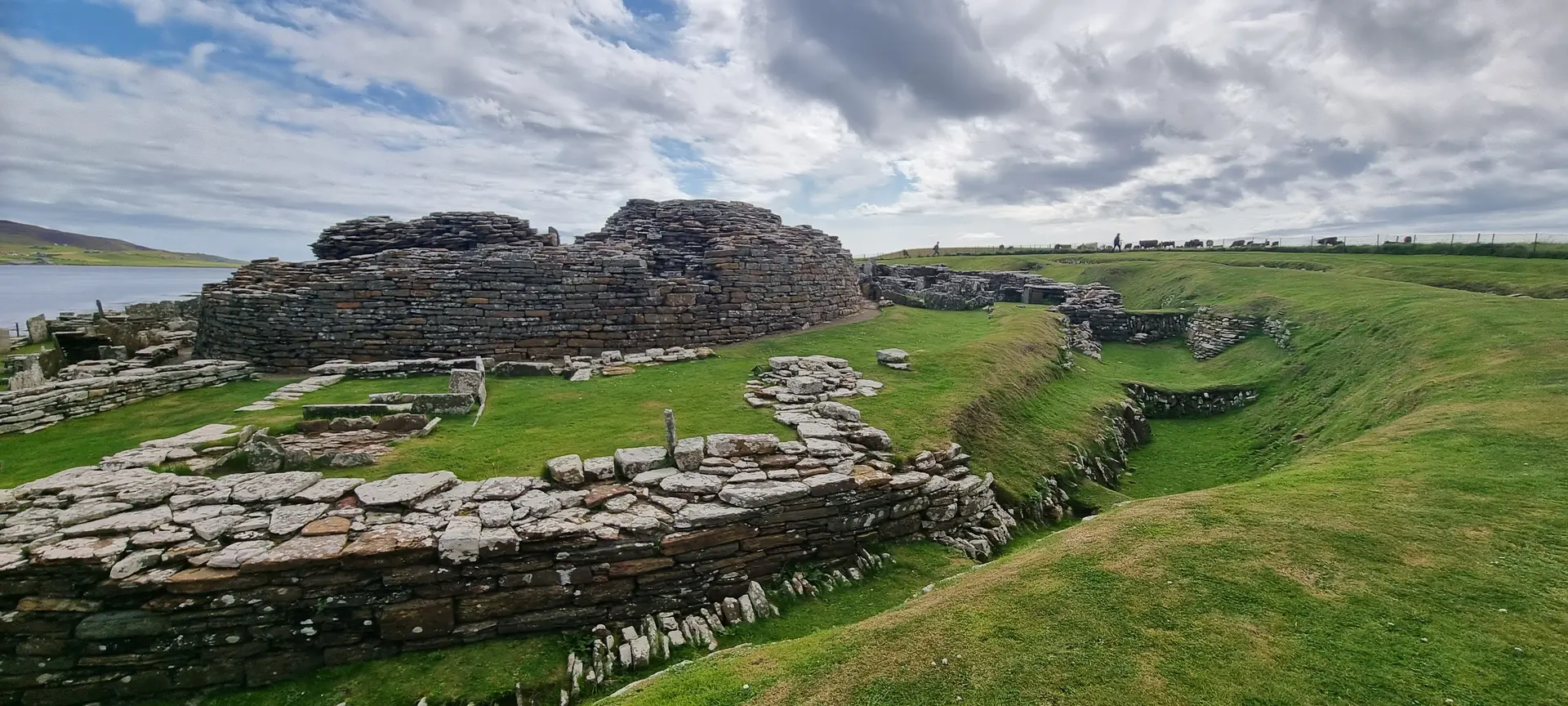
Image of Taversoe Tuick Chambered Cairn. Image source · CC-BY-SA-2.0
Visit essentials
A quick read before you go
- Duration
- Thirty minutes to explore both chambers and appreciate the setting.
- Access
- Located near the pier at Trumland on Rousay's southern coast.
Overview
Taversoe Tuick does not announce itself. From the road, it appears as a low mound on the hillside, unremarkable among Rousay's many grassy knolls. Only on approach does the double nature of the structure become apparent. Two entrances at different levels serve two separate burial chambers, stacked one above the other, each designed and used independently.
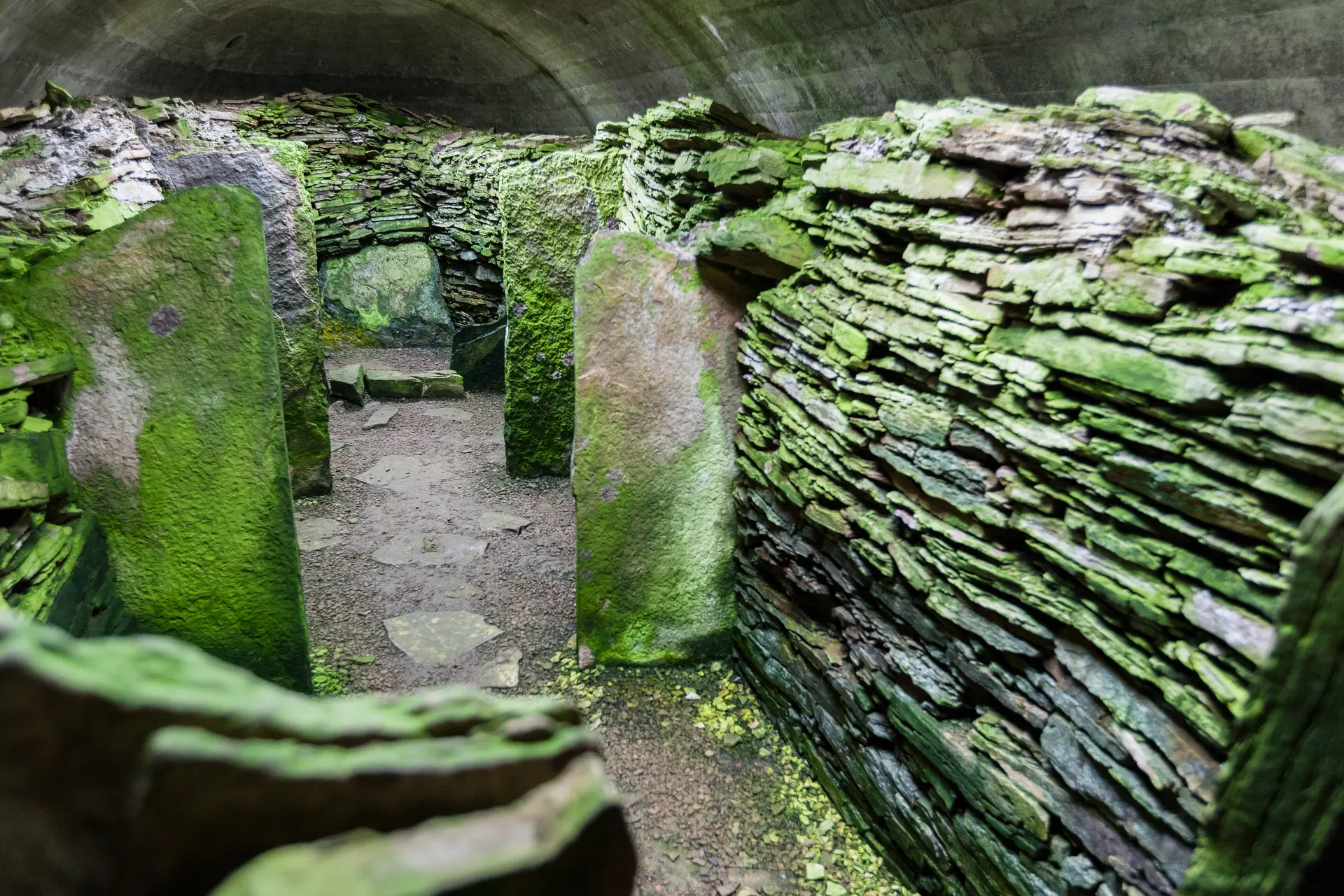
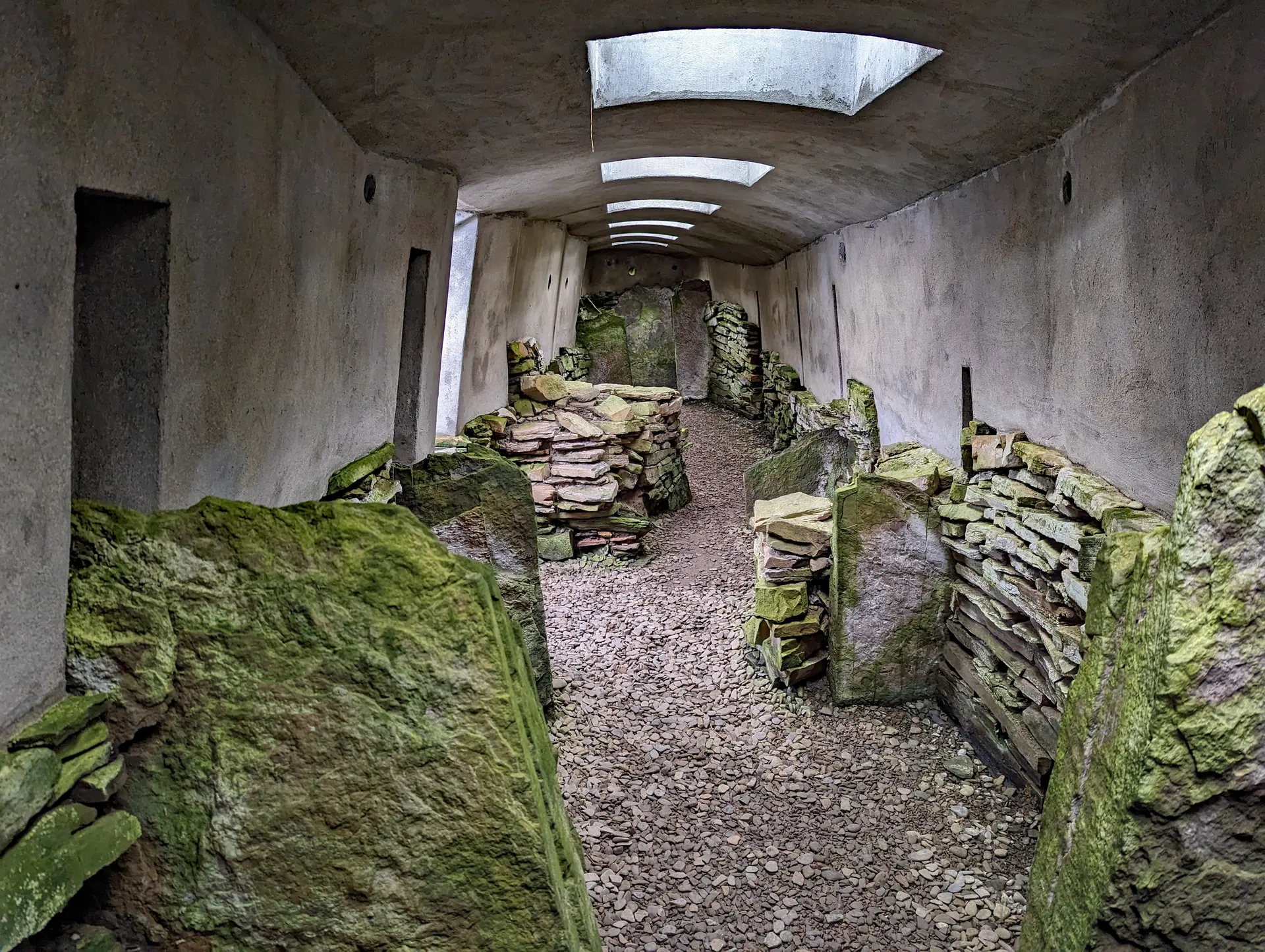
The upper chamber is entered from the north side. Inside, a roughly rectangular central space gives access to four smaller side cells. When excavated in 1898 by Lieutenant-General Traill Burroughs, the upper chamber contained fragmentary human remains and what appeared to be Unstan Ware pottery.
The lower chamber is entered from the south, via a longer passage. Its interior is divided into four compartments fitted with stone shelves, a design more typical of Orkney's stalled cairns. A crouched skeleton was found on one of the shelves, along with bones from at least two other individuals. Three heaps of cremated bone lay in the entrance passage.
A third, smaller chamber was discovered just outside the entrance to the lower chamber, adding a further layer of complexity. This miniature cell contained cremated bone, suggesting yet another variation on the mortuary practices conducted here.
The relationship between the two main chambers is the central question. They were not an accident or an afterthought; archaeological analysis indicates both were planned from the outset. The Neolithic builders deliberately created a tomb with two distinct burial spaces at different levels, each accessed separately. Whether the upper and lower chambers served different families, different social groups, different types of burial, or some other distinction that we cannot reconstruct, is unknown.
The site's name preserves Old Norse elements, as do most place names in Orkney. Like the other cairns on Rousay, Taversoe Tuick was constructed perhaps four millennia before the Norse arrived. The name tells us nothing about the builders' intentions, which are legible only in the stone they shaped.
Why this place is sacred
The concept of thin places is enriched at Taversoe Tuick by the encounter with genuine mystery. Many Neolithic sites present questions we cannot answer, but Taversoe Tuick poses a question we can barely frame: why two chambers, one above the other?
The vertical separation is the key. In most chambered cairns, burial spaces are arranged horizontally: stalls side by side, cells branching from a central chamber. At Taversoe Tuick, the builders chose to stack the spaces. The upper world and the lower world of the tomb were literally separated, each with its own entrance, its own orientation, its own access from the outside world.
This architectural choice must have meant something. In a culture that invested enormous labour in housing the dead, no feature was casual. The decision to create two levels, accessible from opposite sides of the cairn, speaks to a distinction in the understanding of death or the afterlife that we cannot reconstruct. Perhaps the upper and lower chambers served different lineages. Perhaps they corresponded to different modes of death or different stages of the afterlife.
Perhaps the distinction mapped onto some cosmological division between upper and lower worlds. All these are speculation, honest guesses in the face of silence.
The intimacy of the site contributes to its atmosphere. Unlike the grand sheltered monuments at Midhowe, Taversoe Tuick is small, personal, almost domestic in scale. Standing at the upper entrance and knowing that directly below your feet another chamber holds its own dead creates a vertigo of time and meaning. The structure is both simple, just stone and earth, and deeply strange, an arrangement for which no satisfying explanation exists.
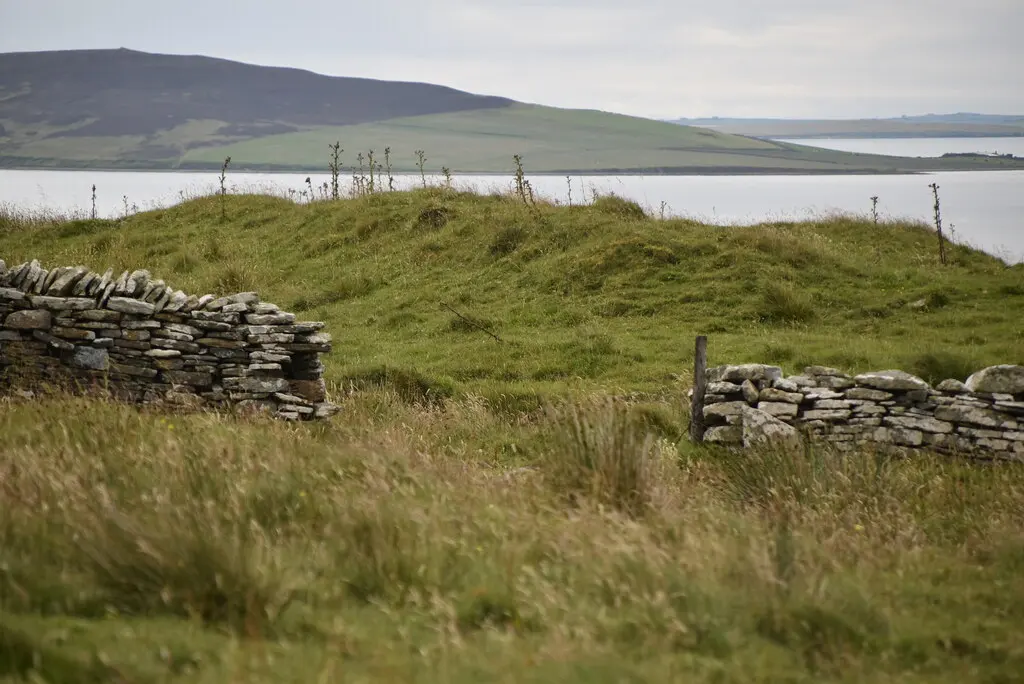
The hillside location, with views down toward the pier and across Eynhallow Sound, places the cairn within the broader ritual landscape of Rousay. But Taversoe Tuick stands slightly apart from the main cluster of cairns on the southwestern coast, as if its unique design warranted a unique position.
Both chambers functioned as burial spaces for Neolithic communities. The upper chamber with its side cells follows a Maeshowe-type design. The lower chamber with its shelved compartments follows a stalled design. The combination of two distinct burial traditions within a single monument is exceptional and unexplained.
Built approximately 3000 BCE. First excavated in 1898 by Lieutenant-General Traill Burroughs. Further investigation confirmed the two-storey design was intentional. The site came under the care of Historic Environment Scotland.
Experience and orientation
The cairn's proximity to the Trumland pier makes it an ideal first or last stop on Rousay. From the pier, a short walk uphill through the grounds near Trumland House brings you to the site. The mound is modest in size, offering no hint of the complexity within.
The upper chamber is typically the first encountered. Entering through the north-facing passage, you find a central space with four side cells opening off it. The design echoes the great passage graves of Orkney, Maeshowe in miniature. The side cells are small, intimate spaces where the dead were placed.
Moving around the mound to the south side, the lower chamber's entrance appears at a lower level. The passage here is longer, leading into a different style of interior: stalled compartments fitted with stone shelves. The contrast between the two chambers is architecturally legible. Even without knowing the dates or the details of excavation, a visitor can perceive that two distinct design philosophies are at work.
The third, miniature chamber outside the lower entrance adds a final layer of curiosity. Its function, like so much here, is uncertain.
What stays with many visitors is the strangeness of the concept. A building with two floors is commonplace in our world. In the Neolithic world, where chambered cairns typically operated on a single level, the decision to stack burial spaces was radical. It implies a sophistication of thought about the arrangement of the dead that challenges easy assumptions about prehistoric simplicity.
The hilltop position offers views down to the pier and across the sound. Returning to the road after visiting Taversoe Tuick, the rest of Rousay's cairns await to the west.
Combine Taversoe Tuick with the Westside Walk to Blackhammer, Yarso, Lairo, and Midhowe.
Context and lineage
No origin narrative survives. The cairn was built approximately 3000 BCE by Neolithic farming communities on Rousay. The decision to create a two-storey tomb must have been driven by beliefs or social structures that we cannot reconstruct from the archaeological evidence alone.
No continuous tradition connects the present to the Neolithic builders. The site is managed as a heritage monument by Historic Environment Scotland.
Lieutenant-General Traill Burroughs
Traditions and practice
Neolithic burial practices at Taversoe Tuick involved both inhumation and cremation. The upper chamber contained fragmentary remains with pottery. The lower chamber held a crouched skeleton on a stone shelf and bones from at least two others. Three heaps of cremated bone in the entrance passage suggest different mortuary treatments for different individuals. The miniature third chamber contained cremated remains.
No active spiritual practices are maintained. Visitors engage with the site as an archaeological monument.
Visit both entrances and observe the contrast between the upper and lower chamber designs. Consider what distinction the builders may have intended by separating burial spaces vertically. The hilltop position offers good views of the broader landscape.
Neolithic Orkney Burial Tradition
HistoricalTaversoe Tuick uniquely combines two major Orkney cairn design traditions, the Maeshowe-type passage grave and the Orkney-Cromarty stalled cairn, within a single two-storey monument. This synthesis suggests either a community that drew on both traditions or a moment of architectural innovation within the broader Neolithic culture.
Both inhumation and cremation were practiced. The dead were placed on stone shelves in the lower chamber and in side cells in the upper chamber. Cremated remains were deposited in the entrance passage and in a miniature third chamber. Pottery and other grave goods accompanied the dead.
Perspectives and open questions
Taversoe Tuick challenges the assumption that Neolithic burial practices followed a single template. Its two-storey design demonstrates that the builders were capable of architectural innovation, creating a monument that combined two distinct burial traditions in a way found almost nowhere else.
Scholarly perspective
Archaeologists classify Taversoe Tuick as a unique monument combining elements of Maeshowe-type (upper chamber with side cells) and Orkney-Cromarty stalled (lower chamber with shelved compartments) cairn designs. The two chambers were planned simultaneously, not added sequentially. Both inhumation and cremation were practiced. The 1898 excavation by Traill Burroughs was conducted by the standards of its era. The monument is one of only two known two-storey cairns in Orkney, the other being Huntersquoy on Eday.
The relationship between the two chamber types within a single monument has generated scholarly debate about whether they represent different social groups, different chronological phases, or different aspects of a single cosmological system.
Living and traditional perspectives
No oral tradition survives from the Neolithic builders.
Alternative interpretations
Some writers on sacred landscapes interpret the upper and lower chambers as representing cosmological divisions: an upper world and a lower world, sky and earth, or different realms of the afterlife. The opposing orientations of the entrances (north and south) have attracted attention from those interested in astronomical alignments. These interpretations remain speculative.
Open questions
The central question remains: why two storeys? Whether the chambers served different families, social classes, genders, age groups, or some other distinction cannot be determined. Why the upper chamber follows a Maeshowe-type plan while the lower follows a stalled design is unexplained. Whether the third miniature chamber served a unique ritual purpose or was a practical addition is unknown.
Plan your visit
Access and arrival
Located near the pier at Trumland on Rousay's southern coast. Short uphill walk from the road. Rousay is reached by ferry from Tingwall on Mainland Orkney (approximately thirty minutes). The most convenient cairn to visit on arrival or before departure.
The Taversoe Hotel is nearby. Limited other accommodation on Rousay. More options in Kirkwall on Mainland Orkney.
Respectful visit
No special requirements. Sturdy footwear recommended.
Photography permitted. Interior photography requires a light source.
Not appropriate at a heritage monument.
Do not damage or disturb stonework. Do not remove any material. Take care in the narrow passages.
The passages are low and narrow. Those with claustrophobia or mobility limitations may find entry difficult. Sturdy footwear recommended for the hillside approach.
Current practical details
Address
B9064, Orkney KW17 2PR, UK
Hours
Hours, fees, and access can change — verify on the official source before you travel. Practical details last checked Jun 2026.
Location
Map loads as you approach this section.
Pilgrim reflections
A portrait of encounter, not a score
Pilgrims describe what they felt, how present they could become, and whether the place would shape a journey. There are no stars and no ranking of traditions.
No reviewed reflections yet
The first pilgrims can help describe the character of being here.
Share a reflection
Available after an account-backed “Been there.” Every reflection is reviewed before publication.
Nearby sacred places
Explore other sacred places in the region. Proximity does not establish access or travel time; check each place’s guidance.
Share a photo
Help visitors recognize Taversoe Tuick Chambered Cairn. Every submission is reviewed before publication.