Knowe of Yarso
A hilltop Neolithic tomb where twenty-nine human dead lay alongside thirty-six red deer, suggesting bonds between species that predated domestication's dominance
Understand sacred places, explore living traditions, and learn how to engage respectfully with Pilgrim Map.
Access has not been verified. Check current local guidance before planning a visit.
Rousay, Scotland, United Kingdom
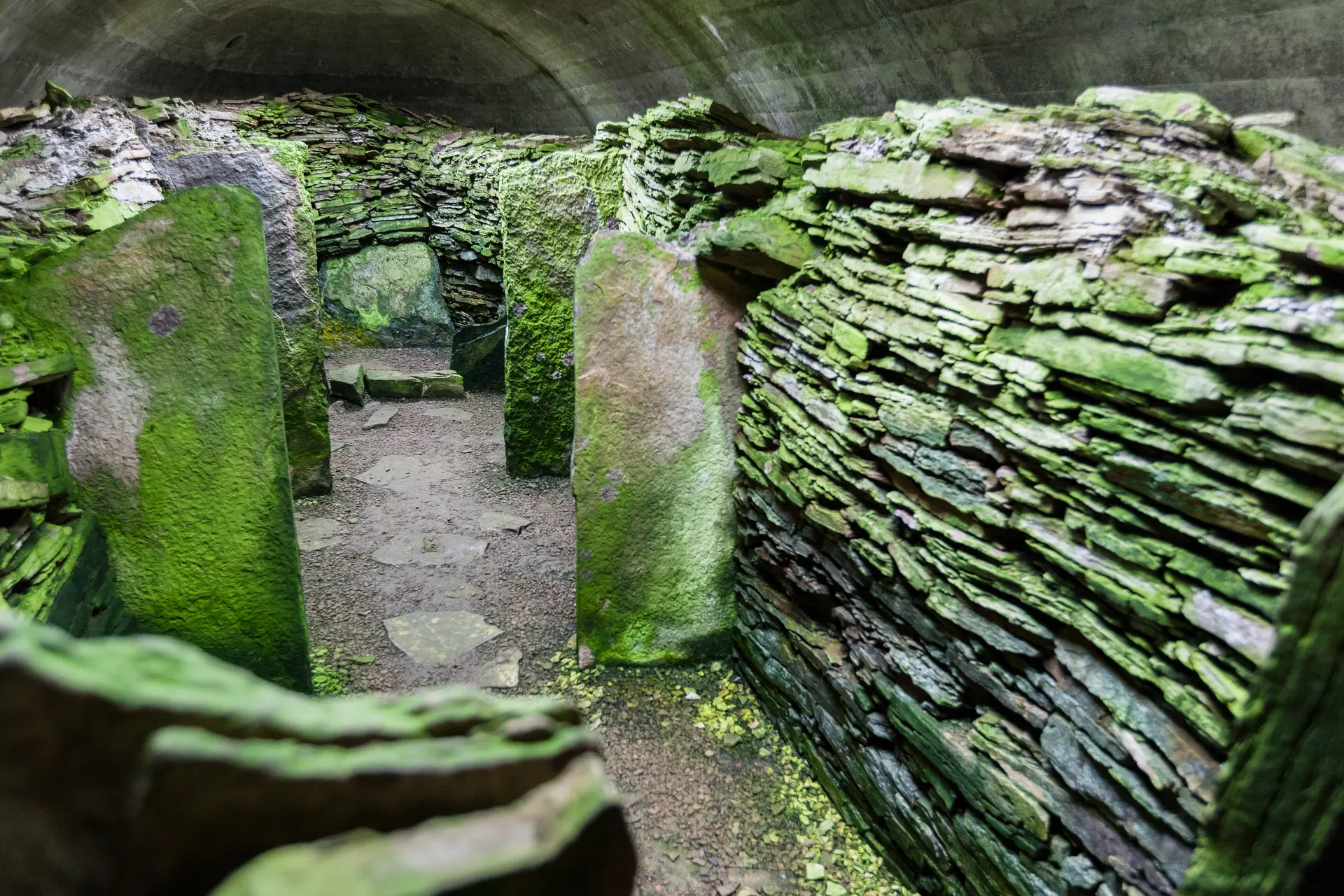
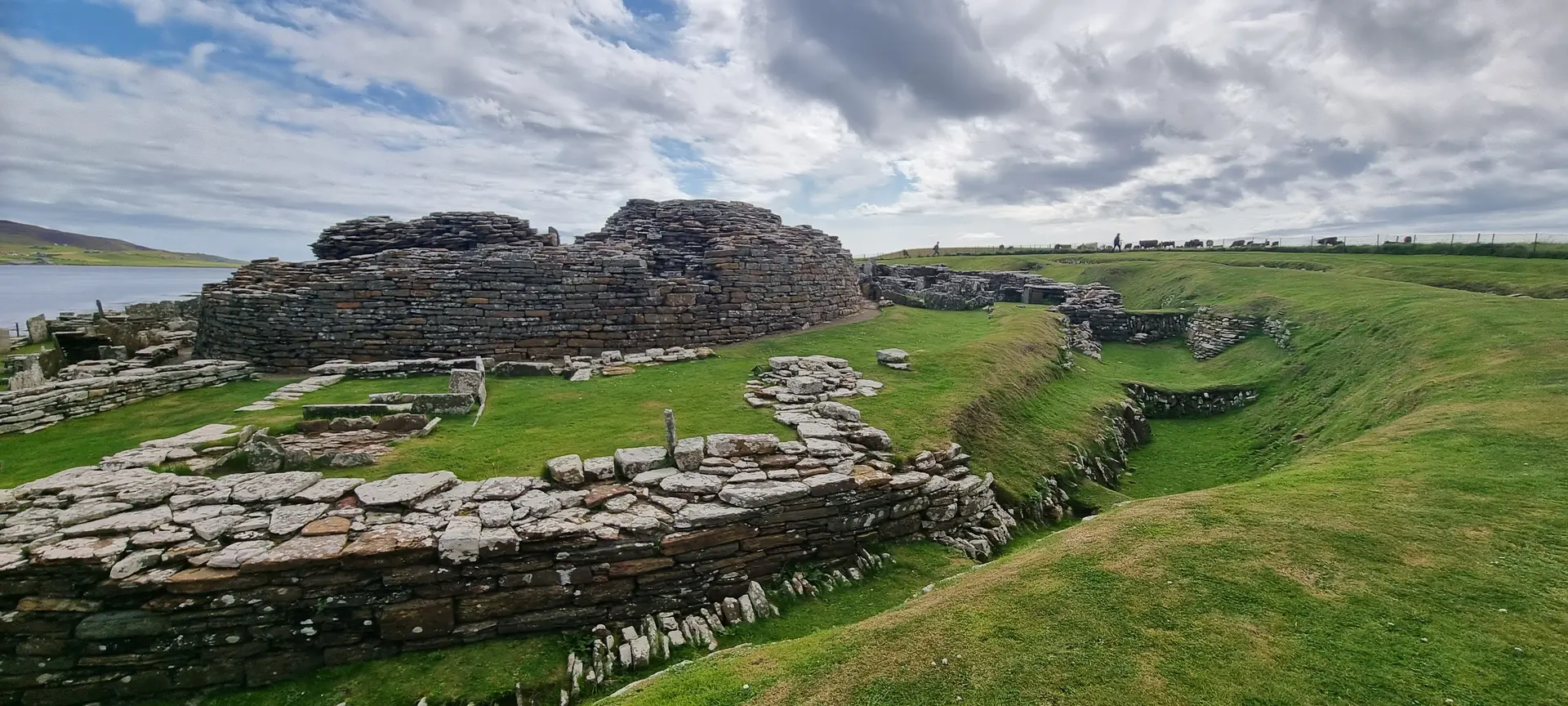
Image of Knowe of Yarso. Image source · CC-BY-SA-4.0
Visit essentials
A quick read before you go
- Duration
- One to two hours to climb, explore, and enjoy the views.
- Access
- Rousay is reached by ferry from Tingwall on Mainland Orkney.
Overview
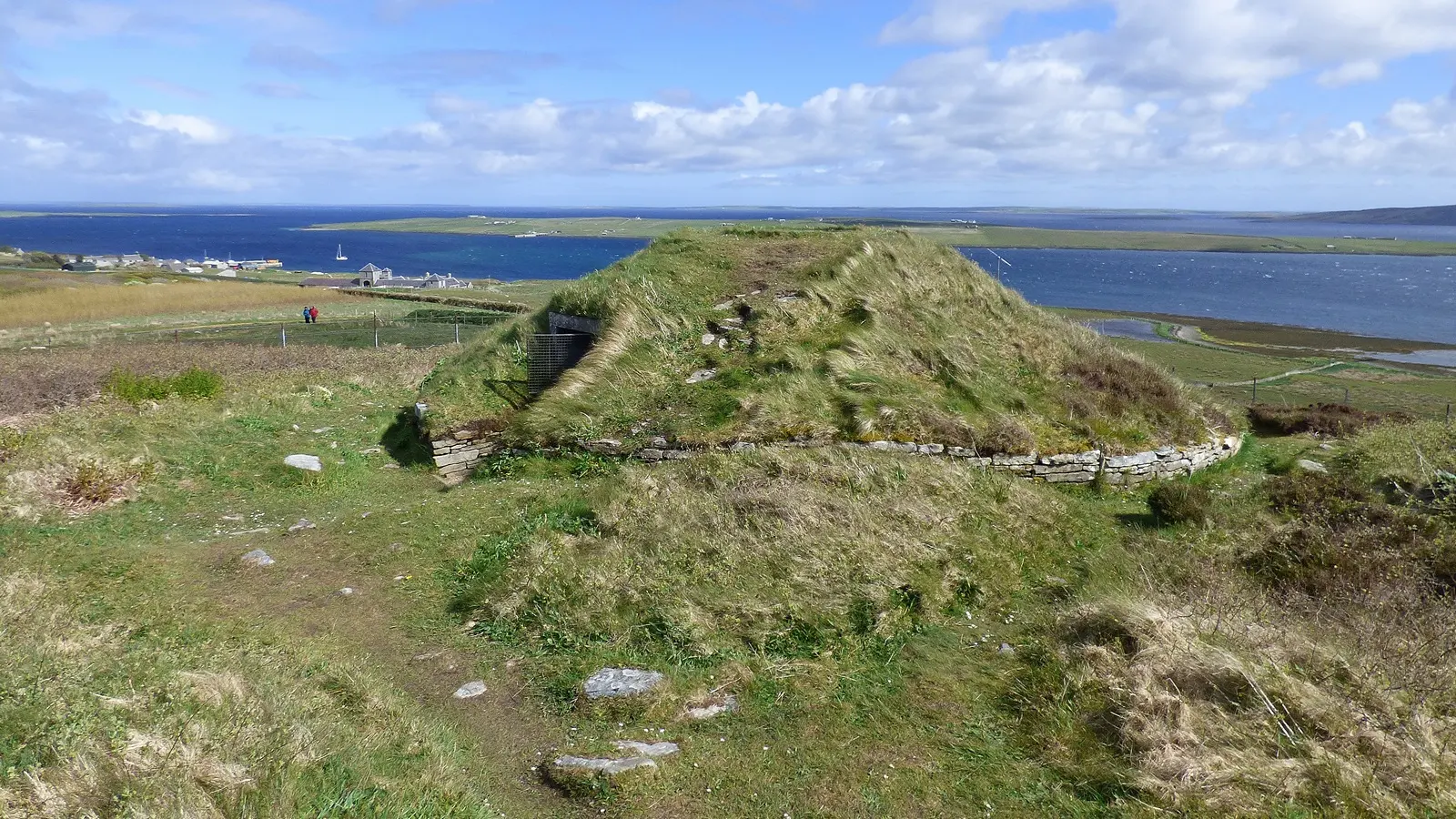
The climb to the Knowe of Yarso is itself an experience. The cairn sits high on the hillside, above and east of the other tombs that line Rousay's southwestern coast. The ascent rewards with expanding views: Eynhallow Sound widening below, the island of Eynhallow visible in the water, the hills of Mainland Orkney layered against the sky. By the time you reach the cairn, you have left the road far below.
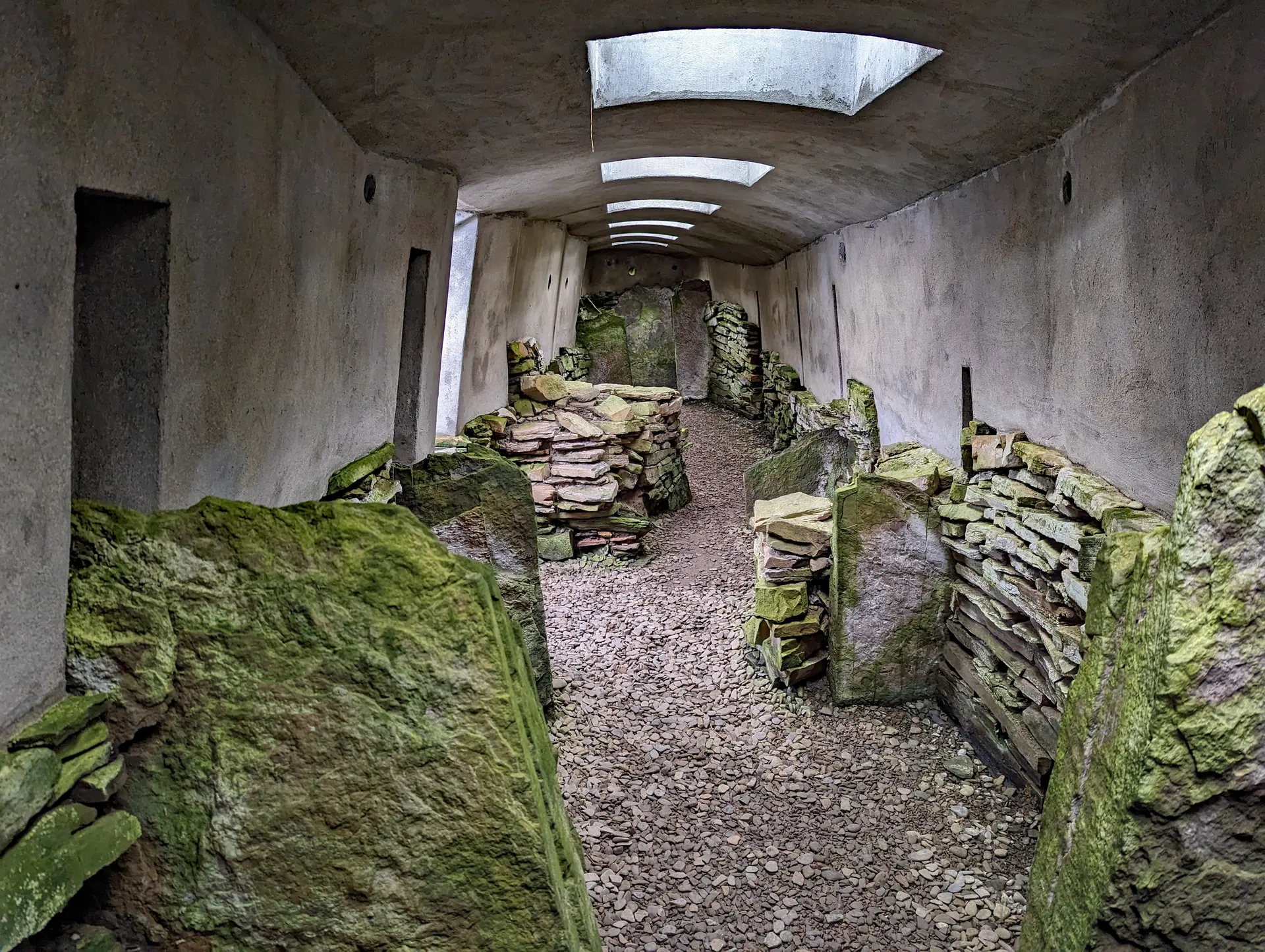
The tomb is a stalled cairn of the Orkney-Cromarty type, its interior divided into compartments by pairs of upright stone slabs. The design is consistent with other Rousay cairns, with a long chamber accessed through a narrow entrance. What distinguishes Yarso is what the 1934 excavation by Walter Grant and J. Graham Callander found inside.
Twenty-nine human individuals were recovered, their bones arranged with the deliberation characteristic of Neolithic mortuary practice. Seventeen skulls were lined up side by side along the chamber floor, a pattern found at other Orkney sites including Midhowe. This arrangement suggests that the Neolithic communities believed the spirit was released through the process of bodily decomposition rather than at the moment of death itself.
The alignment of skulls may have represented a stage in this process, perhaps marking the point at which the dead joined the ancestors.
But it is the thirty-six deer skulls that give Yarso its distinctive character. Red deer were not domestic animals. Their presence in the cairn cannot be explained by simple food offerings. At Cuween Hill near Kirkwall, twenty-four dog skulls were found in similar context. At Isbister on South Ronaldsay, sea eagle bones predominated. Each Orkney cairn seems to have been associated with a particular animal, possibly a totem or spirit guide for the community it served.
At Yarso, the relationship was with the red deer, a creature of the wild hills that the cairn itself overlooks.
Why this place is sacred
The hilltop location sets Yarso apart from the coastal cairns below. Where Midhowe and Lairo sit near sea level, Yarso commands the slopes above, its position requiring effort to reach. This ascent functions as preparation, a gradual separation from the ordinary world of the road and the pier.
The views from the cairn are among the finest on Rousay. Eynhallow Sound stretches west, its tidal currents visible from this height. The other cairns of the southwestern coast are identifiable below. The landscape reads as a whole from here, a geography of Neolithic death arranged across the hillside.
But the deepest source of thinness at Yarso may be the deer skulls. Their presence in the cairn invites a fundamental question: what was the relationship between these Neolithic communities and the red deer of the Orkney hills? The skulls were not casual deposits but deliberate placements, thirty-six of them alongside twenty-nine human dead. Whatever this relationship was, it was considered worthy of preservation beyond death.
The parallel with other Orkney cairns deepens the mystery. Each tomb seems to have maintained its own animal association. The pattern suggests that Neolithic Orcadian communities understood their identity in part through relationship with particular species. This is not ancestor veneration alone but something more expansive, a worldview in which the boundary between human and animal communities was permeable, in which certain creatures shared the afterlife with the human dead.
To sit beside Yarso and look out over the landscape these communities knew is to encounter a worldview fundamentally different from our own. The deer still roam these hills. The cairn still holds the memory of a time when human and deer were laid to rest together.
The cairn functioned as a communal burial monument for Neolithic farming communities on Rousay, dating to approximately 3000 BCE. The inclusion of animal remains alongside human burials indicates complex mortuary rituals involving relationships with the natural world.
Built during the Neolithic period, the cairn was used over an extended period for communal burial. Excavated in 1934 by Grant and Callander. The site came under state guardianship and is now managed by Historic Environment Scotland. A modern shelter protects the interior.
Experience and orientation
The approach begins from the B9064 road, climbing steeply through grassland toward the hilltop. The path is informal, the ground uneven. As you ascend, the sound of the sea fades and the panorama expands. This is the experience Yarso was designed for, or at least the experience its builders chose when they selected this elevated position.
The cairn appears on the hillside as a low structure protected by a modern shelter. Inside, the stalled interior reveals itself: a long chamber divided into compartments by upright stone slabs, the proportions intimate rather than monumental. The stone is local, weathered, five thousand years old.
Knowing what was found here transforms the space. The compartments held twenty-nine human dead. The thirty-six deer skulls lay among them. The seventeen human skulls aligned side by side spoke of rituals whose purpose we cannot reconstruct with certainty but whose deliberation is undeniable.
The hilltop position gives Yarso a quality of elevation, literal and figurative, that the coastal cairns lack. You are above the landscape here, with the kind of perspective that invites contemplation. The other cairns are visible below: Lairo, Ramsay, and further along the coast, Midhowe. From Yarso, the ritual landscape of Rousay becomes comprehensible as a whole, each tomb occupying its place on the slope.
The wind is typically stronger at this height. On clear days, the views extend far beyond Rousay. On overcast days, the clouds sit close, and the cairn seems to exist between earth and sky.
The Knowe of Yarso is reached by a steep climb from the B9064 road on Rousay's southwestern coast. No formal car park exists at the base of the climb. Most visitors combine Yarso with visits to the nearby Blackhammer Chambered Cairn and the Knowes of Lairo and Ramsay. Rousay is reached by ferry from Tingwall on Mainland Orkney.
Context and lineage
The Neolithic communities who built Yarso left no written records. The cairn was constructed approximately 3000 BCE on a hillside with commanding views over Eynhallow Sound. The choice of an elevated rather than coastal location may have carried symbolic significance, perhaps placing the dead closer to the sky or providing them with oversight of the landscape below. The inclusion of thirty-six red deer skulls suggests the builders understood their community's identity as linked to these animals.
No continuous tradition connects the present to the Neolithic builders. The beliefs that motivated the placement of deer skulls alongside human remains are irrecoverable. The site is managed as a heritage monument.
Walter Grant
J. Graham Callander
Traditions and practice
Neolithic burial practices involved placing the dead in crouched positions within the stalled compartments. Over time, bodies were allowed to decompose and bones were rearranged. Seventeen skulls were deliberately aligned side by side. Thirty-six red deer skulls were deposited alongside human remains. These practices indicate complex mortuary rituals involving relationships between human and animal worlds.
No established spiritual communities maintain practice at the site. Visitors engage with Yarso primarily as an archaeological monument. The hilltop setting and the enigma of the deer skulls invite personal reflection.
The climb to Yarso creates a natural preparation for contemplative engagement. At the cairn, consider the view: this is what the builders chose their dead to overlook. Reflect on the deer skulls and what they might mean about how these communities understood their place in the natural world.
Neolithic Orkney-Cromarty Burial Tradition
HistoricalYarso belongs to the Orkney-Cromarty stalled cairn tradition. Its distinctive feature, the deposit of thirty-six deer skulls alongside twenty-nine human dead, suggests a variant of the tradition in which animal-human relationships were central to funerary practice and community identity.
Communal burial in stalled compartments. Deliberate arrangement of human skulls. Deposit of red deer skulls alongside human remains. The practices indicate complex beliefs about death, ancestry, and the relationship between human and animal worlds.
Perspectives and open questions
The Knowe of Yarso poses questions that extend beyond standard archaeological interpretation. The conjunction of human and deer remains opens inquiry into how Neolithic communities understood the relationship between species, a question with resonance for contemporary debates about our place in the natural world.
Scholarly perspective
Archaeologists classify Yarso as an Orkney-Cromarty type stalled cairn dating to approximately 3000 BCE. The 1934 excavation recovered remains of twenty-nine individuals and thirty-six red deer skulls. The alignment of seventeen human skulls side by side is a pattern found at other Orkney sites. The deer skulls parallel the dog skulls at Cuween Hill and the sea eagle bones at Isbister, suggesting that different Orkney communities maintained distinct animal associations.
Some scholars interpret these as totemic relationships, while others see them as deposits related to feasting or status display. The absence of full post-cranial deer skeletons suggests the skulls were selected deliberately rather than representing whole animal offerings.
Living and traditional perspectives
No oral tradition survives from the Neolithic builders. The significance of the deer skulls must be interpreted through archaeological analysis rather than transmitted knowledge.
Alternative interpretations
Some writers on sacred landscapes interpret the animal associations at Orkney cairns as evidence of shamanic practices, in which certain animals served as spirit guides or power animals for specific communities. The hilltop location of Yarso, exposed to wind and sky, has attracted interest from those who perceive elevated locations as inherently conducive to spiritual experience. These interpretations remain speculative.
Open questions
The meaning of the deer skull deposits is the central mystery. Were the deer totemic animals? Sacrificial offerings? Status symbols? The absence of comparable evidence from outside Orkney makes it difficult to draw parallels. Whether the deer skulls were deposited simultaneously or accumulated over time is not firmly established. The relationship between the deer deposits and the human burial practices remains an open question.
Plan your visit
Access and arrival
Rousay is reached by ferry from Tingwall on Mainland Orkney. The cairn is on the southwestern hillside above the B9064. A steep climb through grassland is required. No formal car park. The site is not wheelchair accessible.
Limited accommodation on Rousay. More options in Kirkwall on Mainland Orkney.
Respectful visit
Sturdy waterproof walking boots essential for the steep hillside approach. Windproof and waterproof outer layers advisable.
Photography permitted throughout. The elevated position offers exceptional landscape views for photography.
Not appropriate at a heritage monument.
Do not climb on or disturb the cairn structure. Do not remove any material. Dogs should be kept under control.
The climb is steep and the terrain uneven. Sturdy footwear is essential. Weather at this elevation can change rapidly. The modern shelter protects the interior but the approach is fully exposed.
Current practical details
Address
Rousay, Orkney, Orkney KW17 2PT, UK
Hours
Hours, fees, and access can change — verify on the official source before you travel. Practical details last checked Jun 2026.
Location
Map loads as you approach this section.
Pilgrim reflections
A portrait of encounter, not a score
Pilgrims describe what they felt, how present they could become, and whether the place would shape a journey. There are no stars and no ranking of traditions.
No reviewed reflections yet
The first pilgrims can help describe the character of being here.
Share a reflection
Available after an account-backed “Been there.” Every reflection is reviewed before publication.
Nearby sacred places
Explore other sacred places in the region. Proximity does not establish access or travel time; check each place’s guidance.
Share a photo
Help visitors recognize Knowe of Yarso. Every submission is reviewed before publication.