Tashiding Monastery
Where Padmasambhava's blessing persists and the mere sight of a sacred chorten washes away lifetimes
Understand sacred places, explore living traditions, and learn how to engage respectfully with Pilgrim Map.
Access has not been verified. Check current local guidance before planning a visit.
Ravongla, Sikkim, India
Read the sources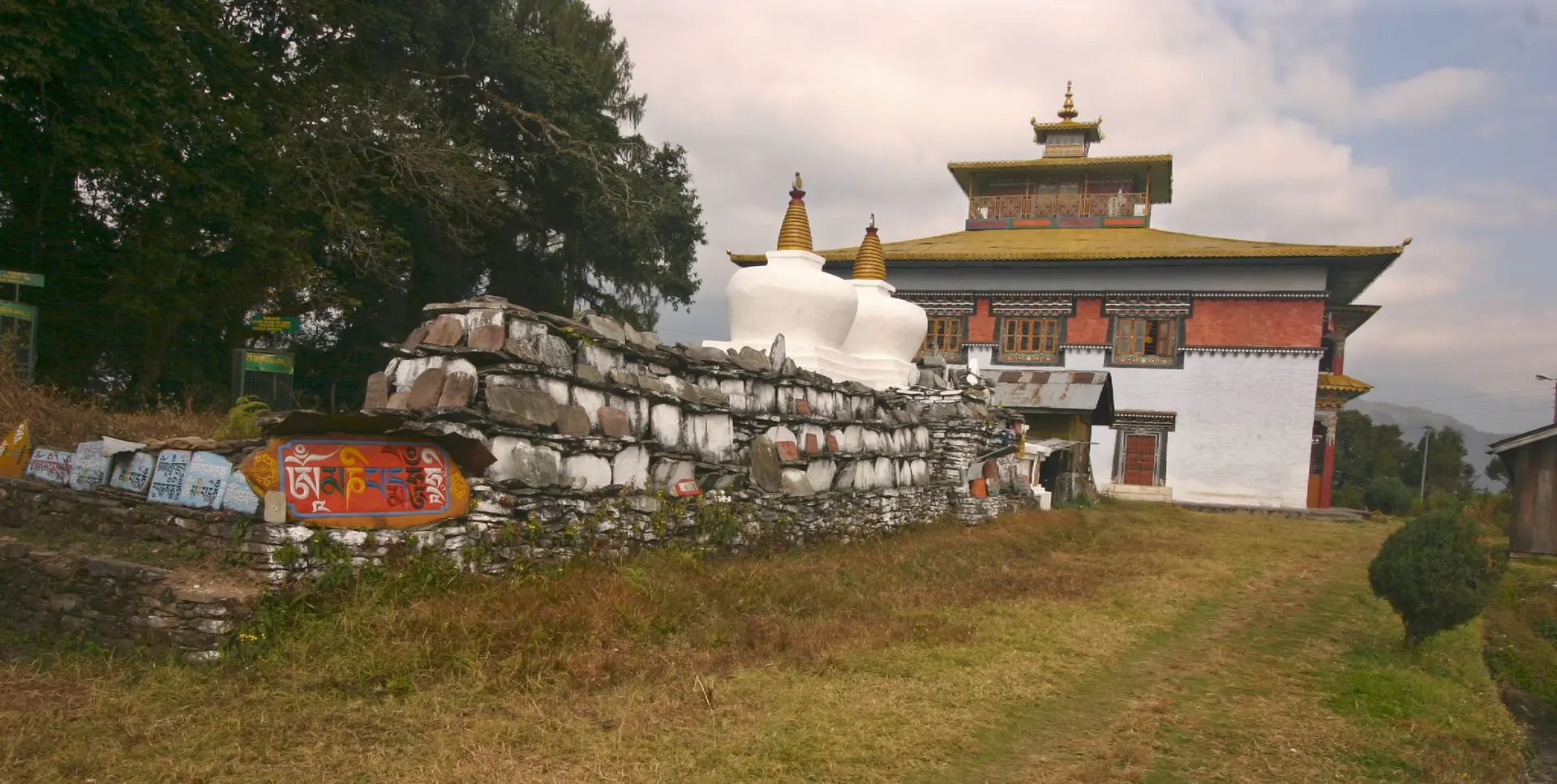
Image of Tashiding Monastery. Image source · CC-BY-2.0
Visit essentials
A quick read before you go
- Duration
- A meaningful visit requires 2-3 hours, including the climb to the monastery, circumambulation of…
- Etiquette
- Tashiding is an active monastery requiring respectful behavior.
Overview
The climb to Tashiding steepens among multiplying prayer flags before reaching a hilltop monastery, distant Mount Kanchenjunga, and 41 ancient chortens—the heart of Sikkimese Buddhist sacred geography. In monastery tradition, Padmasambhava's 8th-century meditation established a blessing here that has never lifted, before Ngadak Sempa Chempo Phunshok Rigzing founded the monastery in 1641. The Thong-Wa-Rang-Dol, 'Savior by Mere Sight,' is held literally by traditional practitioners to undo negative karma and plant seeds of liberation through being seen.
At the annual Bumchu festival, thousands gather as a sacred vessel of water blessed by Padmasambhava is opened; its level and clarity predict the coming year through a mechanism unexplained. Nearly four centuries of practice continue to make the ordinary veil feel thin here.
Why this place is sacred
Tashiding holds an unequalled position in Sikkim's spiritual geography, standing at the center of a sacred-site mandala: Dubdi to the north, Pemayangtse west, Ralang northeast, and Sanga Choeling nearby. Its reputedly heart-shaped hill rises where the Rathong Chu and Rangeet meet; Tibetan Buddhist understanding holds that such confluences concentrate spiritual power. In Tibetan Buddhist understanding, their waters carry the Himalayas' blessings as they descend from Kanchenjunga, the world's third-highest peak and sacred across multiple traditions.
According to monastery tradition, Padmasambhava consecrated this holy place in the 8th century. Later, the three lamas who crowned Sikkim's first king at Yuksom saw bright light from Kanchenjunga strike this hill amid celestial music and incense fragrance, confirming its sanctity. Thong-Wa-Rang-Dol is understood as a technology of liberation: Sikkim's most powerful chorten, literally cleansing lifetimes of karma and planting awakening through sight. The Bumchu vessel holds water blessed by Padmasambhava, concealed as terma and rediscovered here.
Opened only annually yet never depleted, its level and clarity are read by lamas to predict the year; the mechanism remains unexplained.
Ngadak Sempa Chempo Phunshok Rigzing founded Tashiding in 1641 as a Nyingma monastery, establishing institutional Buddhist practice at a site already sanctified by Padmasambhava's blessing. The founding was part of a larger project: the establishment of Sikkim as a Buddhist kingdom. Rigzing was one of the three lamas who crowned the first Chogyal (king) at Yuksom, and Tashiding served to anchor the new kingdom's spiritual authority.
The monastery housed the sacred Bumchu vessel, trained monks in Nyingma teachings, and maintained the chortens that connected practitioners to Padmasambhava's power.
The monastery was extended and renovated in 1717 under the third Chogyal Chakdor Namgyal, who recognized its continued importance to the kingdom. Through centuries of political change, including Sikkim's absorption into India in 1975, Tashiding has maintained unbroken practice. The Bumchu festival continues annually. Monks still recite daily prayers. The chortens still stand.
In 2010, His Holiness the 14th Dalai Lama came to Tashiding for a retreat, confirming its significance in contemporary Tibetan Buddhism. The visit underscored what local practitioners had always known: this is not a historical monument but a living spiritual center, as potent now as when Padmasambhava first blessed the ground.
Experience and orientation
The climb to Tashiding prepares you. Whether ascending from the road or walking from nearby villages, the path winds upward through forest, past prayer flags that grow more numerous as you near the summit. By the time you reach the monastery, something has already shifted.
The first sight is often the chortens, 41 of them, standing in silent witness across the hillside. They are not decorative. Each was built with specific intention, consecrated with specific mantras, holding specific power. To walk among them is to move through a landscape of accumulated devotion spanning centuries.
The Thong-Wa-Rang-Dol chorten draws attention. Even visitors who arrive knowing nothing of its significance often find themselves pausing before it longer than they intended. The belief that seeing it cleanses karma may or may not resonate for you. What is harder to deny is the quality of stillness that surrounds it.
Mount Kanchenjunga appears in the distance when skies are clear, its peak marking the direction of another world entirely. The Sikkimese have always understood themselves as living in relationship with this mountain. At Tashiding, that relationship feels palpable.
During the Bumchu festival, the ordinary atmosphere transforms. Pilgrims arrive by the thousands, creating a sense of communal anticipation that builds toward the moment when the sacred vessel is opened. Receiving even a drop of the blessed water is considered a blessing capable of removing obstacles and planting seeds of enlightenment. The crowd's devotion is genuine, and visitors report being moved by the collective faith even when they do not share the specific beliefs.
The sound of the wind through prayer flags provides constant accompaniment. At times it seems the flags are speaking in a language just beyond comprehension. The monks' chanting, when prayers are in session, adds another layer. These are not performances for visitors but the continuation of practices that have animated this place for nearly four centuries.
Tashiding rewards those who arrive with more than cameras. Consider what you are seeking. The monastery is open to all visitors, but it offers more to those who approach with genuine questions or intentions.
Spend time with the chortens rather than rushing through them. Circumambulate clockwise, as the tradition prescribes, allowing each step to be deliberate. The Thong-Wa-Rang-Dol chorten invites particular attention. Stand before it and simply look. You need not believe anything specific about its power. Simply notice what arises.
If you can, arrive early in the morning, when the light is soft and the crowds have not yet gathered. The silence of those first hours carries its own teaching.
Watching the monks during prayer time offers a window into living tradition. You are witnessing practices that have continued, with variations, since the 17th century. The continuity itself is remarkable.
Context and lineage
Guru Padmasambhava, the 8th-century tantric master who brought Buddhism to Tibet and the Himalayan kingdoms, visited this site during his travels through Sikkim. According to the account preserved in monastery tradition, he shot an arrow into the sky to determine where he should meditate, and the arrow landed on this hill at the confluence of two rivers. Here he sat, and here he blessed the land.
Centuries later, the three lamas who would crown Sikkim's first king gathered at Yuksom for the coronation ceremony. As they performed the rites, they witnessed something extraordinary: brilliant light streaming from the peak of Mount Kanchenjunga onto this specific hill, accompanied by the fragrance of incense and the sound of celestial music. The first Chogyal himself visited the site and erected the original chorten, naming it Thong-Wa-Rang-Dol, 'Savior by Mere Sight.'
In 1641, Ngadak Sempa Chempo Phunshok Rigzing established the monastery, giving institutional form to the sanctity that Padmasambhava had recognized eight centuries earlier. The Bumchu vessel, containing water blessed by Padmasambhava during a ceremony performed for the Tibetan king Trisong Deutsen, was installed here as a terma, a hidden treasure revealed in the right time to the right practitioner.
Tashiding belongs to the Nyingma school, the oldest lineage of Tibetan Buddhism, which traces its origin to Padmasambhava himself. The monastery has maintained this affiliation since its founding, preserving teachings that emphasize dzogchen meditation, terma traditions, and the tantric practices Padmasambhava introduced to the Himalayan regions.
The monastery's lineage intertwines with Sikkim's royal history. The Chogyal dynasty, which ruled Sikkim from the 17th century until its absorption into India in 1975, supported Tashiding as the kingdom's most sacred site. The annual Bumchu festival became not only a religious event but a ceremony affirming the connection between the Buddhist order and political authority.
Today, Tashiding continues under monastic leadership within the Nyingma tradition. Resident monks maintain daily prayers and the annual festival cycle. The lineage of teaching has not been broken.
Padmasambhava
deity/saint
The 8th-century tantric master who brought Buddhism to Tibet and the Himalayan kingdoms. His visit to Tashiding established its sacred status. The Bumchu vessel contains water he blessed, and his presence is understood to persist at the site.
Ngadak Sempa Chempo Phunshok Rigzing
founder
The lama who founded Tashiding Monastery in 1641. He was one of the three monks who crowned Sikkim's first king at Yuksom, establishing the kingdom as a Buddhist realm.
Chakdor Namgyal
patron
The third Chogyal (king) of Sikkim who extended and renovated the monastery in 1717, recognizing its importance to the kingdom's spiritual identity.
Lhatsun Chenpo
builder
One of the three lamas who crowned the first Chogyal, credited with building the sacred chortens at Tashiding including the Thong-Wa-Rang-Dol.
Traditions and practice
The Nyingma tradition emphasizes practices established by Padmasambhava: mantra recitation, visualization meditation, and the cultivation of dzogchen awareness. At Tashiding, these are embedded in daily monastic life. Monks gather for morning and evening prayers, chanting texts that have been recited here since the 17th century.
Circumambulation of the chortens is a central practice for both monks and lay pilgrims. Walking clockwise around the 41 structures while reciting mantras, practitioners accumulate merit and purify negative karma. Each chorten is believed to hold specific blessings, with the Thong-Wa-Rang-Dol the most powerful.
The Bumchu ceremony, held on the 14th and 15th of the first Tibetan lunar month, represents the year's most significant ritual. The sealed vessel is opened only once annually, and its water level and clarity are examined to predict the coming year. An increase in water level foretells prosperity; a decrease suggests hardship; cloudiness indicates conflict. After the examination, the water is mixed with water from the sacred Rathong Chu river and distributed to pilgrims.
Contemporary practice at Tashiding continues these traditions without fundamental change. The monastery has not been secularized or reduced to a tourist site. Monks still live here, still pray, still maintain the annual festival cycle.
Visitors can participate meaningfully through respectful engagement. Circumambulating the chortens, spinning the prayer wheels, and sitting in contemplation are accessible to anyone. During prayer times, observers are welcome to sit quietly and witness the recitation.
The Bumchu festival remains the year's pilgrimage peak. Devotees travel from across Sikkim, neighboring states, and beyond to receive the blessed water. The atmosphere is one of genuine devotion, and visitors report being moved by the collective faith regardless of their own beliefs.
Begin your visit with circumambulation of the chortens. Walk slowly, clockwise, giving particular attention to the Thong-Wa-Rang-Dol. You need not recite mantras if they are not your practice; simple presence and attention suffice.
Stand before the Thong-Wa-Rang-Dol and allow yourself to be seen as much as to see. The teaching holds that the chorten's blessing operates through your perception of it. Whatever you believe about this claim, the practice of standing in receptive stillness carries its own value.
If your visit coincides with prayer times, find a place to sit quietly and listen. The sound of the chanting, the rhythm of the bells and drums, the smell of incense create an immersive experience of living tradition.
Before leaving, take time to sit in silence with a view of the chortens and, if visible, Mount Kanchenjunga. The Sikkimese have always understood themselves in relationship with this mountain. At Tashiding, that relationship becomes available to you.
Nyingma Buddhism
ActiveTashiding is a Nyingma monastery, belonging to the oldest school of Tibetan Buddhism founded by Padmasambhava. It was established in 1641 by one of the three lamas who crowned Sikkim's first king, embedding the site in the foundation of the Buddhist kingdom. The monastery preserves Nyingma teachings emphasizing dzogchen meditation, terma traditions, and the tantric practices introduced by Padmasambhava. As the most sacred monastery in Sikkim, it holds particular importance for maintaining the lineage in the eastern Himalayas.
Daily prayers and pujas continue the liturgical tradition. The annual Bumchu ceremony represents the living practice of a terma tradition. Monks engage in dzogchen and tantric meditation practices. Pilgrims circumambulate the chortens while reciting mantras, particularly the six-syllable mantra of Avalokiteshvara. The monastery trains young monks in Nyingma teachings, ensuring transmission to future generations.
Padmasambhava Veneration
ActiveGuru Padmasambhava visited this location in the 8th century and recognized it as one of the holy places in Sikkim. According to tradition, he shot an arrow into the sky and where it landed, he sat in meditation, blessing the ground with his presence. This blessing established the site's sacred nature centuries before the monastery was built. The Bumchu vessel contains water he blessed during a ceremony for the Tibetan king Trisong Deutsen.
Veneration of Guru Rinpoche (Padmasambhava) pervades the monastery's practice. His image is central to the shrine. Practitioners invoke his presence through mantras, particularly the Vajra Guru mantra. The continuation of practices he established, especially the Bumchu ceremony, maintains living connection with his blessing.
Perspectives and open questions
Tashiding invites multiple ways of understanding. Nyingma practitioners experience it as a living portal to Padmasambhava's blessing. Scholars study it as a significant example of Himalayan Buddhist institutional development. Seekers from various backgrounds encounter something that resists easy categorization. Each perspective offers genuine insight; none exhausts the site's significance.
Scholarly perspective
Academic scholarship recognizes Tashiding as one of the most important Nyingma monasteries in the eastern Himalayas. Its founding in 1641 was part of the establishment of the Sikkimese Buddhist kingdom, interweaving religious and political authority in patterns typical of Himalayan Buddhist polities. The Bumchu ceremony represents a rare surviving example of a terma tradition in institutional practice, linking contemporary ritual to Padmasambhava's 8th-century activity.
The monastery's central position in Sikkim's sacred geography, surrounded by other significant sites, reflects a deliberate mandala-like arrangement that embedded the landscape itself in Buddhist meaning. Scholars continue to study the relationship between Tashiding and the network of monasteries that together defined Sikkim's religious identity.
Living and traditional perspectives
For Nyingma practitioners and Sikkimese Buddhists, Tashiding is not historical artifact but living presence. Padmasambhava's blessing remains active. The Thong-Wa-Rang-Dol chorten genuinely liberates beings by sight. The Bumchu water truly predicts the coming year and confers blessings that plant seeds of awakening.
This is not metaphor or symbolism but the specific functioning of specific sacred objects, as real as gravity. The monastery exists to maintain these functions, and the monks who practice here are custodians of powers that benefit all beings. Pilgrimage to Tashiding is efficacious for spiritual purification and the accumulation of merit in ways that ordinary locations cannot provide.
Alternative interpretations
Some contemporary seekers understand Tashiding as a power point in the subtle geography of the Himalayas, a location where earth energies concentrate. The heart-shaped hill at the confluence of two rivers suggests natural mandala geometry. The consistent reports of unusual experiences may point to something measureable by instruments yet to be developed.
The Bumchu prediction ceremony can be understood as an ancient form of divination connecting human communities to the wisdom inherent in the land itself. The mechanism may operate through principles we do not yet understand rather than supernatural intervention.
Open questions
Genuine mysteries remain. How does the Bumchu water level change within a sealed vessel? The examination occurs only once annually, yet the water never depletes, and its level varies in ways that practitioners understand as predictive. No conventional explanation has been offered.
The mechanism by which seeing the Thong-Wa-Rang-Dol chorten might affect karma is, from a secular perspective, entirely unclear. Yet the belief is not merely historical; it continues to draw pilgrims who report meaningful experiences. Whether this reflects the power of faith, the accumulated intention of centuries, something inherent to the structure, or a combination, the consistency of the reports deserves attention even when explanation fails.
Plan your visit
Access and arrival
Tashiding village has limited accommodation options. Most visitors stay in Pelling, which offers lodging at various price points, from budget guesthouses to comfortable hotels. For those seeking to spend more time, simple rooms may be available in Tashiding village. During the Bumchu festival, accommodations fill quickly; book well in advance.
Respectful visit
Modest clothing is required. Cover shoulders and knees. Avoid clothing with offensive images or slogans. When entering temple buildings, remove your shoes. Some visitors bring a shawl or covering for added modesty.
Photography of the exteriors, chortens, and general grounds is generally permitted. Inside the main shrine, photography may require permission from the monks. Never photograph monks without their consent. Flash photography is inappropriate in sacred spaces. Consider whether your focus on documentation is preventing your direct experience of the site.
Butter lamps and incense can be offered as donations. These are traditional offerings that support the monastery while participating in its devotional economy. Monetary donations are welcomed and support monastery maintenance. Place offerings respectfully at designated areas.
The inner sanctum is reserved for Bhutias and Lepchas. Do not attempt to enter if you are not from these communities. Avoid touching or climbing on chortens and sacred structures. Do not point your feet toward sacred images or monks. Maintain silence during prayers. Clockwise circumambulation only.
The inner sanctum of the monastery is traditionally reserved for Bhutias and Lepchas, the indigenous communities of Sikkim. This restriction reflects the site's deep roots in local culture. Respect it without resentment.
Do not touch or climb on the chortens. These are not sculptures but sacred structures believed to hold spiritual power. Photography around the chorten area is generally permitted, but ask before photographing inside temple buildings.
Maintain silence during prayer times. The monks are not performing for you; they are engaged in practice. Your presence is tolerated as long as it does not disturb.
Current practical details
Address
875X+H4H, Sikkim 737111, India
Hours
Hours, fees, and access can change — verify on the official source before you travel. Practical details last checked Jun 2026.
Location
Map loads as you approach this section.
Pilgrim reflections
A portrait of encounter, not a score
Pilgrims describe what they felt, how present they could become, and whether the place would shape a journey. There are no stars and no ranking of traditions.
No reviewed reflections yet
The first pilgrims can help describe the character of being here.
Share a reflection
Available after an account-backed “Been there.” Every reflection is reviewed before publication.
Nearby sacred places
Explore other sacred places in the region. Proximity does not establish access or travel time; check each place’s guidance.


References
Sources consulted for this page. Source categories describe the publication, not a guarantee that every claim is verified. Traditional accounts and outside interpretations may differ.
- 01Tashiding Monastery - WikipediaencyclopediaPrimary encyclopedic source with historical and geographical data
- 02Tashiding Monastery: Pelling's Spiritual Gem - Incredible India — Ministry of Tourism, Government of IndiaofficialOfficial government tourism source
- 03Tashiding Bumchu - SIBLAC — Sikkim Bhutia Lepcha Apex CommitteeSource contextCultural organization source on Bumchu ceremony details
- 04Tashiding Monastery - Tibetan Buddhist EncyclopediaencyclopediaDetailed Buddhist historical context
- 05His Holiness the Dalai Lama Begins Retreat at Historic Tashiding - Dalai Lama Official SitespiritualConfirms contemporary spiritual significance
- 06Tashiding Monastery Tourism Guide - TravelSetuguideVisitor practical information
- 07Tashiding Monastery - Beyonder TravelguideDetailed descriptions of chortens and spiritual significance
- 08Tracing roots of Bumchu Buddhist Festival in Sikkim - The PrintnewsBumchu festival history and significance
- 09Tashiding Monastery - TrawellguideTimings and visitor information
Photo gallery
3 curated photos
Pilgrim glossary
- Mandala
- A symbolic diagram of the cosmos used in meditation and ritual.
- Mantra
- A sound, word, or phrase repeated as part of meditation or ritual.
Share a photo
Help visitors recognize Tashiding Monastery. Every submission is reviewed before publication.