Hanuman Tok
Where the god who carried a mountain set down his burden in sight of the world's third-highest peak
Understand sacred places, explore living traditions, and learn how to engage respectfully with Pilgrim Map.
Access has not been verified. Check current local guidance before planning a visit.
Gangtok, Sikkim, India
Read the sources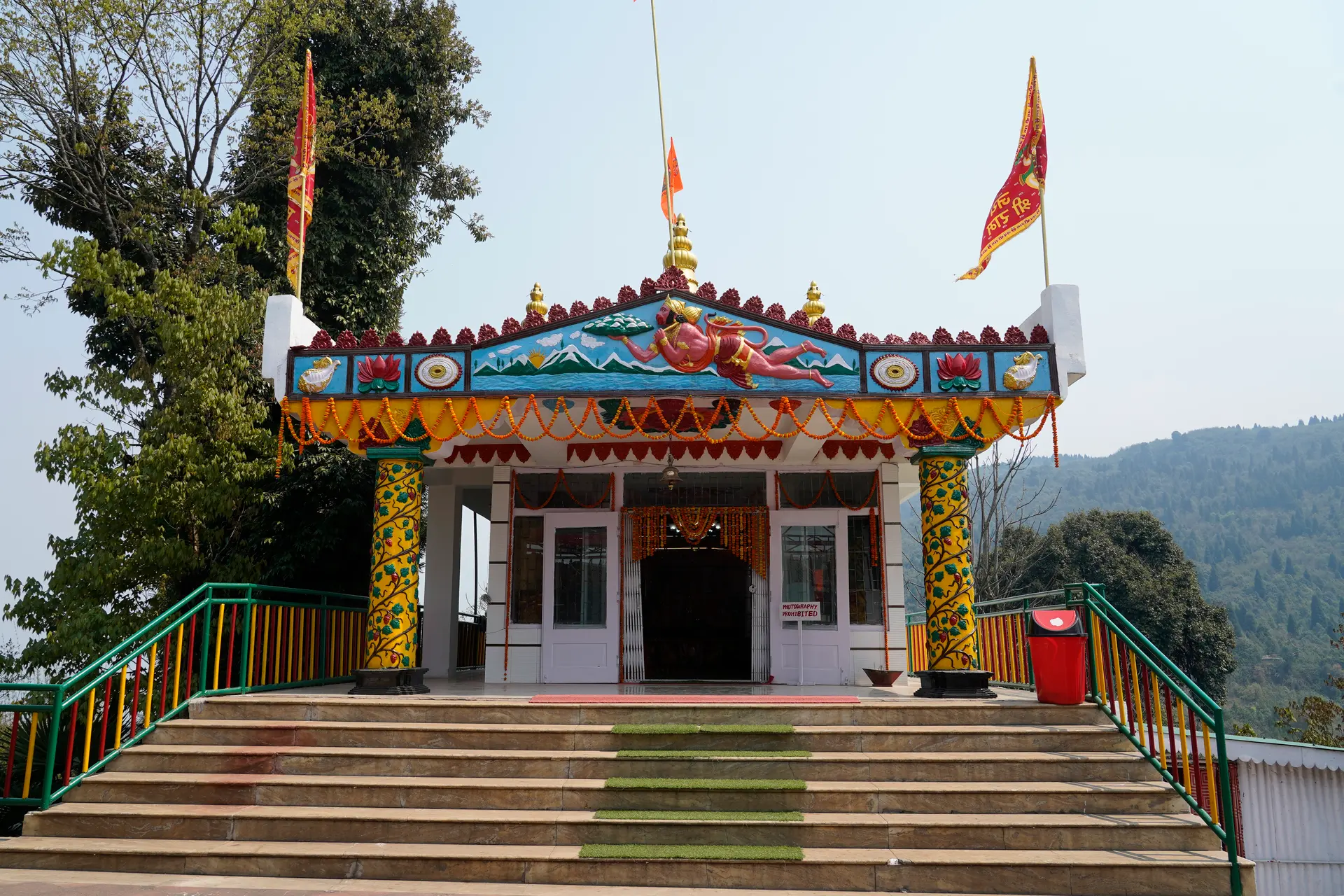
Visit essentials
A quick read before you go
- Duration
- Most visitors spend 1-2 hours, allowing time for prayer, sunrise viewing, and exploring the…
- Access
- Located 11 km from Gangtok city center (MG Marg), about 20-25 minutes by taxi.
Overview
Hanuman Tok marks, in local belief, a rest on Hanuman's Ramayana flight to save the mortally wounded Lakshman. Unable to identify the rare healing herb among thousands on Himalayan Dronagiri, Hanuman uprooted the mountain and carried it south to Lanka. At 7,200 feet above Gangtok, the temple has been maintained by the Indian Army since 1968.
Before its formal establishment, locals worshipped a stone believed blessed by Hanuman's presence; political officer Appaji Pant reportedly had a 1950s vision that led to installation of the idol, formalizing centuries of devotion. The Hindu sanctuary in predominantly Buddhist Sikkim offers 360-degree views including Kanchenjunga, the world's third-highest peak, and has an adjacent Shirdi Sai Baba shrine. Devotees seek blessings, while many visitors come at sunrise, joining devotion with Himalayan grandeur.
Why this place is sacred
What makes a place thin? At Hanuman Tok, the answer begins with story. The Ramayana's episode of Hanuman and the mountain is one of the most beloved in Hindu mythology—a tale of devotion pushed to extremity. Lakshman lies dying. Only a rare herb can save him. Hanuman flies to the Himalayas but cannot identify the herb among thousands. His solution: uproot the entire mountain and carry it south.
The image of the monkey god flying through the night with a mountain balanced on his palm is etched into the imagination of millions.
Hanuman Tok claims to be a rest stop on that flight. Whether historically verifiable is beside the point; what matters is that for centuries, people have come here believing they stand where the god stood. The stone they originally worshipped—before any temple existed—was believed to bear his imprint. That folk tradition predates the formal temple by generations.
The setting intensifies the thinness. At 7,200 feet, the air is crisp and thin in the literal sense. Kanchenjunga, the world's third-highest peak, rises to the northwest. In Sikkimese Buddhist tradition, Kanchenjunga is a sacred mountain, the abode of a protective deity. Hindu pilgrims see the same peak through the lens of their own tradition. The convergence creates a layered sacredness.
The Indian Army's maintenance since 1968 has given the site an unusual quality—disciplined, orderly, meticulously clean. This military stewardship, far from diminishing the sacred atmosphere, seems to enhance it. The 20-foot orange Hanuman statue stands as focal point, surrounded by gardens and viewing platforms. The thinness here is not wild or chaotic but cultivated, tended, continuous.
Experience and orientation
Hanuman Tok is located 11 km from Gangtok city center (MG Marg), about 20-25 minutes by taxi via the Gangtok-Nathula Highway. The temple opens around 5:00 AM (earlier than some sources indicate) for sunrise viewing. Remove shoes at the counter near the base before ascending to the temple complex. The main Hanuman temple houses the 20-foot statue; the adjacent Sai Baba shrine is to the right. Viewing platforms offer 360-degree panoramas.
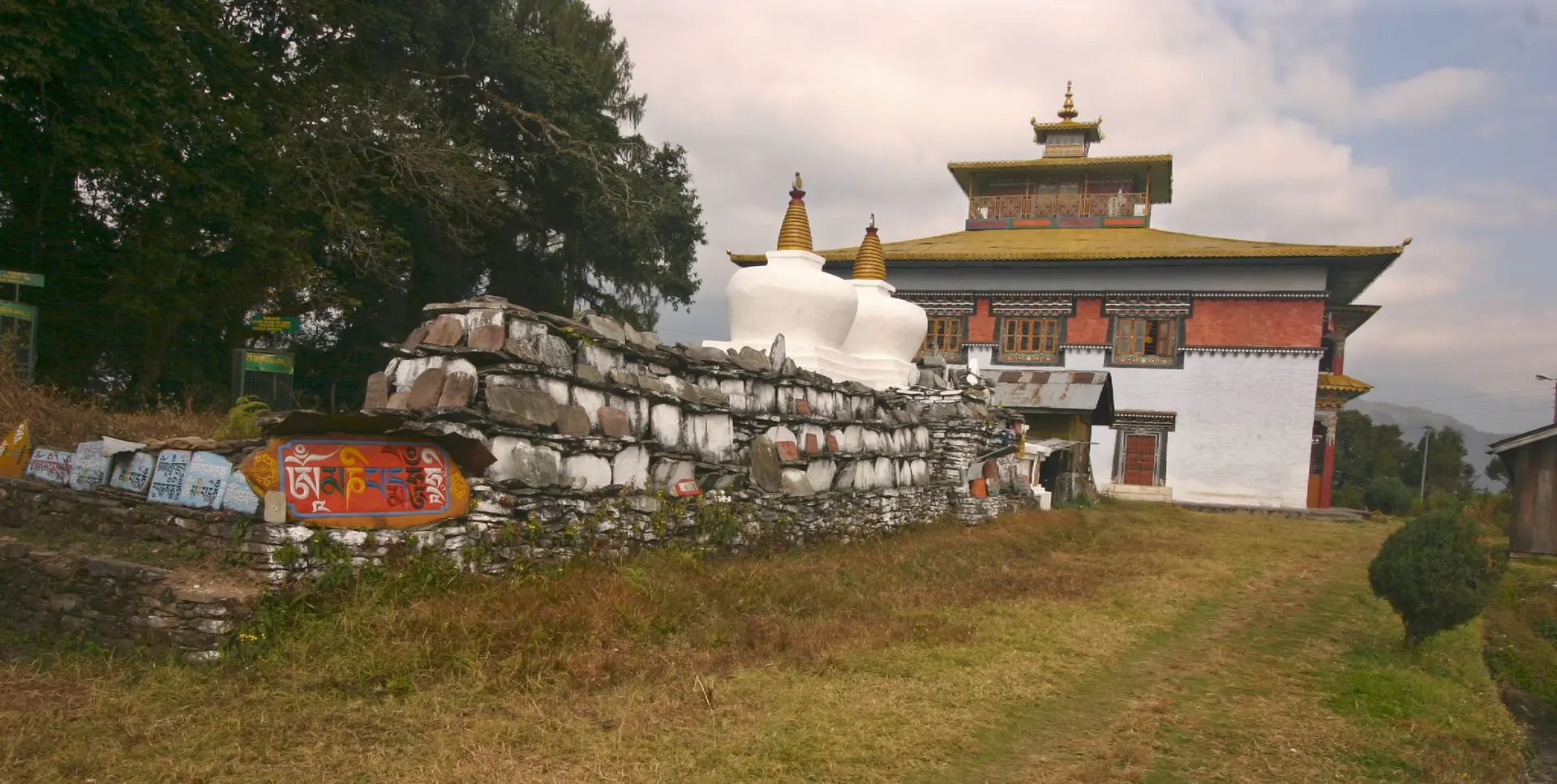
The nearby stupas and chortens belong to Lukshyama, the royal cremation ground, which should be approached respectfully. Most visitors spend 1-2 hours. Bring warm clothing—the altitude makes early mornings cold even in summer.
Context and lineage
Locals worshipped a stone at this site for centuries before formal temple establishment. In the 1950s, a political officer named Appaji Pant reportedly had a vision that led to the installation of the Hanuman idol. The temple was formalized in 1968 when the area was handed to the Indian Army's 17 Mountain Division, which has maintained it since.
Traditions and practice
Daily puja is performed at the temple. Devotees offer prayers for wish fulfillment, particularly on Tuesdays and Saturdays, which are auspicious for Hanuman worship. Prasad (blessed food) is distributed. Many visitors recite the Hanuman Chalisa. The Sai Baba shrine receives separate devotions. Hanuman Jayanti (usually April) is the major celebration.
Hinduism
ActiveHanuman Tok is dedicated to Lord Hanuman, the monkey god revered for his devotion to Lord Rama. According to legend, this is where Hanuman rested while carrying the Dronagiri mountain with the Sanjeevani herb to heal Lakshman during the Ramayana. The temple is believed to fulfill wishes for those who pray with a pure heart. It is one of the significant Hindu pilgrimage sites in predominantly Buddhist Sikkim.
Daily puja with prayers for wish fulfillment. Devotees visit especially on Tuesdays and Saturdays, auspicious days for Hanuman worship. Prasad is distributed. The Hanuman Chalisa (devotional hymn) is commonly recited. Hanuman Jayanti (usually April) is celebrated with special ceremonies.
Shirdi Sai Baba Devotion
ActiveA shrine to Shirdi Sai Baba stands adjacent to the main Hanuman temple. Sai Baba (1838-1918) was a spiritual master revered by both Hindus and Muslims. His inclusion in this Himalayan complex demonstrates the syncretic worship practices prevalent in India, where devotees may honor multiple figures without contradiction.
Devotees may worship at both the Hanuman and Sai Baba shrines during their visit, offering prayers and seeking blessings from both.
Perspectives and open questions
Hanuman Tok invites interpretation through multiple lenses: as a site from Hindu mythology, as a continuation of folk devotion, as a Hindu presence in Buddhist-majority Sikkim, and as a high-altitude place where natural grandeur and spiritual aspiration converge.
Plan your visit
Access and arrival
Located 11 km from Gangtok city center (MG Marg), about 20-25 minutes by taxi. Situated off the Gangtok-Nathula Highway. Hire a taxi or join a local sightseeing tour. Parking available at the base.
Gangtok offers accommodation from budget to mid-range, mostly concentrated around MG Marg. The temple is typically visited as part of a Gangtok day trip or combined with a sunrise excursion.
Respectful visit
Modest dress expected: avoid sleeveless tops and shorts. Warm layers essential for early morning visits at 7,200 feet.
Photography is permitted throughout the complex. Avoid photographing during active prayers or individuals without permission.
Offerings for puja can be made at the temple. Prasad is distributed. A shoe counter at the base safeguards footwear.
Remove shoes before entering the main temple. Maintain quiet. Avoid eating or drinking in the temple area. Dispose of waste properly.
Current practical details
Address
8JXH+4FP, Gangtok, Sikkim 737103, India
Hours
Hours, fees, and access can change — verify on the official source before you travel. Practical details last checked Jun 2026.
Location
Map loads as you approach this section.
Pilgrim reflections
A portrait of encounter, not a score
Pilgrims describe what they felt, how present they could become, and whether the place would shape a journey. There are no stars and no ranking of traditions.
No reviewed reflections yet
The first pilgrims can help describe the character of being here.
Share a reflection
Available after an account-backed “Been there.” Every reflection is reviewed before publication.
Nearby sacred places
Explore other sacred places in the region. Proximity does not establish access or travel time; check each place’s guidance.


References
Sources consulted for this page. Source categories describe the publication, not a guarantee that every claim is verified. Traditional accounts and outside interpretations may differ.
- 01HANUMAN TOK - Sikkim Tourism — Sikkim Tourism GovernmentofficialOfficial government tourism source
- 02Hanuman Tok - Wikipedia — Wikipedia contributorsencyclopediaGeneral overview and history
- 03Hanuman Tok, Gangtok - Info, Timings, Photos, History — Temple PurohitofficialHindu temple information source
- 04Hanuman Tok (Gangtok) History and FAQs — TravelSetuguideVisitor information and history
- 05Hanuman Tok, Gangtok | Timings, Entry Fees, How to Reach — HolidifyguidePractical visitor information
- 06Hanuman Tok Complete Guide To Sikkim's Best Vantage Point — Travel TriangleguideComprehensive visitor guide
Photo gallery
3 curated photos
Share a photo
Help visitors recognize Hanuman Tok. Every submission is reviewed before publication.