Struell Wells, Downpatrick, Northern Ireland
Where Patrick sang psalms in the dark waters, and healing springs still flow
Downpatrick, Northern Ireland, United Kingdom
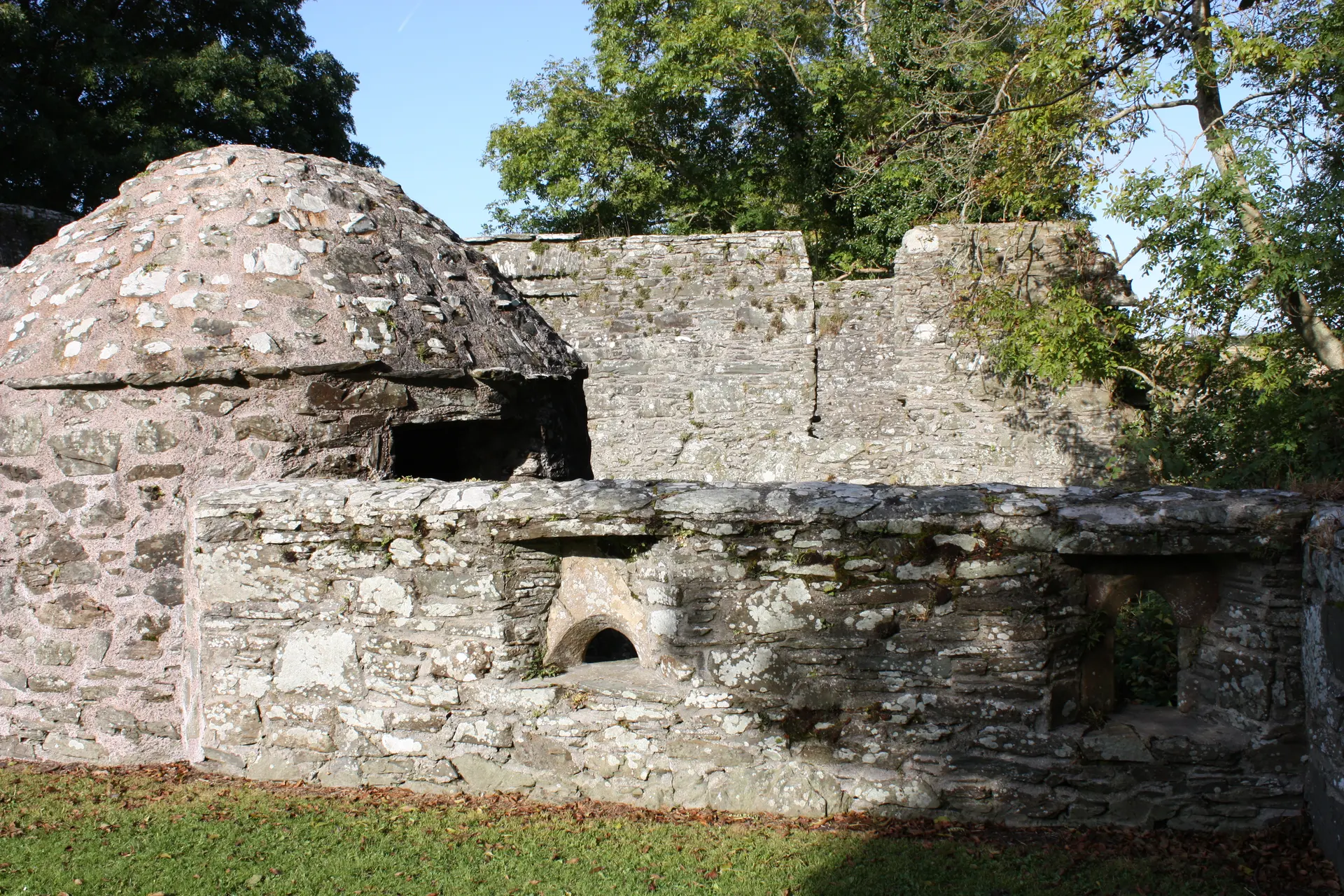
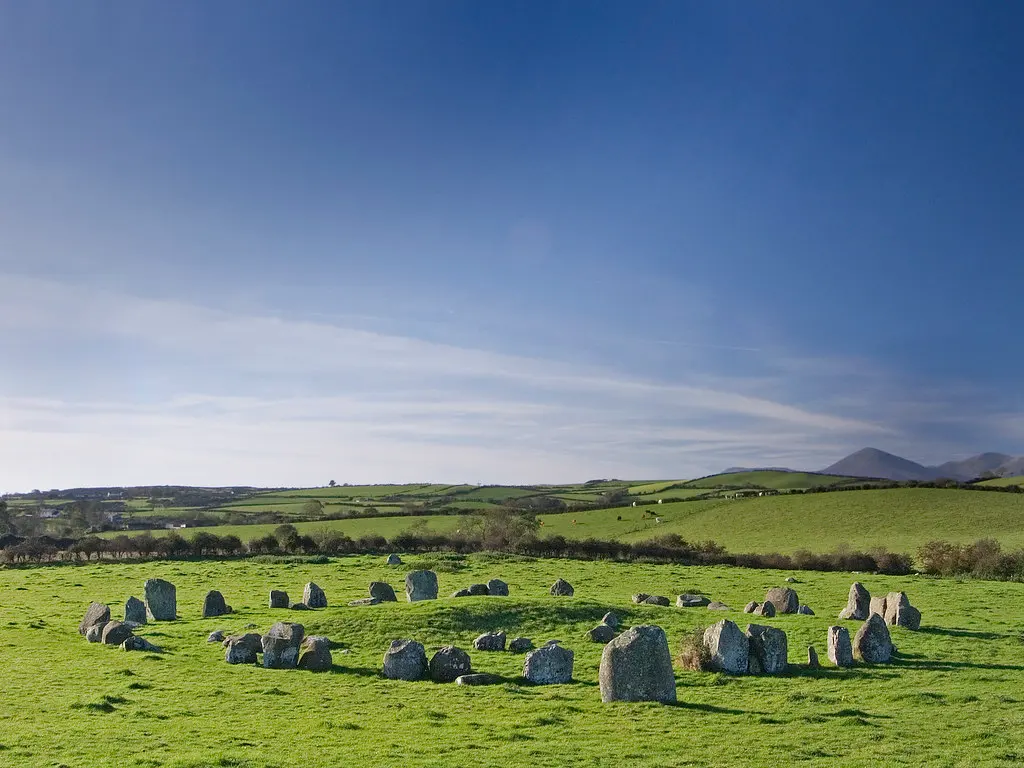
Image of Struell Wells, Downpatrick, Northern Ireland. Image source · CC-BY-SA-3.0
Visit essentials
Before you go
- Access
- The site is located on Ardglass Road, about 1.5 miles (2.4 km) east of Downpatrick town center,…
- Address
- 14 Struell Wells Rd, Downpatrick BT30 6RL, UK
- Duration
- A quick visit takes 30 minutes.
- Etiquette
- Struell Wells functions as a heritage site rather than active worship space, so formal religious…
Overview
Struell Wells is an ancient healing landscape east of Downpatrick where pre-Christian water veneration and Christian pilgrimage remain layered. Fiacc's Hymn, composed around 800 CE, says Patrick spent nights immersed in the water singing psalms, then rested by day on the slab now called St Patrick's Chair. The valley holds the vaulted Drinking Well, the Eye Well still used for water associated with sight, locked Men's and Women's Bathhouses, and an unfinished 18th-century church.
The stream's constant sound gives the quiet site an atmosphere visitors describe as peaceful yet alert. Organized pilgrimage and bathing have ended, but people still collect water, sit in silence, and continue the place's long healing tradition.
Why this place is sacred
Irish tradition treats wells as openings where the invisible rises with water. Struell's narrow hidden valley deepens that threshold: visitors descend from fields and roads into a contained space long honored as sacred. Its springs continue through drought and flood. Pre-Christian Celts read such constancy as divine presence; Christian tradition understood Patrick's blessing as transforming, not erasing, the older veneration.
Traditional midsummer bathing linked healing water to the year's solar turning, a pattern shared across Celtic cultures. Visitors who know little of that cosmology still report unusual peace, emotional stirring, and altered time. The source leaves open whether this reflects accumulated pilgrimage, the landscape's psychological effects, or something beyond conventional explanation.
Scholarly evidence points to Struell as an important pre-Christian sacred site, possibly associated with midsummer healing rituals and veneration of water deities. The practice of communal bathing at midsummer, documented into the 19th century, appears to be a continuation of pre-Christian traditions, adapted but not invented by Christianity. The site's name in the mythological Second Battle of Mag Tuired appears as 'Slan,' a well used to heal wounded warriors, suggesting its healing associations are ancient.
Patrick's arrival in the 5th century marked a transformation rather than an ending. The saint, according to 8th-century sources, did not reject the site's power but claimed it for Christianity, spending nights immersed in the waters singing psalms. This pattern of appropriation rather than destruction characterized Celtic Christianity's relationship with indigenous sacred sites.
By the medieval period, Struell had become an established pilgrimage destination. A chapel is documented by 1306. The structures visible today date primarily from the 17th and 18th centuries, with Lady Betty Cromwell repairing the bathhouses around 1600 and a new church begun in the mid-1700s though never completed.
The 18th and 19th centuries saw pilgrimages reach their peak, with nearly 2,000 participants at midsummer, elaborate rituals including circling the wells on knees, turning on St Patrick's Chair, and communal naked bathing in the wells. By the mid-19th century, disturbances led to the suppression of organized pilgrimages.
Today the site functions as a heritage property managed by the Northern Ireland Environment Agency, but individuals continue to visit for spiritual purposes, collecting the healing waters and seeking the peace the valley offers.
Experience and orientation
Water is always audible in Struell's quiet valley. The modest site has no visitor center, cafe, or gift shop; entrance boards provide context, then visitors meet the wells, locked bathhouses, stream, and old stones directly. Many describe a captivating spiritual atmosphere and a sense of stepping outside ordinary time. For those who know Patrick's story, standing where he reportedly sang psalms through the night can make the tradition visceral.
Hawthorn, elder flower, meadowsweet, and horsetail grow wild, extending the landscape's healing associations. Visitors who stay, sit by the wells, and let the water's sound become company often report shifts in perspective that outlast the visit.
Struell Wells asks nothing of you but arrival. There is no prescribed ritual, no correct way to engage. Some collect water from the Drinking Well or Eye Well, continuing the healing practice that has drawn people here for centuries. Others simply sit, letting the atmosphere work at its own pace.
The site rewards slowness. A rushed visit will show you old stones and flowing water, but little more. To sense what pilgrims across the centuries have sensed requires a different tempo, a willingness to let go of agenda and allow the place to register.
If you come with a question, you need not name it aloud. The tradition of seeking healing here is broad enough to include all manner of affliction. Those who brought physical ailments understood that body and spirit are not separate. Whatever you carry, you may set it down here and see what the waters have to say.
Context and lineage
The founding narrative places Patrick himself at the origin of Struell's Christian significance. According to Fiacc's Hymn, composed around 800 CE, Patrick came to 'Slan north of Benna Bairche,' where he spent nights immersed in the well singing psalms and spiritual songs, then rested during the day on a stone slab now known as St Patrick's Chair.
This account serves a specific theological purpose: it transforms an already-sacred pagan site into a Christian holy place, sanctified by Ireland's apostle himself. The narrative does not deny the site's prior significance but claims it for the new faith.
Older still is the reference in the mythological Second Battle of Mag Tuired, where a well called Slan healed wounded warriors in conflicts between the supernatural races contesting Ireland. Whether this is the same place or a narrative template later applied here remains uncertain, but it suggests the site's healing associations are genuinely ancient.
Father Edmund McCana recorded in 1643 that the stream itself was brought into existence by Patrick's prayers, adding another layer to the founding mythology. These stories do not conflict but accumulate, each generation adding its own understanding to what was already present.
The line of those who have sought healing at Struell stretches beyond documentation. Pre-Christian pilgrims came at midsummer for rituals whose details are lost. Early medieval Christians continued the tradition under Patrick's newly sanctified authority. Medieval pilgrims are recorded from 1306 onward. The 17th and 18th centuries brought repairs and new construction, suggesting sustained use despite Reformation disruptions.
The great pilgrimages of the 18th and 19th centuries, with their elaborate rituals and festival atmosphere, represented both the height and the end of organized devotion. When these gatherings were suppressed due to rowdy disturbances, the tradition did not die but dispersed into individual practice.
Today's visitors inherit this lineage whether they know it or not. The person who collects water from the Eye Well participates in a practice continuous with those who came seeking sight before Patrick was born.
St Patrick
saint
Ireland's patron saint, who according to 8th-century sources Christianized this site by spending nights immersed in the waters singing psalms. Whether Patrick actually visited is historically uncertain, but the association is central to the site's significance.
Lady Betty Cromwell
historical
In the 17th century, Lady Betty repaired the Men's Bathhouse, demonstrating continued Protestant interest in the site despite Reformation-era suspicion of pilgrimage traditions.
Bishop Fiacc of Sletty
hagiographer
The traditional author of Fiacc's Hymn, the earliest written source describing Patrick at Struell. The hymn likely dates to the 8th century, several centuries after Patrick's lifetime.
Traditions and practice
The pilgrimage season began on Midsummer Eve, June 23rd, rather than on St Patrick's Day. This timing, with its connection to solar maxima and pre-Christian festival dates, suggests the ceremonies retained pagan elements beneath their Christian overlay. The pilgrimage lasted a week, culminating at midnight on midsummer's eve in a festival atmosphere with tents selling whiskey and food.
The rituals themselves were elaborate. Pilgrims would circuit all the wells and cairns, then circle the Penitential Ring, a circle of sharp stones around St Patrick's Chair, on their knees seven times, sometimes carrying a large stone. The penitent would then be seated on St Patrick's Chair and turned three times from left to right. In the 19th century, a man charged a penny to perform this turning.
Following the chair ritual, prayers were offered at the altar in the ancient chapel, concluded with bathing in the wells.
The bathing was remarkable. Unlike any other Irish holy well site, pilgrims at Struell, men and women alike, bathed naked in the wells. Scholars understand this as a continuation of pre-Christian midsummer rituals, preserved within a Christian framework but never fully Christianized.
These practices ceased in the mid-19th century when disturbances led to suppression of the gatherings.
No formal ceremonies take place at Struell today. The bathhouses are locked, and bathing is not possible. What remains available is individual practice.
Visitors continue to collect water from the Drinking Well and Eye Well, maintaining the healing tradition in personal form. The waters are believed to address various ailments, with the Eye Well particularly associated with afflictions of sight. Some bring containers; others cup their hands and drink directly.
Quiet prayer and meditation are common. Those who follow the St Patrick's Way, the 132-kilometer pilgrim trail connecting Armagh and Downpatrick, often include Struell in their route. The annual St Patrick's Day pilgrimage from Saul to Down Cathedral passes through the area, though the wells themselves are not the primary focus.
Some visitors simply sit. The site's atmosphere invites contemplation, and many find that doing nothing in particular, simply being present with the waters and the stones and the sky, is practice enough.
If you come seeking engagement beyond observation, consider these possibilities:
Collect water from the wells. Bring a small container, or use what you have. The tradition of taking Struell's waters for healing extends beyond memory. You need not believe literally in miraculous cures; the act of collection is itself a form of participation, an acknowledgment that something here is worth carrying away.
Find a place to sit where the water is audible. Let its sound become your focus. The boundary between meditation and simply sitting is less distinct than technique-focused practitioners suggest. Attention to the water is a form of practice.
If you are familiar with Patrick's story, spend time where he reportedly spent his nights, at the well where he sang psalms until dawn. Consider what it meant to immerse oneself in cold water through darkness, singing into it. You cannot recreate this practice, but you can imagine your way into it.
Before leaving, offer something. Not a physical offering, which would be removed as litter, but something internal: gratitude, intention, acknowledgment that you are not the first to stand here and will not be the last.
Celtic Christianity
ActiveStruell Wells is one of the most important sites associated with St Patrick in Ireland. The 8th-century Fiacc's Hymn describes Patrick immersing himself in the well at night, singing psalms, and resting on a stone slab during the day. The site embodies the Celtic Christian practice of transforming indigenous sacred places into Christian holy sites, claiming rather than destroying what came before.
Contemporary practices include pilgrimage visits, collecting water from the Drinking Well and Eye Well for healing, prayer at St Patrick's Chair, walking the St Patrick's Way pilgrim trail, and participation in the annual St Patrick's Day pilgrimage from Saul to Down Cathedral. While the elaborate rituals of past centuries have ceased, individual devotion continues.
Pre-Christian Celtic Religion
HistoricalArchaeological and scholarly evidence strongly suggests Struell was an important sacred site in pre-Christian times. The midsummer bathing rituals, the association with water healing, and the timing of pilgrimages on pagan festival days all point to origins far older than Patrick. A late 7th-century Life of St Patrick states that druids regarded wells as sacred and made offerings to them.
Historical practices included midsummer bathing rituals for health promotion, livestock bathing at midsummer for protection from illness, and well veneration through offerings. These practices are no longer observed in their original form, though scholars see traces of them in the Christian pilgrimage traditions that developed.
Perspectives and open questions
Struell Wells invites interpretation from multiple angles, none of which fully contains its significance. Scholars, Christian pilgrims, and contemporary seekers each approach the site through their own frameworks. Holding these perspectives together, without forcing resolution, allows the site's complexity to remain visible.
Scholarly perspective
Academic research from Queen's University Belfast has established that Struell was likely an important pre-Christian sacred site, with midsummer bathing rituals representing continuity of pagan practices rather than Christian innovation. The timing of pilgrimages on Midsummer Eve and the Friday before Lammas, both dates significant in the pre-Christian calendar, suggests the Christian overlay did not fully transform older observances.
The physical evidence presents a complex picture. Structures visible today date from the 13th through 18th centuries, but they overlie earlier features. Archaeological excavation has revealed traces of an early medieval church, confirming continuous Christian use from at least the early medieval period. The relationship between these Christian structures and any pre-Christian predecessors remains partly speculative.
Scholars note that the communal naked bathing documented at Struell is unique among Irish holy well sites, suggesting preservation of particularly archaic ritual elements. The integration of healing, midsummer timing, and water veneration echoes patterns found across Celtic cultures, pointing to beliefs and practices that Christianity adapted rather than replaced.
Living and traditional perspectives
Within Irish Christian tradition, Struell is understood as one of the places sanctified by Patrick himself. The healing properties of the waters derive from Patrick's blessing, his nights spent in psalm-singing immersion transforming what had been pagan into what became holy. The site represents not the defeat of earlier tradition but its fulfillment, as Christian meaning completed what pre-Christian practice had groped toward.
This perspective does not deny pre-Christian origins but interprets them teleologically. What the druids sensed dimly, Christianity made clear. The waters healed before Patrick came; after his blessing, they heal through the power of Christ. The continuity of practice, from pre-Christian to Christian and beyond, demonstrates the persistence of genuine holiness rather than mere superstition.
For practitioners of this tradition, Struell remains a place of potential healing and encounter. The waters still flow. Patrick's blessing remains active across time. Those who come in faith participate in a communion stretching from the saint's own night vigils to the present moment.
Alternative interpretations
Contemporary spiritual seekers sometimes interpret Struell as an ancient energy center or 'thin place' where the boundary between physical and spiritual dimensions becomes permeable. The pre-Christian associations connect the site to broader Celtic spirituality movements that understand the land itself as sacred, holding memory and power independent of any tradition's claims.
From this perspective, Patrick's significance is not exclusive. He was responding to something already present, something the site holds regardless of what frameworks have been imposed. The experience visitors report, the peace and unusual awareness, reflects qualities inherent in the place rather than added by any tradition.
Some see the convergence of water, stone, and hidden valley as creating conditions for altered states of consciousness. The constant sound of flowing water, the visual containment of the valley, the knowledge of ancestral practice, all contribute to experiences that exceed ordinary awareness.
Open questions
Genuine mysteries remain at Struell. The exact nature and extent of pre-Christian worship is archaeologically unconfirmed. Whether the 'Slan' well mentioned in the Second Battle of Mag Tuired refers to this site or represents a narrative template cannot be established. The relationship between midsummer timing and specific cosmological beliefs remains partly speculative.
The structures visible today raise their own questions. Why was the church begun in the mid-18th century never completed? What earlier buildings did it replace? What happened during the centuries between Patrick's supposed visit and the first documentary reference in 1306?
Most fundamentally, why do people continue to report experiences here that exceed what the landscape alone might explain? Whether the answer lies in psychology, accumulated intention, something in the water, or something beyond any framework we possess, the question remains genuinely open.
Plan your visit
Access and arrival
The site is located on Ardglass Road, about 1.5 miles (2.4 km) east of Downpatrick town center, in County Down, Northern Ireland. A small parking area is available on site. Public transport is limited; car access is recommended. The site is unsuitable for wheelchair users due to uneven terrain. Entry is free.
Downpatrick offers various accommodation options from budget to boutique. The town provides a convenient base for exploring St Patrick heritage sites in the area. Belfast is approximately 45 minutes away by car and offers a full range of urban accommodations.
Respectful visit
No formal requirements exist. Dress for weather and terrain rather than ceremony. The valley can be damp, and the ground uneven. Sturdy footwear is practical.
Permitted throughout the site. No flash inside structures. No climbing for better angles. The site's atmosphere is part of what you are photographing; do not sacrifice it for composition.
Physical offerings are not appropriate at this heritage site and will be removed by staff. If you wish to offer something, make it internal: a prayer, an intention, an acknowledgment. The tradition of reciprocity can be honored without leaving objects behind.
The bathhouses are locked and cannot be entered. Do not climb on or lean against the structures, and avoid unnecessary contact with stone because accumulated skin oils cause damage. If collecting water, keep containers off the stone and deposit nothing in the wells. Children under 16 should not visit unaccompanied. Uneven terrain makes the site unsuitable for wheelchair users. Northern Ireland Environment Agency heritage protocols apply.
The bathhouses are locked and cannot be entered. Do not attempt to access them. The structures date from the 17th century and require protection.
Physical offerings left at the site will be removed. This is a heritage property, and offerings, however spiritually sincere, are treated as litter by those responsible for its preservation.
The terrain is uneven and unsuitable for wheelchair users. Children under 16 should not visit unaccompanied. These are practical rather than spiritual cautions, but they matter.
Current practical details
Address
14 Struell Wells Rd, Downpatrick BT30 6RL, UK
Hours
Hours, fees, and access can change — verify on the official source before you travel. Practical details last checked Jun 2026.
Location
Map loads as you approach this section.
Pilgrim reflections
A portrait of encounter, not a score
Pilgrims describe what they felt, how present they could become, and whether the place would shape a journey. There are no stars and no ranking of traditions.
No reviewed reflections yet
The first pilgrims can help describe the character of being here.
Share a reflection
Available after an account-backed “Been there.” Every reflection is reviewed before publication.
Nearby sacred places
Explore other sacred places in the region. Proximity does not establish access or travel time; check each place’s guidance.
Share a photo
Help visitors recognize Struell Wells, Downpatrick, Northern Ireland. Every submission is reviewed before publication.