Giant’s Ring, Belfast, Northern Ireland
Where Neolithic ancestors built a cathedral of earth, and the veil between ages grows thin
Understand sacred places, explore living traditions, and learn how to engage respectfully with Pilgrim Map.
Access has not been verified. Check current local guidance before planning a visit.
Belfast, Northern Ireland, United Kingdom
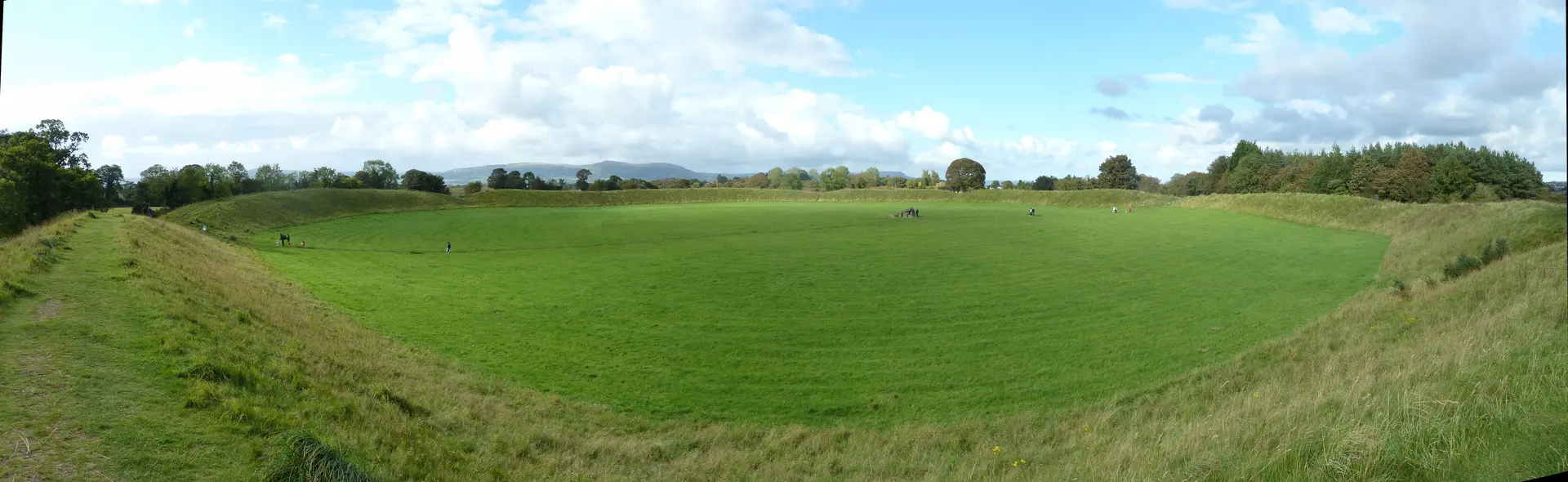
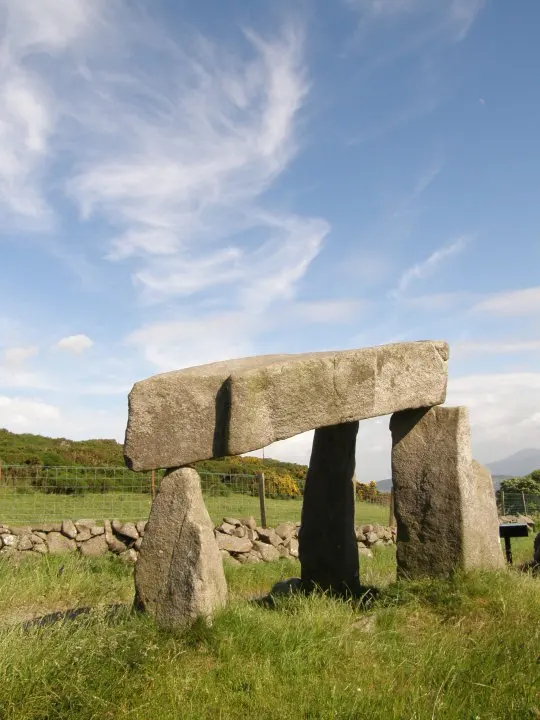
Image of Giant’s Ring, Belfast, Northern Ireland. Image source · CC-BY-3.0
Visit essentials
A quick read before you go
- Duration
- A focused visit to the monument takes 30-60 minutes, allowing time to walk the earthwork…
- Etiquette
- As a protected heritage site and ancient burial ground, the Giant's Ring requires respectful…
Overview
The Giant's Ring is a five-thousand-year-old Neolithic ceremonial enclosure and mortuary landscape. Its 180-meter earthwork surrounds an older stone passage tomb that held cremated remains. Raised banks may have allowed hundreds to witness ceremonies by farming communities whose names and beliefs are now unknown. Later giant legends express the monument's scale, not archaeological history. Visitors may experience stillness, connection, or historical weight, but no power or response is promised.
Walk the ancient circuit and treat its accumulated human presence with care.
Why this place is sacred
One interpretive frame treats the Giant's Ring as a threshold between living and dead. The passage tomb predates the henge by perhaps two centuries; excarnation and cremation reduced bodies to remains placed in its stone chamber. Later builders enclosed it with an earthwork that Barrie Hartwell estimated required 70,000 person-hours and 25,000 tons of earth—major labor for a subsistence population. Its flat-topped bank and eastern entrance face the rising sun.
The plateau above the River Lagan overlooks the landscape; nearby excavations found timber enclosures, cremation burials, and standing stones, making the Ring the central monument of a wider ceremonial precinct. Five thousand years of attention have accumulated here, but Neolithic beliefs remain unrecoverable; modern reports of a boundary 'thinning' are experiences, not evidence of the builders' cosmology.
Archaeological evidence suggests the Giant's Ring served as a major ceremonial center for funerary rites and communal gatherings. Archaeologist Michael J. O'Kelly interpreted such sites as evidence of a Neolithic cult of the dead, a religion centered on ancestor veneration. The passage tomb at the center would have received the processed remains of the deceased, while the surrounding henge provided space for the rituals that maintained the relationship between living and dead.
Excavations of nearby timber enclosures revealed evidence of excarnation, suggesting bodies were prepared for burial in structures that were themselves eventually destroyed by fire.
The rituals that gave the Giant's Ring meaning ceased long before recorded history. By the eighteenth century, the enclosure had become a horse racing track, its sacred purpose forgotten but its impressive scale exploited for entertainment. In 1837, Arthur Hill-Trevor built a protective wall around the central tomb, preventing further damage from agricultural activity. The Ancient Monuments Protection Act of 1882 designated the site among Northern Ireland's first three protected monuments.
Modern visitors arrive for heritage appreciation, contemplative walks, and occasional spiritual practice. Neo-pagan and druid groups sometimes gather here for seasonal observances, though no formal religious community maintains the site. The nineteenth-century name Druid's Altar for the central tomb reflects romantic interpretation rather than archaeological evidence, yet it captures something true about the site's persistent pull on human spiritual imagination.
Experience and orientation
Enter through the eastern bank gap into a vast, amphitheater-like enclosure. Five stones remain at the central passage tomb where Neolithic remains once lay. Visitors report peace, a listening quality, 'lovely energy,' and connection to deep time; these are personal accounts, not promised effects. Sitting quietly can acknowledge the tomb without inventing ritual. The roughly 565-meter bank circuit reveals the enclosure's geometry, surrounding farmland, distant hills, and the River Lagan below.
Some visitors report quieter thoughts or a sense of significance while walking.
The Giant's Ring rewards those who approach it with intention rather than expectation. Consider arriving without agenda beyond presence. Walk to the center first, to the megalithic tomb. Stand or sit in silence, acknowledging that you occupy a space built to house the dead. You need not believe in spirits or ancestors to honor the function this place once served.
Then walk the circumference of the earthwork bank. Let the rhythm of walking settle your thoughts. Notice the views that open as you circle, the farmland, the distant hills, the river below. The Neolithic builders chose this elevated position deliberately; allow their choice to work on you.
The site does not ask you to believe anything. It asks only that you be present in a place where presence has accumulated for five thousand years. Whatever you bring, grief or transition or simple curiosity, the enclosure will hold it without comment.
Context and lineage
The name Giant's Ring derives from later folk belief, an attempt to explain the massive earthwork's existence. Local tradition held that a long-departed race of giants once inhabited the area, for surely no ordinary humans could have constructed such a monument. Some accounts associate the site with Fionn mac Cumhaill, the legendary Irish giant-warrior credited with creating the Giant's Causeway and other monumental features of the Irish landscape.
These origin stories, though archaeologically unfounded, capture something true about the site's effect on observers. The scale does seem superhuman. The effort does appear to exceed practical necessity. Whatever the Neolithic builders intended, they created something that has never stopped provoking wonder about its makers.
The Giant's Ring was used for perhaps five hundred years of active ceremonial purpose, from the construction of the passage tomb around 3200 BCE through the apparent end of the ritual landscape's use around 2500 BCE. The timber temple discovered by Hartwell was destroyed by fire around 2550 BCE, possibly deliberately as part of mortuary ritual, possibly by accident.
For the next four thousand years, the site persisted as a landmark, its original purpose forgotten but its presence undeniable. Local Gaelic communities likely told stories about it; none survived to be recorded. The eighteenth century brought horse racing to the enclosure, an ironic echo of the communal gatherings that once took place here. Victorian antiquarianism brought protection and the romantic label Druid's Altar.
Since designation as a protected monument in 1882, the Giant's Ring has been maintained for public access and heritage appreciation. Contemporary visitors include walkers, heritage enthusiasts, school groups, and seekers who sense in the place something that exceeds its archaeological explanation.
The Ballynahatty Woman
historical
A Neolithic woman whose remains were excavated from a tomb near the Giant's Ring in 1855. In 2015, she became the first ancient Irish person to have her genome sequenced, revealing that the Neolithic population of Ireland had Near Eastern ancestry and had migrated via the Iberian Peninsula. She had brown eyes and dark hair, and lived between 3343 and 3020 BCE.
Barrie Hartwell
historical
Queen's University archaeologist whose excavations from 1990-1999 revealed the extent of the ritual landscape surrounding the Giant's Ring, including timber enclosures he interpreted as mortuary temples. His work demonstrated the site's function as a ceremonial cathedral of its era.
Arthur Hill-Trevor, 3rd Viscount Dungannon
historical
The landowner who in 1837 constructed a protective wall around the central megalithic tomb, beginning the modern era of the site's preservation.
Traditions and practice
Archaeological evidence suggests the Neolithic users of this site practiced complex mortuary rituals. Bodies may have been exposed in timber structures for excarnation before cremation and interment in the passage tomb. The henge provided space for communal ceremonies that likely involved the entire community, the earthwork banks serving as a grandstand for observers. The enormous labor investment suggests these ceremonies marked significant moments in the agricultural and social calendar.
The specific content of these rituals remains beyond recovery. Whatever songs were sung, whatever offerings made, whatever beliefs undergirded the construction have left no direct trace. We have only the architecture of their devotion and the remains of those they honored.
Contemporary spiritual visitors approach the Giant's Ring with practices adapted to heritage site constraints. Walking the circumference of the earthwork bank serves as a meditative circuit, the roughly 565-meter path long enough to allow thought to settle. Some complete three circuits, a pattern found in many pilgrimage traditions. The central megalithic tomb serves as a focal point for silent contemplation, though physical contact with the stones is discouraged to prevent erosion.
Neo-pagan and druid groups occasionally gather at the site for seasonal observances, particularly around solstices and equinoxes, though these gatherings are informal rather than organized. The nineteenth-century name Druid's Altar, while historically inaccurate, reflects a persistent intuition that the site invites spiritual engagement.
Local tour operators sometimes include the Giant's Ring in heritage walks, providing archaeological context that can deepen appreciation without prescribing spiritual response.
Visit early or late for quieter conditions. Pause at the central tomb in silence, acknowledging that it housed the dead without requiring belief in spirits or ancestors. Walk the bank circuit and notice farmland, hills, and the river. Before leaving, pause at the eastern entrance, oriented toward the rising sun, and consider what you carry away from a place where many once carried their dead.
Neolithic Religion (Ancestor Veneration)
HistoricalThe Giant's Ring appears to have served as a ceremonial center for what archaeologist Michael J. O'Kelly termed the Neolithic cult of the dead. The massive earthwork enclosing a burial tomb suggests the site hosted communal rituals maintaining the relationship between the living and their ancestors. The investment of labor, perhaps 70,000 person-hours, indicates the ceremonies performed here carried enormous social and spiritual importance.
Archaeological evidence suggests complex mortuary practices including excarnation, cremation, and interment in the passage tomb. Bodies may have been prepared in timber structures before burial. The henge's flat-topped banks would have served as a grandstand, allowing the community to witness ceremonies performed in the central space. Specific rituals, songs, offerings, and beliefs remain beyond recovery.
Contemporary Paganism and Druidry
ActiveWhile no formal organized religious activity takes place at the Giant's Ring, contemporary pagans and druids recognize the site as sacred ground. The nineteenth-century designation Druid's Altar, though archaeologically inaccurate, expresses an intuition that the site invites spiritual engagement. Some visitors include it among Ireland's thin places where the veil between worlds is perceived as thinner.
Contemporary spiritual practice at the site typically involves walking the earthwork as a meditative circuit, sitting in silence at the central tomb, and approaching the visit as pilgrimage rather than tourism. Some practitioners visit around solstices, equinoxes, or other dates significant in their calendar. These gatherings are informal rather than organized.
Perspectives and open questions
The Giant's Ring has been interpreted through multiple lenses: archaeological science, romantic antiquarianism, folk tradition, and contemporary spirituality. Each perspective captures something genuine, and honest engagement requires holding them together. The site predates writing and the traditions that might have explained it; we approach it through inference, imagination, and attention to what persists.
Scholarly perspective
Archaeological consensus places the Giant's Ring within the tradition of Neolithic ceremonial enclosures known across Britain and Ireland. Barrie Hartwell's excavations from 1990-1999 revealed the site as the center of a larger ritual landscape, including timber enclosures he interpreted as mortuary structures where bodies were prepared for burial. The central passage tomb predates the henge by perhaps two centuries, suggesting the location was already sacred when the earthwork was constructed around it.
Michael J. O'Kelly's interpretation of Irish passage tombs as evidence of a Neolithic cult of the dead applies well here. The massive labor investment, perhaps 70,000 person-hours, indicates that ceremonies performed within the enclosure carried enormous social importance. DNA research on the nearby Ballynahatty Woman, published in 2015, established that the Neolithic population of Ireland descended from Near Eastern farmers who migrated via the Iberian Peninsula, arriving with the agricultural revolution that transformed Europe.
Scholars continue to debate specific functions. Whether the site served astronomical purposes remains unconfirmed, unlike Newgrange and other passage tombs with documented solar alignments. The relationship between the passage tomb builders and the later henge builders is not fully understood. What the site meant to its users, beyond its clear association with the dead, remains a matter of informed inference.
Living and traditional perspectives
No direct continuity exists with the Neolithic users of the Giant's Ring. Folk traditions that emerged in later centuries attributed the monument to giants, a common pattern for explaining megalithic construction. Some accounts associate the site with Fionn mac Cumhaill, the legendary giant-warrior of Irish mythology.
The nineteenth-century name Druid's Altar for the central tomb reflects romantic interpretation rather than archaeological evidence. The druids of the Celtic Iron Age lived more than two thousand years after the Giant's Ring was built. Yet the label persists, expressing an intuition that the site invites spiritual interpretation even if the specific tradition is misidentified.
Alternative interpretations
Some contemporary spiritual visitors call the Giant's Ring a 'thin place,' using a Celtic Christian idea of a permeable boundary between worlds; some neo-pagan practitioners visit for seasonal observance or personal ritual. These readings are not archaeologically verified. Reports of unusual peace, connection across time, or difficult-to-name experience describe visitors' responses, not proof that the site exceeds its heritage status.
Open questions
Genuine mysteries persist. The specific beliefs and cosmology of the Neolithic builders remain beyond recovery. We do not know why this particular location was chosen for such monumental construction, or what the relationship was between the passage tomb builders and the later henge builders.
No confirmed astronomical alignments have been identified at the Giant's Ring, unlike Newgrange and other Irish passage tombs. Whether this absence reflects lost features, lack of investigation, or genuine difference from other sites remains unclear. The reasons for the timber temple's destruction by fire around 2550 BCE, whether deliberate ritual burning or accident, are debated.
Most fundamentally, we cannot recover what it meant to stand within this enclosure five thousand years ago, participating in ceremonies whose form and content have left no trace. The site invites speculation precisely because so much remains unknown.
Plan your visit
Access and arrival
Belfast city center offers accommodation at all price points, approximately 20 minutes by car from the Giant's Ring. The Lagan Valley area has smaller hotels and bed-and-breakfasts closer to the site. No retreat centers or pilgrimage accommodation specifically serve the Giant's Ring.
Respectful visit
No formal dress requirements apply. Wear practical outdoor clothing and sturdy walking shoes, as the terrain is uneven and can be muddy after rain. Layers are advisable given Northern Ireland's changeable weather.
Photography is permitted throughout the site without restriction. Consider, however, spending some time without a camera, actually seeing the place before framing it for documentation.
Physical offerings are not traditional to the site's current use and may be treated as litter by site managers. If offering is important to your practice, make it internal: a silent acknowledgment, a moment of gratitude, an intention offered without material form.
Do not climb on or touch the megalithic stones. Do not carve, paint, or otherwise mark any surface. Keep dogs under control at all times. Do not leave litter. The car park may close at night; check current hours before planning an extended visit.
The Giant's Ring is managed as a heritage site, not an active place of worship. Leaving physical offerings is not traditional and may be removed by site managers. Do not touch or climb on the megalithic stones; graffiti has been an issue and any such activity damages an irreplaceable monument.
If you encounter others during your visit, whether dog walkers or fellow seekers, recognize that the site serves multiple purposes. Loud or disruptive behavior is inappropriate, but so is expecting exclusive access to a public space. The site has always been a place of gathering; your presence joins a long lineage of human encounter here.
Current practical details
Address
79 Ballylesson Rd, Belfast BT8 8JT, UK
Phone
Hours
Hours, fees, and access can change — verify on the official source before you travel. Practical details last checked Jun 2026.
Location
Map loads as you approach this section.
Pilgrim reflections
A portrait of encounter, not a score
Pilgrims describe what they felt, how present they could become, and whether the place would shape a journey. There are no stars and no ranking of traditions.
No reviewed reflections yet
The first pilgrims can help describe the character of being here.
Share a reflection
Available after an account-backed “Been there.” Every reflection is reviewed before publication.
Nearby sacred places
Explore other sacred places in the region. Proximity does not establish access or travel time; check each place’s guidance.
Share a photo
Help visitors recognize Giant’s Ring, Belfast, Northern Ireland. Every submission is reviewed before publication.