St. Mary’s Church, Haddington, Scotland
Scotland's longest parish church, where nine centuries of prayer survive siege, ruin, and resurrection
Haddington, Scotland, United Kingdom
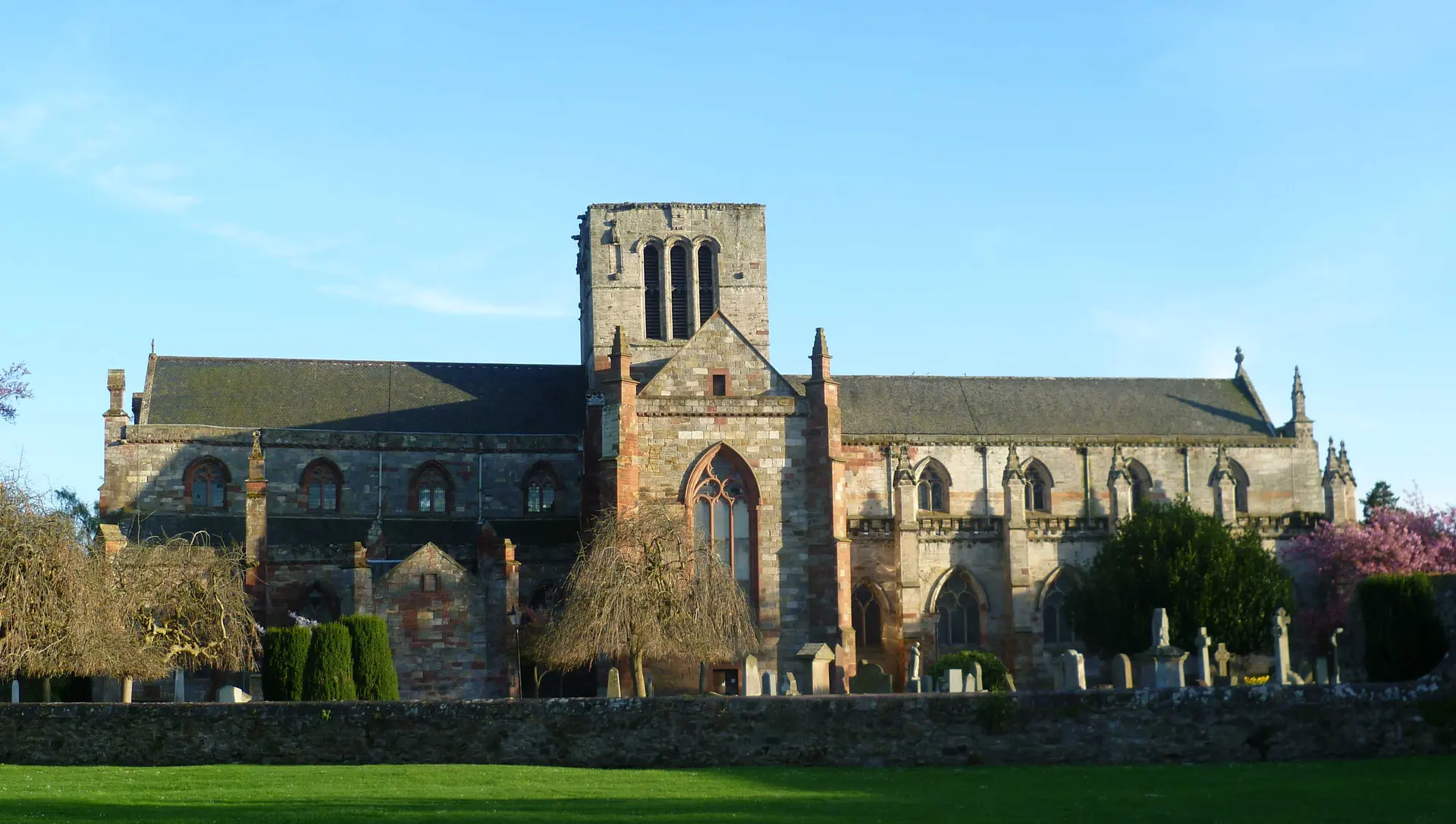
Image of St. Mary’s Church, Haddington, Scotland. Image source · CC-BY-SA-3.0
Visit essentials
Before you go
- Address
- Sidegate, Haddington EH41 4BZ, UK
- Duration
- Ninety minutes to follow the numbered trail and appreciate major features
- Etiquette
- St Mary's is an active Church of Scotland parish church.
Overview
St Mary's has burned, been rebuilt, endured siege, lost its roof for four centuries, and risen again. John Knox was born across the river; Mary Queen of Scots' fate was sealed in a treaty signed nearby; and the Scottish Reformation transformed worship. Through each rupture, Haddington's people returned to pray.
A luminous Franciscan choir completed in 1242 earned the name Lucerna Laudoniae, the Lamp of Lothian. After that church's destruction in 1356, St Mary's inherited the name, although its own choir remained roofless for centuries. Only the 1970s restoration, returning clear glass to the windows, gave this church the light meriting that title.
Sunday worship continues nearly five hundred years after the Reformation. In the Lauderdale Aisle, an Episcopal altar within Presbyterian walls draws pilgrims from traditions once bitterly divided. The annual May pilgrimage, begun in 1970, brings over a thousand seekers into light, silence, and accumulated prayer.
Why this place is sacred
The Lamp of Lothian was first lit elsewhere. In 1242, the Franciscan friars completed their church in Haddington, and the luminous quality of its choir gave it that name. When Edward III destroyed the town in 1356 during the Burnt Candlemas, the lamp was extinguished. The name transferred over centuries to St Mary's, built nearby after the devastation, though the connection rested on memory rather than resemblance.
St Mary's own light was dimmed in 1548 when English forces, during the siege that would deliver Mary Queen of Scots to France, damaged the choir so severely that it stood roofless for four hundred years. The nave continued in use, but the great eastern end lay open to the sky, stone slowly returning to ruin.
When restoration came in the 1970s, the architects made a choice that transformed the space. Rather than Victorian stained glass, they installed clear windows, allowing unfiltered light to flood the rebuilt choir. The effect recovered something of what the medieval builders sought. Visitors today describe the space as a sanctuary of light, air, and openness. The name finally fits.
But the thinness here is not merely architectural. Nine centuries of continuous worship create their own accumulation. The knowledge that people have gathered here through plague, war, reformation, and restoration lends gravity to present-day prayer. The Lauderdale Aisle, where traditions once separated by blood now pray together, embodies reconciliation that seemed impossible for centuries. The annual pilgrimage reconnects modern visitors to medieval patterns of seeking. Something persists in these stones that cannot be attributed to any single cause.
St Mary's was built by the townsfolk of Haddington after the destruction of 1356, replacing their lost churches and eventually surpassing them in scale. By the time of its completion around 1462, it rivalled cathedrals in size and was formally constituted as a collegiate church around 1540, with canons maintaining perpetual prayer. The medieval church served both as the spiritual center of a prosperous market town and as a symbol of recovery from devastation.
The Reformation of 1560 transformed St Mary's from a Catholic collegiate church to a Protestant parish church. John Knox, born in Haddington, urged the town council to repair the nave for Reformed worship in 1561. The ruined choir and transepts remained untouched for centuries, a reminder of siege damage that the congregation lived alongside. Only in the twentieth century did restoration begin, culminating in the 1971-73 project that returned the choir to use.
The establishment of the Lauderdale Aisle as an ecumenical chapel in 1978 added a new dimension, making St Mary's a pioneer of interfaith cooperation in Scotland.
Experience and orientation
The scale registers first. At two hundred and six feet from east to west, St Mary's is the longest parish church in Scotland, rivalling the dimensions of many cathedrals. Yet visitors report that the space does not feel imposing. The word that appears most often in their accounts is peace, though they struggle to articulate exactly what kind. Not the peace of emptiness, but something more alert, a listening quality in the silence.
The restored choir holds particular power. Clear glass floods the space with unfiltered light, creating what one visitor called a sanctuary of light, air, and space. Those who enter when the afternoon sun illuminates the east window often pause involuntarily, caught by a quality they did not expect. The fibreglass vaulting, installed during the 1970s restoration using boat-building technology, appears ancient to casual inspection. The illusion serves something deeper than deception: it creates continuity with what was lost.
The volunteer guides who staff the church during open hours are themselves part of the experience. Visitors consistently note their knowledge, their enthusiasm, and their evident love for the building. They speak of history not as dead fact but as living presence. The numbered trail they offer allows self-guided exploration, but many visitors find themselves drawn into conversation, discovering connections they had not anticipated.
For those with eyes for it, the layers accumulate. The grave of Jane Welsh Carlyle, called the Flower of Haddington and one of the great letter writers. The memorial to William Seton from 1682. The stained glass by Sax Shaw depicting St Margaret and St Helen. The 1990 pipe organ by Lammermuir Pipe Organs. Each element holds its own significance, available to those who seek it.
St Mary's rewards time. A quick walk through the interior takes perhaps thirty minutes, but the building reveals itself more fully to those who linger. Follow the numbered trail at a contemplative pace. Sit in the choir and let the light work. If the Lauderdale Aisle is accessible, spend time in that intimate space where ecumenical healing found its form.
If you arrive during visitor hours, engage with the volunteer guides. Their knowledge extends far beyond historical fact into the kind of understanding that comes only from long relationship with a place. They welcome questions and seem genuinely pleased to share what they love.
Context and lineage
In February 1356, Edward III of England led his army through the Lothians in a campaign so fierce it was called the Burnt Candlemas. Haddington burned. The Franciscan church that had earned the Lamp of Lothian name was destroyed. The townsfolk, recovering over decades, built St Mary's on a site nearby, beginning work around 1380.
The church grew gradually. Bishop Henry Wardlaw of St Andrews, who would also found the University of St Andrews, consecrated it around 1410. Construction continued until 1462, by which time St Mary's had reached its present extent: a cruciform building longer than many cathedrals, with a massive tower at the crossing. Around 1540, it was formally constituted as a collegiate church, with canons maintaining perpetual prayer.
But siege returned. In 1548, during the conflict known as the Rough Wooing, English forces occupied Haddington. The Scottish Parliament, meeting at the nearby Abbey, signed the Treaty of Haddington on 7 July, promising the six-year-old Mary Queen of Scots to the French Dauphin in exchange for military assistance. The siege damaged the choir so severely that it stood roofless until the 1970s restoration.
From its medieval foundation through the Reformation, through centuries when the choir lay roofless, through twentieth-century restoration and the establishment of ecumenical worship, St Mary's has maintained continuity of purpose. Each generation has received the building, cared for it according to their understanding, and passed it on. The thread of worship has not broken in nine centuries.
John Knox
Protestant Reformer
Born in Haddington around 1514, Knox trained as a priest here before his conversion to Protestantism. After imprisonment as a galley slave and years of exile, he returned to lead the Scottish Reformation. In 1561 he urged the Haddington town council to repair the nave for Reformed worship.
Mary Queen of Scots
Queen of Scotland
The Treaty of Haddington, signed at the nearby Abbey in 1548, promised the six-year-old queen to the French Dauphin. The treaty changed the course of Scottish history, sending Mary to France and eventually bringing her into conflict with Elizabeth I.
17th Earl of Lauderdale
Restorer of the Lauderdale Aisle
In 1970 he initiated the annual Haddington Pilgrimage and in 1978 restored the Lauderdale Aisle as an ecumenical chapel. His vision of Christian unity across traditional divisions continues to draw pilgrims from multiple denominations.
Traditions and practice
The medieval collegiate church maintained perpetual prayer through its canons. The Mass was celebrated according to Catholic rite. After the Reformation, Reformed worship replaced the old liturgy: preaching, psalm-singing, and the sacraments administered according to Presbyterian understanding. The bells, removed by English forces in 1548, remained silent until 1999.
Regular Church of Scotland worship takes place on Sunday mornings at 10am. The service follows Presbyterian tradition and welcomes visitors of any background. The Lauderdale Aisle hosts Episcopal services and ecumenical gatherings throughout the year. Bell ringing, restored in 1999 with a peal of eight bells, occurs regularly. Summer concerts on Sunday afternoons at 4pm are free and open to all.
Those seeking more than a visit might attend Sunday worship, joining the congregation as generations have done. The annual Haddington Pilgrimage on the second Saturday in May offers participation in a larger movement of seeking. During visitor hours, simply sitting in the light of the restored choir creates space for whatever contemplation arises.
Church of Scotland (Presbyterian)
ActiveSt Mary's has served as a Church of Scotland parish church since the Reformation of 1560. John Knox urged the town council to repair the nave for Reformed worship in 1561. The church continues as the principal parish church of Haddington, uniting with Haddington West Kirk in 2014 to form The Parish of Haddington at St Mary's.
Regular Sunday worship at 10am. Baptisms, weddings, and funerals. Bell ringing following the 1999 restoration. Summer concert series. The church is open for visitor contemplation from May through September.
Scottish Episcopal Church (Lauderdale Aisle)
ActiveThe Lauderdale Aisle was created in 1978 by the 17th Earl of Lauderdale as an ecumenical chapel within the Church of Scotland building. Consecrated by the Bishop of Edinburgh, it represents a unique arrangement where an Episcopal altar exists within Presbyterian walls. The altar is dedicated to the Three Kings.
Episcopal services in the Lauderdale Aisle. The chapel draws pilgrims from multiple Christian denominations for ecumenical worship. The space incorporates Catholic and Orthodox influences in its furnishings and liturgy.
Ecumenical Pilgrimage
ActiveThe Haddington Pilgrimage, begun in 1970 at the instigation of the Earl of Lauderdale, takes place annually on the second Saturday in May. It was described at its founding as an ecumenical service never before seen in Scotland and now attracts over a thousand pilgrims annually.
Annual pilgrimage procession and ecumenical services combining elements from multiple Christian traditions. A separate walking pilgrimage covers twelve miles from Haddington to Whitekirk via Athelstaneford and Prestonkirk.
Medieval Roman Catholic
HistoricalSt Mary's was formally constituted as a collegiate church around 1540, with canons maintaining perpetual prayer. The medieval church ranked among the largest and finest in Scotland, rivalling most Scottish cathedrals. The Treaty of Haddington was signed at the nearby Abbey in 1548.
The medieval liturgy included Mass, the Divine Office, and veneration of the Virgin Mary. Collegiate canons maintained perpetual prayer. The Reformation ended these practices in 1560.
Perspectives and open questions
St Mary's can be approached through multiple lenses: as architectural achievement, as historical witness, as active place of worship, or as site of ecumenical reconciliation. Each perspective illuminates something genuine; none exhausts the place's significance.
Scholarly perspective
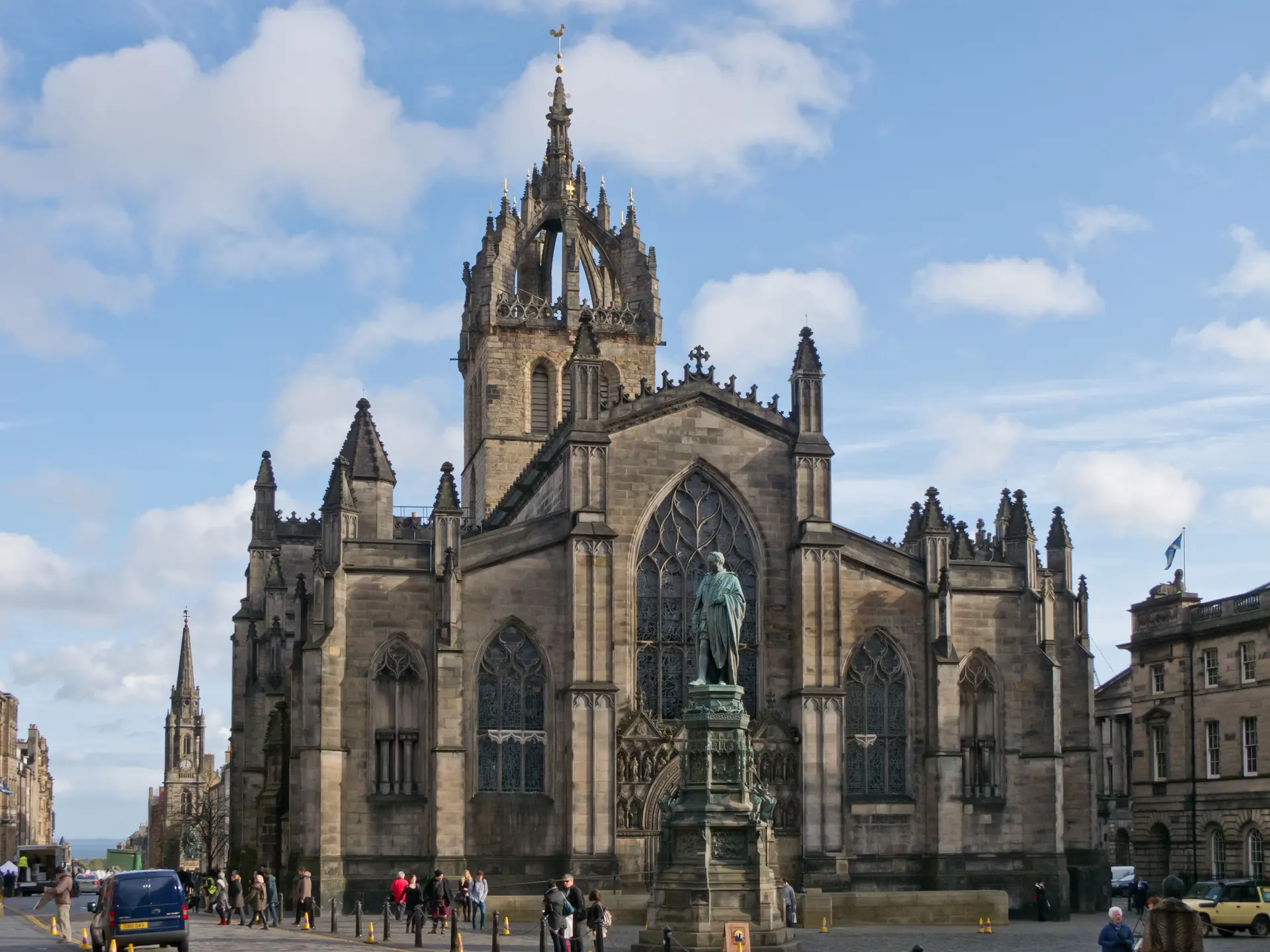
Heritage bodies recognise St Mary's as one of Scotland's most important medieval parish churches, rivalling St Giles Cathedral in Edinburgh in scale and significance. The 1971-73 restoration by Ian G. Lindsay and Partners is considered among the most important church restorations undertaken in twentieth-century Scotland. The innovative use of fibreglass for the rebuilt vaults demonstrated how modern technology could serve historic preservation.
The transfer of the Lamp of Lothian name from the destroyed Franciscan church to St Mary's, occurring over centuries through historical confusion, is well documented.
Living and traditional perspectives
From within the Church of Scotland tradition, St Mary's represents continuity with the Reformation that Knox helped lead. The connection to Knox, born in Haddington and trained here, grounds present-day worship in Reformation inheritance. The Lauderdale Aisle's ecumenical character, while crossing traditional boundaries, reflects a distinctly Scottish approach to healing Christian divisions while maintaining individual traditions.
Alternative interpretations
Some visitors perceive St Mary's as a place of unusual spiritual energy, particularly in the light-filled restored choir. The church's survival through multiple destructions suggests to some a persistent sanctity that transcends particular religious forms. The convergence of ley line theories with certain medieval church locations appears in popular spiritual literature, though no academic evidence supports such claims for St Mary's specifically.
Open questions
Genuine mysteries remain. Whether the tower ever had a planned crown spire similar to St Giles Cathedral, as the corbelling suggests. The full extent of pre-Reformation furnishings, relics, and vestments that once filled this space. The precise circumstances of the choir's ruination during the 1548-49 siege. Archaeological potential beneath the church floor remains largely unexplored.
Plan your visit
Access and arrival
Haddington offers hotels and B&Bs including The Maitlandfield House Hotel. Edinburgh provides extensive options thirty to forty-five minutes away.
Respectful visit
No specific requirements, though modest dress appropriate for a place of worship is appreciated. The church interior can be cool; a light layer may be welcome.
Photography is permitted for personal use throughout the church. Respectful photography of memorials and architectural features is welcomed. No flash during services. Drone photography in the churchyard requires permission.
Donation boxes are available, and contributions help maintain this historic building. Candle lighting is not offered due to fire risk. Flowers may be brought for placing by arrangement with church staff.
During services, visitors should participate or wait until worship concludes. No food or drink inside the church. Large bags should be left at home or stored. Some areas may be roped off for preservation.
During Sunday worship, visitors should join the congregation rather than treating the service as an attraction. The Lauderdale Aisle may have separate opening arrangements; check before assuming access. This is an active place of worship, and behavior should reflect appropriate reverence.
Current practical details
Address
Sidegate, Haddington EH41 4BZ, UK
Phone
Hours
Hours, fees, and access can change — verify on the official source before you travel. Practical details last checked Jun 2026.
Location
Map loads as you approach this section.
Pilgrim reflections
A portrait of encounter, not a score
Pilgrims describe what they felt, how present they could become, and whether the place would shape a journey. There are no stars and no ranking of traditions.
No reviewed reflections yet
The first pilgrims can help describe the character of being here.
Share a reflection
Available after an account-backed “Been there.” Every reflection is reviewed before publication.
Nearby sacred places
Explore other sacred places in the region. Proximity does not establish access or travel time; check each place’s guidance.

References
Sources consulted for this page. Source categories describe the publication, not a guarantee that every claim is verified. Traditional accounts and outside interpretations may differ.
- 01St Mary's Parish Church, Haddington — Scotland's Churches TrustofficialOfficial church heritage organization with detailed historical information
- 02Haddington Parish Church - Home — St Mary's KirkSource contextOfficial church website with current visitor information and history
- 03St Mary's Parish Church, Haddington — VisitScotlandguideOfficial Scottish tourism board information
- 04Haddington, St Mary's Parish Church — Canmore (Historic Environment Scotland)officialOfficial Scottish heritage database with architectural details
- 05The Story of Scotland's Longest Siege — Historic Environment Scotland BlogSource contextOfficial heritage body's account of the Siege of Haddington
- 06What became of the nuns of Haddington? — University of LeedsacademicAcademic research on the medieval Cistercian nunnery
- 07St Mary's Collegiate Church, Haddington — WikipediaencyclopediaComprehensive overview of church history, architecture, and restoration
- 08St Mary's Church, Haddington Feature Page — Undiscovered ScotlandguideDetailed visitor-focused history explaining the Lamp of Lothian name
- 09Haddington, St Mary's Church — Britain ExpressguideGood overview of medieval history and architectural features
- 10St Mary's Parish Church, Haddington — Sacred ScotlandSource contextFocus on spiritual significance and ecumenical aspects
- 11Treaty of Haddington — WikipediaencyclopediaDetails of the 1548 treaty involving Mary Queen of Scots
- 12Siege of Haddington — WikipediaencyclopediaDetailed account of the 1548-49 siege during the Rough Wooing
- 13Lauderdale Aisle, Haddington — Clan MaitlandSource contextDetailed information on the Lauderdale Aisle and its ecumenical restoration
- 14The Abbey of St Mary, Haddington: Beginnings — Haddington's History SocietySource contextLocal history society with detailed research on the medieval abbey
- 15John Knox — WikipediaencyclopediaBiographical information on John Knox's connection to Haddington
- 16Jane Welsh Carlyle, the Flower of Haddington — Lothian Life MagazineSource contextDetails of Jane Welsh Carlyle's burial at St Mary's
- 17Haddington, East Lothian — WikipediaencyclopediaGeographic and historical context of the town
- 18St Mary's Church Haddington building — Edinburgh ArchitectureSource contextArchitectural analysis and restoration history
- 19Haddington Society of Change Ringers marking 25th anniversary — East Lothian CouriernewsHistory of the bells installation in 1999
- 20Haddington, St Mary's Parish Church — Trove ScotlandofficialHeritage database entry with architectural details
- 21St Mary's Church, Haddington Reviews — TripAdvisorSource contextVisitor reviews and experiences
Share a photo
Help visitors recognize St. Mary’s Church, Haddington, Scotland. Every submission is reviewed before publication.