Duddo Five Stones, Duddo
Weathered sentinels on a Northumberland hilltop where Bronze Age burial rites echo through four millennia
Understand sacred places, explore living traditions, and learn how to engage respectfully with Pilgrim Map.
Access has not been verified. Check current local guidance before planning a visit.
Duddo, England, United Kingdom
Read the sources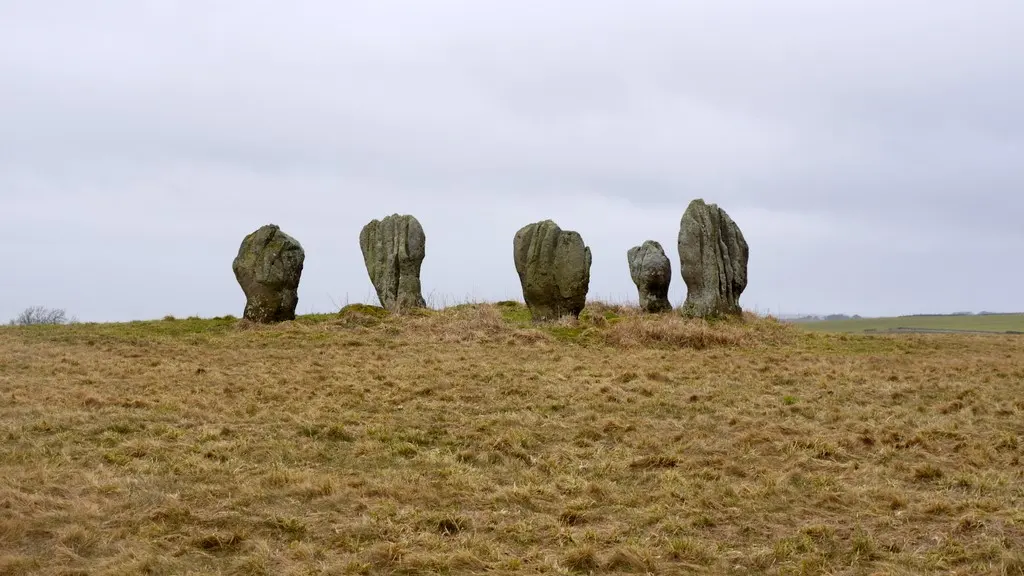
Image of Duddo Five Stones, Duddo. Image source · CC-BY-SA-2.0
Visit essentials
A quick read before you go
- Duration
- Allow at least two hours for the round trip, including time with the stones.
- Access
- From the B6354, approximately 800 meters north of Grindonrigg, a small sign marks the access…
Overview
On a low hilltop in the Northumberland borderlands, five weathered sandstone pillars stand in a rough circle. Millennia of wind and rain have cut deep vertical grooves into their surfaces, giving them an almost organic quality, less like placed stones than beings frozen mid-gesture.
Raised around four thousand years ago, the stones have no written account of their purpose. Inference rests on cremated bone fragments from a central pit, the prominent rise and its commanding views of the Cheviot Hills and River Tweed, and a circular arrangement that may have held astronomical significance. The builders were marking something and honoring someone, perhaps many.
The rituals fell silent before recorded history reached this part of Britain, yet visitors consistently describe an atmosphere beyond the merely scenic. Isolation, the walk across farmland, the absence of interpretation boards and gift shops, and the stones' gradual appearance against the sky all contribute. So does a persistent quality of attention, as though the hills still listen. No belief in the stones' power is required: arrive, wait, and notice what rises to meet you.
Why this place is sacred
The Bronze Age people who erected these stones chose their location with evident care. This knoll provides panoramic views in every direction: the Cheviot Hills rolling to the south, the Lammermuir Hills to the north, the silver ribbon of the River Tweed curving westward toward the sea. Such prominence would have been visible from surrounding settlements, marking this as a place set apart, elevated both physically and spiritually.
Archaeological investigation revealed cremated human remains in a central pit, indicating the circle served as a sacred burial ground. Whether for a single chieftain or multiple individuals over generations remains unclear. What seems certain is that death was not an ending here but a transformation, the bones returning to the earth within a ring of standing witnesses. The stones themselves may have represented ancestors, guardians, or aspects of a cosmology lost to us.
Some researchers suggest astronomical alignments, particularly with the winter solstice, though exact orientations require further verification. Such alignments were common in Bronze Age monuments, reflecting cultures that understood themselves as participants in celestial rhythms rather than observers of them. The darkest day of the year would have held particular significance: a hinge point when the sun began its return, when death turned toward rebirth.
Contemporary visitors often describe the site's atmosphere in terms that echo these ancient themes. The stones seem to watch. The wind through their grooves creates sounds some call singing. The sense of boundary between present and deep past grows thin. Whether this reflects accumulated human intention, the landscape's psychological impact, or something beyond conventional explanation, the effect is consistent enough to take seriously.
Archaeological evidence suggests Duddo served as a funerary monument where Bronze Age communities cremated and buried their dead within a sacred circular enclosure. The prominent hilltop location would have made the site visible across the surrounding territory, marking it as a place of communal significance. The original circle likely contained six or seven stones arranged in a diameter of approximately ten meters.
Beyond burial, the site may have served for seasonal ceremonies, astronomical observation, and maintenance of relationships between the living, the dead, and the wider cosmos.
The original traditions practiced at Duddo had already fallen silent by the time written history reached Britain. Roman, then Saxon, then Norman occupants of this borderland left no accounts of the stones, suggesting they had passed from living memory into landscape feature. Local folklore later transformed the monument through the lens of Christianity: the stones became Sabbath-breakers turned to rock for their transgression, their grooved surfaces the cording of their petrified trousers.
For centuries the site stood largely unnoticed except by those who farmed the surrounding fields. Antiquarian interest emerged in the nineteenth century, with partial excavation in 1890 revealing the central burial pit. One fallen stone was re-erected after 1903, transforming the site from 'Duddo Four Stones' to its current configuration. Protection as a Scheduled Ancient Monument came in 1925.
Since 2014, a permissive footpath has allowed formal public access across private farmland, bringing the stones within reach of seekers who might otherwise never have found them.
Experience and orientation
The experience of Duddo begins before you reach the stones. The walk from the road takes you across working farmland, through gates that must be closed behind you, past sheep who watch with mild curiosity. There are no signs beyond a small marker at the path's start, no kiosk, no audio tour. The modern world falls away incrementally, replaced by grass, sky, and the gradual rise of the knoll ahead.
When the stones finally appear against the horizon, they do so with a kind of inevitability, as though they have been waiting. Five figures in a loose circle, varying in height from roughly one and a half to over two meters, their surfaces scored with deep vertical channels that catch shadow and light. Up close, the weathering transforms them. They look less like hewn rock than something grown or shaped by intention beyond the human.
Visitors frequently describe touching the stones as an act of communication rather than mere contact. One account speaks of feeling vibrations, as though the stones wished to share stories from their long watch. Others describe a quality of silence that is not empty but full, a listening presence. The wind through the grooves creates sounds that shift with direction and intensity, earning the site its occasional name of the Singing Stones.
The surrounding views deepen the experience. The Cheviots rise and fall to the south, ancient and patient. The Tweed glimmers in the valley. The Scottish border lies just a few miles north. This is boundary country in every sense, and the stones stand at its center, holding space between territories, between eras, between the seen and the unseen.
Those who return multiple times, or who sit with the stones through changing light, often report experiences that words strain to contain. A sense of time opening, of mortality made companionable rather than fearsome. The Bronze Age dead who once lay here have been gone for millennia, yet something of their presence persists, welcomed rather than haunting.
Duddo rewards unhurried attention. The temptation to photograph immediately upon arrival is understandable, given the stones' photogenic qualities, but consider first sitting with them in silence. Find a spot just outside the circle where you can see all five stones against the sky, and simply wait.
Notice the weathering on each stone, how each has developed its own character through four thousand years of exposure. The deep grooves catch different light at different times of day, transforming the stones' appearance. Those who come at sunrise or sunset often find themselves watching stone become sculpture, become being, become witness.
If you have brought something to resolve, a question or a grief or a transition, you might address it to the stones. Not as prayer necessarily, but as acknowledgment. The people who raised this circle understood it as a place for the living to commune with those who came before. That function persists, available to anyone willing to slow down enough to access it.
Context and lineage
No founding narrative survives. The people who erected these stones practiced oral traditions that did not survive the successive waves of cultural change that swept Britain over subsequent millennia. What can be reconstructed comes from the stones themselves and what lies beneath them.
Sometime around four thousand years ago, a community in what is now the Scottish-English borderlands selected this prominent knoll for a monument. They transported sandstone blocks of substantial size to the hilltop, arranging them in a circle approximately ten meters across. At the center, they dug a pit where they placed the cremated remains of at least one individual, along with charcoal from the funeral fire.
Who was buried here remains unknown. The care invested in the monument suggests someone of significance: a leader, a priest, perhaps a founder whose remains would anchor the community's relationship with this place. Or perhaps the pit received multiple burials over generations, the circle serving as sacred ground for the community's honored dead.
The astronomical alignments suggested by some researchers, particularly with the winter solstice, hint at ceremonies timed to cosmic rhythms. The darkest day, the turning point, the death that precedes rebirth. The people who gathered here would have understood themselves as participants in these patterns rather than mere observers. Their dead did not simply end; they transformed, entering a cycle larger than any single life.
The direct lineage of practice at Duddo ended before recorded history began in this region. No continuous tradition connects present-day visitors to the Bronze Age builders. Yet the stones themselves constitute a form of inheritance, marking the land as sacred across a gap of four millennia.
Since formal archaeological interest emerged in the nineteenth century, the site has drawn a new kind of pilgrim. Antiquarians first came to measure and speculate. Historians followed, placing Duddo within the broader pattern of British prehistoric monuments. Photographers discovered its extraordinary visual qualities. And seekers of various kinds have found in this circle a place where the past feels unusually present, where the thinness of time becomes palpable.
Contemporary visitors include heritage tourists exploring Northumberland's prehistoric landscape, modern pagans and druids seeking connection with pre-Christian sacred sites, photographers chasing the perfect light, and those on personal journeys who simply feel drawn to stand where humans have stood for four thousand years.
Unknown Bronze Age Ancestors
buried
The cremated remains discovered in the central pit represent the individuals for whom this monument was raised. Their identities, roles, and relationship to the builders remain matters of inference rather than knowledge.
The Sabbath-Breakers
legendary
Later folklore transformed the stones into petrified sinners, turned to rock for working on the Sabbath. The story explains both the stones' presence and their grooved surfaces, said to resemble the cording of their trousers. This Christianization of a pagan monument reflects how later cultures made sense of the mysterious.
Traditions and practice
The original practices performed at Duddo are largely unknown. Archaeological evidence of cremation burial suggests funerary rituals involving fire, the reduction of bodies to bone, and the deliberate placement of remains within the sacred circle. Offerings may have accompanied the dead, though no grave goods survived in the excavated pit.
If the stones held astronomical alignments, seasonal ceremonies would have marked the solstices or equinoxes, particularly the winter solstice when the sun began its return. Such ceremonies likely involved the community gathering within or around the circle, perhaps maintaining vigil through the longest night, welcoming the dawn that promised the year's renewal. Fire would have played a role, as it did throughout Bronze Age ritual life.
Beyond this, inference gives way to imagination. The specific prayers, songs, offerings, and gestures that once animated this space have passed beyond recovery. What remains is the architecture of intention: stones placed with care, oriented with purpose, maintained across generations.
Modern pagans, druids, and spiritual practitioners occasionally visit Duddo for personal ceremonies. These typically involve meditation within the circle, spoken or silent address to the stones, and small offerings of biodegradable materials. Some time visits to coincide with the Celtic calendar festivals, particularly Samhain (when the boundary between living and dead grows thin) or the winter solstice.
Most visitors, however, come without formal practice. They walk, look, photograph, sit. The site's power lies partly in its accessibility to those without spiritual framework. You need not believe anything particular to feel the weight of four millennia, to experience the stones as witnesses to time passing, to find in their silence a mirror for your own contemplation.
Spiritual retreat centers in Northumberland occasionally include Duddo in programs exploring the region's prehistoric sacred landscape, combining site visits with discussion of pre-Christian British spirituality. These programs provide context without prescribing practice, honoring the site's openness to interpretation.
If you come seeking more than scenery, consider these invitations.
Arrive in silence and maintain it for at least the first fifteen minutes. Let the walk across the fields become a transition, leaving ordinary concerns with your car. As the stones come into view, pause before approaching. Notice what arises in you at first sight.
Once within the circle, take time with each stone individually. Notice how weathering has given each its own character, its own profile against the sky. Some visitors find that certain stones draw them more than others. Trust this without requiring explanation.
Before leaving, find a spot to sit where you can see the full circle. Offer silent acknowledgment to whatever brought you here and whatever you found. The form matters less than the sincerity. The people who built this place understood it as a threshold; crossing back into ordinary life deserves marking.
Prehistoric/Neolithic-Bronze Age
HistoricalDuddo Five Stones was erected during the late Neolithic to early Bronze Age as a funerary and ceremonial monument. The presence of cremated remains indicates it served as a sacred burial ground, possibly for a chieftain or other notable individuals. The prominent hilltop location, commanding views across the border landscape, suggests the site held significance as a marker of territory and community identity as well as a place for communion with the dead and possibly the celestial cycles.
Original practices are largely unknown. Archaeological evidence indicates cremation burial within the circle, involving fire, reduction of bodies to bone, and deliberate placement of remains in a central pit. Seasonal ceremonies may have marked solstices or other astronomical events, with the community gathering to maintain relationships between the living, the dead, and cosmic powers. Specific rituals, songs, and offerings have not survived.
Modern Paganism/Neo-Paganism
ActiveFor contemporary pagans, druids, and spiritual practitioners, Duddo represents one of many prehistoric sacred sites across Britain that offer connection with pre-Christian spiritual traditions. The isolation and atmospheric quality of the site make it particularly suited for personal meditation and ritual. Though no continuous tradition links modern practice to Bronze Age ceremony, many find meaning in engaging with spaces their spiritual ancestors may have held sacred.
Contemporary pagan practice at Duddo typically involves personal meditation within the circle, silent or spoken address to the stones, and small offerings of biodegradable materials. Some time visits to Celtic calendar festivals or astronomical events like the solstices. Practice is individual rather than organized; no regular ceremonies or gatherings take place at the site.
Folklore/Local Tradition
ActiveLocal folklore transformed the prehistoric monument through the lens of Christianity, reinterpreting the mysterious stones as petrified sinners punished for Sabbath-breaking. This Christianization, common throughout Britain, represents how later cultures made sense of monuments whose original meaning had been forgotten. The folk names 'The Women', 'The Seven Turnip Pickers', and 'The Singing Stones' preserve fragments of local knowledge and imagination.
No formal practices are associated with the folklore tradition. The legends serve primarily as explanatory narratives, answering the question of why these stones stand here. The saying 'If you don't believe it, go and look for yourself and you'll see the cording of their trousers' invites experiential engagement with the site's mystery.
Perspectives and open questions
Duddo Five Stones invites multiple interpretations, and honest engagement requires holding them together without forcing resolution. Archaeologists, folklorists, modern spiritual practitioners, and local communities each bring genuine insight. The stones have stood long enough to accumulate layers of meaning that complement rather than contradict each other.
Scholarly perspective
Archaeological consensus places Duddo's construction in the late Neolithic to early Bronze Age, approximately 2400-1500 BCE. The site fits within the broader tradition of stone circle construction that flourished across Britain during this period, though circles in Northumberland are relatively rare compared to regions like Cumbria or Scotland.
The 1890 excavation by Robert Carr revealed cremated bone and charcoal in a central pit, confirming the site's funerary function. The discovery of empty sockets on the western side indicates the original circle contained six or seven stones rather than the current five. One stone was re-erected after 1903 following a period when the site was known as Duddo Four Stones.
Scholars continue to debate possible astronomical alignments. Some suggest orientation toward the winter solstice sunrise or sunset, though precise measurements are complicated by the stones' current positions and the likelihood of movement over millennia. The hilltop location, commanding views across the border landscape, clearly held significance for the builders regardless of specific celestial orientations.
Living and traditional perspectives
Local traditional knowledge manifests primarily through folklore rather than continuous spiritual practice. The legend of the Sabbath-breakers, known across Britain in connection with various stone monuments, was applied to Duddo at some point after Christianization. In this telling, the stones represent sinners turned to rock for working on the Lord's day, their grooved surfaces showing the cording of their petrified trousers.
Variant names, including 'The Women' and 'The Seven Turnip Pickers', preserve other folk memories now largely disconnected from explanatory narratives. These names hint at alternative legends that may have circulated locally before being forgotten.
The association of standing stones with transformation and punishment, common throughout the British Isles, reflects how later cultures processed the mysterious presence of prehistoric monuments. The stones defied easy explanation; stories arose to fill the gap.
Alternative interpretations
Contemporary spiritual practitioners often describe Duddo as a place of tangible energy or presence. Visitors speak of feeling vibrations from the stones, sensing the accumulated weight of millennia, or experiencing the site as a threshold between ordinary reality and something larger. The name 'Singing Stones', referring to the sounds wind makes through the weathered grooves, carries overtones of animate presence.
Some interpret the site within frameworks of earth energy, ley lines, or sacred geometry, seeing stone circles as points on a network of planetary power. Others approach through ancestor veneration, treating visits as communion with the Bronze Age dead whose remains once lay within the circle.
These interpretations lack archaeological verification but often emerge from genuine experiences visitors have at the site. The language of energy and presence may be an attempt to describe something real that resists conventional vocabulary.
Open questions
Genuine mysteries remain at Duddo. The exact purpose of the monument beyond burial remains inference rather than knowledge. Whether astronomical alignments were intentional, and if so their precise nature, requires further investigation. The relationship between this circle and other prehistoric sites in the region is unclear.
Who was buried here, and what role they played in their community, may never be known. The rituals performed, the cosmology that informed them, the songs and prayers that once animated this space, all passed beyond recovery millennia ago. This uncertainty is worth preserving. It keeps the site open to questioning rather than pinned down by false certainty.
Plan your visit
Access and arrival
From the B6354, approximately 800 meters north of Grindonrigg, a small sign marks the access point. Park on the grass verge by the gate, taking care to leave room for farm vehicles. Follow the signposted footpath north through two fields to the hilltop. The terrain is uneven and can be extremely muddy after rain. The path is not suitable for wheelchairs, pushchairs, or those with significant mobility impairments.
No accommodations exist at the site or in the immediate village of Duddo. Berwick-upon-Tweed, approximately ten miles away, offers a range of lodging options from budget to boutique. The surrounding Northumberland countryside contains numerous bed and breakfasts, country hotels, and self-catering cottages for those wishing to spend multiple days exploring the region's prehistoric and medieval heritage.
Respectful visit
No formal dress code applies. Practical considerations matter: sturdy waterproof footwear is essential, as the path can be extremely muddy even in summer. Dress in layers appropriate to changeable Northumberland weather. The hilltop is exposed, so wind protection helps. In winter, warm gear becomes necessary for any extended time with the stones.
Photography is permitted and the site is extraordinarily photogenic. The play of light on the weathered surfaces, particularly at sunrise and sunset, has made Duddo a destination for photographers throughout the year. There are no restrictions on personal photography.
However, consider balancing documentation with presence. The urge to capture can override the capacity to experience. Perhaps spend your first visit, or at least your first fifteen minutes, simply looking. The stones have stood for four millennia; they will outlast your camera's shutter.
Some modern visitors leave small offerings on or near the stones. This practice has no historical connection to the site's original use but reflects contemporary spiritual approaches. If you choose to leave an offering, use only biodegradable materials that will not harm the environment or disturb other visitors. Better still, make your offering internal. The Bronze Age dead do not require your tokens; what persists here responds to attention, not objects.
The stones are protected as a Scheduled Ancient Monument under the Ancient Monuments and Archaeological Areas Act 1979. Damaging or disturbing them is a criminal offense. Do not touch, climb, or remove anything from the site. Visitors should stay on the agreed path across the private farmland and not wander into other areas. No facilities exist at the site.
The stones are a Scheduled Ancient Monument protected by law. Do not climb on, lean against, or damage them in any way. Do not remove any stone, artifact, or natural material from the site.
If you choose to leave offerings as some modern practitioners do, use only biodegradable materials that will not harm the environment or detract from other visitors' experience. Better still, make your offering internal: a thought, a prayer, an intention.
The site is on private farmland with permissive public access. This access depends on visitors behaving responsibly. Treat the land with care, close gates, stay on the path except within the immediate circle, and leave no trace.
Current practical details
Address
Duddo, Berwick-upon-Tweed TD15 2PT, UK
Hours
Hours, fees, and access can change — verify on the official source before you travel. Practical details last checked Jun 2026.
Location
Map loads as you approach this section.
Pilgrim reflections
A portrait of encounter, not a score
Pilgrims describe what they felt, how present they could become, and whether the place would shape a journey. There are no stars and no ranking of traditions.
No reviewed reflections yet
The first pilgrims can help describe the character of being here.
Share a reflection
Available after an account-backed “Been there.” Every reflection is reviewed before publication.
Nearby sacred places
Explore other sacred places in the region. Proximity does not establish access or travel time; check each place’s guidance.
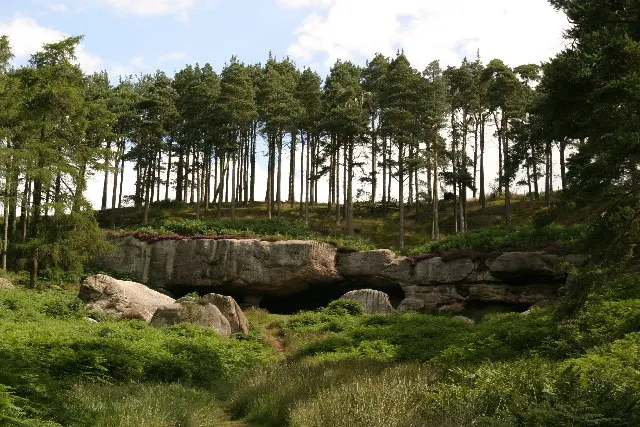
St Cuthbert's Cave
Holburn, Holburn, Northumberland, United Kingdom
15.3 km away
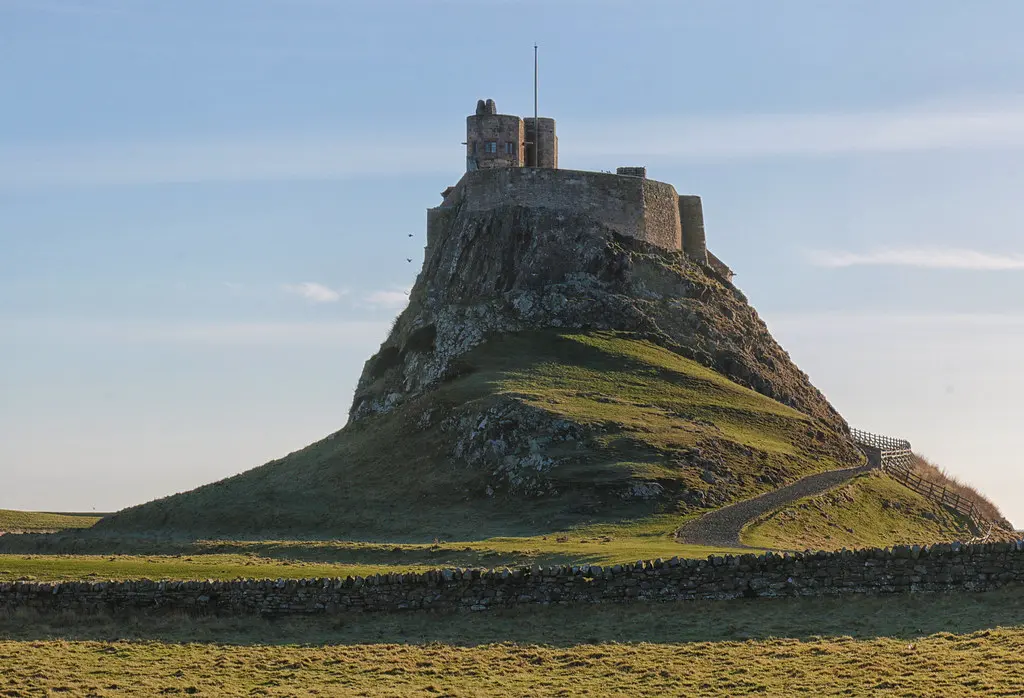
Lindisfarne
Holy Island, England, United Kingdom
18.6 km away
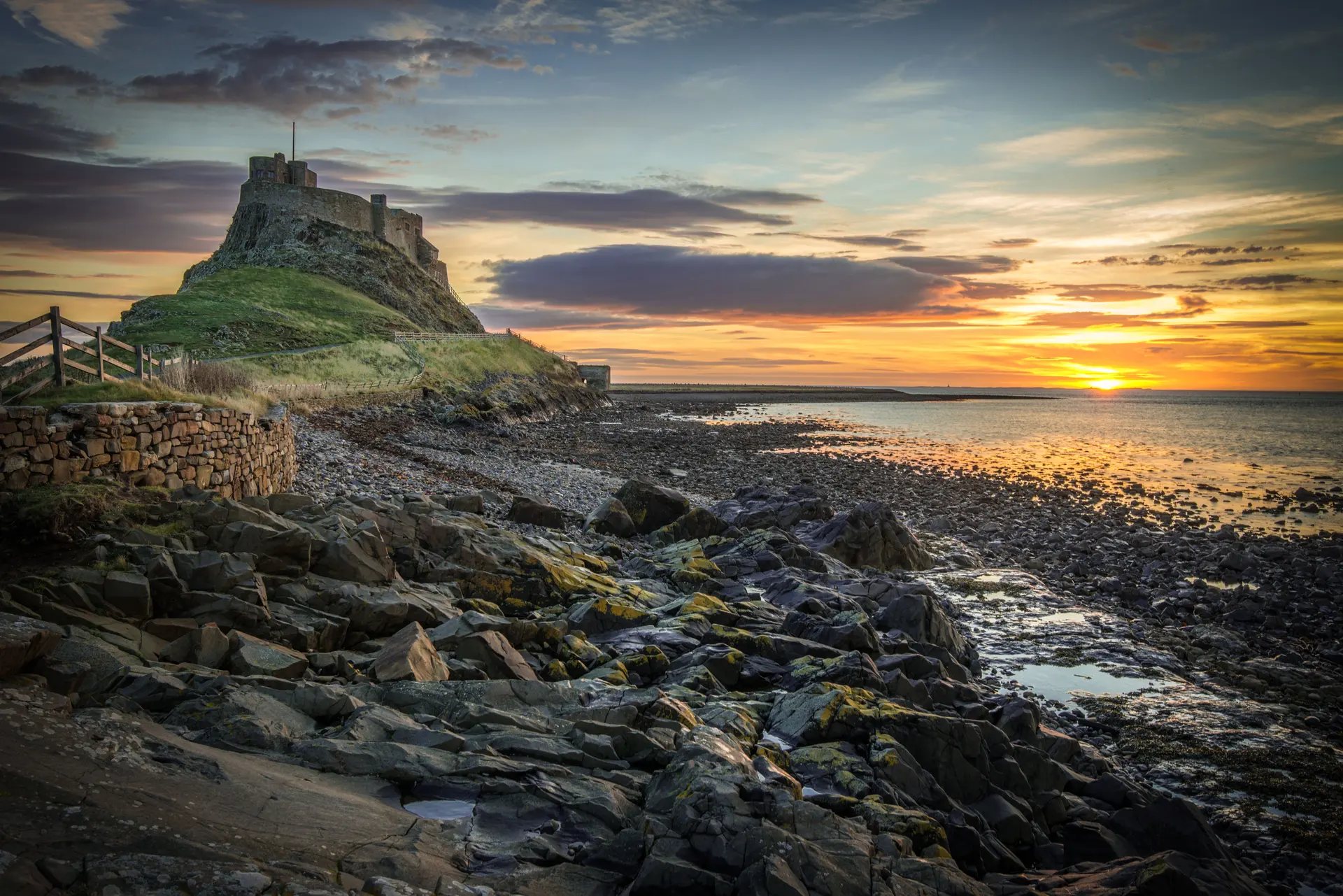
Lindisfarne Priory
Holy Island, Holy Island, Northumberland, United Kingdom
19.6 km away
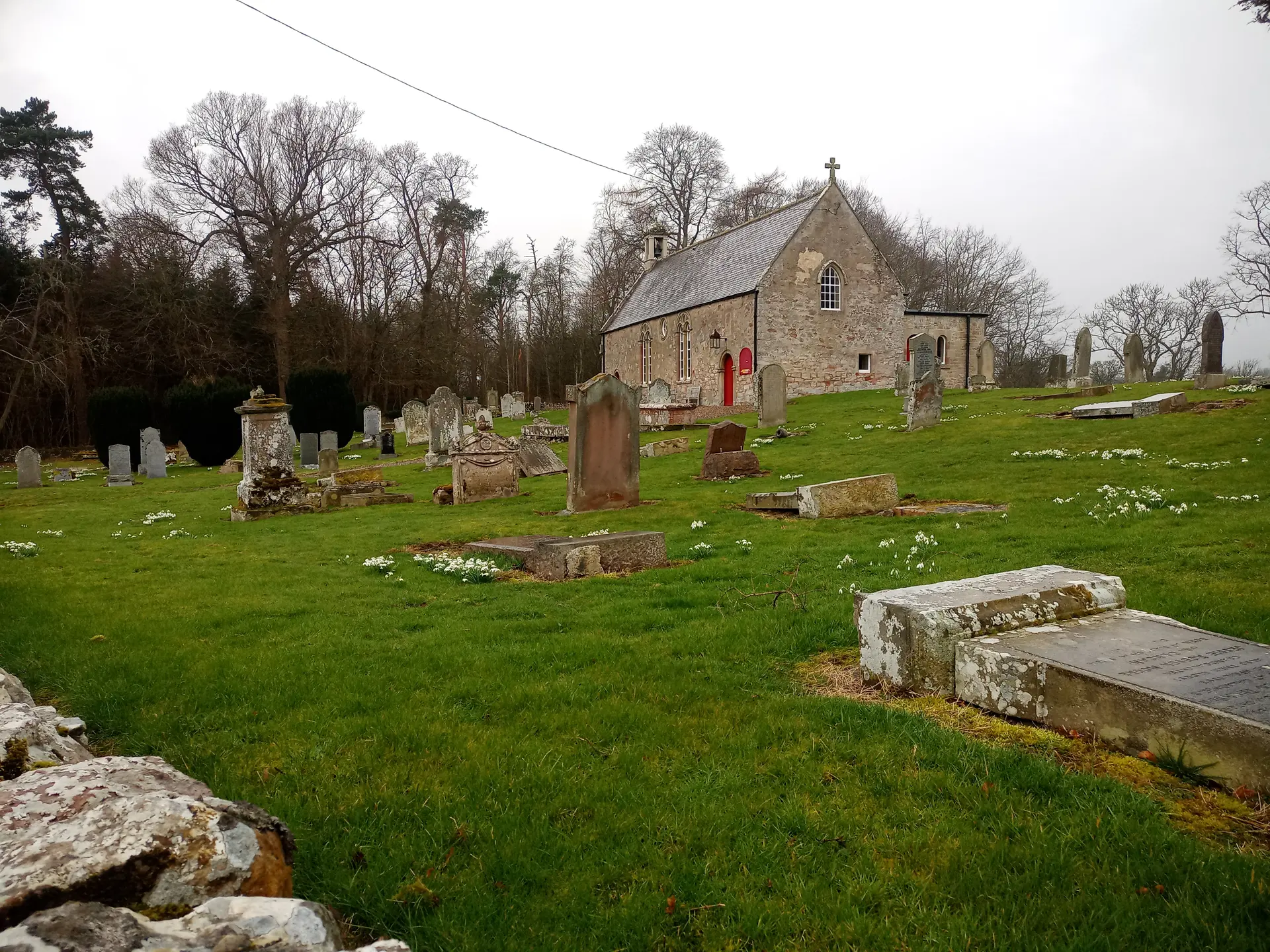
Maxton Kirk (Maxton Parish Church)
Maxton, Maxton, Scottish Borders, United Kingdom
34.6 km away
References
Sources consulted for this page. Source categories describe the publication, not a guarantee that every claim is verified. Traditional accounts and outside interpretations may differ.
- 01Duddo Five Stones - Wikipediaencyclopedia
- 02Duddo stone circle - Historic Englandofficial
- 03Duddo Five Stones - Atlas Obscuraguide
- 04The Duddo Stones - Northumberland ArchivesSource context
- 05Duddo Stone Circle - Britain Expressguide
- 06Duddo Five Stones - The Megalithic Portalofficial
- 07Duddo Five Stones, Northumbria - The Journal Of Antiquitiesacademic
- 08Duddo Five Stones - The Modern Antiquarianofficial
- 09Duddo Standing Stones - The Ginger WitchSource context
- 10The Mystery of the Duddo Stones - Borders AncestrySource context
- 11Duddo Stones - Visit Berwickofficial
- 12Duddo Stones - Fabulous Northguide
- 13Duddo Stones Photography Guide - PhotoHoundguide
Share a photo
Help visitors recognize Duddo Five Stones, Duddo. Every submission is reviewed before publication.