Lindisfarne
Where tides still govern access to England's cradle of Celtic Christianity
Holy Island, England, United Kingdom
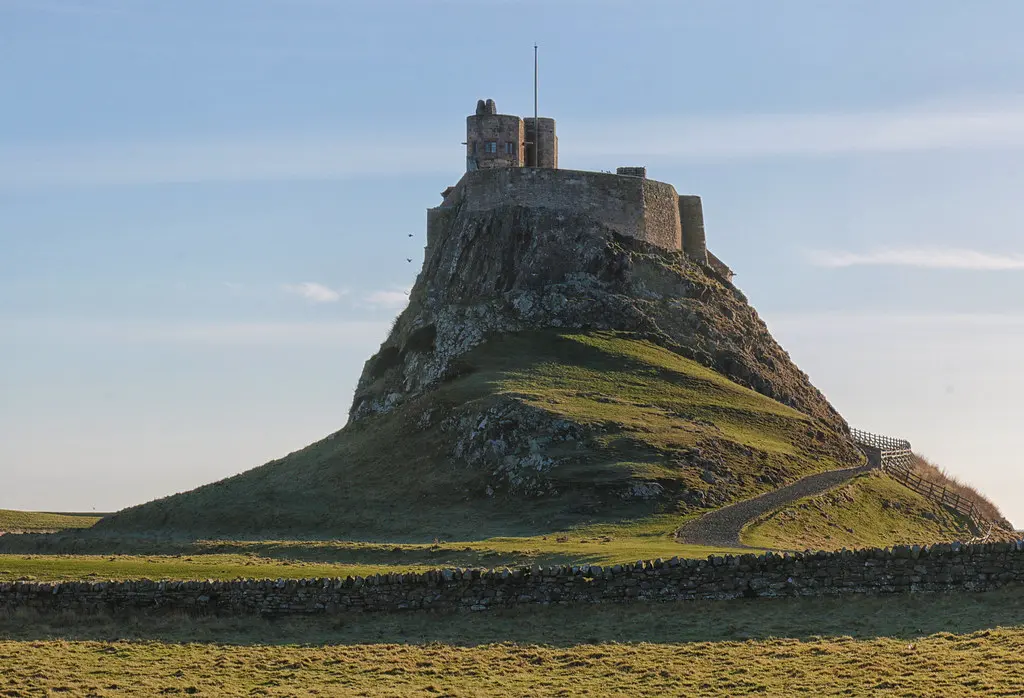
Image of Lindisfarne. Image source
Visit essentials
Before you go
- Address
- Holy Island, Berwick-upon-Tweed TD15, UK
- Duration
- A rushed visit takes three to four hours.
- Etiquette
- Lindisfarne is an active pilgrimage site with a small resident community.
Overview
Twice daily the North Sea reclaims Holy Island's causeway, stranding those who ignore tide tables. Lindisfarne's access must be timed, planned, and received. Monks arriving from Iona in 635 CE chose this tidal separation for both accessibility and withdrawal: low tide opened the Northumbrian mainland; high water enclosed their days.
St Cuthbert pursued deeper solitude on Inner Farne, conversing with seabirds and reportedly emerging dry after praying waist-deep in the sea. He died in 687 CE; when his body was found incorrupt eleven years later, Lindisfarne became a pilgrimage destination that has never ceased drawing seekers.
A Viking raid shattered the monastery in 793 CE and shocked Christendom. Monks fled with Cuthbert's body, wandered seven years, and settled at what became Durham Cathedral. New monks returned, rebuilt the priory, and continued pilgrimage.
Today its red-sandstone ruins face the North Sea while St Mary's Parish Church continues daily offices heard since Aidan's time. Pilgrims still cross the sands on the ancient Pilgrim's Way, some barefoot in the old tradition; the tides still decide entry.
Why this place is sacred
The Celtic Christians who shaped Lindisfarne's identity spoke of thin places, locations where the distance between the divine and human worlds narrows to almost nothing. They chose their holy sites with care, often settling on islands, headlands, and liminal landscapes where land and water, earth and sky seemed to interpenetrate.
Lindisfarne's tidal nature creates a physical enactment of this theology. Twice daily, the island separates from the mainland, becoming its own world. The act of crossing, whether by causeway or the older Pilgrim's Way across the sands, becomes a passage between states. Pilgrims have understood this intuitively for centuries. Many still choose to walk the sand route, following posts that mark the path monks have used since the early medieval period.
Some walk barefoot, adding penitential intention to the liminal geography.
Nearly fourteen hundred years of prayer have left their mark. St Aidan established his monastery here in 635 CE, and some form of Christian worship has continued ever since. St Cuthbert's miracles, his reported conversations with animals, his incorrupt body, drew medieval pilgrims in their thousands. The Vikings' destruction in 793 CE, remembered as a martyrdom, added another layer of sacred history. When Benedictine monks rebuilt the priory after the Norman Conquest, they inherited and extended an already ancient tradition.
Contemporary visitors, whether Christian pilgrims or secular tourists, frequently describe a quality that exceeds explanation. The word most often used is peace, but not passive peace. An alert stillness. A sense of being seen, held, witnessed. The ruined priory, with its famous rainbow arch open to the sky, seems to frame something beyond itself.
Whether this reflects accumulated centuries of intention, the dramatic interplay of sea and stone and light, or something that transcends conventional vocabulary, the effect is consistent enough across visitors of different backgrounds to take seriously.
King Oswald of Northumbria invited monks from Iona to convert his kingdom to Christianity. The first bishop sent was reportedly too harsh; Aidan, known for gentleness, was sent in his place and chose Lindisfarne as his seat because, like Iona, it was a tidal island offering both connection to and separation from the world. The monastery served as the center for the Christianization of northern England, sending missionaries throughout the region while maintaining a contemplative core.
The scriptorium that produced the Lindisfarne Gospels was one of the great centers of learning in early medieval Europe.
The Viking raid of 793 CE, one of the first major Norse attacks on Western Christendom, forced the monks to flee. They carried St Cuthbert's body with them for seven years before settling at Chester-le-Street, eventually moving to Durham. Lindisfarne itself fell into ruin but never entirely lost its sacred significance.
After the Norman Conquest, Benedictine monks from Durham established a new priory as a dependent cell. For four centuries they maintained the tradition until Henry VIII dissolved the monasteries in 1536. The priory fell to ruin, but St Mary's Parish Church continued, and pilgrimage never entirely ceased.
The twentieth and twenty-first centuries have seen revival. Retreat centers have opened on the island, offering programs in Celtic Christian spirituality. The Northern Cross Easter pilgrimage brings walkers from across Britain to cross the sands on Good Friday. St Cuthbert's Way, a long-distance walking route from Melrose in Scotland, culminates at Holy Island. The thin place continues to thin.
Experience and orientation
The experience begins before arrival. Checking tide times, planning the crossing, waiting if necessary for waters to recede. This is not inconvenience but invitation. The tides require a different relationship with time than modern life usually permits. Visitors who have rushed elsewhere find themselves forced into patience, watching the causeway slowly emerge from the sea.
The Pilgrim's Way offers an alternative crossing for those willing to walk. Three miles across sand and mud, following wooden posts that mark a path used since the monastery's founding. The walk takes about two hours, depending on conditions. Some pilgrims remove their shoes, walking barefoot as penitents did for centuries. The experience is of vulnerability, of earth between toes, of dependence on tides that care nothing for human schedules.
On the island itself, the priory ruins hold the center. The red sandstone has weathered to complex textures, the famous rainbow arch framing sky where a roof once stood. Visitors describe the ruins as open rather than broken. An absence that somehow becomes a presence. Sitting within the roofless nave, watching clouds pass through what were once windows, produces a stillness that many find unexpectedly moving.
St Mary's Parish Church, beside the priory, continues daily worship. Morning Prayer at eight, Evening Prayer at five. These brief services, open to all, offer participation in a tradition nearly fourteen centuries old. The church itself dates to the twelfth century but stands on or near the site of Aidan's original wooden church. Some visitors attend simply to witness; others find themselves praying.
The wider island rewards exploration. Lindisfarne Castle on its crag, converted by Edwin Lutyens into an Arts and Crafts home with Gertrude Jekyll gardens. The Lindisfarne National Nature Reserve, where thousands of migratory birds find haven. The village with its small resident population, living alongside pilgrims and tourists. The coastline, wild and wind-swept, with views to the Farne Islands where Cuthbert sought his hermitage.
Those who stay overnight, after day visitors have departed, describe a deepening. The island settles into itself. Evening light transforms the priory ruins. The sense of place intensifies without the crowds. For many, the most profound experiences come in these quiet hours, when Lindisfarne feels less like a destination than a threshold.
Lindisfarne rewards those who arrive with intention rather than simply curiosity. The crossing itself can be approached as pilgrimage, whether by causeway or the Pilgrim's Way. Consider what you are crossing toward. Consider what you might leave behind.
Once on the island, slowness serves better than efficiency. The priory ruins, the parish church, the coastline, the castle. Each rewards time given. Rushing through misses the quality that brings people back.
Attending one of the daily offices at St Mary's, even briefly, connects you to a tradition of prayer that has continued through Viking raids, dissolution, and all the upheavals of fourteen centuries. You need not share the faith to recognize something in its persistence.
If the tides permit and conditions are suitable, the Pilgrim's Way crossing is worth the effort. Check conditions carefully. Consider a guide if unfamiliar with tidal crossings. But the experience of walking where monks have walked, of approaching the island as medieval pilgrims did, of arriving tired and relieved and open, is difficult to replicate any other way.
Context and lineage
In 635 CE, King Oswald of Northumbria sought to convert his kingdom to Christianity. He had lived in exile among the Irish monks of Iona and wanted that tradition for his people. The first bishop sent proved too severe for the Northumbrians. A monk named Aidan, known for his gentleness and missionary zeal, suggested a softer approach might serve better. He was consecrated bishop and sent in turn.
Aidan chose Lindisfarne for his seat because it resembled Iona: a tidal island offering both access to the mainland and regular periods of sacred separation. From here, he sent missionaries throughout Northumbria. He walked rather than rode, the better to meet people along the way. He ransomed slaves and educated them for the priesthood. He established schools and communities. When he died in 651 CE, he had laid the foundations for the Christianization of northern England.
A generation later, a young man named Cuthbert arrived at the monastery. He would become Lindisfarne's most famous figure. Bishop, hermit, worker of miracles. His love of animals, his ability to pray standing in the cold sea, his gentleness and his fierce commitment to contemplative life made him beloved in his own time. When he died in 687 CE on Inner Farne, his body was brought back to Lindisfarne for burial.
Eleven years later, when monks opened his tomb to elevate his relics, they found his body incorrupt. The discovery transformed Lindisfarne into a major pilgrimage center.
The lineage of Lindisfarne flows from Iona, the Scottish island where Columba established his monastery in 563 CE. The Celtic Christian tradition that Aidan brought emphasized monasticism, contemplative practice, and a spirituality deeply integrated with the natural world. This tradition shaped the early Church in Britain until the Synod of Whitby in 664 CE determined that Roman practices would prevail. Lindisfarne conformed but retained its distinctive character.
After the monks fled the Viking raids, carrying Cuthbert's body with them, they wandered for seven years before settling at Chester-le-Street in 883 CE. In 995 CE, the community moved to Durham, where Cuthbert's body still rests in the cathedral. Durham and Lindisfarne remained linked; after the Norman Conquest, Benedictine monks from Durham founded the new priory at Lindisfarne as a daughter house.
The dissolution of the monasteries in 1536 ended formal monastic life, but the parish church continued. In the twentieth century, the Celtic Christian tradition that Aidan and Cuthbert represented experienced revival. The Community of Aidan and Hilda, inspired by Lindisfarne's heritage, seeks to live Celtic Christian spirituality in contemporary forms. Retreat centers on the island offer programs that draw on this tradition. The lineage continues, transformed but recognizable.
St Aidan
founder
Irish monk from Iona who founded the Lindisfarne monastery in 635 CE. Known for his gentleness, missionary zeal, and practice of walking rather than riding so he could meet people along the way. His approach to conversion through kindness rather than compulsion shaped the character of Northumbrian Christianity.
St Cuthbert
saint
Lindisfarne's most venerated bishop, who died in 687 CE. Known for his contemplative intensity, his love of animals, and the reported incorruption of his body. His cult made Lindisfarne a major pilgrimage destination and eventually led to the foundation of Durham Cathedral to house his relics.
King Oswald
patron
King of Northumbria who invited the monks from Iona to convert his kingdom. His support made the Lindisfarne foundation possible. He was later venerated as a saint and martyr after dying in battle in 642 CE.
Bishop Eadfrith
creator
Bishop of Lindisfarne who created the Lindisfarne Gospels around 710-725 CE, one of the supreme masterpieces of Insular art. The manuscript demonstrates sophisticated fusion of Celtic, Anglo-Saxon, and Mediterranean artistic traditions.
Traditions and practice
The monks of Lindisfarne followed the Celtic Christian daily office, gathering multiple times for prayer and psalmody. This pattern of daily prayer has continued in some form since 635 CE, now maintained at St Mary's Parish Church. The pilgrimage tradition, arising from Cuthbert's cult, drew medieval seekers who walked the Pilgrim's Way across the sands, many barefoot as a penitential practice. The Northern Cross pilgrimage continues this tradition each Easter, with pilgrims carrying wooden crosses to the island.
Veneration of St Cuthbert was central to medieval practice. Though his body rests in Durham, Lindisfarne remained the place of his episcopal ministry and the site of his shrine's origin. Collecting St Cuthbert's beads, actually fossilized crinoid columnals found on local beaches, continues as a folk devotion. The cult extended to the eider ducks, locally called Cuddy's ducks after Cuthbert, who reportedly protected them.
Daily Morning Prayer at 8am and Evening Prayer at 5pm continue at St Mary's Church, open to all. Sunday Parish Eucharist at 10:45am draws locals and visitors alike. Monthly Book of Common Prayer communion preserves the traditional Anglican liturgy. Special services mark the seasons: Advent contemplative services, Christmas carol services, the Easter Vigil with its service of new light on the beach.
The Northern Cross pilgrimage brings walkers to Holy Island each Good Friday, culminating in a barefoot crossing of the sands while carrying wooden crosses. This modern revival of medieval practice attracts pilgrims from across Britain.
Retreat centers on the island offer programs in Celtic Christian spirituality. The Open Gate provides ecumenical hospitality. Marygate House offers Catholic-oriented retreats. Programs often combine contemplative practice with the landscape, drawing on the Celtic tradition of finding the sacred in nature.
The Faith and Feathers retreat combines birdwatching with spiritual practice, recognizing Cuthbert's love of the natural world. The island's National Nature Reserve, with its thousands of migratory birds, extends the contemplative invitation beyond church walls.
If pilgrimage is your intention, consider the Pilgrim's Way crossing rather than the causeway. Check tide times and local conditions carefully. The three-mile walk across sand and mud, following the ancient posts, transforms arrival into devotion. Some walk barefoot in the traditional manner, though this requires careful attention to sharp shells and cold water.
Attend Morning or Evening Prayer at St Mary's. The services are brief, twenty to thirty minutes, but they connect you to a tradition of daily prayer that has continued through fourteen centuries of upheaval. You need not be Christian to find meaning in the persistence.
Spend time in the priory ruins without agenda. Find a place to sit where the rainbow arch frames the sky. Let the absence of roof become a presence. Medieval pilgrims came seeking miracles; contemporary seekers might simply come seeking quiet. Both are available.
If you can stay overnight, remain after the day visitors leave. Walk the coastline at evening. Watch the tide reclaim the causeway, knowing you are held on the island until morning. The quality of attention shifts when departure is impossible.
Celtic Christianity
ActiveLindisfarne is considered the cradle of Celtic Christianity in England. Founded by St Aidan from Iona in 635 CE, the monastery represented the Irish Christian tradition with its emphasis on monasticism, contemplative practice, nature spirituality, and missionary activity. This tradition is experiencing contemporary revival through retreat centers, the Community of Aidan and Hilda, and programs offering Celtic Christian spiritual formation.
Contemporary Celtic Christian practice at Lindisfarne includes contemplative prayer, nature-based spirituality, pilgrimage walks including the traditional barefoot crossing of the sands, and communion services in the Celtic or Northumbria tradition. Retreat centers offer structured programs drawing on this heritage. Daily prayer in the Celtic pattern continues at St Mary's Church.
Anglican Christianity
ActiveSt Mary's Parish Church is the Anglican church on the island, standing on or near the site of St Aidan's original wooden church. The Church of England considers itself the inheritor of the pre-Reformation church in England, including the traditions established at Lindisfarne. Daily offices continue the pattern of prayer that has echoed here for nearly fourteen centuries.
Daily Morning Prayer at 8am and Evening Prayer at 5pm maintain the tradition of the daily office. Sunday Parish Eucharist at 10:45am draws locals and visitors. Monthly Book of Common Prayer communion preserves traditional Anglican liturgy. Seasonal services mark Advent, Christmas, Lent, and Easter. The Northern Cross Easter pilgrimage is an Anglican-organized event.
Pilgrimage Tradition
ActiveLindisfarne has been a pilgrimage destination since the establishment of St Cuthbert's cult in the late seventh century. The tradition of walking the Pilgrim's Way across the sand and mudflats continues to this day, with modern pilgrims following the route marked by wooden posts that has been used for over thirteen hundred years. St Cuthbert's Way, a 62-mile route from Melrose, ends at Holy Island.
Walking the Pilgrim's Way across the sands, approximately three miles. Barefoot crossing as traditional penitential practice. The Northern Cross Easter pilgrimage, carrying wooden crosses to the island on Good Friday. Walking St Cuthbert's Way from Melrose. Visiting sites associated with Cuthbert and Aidan on the island.
Cult of St Cuthbert
ActiveSt Cuthbert, who died in 687 CE, is considered possibly the most venerated saint in English history. His incorrupt body became the focus of medieval pilgrimage, and though his remains were eventually moved to Durham Cathedral, Lindisfarne remains central to his cult as the place of his episcopal ministry. He is patron saint of Northumbria.
Veneration at sites associated with Cuthbert on the island and at Inner Farne where he lived as a hermit. Pilgrimage to Lindisfarne as his bishopric. Collection of St Cuthbert's beads, fossilized crinoid columnals found on local beaches. Commemorations on his feast days, March 20 and September 4. The tradition of protecting eider ducks, known locally as Cuddy's ducks.
Roman Catholicism
ActiveThe pre-Reformation history of Lindisfarne is fundamentally Catholic, and Catholic pilgrims continue to visit as an important site in English Christian history. A Catholic church exists on the island. St Cuthbert's Centre offers Catholic-oriented retreat programs.
Catholic Mass on the island. Pilgrimage visits to sites associated with the saints. Retreats at Marygate House and St Cuthbert's Centre. Participation in shared pilgrimage traditions including the Pilgrim's Way crossing.
Perspectives and open questions
Lindisfarne invites multiple ways of understanding, and honest engagement requires holding them together. Historians, theologians, archaeologists, and contemporary seekers each offer insight. The island is large enough to contain their differences without requiring resolution.
Scholarly perspective
Archaeological and historical consensus places the monastery's founding in 635 CE under St Aidan, with significant development under St Cuthbert and his successors. The Lindisfarne Gospels, created by Bishop Eadfrith around 710-725 CE, represent one of the supreme achievements of Insular art, demonstrating sophisticated fusion of Celtic, Anglo-Saxon, and Mediterranean traditions. The manuscript is now held by the British Library.
The 793 CE Viking raid is documented in the Anglo-Saxon Chronicle and in the letters of Alcuin, who described it as unprecedented sacrilege. Historians recognize this raid as a watershed moment, traditionally marking the beginning of the Viking Age. Archaeological work continues to reveal details of monastic life, though the original wooden structures of the seventh century left limited physical traces.
The Norman priory, built after 1093 as a dependency of Durham Cathedral, represents the second phase of Lindisfarne's monastic history. Its ruins, particularly the distinctive rainbow arch, date from this later period. St Mary's Parish Church, incorporating Norman elements, continues on or near the site of earlier churches.
Living and traditional perspectives
In Celtic Christian understanding, Lindisfarne exemplifies the thin place where heaven and earth draw close. The tradition of Irish monks establishing monasteries on tidal islands expressed a theology of sacred separation, of finding God in the liminal spaces between sea and land, solitude and community, earth and sky.
St Cuthbert's life embodies this tradition. His reported miracles, his conversation with animals, his ability to spend hours standing in the cold sea in prayer, his seeking of ever deeper solitude on Inner Farne, all reflect a spirituality that found the divine pervading the natural world. The incorruption of his body, witnessed by monks in 698 CE, confirmed his sanctity in the medieval understanding.
The pilgrimage tradition that developed around Cuthbert's cult understood the journey itself as transformative. Walking the Pilgrim's Way across the sands, particularly barefoot, was not simply transport but practice. The discomfort, the vulnerability, the dependence on tides, all served to open pilgrims to encounter.
Alternative interpretations
Some contemporary seekers approach Lindisfarne through the lens of earth energies or ley lines, seeing it as a node in a planetary network of sacred sites. The island's dramatic setting, its long history of spiritual practice, and the reported experiences of visitors have attracted interest from New Age and neo-pagan communities.
Others find in Celtic Christianity itself an alternative to what they see as later, more institutionalized forms of faith. They emphasize the nature spirituality, the thin place theology, the integration of contemplation and action that characterized Aidan and Cuthbert's tradition. Whether this represents historical accuracy or romantic reconstruction is debated, but it shapes how many contemporary visitors understand their experience.
Archaeological evidence of any pre-Christian sacred use of the island remains limited. Some suggest the island may have held significance before the monks arrived; this remains speculative.
Open questions
Genuine mysteries persist. The exact appearance of the original seventh-century wooden monastery is archaeologically uncertain. The full route of the monks' seven-year wandering with St Cuthbert's body between 875 and 883 CE is only partially reconstructed. What happened to other illuminated manuscripts that must have been produced at Lindisfarne's scriptorium remains unknown.
How the Lindisfarne Gospels survived the Viking raids and subsequent upheavals is not fully explained. The circumstances of Cuthbert's incorrupt body, whether natural preservation or something else, cannot be definitively determined centuries later. The nature of any pre-Christian significance the island may have held is speculative.
Perhaps most significantly, what visitors describe experiencing here, that quality of thinness and presence, resists conventional explanation. Whether it reflects accumulated centuries of prayer, the psychological impact of the landscape, or something that exceeds ordinary vocabulary, the pattern is consistent enough to acknowledge without claiming to understand.
Plan your visit
Access and arrival
The island offers several options for overnight stays. The Crown and Anchor and Manor House Hotel provide traditional accommodation. Various B&Bs and self-catering cottages are available. For those seeking spiritual engagement, the Open Gate offers ecumenical retreat hospitality. Marygate House provides Catholic-oriented retreats. Mainland options in Beal, Belford, or Berwick-upon-Tweed work for those who prefer to stay off-island.
Respectful visit
No formal requirements for dress, but layers are essential. The Northumberland coast is exposed to wind and weather; conditions can change rapidly. Sturdy footwear is important for the priory ruins and coastal walks. If attending church services, modest dress shows respect. If walking the Pilgrim's Way, be prepared to get wet and muddy.
Personal photography is permitted throughout the island, including at the priory ruins and the exterior of St Mary's Church. Be unobtrusive during church services. Ask permission before photographing local residents or their property. Drones may have restrictions; check local regulations.
Donations are welcome at St Mary's Church and support the ongoing work of the parish. English Heritage maintains the priory; entry fees contribute to preservation. The island's economy depends on visitors; purchasing from local shops and businesses is a form of reciprocity with the community that maintains this sacred place.
Access to the island is restricted by tides. Check crossing times at the official Northumberland County Council website before every visit. Do not attempt to cross when the causeway is flooded or flooding. Do not disturb wildlife, particularly nesting birds in the nature reserve. Respect closure notices at any site. The castle has seasonal opening hours and may be closed for conservation work.
The Pilgrim's Way crossing requires careful attention to tides and local conditions. Do not attempt it without checking safe crossing times. Consider hiring a local guide if you are unfamiliar with tidal crossings. The sands can be treacherous; people have died attempting crossings at the wrong time.
Do not disturb nesting birds, particularly during breeding season. The island is part of a National Nature Reserve with protected species. Respect for Cuthbert's legacy includes respect for the creatures he loved.
The resident population of Holy Island is small and lives alongside significant tourist pressure. Their home is not simply a heritage site. Respect private property and local customs. Support local businesses rather than bringing all provisions from the mainland.
Current practical details
Address
Holy Island, Berwick-upon-Tweed TD15, UK
Hours, fees, and access can change — verify on the official source before you travel. Practical details last checked Jun 2026.
Location
Map loads as you approach this section.
Pilgrim reflections
A portrait of encounter, not a score
Pilgrims describe what they felt, how present they could become, and whether the place would shape a journey. There are no stars and no ranking of traditions.
No reviewed reflections yet
The first pilgrims can help describe the character of being here.
Share a reflection
Available after an account-backed “Been there.” Every reflection is reviewed before publication.
Nearby sacred places
Explore other sacred places in the region. Proximity does not establish access or travel time; check each place’s guidance.
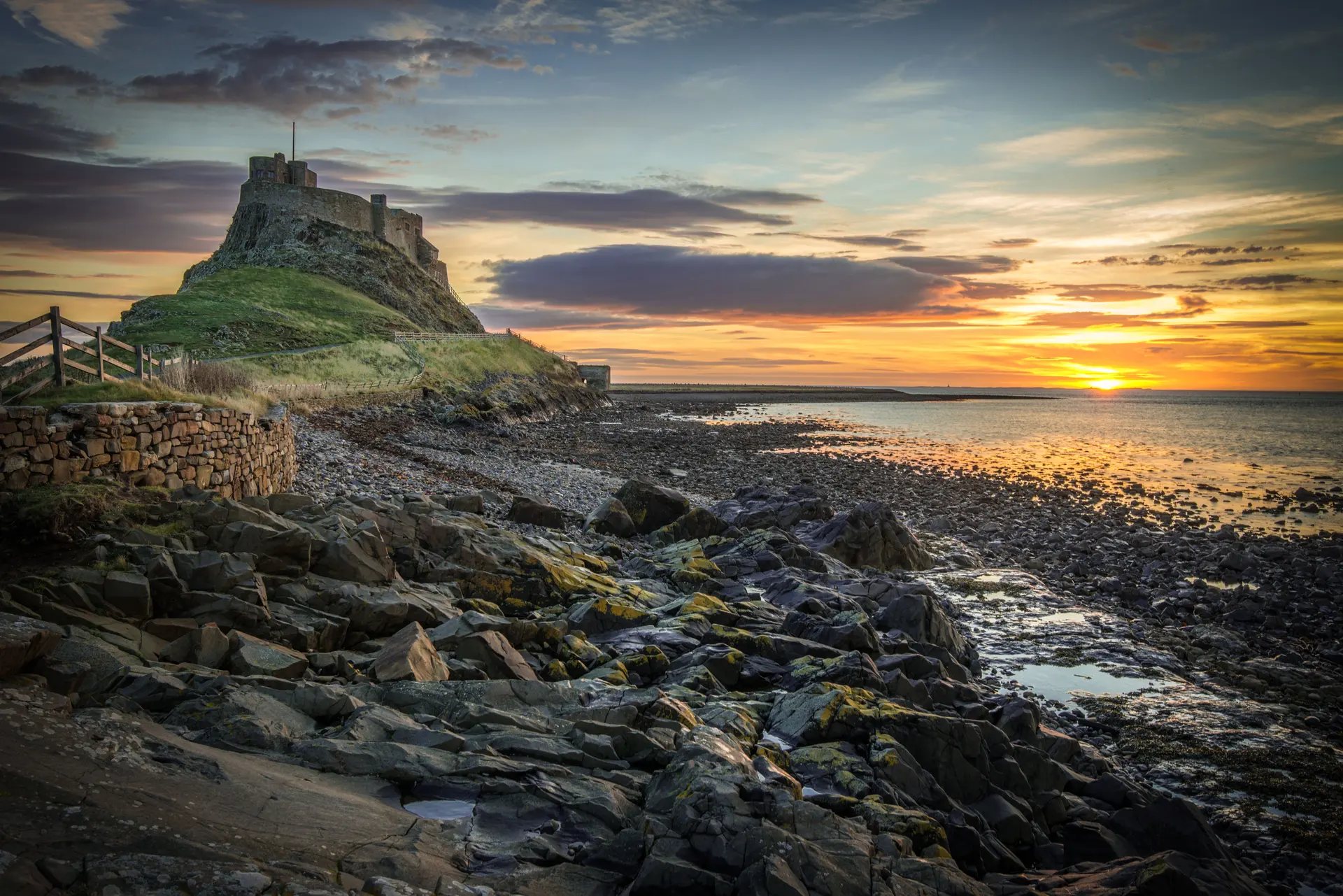
Lindisfarne Priory
Holy Island, Holy Island, Northumberland, United Kingdom
1.8 km away
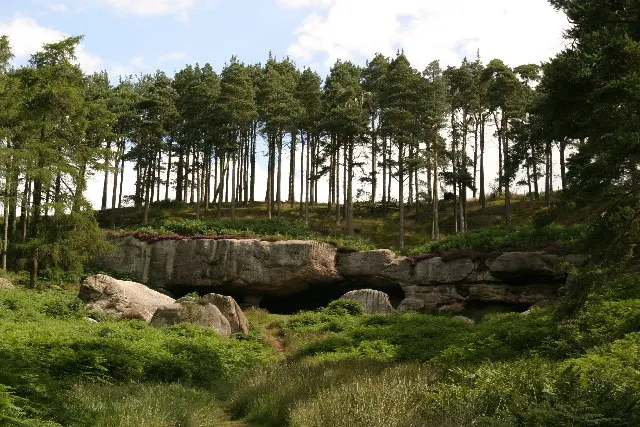
St Cuthbert's Cave
Holburn, Holburn, Northumberland, United Kingdom
9.8 km away
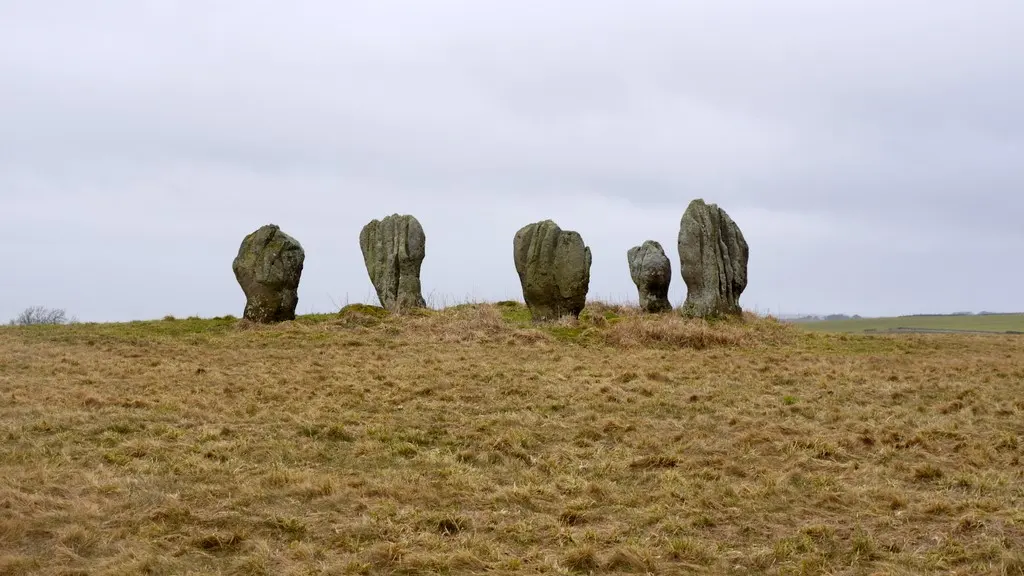
Duddo Five Stones, Duddo
Duddo, England, United Kingdom
18.6 km away
Warkworth Hermitage
Warkworth, Warkworth, Northumberland, United Kingdom
39.3 km away
References
Sources consulted for this page. Source categories describe the publication, not a guarantee that every claim is verified. Traditional accounts and outside interpretations may differ.
- 01History of Lindisfarne Priory - English Heritage — English HeritageofficialOfficial heritage site with detailed historical information and archaeological findings
- 02Lindisfarne Raid - Britannica — Encyclopaedia BritannicaencyclopediaAuthoritative encyclopedia entry on the Viking raid
- 03The Lindisfarne Gospels - Smarthistory — SmarthistoryacademicArt historical analysis of the Lindisfarne Gospels
- 04Saint Cuthbert - Britannica — Encyclopaedia BritannicaencyclopediaAuthoritative biography of St Cuthbert
- 05Lindisfarne Gospels - British Library — British LibraryofficialOfficial custodian of the Lindisfarne Gospels
- 06Lindisfarne Castle - National Trust — National TrustofficialOfficial site for Lindisfarne Castle visitor information
- 07The Holy Island of Lindisfarne - Official Website — Holy Island TourismofficialOfficial tourism website with comprehensive visitor information
- 08Holy Island Safe Crossing Times — Northumberland County CouncilofficialOfficial tide and crossing time information
- 09Lindisfarne Priory and Parish Church, Holy Island - British Pilgrimage Trust — British Pilgrimage TrustSource contextPilgrimage context and spiritual significance
- 10The Parish Church of St Mary's, Holy Island — St Mary's Church Holy IslandSource contextOfficial parish church website with service times
- 11Lindisfarne - Wikipedia — Wikipedia contributorsencyclopediaGeneral overview with historical context and references
- 12Holy Island of Lindisfarne - Sacred Land — Sacred Land Film ProjectSource contextFocus on sacred and ecological significance
- 13Lindisfarne National Nature Reserve - Wikipedia — Wikipedia contributorsofficialInformation on wildlife and nature reserve
Photo gallery
6 curated photos
Share a photo
Help visitors recognize Lindisfarne. Every submission is reviewed before publication.