St. Mary Church, Trakai, Lithuania
Six centuries of unbroken worship where Catholics, Orthodox, and Muslims venerate one miraculous icon
Understand sacred places, explore living traditions, and learn how to engage respectfully with Pilgrim Map.
Access has not been verified. Check current local guidance before planning a visit.
Trakai, Trakai, Lithuania

Visit essentials
A quick read before you go
- Duration
- A thoughtful visit to the basilica interior takes 30 to 60 minutes.
- Access
- Located in the center of Trakai, approximately 28 kilometers west of Vilnius.
Overview
Most visitors come to Trakai for the castle. They photograph the towers reflected in the lake, walk the reconstructed halls, and leave. They pass the basilica on their way, perhaps glancing at its facade, registering it as a church and moving on. That is a mistake worth correcting.
The Basilica of the Visitation has been in continuous operation since 1409. In a country whose sacred sites have been ransacked, converted, closed, or abandoned, Trakai Basilica has never shut its doors, never been given to another denomination, never been used for storage or silence. Six hundred years of unbroken worship occupy these walls.
At the center of the great altar hangs the Mother of God of Trakai, a painting that tradition attributes to a gift from Byzantine Emperor Manuel II Palaiologos to Grand Duke Vytautas upon his baptism. Over 400 votive offerings, silver hearts and crucifixes and miniature limbs placed by grateful devotees since the early seventeenth century, cover the icon in testimony to answered prayers.
What makes this icon singular is its multi-faith veneration. For six centuries, not only Catholics but also Orthodox Christians and Muslims have knelt before it. Vytautas settled Karaites, Tatars, and others alongside Lithuanian Catholics, and the icon's grace crossed the boundaries that doctrine drew. No committee arranged this ecumenism. The icon simply proved capable of addressing something common in the human heart.
The church received papal crowns in 1718 and basilica status in 2017. These honors recognize what the votive offerings already demonstrate: whatever resides in this painting has been answering prayers for a very long time.
On the Feast of the Assumption each August, worshippers bring bouquets of herbs, grains, and garden flowers to be blessed, weaving pre-Christian Lithuanian nature reverence into Catholic liturgy. In summer, a youth pilgrimage walks 30 kilometers from the Gate of Dawn in Vilnius to this altar.
The castle across the lake was built for power. The basilica beside it was built for prayer. Both have endured. Only one has never closed its doors.
Why this place is sacred
The most remarkable thing about the Trakai Basilica is what it has not done: it has not stopped. Through Teutonic invasions, Swedish wars, Russian occupation, and Soviet atheism, this church has remained open and active. In a country where sacred continuity was the exception rather than the rule, Trakai's unbroken record constitutes a form of miracle independent of the icon's own miraculous reputation.
The 400 votive offerings on the icon are not decorative. Each one represents a specific moment when a person came to this altar in need, prayed, and later returned to give thanks in silver. Heart-shaped articles for afflictions of the spirit. Chaplets for graces received. Miniature renderings of limbs for healings of the body. These offerings have accumulated since the early seventeenth century, creating a physical record of continuous spiritual transaction between the human and divine.
The multi-faith dimension defies easy explanation. That Catholics should venerate a Marian icon is expected. That Orthodox Christians should do the same is notable. That Muslims should kneel before an image of a Christian holy figure is extraordinary. Trakai's Tatar community, settled by Vytautas centuries ago, has maintained this practice across generations, suggesting that the icon's spiritual authority operates at a level beneath doctrinal difference.
The setting contributes. Trakai sits among lakes, the castle on its island mirrored in water, the basilica on the shore. The landscape speaks of liminality: water and land, island and mainland, political power and spiritual authority, existing side by side. The basilica's Gothic bones beneath its Baroque overlay mirror this layering: you stand in a space where the fifteenth century and the eighteenth occupy the same walls.
Vytautas the Great founded the church as the principal place of worship in his capital city. Its dual function as royal chapel and community church connected the Grand Duke's political authority with his spiritual obligations. The placement of a Byzantine icon in the altar linked Lithuania's Christianity to its origin in the encounter between East and West.
The church has evolved from Gothic simplicity to Baroque grandeur through successive renovations, particularly after damage during the Swedish wars of the seventeenth century. The canonical coronation in 1718 marked its elevation to a site of formal pilgrimage. The Soviet period, remarkably, did not close the church, though it suppressed much of its public devotional activity. The elevation to basilica status in 2017 represented papal recognition of both its historical importance and the vitality of its contemporary faith community.
Experience and orientation
The experience begins with contrast. Outside, Trakai is a tourist town oriented toward the castle: souvenir shops, kibinai pastry stands, boat rental docks. The basilica sits slightly apart from this commerce, its presence registering as secondary to most visitors. Stepping inside reverses the hierarchy.
The Baroque interior is rich: gilded altars, painted vaults, the scale and ambition of a church that considers itself equal to the castle across the lake. The great altar dominates, and at its center the Mother of God of Trakai holds court in the most literal sense. The icon's accumulation of votive offerings creates a visual field that photographs cannot adequately capture.
In person, the effect of 400 silver testimonies to answered prayer, arrayed around a fifteenth-century painting that has looked down from this same position for six hundred years, is overwhelming not in scale but in implication.
Visitors who know the icon's traditional provenance, a gift from the Byzantine Emperor to the man who made Lithuania Christian, experience an additional dimension. The painting sits at the intersection of East and West, of Byzantine aesthetics and Catholic devotion, of political alliance and spiritual gift.
Its hybrid character, noted by art historians who observe both Byzantine iconographic schemes and Western European late medieval painting traits, is visible in the image itself: an icon that is not quite an icon, a painting that is not quite a painting.
During Zolines, the experience transforms into communal celebration. The procession through Trakai's streets, the blessing of herbs and flowers, the convergence of Catholic liturgy with pre-Christian nature reverence: these create an atmosphere that is uniquely Lithuanian, rooted in a spiritual soil that is older than any denomination.
The most profound encounters, by visitors' own accounts, happen when the crowds thin and the basilica returns to its default state: a church that has been holding daily Mass for six hundred years, its doors open, its icon watching, its silence full of accumulated prayer.
Resist the pull toward the castle, at least at first. Enter the basilica before you enter the fortress. Sit in a pew and let the Baroque interior settle around you. When you approach the great altar, study the votive offerings individually before taking in the icon as a whole. Each silver heart, each miniature limb, holds a story. The icon's face, when you finally give it sustained attention, reveals qualities that the riza's ornamentation initially obscures.
If time permits, attend Mass. The experience of participating in a liturgy in a church that has held daily worship for six centuries connects you to a continuity that most sacred sites can only approximate. After the basilica, walk to the castle with different eyes: you will have visited the power that lasts before the power that falls.
Context and lineage
According to tradition, when Vytautas the Great was baptized into Christianity, the Byzantine Emperor Manuel II Palaiologos gave him a painting of the Virgin Mary as a gift. When Vytautas founded the Church of the Visitation in his capital city of Trakai in 1409, he placed this Byzantine icon in the main altar, where it has remained for over six centuries.
The icon's reputation for miraculous intervention grew steadily. By 1645, the church's pastor Simonas Mankevicius had officially documented 23 miracles attributed to the image. From the early seventeenth century, grateful believers began attaching votive offerings to the painting: small heart-shaped articles and chaplets made of precious metals, silver renderings of healed body parts. Over 400 such offerings now adorn the icon.
In 1717, Lithuanian Chancellor Leonas Sapiga and Vice-Chancellor Aleksandras Narusevicius donated golden crowns for the Virgin and Infant. On September 4, 1718, Bishop Konstanty Kazimierz Brzostowski performed the canonical coronation on behalf of Pope Clement XI, making the Mother of God of Trakai the first papally crowned icon in the Grand Duchy of Lithuania.
The church suffered damage during the Swedish wars of the seventeenth century and was extensively rebuilt in the Baroque style. Gothic elements remain visible in the walls, creating a palimpsest of architectural periods. Through Russian imperial rule and Soviet occupation, the church remarkably remained open and active, its doors never closed to worshippers. In 2017, the church was elevated to basilica status by papal decree, the most recent chapter in a continuous story.
The spiritual lineage of Trakai Basilica extends from Vytautas the Great's founding through six centuries of continuous worship, the canonical coronation of 1718, survival through Russian and Soviet rule, and elevation to basilica status in 2017. The multi-faith veneration tradition, involving Catholic, Orthodox, and Muslim devotees, adds a dimension of interfaith lineage that is rare in European sacred history. The icon's traditional Byzantine provenance connects Lithuania's Catholic heritage to the Eastern Christian world from which it partially derived.
Vytautas the Great
historical
Grand Duke of Lithuania (c. 1350-1430) who founded the church in 1409 and, according to tradition, placed the Byzantine icon in its altar. The most celebrated ruler of the Grand Duchy, he made Trakai his capital and transformed it into a center of both political and spiritual authority.
Byzantine Emperor Manuel II Palaiologos
historical
According to tradition, gave the icon of the Mother of God of Trakai to Vytautas upon his baptism, establishing a spiritual connection between the Byzantine and Lithuanian worlds. This attribution, while not confirmed by Byzantine sources, speaks to the icon's perceived significance.
Simonas Mankevicius
historical
Pastor of Trakai who in 1645 officially documented 23 miracles attributed to the Mother of God icon, establishing its formal reputation as a miraculous image.
Pope Clement XI
historical
Authorized the canonical coronation of the Mother of God of Trakai in 1718, making it the first papally crowned icon in the Grand Duchy of Lithuania.
Traditions and practice
The core traditional practice is veneration of the Mother of God of Trakai at the main altar. The placement of votive offerings, silver hearts and chaplets and figurines of healed body parts, dates to the early seventeenth century and continues among devoted faithful. The Feast of the Visitation on July 2 serves as the church's patronal celebration.
The Zolines herb-blessing tradition, in which worshippers bring bouquets of herbs, grains, vegetables, and garden flowers to be blessed on the Feast of the Assumption, represents a distinctive Lithuanian synthesis of Catholic liturgy and pre-Christian nature reverence.
Daily Masses are celebrated in Lithuanian and Polish, maintaining the bilingual liturgical tradition of a region where both nations have deep historical roots. The annual Zolines celebration on August 15 features a procession through Trakai's streets and the traditional herb-blessing ceremony. The Trakines celebration commemorates the anniversary of the icon's canonical coronation.
An annual youth pilgrimage walks approximately 30 kilometers from the Gate of Dawn in Vilnius to the basilica, a journey that physically connects Lithuania's two most important Marian shrines. The church was elevated to basilica status in 2017, adding certain pastoral and charitable obligations.
Enter the basilica with the awareness that you are crossing the threshold of the oldest continuously active church in Lithuania's former capital. Approach the great altar slowly. The votive offerings will catch your attention before the icon itself does. Let them. Each silver piece is a prayer materialized, a transaction between human need and divine response.
When your attention finally settles on the icon's face, notice its hybrid character: neither fully Byzantine nor fully Western, an image that belongs to the space between categories.
If you can attend Zolines, the herb-blessing ceremony offers an experience unavailable elsewhere. Holding a bouquet of garden herbs while a priest speaks words of blessing over them connects you to a practice that predates denominational Christianity in Lithuania, reaching toward something in the Lithuanian relationship with the natural world that the Church wisely chose to incorporate rather than suppress.
The pilgrimage from the Gate of Dawn, if you have the time and stamina for a 30-kilometer walk, transforms the relationship between Vilnius and Trakai from a car journey into a prayer said with the body.
Roman Catholicism
ActiveThe basilica was founded by Vytautas the Great in 1409, making it one of the oldest continuously operating churches in Lithuania. It houses the first papally crowned icon in the Grand Duchy of Lithuania, bearing over 400 votive offerings from four centuries of devotion. Elevated to basilica status in 2017, it remains one of Lithuania's principal Marian pilgrimage destinations.
Daily Mass in Lithuanian and Polish. Annual Zolines celebration with procession and herb-blessing. Trakines coronation anniversary. Youth pilgrimage from the Gate of Dawn. Continuous veneration of the Mother of God icon. Feast of the Visitation as patronal celebration.
Multi-Faith Marian Veneration
ActiveThe Mother of God of Trakai is venerated by Catholics, Orthodox Christians, and Muslims, reflecting the multicultural heritage of Trakai, where Vytautas settled communities of diverse faiths alongside Lithuanian Catholics. This multi-faith devotion has persisted for six centuries, making the icon one of the rarest examples of cross-traditional Marian veneration in Europe.
Veneration of the icon by visitors and devotees of multiple faith traditions. The ecumenical character of the devotion is organic rather than programmatic, arising from centuries of shared life in a multicultural city.
Perspectives and open questions
Trakai Basilica invites engagement through multiple lenses: art history, political history, interfaith dialogue, and living devotion. Each reveals dimensions the others miss, and the site is large enough in its significance to accommodate all of them without contradiction.
Scholarly perspective
Art historians recognize the Mother of God of Trakai as a significant example of the interaction between Byzantine and Western European artistic traditions in the Grand Duchy of Lithuania. The International Marian Research Institute at the University of Dayton has documented the icon's history within the broader context of European Marian devotion. The painting's hybrid style, combining Byzantine iconographic schemes with Western European late medieval traits, reflects Lithuania's cultural position at the intersection of Eastern and Western Christendom.
Architectural historians note the church's Gothic core beneath its Baroque overlay as a physical record of Lithuania's evolving relationship with European artistic currents. The elevation to basilica status in 2017 is understood as papal recognition of both historical importance and contemporary vitality.
Living and traditional perspectives
For Lithuanian Catholics, the Mother of God of Trakai is one of the most revered Marian images in the country, connected through tradition to the founding of Christian Lithuania itself. The icon's title 'Protector of the Sick' reflects centuries of healing devotion. The over 400 votive offerings represent an unbroken chain of gratitude spanning four centuries. The Zolines herb-blessing tradition represents a distinctively Lithuanian synthesis of Catholic liturgy and pre-Christian nature reverence.
The 30-kilometer pilgrimage from the Gate of Dawn to Trakai is experienced as a journey between Lithuania's two most sacred Marian shrines.
Alternative interpretations
The icon's dual Byzantine-Western character and its veneration by Catholics, Orthodox, and Muslims suggest a universality that transcends denominational boundaries. The lakeside setting of Trakai, with its castle and church on islands and peninsulas surrounded by water, evokes archetypal imagery of sacred islands and water-encircled holy places found across many traditions.
The Zolines herb-blessing tradition preserves elements of pre-Christian Lithuanian nature spirituality within a Catholic frame, suggesting layers of sacred relationship with the land that are older than any current denomination.
Open questions
The exact provenance of the icon remains uncertain. The tradition of it being a gift from Byzantine Emperor Manuel II Palaiologos to Vytautas is not confirmed by Byzantine sources. Art historical analysis dates the painting to the mid-fifteenth century with partial repainting in the early seventeenth century, raising questions about its relationship to the 1409 founding. The full nature of the 23 miracles documented by pastor Mankevicius in 1645 is not readily accessible.
Why this particular icon attracted multi-faith veneration, including Muslim devotion, remains a subject of scholarly inquiry. The relationship between fresco fragments in the church walls and those in Trakai Castle suggests shared artistic programs that are not fully understood.
Plan your visit
Access and arrival
Located in the center of Trakai, approximately 28 kilometers west of Vilnius. Easily accessible by car, approximately 30 minutes, or by bus and minibus from Vilnius bus station, with frequent service. The basilica is within easy walking distance of Trakai Island Castle and the town center. Free entry to the church; donations encouraged. Wheelchair accessibility may be limited in this historic building. Mobile phone signal is reliable throughout Trakai. Emergency services are available in the town.
Trakai offers guesthouses, small hotels, and holiday rentals, many with lakeside views. Vilnius, 28 kilometers east, provides the full range of accommodation options. For a spiritual visit, staying overnight in Trakai allows attendance at morning Mass and a quieter encounter with the basilica than a day trip permits.
Respectful visit
Modest dress is required. Shoulders and knees should be covered. Given that many visitors arrive from the more casual castle visit, carrying a light cover-up is advisable.
Photography may be restricted inside the basilica, particularly near the miraculous icon and during services. Check current policies at the entrance. Flash photography should be avoided throughout. No photography during Mass.
Candles may be lit. Donations are requested for the preservation of this historic church. The tradition of votive offerings to the icon is primarily for devoted faithful rather than casual visitors.
Do not touch the miraculous icon or its votive offerings. Quiet and respectful behavior at all times. Do not disturb worshippers during services. Follow instructions of church staff regarding photography and access.
The basilica is an active place of worship, not a museum adjunct to the castle. Visitors arriving from the tourist-oriented castle area should adjust their behavior accordingly.
Current practical details
Address
Birutės skg. 5, 21114 Trakai, Lithuania
Phone
Hours
Hours, fees, and access can change — verify on the official source before you travel. Practical details last checked Jun 2026.
Location
Map loads as you approach this section.
Pilgrim reflections
A portrait of encounter, not a score
Pilgrims describe what they felt, how present they could become, and whether the place would shape a journey. There are no stars and no ranking of traditions.
No reviewed reflections yet
The first pilgrims can help describe the character of being here.
Share a reflection
Available after an account-backed “Been there.” Every reflection is reviewed before publication.
Nearby sacred places
Explore other sacred places in the region. Proximity does not establish access or travel time; check each place’s guidance.
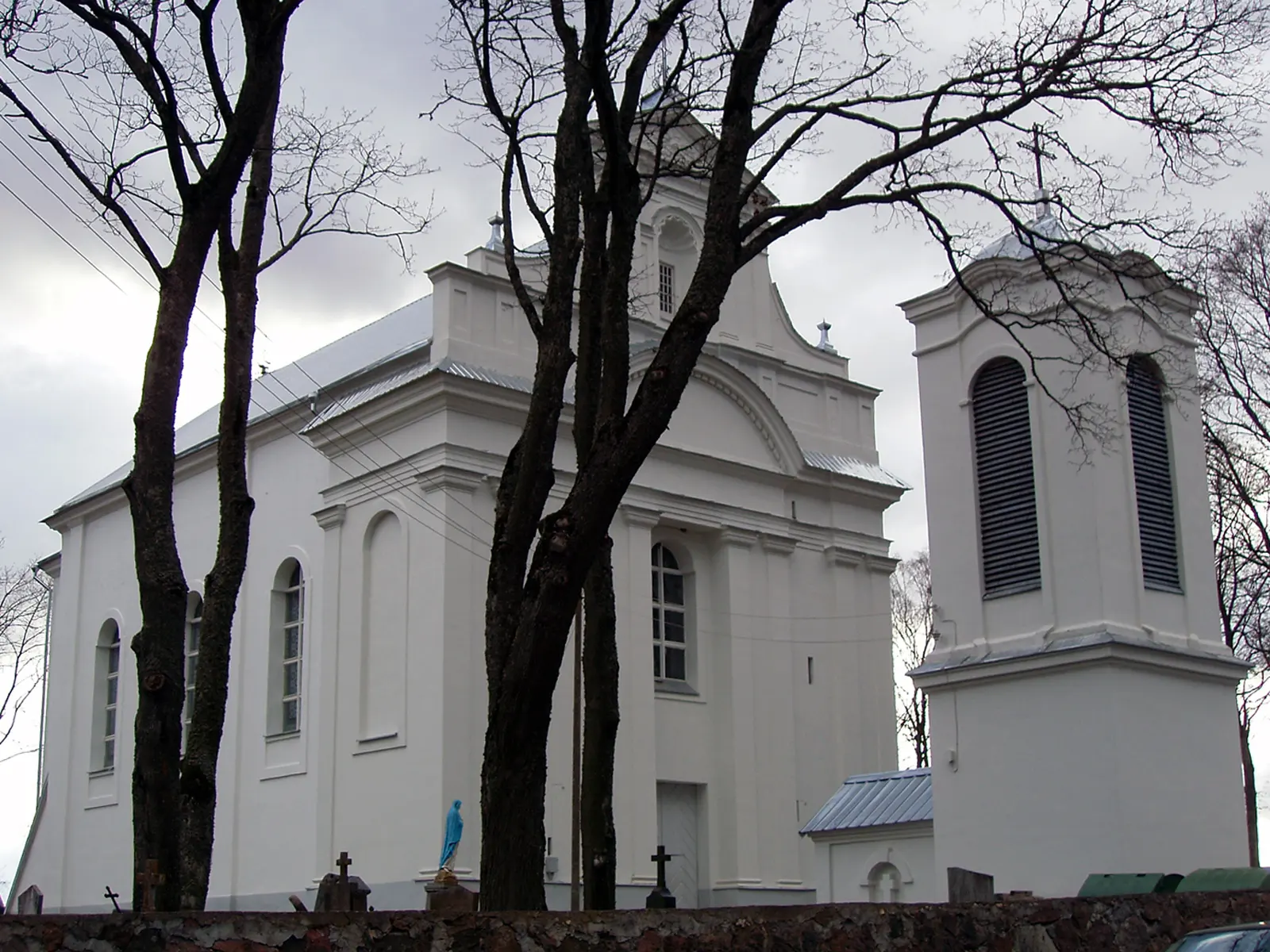
Church of the Virgin Mary Victorious, Kazokiskes
Kazokiškės, Elektrėnai, Lithuania
20.3 km away
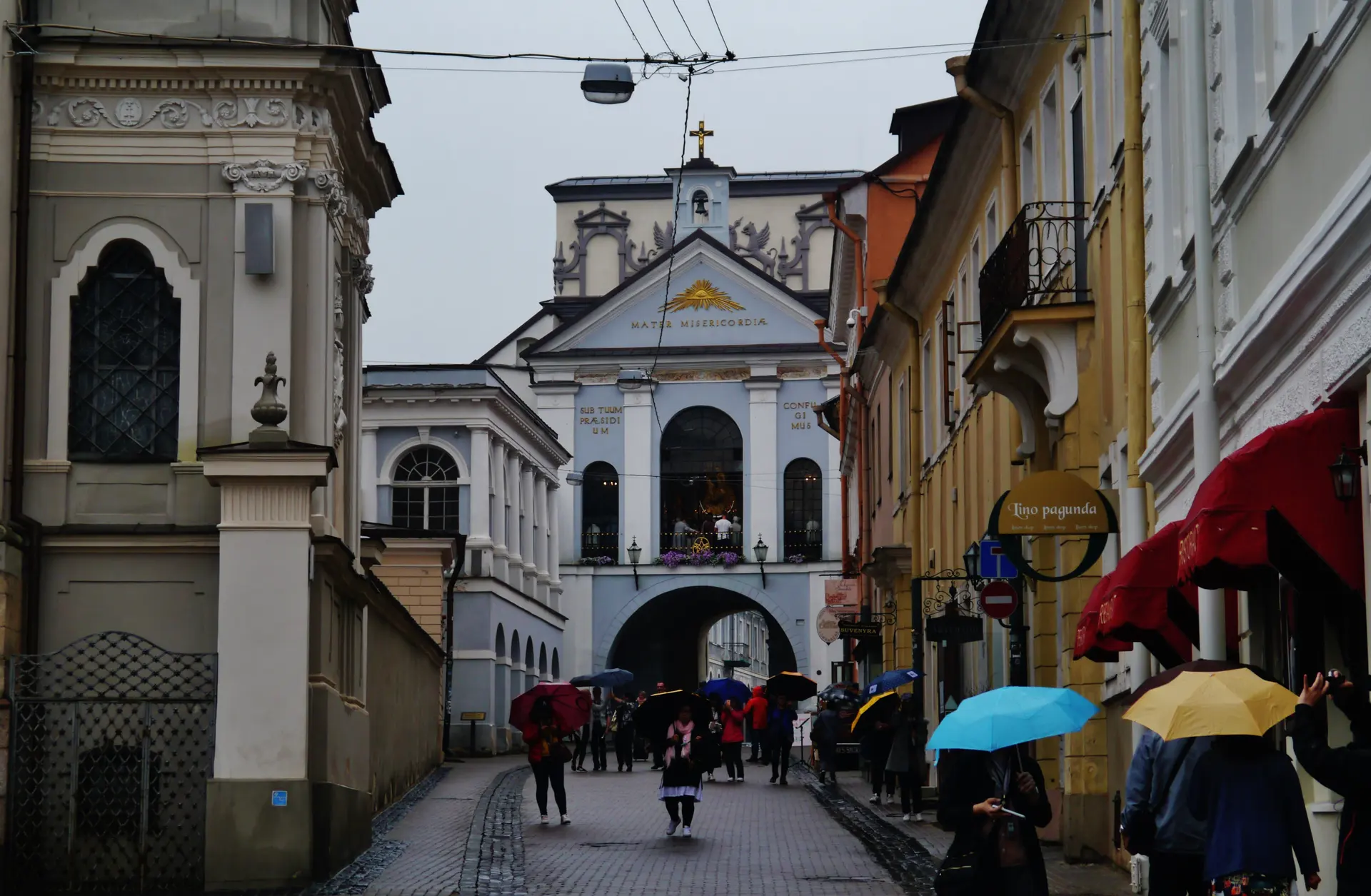
Our Lady of the Gate of Dawn
Vilnius, Vilnius, Lithuania
23.0 km away
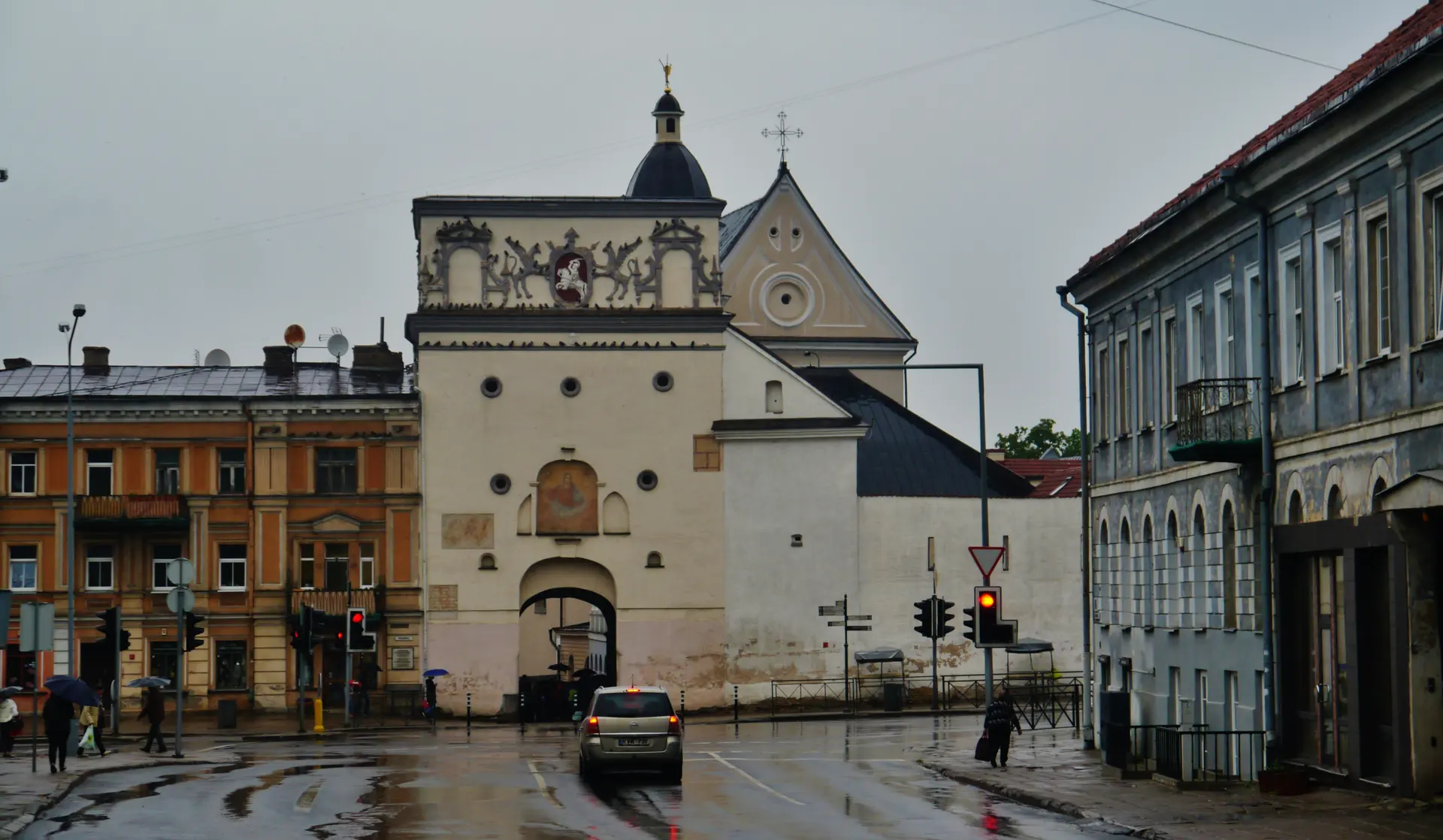
Gates of Dawn, Vilniaus
Vilnius, Vilnius, Lithuania
23.0 km away

Orthodox Church of the Holy Spirit, Vilnius
Vilnius, Vilnius, Lithuania
23.1 km away
Share a photo
Help visitors recognize St. Mary Church, Trakai, Lithuania. Every submission is reviewed before publication.