Our Lady of the Gate of Dawn
InsideGates of Dawn, Vilniaus
A miraculous icon above the last medieval gate, where three Christian traditions kneel together
Understand sacred places, explore living traditions, and learn how to engage respectfully with Pilgrim Map.
Access has not been verified. Check current local guidance before planning a visit.
Vilnius, Vilnius, Lithuania
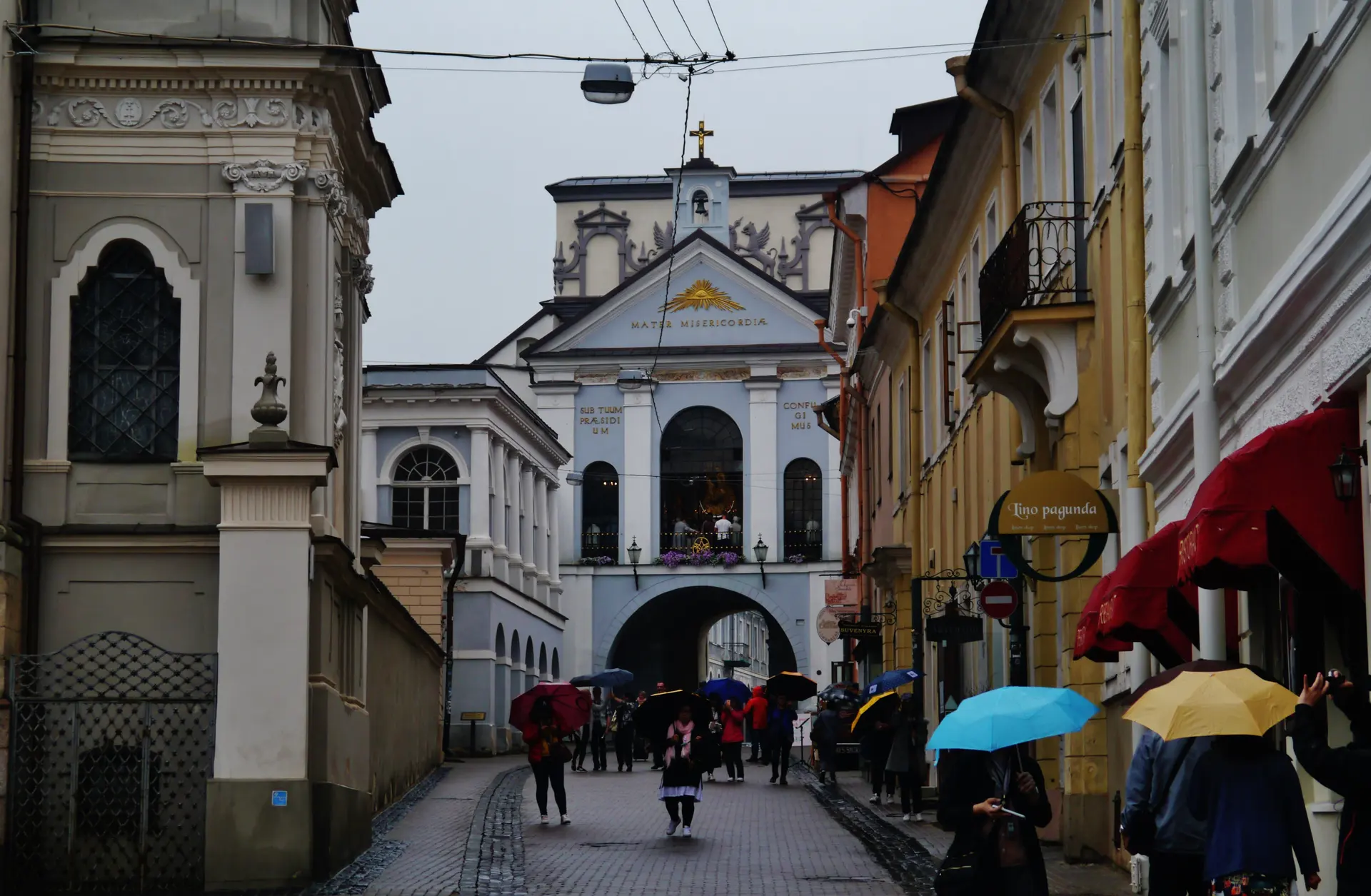
Image of Our Lady of the Gate of Dawn. Image source · CC-BY-SA-4.0
Visit essentials
A quick read before you go
- Duration
- A brief visit takes 15 to 30 minutes.
- Access
- Located at Ausros Vartu g.
Overview
Walking south along Ausros Vartu Street, the medieval Gate of Dawn ends the road and the icon looks down from above, visible from the street. For centuries passersby have removed their hats and crossed themselves here, a gesture older than living memory.
A narrow staircase reaches the small, intimate chapel. The Virgin's head inclines in contemplation and her hands fold in prayer beneath an ornate gilded-silver riza whose flowers symbolize purity. Approximately eight thousand silver votives cover the surfaces—hearts, crucifixes, arms, legs, and eyes—left by people who came in need and believed their prayers were heard.
This active shrine celebrates daily Mass in Lithuanian and Polish. Pilgrims weep and the air carries accumulated intention; Catholics claim the icon, Orthodox believers venerate it, and Greek Catholics honor it. It belongs exclusively to none and simultaneously to all three.
Nine gates once pierced Vilnius's walls; this alone survives, perhaps saved by its sanctifying icon. What was protected as sacred endured while the merely functional was removed. The chapel marks thresholds between old city and world beyond, material and numinous, and three traditions sharing an indivisible mother.
Pope John Paul II prayed here in 1993 and Pope Francis knelt here in 2018, confirming what Lithuanian and Polish faithful had known for centuries: the small room holds a weight beyond its dimensions.
Why this place is sacred
The chapel occupies a space that is literally between: above the gate, suspended between the city's interior and its exterior, between ground and sky. In an era when city gates were understood as vulnerable points requiring spiritual protection, the placement of a sacred image here carried both practical and cosmological significance. The icon guarded the threshold, and in return, the threshold sanctified the icon.
The silver votive offerings transform the walls into a three-dimensional prayer. Each piece of metal represents a specific petition and its perceived answer: a silver heart for a healed affliction of the spirit, a silver leg for a restored ability to walk, a silver eye for sight returned. Approximately eight thousand such offerings have accumulated since the seventeenth century.
They do not merely decorate the chapel; they constitute a physical record of faith sustained across generations, through wars, occupations, and regime changes.
The icon itself carries a quality that visitors consistently struggle to articulate. The Virgin's downcast eyes, her hands folded rather than holding the Christ child, her expression of quiet interiority: these formal qualities create a devotional encounter that feels personal rather than institutional. The gilded silver riza, added in stages between 1670 and the 1730s, frames the face in a way that concentrates attention. Pilgrims describe feeling seen, known, met.
The multi-traditional veneration is perhaps the most distinctive thin-place quality. That Catholics, Orthodox, and Greek Catholics kneel before the same image suggests the icon has found a way to speak across doctrinal boundaries, reaching something common in the human response to the sacred. This ecumenical character is not the result of deliberate interfaith programming but has developed organically over centuries.
The original placement of a sacred image above the Gate of Dawn followed the common medieval practice of protecting city gates with religious icons. The chapel, built in 1671 by the Discalced Carmelites, formalized this protective function into a permanent devotional space. The icon's growing reputation for miracles expanded its purpose from protective talisman to active pilgrimage destination.
The shrine has passed through distinct phases: the initial placement of an image above the gate in the sixteenth century, the Carmelite construction of the chapel in 1671, the formal establishment of the feast in 1735, the canonical coronation by Pope Pius XI in 1927, survival through Russian imperial and Soviet occupation, and the post-independence renewal marked by papal visits in 1993 and 2018. Each phase has added layers of significance without erasing earlier ones.
The shrine remains what it has been for centuries: a gate between worlds.
Experience and orientation
The ascent to the chapel is itself an act of transition. Climbing the narrow staircase from the street, leaving the noise of Vilnius's Old Town behind, you enter a space that belongs to a different register of experience. The chapel is small enough that the icon dominates immediately. There is no distance from which to observe it coolly.
The face of the Virgin, visible through the ornate riza, exercises a particular pull. Art historians attribute this to the painting's composition, based on a work by Flemish artist Martin de Vos, with its combination of downcast eyes and slightly inclined head. Pilgrims attribute it to the icon's inherent sanctity. Whatever the explanation, visitors of widely different backgrounds report the same response: a sense of being addressed personally, of the icon's gaze finding them specifically.
The votive offerings intensify this experience. Surrounded by thousands of silver testimonies to answered prayers, the visitor is immersed in evidence of a living tradition of petition and gratitude. The effect is cumulative: each individual offering is modest, but together they constitute an overwhelming argument for the reality of spiritual encounter.
During the November feast, the chapel and surrounding streets transform. The eight days of celebration draw pilgrims from across Lithuania and Poland, and the processions through the Old Town create a communal devotional experience that extends far beyond the chapel walls. The decorated streets, the hymns, the candlelight: these are not performances but expressions of a faith that has survived everything the twentieth century could throw at it.
Arrive early in the morning if you seek quiet contemplation. The chapel fills with pilgrims and tourists as the day progresses. Stand on the street below first and look up at the icon from the perspective of centuries of passersby who paused to cross themselves. Then climb the stairs and let the intimate scale of the chapel do its work. Sit or kneel if you are comfortable doing so.
The icon is not in a hurry, and neither should you be.
Context and lineage
When Vilnius built its city walls in the early sixteenth century, nine gates pierced the fortifications. Following common practice, religious images were placed above the gates to protect the city and bless those who passed through. The image at the southern gate, the Gate of Dawn, gained an extraordinary reputation.
The painting, completed around 1620 to 1630 and likely based on a composition by Flemish artist Martin de Vos, depicts the Virgin Mary with downcast eyes and folded hands, an expression of quiet receptivity that has proved unusually powerful in devotional encounter. The Discalced Carmelites, who received land near the gate in 1626, built the Church of St. Teresa adjacent to it and constructed the chapel above the gate in 1671, creating the intimate devotional space that exists today.
The icon's reputation for miracles grew steadily. In 1702, during the Great Northern War, the heavy iron gates reportedly fell and crushed four Swedish soldiers, after which the Lithuanian army launched a successful counterattack on Easter Sunday. In 1706, a city fire was miraculously subdued. In 1708, a Russian soldier attempting to steal the icon's silver riza was reportedly struck dead. Whether history or legend, these accounts cemented the icon's status as protector of Vilnius.
By the eighteenth century, the practice of placing silver votive offerings at the icon was well established. The Carmelite friar Hilary published a detailed history of the icon and its miracles in 1761. The feast was formally established in 1735. The canonical coronation by Pope Pius XI in 1927 was both a religious and political event, affirming Lithuanian Catholic identity during a period of national self-definition.
The devotion at the Gate of Dawn has been maintained through an unbroken chain: from the Discalced Carmelites who built the chapel and organized the feast, through the periods of Russian imperial rule and Soviet occupation when the shrine survived despite political upheaval, to the current pastoral care within the Archdiocese of Vilnius. The ecumenical dimension, with Orthodox and Greek Catholic veneration alongside the Catholic primary tradition, represents a lineage of multi-traditional devotion that is rare among European Marian shrines.
The Blessed Virgin Mary
deity
Venerated as Mother of Mercy (Mater Misericordiae) through the miraculous icon at the Gate of Dawn. The icon has been credited with protecting Vilnius during wars, healing the sick, and answering the prayers of the faithful for four centuries.
Discalced Carmelite Order
historical
Founded the chapel above the Gate of Dawn in 1671 and served as its custodians for centuries. They built the adjacent Church of St. Teresa, organized the annual feast from 1735, and published accounts of the icon's miracles.
Pope John Paul II
historical
Prayed at the Gate of Dawn chapel during his 1993 visit to Lithuania, affirming the shrine's significance to the universal Catholic Church and to Lithuanian national identity after decades of Soviet occupation.
Pope Francis
historical
Visited and prayed at the Gate of Dawn in September 2018, continuing papal recognition of the shrine's spiritual importance.
Traditions and practice
The oldest practice at the Gate of Dawn is the street-level gesture: passersby removing their hats and crossing themselves as they walk beneath the icon. This spontaneous act of reverence predates the formal chapel and continues today. Within the chapel, prayer before the miraculous icon is the central devotion, accompanied by the Rosary.
The tradition of placing silver votive offerings as thanksgiving for answered prayers dates to at least the seventeenth century and has produced the remarkable accumulation of approximately eight thousand ex-votos that now cover the walls. The silver crescent moon beneath the icon, bearing a date of 1849, is itself a votive offering of unknown provenance.
Daily Masses are celebrated in Lithuanian (Monday through Saturday at 9:00 AM, Sunday at 9:30 AM) and Polish (Monday through Saturday at 10:00 AM). Rosary devotions are held regularly. The eight-day Feast of the Protection of Our Lady of the Gate of Dawn, centered on November 16, features special liturgies, processions through Vilnius's Old Town, and decorated streets. The annual Corpus Christi procession concludes at the chapel.
On Divine Mercy Sunday, an ecumenical Way of Light procession begins at the Gate of Dawn. An annual youth pilgrimage departs from the Gate of Dawn for the Trakai Basilica, covering approximately 30 kilometers on foot.
Begin on the street. Stand beneath the gate and look up at the icon as generations of Vilnius residents have done. Notice how the painting watches over the threshold between the old city and the world beyond. Then climb the stairs.
Inside the chapel, give yourself time to absorb the votive offerings before focusing on the icon itself. Each silver heart, each miniature limb, each crucifix represents a specific human story of need and gratitude. Let the cumulative effect settle before you turn your attention to the Virgin's face.
If you are present during Mass, the chapel's acoustics and intimacy create a liturgical experience quite different from larger churches. If you arrive between services, the silence of the small space, dense with the presence of the icon and the weight of the votive offerings, offers something equally valuable.
Roman Catholicism
ActiveThe Gate of Dawn chapel houses one of the most important Catholic Marian icons in Central-Eastern Europe. The icon was canonically crowned by Pope Pius XI in 1927 and has been visited by two popes. The shrine serves as a focal point for Lithuanian and Polish Catholic identity and is one of the principal Marian pilgrimage destinations in the Baltic states.
Daily Masses in Lithuanian and Polish, Rosary devotions, the eight-day November feast, Corpus Christi procession concluding at the chapel, Divine Mercy Sunday ecumenical Way of Light procession, and the annual youth pilgrimage from the Gate of Dawn to Trakai. The traditional practice of crossing oneself when passing under the gate continues among local faithful.
Eastern Orthodox Christianity
ActiveThe icon is venerated by Eastern Orthodox Christians, reflecting the shared spiritual heritage of the Polish-Lithuanian Commonwealth. Orthodox faithful pray before copies of the icon throughout Belarus, Ukraine, and Russia, making it one of the rare Marian images honored across both major branches of Christianity.
Prayer and veneration before the icon or its copies in Orthodox churches across Eastern Europe.
Greek Catholicism
ActiveGreek Catholic communities, particularly in Ukraine and Belarus, venerate the icon as part of the spiritual heritage of the former Polish-Lithuanian Commonwealth. This tradition represents a bridge between the Latin and Eastern rites of Christianity.
Veneration of the icon and pilgrimages to the chapel, especially by Ukrainian and Belarusian Greek Catholic communities.
Perspectives and open questions
The Gate of Dawn holds different things for different people: a miraculous icon, a symbol of national identity, an art historical puzzle, an ecumenical meeting point. These perspectives do not compete with each other so much as they illuminate different facets of a site that has absorbed four centuries of meaning.
Scholarly perspective
Art historians date the painting to approximately 1620 to 1630, likely based on a composition by Flemish artist Martin de Vos. The silver riza was added in stages between 1670 and the 1730s. The chapel was built in 1671 by the Discalced Carmelites. The canonical coronation in 1927 reflected both religious devotion and the political significance of Lithuanian and Polish national identity.
Historians note the shrine's role as a symbol of resistance during Russian imperial and Soviet occupation, when the icon's survival became a metaphor for the survival of Lithuanian Catholic culture.
Living and traditional perspectives
Lithuanian and Polish Catholic tradition holds the icon as miraculous, with countless healings and interventions attributed to prayers before it. The tradition of votive offerings testifies to generations of believed answered prayers. For both nations, the icon is deeply intertwined with identity: a guardian of the people through centuries of foreign occupation. The icon's survival as the only remaining gate and shrine of Vilnius's medieval fortifications is itself regarded as providential, a sign that what is sacred endures.
Alternative interpretations
Some visitors and writers note the liminal quality of the site, a sacred image placed above a gate, a threshold between worlds, as carrying significance beyond the strictly denominational. The enclosed garden symbolism of the riza's floral motifs connects to broader mystical traditions of the Virgin as gateway between the human and divine. The accumulation of thousands of votive offerings is sometimes described as creating a concentrated field of devotional energy that transcends any single tradition's framework.
Open questions
The exact identity of the original artist remains unknown. The precise date the painting was first placed at the gate is debated. Some traditions claim an origin as early as 1363, though art historical analysis does not support this. The mechanism by which the heavy iron gates fell on Swedish soldiers in 1702 has never been satisfactorily explained.
The large silver crescent moon votive offering beneath the icon bears a date of 1849, but the identity of its donor and the circumstances of its placement are unknown.
Plan your visit
Access and arrival
Located at Ausros Vartu g. 14, at the southern end of Ausros Vartu Street in Vilnius Old Town. The chapel is accessed via a staircase from street level. The Gate of Dawn spans the street and is unmistakable. Vilnius Old Town is walkable, and the site is approximately 800 meters south of Vilnius Cathedral. Public transport and taxis serve the area. The closest bus stops are within a five-minute walk. Vilnius International Airport is approximately 7 kilometers away.
Mobile phone signal is reliable throughout the Old Town area.
Vilnius Old Town offers accommodation at all price points, from hostels to luxury hotels, many within a few minutes' walk of the Gate of Dawn. For visitors seeking a devotional stay, some nearby convents and religious houses offer simple accommodation.
Respectful visit
Modest dress is expected: shoulders and knees covered. Men should remove hats inside the chapel. During the November feast, dress warmly, as outdoor processions can last several hours in cool weather.
Photography is generally permitted outside of services but should be exercised with discretion given the chapel's small size and the proximity of praying pilgrims. Flash photography near the icon is discouraged. No photography during Mass or devotions. Always check current guidelines posted at the entrance.
Silver votive offerings (ex-votos) are the traditional form of thanksgiving, though their placement is now primarily the province of regular devotees. Candles can be lit. Monetary offerings are accepted and support the chapel's maintenance.
Silence is expected during prayer and services. No food or drink inside the chapel. The chapel is accessed via a staircase on Ausros Vartu Street and may be inaccessible to those with mobility difficulties. Access hours are seasonal: May through October, 6:00 to 19:00; November through April, 7:00 to 19:00.
The chapel is small and can become crowded, especially during the November feast and on Sundays. Arriving early in the morning, outside of Mass times, provides the most contemplative atmosphere. The staircase to the chapel is narrow and may be challenging for those with mobility difficulties. During services, visitors should either participate quietly or wait until the service concludes.
Current practical details
Address
Aušros Vartų g. 14, 01303 Vilnius, Lithuania
Phone
Hours
Hours, fees, and access can change — verify on the official source before you travel. Practical details last checked Jun 2026.
Location
Map loads as you approach this section.
Pilgrim reflections
A portrait of encounter, not a score
Pilgrims describe what they felt, how present they could become, and whether the place would shape a journey. There are no stars and no ranking of traditions.
No reviewed reflections yet
The first pilgrims can help describe the character of being here.
Share a reflection
Available after an account-backed “Been there.” Every reflection is reviewed before publication.
Nearby sacred places
Explore other sacred places in the region. Proximity does not establish access or travel time; check each place’s guidance.
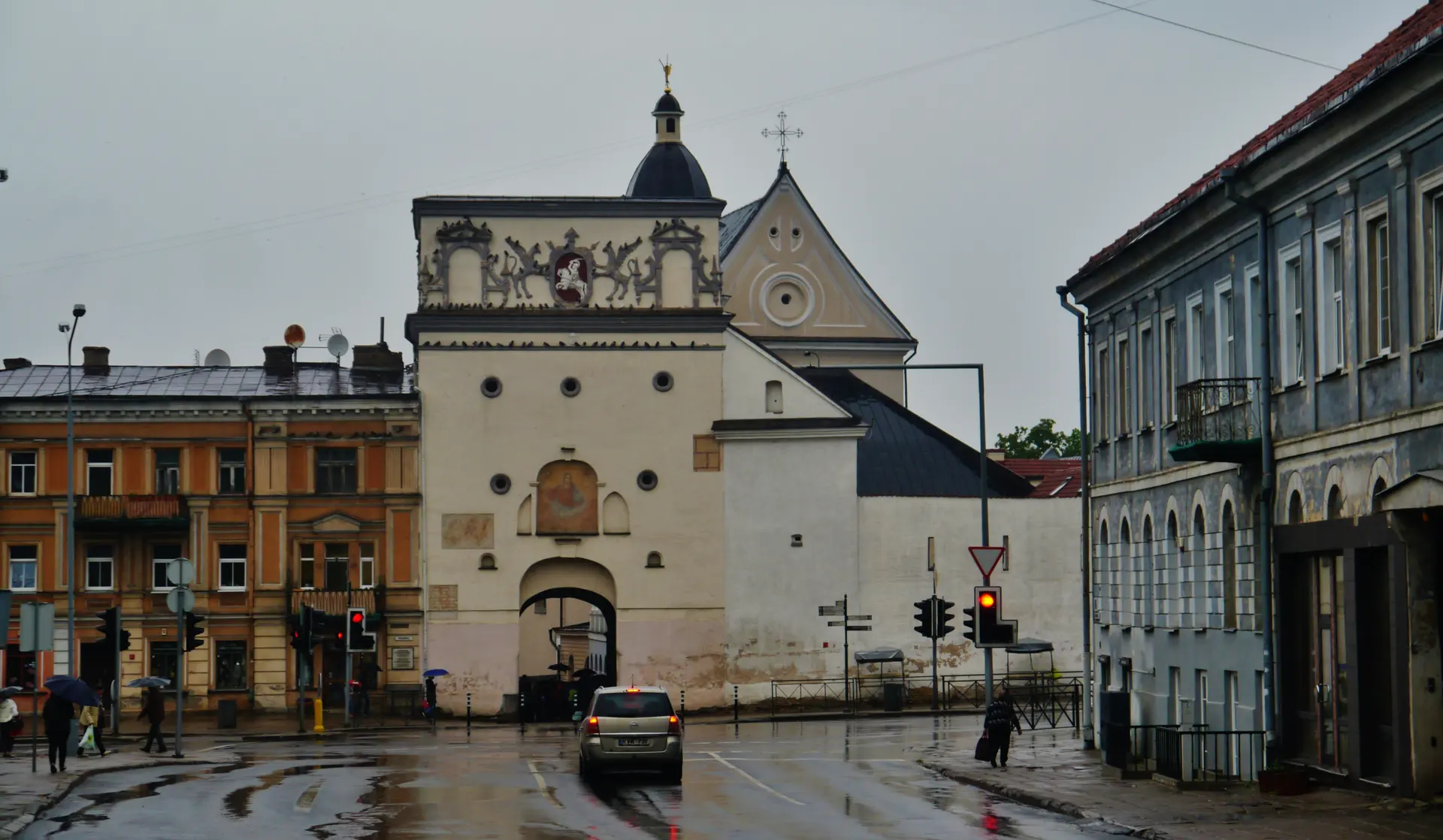
Gates of Dawn, Vilniaus
Vilnius, Vilnius, Lithuania
0.0 km away

Orthodox Church of the Holy Spirit, Vilnius
Vilnius, Vilnius, Lithuania
0.2 km away

Vilnius Cathedral and Chapel of St Casimir, Lithuania
Vilnius, Vilnius, Lithuania
1.2 km away

House of Saint Faustina
Vilnius, Vilnius, Vilnius County, Lithuania
3.9 km away
Photo gallery
3 curated photos
Share a photo
Help visitors recognize Our Lady of the Gate of Dawn. Every submission is reviewed before publication.