Gates of Dawn, Vilniaus
The last medieval gate of Vilnius, preserved by the faith that made it sacred
Understand sacred places, explore living traditions, and learn how to engage respectfully with Pilgrim Map.
Access has not been verified. Check current local guidance before planning a visit.
Vilnius, Vilnius, Lithuania
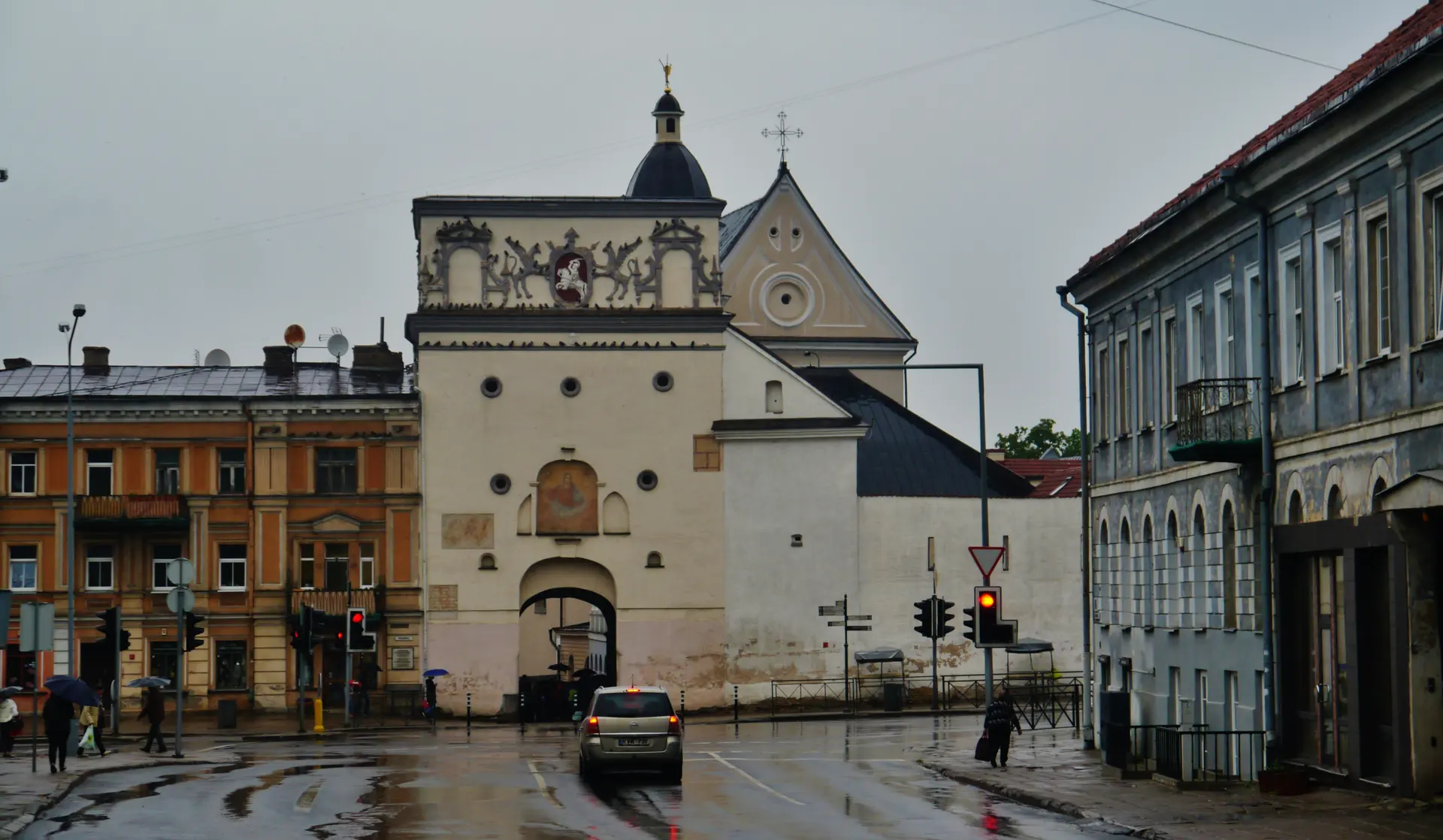
Image of Gates of Dawn, Vilniaus. Image source · CC-BY-SA-4.0
Visit essentials
A quick read before you go
- Duration
- Walking through the gate takes minutes.
- Etiquette
- The gate itself is a public passage requiring no special protocol.
Overview
Nine gates once pierced the defensive walls of Vilnius. Russian authorities demolished eight of them between 1799 and 1805, clearing the medieval fortifications that no longer served a military purpose. The ninth they could not touch. The veneration of the miraculous icon of Our Lady of Mercy in the chapel above the gate was so intense, so woven into the spiritual life of the city, that destruction would have provoked revolt.
The Gates of Dawn survives because faith preserved it. This is not metaphor but documented history. The gate that was built to protect the city from enemies was itself protected by the prayers of those who passed through it. For centuries, travelers entering or leaving Vilnius would remove their hats, bow, or cross themselves as they walked beneath the icon. The tradition continues today.
Built between 1503 and 1514 under Grand Duke Alexander Jagiellon, the gate was originally called the Medininkai Gate, named for the road it guarded toward the village of Medininkai to the south. The name 'Ausros vartai,' Gate of Dawn, is a nineteenth-century romantic Lithuanian coinage. But the gate's identity has always been bound more to the icon above than to the road below.
The chapel was added in 1671 by Discalced Carmelites, housing a painting of the Virgin Mary that had already acquired a reputation for miraculous protection. When the iron gates reportedly fell on Swedish soldiers during the Great Northern War in 1702, killing four on Holy Saturday, and Lithuanian forces counter-attacked successfully on Easter Sunday, the icon's protective power entered the realm of documented military history.
Today the gate anchors the southern end of the Vilnius Old Town and the pilgrimage route established in memory of Saint John Paul II. Pedestrians and vehicles still pass through the Gothic archway daily. The icon still watches from above. The tradition of reverence at the threshold continues, connecting twenty-first-century Vilnius to its medieval self.
Sites inside
Why this place is sacred
Thresholds have been recognized as sacred spaces across traditions and centuries. The Gates of Dawn is perhaps the most literal expression of this understanding in European Christianity. Here, the military and the sacred are fused in stone and devotion. The same structure that once deployed portcullis and drawbridge also holds a chapel and a miraculous icon.
Stand on the southern side of the gate and look up. The pointed Gothic arch rises approximately fourteen meters, channeling attention upward toward the chapel window where the icon is visible from the street below. This vertical movement, from the street-level traffic to the sacred image above, is the gate's essential gesture. It lifts the gaze.
The tradition of reverencing the icon when passing through has transformed every transit into a spiritual act. For centuries, this was not a conscious decision but an ingrained response, as natural as breathing. Men removed their hats. Women crossed themselves. The gate asked something of everyone who passed, and most gave it.
The gate's solitary survival deepens its sacred quality. Among nine, it alone remains. The other eight were rubble by 1805. That this one endured, and endured specifically because of devotion to the icon, gives it a quality of chosen-ness. It was not preserved by accident or antiquarian interest but by living faith. The walls fell; the prayer did not.
The convergence of military architecture, Marian devotion, and national symbolism creates a density of meaning unusual even for a city as layered as Vilnius. The gate has become what it guards: a passage between worlds.
Built 1503-1514 as the Medininkai Gate, part of Vilnius' defensive wall system under Grand Duke Alexander Jagiellon. The gate was the tallest of nine, positioned at the weakest point of the fortifications, and equipped with drawbridge, portcullis, and firing openings. Religious images were placed above city gates as a common practice to bless travelers and ward off attacks.
The gate evolved from military structure to sacred monument through the addition of the chapel in 1671 by Discalced Carmelites. When Russian authorities demolished the other eight gates between 1799 and 1805, the gate's religious significance saved it from destruction. Later modifications added a Palladian-style facade. In the nineteenth century, the Lithuanian romantic movement renamed it Ausros vartai, Gate of Dawn. The gate now serves as both a public thoroughfare and the anchor of the Vilnius pilgrimage route.
Experience and orientation
Approach the gate from the south, from the direction of the train station, the way pilgrims and travelers have approached for centuries. The modern city falls away gradually as Ausros Vartu Street narrows. The gate appears ahead, its Gothic arch framing the view into the Old Town beyond.
The passage itself is narrow enough to feel the walls on either side. Look for the firing openings in the exterior, still visible, reminders of the gate's military origins. The stone is thick and cool. Pedestrians and occasional vehicles share the space, creating a compression that amplifies the threshold experience.
Look up. Through the window above, the icon of Our Lady of Mercy is visible from the street. This is the view that has prompted five centuries of spontaneous reverence. People still pause here. Some cross themselves. Others simply look, caught for a moment by the unexpected presence of the sacred in the midst of daily transit.
To visit the chapel itself requires ascending a separate staircase, typically accessed through the Church of St. Teresa immediately to the south. The chapel is intimate, the icon set behind glass and framed in silver and gold. The space is dense with candles, flowers, and the quiet prayers of those who have climbed above the street to be closer to what draws them.
Continue north along Ausros Vartu Street, one of the most atmospheric streets in Vilnius, lined with churches and historic buildings. The Orthodox Church of the Holy Spirit is two hundred meters ahead. The full pilgrimage route extends to Vilnius Cathedral, approximately eight hundred meters north. Walking this route retraces centuries of processional practice, particularly the Corpus Christi procession that concludes at the gate each year.
Approach from the south for the most traditional experience. The gate straddles Ausros Vartu Street at the southern boundary of the Old Town. The chapel above is accessed through a staircase near the Church of St. Teresa, immediately south of the gate. The pilgrimage route extends north along Ausros Vartu Street to Vilnius Cathedral.
Context and lineage
The defensive walls of Vilnius were constructed between 1503 and 1522 under Grand Duke Alexander Jagiellon, encircling the city with nine gates, towers, and fortified walls. The Medininkai Gate, as it was originally known, guarded the southern approach along the road to the village of Medininkai.
The practice of placing religious images above city gates was common across medieval Europe, invoking divine protection for the city and blessing for travelers. The image above the Medininkai Gate, painted around 1630 as a replacement for an earlier one, accumulated a reputation for miraculous protection.
The pivotal moment came during the Great Northern War. In 1702, the heavy iron gates reportedly fell on four Swedish soldiers on Holy Saturday. The following day, Easter Sunday, Lithuanian forces successfully counter-attacked. The event was attributed to the icon's intervention, deepening the veneration surrounding it.
When Russian authorities demolished the other eight gates between 1799 and 1805, the devotion to the icon of Our Lady of Mercy was so fervent that destroying the Gate of Dawn would have risked civil unrest. The gate survived not through preservation order or architectural merit but through the accumulated force of popular faith.
The gate belongs simultaneously to the history of European military fortification, the tradition of Marian devotion in the Polish-Lithuanian Commonwealth, and the narrative of Lithuanian national identity. The Discalced Carmelite presence connected it to the Teresian reform movement in the Catholic Church. Its inclusion in the European Marian Network links it to twenty significant Marian shrines across the continent. The pilgrimage route established in memory of Saint John Paul II places it within contemporary Catholic practice.
Grand Duke Alexander Jagiellon
Builder of Vilnius' defensive walls
Discalced Carmelite Order
Builders of the chapel
Johann Christoph Glaubitz
Architect of Baroque modifications
Pope John Paul II
Pilgrim and advocate
Traditions and practice
The Corpus Christi procession from Vilnius Cathedral concludes at the Gate of Dawn each year, a tradition connecting the city's principal church to its most venerated icon. The practice of removing hats, bowing, or crossing oneself when passing under the gate dates back centuries and reflects the understanding that transit through this threshold is itself a spiritual act. Palm Sunday brings vendors selling ornate dried-flower batons called 'verbos' near the gate, which are blessed and carried in procession.
The Day of Prayer for the City of Vilnius, revived in 2008, dates to the early eighteenth century when residents gathered annually at the shrine to give thanks for the city's protection.
The chapel holds daily Masses in Lithuanian and Polish. The Divine Mercy Sunday ecumenical Way of Light procession begins at the Gate of Dawn on the Sunday after Easter. An annual youth pilgrimage to Trakai departs from the gate. The eight-day Feast of the Protection of Our Lady of the Gate of Dawn, centered on November 16, features decorations, illuminations, and celebrations.
The Vilnius pilgrimage route from the Cathedral to the gate is self-guided and marked, part of the John Paul II Pilgrim Way network.
Walk through the gate from south to north, entering the Old Town as pilgrims have for centuries. Pause under the arch and look up at the icon through the chapel window. Then ascend to the chapel to see the icon up close. If time permits, walk the full pilgrimage route from Vilnius Cathedral south to the gate, stopping at churches along the way. Attend Mass in the chapel for the most immersive experience.
If visiting on Palm Sunday, browse the verbos market and observe the blessing of these traditional dried-flower creations.
Roman Catholic Marian Devotion
ActiveThe gate houses the Chapel of Our Lady of Mercy containing the miraculous icon of the Blessed Virgin Mary, canonically crowned in 1927. The gate and chapel complex is one of the most important Catholic shrines in the Baltic states and is part of the European Marian Network linking twenty significant Marian shrines across Europe. The eight-day November feast, the Corpus Christi procession, and the Divine Mercy Sunday Way of Light all center on this site.
Daily Masses in Lithuanian and Polish in the chapel. Annual Corpus Christi procession from Vilnius Cathedral concluding at the gate. Divine Mercy Sunday Way of Light ecumenical procession beginning at the gate. Eight-day feast around November 16. Palm Sunday verbos market. Traditional practice of reverencing the icon when passing through.
Medieval Fortification Heritage
HistoricalThe gate was one of nine in Vilnius' defensive wall system, built 1503-1514 under Grand Duke Alexander Jagiellon. It was the tallest gate, positioned at the weakest point of the fortifications. Its survival as the only gate makes it the sole physical testimony to Vilnius' medieval defensive architecture. The firing openings, thick walls, and Gothic arch preserve the material reality of early sixteenth-century military engineering.
The gate served as the principal southern entrance, equipped with drawbridge, portcullis, and firing positions. Religious images were placed above gates for spiritual protection. The gate controlled access between the city and the road to Medininkai.
Lithuanian National Identity
ActiveThe gate became a symbol of Lithuanian and Polish national identity during the partitions of Poland-Lithuania. Its survival as the only gate, saved by popular faith, gave it symbolic weight as a remnant of sovereignty. In 2008, the traditional Day of Prayer for the City of Vilnius was revived, an eighteenth-century practice of gathering at the shrine to give thanks. The gate appears on Lithuanian postage stamps, art, and literature as an iconic symbol of Vilnius.
National and religious celebrations and processions center on the gate. The Day of Prayer for the City of Vilnius gathers residents at the shrine annually. The gate serves as a focal point for commemorations linking faith and national identity.
Perspectives and open questions
The Gates of Dawn invites reading as military history, art history, Marian theology, national symbol, and living threshold. No single perspective contains it. The gate's power comes precisely from the layering of these meanings in a single passage.
Scholarly perspective
Historians classify the gate as a late Gothic fortification structure built 1503-1514 as part of Vilnius' defensive wall system. Its survival is attributed to the religious significance of the icon, which made demolition politically unfeasible when Russian authorities dismantled the other eight gates between 1799 and 1805. The gate's architectural features, including the pointed arch, firing openings, and defensive elements, are characteristic of early sixteenth-century Lithuanian military architecture.
The name 'Ausros vartai' is a nineteenth-century Lithuanian romantic coinage; the original name was Medininkai Gate.
Living and traditional perspectives
For Lithuanian and Polish Catholics, the gate was providentially preserved by the Virgin Mary's protection. Its survival as the only gate is itself considered miraculous, a sign of divine favor. The tradition of reverencing the icon when passing through reflects deep conviction in the sacred quality of thresholds and the protective power of Marian images.
The residents of Vilnius have honored Mary of the Gate of Dawn as their patron, understanding the gate as a guardian of the city whose spiritual fortification supplements the military one.
Alternative interpretations
The gate as threshold between worlds resonates with cross-cultural traditions about liminal spaces as sites of spiritual power. The practice of placing religious images above gates connects to widespread traditions of guardian deities at boundaries and entrances, found across civilizations from ancient Mesopotamia to medieval Europe. The gate's orientation, facing south toward other lands, carries additional symbolic significance in terms of welcoming and protection.
Open questions
The precise circumstances of the 1702 incident when the gates fell on Swedish soldiers remain unexplained in naturalistic terms. Why this particular gate, the southernmost, became the primary site of Marian veneration rather than one of the other eight is not fully understood. The identity and fate of religious images that may have hung above the other eight demolished gates are unknown.
Plan your visit
Access and arrival
Vilnius Old Town offers extensive accommodation options within walking distance. Hotels and guesthouses line the streets between the Cathedral and the Gate of Dawn. The Old Town's compact size makes all sites accessible on foot.
Respectful visit
No specific requirements for walking through the gate. Modest clothing covering shoulders and knees when visiting the chapel above.
Photography of the gate exterior is unrestricted. Photography inside the chapel may be limited during services. Respectful photography is generally acceptable.
Offerings are associated with the chapel rather than the gate itself. Candles and monetary offerings can be made in the chapel.
The gate is a public thoroughfare; be aware of pedestrian and vehicle traffic. The chapel has separate access and set opening hours. During processions, traffic through the gate may be redirected.
The chapel has set hours (May-October: 6:00-19:00; November-April: 7:00-19:00) and access is through a separate staircase.
Current practical details
Address
Aušros Vartų g. 14, 01303 Vilnius, Lithuania
Phone
Hours
Hours, fees, and access can change — verify on the official source before you travel. Practical details last checked Jun 2026.
Location
Map loads as you approach this section.
Pilgrim reflections
A portrait of encounter, not a score
Pilgrims describe what they felt, how present they could become, and whether the place would shape a journey. There are no stars and no ranking of traditions.
No reviewed reflections yet
The first pilgrims can help describe the character of being here.
Share a reflection
Available after an account-backed “Been there.” Every reflection is reviewed before publication.
Nearby sacred places
Explore other sacred places in the region. Proximity does not establish access or travel time; check each place’s guidance.
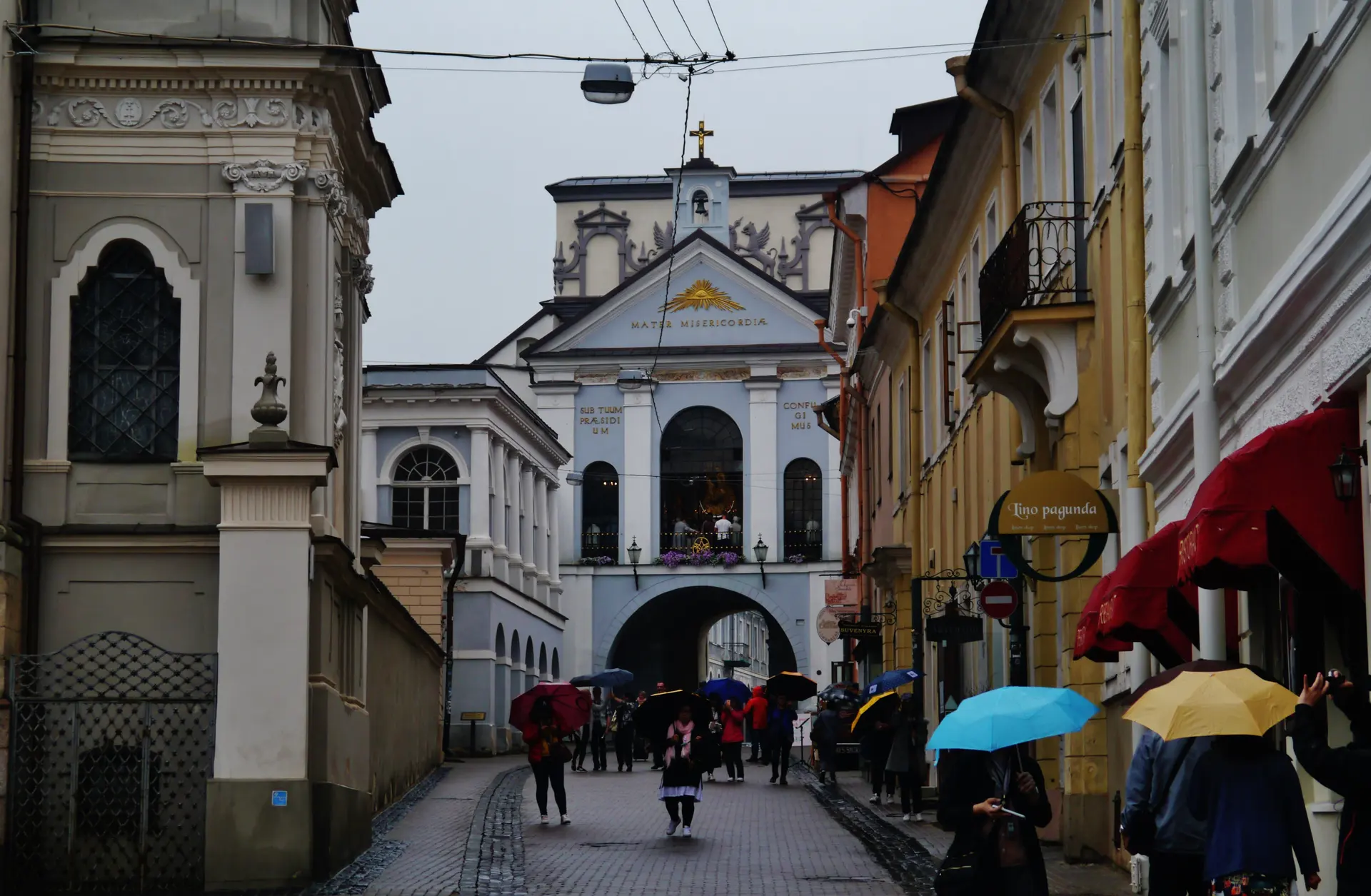
Our Lady of the Gate of Dawn
Vilnius, Vilnius, Lithuania
0.0 km away

Orthodox Church of the Holy Spirit, Vilnius
Vilnius, Vilnius, Lithuania
0.2 km away

Vilnius Cathedral and Chapel of St Casimir, Lithuania
Vilnius, Vilnius, Lithuania
1.2 km away

House of Saint Faustina
Vilnius, Vilnius, Vilnius County, Lithuania
3.9 km away
Share a photo
Help visitors recognize Gates of Dawn, Vilniaus. Every submission is reviewed before publication.