St. Bartholomew's Church, Berchtesgaden
A red-domed Baroque pilgrimage church on a lake peninsula beneath the Watzmann's east face
Understand sacred places, explore living traditions, and learn how to engage respectfully with Pilgrim Map.
Access has not been verified. Check current local guidance before planning a visit.
Königssee, Bavaria, Germany
Read the sources
Visit essentials
A quick read before you go
- Duration
- Half a day including the roughly 35-minute boat crossing each way; longer with hikes such as the…
- Access
- On the Hirschau peninsula on the western shore of Lake Königssee, Schönau am Königssee, Bavaria,…
Overview
On the Hirschau peninsula, where Lake Königssee narrows beneath the Watzmann's sheer east face, St. Bartholomä's red-domed Baroque church has drawn travelers since 1134. Berchtesgaden's Prince-Provosts founded it for the Holy Trinity and Virgin Mary. In 1522 its patron became St. Bartholomew the Apostle, protector of alpine herdsmen and dairymen.
A 1697 Baroque rebuilding echoed Salzburg Cathedral. Its triple-conch choir has three apses symbolizing the Trinity, stucco by Salzburg artist Joseph Schmidt, and famous twin red onion domes. Within Berchtesgaden National Park, a UNESCO Biosphere Reserve, the church is reachable only by near-silent electric ferry or demanding alpine paths. This remoteness makes it a sacred high-pass waypoint and the destination of one of Europe's oldest high-altitude pilgrimages.
The Bartholomä pilgrimage began in 1635 in thanksgiving for surviving plague. After a pilgrim boat capsized on the Königssee in 1688 and seventy-one drowned, the route was fixed across the Steinernes Meer from Maria Alm, Austria; it was revived in 1951. Boat passengers and walkers finishing days in the mountains reach a small Baroque interior amid lake stillness and alpine grandeur, one of the Alps' most contemplated scenes.
Why this place is sacred
The power of St. Bartholomä is inseparable from how one reaches it. There is no road; the church comes only by the near-silent electric ferry gliding up the Königssee or by a hard crossing of the high mountains. That access preserves a quiet that larger shrines rarely keep. The red domes set against the Watzmann's east face and mirrored in the emerald water compose a scene of lake, peak, and small human structure that many find profoundly stilling.
For pilgrims who arrive on foot after the multi-day crossing of the Steinernes Meer, the church is the resolution of an ordeal. The thinness here is the thinness of mountains and water: vast natural grandeur framing a small, centuries-old place of prayer.
Experience and orientation
Most visitors arrive on the near-silent electric ferry from Schönau, a crossing of about thirty-five minutes up the Königssee. The church-and-lodge ensemble set against the Watzmann's east face is one of the most photographed scenes in the Alps, the red onion domes vivid above the emerald water. The interior is small and Baroque, with the triple-conch choir of three apses, the high altar to St. Bartholomew bearing a painting of his martyrdom, side altars to St. Catherine and St.
James, and Joseph Schmidt's stucco. The surrounding national park inspires calm and reflection, and popular add-ons include the roughly two-hour return hike to the Eiskapelle beneath the Watzmann. Pilgrims who arrive on foot after the multi-day mountain crossing describe the moment as deeply moving.
Allow about half a day including the roughly 35-minute boat crossing each way, longer with hikes such as the Eiskapelle. Dress warmly and in sturdy footwear, and plan around ferry timetables and weather.
Context and lineage
The church was founded in 1134 by the Prince-Provosts of Berchtesgaden, originally dedicated to the Holy Trinity and the Virgin Mary, with patronage shifting to St. Bartholomew, patron of alpine herdsmen, in 1522. The Maria Alm pilgrimage began in 1635 as thanksgiving for surviving plague. After a 1688 disaster in which a pilgrim boat capsized on the Königssee and seventy-one people drowned, the route was fixed to end at St.
Bartholomä by crossing the mountains on foot; the pilgrimage was revived in 1951. Some aggregator pages mistakenly place the church in Austria; it is in Bavaria, Germany, while the August pilgrimage originates in Maria Alm, Austria.
Roman Catholic; founded by the medieval Berchtesgaden provostry and continuous as a pilgrimage church into the present.
Prince-Provosts of Berchtesgaden
Founders
St. Bartholomew the Apostle
Patron saint
Joseph Schmidt
Stucco artist
Maria Alm pilgrims
Pilgrimage community
Traditions and practice
Pilgrimage and devotion to St. Bartholomew, with intercession by alpine farming communities and travelers.
The annual Bartholomä pilgrimage takes place on the Saturday after 24 August, St. Bartholomew's feast, with up to around 2,000 participants crossing the Hochkönig and Steinernes Meer from Maria Alm; Masses and devotions are held at the church.
Cross the lake by ferry, or for experienced hikers follow the pilgrimage routes on foot, and enter the small church quietly to pray or attend Mass. Let the lake stillness and the mountain setting frame the visit.
Roman Catholic Christianity
ActiveAn iconic Bavarian alpine pilgrimage church dedicated to St. Bartholomew the Apostle, patron of alpine herdsmen and dairymen; terminus of one of Europe's oldest high-altitude pilgrimages and a centuries-old place of devotion amid the Berchtesgaden Alps.
Pilgrimage, Mass and devotions to St. Bartholomew; the annual cross-mountain Bartholomä pilgrimage from Maria Alm in Austria.
Perspectives and open questions
St. Bartholomä is studied as a medieval foundation and Baroque masterwork, venerated within living alpine Catholic devotion, and embraced as a symbol of the sublime mountain landscape.
Scholarly perspective
Scholars describe a medieval foundation of the Berchtesgaden provostry (1134), re-dedicated to St. Bartholomew in 1522 and rebuilt in Baroque form in 1697 on a plan echoing Salzburg Cathedral, an important regional pilgrimage church and a celebrated example of alpine sacred architecture.
Living and traditional perspectives
Local Catholic and alpine-farming tradition venerates St. Bartholomew as protector of herdsmen, and the Maria Alm pilgrimage embodies living communal devotion and gratitude.
Alternative interpretations
Beyond its Catholic identity, the church is widely embraced as a symbol of the sublime alpine landscape, drawing those moved by the spirituality of mountains and water.
Open questions
Details of the earliest twelfth-century structure beneath the Baroque rebuild are incompletely documented.
Plan your visit
Access and arrival
On the Hirschau peninsula on the western shore of Lake Königssee, Schönau am Königssee, Bavaria, within Berchtesgaden National Park; reachable only by electric ferry from Seelände/Schönau or by demanding alpine paths. The current regular Mass schedule was not confirmed from an official parish source; check locally before visiting.
Respectful visit
Modest, respectful attire for a working church; dress warmly and in sturdy footwear for the lakeside and any hiking.
Photography of the exterior and setting is hugely popular and welcome; inside, be discreet, avoid flash, and do not disrupt services.
Candle offerings and donations support the church.
Respect national-park rules (stay on paths, no littering or fires); be quiet during liturgy; plan around ferry timetables and weather.
Respect national-park rules: stay on paths, and avoid littering or fires. Be quiet during liturgy, and plan around ferry timetables and weather, which limit access.
Current practical details
Address
Kirche St. Bartholomä, St. Bartholomä 1, 83471 Schönau am Königssee, Germany
Phone
Hours, fees, and access can change — verify on the official source before you travel. Practical details last checked Jun 2026.
Location
Map loads as you approach this section.
Pilgrim reflections
A portrait of encounter, not a score
Pilgrims describe what they felt, how present they could become, and whether the place would shape a journey. There are no stars and no ranking of traditions.
No reviewed reflections yet
The first pilgrims can help describe the character of being here.
Share a reflection
Available after an account-backed “Been there.” Every reflection is reviewed before publication.
Nearby sacred places
Explore other sacred places in the region. Proximity does not establish access or travel time; check each place’s guidance.

St Leonhard Pilgrimage Church, Grödig
Grödig, Grödig, Salzburg, Austria
20.9 km away

Maria Kirchental Pilgrimage Church
St. Martin bei Lofer, St. Martin bei Lofer, Salzburg, Austria
21.4 km away
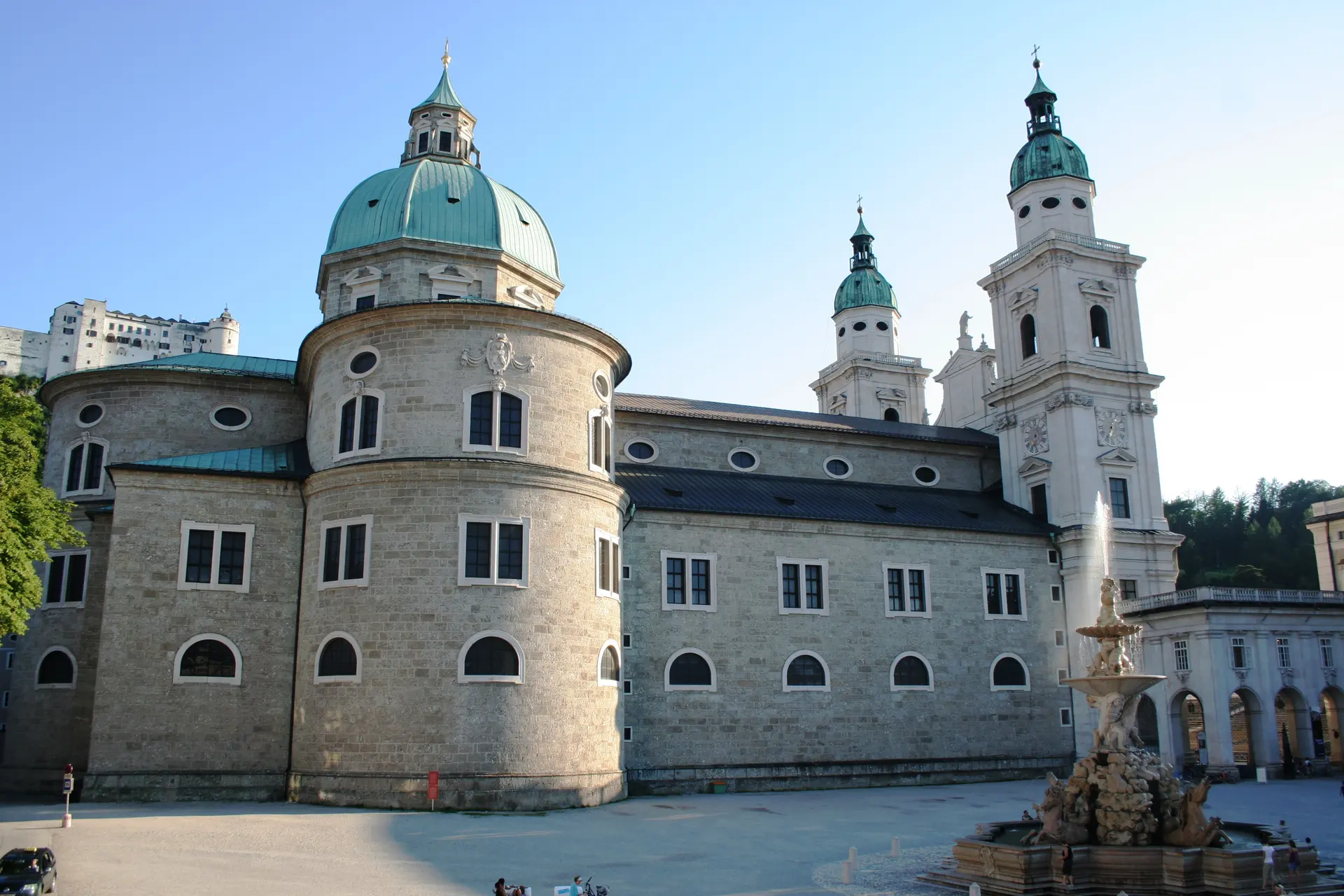
Salzburg Cathedral
Salzburg, Salzburg, Austria
28.7 km away

Maria Plain Pilgrimage Church
Bergheim, Bergheim, Salzburg, Austria
33.1 km away
References
Sources consulted for this page. Source categories describe the publication, not a guarantee that every claim is verified. Traditional accounts and outside interpretations may differ.
- 01St. Bartholomew's Church, Berchtesgaden — Wikipedia — Wikipedia contributorsacademicConfirms 1134 founding by the Prince-Provosts of Berchtesgaden, 1522 re-dedication to St. Bartholomew, 1697 Baroque rebuild modeled on Salzburg Cathedral with onion domes, Hirschau peninsula location, and the Maria Alm pilgrimage.
- 02Die Wallfahrtskirche St. Bartholomä am Königssee — Berchtesgaden TourismusofficialOfficial tourism source; confirms pilgrimage-church status, Watzmann backdrop, and boat-only access within the national park.
- 03St Bartholomew's Church (Königssee) — Bayerische Schlösserverwaltung (Bavarian Palace Department)officialOfficial Bavarian heritage authority; confirms history, Baroque architecture, three-apse choir and stucco work.
- 04Bartholomä Pilgrimage — Hochkönig — Hochkönig Tourism (Austria)officialConfirms the Maria Alm / Bartholomä high-altitude pilgrimage across the Steinernes Meer, its origin (1635 plague thanksgiving), 1951 revival, and the 1688 boat-capsizing tragedy.
- 05Boat trips at Lake Königssee — Visitor information — Bayerische SeenschifffahrtofficialOfficial lake ferry operator; confirms electric-boat access from Schönau (~35 min), seasonal/winter service, and that the church is reached by boat or alpine paths only.
- 06National Park Information Point St. Bartholomä — Nationalpark BerchtesgadenofficialNational park authority; confirms the church's setting within Berchtesgaden National Park and visitor context (e.g., Eiskapelle hike).
- 07St. Bartholomew Church, Berchtesgaden, Germany — SpottingHistorySource contextConfirms the triple-conch (three-apse) choir symbolizing the Trinity, the three altars (high altar to St. Bartholomew with a martyrdom painting, side altars to St. Catherine and St. James), and Joseph Schmidt's stucco.
Share a photo
Help visitors recognize St. Bartholomew's Church, Berchtesgaden. Every submission is reviewed before publication.