St. Andrew’s Church, Bishopstone, England
Where Saxon stone still holds the prayers of thirteen centuries, and the faithful still gather
Seaford, England, United Kingdom
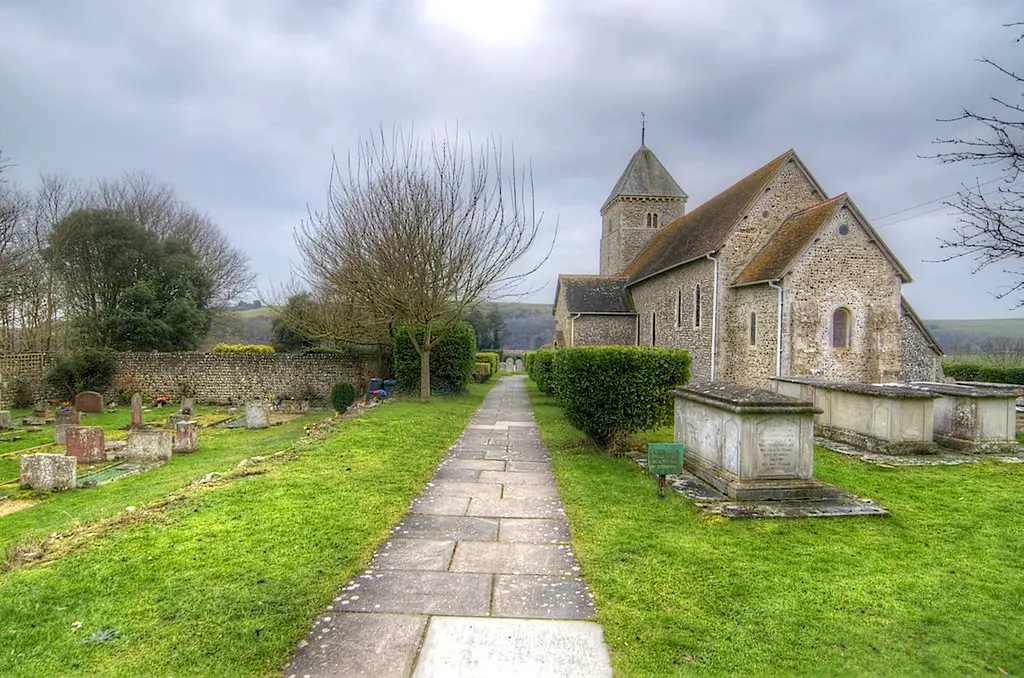
Image of St. Andrew’s Church, Bishopstone, England. Image source
Visit essentials
Before you go
- Address
- Bishopstone Rd, Bishopstone, Seaford BN25 2UD, UK
- Duration
- A heritage visit typically requires thirty to sixty minutes to appreciate the Saxon features,…
- Etiquette
- St Andrew's is an active place of worship that welcomes visitors warmly.
Overview
At St Andrew's, the deep roots of English Christianity remain visible and touchable. Saxon stonework has outlasted dynasties, the Norman conquest, and the Reformation, and still holds weekly prayer. Above the south porch, a sundial inscribed with the name Eadric continues to measure light across stone worn by thirteen centuries of weather.
St Lewinna was martyred here in the seventh century. Her relics drew pilgrims until they were stolen and taken to Flanders; pilgrimage ceased, but prayer continued. The community still gathers, celebrates eucharist, and offers healing prayer within these ancient walls.
Standing where Saxon Christians stood, in a building they would recognize, brings past and present close. The encounter is not only with history but with continuity—an unbroken thread of people reaching toward something greater than themselves.
Why this place is sacred
The thinness of St Andrew's arises first from continuity. This is not a ruin revived or a heritage attraction. The Eucharist celebrated here each Wednesday continues a practice that began when Saxon missionaries first brought Christianity to the South Saxons in the late seventh century. The church has never stopped being a church.
Archaeological evidence suggests something older still. During foundation strengthening in 1860, workers discovered urns containing charred bones described as Ancient British or Roman. Whether this indicates pre-Christian sacred activity on the site remains uncertain, but the pattern of early churches built upon earlier sacred ground is well documented across Britain. Something may have drawn human attention to this place before Christianity arrived.
The church's minster status adds another dimension. St Andrew's was not merely a local parish church but a mother church for the surrounding region, sending itinerant clergy to serve communities throughout the episcopal estate. The name Bishopstone itself—dwelling place of the bishop—speaks to its importance. This was a center from which Christianity radiated outward across the Sussex Downs.
Then there is the martyrdom of St Lewinna. In the seventh century, a Christian woman was killed here for her faith by Saxon pagans who had not yet accepted the new religion. Her relics were enshrined in the church, and miracles were reported at her tomb. Pilgrims came seeking healing until a Flemish monk stole the relics around 1060 and carried them away.
The relics were later destroyed in religious disturbances, but the memory persists—this is ground where someone died for what she believed.
The physical fabric compounds these factors. The Saxon walls, the ancient sundial, the stones fitted by hands that knew no Norman or medieval England—they create a tangible connection across time. Visitors describe feeling held by something larger than themselves, sensing the accumulated presence of all who have prayed here before.
St Andrew's was established as an Anglo-Saxon minster church, one of approximately fifty such churches across Sussex that supplied clergy to surrounding districts. The estate was administered by the Bishops of Selsey, later Chichester, making it a regional center of both ecclesiastical and temporal authority. Evidence from early ninth-century Mercian charters suggests the estate had become royal property by the time of King Offa, who reigned from 757 to 796.
The church's original purpose combined spiritual service with administrative function—the heart of a community that extended well beyond the village itself.
The church has evolved through phases while retaining its essential character. Norman builders added the upper tower storey, reconstructed the chancel, and built the north aisle, leaving their mark without erasing the Saxon foundation. Medieval additions included wall paintings, now fragmentary, and the fourteenth-century niche in the south porch that may have served as an Easter Sepulchre.
The loss of St Lewinna's relics in the eleventh century ended the church's role as a pilgrimage destination, but it remained the parish church for Bishopstone. The Reformation brought changes in liturgy and stripped away medieval devotions, yet services continued. Victorian restoration, while well-intentioned, covered some original features, though the discovery of the single-splayed Saxon north window in 2006 reminded everyone how much the building still holds.
Today, St Andrew's serves a dual role: heritage site and living church. The communion celebrated each Wednesday maintains the ancient rhythm; the monthly healing services add a contemporary expression of care for the wounded. Visitors come for the architecture and find themselves encountering something more.
Experience and orientation
The first thing visitors notice is the silence. Not the absence of sound—the Downs have their own voice, and the village its daily rhythms—but a quality of stillness that seems to emanate from the walls themselves. The thick Saxon masonry absorbs and holds, creating a sense of enclosure that feels protective rather than confining.
Many describe an unexpected emotional response. Standing in the nave, touching walls that have stood since the time of Bede, something shifts. The scale of time becomes tangible. Thirteen centuries of human beings have entered through that door, knelt on this ground, lifted their eyes toward the same light falling through windows that have witnessed every mood England has known. The weight of that continuity can be overwhelming.
The sundial above the south porch draws particular attention. The name Eadric, carved in letters shaped by a hand that lived and died over a thousand years ago, remains legible. Some scholars believe this may refer to Eadric, King of Kent, who reigned in the late seventh century. Whether royal or not, the inscription speaks of someone who wanted to be remembered—and succeeded beyond any expectation they could have held.
Those who come for services describe the experience differently. Participating in Eucharist here, using words that echo those spoken since the English language took its earliest forms, connects the worshipper to something beyond personal belief. The healing services, held monthly, draw those carrying burdens they cannot name. The church holds them without requiring explanation.
Visitors often linger longer than planned. The intention to see the Saxon features becomes an hour of sitting in silence, following the light across stone, feeling the particular quality of a place that has been prayed in for more years than most nations have existed.
Approach St Andrew's slowly. The walk from Seaford or the lane from Bishopstone station allows the Downs to prepare you for what the church holds. Notice how the building sits in its landscape—neither dominating nor hiding, but belonging to the earth it rises from.
Enter through the south porch, pausing beneath the sundial. Consider that the light striking these stones has done so every clear day for thirteen centuries. The porch itself is Saxon, positioned unusually far west along the nave, inviting speculation about its original purpose.
Inside, resist the urge to immediately identify features from guidebooks. Sit first. Let your eyes adjust. The church will reveal itself at its own pace. The layers of history—Saxon, Norman, medieval, restored—become apparent gradually, like conversation with someone who has much to tell but no hurry to tell it.
If you come during a service, join it. You need not be Anglican, or Christian, or anything at all. The act of gathering with others in a space designed for exactly this purpose is itself meaningful. The words and rituals carry more than their literal meaning—they carry the intentions of all who have spoken them here before.
Context and lineage
The story of St Andrew's begins with conversion. When Christianity came to the South Saxons in the late seventh century, brought by missionaries like Wilfrid of York, the new faith needed places to take root. Churches rose across the landscape, many positioned on sites already held sacred by the people who would now worship in a new way.
The episcopal estate at Bishopstone—literally the dwelling place of the bishop—became one such center. The Bishops of Selsey established a minster church here, meaning not a monastery in the later sense but a mother church from which priests went out to serve surrounding communities. The church named for St Andrew became the spiritual heart of an estate that included Denton, Norton, Sutton, and lands beyond.
St Lewinna's martyrdom adds another layer to the founding narrative. According to traditional accounts, this Christian woman was killed around 670 by Saxon pagans who had not yet accepted the faith. Her body was enshrined in the church, and miracles occurred at her tomb. The shrine drew pilgrims seeking healing and intercession until a Flemish monk named Balgerus stole the relics around 1058-1060 and carried them to Bergues Abbey in Flanders.
There the relics were venerated until religious disturbances in 1522 led to their destruction.
The identity of Eadric, whose name appears on the sundial, remains debated. Some scholars have suggested he was Eadric, King of Kent, which would date the inscription to around 685-686. Others propose he was an earl, a priest, or the church's first incumbent. The mystery persists, adding to the site's sense of reaching beyond certain knowledge into the deep past.
The ecclesiastical lineage of St Andrew's runs unbroken from the Saxon period to the present. The Bishops of Selsey, later translated to Chichester after the Norman conquest, held the manor and appointed clergy to serve the church. The tradition of episcopal connection persists—St Andrew's remains within the Diocese of Chichester.
The church now forms part of the United Benefice with St Peter's East Blatchington, sharing clergy and resources while maintaining its distinct identity. The current practice reflects an inclusive, gently Anglo-Catholic character within the Church of England's broad tradition.
Archaeological work has revealed the broader context. Gabor Thomas's excavations between 2002 and 2005 uncovered extensive remains of the Anglo-Saxon settlement surrounding the church—one of the most significant Saxon sites in southern England. The church is the only above-ground survivor of what was once a substantial high-status estate complex.
St Lewinna (Leofwynn)
martyr
A Christian woman martyred circa 670 by Saxon pagans for refusing to renounce her faith. Her relics were enshrined at St Andrew's, drawing pilgrims until they were stolen around 1060. She is Sussex's only female martyr saint. Her feast day is July 24.
Eadric
historical
The name inscribed on the sundial above the south porch. His identity remains uncertain—possibly King Eadric of Kent (reigned 685-686), an earl, a priest, or the church's founder. The inscription is one of the oldest personal names preserved in English church fabric.
Balgerus
historical
A Flemish monk who stole St Lewinna's relics from the church around 1058-1060, carrying them to Bergues Abbey in Flanders. His account provides the primary historical record of St Lewinna's cult.
Bishops of Selsey/Chichester
institutional
The episcopal see that administered the Bishopstone estate from its establishment until the present. The Domesday Book of 1086 records the Bishops of Chichester as holders of the manor, confirming the church's episcopal connection.
Traditions and practice
Historical practices at St Andrew's would have included the daily offices and celebration of Eucharist according to pre-Norman English rites. The minster status meant clergy were trained and sent out to serve surrounding communities. The veneration of St Lewinna drew pilgrims seeking healing and intercession at her shrine—a practice that continued until the relics were stolen in the eleventh century.
The Reformation ended Catholic devotions, and the character of worship shifted through the centuries that followed. High church and low church emphases rose and fell with changing clergy and national mood. Throughout, the basic rhythm of Sunday worship, baptisms, weddings, and funerals continued unbroken.
The current worship schedule reflects the church's dual identity as heritage site and living parish. Wednesday mornings bring a said Eucharist at 10am—a quiet service suited to the contemplative atmosphere. The last Wednesday of each month features a prayer healing service, drawing those seeking prayer for themselves or others. The last Friday afternoon offers contemplative or silent prayer, creating space for those who seek stillness without formal liturgy.
Major festivals are celebrated with particular attention. St Andrew's Day on November 30 honors the patron saint. The Christian year unfolds through Advent, Christmas, Lent, Easter, and Pentecost as it has for thirteen centuries.
Baptisms, weddings, and funerals continue to mark life transitions within the community. The church remains what it has always been: a place where people bring their beginnings, their unions, and their endings.
If you seek more than heritage tourism, consider these approaches.
Attend the Wednesday Eucharist. You need not be Anglican or hold any particular belief. The act of participating in a ritual that has occurred in this space for over a millennium carries its own meaning. Arrive a few minutes early and sit with the silence before the service begins.
If you come outside service times, find a place to sit rather than immediately exploring. Let the building speak before you ask questions of it. The quality of stillness here rewards those who allow time for it to reach them.
Bring an intention. Not a shopping list for the divine, but something you carry that needs holding—a grief, a decision, a hope. Leave it here, not expecting answer but trusting that the accumulated centuries of similar offerings have created a space capable of receiving yours.
Before leaving, offer silent gratitude. To the Saxon builders, to St Lewinna, to the generations of faithful who have maintained this place, to whatever you understand as sacred. The form matters less than the sincerity.
Anglo-Saxon Christianity
HistoricalSt Andrew's preserves some of England's most important physical evidence of Anglo-Saxon Christianity. As a minster church, it served as the mother church for a substantial episcopal estate, training and sending clergy to serve surrounding communities. The church witnessed the period when Christianity was establishing itself among the South Saxons, including the martyrdom of St Lewinna.
Historical practices included daily offices according to pre-Norman English rites, celebration of Eucharist, and the veneration of St Lewinna's relics at her shrine. The minster function meant pastoral responsibility for a wide region.
Cult of St Lewinna
HistoricalSt Lewinna was martyred circa 670 for her Christian faith, becoming Sussex's only female martyr saint. Her relics were enshrined at St Andrew's, drawing pilgrims seeking healing until the relics were stolen around 1058-1060. Though the relics were destroyed in 1522 and the active cult ended centuries ago, her memory connects this church to the age of martyrs.
Historical practices centered on veneration at her shrine, pilgrimage for healing, and celebration of her feast day on July 24. The theft of her relics ended organized cult practice at this location.
Church of England (Anglican)
ActiveSt Andrew's is the historic parish church for Bishopstone, now part of the United Benefice with St Peter's East Blatchington within the Diocese of Chichester. The church maintains an inclusive, gently Anglo-Catholic character, continuing the tradition of worship that has occurred here since before the English language took its modern form.
Weekly Wednesday Eucharist at 10am. Monthly healing prayer service on the last Wednesday. Contemplative prayer gathering on the last Friday at 4pm. The church is open daily for private prayer. Baptisms, weddings, and funerals continue to mark life transitions within the community.
Perspectives and open questions
St Andrew's Church has drawn scholarly attention for its exceptional surviving Saxon fabric while remaining a living place of worship rather than a museum piece. Understanding the site requires holding together architectural analysis, religious history, and the ongoing spiritual life of the community. Questions remain genuinely unresolved, lending the church an air of mystery that complements its contemplative atmosphere.
Scholarly perspective
Architectural historians agree on the exceptional quality of St Andrew's Saxon fabric, though they have long debated the precise dating. Pevsner favored an early eighth-century construction. Baldwin Brown preferred the tenth century, based on the long-and-short quoin work. The Taylors proposed a broad range of 600 to 950 CE. More recent scholarship has suggested dates as late as circa 1000 CE.
The debate reflects genuine uncertainty in dating pre-Conquest English churches. The presence of the Eadric sundial has been used to support earlier dating—if Eadric refers to King Eadric of Kent, the inscription dates to around 685-686—but this identification is not certain.
Gabor Thomas's archaeological excavations between 2002 and 2005, published as Council for British Archaeology Research Report 163, established Bishopstone as one of the most important Anglo-Saxon settlement sites in southern England. The church emerged as the sole above-ground survivor of a substantial high-status estate complex.
John Blair has produced detailed evidence identifying St Andrew's as the unnamed Sussex minster from which St Lewinna's relics were stolen, connecting the building to the broader history of early English Christianity.
Living and traditional perspectives
Within the Christian tradition, St Andrew's holds particular significance as the shrine of St Lewinna, Sussex's only female martyr. Her story exemplifies the early period when Christianity was establishing itself among the South Saxons, sometimes at the cost of converts' lives.
The Eastern Orthodox tradition has maintained interest in St Lewinna as an early British saint, with her feast day commemorated on July 24. Her story connects this church to the undivided Christianity of the first millennium, before the schisms that would later separate East and West.
For Anglicans, St Andrew's represents the deep roots of the Church of England, predating not only the Reformation but the Norman Conquest and the organizational structures of medieval Catholicism. The church stands as evidence that English Christianity has its own ancient tradition, not merely an import from Rome.
Alternative interpretations
The discovery of pre-Christian burial urns during 1860 foundation work opens questions about the site's deeper history. The pattern of Christian churches built upon earlier sacred sites is well documented across Britain, suggesting that missionaries may have recognized and claimed places already held sacred by the communities they sought to convert.
Some interpret this as cynical appropriation, others as respectful continuity. The truth likely varies by site and circumstance. At Bishopstone, we simply do not know whether the Christians who built here were aware of earlier sacred use, or whether the coincidence is accidental.
The site's position within the Sussex Downs, its relationship to the episcopal estate, and its function as a minster church all suggest intentional placement within a spiritual geography now largely lost to us.
Open questions
Genuine mysteries persist at St Andrew's. The precise construction date remains unresolved despite decades of scholarly attention. The identity of Eadric—whether king, earl, priest, or craftsman—is unknown. The exact location of St Lewinna's shrine within the church has never been identified.
The nature of any pre-Christian sacred activity at the site is speculation based on the burial urns, without supporting evidence for what rituals or beliefs might have been practiced. The extent of the Anglo-Saxon monastic complex revealed by excavation raises questions about the full scope of religious life centered here.
The reason for the minster's decline from regional importance to village parish remains unclear, though the loss of St Lewinna's relics may have contributed. These uncertainties are not defects in our knowledge but features of the site—windows into a past that did not think to explain itself to us.
Plan your visit
Access and arrival
Seaford offers a range of accommodation options, from guesthouses to small hotels. Eastbourne, a larger town nearby, provides more extensive choices. The South Downs also offer walking-oriented accommodation for those combining the visit with exploration of the Downs.
Respectful visit
There is no formal dress code. Respectful casual clothing is appropriate for an active church. During services, removing hats is customary for men. Practical footwear is recommended as the church has stone floors and uneven surfaces.
Personal photography is generally permitted when services are not in progress. Use of flash inside the building is discouraged. Photographing the sundial and exterior features is welcomed. Professional or commercial photography requires advance permission from the benefice. Consider spending time simply looking before raising a camera—the building rewards direct attention.
Donations for church maintenance and ministry are gratefully received. A donation box is available. Candles may be lit in prayer with an accompanying donation. There is no admission charge, and none is expected.
The church is open daily from 10am to 3pm. Access outside these hours requires arrangement with the benefice. Some areas may occasionally be roped off for preservation or safety reasons. Do not touch ancient stonework, carved features, or the sundial. Climbing on tomb slabs or memorial features is not permitted.
Do not confuse tourism with pilgrimage. Walking quickly through the building checking off Saxon features and taking photographs misses what the space offers. If you come seeking something, give the church time to provide it.
Be aware that this is an active place of worship. Services may be occurring during your visit. If so, you are welcome to join, but maintain appropriate quiet and reverence if you choose to observe rather than participate.
The church fabric is ancient and fragile. Do not touch carved stonework or attempt to take rubbings of the sundial inscription. What has survived thirteen centuries deserves protection for thirteen more.
Current practical details
Address
Bishopstone Rd, Bishopstone, Seaford BN25 2UD, UK
Phone
Hours, fees, and access can change — verify on the official source before you travel. Practical details last checked Jun 2026.
Location
Map loads as you approach this section.
Pilgrim reflections
A portrait of encounter, not a score
Pilgrims describe what they felt, how present they could become, and whether the place would shape a journey. There are no stars and no ranking of traditions.
No reviewed reflections yet
The first pilgrims can help describe the character of being here.
Share a reflection
Available after an account-backed “Been there.” Every reflection is reviewed before publication.
Nearby sacred places
Explore other sacred places in the region. Proximity does not establish access or travel time; check each place’s guidance.
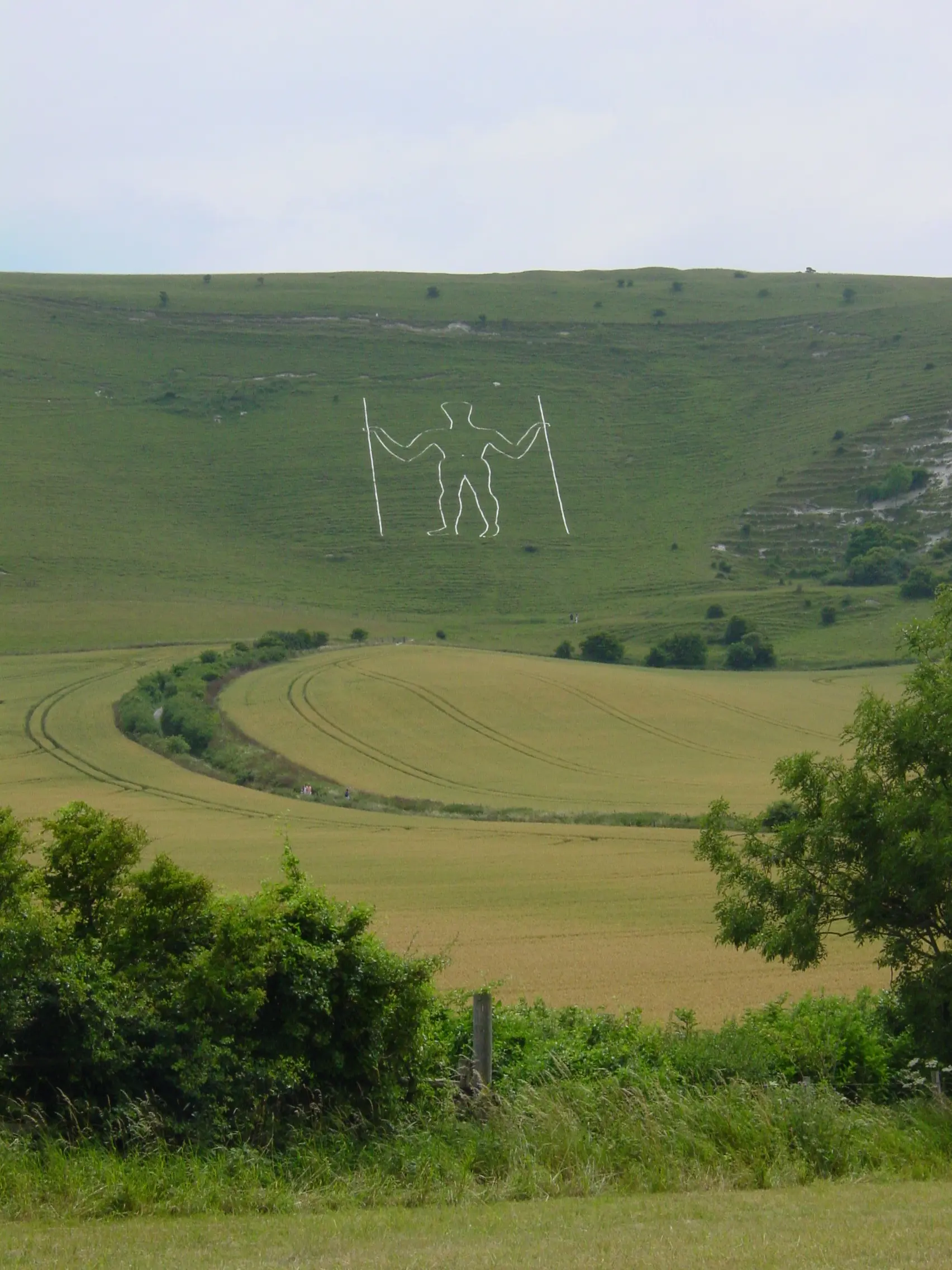
Long Man of Wilmington
England, England, United Kingdom
8.5 km away
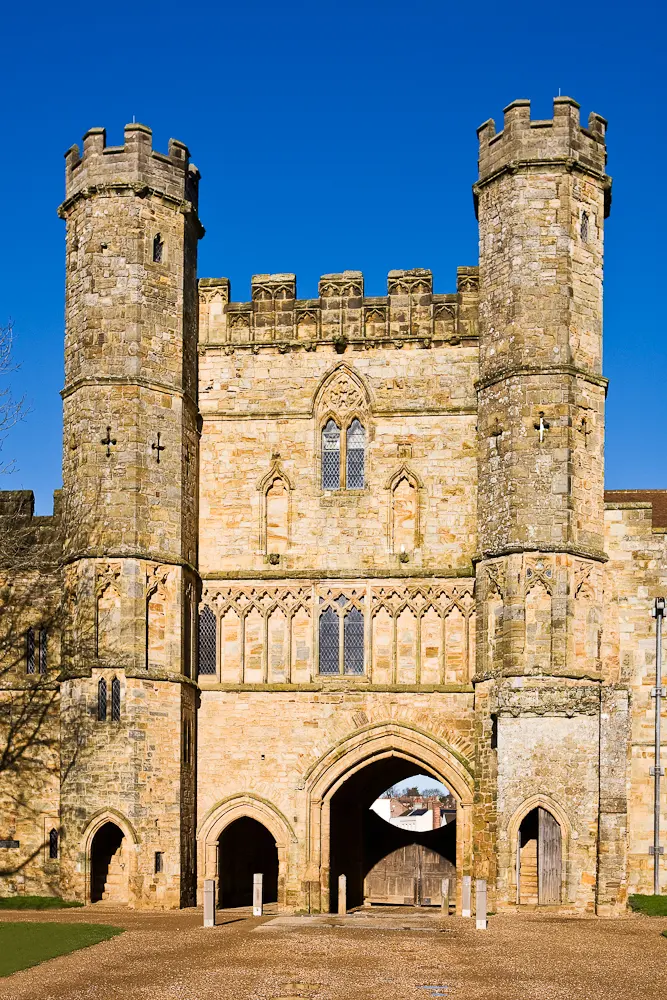
Battle Abbey
Battle, England, United Kingdom
31.2 km away
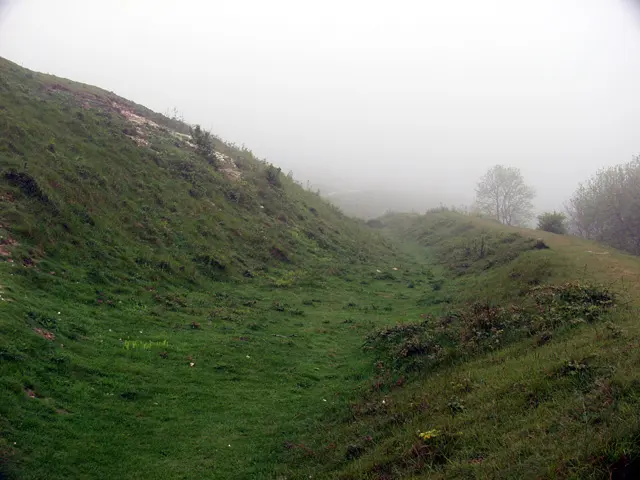
Cissbury Ring, Findon, West Sussex, England
Worthing, England, United Kingdom
34.0 km away
Chanctonbury Rings, Findon, West Sussex, England
Horsham, England, United Kingdom
35.1 km away
References
Sources consulted for this page. Source categories describe the publication, not a guarantee that every claim is verified. Traditional accounts and outside interpretations may differ.
- 01Bishopstone - St Andrew - Sussex Parish Churches — Sussex Parish ChurchesofficialComprehensive architectural and historical analysis with scholarly references
- 02St Andrew's, Bishopstone - A Church Near You — Church of EnglandSource contextOfficial Church of England listing with service times and contact information
- 03Our Buildings - EBB Churches — East Blatchington and Bishopstone ChurchesSource contextOfficial benefice website with restoration updates
- 04St Andrew, Bishopstone, Sussex - CRSBI — Corpus of Romanesque Sculpture in Britain and IrelandacademicScholarly architectural analysis of Romanesque features
- 05Church of St Andrew - Historic England — Historic EnglandofficialOfficial Grade I listing details
- 06The later Anglo-Saxon settlement at Bishopstone: A downland manor in the making — Gabor ThomasacademicCouncil for British Archaeology Research Report 163 (2010) - major archaeological study
- 07Bishopstone, East Sussex - Wikipedia — Wikipedia contributorsencyclopediaGood overview with historical context
- 08St Andrew's Church, Bishopstone - Wikishire — Wikishire contributorsencyclopediaDetailed architectural description
- 09Lewina - Wikipedia — Wikipedia contributorsencyclopediaAccount of St Lewinna and relic theft narrative
- 10Holy Sussex: Three Southern Saints - Orthodox England — Orthodox EnglandspiritualReligious perspective on St Lewinna
- 11St Andrew's Church - TripAdvisor — TripAdvisor contributorsSource contextVisitor experiences and practical information
Share a photo
Help visitors recognize St. Andrew’s Church, Bishopstone, England. Every submission is reviewed before publication.