Serpent Mound, Peebles, Ohio
The world's largest serpent effigy, where ancient astronomers spoke to sky and descendants return home
Understand sacred places, explore living traditions, and learn how to engage respectfully with Pilgrim Map.
Access has not been verified. Check current local guidance before planning a visit.
Bratton Township, Ohio, United States
Read the sources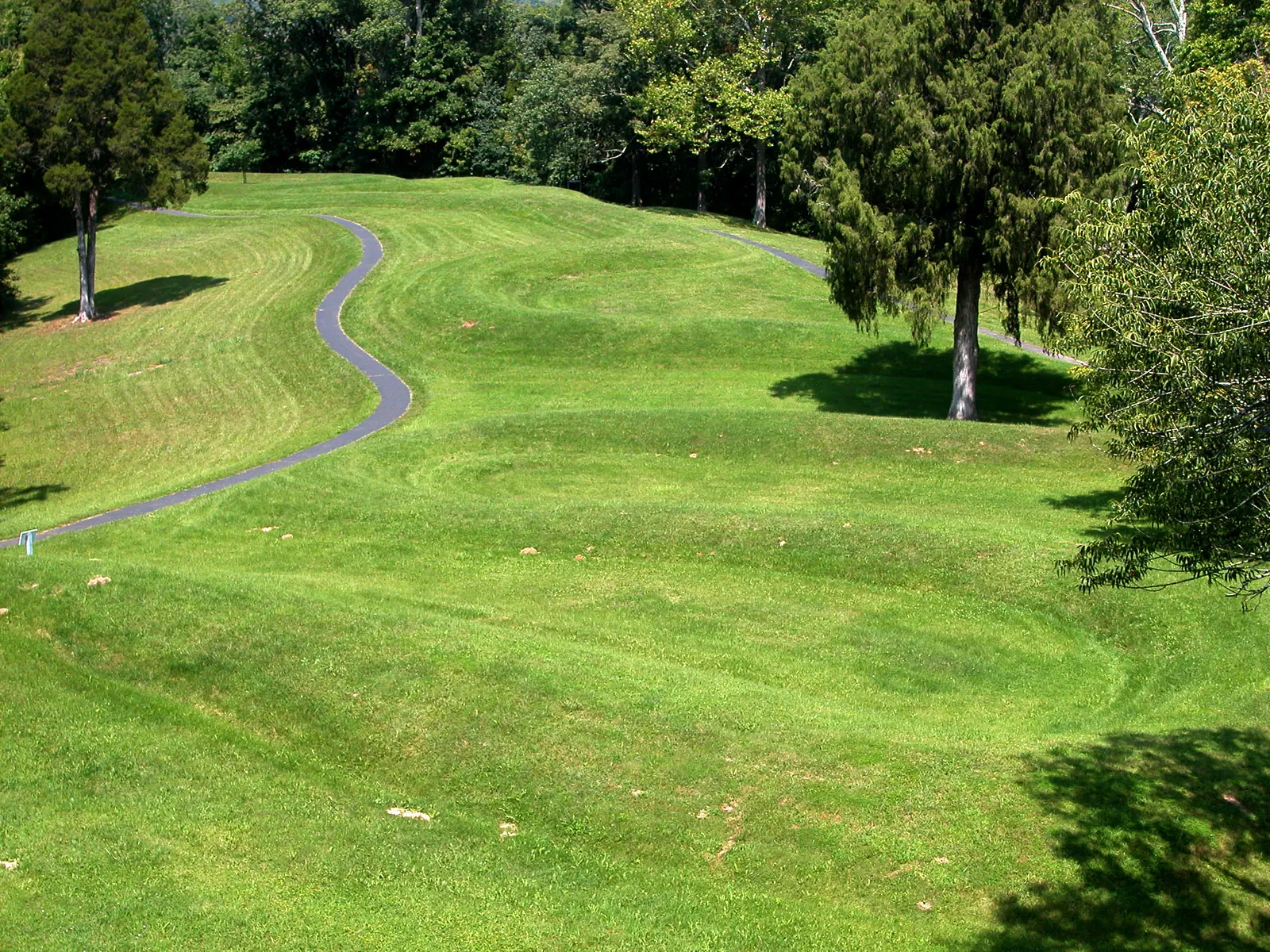
Visit essentials
A quick read before you go
- Duration
- Allow one to two hours for a meaningful visit.
- Etiquette
- Serpent Mound is a sacred site that requires the same reverence as any place of worship.
Overview
The largest serpent effigy in the world stretches nearly a quarter mile across an Ohio hilltop, its head aimed toward the point where the sun sets on the longest day of the year. No burial goods lie beneath it and no written records explain its purpose, yet it has endured through millennia, successive cultures, near-destruction, and eventual protection.
The mound was built on the rim of an ancient meteorite impact crater, a geological anomaly that may or may not have been significant to its creators. Archaeologists debate whether they belonged to the Adena culture some two thousand years ago, the Fort Ancient culture a thousand years later, or perhaps both—an original construction later maintained or rebuilt. Its astronomical alignments, careful shaping, and monumentality are not disputed.
Since 2021, the Shawnee Tribe and the Eastern Shawnee Tribe of Oklahoma have returned for ceremonies, particularly at summer solstice. Chief Ben Barnes has described the serpent as present within ongoing Shawnee religious practice—an umbilical connection to the world below. After centuries of forced removal, descendants are coming home and ask visitors to approach with the reverence due to any sacred place.
Why this place is sacred
The serpent's head points toward the summer solstice sunset. Stand at the right place on June 21st and you will see the sun descend directly into the wide-open jaws—an alignment the builders created with only earth and intention. The coils of the body trace other celestial patterns: solstice sunrise, equinox positions, perhaps lunar cycles. Researchers disagree on how precisely these alignments were intended, but the convergence is too consistent to dismiss as coincidence.
Beneath the mound lies another anomaly—the Serpent Mound crater, formed by a meteorite impact roughly 300 million years ago. Whether the builders knew this, and whether it influenced their choice of location, cannot be determined. But the effect is of a site twice-marked: once by cosmic violence in deep time, once by human intention in recorded time.
The Shawnee understand this place through a cosmology that includes the Great Serpent as a powerful spiritual figure. Their Snake Clan maintains traditions linking them to what lies below. When they returned in 2021, watching sunset at the serpent's head, one leader described the moment as coming home. For them, the thinness here is not metaphor—it is the actual proximity of worlds.
Visitors without these frameworks still report the site's distinctive quality. The scale is one factor—walking the path around the serpent takes time, and time changes perception. The silence is another; even with other visitors present, the site tends toward quiet. But something else operates here, something that causes visitors to slow down, to lower their voices, to sit for a while before leaving. Whatever the builders embedded in earth, it has not entirely dissipated.
The specific ceremonies or practices performed at Serpent Mound remain unknown. Unlike nearby burial mounds, the serpent contains no artifacts, no burials, no objects that might indicate use. The astronomical alignments suggest calendrical or ceremonial function, and the serpent figure held spiritual significance across many Native American cultures. But the builders left no records, and their descendants—if identifiable—hold knowledge they are not obligated to share.
What remains is the form itself: an invitation to interpretation that has never been fully answered.
The mound was first recorded by Western surveyors in 1846 and excavated in the 1880s by Frederic Ward Putnam of Harvard, whose efforts ultimately led to its preservation. For decades it was attributed to the Adena culture, then in 1991 radiocarbon dating suggested the Fort Ancient culture built it around 1070 CE—possibly in response to the appearance of Halley's Comet. A 2014 study reattributed it to the Adena, around 300 BCE, though this methodology has been challenged.
The current scholarly view holds both possibilities, and perhaps a synthesis: Adena origins with Fort Ancient maintenance or rebuilding.
The site became a National Historic Landmark in 1966 and was added to the U.S. World Heritage tentative list in 2008. It was not included in the 2023 UNESCO inscription of Ohio's Hopewell Ceremonial Earthworks because it belongs to a different cultural period. The most significant recent evolution is the partnership between Ohio History Connection and the Shawnee tribes, who have returned to conduct ceremonies and educate visitors about indigenous perspectives.
Experience and orientation
The drive to Serpent Mound takes you into rural Ohio, away from interstates and into a landscape of farms and small towns. This is not a site on the way to somewhere else; you must seek it deliberately. When you arrive, the visitor center offers context: a small museum explains the archaeological debates, the astronomical alignments, the Shawnee connection. This preparation matters. Without it, you might see only a grass-covered earthwork.
With it, you begin to perceive what lies beneath the surface.
The observation tower provides the overview—from above, the serpent's form emerges clearly, coiling seven times before its tail curls into a tight spiral. The head is wide-open, as if about to swallow the oval shape at its front. What that oval represents—an egg, the sun, a frog, or a platform mound remnant—remains debated. But from the tower, the scale becomes real. This is not a small sculpture.
It is a quarter-mile of intentional earthmoving, accomplished without metal tools, shaped to align with celestial events.
Descending from the tower, you walk the path that circuits the mound. You cannot walk on the serpent itself—a protection visitors are asked to honor. The path takes fifteen to twenty minutes if you move slowly, and slowness is appropriate here. The absence of shade means summer visits require preparation: water, sunscreen, a hat. The absence of sound—once other visitors quiet—means you hear wind in grass, birds, your own footsteps. The absence of distraction means thoughts arise unbidden.
Visitors often report a shift in quality during this walk. Words like 'peaceful' and 'contemplative' recur, but they are imprecise. Something about the form, the scale, the intention embedded in earth, creates conditions for reflection. What you reflect on is your own matter—the site does not prescribe. It simply holds space.
At summer solstice, when the sun sets directly into the serpent's open jaws, the experience intensifies. Crowds gather—some tourists, some seekers, some Shawnee returning to ancestral ground. The moment when light and earth align is brief but memorable. For those who have learned what the alignment means, it is also moving: evidence that people two thousand years ago understood the sky well enough to build in stone and soil a record of their understanding.
The serpent's head faces west-northwest, toward the summer solstice sunset. The tail points east-southeast, toward the winter solstice sunrise. The coils of the body trace other alignments. Orientation yourself to these directions is part of experiencing what the builders created. On a summer solstice evening, position yourself near the head before sunset. On a winter solstice morning, arrive early enough to see dawn from the tail.
At other times, simply walking the path with awareness of what each curve might mark deepens engagement.
Context and lineage
No founding narrative has survived in written form. Oral traditions that might illuminate the serpent's origin are held by tribal communities and are not fully shared with outsiders—nor should they be. What scholars have pieced together comes from archaeology, archaeoastronomy, and comparative mythology.
The Dhegiha Siouan tribes told a creation story involving the Great Serpent and First Woman. Some researchers see the entire earthwork as representing an episode from this narrative. The Horned Serpent appears across Native North American mythology as a powerful, ambivalent figure—associated with water, the underworld, and transformative power. Whether the mound depicts this figure specifically cannot be determined, but the serpent clearly held profound significance for its builders.
One intriguing possibility involves Halley's Comet, which appeared over North America in 1066 CE. If the Fort Ancient dating is correct, the mound may have been built in response—an earth-mirror of a celestial serpent streaking across the sky. Critics note that Halley's Comet has a straight tail, not the coiled form of the mound, but the timing remains suggestive.
The Shawnee offer a different framework. Chief Ben Barnes has stated that the serpent is present within ongoing Shawnee religious and ceremonial traditions—an umbilical connection to the world below. The age of the mound matters less, in this view, than the continuity of serpent symbolism in living practice. The Snake Clan endures within Shawnee society, a community for whom the serpent is not archaeology but identity.
The lineage of Serpent Mound is contested and complex. If built by the Adena culture (800 BCE - 100 CE), it represents a late expression of Early Woodland mound-building traditions. If built by the Fort Ancient culture (900-1650 CE), it connects to Late Woodland and Mississippian traditions, and to Ohio's Alligator Mound, another Fort Ancient effigy. A synthesis view holds that the Adena created the original, and the Fort Ancient maintained or rebuilt it a thousand years later.
The Shawnee, who historically inhabited Ohio before forced removal in the 18th and 19th centuries, claim ancestral connection regardless of which archaeological culture built the physical structure. Chief Barnes has noted evidence throughout the region, from Ohio into Kentucky and West Virginia, as well as ceremonial traditions still practiced in Oklahoma, supporting this connection. The Snake Clan within Shawnee society maintains the serpent as spiritually significant.
Serpent Mound is part of Ohio's broader landscape of indigenous monuments, which includes the UNESCO-inscribed Hopewell Ceremonial Earthworks, Fort Ancient Earthworks, and Newark Earthworks. Though built by different cultures across different centuries, these sites together represent the mound-building traditions of the Eastern Woodlands—among the most sophisticated prehistoric constructions in North America.
The Builders
Creators of the effigy
Frederic Ward Putnam
Archaeologist and preservationist
Chief Ben Barnes
Chief of the Shawnee Tribe
Chief Glenna Wallace
Chief of the Eastern Shawnee Tribe of Oklahoma
Traditions and practice
The specific rituals or ceremonies performed by the mound's builders cannot be reconstructed. No artifacts illuminate use; no oral traditions have been publicly shared. The astronomical alignments suggest the site may have served to mark seasons or ceremonial calendars. Serpent symbolism across Native American traditions associates the figure with transformation, renewal, the underworld, and the connection between realms. But applying these general meanings to this specific site requires caution.
The Shawnee hold traditional knowledge that is not fully shared with outsiders. What has been publicly stated is that the serpent remains present within ongoing religious and ceremonial practice—not a relic of the past, but a living element of Shawnee spirituality. The Snake Clan's existence testifies to this continuity.
Since 2021, the Shawnee Tribe and Eastern Shawnee Tribe of Oklahoma have partnered with Ohio History Connection to conduct ceremonies at Serpent Mound, particularly at summer solstice. These events combine public education with ceremonial practice. At sunset on the solstice, participants gather at the serpent's head to watch the sun descend into the open jaws—an experience Chief Barnes has described as coming home.
The Friends of Serpent Mound organize a Summer Solstice Celebration Festival each June, typically spanning several days around the 21st. Events include educational presentations, music, and opportunities for visitors to experience the sunset alignment. Archaeological tours are offered on the second and fourth Fridays of each month during the season.
Serpent Mound offers no prescribed ritual for visitors. What it offers is space for whatever you bring. Walk the path around the effigy slowly, allowing the scale and form to work on perception. Sit on one of the benches and simply look. If possible, time your visit to a solstice or equinox—not for ceremony, but for the experience of alignment, the sun finding its mark as it has for millennia.
Before your visit, learn what you can about the Shawnee connection. Understanding that this is a sacred site for living peoples, not merely an archaeological curiosity, changes the quality of attention. Let your visit be contemplation, not consumption.
If you attend a public event during which indigenous ceremonies occur, remain respectful. Watch and listen; do not participate unless explicitly invited. Photography may be inappropriate during ceremonies—take cues from context and announcements.
Shawnee Ancestral Spiritual Practice
ActiveThe Shawnee Tribe affirms ancestral connection to Serpent Mound based on the presence of serpent symbolism in ongoing Shawnee religious and ceremonial traditions. The Snake Clan remains an important traditional, religious community within Shawnee society, for whom the serpent represents an umbilical connection to the world below. After forced removal to Oklahoma in the 19th century, the Shawnee have returned for ceremonial reconnection since 2021.
Summer solstice ceremonies at the serpent's head, prayers at sunset, feasting and prayer gatherings. Specific ceremonial protocols are sacred knowledge not shared publicly. The Shawnee Tribe has partnered with Ohio History Connection to conduct ceremonies and educate visitors about indigenous perspectives.
Eastern Shawnee Tribal Reclamation
ActiveThe Eastern Shawnee Tribe of Oklahoma, under Chief Glenna Wallace, has partnered with Ohio History Connection to reclaim connection to Serpent Mound and other Ohio earthworks. Wallace has spoken about how her ancestors treasured these mounds as sacred places. The tribe's near-extinction—reduced to 69 people by 1900—makes reconnection with ancestral sites particularly poignant and significant.
Public education about indigenous connection; ceremonial presence at solstice events; advocacy against appropriation and misinformation. The Eastern Shawnee work alongside the Shawnee Tribe to ensure indigenous perspectives are centered in interpretation of the site.
Fort Ancient Culture (Historical)
HistoricalIf the 1991 radiocarbon dating is accepted, Serpent Mound was built by the Fort Ancient culture around 1070 CE. This culture, which flourished from 900-1650 CE, frequently depicted serpents in their art and built other effigy mounds, including Ohio's Alligator Mound. Some scholars suggest the mound may have been built in response to Halley's Comet appearing in 1066 CE.
Unknown specifically for Serpent Mound. Fort Ancient artifacts from other sites suggest belief in afterlife, higher powers, and the potency of totemic animal images. Animism—the belief that all things contain an animating spirit—characterized their worldview.
Adena Culture (Historical)
HistoricalIf the 2014 radiocarbon dating is accepted, Serpent Mound was originally built by the Adena culture around 321 BCE. The Adena, who flourished from 800 BCE to 100 CE, are known for burial mounds in Ohio, but not for effigy mounds or serpent symbolism. This makes the Adena attribution controversial. Some scholars propose the Adena built the original, later maintained or rebuilt by Fort Ancient peoples.
Adena burial practices are documented in nearby burial mounds, but specific practices at the serpent effigy remain unknown. The Adena were part of the Early Woodland tradition of mound building in the Ohio Valley.
Archaeoastronomy
ActiveSerpent Mound has become a significant site for archaeoastronomy research and celestial observation. The serpent's head aligns with the summer solstice sunset, the tail points toward winter solstice sunrise, and the body coils may trace other celestial alignments. Researchers have proposed connections to lunar cycles and the constellation Draco.
Summer solstice sunset observation at the serpent's head draws visitors seeking the iconic alignment. Winter solstice sunrise observation at the tail provides the complementary experience. Archaeological tours explore the astronomical dimensions of the site. Researchers continue studying the alignments' precision and intentionality.
Perspectives and open questions
Serpent Mound invites multiple frameworks of understanding, none of which fully encompasses what it is. Archaeological perspectives debate who built it and when. Indigenous perspectives affirm spiritual connection that transcends archaeological categorization. Alternative perspectives have introduced theories that indigenous leaders find harmful. What unifies serious engagement is humility before what we do not know.
Scholarly perspective
Scholarly consensus on Serpent Mound remains genuinely divided—a rare case in archaeology. The 1991 radiocarbon dating placed construction around 1070 CE, attributing it to the Fort Ancient culture, which frequently depicted serpents in their art and built other effigy mounds. The 2014 dating contradicted this, placing construction around 321 BCE and attributing it to the Adena culture.
However, a 2018 critique by archaeologist Brad Lepper and colleagues challenged the 2014 methodology, noting that the dated material was organic sediment rather than charcoal and was obtained from soil cores rather than exposed profiles.
Many scholars now entertain a synthesis: the Adena may have built the original, and the Fort Ancient may have maintained or rebuilt it a thousand years later. This would explain dating evidence pointing to both periods. What scholars do agree on is the site's significance: Serpent Mound is one of the most important prehistoric monuments in North America, demonstrating sophisticated astronomical knowledge and monumental construction capacity.
The astronomical alignments are generally accepted, though the precision and intentionality of each specific alignment remain debated. The head's alignment with summer solstice sunset is the most dramatic and widely acknowledged. Other proposed alignments—lunar cycles, the constellation Draco, body coils marking equinoxes—are more speculative.
Living and traditional perspectives
The Shawnee tribes affirm ancestral connection to Serpent Mound that does not depend on resolving archaeological dating debates. Chief Ben Barnes has stated: 'Because of the age, location, and the important symbolism of serpents to the Shawnee, we feel a close kinship to this place. There's a lot of evidence that indicates our ancestors may well have built the serpent. And it's not just evidence in Ohio. It's evidence throughout the region, even southward into Kentucky and West Virginia.
As well as evidence from our religious and ceremonial traditions that we still practice today in Oklahoma.'
The Snake Clan within Shawnee traditional, religious community speaks to the enduring significance of serpent symbolism. The serpent is not a historical artifact for these communities—it is present within living practice, what Barnes calls an umbilical connection to the world below.
Chief Glenna Wallace of the Eastern Shawnee has described how her ancestors treasured Ohio's mounds as sacred, protected, and revered. The devastation of federal removal policies reduced her tribe to 69 people by 1900, making reconnection with ancestral sites particularly significant. The return to Serpent Mound is an act of healing and reclamation.
Both tribal leaders emphasize that Serpent Mound deserves the same reverence as any place of worship. It is not a tourist attraction but a sacred site with living significance.
Alternative interpretations
Some fringe theories propose that Serpent Mound was built by beings other than Native American peoples—aliens, giants, or lost civilizations. These theories have no archaeological support and have been explicitly rejected by indigenous leaders as harmful misinformation that erases Native American achievement.
New Age appropriation—conducting unauthorized ceremonies, burying crystals or objects, treating the site as a personal energy spot—has been identified by tribal leaders as disrespectful and, in some cases, as desecration. Chief Wallace has described such activities as having the quality of a minstrel show, appropriating and misrepresenting Native cultures.
These alternative framings, whatever their intent, cause real harm. They redirect attention from indigenous perspectives and achievements, and they violate the sanctity of a sacred site. Visitors encountering such theories should decline to repeat them.
Open questions
Genuine mysteries remain at Serpent Mound—mysteries that deserve acknowledgment rather than speculation. The definitive cultural attribution cannot be settled with current evidence; both Adena and Fort Ancient dating have support and critique. The specific ceremonial function remains unknown; no artifacts illuminate use. The meaning of the oval at the serpent's head—egg, sun, frog, or platform remnant—is debated without resolution.
Whether the astronomical alignments were precisely intentional or approximate cannot be determined. The relationship between the mound and the underlying meteorite impact crater—whether the builders knew of it, and whether it influenced their choice of location—is beyond recovery.
Perhaps most significantly, the oral traditions and ceremonial knowledge that would illuminate these questions are held by tribal communities and are theirs to share or withhold. Not all knowledge is public, and not all mysteries require solving. What the serpent meant to its builders, they did not record. What it means to their descendants, those descendants are entitled to keep private. Visitors can sit with uncertainty and find meaning in that sitting.
Plan your visit
Access and arrival
Limited lodging is available in Peebles itself. More options exist in Hillsboro (15 miles) and Chillicothe (35 miles). For solstice events, book well in advance as accommodations fill quickly. Camping options exist in the region; check with local campgrounds.
Respectful visit
No specific dress code applies. Wear comfortable walking shoes for the perimeter path and sun protection for the unshaded site. In summer, the lack of shade makes heat a consideration; in winter, cold and wind require appropriate layers. Dress practically and modestly.
Photography is permitted for personal use. Do not use photography for commercial purposes without permission from Ohio History Connection. During indigenous ceremonies, photography may be restricted—follow any announcements and respect requests not to photograph. When photographing other visitors, obtain consent.
Do not leave offerings of any kind. This includes natural items like flowers or stones as well as objects you might consider spiritually meaningful. The site is not a personal altar. Tribal leaders have specifically requested that visitors not bury objects, leave crystals, or treat the mound as a receptacle for individual spiritual practice.
{"Do not walk on the mound—stay on designated paths","Do not touch, disturb, or remove anything from the site","Do not conduct personal ceremonies or rituals","Do not leave offerings or bury objects","Do not spread fringe theories (aliens, giants) that erase indigenous heritage","Access only during posted hours—visiting outside hours is trespassing","Pets must be leashed"}
Tribal leaders have explicitly identified certain activities as inappropriate and disrespectful. Do not conduct your own ceremonies or rituals at the site. Do not leave offerings, dig, or bury items in or near the mound—this has been described as desecration. Do not spread or repeat fringe theories about aliens or giants building the mound; these misrepresentations are harmful to indigenous communities.
The site has become, in the words of one tribal leader, a flashpoint where appropriation and misinformation threaten sacred heritage.
Treat Serpent Mound as you would any place of worship. The reverence appropriate to a cathedral, synagogue, or mosque is appropriate here.
Current practical details
Address
3850 OH-73, Peebles, OH 45660, USA
Phone
Hours
Hours, fees, and access can change — verify on the official source before you travel. Practical details last checked Jun 2026.
Location
Map loads as you approach this section.
Pilgrim reflections
A portrait of encounter, not a score
Pilgrims describe what they felt, how present they could become, and whether the place would shape a journey. There are no stars and no ranking of traditions.
No reviewed reflections yet
The first pilgrims can help describe the character of being here.
Share a reflection
Available after an account-backed “Been there.” Every reflection is reviewed before publication.
Nearby sacred places
Explore other sacred places in the region. Proximity does not establish access or travel time; check each place’s guidance.
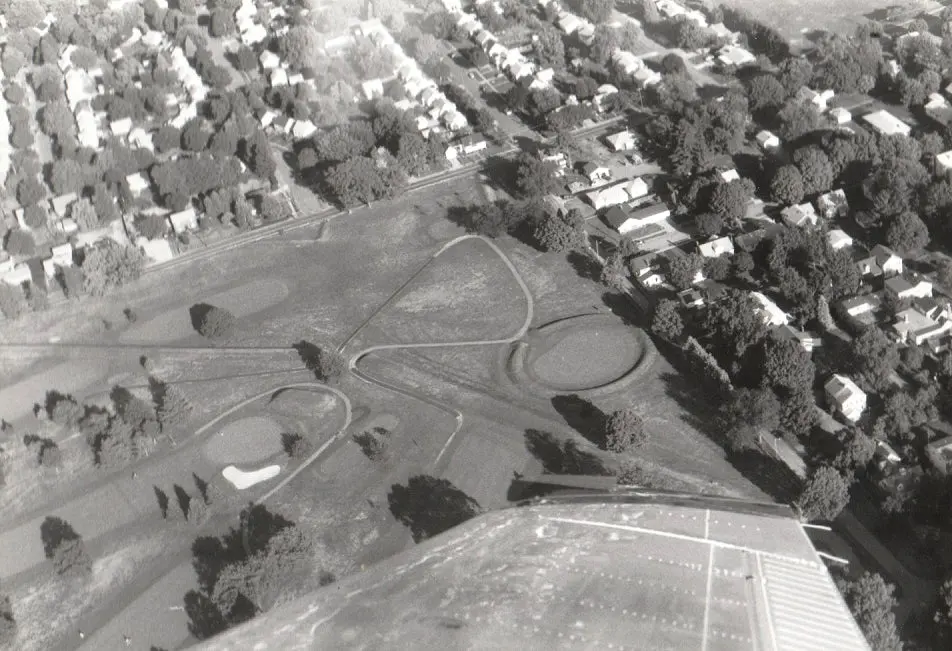
Hopewell Ceremonial Earthworks
Newark, Ohio, United States
142.5 km away

Maria Stein Shrine of the Holy Relics
Maria Stein, Ohio, United States
178.6 km away
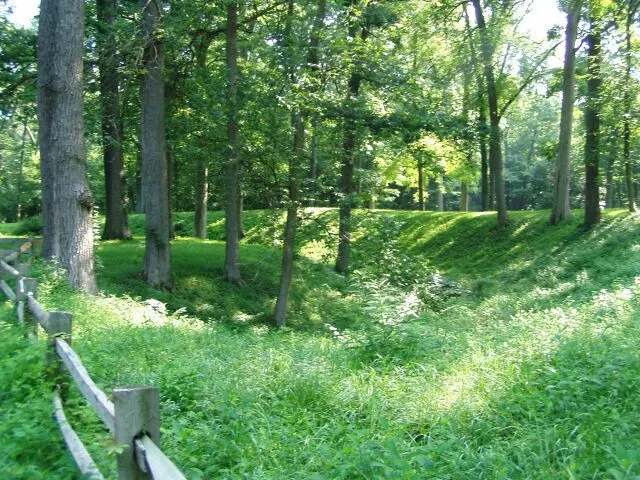
Mounds State Park, Indiana
Anderson, Indiana, United States
224.2 km away
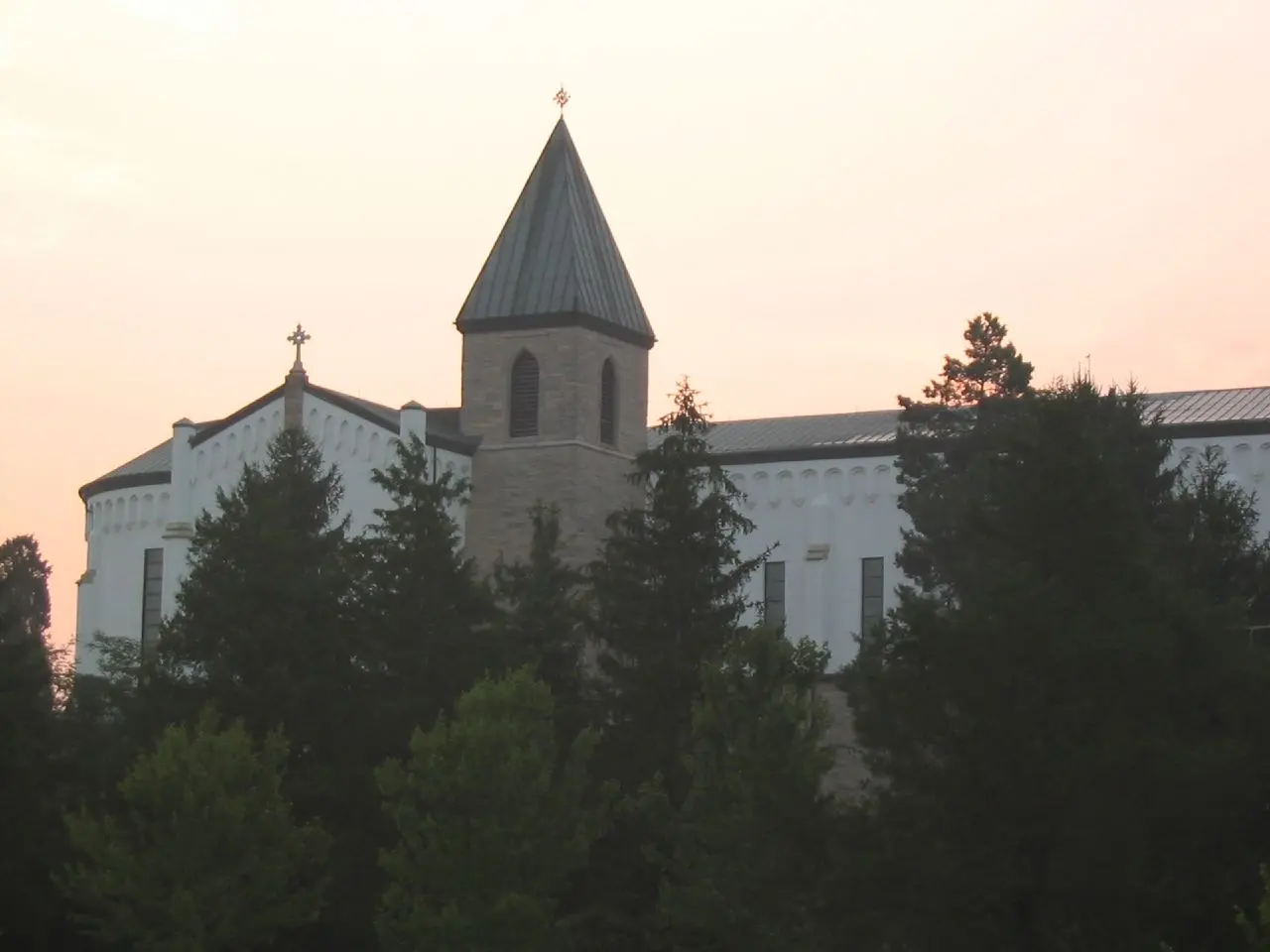
Abbey of Our Lady of Gethsemani
Trappist, Kentucky, United States
237.5 km away
References
Sources consulted for this page. Source categories describe the publication, not a guarantee that every claim is verified. Traditional accounts and outside interpretations may differ.
- 01Serpent Mound - Ohio History Connection — Ohio History ConnectionofficialOfficial site manager; authoritative for visitor information
- 02Ohio's Serpent Mound- An American Indian Story Written in the Earth — Ohio History ConnectionofficialExcellent overview respecting indigenous perspectives
- 03WHO BUILT SERPENT MOUND? — Ohio History ConnectionofficialScholarly discussion of dating controversy
- 04Serpent Mound - UNESCO World Heritage Centre — UNESCOofficialUNESCO tentative list entry
- 05Serpent Mound - World History Encyclopedia — World History EncyclopediaacademicScholarly encyclopedia entry
- 06Shawnee reclaim the great Serpent Mound — Indian Country TodaySource contextIndigenous media; direct quotes from Chiefs Ben Barnes and Glenna Wallace
- 07SUMMER SOLSTICE WILL BE CELEBRATED AT SERPENT MOUND JUNE 20-23 — Shawnee TribeSource contextOfficial Shawnee Tribe communication
- 08Serpent Mound: Still Built by the Adena, and Still Rebuilt During the Fort Ancient Period — Lepper et al.academicAcademic critique of 2014 dating study
- 09Astronomy in Art & Architecture: Serpent Mound, Ohio — Vatican ObservatoryacademicScholarly archaeoastronomy analysis
- 10Serpent Mound - WikipediaencyclopediaGood overview with citations; useful for cross-referencing
- 11Serpent Mound - Location, Origins & Preservation — History.comacademicGood historical overview
- 12How Ohio's Indigenous sacred sites became a religious flashpoint — National Catholic ReporteracademicDocuments appropriation concerns
- 13Moon at Serpent Mound — Moon at Serpent Mound ProjectacademicDetailed astronomical alignment analysis
- 14Friends of Serpent Mound — Friends of Serpent MoundSource contextCommunity organization; organizes events
- 15Ancient Ohio Trail - Serpent Mound — Ancient Ohio TrailSource contextTourism context with other Ohio sites
Share a photo
Help visitors recognize Serpent Mound, Peebles, Ohio. Every submission is reviewed before publication.