Hopewell Ceremonial Earthworks
Where ancient Americans built earth and sky into one geometry, aligning mounds with moon and meaning
Understand sacred places, explore living traditions, and learn how to engage respectfully with Pilgrim Map.
Access has not been verified. Check current local guidance before planning a visit.
Newark, Ohio, United States
Read the sources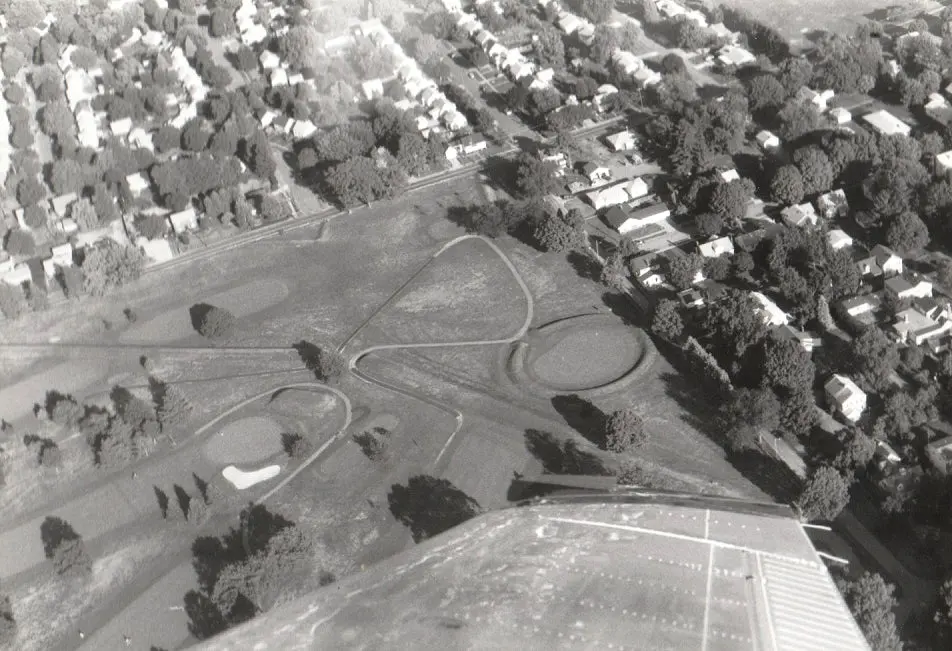
Image of Hopewell Ceremonial Earthworks. Image source · CC-BY-SA-4.0
Visit essentials
A quick read before you go
- Duration
- Half day to visit both the Great Circle and Octagon Earthworks with museum
- Etiquette
- Approach the Hopewell earthworks as sacred ground and burial site.
Overview
Two thousand years ago, small communities of foragers, fishers, and farmers across the Ohio River valley periodically gathered to raise precise earthen forms: circles nearly twelve hundred feet in diameter, octagons aligned to lunar extremes, and pathways stretching for miles. The Hopewell Ceremonial Earthworks are among humanity's most ambitious efforts to inscribe spiritual meaning on land.
Without metal tools or written language, their builders achieved geometric precision unmatched for centuries, tracked the moon's complex 18.6-year cycle in earthwork architecture, and drew people from half a continent bearing obsidian from the Rockies, mica from the Appalachians, and shells from the Gulf coast. For descendant Native American communities—the Shawnee, Miami, Delaware, and others—these remain living sacred places.
The 2023 UNESCO World Heritage inscription recognized rather than discovered what John Low, Newark Earthworks Center director and Pokagon Band of Potawatomi citizen, says plainly: the earth here 'was sacred, is sacred, will always be sacred.'
Why this place is sacred
What makes a place thin—that Celtic concept of locations where the distance between worlds narrows? The Hopewell Ceremonial Earthworks offer an answer inscribed in earth.
Consider the Octagon Earthworks. Its walls frame a precise alignment with the moon's northernmost rising point, an extreme that the moon reaches only once every 18.6 years. The builders could not have discovered this alignment in a single lifetime. This knowledge required generations of careful observation, passed down as sacred trust. The earthwork embodies not just astronomical fact but accumulated devotion—ancestors watching, recording, teaching, until finally their descendants could build in earth what they had learned from sky.
The Great Circle nearby spans nearly twelve hundred feet, enclosing thirty acres within walls that once stood twelve feet high. Its entrance opens to the east, toward sunrise. Walking in, you cross a threshold the Hopewell marked as significant two millennia ago. The scale silences casual conversation. You find yourself walking slowly, attending.
Visitors describe various experiences: awe at the scale, peace in the enclosed space, connection to the builders, recognition of something they cannot quite name. These reports align with what makes thin places thin—not supernatural pyrotechnics but a quality of attention, a sense that this ground holds accumulated human meaning.
The Hopewell drew people here from the ends of their known world. Artifacts reveal offerings brought from the Rocky Mountains, the Gulf of Mexico, the Atlantic coast, the Great Lakes. This was a pilgrimage center before that word existed in English. Something called people here, as something continues to call them.
The Hopewell built these earthworks as ceremonial centers for activities that connected human community with cosmic order. Archaeological evidence reveals elaborate burials, large shrines, altars, and objects of ritual significance. The sites hosted feasts, funerals, and rites of passage. The astronomical alignments suggest ceremonies timed to celestial events—particularly the moon's complex cycle. Creek oral traditions speak of seasonal pilgrimages northward to 'special mounds' in Ohio, suggesting the earthworks drew participants from across the Hopewell's vast network.
The Hopewell ceremonial tradition flourished for nearly four centuries, from roughly 100 BCE to 400 CE. During this time, the earthworks were actively maintained and used. Around 400 CE, the tradition declined for reasons that remain unclear—perhaps environmental stress, social change, or the natural evolution of spiritual practice.
But the sites never lost their sacred character. Subsequent Indigenous peoples—including ancestors of the Shawnee, Miami, and Delaware—continued to recognize and reverence these places. European settlers, unfortunately, destroyed much of the original complex. What survives represents perhaps ten percent of the Newark earthworks' original extent.
The twentieth century brought both threat and protection. A country club occupied the Octagon for over a century, ironically preserving it as open space while limiting access. After decades of legal struggle, the golf course left in January 2025, and the full earthwork is now accessible. The 2023 UNESCO inscription marked global recognition of these sites' significance. Today they stand as both ancient sacred ground and symbol of Indigenous heritage reclaimed.
Experience and orientation
The experience of the Hopewell Ceremonial Earthworks begins with scale. Standing at the edge of the Great Circle, you look across thirty acres enclosed by earthen walls that once rose twelve feet. The mind adjusts slowly to this ambition built in soil.
Walking the perimeter takes time. The enclosure is so large that distant figures become small, their voices carrying faintly across the grass. The walls curve with a precision that reveals itself gradually—not the rough approximation you might expect from hand-built earthwork, but confident geometry that holds its shape for nearly a quarter mile in each direction.
Inside the circle, something shifts. Visitors describe it variously: a stillness, a sense of being held, an awareness of the sky that the enclosure seems to frame. The walls are not high enough to block the horizon, yet they define a space that feels distinct from the surrounding landscape. You are somewhere specific now, a place the Hopewell marked as different from ordinary ground.
At the Octagon Earthworks, the experience adds intellectual wonder. Knowing that these walls frame an alignment with lunar movements—that the builders tracked celestial patterns across generations to achieve this precision—transforms how you see the shapes. They become records of patience and devotion, encoded in earth.
Many visitors report a sense of connection that surprises them. They did not expect to feel moved by mounds in Ohio. But standing where ancestors of living people built cosmic calendars from soil and observation, something stirs. The earthworks remind us that sacred intention has deep roots on this continent, that sophisticated spiritual practice flourished here long before European arrival.
For Native American visitors, the sites carry additional weight. These are ancestral grounds, places where relatives were buried with offerings brought from far distances. The experience is one of homecoming and reclamation, of standing where ancestors stood with purposes both lost and preserved.
Approach the Hopewell earthworks as you would any sacred site—with respect and attention. Begin at the Great Circle Museum to understand what you will see. Then walk the grounds slowly. This is not a site to rush through.
At the Great Circle, enter through the eastern opening and walk the interior. Notice how the walls define space, how the sky appears framed by earth. At the Octagon, trace the complex geometry that the Hopewell designed to frame lunar alignments. Consider that you are walking a calendar built for events that occur once in eighteen years.
Bring your questions. Why did dispersed communities gather to build these monuments? What did they experience here? Why does the site still affect visitors today? The earthworks may not answer directly, but walking them changes how you hold the questions.
Context and lineage
The Hopewell cultural tradition emerged around 100 BCE among communities living along Ohio's river valleys. Over centuries, these peoples developed increasingly elaborate ceremonial practices centered on monumental earthworks, specialized ritual objects, and long-distance exchange of precious materials.
The culture takes its name from Mordecai Hopewell, a nineteenth-century farmer on whose land archaeologists first studied these mounds. But the builders called themselves something else—names lost to time, though their descendants still live.
Archaeological evidence reveals that the Hopewell were not a single tribe but a network of communities sharing ceremonial practices. They lived in small, dispersed settlements, practicing a mixed economy of foraging, fishing, and cultivation. Yet periodically they gathered at earthwork centers for ceremonies whose specifics remain mysterious.
Creek oral traditions, recorded by Jean and Joyotpaul Chaudhuri, speak of ancestral journeys northward on seasonal pilgrimages to 'special mounds' in Ohio. These may preserve memory of the Hopewell's reach—their ability to draw participants from across the continent to ceremonial gatherings.
Around 400 CE, the Hopewell tradition declined. The earthworks ceased to be actively maintained; the trade networks contracted. Scholars debate the causes—climate change, resource depletion, cultural evolution. But the sites retained their sacred character. Subsequent Indigenous peoples recognized these places as significant, even if the original ceremonies had passed from living practice.
The Hopewell cultural tradition represents one expression of mound-building practices that span thousands of years of Indigenous North American history. Earlier Adena peoples built burial mounds in the same region. Later Mississippian cultures raised platform mounds across the Southeast. Some scholars see the Hopewell as ancestral to historic tribes including the Cherokee and Iroquois; others trace connections to the Miami, Shawnee, and Delaware who lived in Ohio at European contact.
Today, descendants of many Native nations recognize the Hopewell earthworks as sacred heritage. The sites belong to Indigenous history broadly, not to a single tribe. This pan-Indigenous significance shaped the successful campaign for UNESCO recognition and informs ongoing efforts at preservation and interpretation.
John Low
Chief Glenna Wallace
Brad Lepper
Traditions and practice
Archaeological evidence reveals elaborate ceremonial practices at the Hopewell earthworks. Large shrines stood beneath burial mounds, containing altars, cremated remains, and ritual objects. The dead were interred with offerings that had traveled hundreds of miles—copper from the Great Lakes, obsidian from Yellowstone, mica from Appalachia, shells from the Gulf coast.
The astronomical alignments suggest ceremonies timed to celestial events. The Octagon's alignment with the moon's northernmost rising—an event occurring only once every 18.6 years—may have marked the Hopewell's grandest festival. Solar alignments at Fort Ancient and other sites indicate attention to solstices and equinoxes.
These were gathering places. People came from across eastern North America, bringing precious materials and leaving them in the earth. The earthworks created spaces for feasts, rituals, and rites of passage. Though the specific beliefs and ceremonies remain unknown, the physical evidence reveals a religious movement that spread across half a continent for nearly four centuries.
The Hopewell Ceremonial Earthworks are now managed by the National Park Service and Ohio History Connection with Indigenous input. The Newark Earthworks Center at Ohio State University, directed by John Low, works to center Native perspectives in site interpretation.
Public programming includes regular guided tours, archaeologist-led walks, and anniversary commemorations of the 2023 UNESCO inscription. Educational programs introduce visitors to Hopewell culture and Indigenous heritage.
Some Native American ceremonial activity may occur at the sites, though this is generally private. Indigenous visitors describe experiences of reconnection with ancestral places. The sites serve as touchstones for discussions of Indigenous history, sacred landscape, and the ongoing significance of ancient places.
Visit with a posture of respect and attention. This is sacred ground and burial site. Begin at the Great Circle Museum to orient yourself to what the Hopewell built and why it matters. Walk the earthworks slowly, allowing their scale and precision to register fully.
Join a guided tour if possible—particularly the archaeologist-led tours on the first and third Friday of each month from April to October. These offer context that transforms what you see.
Spend time inside the Great Circle. Sit, if you wish. Notice how the enclosure defines space, how sound and sight change within the walls. At the Octagon, trace the geometry and consider the lunar alignment encoded in its design.
If you visit during a significant astronomical event—particularly the 18.6-year lunar alignment—you may witness what the Hopewell built for: earth and sky in precise relationship.
Hopewell ceremonialism
HistoricalThe Hopewell cultural tradition (100 BCE–400 CE) created these earthworks as ceremonial centers for activities that connected human community with cosmic order. Archaeological evidence reveals elaborate funerary practices, long-distance pilgrimage, and astronomical observation encoded in earthen architecture. The tradition spread across half the continent for nearly four centuries.
Construction of monumental earthworks with precise geometric forms. Burial of the dead with offerings brought from across the continent—copper from the Great Lakes, obsidian from Yellowstone, mica from Appalachia, shells from the Gulf. Ceremonies timed to celestial events, particularly the moon's 18.6-year cycle. Periodic gatherings at ceremonial centers drawing participants from great distances.
Contemporary Native American reverence
ActiveDescendant Native American communities—including the Shawnee, Eastern Shawnee, Miami, Delaware, and many others—recognize the Hopewell earthworks as ancestral sacred ground. These sites connect living peoples to heritage and ancestors. The successful campaign for UNESCO recognition was led in part by Indigenous advocates who emphasized ongoing spiritual significance.
Visitation for spiritual connection and reconnection with ancestral places. Participation in site interpretation and management through organizations like the Newark Earthworks Center. Advocacy for preservation and proper treatment of ancestral remains. Some ceremonial activity, generally conducted privately. Educational efforts to ensure the sites are understood as Indigenous achievement.
Perspectives and open questions
The Hopewell Ceremonial Earthworks inspire multiple interpretive frameworks. Archaeological science documents their physical characteristics and cultural context. Indigenous perspectives emphasize ongoing sacred significance and ancestral connection. These views need not conflict—the earthworks are large enough to hold many meanings.
Scholarly perspective
Archaeologists recognize the Hopewell Ceremonial Earthworks as among the most significant ancient sites in North America. The UNESCO inscription describes them as 'masterpieces of landscape architecture' demonstrating 'exceptional geometric precision' and sophisticated astronomical knowledge.
Research has documented trade networks spanning from the Rocky Mountains to the Atlantic coast, suggesting the earthworks served as nodes in a continental web of exchange and ceremony. The lunar alignments at Newark required generations of observation to discover and encode—evidence of sustained intellectual achievement.
Scholars debate the social organization that enabled these constructions. The Hopewell were not urban dwellers or subjects of kings; they lived in small, dispersed, apparently egalitarian communities. Yet periodically they gathered to build monuments rivaling any ancient civilization's achievements. How they coordinated this effort remains partially mysterious.
Living and traditional perspectives
For descendant Native American communities, the Hopewell Ceremonial Earthworks are ancestral sacred ground—not artifacts of a vanished people but places connected to living communities.
John Low, director of the Newark Earthworks Center and citizen of the Pokagon Band of Potawatomi, articulates this perspective: 'The earth which they are built upon was sacred, is sacred, will always be sacred.' The land itself holds spiritual power; the earthworks mark and concentrate what was already present.
Chief Glenna Wallace of the Eastern Shawnee honors the complexity of Indigenous relationship to these sites: her ancestors did not build them but 'loved them, protected them, revered them.' The earthworks belong to Indigenous heritage broadly, transcending tribal boundaries.
This perspective refuses to treat the sites as merely archaeological. They are places where ancestors were buried, where ceremonies were conducted, where the earth was shaped with sacred intention. That intention persists.
Alternative interpretations
Some alternative researchers have proposed that the Hopewell earthworks were built by peoples other than Indigenous Americans, or that they required advanced technologies unavailable to ancient peoples. These theories lack archaeological support and are widely rejected by scholars.
More importantly, such alternative interpretations can cause harm. By implying that Indigenous peoples could not have created these achievements, they diminish Native heritage and repeat colonial narratives of Indigenous incapacity. The Hopewell earthworks are Indigenous accomplishments, built by ancestors of living Native American communities.
Open questions
Much about the Hopewell remains genuinely mysterious. The specific beliefs and ceremonies conducted at the earthworks are unknown—we have physical evidence but no texts or detailed oral traditions describing what occurred within these enclosures.
Why the Hopewell tradition declined around 400 CE remains debated. Climate change, resource depletion, and cultural evolution have all been proposed, but no consensus exists.
The full extent of original construction at Newark is unknown. Perhaps ninety percent of the original complex was destroyed by European-American settlement. What survives hints at a larger vision we can no longer fully comprehend.
And the deepest mystery: what the Hopewell experienced in these spaces, what they encountered when earth and moon aligned, what meaning they found in geometry traced across the landscape—this remains beyond archaeological recovery, available only through imagination and, perhaps, through walking these grounds with attention.
Plan your visit
Access and arrival
Hotels and motels in Newark and Heath offer convenient lodging. Camping is available at nearby Buckeye Lake State Park and other facilities. Columbus, 45 minutes away, provides a full range of accommodations. For immersive experience, consider staying multiple nights to visit all eight earthwork sites in the UNESCO designation.
Respectful visit
Practical outdoor clothing appropriate for walking and weather conditions. Tours are conducted rain or shine. Comfortable shoes recommended for walking the earthwork grounds, which lack paved paths. Dress in layers, as Ohio weather can change quickly.
Personal photography is welcome throughout the sites. No flash photography needed outdoors. Commercial or professional photography requires advance permission from site management. Be sensitive during any ceremonial events or special programs—take cues from staff about appropriate behavior.
Leaving offerings is not a traditional visitor practice at these sites. Do not leave items at the earthworks. If you witness others leaving offerings during ceremonial events, respect their practice but do not imitate without understanding.
Do not climb on earthwork walls. Do not remove artifacts, soil, or plant material. Stay on designated paths when indicated. Observe posted closures during special events. Report any artifacts noticed on the ground to staff rather than handling them.
These are burial sites. Treat them with the respect you would bring to a cemetery. Do not climb on the earthwork walls; foot traffic causes erosion that degrades structures that have stood for two millennia. Stay on designated paths.
Be aware that for many Indigenous visitors, these are ancestral grounds carrying deep spiritual significance. Your presence as a tourist is welcomed but should be mindful.
Do not leave offerings or take anything from the sites. Report any artifacts you notice to staff rather than handling them.
Current practical details
Address
455 Hebron Rd, Heath, OH 43056, USA
Phone
Hours
Hours, fees, and access can change — verify on the official source before you travel. Practical details last checked Jun 2026.
Location
Map loads as you approach this section.
Pilgrim reflections
A portrait of encounter, not a score
Pilgrims describe what they felt, how present they could become, and whether the place would shape a journey. There are no stars and no ranking of traditions.
No reviewed reflections yet
The first pilgrims can help describe the character of being here.
Share a reflection
Available after an account-backed “Been there.” Every reflection is reviewed before publication.
Nearby sacred places
Explore other sacred places in the region. Proximity does not establish access or travel time; check each place’s guidance.

National Shrine of Saint Dymphna
Massillon, Ohio, United States
113.7 km away

The Sorrowful Mother Shrine
Bellevue, Ohio, United States
139.2 km away
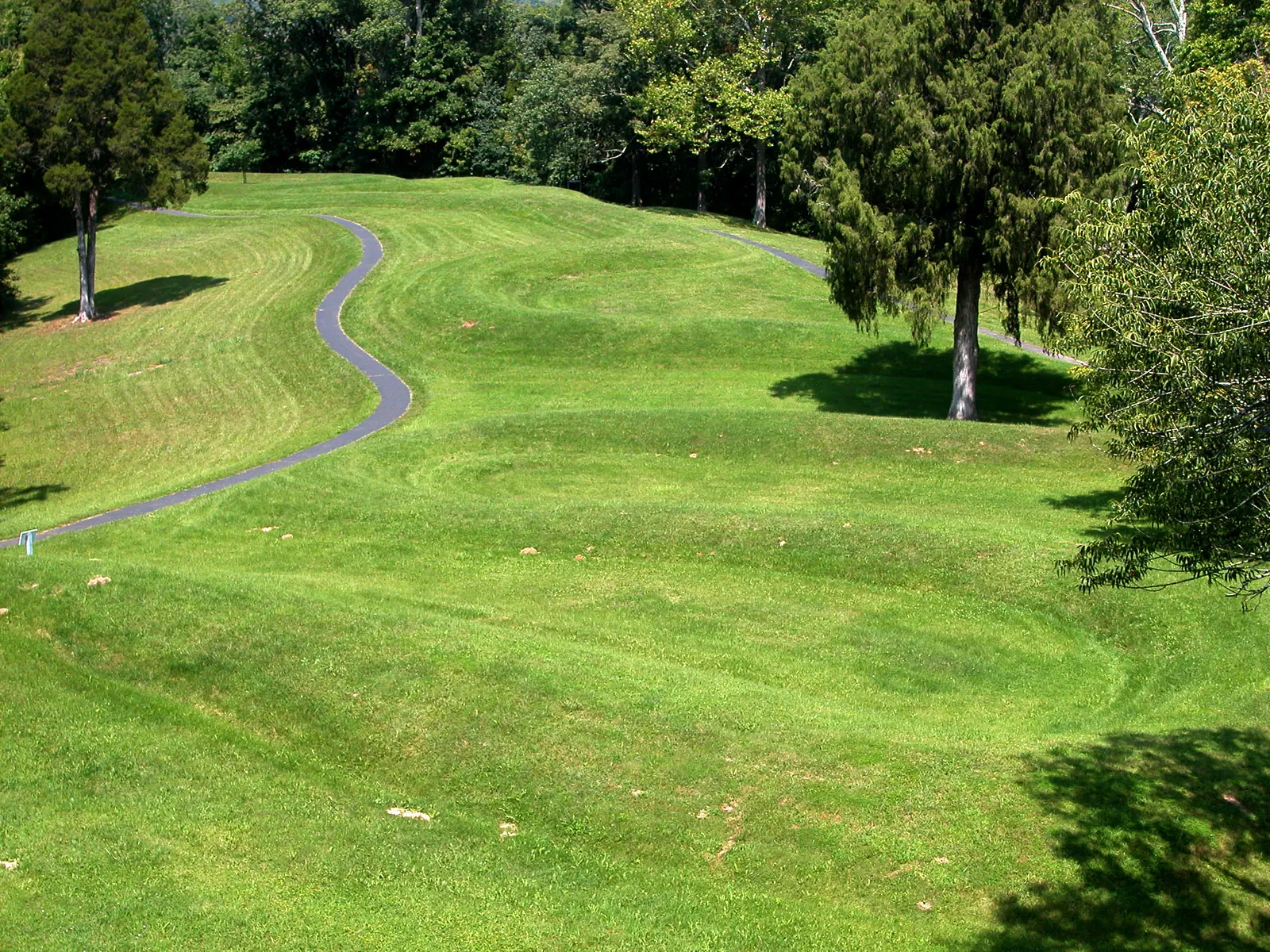
Serpent Mound, Peebles, Ohio
Bratton Township, Ohio, United States
142.5 km away
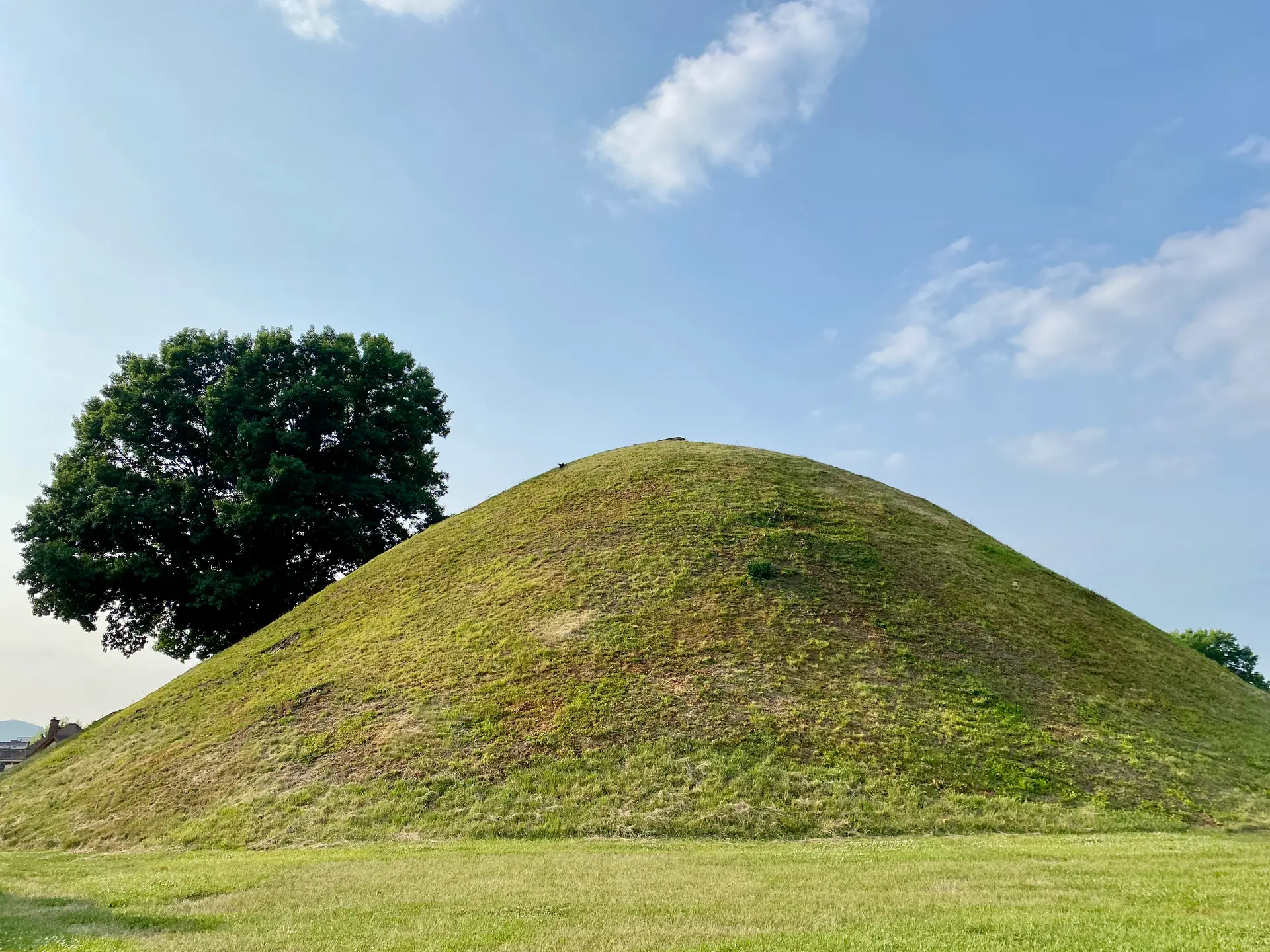
Grave Creek Mound, Moundsville, Ohio
Moundsville, West Virginia, United States
145.0 km away
References
Sources consulted for this page. Source categories describe the publication, not a guarantee that every claim is verified. Traditional accounts and outside interpretations may differ.
- 01Hopewell Ceremonial Earthworks — UNESCO World Heritage CentreofficialOfficial UNESCO World Heritage listing, inscribed September 2023
- 02Hopewell Ceremonial Earthworks — National Park ServiceofficialOfficial NPS documentation
- 03Newark Earthworks — Ohio History ConnectionofficialState heritage authority managing site
- 04The Hopewell Ceremonial Earthworks — Ohio State University Newark Earthworks CenteracademicAcademic research center directed by John Low (Pokagon Band of Potawatomi)
- 05How Ohio's Indigenous sacred sites became a religious flashpoint — National Catholic ReporternewsIncludes Indigenous perspectives and quotes from tribal leaders
- 06Newark Earthworks — WikipediaencyclopediaWell-sourced overview article
Share a photo
Help visitors recognize Hopewell Ceremonial Earthworks. Every submission is reviewed before publication.