Santa Maria Assunta, Assergi
A rock-hewn crypt beneath a fortified village, where a hermit saint's relics rest at the foot of Gran Sasso
Understand sacred places, explore living traditions, and learn how to engage respectfully with Pilgrim Map.
Access has not been verified. Check current local guidance before planning a visit.
Assergi, L'Aquila, Italy
Read the sources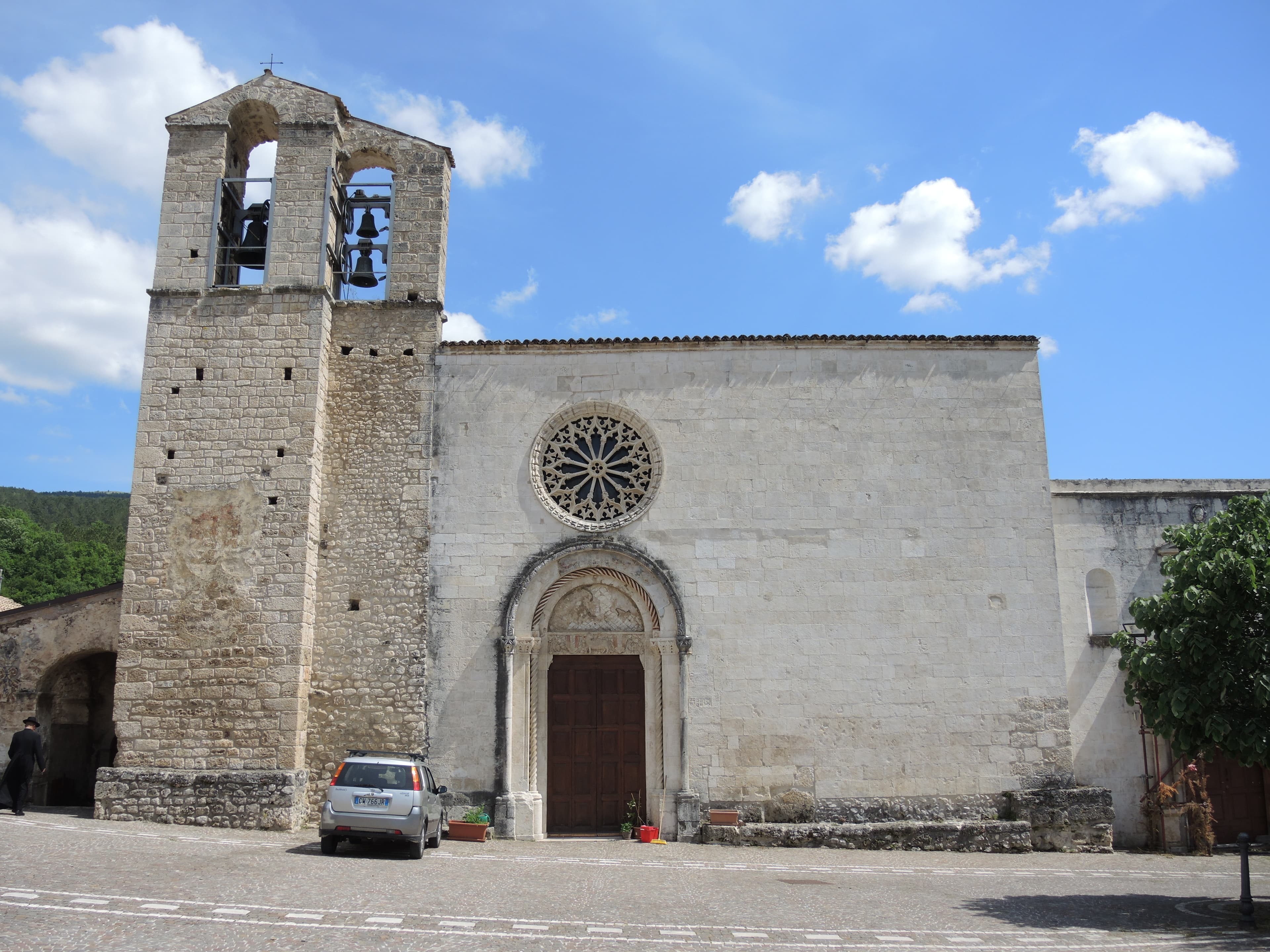
Image of Santa Maria Assunta, Assergi. Image source · CC-BY-SA-4.0
Visit essentials
A quick read before you go
- Duration
- Allow 30 to 60 minutes for the church and crypt.
- Access
- Assergi is accessible by car from L'Aquila (approximately 15 km) via the road to the Gran Sasso…
Overview
Santa Maria Assunta stands where Assergi's medieval walls meet Gran Sasso, its apse embedded in ancient village fortifications. Founded around 1150 on a Benedictine monastery site established by Sant'Equizio, it has held nearly nine centuries of continuous worship. Its walls absorbed Renaissance frescoes and Baroque interventions before a twentieth-century restoration stripped the interior back toward its Romanesque origins.
A bedrock crypt descends into three near-dark naves. An ornate silver reliquary guards the bones of San Franco, the hermit monk who retreated to caves at 1,730 and 2,260 metres above the village and whose attributed miracles drew medieval pilgrims up mountain paths. A third-century BC Italic stele attests pre-Roman significance. The Madonna sdraiata, a fourteenth-century polychrome sculpture of a reclining crowned figure, has an identity and meaning that scholars still debate.
These layers accumulate rather than resolve into one story.
Why this place is sacred
Certain places become thin not through breadth but through depth. Santa Maria Assunta is one such place. The church floor separates the everyday parish life of a small Abruzzese village from a crypt that reaches into geological and sacred time simultaneously. The rock was not merely excavated to create a space — it was recognized as already holding something.
The Vestini people who settled this area before the Romans evidently thought so; their stele endures in the crypt like a footnote from a language no longer spoken.
San Franco understood this verticality. He did not seek flat terrain for his contemplation but climbed higher and higher into the Gran Sasso massif, finding caves at ever-greater altitudes. His body returned to the village after death, descending into the rock-cut crypt — completing a circuit between summit and stone that the annual June pilgrimage still traces.
The church itself, with its apse pressed into the defensive walls facing the mountain, seems to acknowledge that it exists at an interface — between settlement and wilderness, between community worship and solitary ascent, between the knowable surface and whatever persists in the dark below.
The site began as a Benedictine monastery called Santa Maria ad Silicem, founded by Sant'Equizio. The presence of a third-century BC Italic stele in the crypt suggests the location held significance well before the Christian foundation, though the nature of that earlier reverence remains unclear.
From pre-Roman sacred ground to Benedictine monastery to parish church, the site has continuously adapted while preserving its underground heart. The cult of San Franco, which developed in the twelfth century, added a pilgrimage dimension that connected the village church to the mountain hermitages above. Baroque renovations in the eighteenth century gave way to a 1960s restoration that sought to recover the Romanesque original — each generation rewriting the surface while the crypt remained unchanged.
Experience and orientation
Enter through the fifteenth-century white stone portal with its rounded tympanum and twin coats of arms bearing a lamb. The interior has the quiet, somewhat dim quality common to small Italian Romanesque churches — few windows, walls that have absorbed and released frescoes over centuries, the scent of candle wax and old stone. Works by Saturnino Gatti and Francesco di Paolo da Montereale survive on the walls and columns, their Renaissance confidence a contrast to the building's more austere bones.
Then descend. The crypt's three naves are carved from the rock itself, and the quality of the space changes immediately. Sound dampens. The temperature drops. Light becomes something you notice by its scarcity. The silver reliquary of San Franco, described as a masterpiece of Sulmona metalwork, catches whatever light reaches it. Nearby stands the Madonna sdraiata — a reclining crowned figure in polychrome wood, fourteenth century, whose interpretation remains genuinely open.
She is not the typical upright Madonna of Italian churches; her posture introduces a question that the crypt's darkness does not answer.
The Italic stele, dated to the third century BC, occupies the same space without explanation or apology. It simply persists, a reminder that this ground was marked as significant long before Bishop Berardo of Forcona laid the foundation parchment in 1150.
Begin in the upper church and allow time for your eyes to adjust. The frescoes reveal themselves gradually in the low light. When you descend to the crypt, move slowly — the passage from daylight to rock-carved darkness is the experience. Let the reliquary and the Madonna sdraiata hold your attention before you notice the Italic stele. The sequence matters: it mirrors the site's own layering, from present-day parish to medieval devotion to something older still.
Context and lineage
According to local tradition, San Franco was a hermit monk who withdrew to caves high on Gran Sasso above Assergi. When his mother visited and asked for water, he struck rock and a spring emerged — water that, according to tradition, cures skin ailments. In his cave at Peschioli, a stone known as San Franco's pillow is held to relieve migraines when one rests upon it.
These accounts, while not verifiable by historical methods, have sustained a living pilgrimage tradition for centuries.
The site traces an unbroken lineage from a pre-Roman sacred marker (the Italic stele) through Benedictine monasticism to its current life as an active Catholic parish. The cult of San Franco, which emerged in the twelfth century, added a distinctly Abruzzese layer of mountain hermit devotion that connects the lowland church to the high-altitude caves of Gran Sasso.
Sant'Equizio
Founder of the original Benedictine monastery (Santa Maria ad Silicem) on this site; co-patron of L'Aquila
Bishop Berardo of Forcona
Commissioned the construction of the current church around 1150
San Franco of Assergi
Hermit monk and patron saint of Assergi; his relics rest in the crypt. His mountain hermitages remain pilgrimage destinations
Saturnino Gatti
Renaissance artist whose frescoes adorn the church interior
Francesco di Paolo da Montereale
Renaissance painter who contributed frescoes to the church
Traditions and practice
The feast of San Franco on June 5th is the devotional heart of the year. Holy Mass is celebrated in the church, followed by a procession through the village streets accompanied by a musical band. In the evening, the community gathers in Piazza San Franco for dancing.
On the same day, pilgrims climb the mountain paths from Assergi to San Franco's hermitages — to the cave at Peschioli at 1,730 metres and, for the more determined, to the cave on Pizzo Cefalone at 2,260 metres. At the spring, pilgrims drink water held to cure skin ailments and rest their heads on the saint's stone pillow, seeking relief from migraines.
Regular parish worship services continue throughout the year. The church also serves as the starting point for the guided cultural experience 'Un VASTO racconto,' which interprets the site within its broader Abruzzese context. Veneration of San Franco's relics in the crypt remains a devotional practice for local faithful and visiting pilgrims.
Attend the June 5th feast to witness the full cycle of devotion — from Mass to procession to mountain ascent. Outside this date, the crypt can be visited through guided tours, which provide access to the reliquary, the Madonna sdraiata, and the Italic stele. Sitting quietly in the crypt, if access permits, offers an encounter with the site's deepest layer.
Roman Catholicism
ActiveThe church has served as an active centre of Catholic worship since approximately 1150, dedicated to the Assumption of the Blessed Virgin Mary. It holds the relics of San Franco, patron saint of Assergi, in its crypt. The Benedictine monastery that preceded the current church was founded by Sant'Equizio, co-patron of L'Aquila.
Regular parish worship throughout the year. Annual patronal feast of San Franco on June 5th featuring Mass, village procession with music, and pilgrimage to the mountain hermitages. Feast of the Assumption on August 15th. Veneration of San Franco's relics in the crypt.
Benedictine monasticism
HistoricalThe original monastery of Santa Maria ad Silicem, founded by Sant'Equizio, established the site as a centre of contemplative life before the parish church was built. Benedictine values of prayer, work, and community shaped the early spiritual character of Assergi.
The monastic community is no longer present, though the architectural fabric of the monastery remains integrated into the church and village. The tradition's influence persists in the contemplative quality of the crypt and in the broader Benedictine heritage of the Abruzzese landscape.
Perspectives and open questions
Santa Maria Assunta invites multiple readings — as an architectural document, as a living parish, as a pilgrimage node connecting village to mountain hermitages, and as a site where pre-Roman, medieval, and contemporary devotion share the same bedrock.
Scholarly perspective
Art historians recognize the church as an important example of Abruzzese Romanesque architecture, notable for its integration into Assergi's defensive walls and for the surviving Renaissance frescoes by Saturnino Gatti and Francesco di Paolo da Montereale. The rock-hewn crypt draws particular interest for its three-nave structure and its collection of objects spanning two millennia.
The Madonna sdraiata remains a subject of ongoing scholarly discussion — a reclining crowned figure in polychrome wood whose iconographic programme does not conform to standard Marian typology.
Living and traditional perspectives
In Catholic devotion, the church is inseparable from San Franco, whose relics consecrate the crypt and whose hermitages consecrate the mountain above. The miraculous spring and healing stone pillow are not metaphors for the faithful but living realities — tested annually on June 5th when pilgrims climb to the caves. The Benedictine foundation by Sant'Equizio places the site within a monastic lineage that shaped Abruzzo's spiritual landscape.
Alternative interpretations
The presence of a third-century BC Italic stele in the crypt has drawn interest from those who see the site as part of a deeper, pre-Christian sacred geography. The convergence of underground chamber, mountain hermitage, and miraculous water source resonates with broader traditions of sacred hydrology and subterranean initiation found across Mediterranean cultures.
Open questions
The Madonna sdraiata poses the most persistent question: who is she? A reclining crowned figure does not fit conventional Marian iconography. Some scholars suggest a connection to funeral sculpture traditions; others see a deliberate theological statement. The Italic stele raises similar questions about continuity — whether the Benedictines chose this site knowing of its earlier significance, or whether the coincidence is just that.
Plan your visit
Access and arrival
Assergi is accessible by car from L'Aquila (approximately 15 km) via the road to the Gran Sasso tunnel on the A24 motorway. The church faces Piazza San Franco in the village centre. No mobile phone signal information was available at time of writing; check locally for current conditions. For crypt access and guided tour availability, contact the parish or the 'Un VASTO racconto' cultural program.
Accommodation in Assergi village is limited. L'Aquila (15 km) offers a fuller range of options. Agriturismo properties in the surrounding Gran Sasso area provide an alternative for those seeking proximity to both the church and the mountain paths.
Respectful visit
Shoulders and knees should be covered, as is standard for Italian Catholic churches.
Photography without flash is generally permitted in the upper church. The crypt may have restrictions during guided tours — ask before photographing the reliquary or the Madonna sdraiata.
Candle lighting is available, as is customary in Italian parish churches.
Maintain silence during services | Crypt access may require booking a guided tour in advance | Do not touch the reliquary, sculptures, or frescoes
The mountain pilgrimage to San Franco's hermitages requires proper footwear and reasonable fitness — the paths climb steeply to high altitude. The caves are only safely accessible from June through September due to snow cover. Crypt access may require advance booking through the guided tour program.
Current practical details
Address
Via dell' Arco, 67100 Assergi AQ, Italy
Hours, fees, and access can change — verify on the official source before you travel. Practical details last checked Jun 2026.
Location
Map loads as you approach this section.
Pilgrim reflections
A portrait of encounter, not a score
Pilgrims describe what they felt, how present they could become, and whether the place would shape a journey. There are no stars and no ranking of traditions.
No reviewed reflections yet
The first pilgrims can help describe the character of being here.
Share a reflection
Available after an account-backed “Been there.” Every reflection is reviewed before publication.
Nearby sacred places
Explore other sacred places in the region. Proximity does not establish access or travel time; check each place’s guidance.
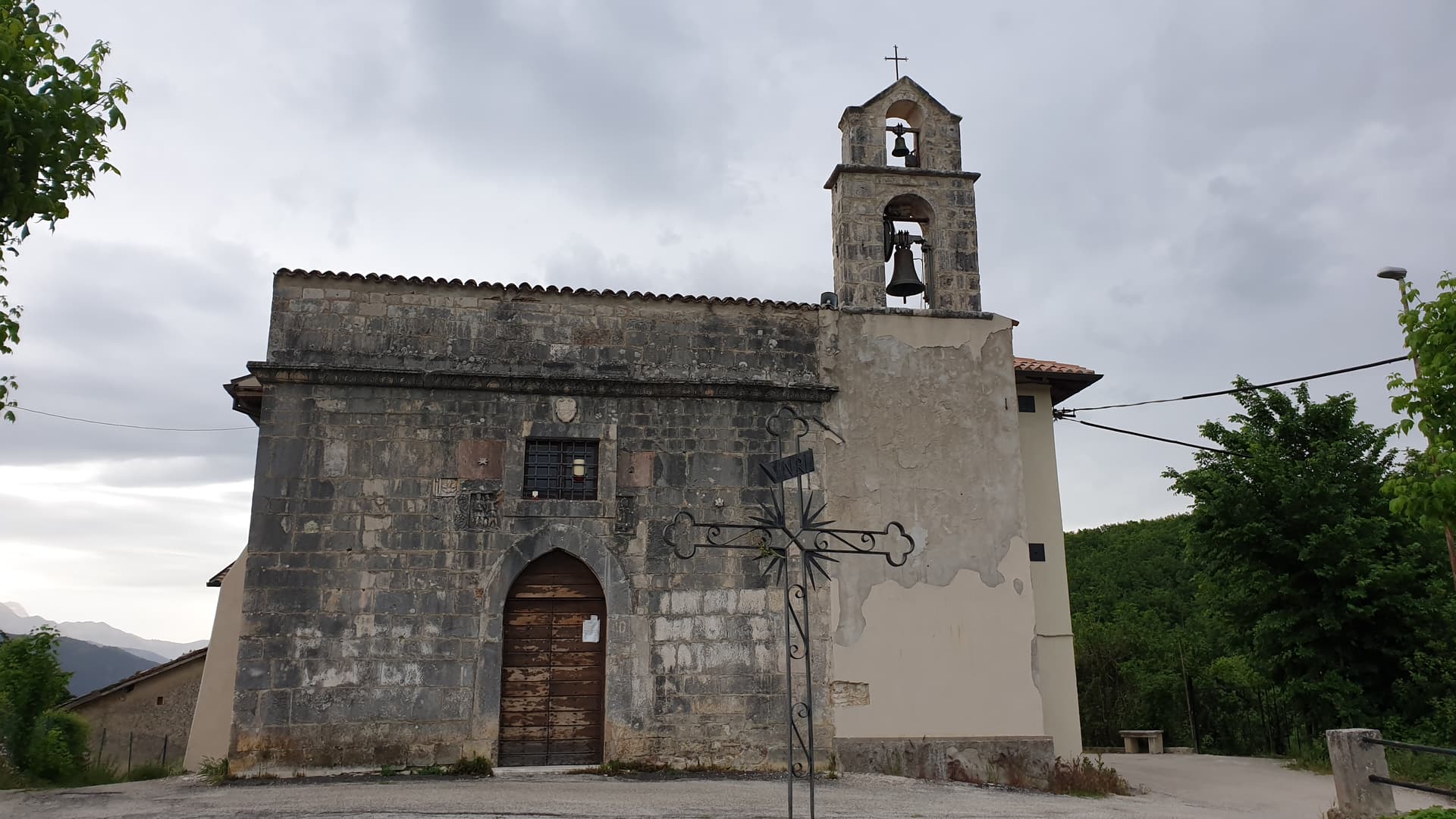
Chiesa di San Pietro della Ienca
San Pietro della Ienca, L'Aquila, Italy
4.4 km away

Basilica of Santa Maria di Collemaggio
L'Aquila, L'Aquila, Abruzzo, Italy
14.2 km away

Basilica of the Holy Face of Manoppello
Manoppello, Manoppello, Abruzzo, Italy
49.9 km away

Santuario di Santa Rita, Cascia
Cascia, Perugia, Italy
51.2 km away
References
Sources consulted for this page. Source categories describe the publication, not a guarantee that every claim is verified. Traditional accounts and outside interpretations may differ.
- 01Santa Maria Assunta - Abruzzo Cultura — Regione AbruzzoofficialOfficial regional cultural portal with church documentation
- 02Santa Maria Assunta, Assergi - Wikipedia (English) — Wikipedia contributorsencyclopediaGeneral overview of the church's history, architecture, and crypt
- 03Chiesa di Santa Maria Assunta (Assergi) - Wikipedia (Italian) — Wikipedia contributorsencyclopediaMore detailed Italian-language article
- 04Santa Maria Assunta in Assergi - GAM 246 — GAM 246guideDetailed description of church, crypt, and artworks including Madonna sdraiata and silver reliquary
- 05Saint Franco of Assergi - Santopedia — SantopediaSource contextBasic hagiographic information about San Franco
- 06Assergi Racconta - San Franco festa patronale — Assergi RaccontaSource contextLocal community site with details of patronal feast celebrations
- 07Assergi - Wikipedia — Wikipedia contributorsencyclopediaHistorical context for the village, including Vestini origins and medieval development
- 08The Saint Franco's hermitages - Abruzzo Up n' Down — Abruzzo Up n' DownblogDescribes San Franco's hermitages, miracles, and the June 5th pilgrimage
Share a photo
Help visitors recognize Santa Maria Assunta, Assergi. Every submission is reviewed before publication.