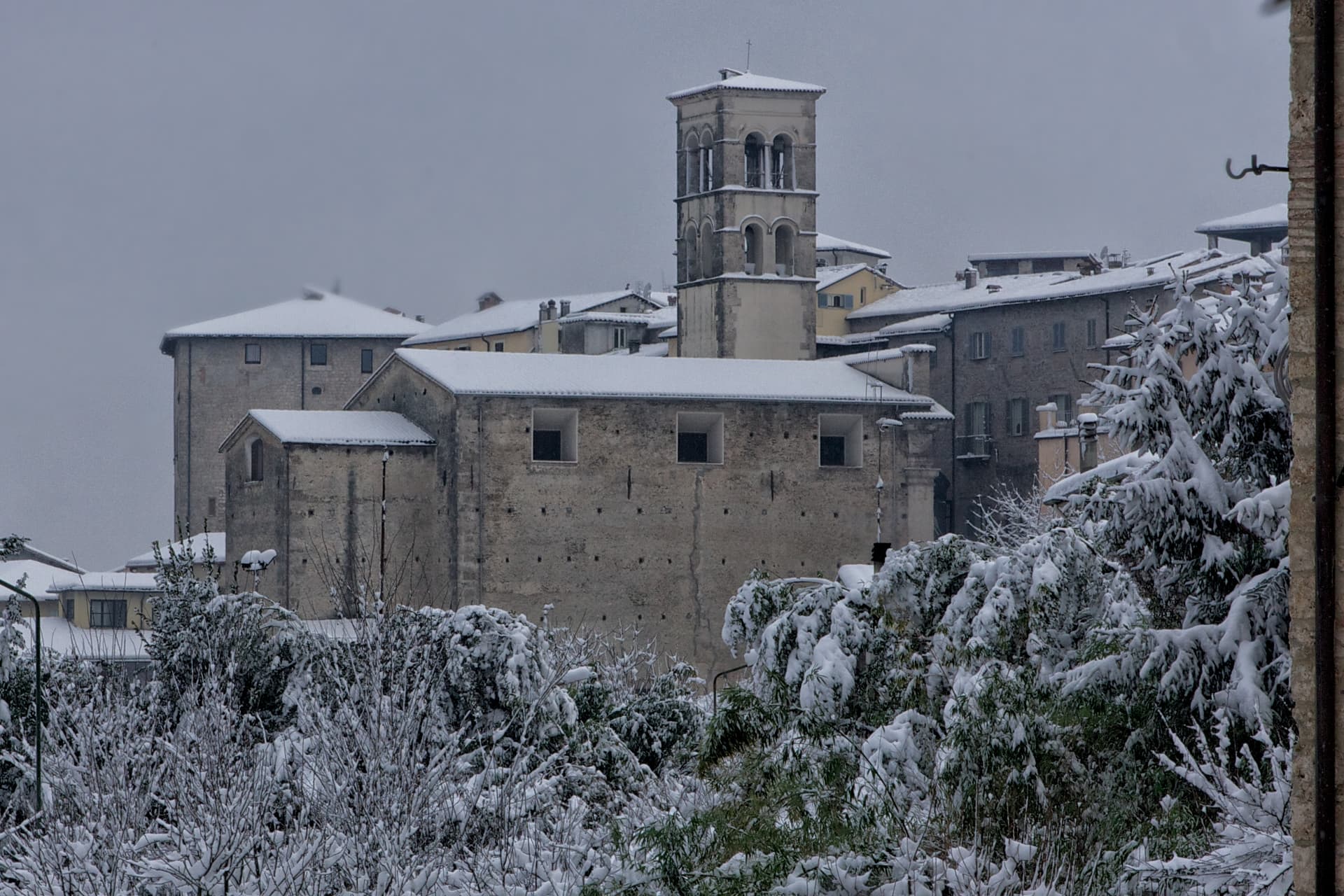
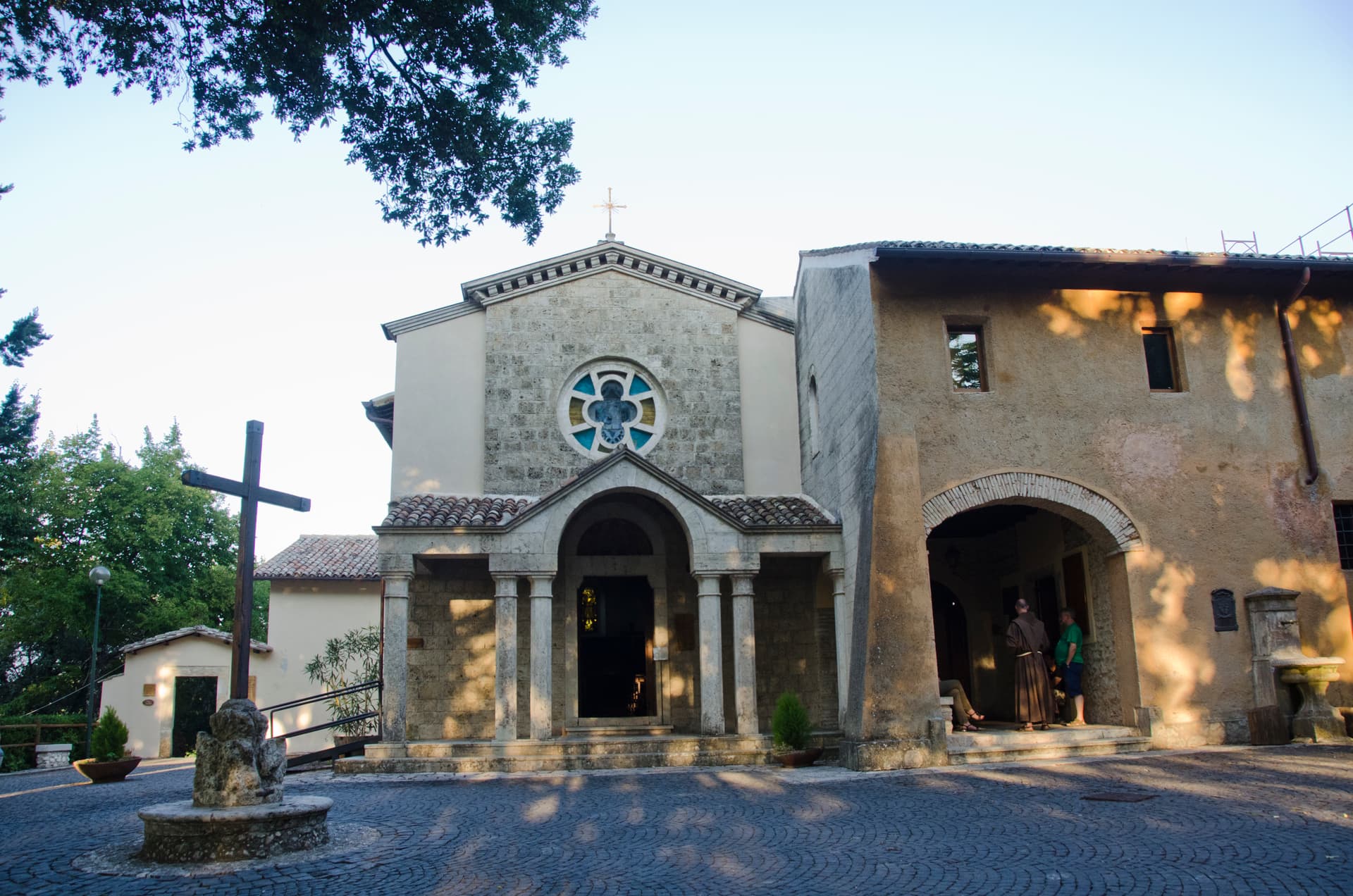
Chiesa di San Domenico
A Franciscan church rooted in the house of one of Saint Francis's first companions
Understand sacred places, explore living traditions, and learn how to engage respectfully with Pilgrim Map.
Access has not been verified. Check current local guidance before planning a visit.
Rieti, Rieti, Italy
Read the sourcesVisit essentials
A quick read before you go
- Duration
- 20-30 minutes if accessible
- Access
- Within walking distance of Rieti's cathedral and other historic center churches.
Overview
The Chiesa di Santa Chiara in Rieti traces its origins to one of the most intimate connections in the early Franciscan movement. In 1229, Pope Nicholas IV granted the house of blessed Angelo Tancredi of Rieti to four women who wished to live under the Franciscan Rule. Angelo Tancredi was among Saint Francis's first companions, one of the small group who followed Francis when the movement was still new and uncertain.
From this grant, a small community grew. The women built a chapel dedicated to San Stefano beside their house and gradually attracted further patronage and donations. The formal dedication to Saint Clare, founder of the Order of Poor Ladies (later Poor Clares), connected the Rieti community to the broader female Franciscan tradition that Clare had established in Assisi.
The present church owes its existence to a significant sixteenth-century endowment. In 1566, Paolo Buonamici, a doctor and aristocrat from the town of Casperia, endowed the convent with thirty-six thousand scudi, a substantial sum that funded the construction of the current church between 1567 and 1594. Buonamici's daughter and granddaughter were among the nuns, giving the endowment a personal as well as pious dimension.
The church stands within Rieti's historic center as part of the Franciscan constellation that defines the city's spiritual character. Alongside the cathedral, the Dominican church of San Domenico, and the four Franciscan sanctuaries on the surrounding hills, Santa Chiara represents the female dimension of a movement that transformed this valley into sacred ground.
Why this place is sacred
Angelo Tancredi occupies a particular place in Franciscan history. As one of Saint Francis's first companions, he belongs to the generation that knew the founder personally, that shared his poverty and his vision before institutions formed around the movement. That his house in Rieti became the foundation of a women's community connects this site to the most personal layer of Franciscan history.
The four women who received the house in 1229 were establishing something new: a female Franciscan presence in a city that Francis himself had visited and where he would return. Their decision to live under the Franciscan Rule placed them within the movement that Clare of Assisi was shaping, a movement of women choosing radical poverty and contemplative prayer.
The thinness accumulated over the following centuries through the continuous prayer of the community, the construction of the larger church in the late sixteenth century, and the integration of the site into Rieti's network of sacred places. Whether the building retains an active religious community today is uncertain from available sources, but the historical layers remain embedded in the stone.
House of blessed Angelo Tancredi, companion of Saint Francis, granted to four Franciscan nuns in 1229
From domestic dwelling to small convent and chapel (San Stefano) to the present church dedicated to Saint Clare (1567-1594), funded by Paolo Buonamici's endowment.
Experience and orientation
The Chiesa di Santa Chiara sits within the medieval streets of Rieti's historic center, part of the dense fabric of churches, convents, and palazzi that characterize this ancient city. The building dates from the late sixteenth century, a period of relative architectural confidence that produced a church of modest but solid proportions.
For visitors tracing the Franciscan story through Rieti, the church offers a connection to the movement's earliest generation. To stand on the ground where Angelo Tancredi lived, where four women chose to follow the Franciscan path, is to encounter the movement at its most personal and intimate scale, before the great sanctuaries and the institutional structures that would come later.
The current state of the building and its accessibility for visitors should be verified locally before planning a visit. Rieti's tourist information office or the diocese can provide current information.
Within Rieti's historic center, in the Lazio region, approximately 80 km northeast of Rome.
Context and lineage
In 1229, Pope Nicholas IV granted the house of blessed Angelo Tancredi of Rieti, one of Saint Francis's first companions, to four women who wished to live as nuns under the Franciscan Rule. They built a chapel to San Stefano and gradually expanded. In 1566, the aristocrat Paolo Buonamici of Casperia, whose daughter and granddaughter were among the nuns, endowed the convent with 36,000 scudi, enabling the construction of the present church (1567-1594).
Franciscan / Poor Clare tradition. Part of the broader Franciscan presence in the Rieti Valle Santa.
Blessed Angelo Tancredi
Early companion of Saint Francis, whose house became the convent's foundation
Paolo Buonamici
Aristocrat who endowed the convent with 36,000 scudi, enabling the present church's construction
Saint Clare of Assisi
Founder of the Poor Clares, to whom the church is dedicated
Traditions and practice
The nuns followed the Franciscan Rule, likely including the Divine Office, communal prayer, and the practices of the Poor Clare order.
Current religious activity status unclear from available sources. Verify locally.
Visit as part of a walking exploration of Rieti's historic center, combining with the cathedral and the church of San Domenico. If accessible, consider the Franciscan connection as you enter: this ground was once the home of one of Francis's first companions.
Roman Catholicism - Franciscan / Poor Clares
HistoricalFounded on the house of one of Saint Francis's earliest companions. Represents the female Franciscan tradition in the Valle Santa.
Historically: Poor Clare liturgical life and communal prayer
Perspectives and open questions
Santa Chiara invites reading through the lens of early Franciscan history, female religious life, and the sacred geography of Rieti.
Scholarly perspective
The church is documented from 1229, with the present building dating to the late sixteenth century. Its significance lies primarily in the Franciscan connection through Angelo Tancredi and in the witness of female Franciscan community life in Rieti.
Living and traditional perspectives
Within the Franciscan tradition, the site represents the female dimension of the movement in one of its most important valleys. The connection to Angelo Tancredi places it within the founder's immediate circle.
Open questions
The current condition, use, and accessibility of the building are not well-documented in available sources. The interior furnishings and any surviving artwork have not been thoroughly catalogued in accessible literature.
Plan your visit
Access and arrival
Within walking distance of Rieti's cathedral and other historic center churches.
See Cattedrale di Santa Maria Assunta, Rieti
Respectful visit
Modest dress if entering the church.
Check locally for current guidelines.
Current access status uncertain—verify locally
Current accessibility uncertain. Verify locally before visiting.
Current practical details
Address
Via Giordano Bruno, 2-3, 02100 Rieti RI, Italy
Hours
Hours, fees, and access can change — verify on the official source before you travel. Practical details last checked Jun 2026.
Location
Map loads as you approach this section.
Pilgrim reflections
A portrait of encounter, not a score
Pilgrims describe what they felt, how present they could become, and whether the place would shape a journey. There are no stars and no ranking of traditions.
No reviewed reflections yet
The first pilgrims can help describe the character of being here.
Share a reflection
Available after an account-backed “Been there.” Every reflection is reviewed before publication.
Nearby sacred places
Explore other sacred places in the region. Proximity does not establish access or travel time; check each place’s guidance.


References
Sources consulted for this page. Source categories describe the publication, not a guarantee that every claim is verified. Traditional accounts and outside interpretations may differ.
- 01The Church of St. Domenico - Visit Rieti — Visit RietiSource contextOfficial tourism source
- 02San Domenico, Rieti - Wikipedia — Wikipedia contributorsencyclopediaDetailed article on the church history
- 03Chiesa di San Domenico - MyCityHunt — MyCityHuntguideTourism information with historical context
Share a photo
Help visitors recognize Chiesa di San Domenico. Every submission is reviewed before publication.