Sanctuary of Our Lady of the End of the Bridge – Refuge of the Mother and Child of Pau
Our Lady at the end of the bridge, refuge of mothers and children since the days of Henri IV
Understand sacred places, explore living traditions, and learn how to engage respectfully with Pilgrim Map.
Access has not been verified. Check current local guidance before planning a visit.
Pyrénées-Atlantiques, France
Read the sources
Station 38 of 38
Camino de Santiago — Via PodiensisVisit essentials
A quick read before you go
- Duration
- 20–40 minutes for the church, stained glass, and mosaic apse.
- Access
- In Pau (Pyrénées-Atlantiques), 14-Juillet neighbourhood on the left bank of the gave, at the…
Overview
The Sanctuary of Notre-Dame du Bout du Pont stands in the 14-Juillet neighbourhood of Pau, on the left bank of the gave, the swift river that runs below the castle. Its devotion is far older than the present building.
From the origins of Pau and its castle, an oratory to 'Nouste Dame deü Cap deü Pount' — Our Lady at the End of the Bridge — stood at the bridge over the gave, invoked by shepherds for safe crossing and, above all, by women during pregnancy and childbirth.
In 1553, in labour at Pau Castle, Jeanne d'Albret is said to have sung the Béarnais hymn to Our Lady of the Bridge's End as she gave birth to the future King Henri IV, anchoring the Virgin's role as protector of mothers and children.
The present neo-Gothic church, with its six-bay nave, was built between 1929 and 1932 in an unusual way: the chapel of the Ursulines, dating from 1873, was dismantled and rebuilt stone by stone by the parishioner-architect Henri Navarre, reusing its stones and its Mauméjean stained glass. Nicknamed 'the pearl of chapels', it is rich in coloured glass and a mosaic apse, with a strong atmosphere of Marian devotion focused on motherhood.
On 8 December 2023, the feast of the Immaculate Conception, Bishop Marc Aillet solemnly erected it as the diocesan Sanctuary 'Notre-Dame du Bout du Pont: Refuge of the Mother and Child', a place to implore Our Lady's intercession for mothers and for children born and unborn. Set on the Béarn corridor that pilgrims have long followed toward Compostela, it draws families and walkers alike to pray under Mary's protection.
Why this place is sacred
The thinness of Notre-Dame du Bout du Pont lies in the image at its heart: Our Lady 'at the end of the bridge', protecting those who cross the dangerous gave and, above all, women in pregnancy and childbirth. The devotion has been carried in a Béarnais hymn since at least the sixteenth century and is bound to the regional memory of Jeanne d'Albret and the birth of Henri IV.
The image lends itself to readings of passage and threshold — birth, the crossing of waters, the pilgrim's journey — and the church's formal erection as a sanctuary for mothers and children in 2023 has renewed its devotional focus. For expectant parents especially, the place can carry a strong sense of being held under Mary's protection.
A medieval Béarnais oratory to Our Lady at the end of the bridge over the gave, invoked for safe crossing and for the protection of women in childbirth.
From a medieval bridge-end oratory (devotion documented from at least the sixteenth century), through the Ursulines' convent chapel, to the present neo-Gothic church rebuilt stone by stone in 1929–1932; erected a diocesan Marian sanctuary, 'Refuge of the Mother and Child', on 8 December 2023.
Experience and orientation
Visitors find a luminous neo-Gothic church, nicknamed 'the pearl of chapels', rich in Mauméjean stained glass and a mosaic apse, with a strong atmosphere of Marian devotion focused on motherhood. Pilgrims and families come to pray for mothers and children, entrusting the born and unborn to Our Lady.
The sanctuary's focus on the protection of mothers and the unborn, and its deep Béarnais roots — the hymn, the legend of Henri IV's birth — often move visitors, especially expectant parents, to prayer, gratitude, and a sense of being held under Mary's protection. It is an urban parish sanctuary, easily reached on foot in the city, and its devotional character invites a contemplative pause amid the journey through Béarn.
Find the church in Pau's 14-Juillet neighbourhood, on the left bank of the gave at the corner of rue Marcel-Barthe and rue du Général-Dauture. Step inside to take in the stained glass and mosaic apse, and to pray, especially if you carry intentions for mothers or children. Verify Mass and opening times with the parish.
Context and lineage
From the origins of Pau and its castle, an oratory to 'Nouste Dame deü Cap deü Pount' stood at the bridge over the gave, invoked by shepherds for safe crossing and by women during pregnancy. In 1553, in labour at Pau Castle, Jeanne d'Albret is said to have sung the Béarnais hymn to Notre-Dame du Bout du Pont as she gave birth to the future Henri IV, anchoring the Virgin's role as protector of mothers and children.
The Ursulines' convent chapel was later dismantled and rebuilt stone by stone (1929–1932) by architect Henri Navarre to house the devotion; in 2023 the church was erected a diocesan sanctuary. The precise medieval origins of the original bridge-end oratory before the sixteenth century are not exhaustively documented. (The devotional title is shared with a different church in Saint-Jean-Pied-de-Port; this entry concerns the Pau sanctuary.)
A medieval Béarnais bridge-end oratory, then an Ursuline convent chapel, now a diocesan Marian sanctuary under Roman Catholicism; the Béarnais Marian piety and the Camino's Béarn corridor toward Compostela both run through it.
Our Lady at the End of the Bridge (Notre-Dame du Bout du Pont)
Object of Marian devotion
Jeanne d'Albret
Royal devotee
Henri Navarre
Parishioner-architect
Bishop Marc Aillet
Founder of the sanctuary
Traditions and practice
Marian devotion and the Béarnais hymn to Our Lady of the Bridge's End; intercessory prayer for pregnant women, mothers, and children; the feast of the Immaculate Conception (8 December), on which the sanctuary was erected.
Mass and parish life; pilgrimage and intercessory prayer at the Marian sanctuary, especially by and for mothers and children; candle offerings.
Sit before the stained glass and mosaic apse and, if you wish, entrust a mother or child — your own or another's — to Our Lady. Light a candle or leave a written intention; the sanctuary is dedicated to exactly this kind of prayer.
Roman Catholicism (Marian devotion: Notre-Dame du Bout du Pont, Refuge of Mother and Child)
ActiveThe sanctuary continues a Béarnais Marian devotion documented since at least the sixteenth century: an oratory to 'Nouste Dame deü Cap deü Pount' once stood at the gave bridge below Pau Castle, invoked by shepherds for safe crossing and above all by women in pregnancy and childbirth — Jeanne d'Albret is said to have sung its Béarnais hymn at the 1553 birth of the future Henri IV. The present neo-Gothic church (1929–1932), formed from the Ursulines' chapel rebuilt stone by stone, was erected by Bishop Marc Aillet on 8 December 2023 as the diocesan sanctuary 'Refuge of the Mother and Child'.
Marian devotion and intercessory prayer, especially for pregnant women, mothers, and children; Mass and parish life; pilgrimage to the sanctuary; the historic Béarnais hymn to Our Lady of the Bridge's End.
Perspectives and open questions
The sanctuary is read as a 1929–1932 rebuilding perpetuating an early-modern Béarnais Marian devotion, and as a regional emblem of motherhood and protection.
Scholarly perspective
Heritage and diocesan records describe the church as a 1929–1932 neo-Gothic rebuilding of the Ursulines' chapel, perpetuating a documented late-medieval and early-modern Béarnais Marian devotion, and erected a diocesan sanctuary in 2023.
Living and traditional perspectives
For Béarnais Catholics the devotion to Our Lady of the Bridge's End is woven into regional identity — the hymn, the protection of mothers in childbirth, and the legend of Jeanne d'Albret and Henri IV's birth.
Alternative interpretations
The image of Our Lady 'at the end of the bridge', protecting those who cross the river, lends itself to symbolic readings of passage, threshold, and safe transition — birth, the crossing of waters, and the pilgrim's journey.
Open questions
The precise medieval origins of the original bridge-end oratory and the full historical development of the devotion before the sixteenth century are not exhaustively documented.
Plan your visit
Access and arrival
In Pau (Pyrénées-Atlantiques), 14-Juillet neighbourhood on the left bank of the gave, at the corner of rue Marcel-Barthe and rue du Général-Dauture (64000 Pau); easily reached on foot in the city, on the Béarn pilgrim corridor toward Oloron and the Pyrenees.
Pau, a regional city, offers a full range of lodging; pilgrim accommodation is available along the Béarn corridor toward Oloron.
Respectful visit
Modest dress appropriate to an active church and Marian sanctuary.
Generally permitted with discretion; avoid disturbing those at prayer or during services.
Candle offerings and prayer intentions; donations toward the sanctuary's upkeep.
Respect ongoing worship and the contemplative, devotional character of the sanctuary.
Respect ongoing worship and the contemplative, devotional character of the sanctuary; avoid disturbing those at prayer.
Current practical details
Address
19 Rue du Général Dauture, 64000 Pau, France
Phone
Hours
Hours, fees, and access can change — verify on the official source before you travel. Practical details last checked Jun 2026.
Location
Map loads as you approach this section.
Pilgrim reflections
A portrait of encounter, not a score
Pilgrims describe what they felt, how present they could become, and whether the place would shape a journey. There are no stars and no ranking of traditions.
No reviewed reflections yet
The first pilgrims can help describe the character of being here.
Share a reflection
Available after an account-backed “Been there.” Every reflection is reviewed before publication.
Nearby sacred places
Explore other sacred places in the region. Proximity does not establish access or travel time; check each place’s guidance.

Sanctuary of Notre-Dame de Bétharram
Lestelle-Bétharram, Lestelle-Bétharram, Pyrénées-Atlantiques / Nouvelle-Aquitaine, France
22.9 km away

Church of L’Hôpital-Saint-Blaise
Pyrénées-Atlantiques, France
31.8 km away
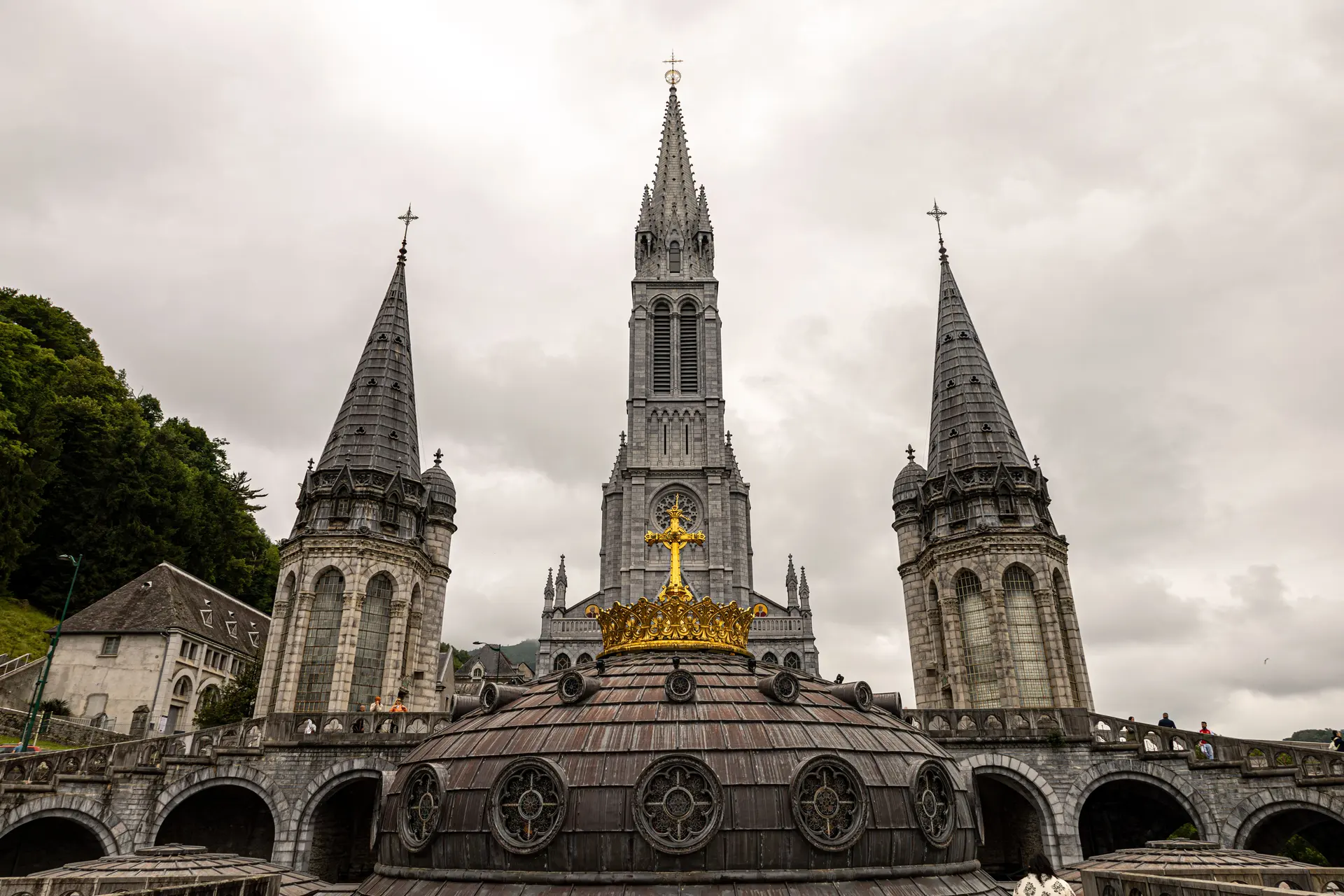
Lourdes Sanctuary
Lourdes, Hautes-Pyrénées, France
33.8 km away
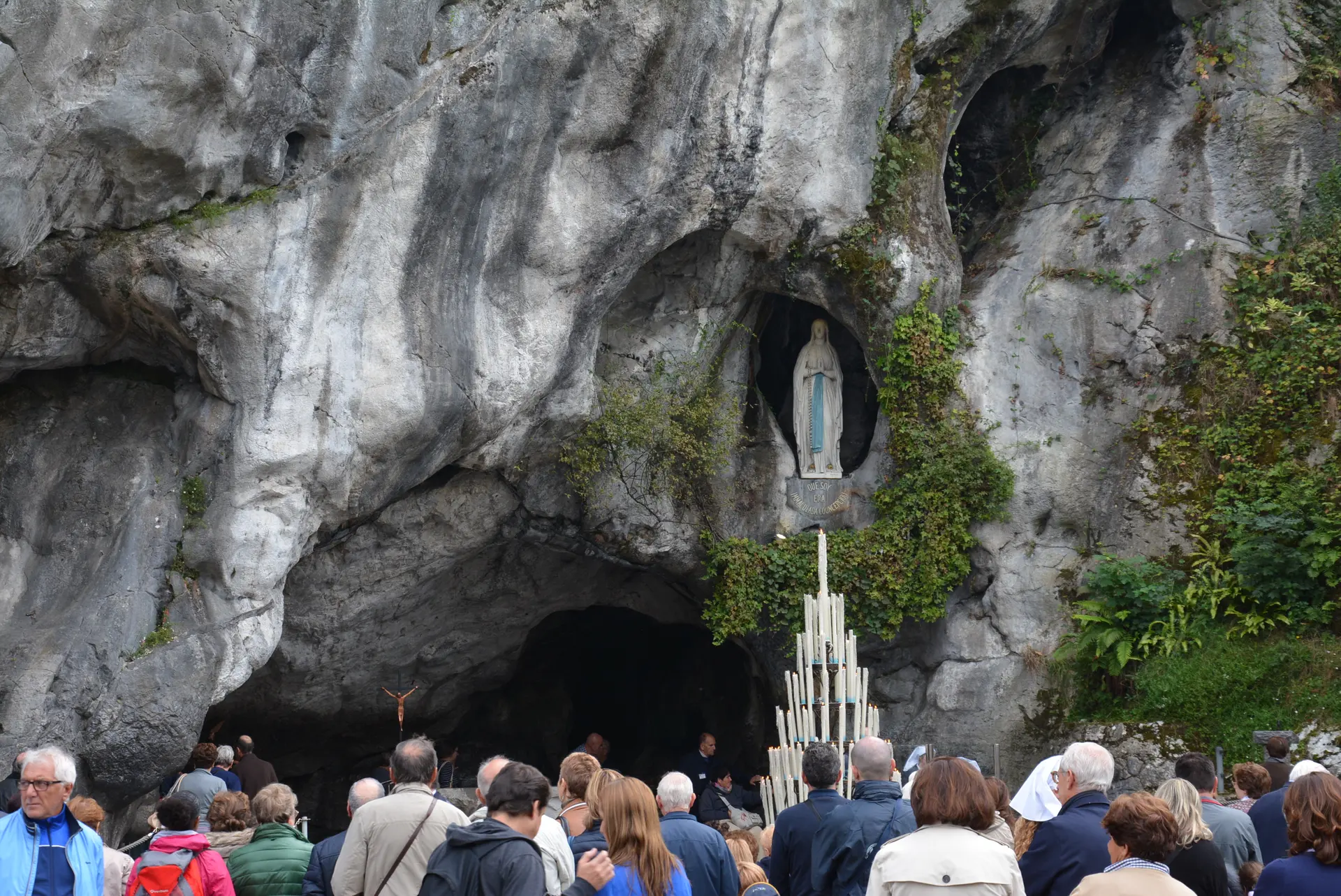
Grotto of Lourdes (Grotto of Massabiell)
Lourdes, Hautes-Pyrénées, France
33.9 km away
References
Sources consulted for this page. Source categories describe the publication, not a guarantee that every claim is verified. Traditional accounts and outside interpretations may differ.
- 01Église Notre-Dame du Bout-du-Pont — Wikipédia — Wikipédia contributorsacademicChurch in Pau's 14-Juillet neighbourhood on the left bank of the gave; coordinates 43.290692°N, -0.380500°W; neo-Gothic, six-bay nave; built 1929–1932 (inaugurated 18 Dec 1932) using stones and stained glass of the former Ursulines chapel (1873), dismantled and rebuilt stone by stone by architect Henri Navarre.
- 02Un nouveau sanctuaire dans notre diocèse : Notre-Dame du Bout du Pont — Diocèse 64 — Diocèse de Bayonne, Lescar et OloronofficialOfficial diocesan announcement that on 8 December 2023 (Immaculate Conception) Bishop Marc Aillet erected the diocesan Sanctuary 'Notre-Dame-du-Bout-du-Pont: Refuge de la mère et l'enfant'.
- 03Notre-Dame du Bout du Pont 'La perle des chapelles' — Histoire (parish/sanctuary site) — Sanctuaire Notre-Dame du Bout du Pont, PauofficialSanctuary's own history: medieval Béarnais oratory 'Nouste Dame deü Cap deü Pount' at the bridge over the gave; Jeanne d'Albret invoked it (Béarnais hymn) at the 1553 birth of the future Henri IV; the Virgin invoked by women in pregnancy and shepherds crossing the gave.
- 04Église Notre-Dame du bout du pont Pau — Paroisse Notre-Dame de l'Espérance — Paroisse Notre-Dame de l'Espérance (Diocèse de Bayonne)officialParish page: built after the 1905 law in the 14-Juillet neighbourhood; chapel of the Ursulines dismantled stone by stone by parishioner-architect Henri Navarre and rebuilt 1929–1932 at the corner of rue Marcel-Barthe and rue du Général-Dauture.
- 05Pau : Notre-Dame du Bout du Pont consacrée 'nouveau sanctuaire' par Mgr Aillet — Baskulture — BaskultureSource contextPress coverage of the December 2023 erection of the Pau sanctuary dedicated to mother and child; recounts the Marian devotion and its protection of pregnant women and children.
- 06Sanctuaire Notre-Dame du Bout du Pont Pau (64) — Guide Tourisme France — Guide Tourisme FranceSource contextTourism listing for the Pau sanctuary, neo-Gothic church with Mauméjean stained glass, address rue du Général Dauture.
- 07Notre-Dame du Bout du Pont — Ursulines de l'Union Romaine — Ursulines de l'Union RomaineofficialAccount from the Ursuline order of the chapel's origin as the Ursulines' convent chapel in Pau, later moved and rebuilt as the present church.
Share a photo
Help visitors recognize Sanctuary of Our Lady of the End of the Bridge – Refuge of the Mother and Child of Pau. Every submission is reviewed before publication.