Sanctuary of Bom Jesus do Congonhas
Where tools strapped to broken hands carved the most moving Passion in the Americas
Understand sacred places, explore living traditions, and learn how to engage respectfully with Pilgrim Map.
Access has not been verified. Check current local guidance before planning a visit.
Congonhas, Minas Gerais, Brazil
Read the sources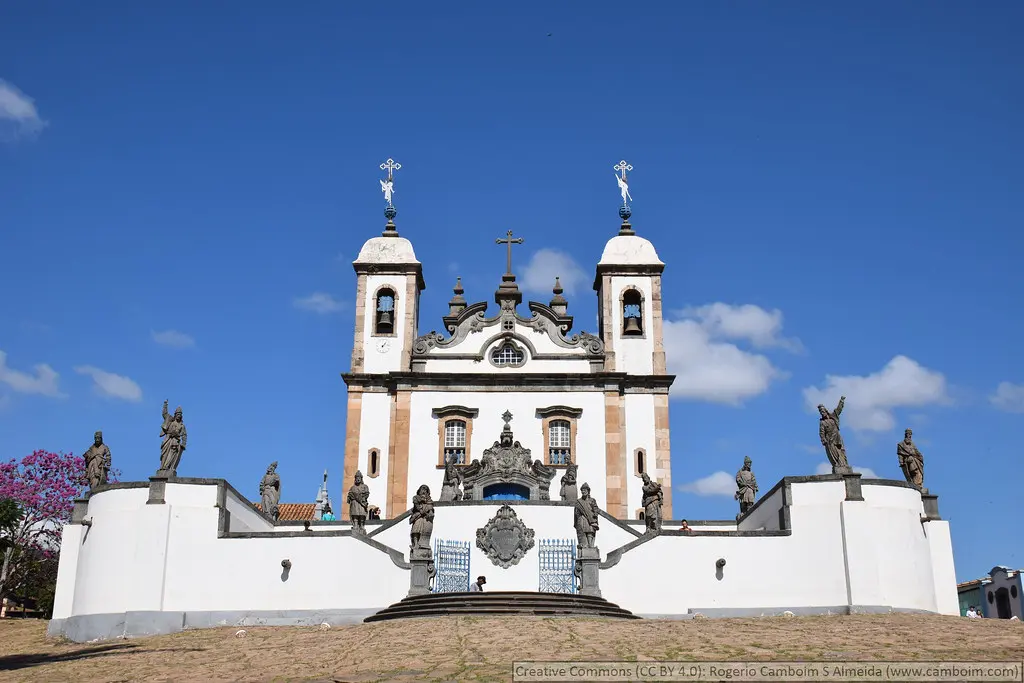
Image of Sanctuary of Bom Jesus do Congonhas. Image source · CC-BY-2.0
Visit essentials
A quick read before you go
- Duration
- The sanctuary complex requires minimum 2 hours: Passion chapels (30-45 minutes), prophets and…
- Access
- The sanctuary stands on Praça da Basílica in Congonhas, Minas Gerais, on the Morro do Maranhão…
Overview
The Sanctuary of Bom Jesus do Congonhas stands where suffering became sacred art. In 1757, a man named Feliciano Mendes was healed after praying to Bom Jesus—the Good Jesus—and vowed to build a sanctuary on a hilltop in the gold-mining region of colonial Brazil. Four decades later, an artist named Antônio Francisco Lisboa arrived to sculpt the final masterwork of colonial Brazilian art, though a disease had destroyed his hands and feet. He worked with tools strapped to his stumps.
The sanctuary he created is a devotional journey compressed into architecture and stone. Six chapels mark the Passion of Christ, their polychrome figures frozen in expressions of anguish, betrayal, and sacrifice—expressions carved by hands that could barely hold the chisel. At the top of the hill, twelve prophets stand on the staircase parapets, soapstone figures with scrolls announcing salvation, their deliberately distorted proportions designed to appear monumental from below.
Behind them, a Rococo church completes the ascent: from suffering through prophecy to resurrection.
Pilgrims still come. In the Room of Miracles, centuries of ex-votos—photographs, paintings, objects—testify to prayers answered, lives changed. The September Jubilee draws thousands seeking what Feliciano Mendes found: hope in the midst of illness, transformation in the presence of the sacred. UNESCO calls Congonhas 'the apex of Christian art in Latin America.' For those who climb this hill, it offers something simpler: the promise that suffering is not the end of the story.
Why this place is sacred
What makes Congonhas thin, permeable to encounter? The answer lies in accumulated transformation—suffering becoming something else, again and again.
The first transformation is foundational. In 1757, Feliciano Mendes lay gravely ill in the gold-mining territory of Minas Gerais. He prayed to Bom Jesus de Matosinhos, a devotion imported from Portugal, and was healed. The sanctuary he built in thanksgiving began as one man's answered prayer and grew into a pilgrimage destination where others have sought the same for 250 years.
The second transformation is artistic. When Antônio Francisco Lisboa—Aleijadinho—arrived to sculpt the Passion and the prophets, his own body was being destroyed by disease, possibly leprosy. His fingers and toes wasted away; he could no longer hold tools in the ordinary way. Yet the sculptures he created are among the most expressive in Christian art. The Passion figures' anguished faces were carved by hands that should not have been capable of carving.
The prophets' monumental presence emerged from a broken body. In Aleijadinho's art, suffering did not prevent creation—it deepened it.
The third transformation continues in the Room of Miracles. For over two centuries, pilgrims who received answered prayers have left ex-votos—tokens of thanksgiving. Photographs of sick children who recovered. Paintings of accidents survived. Objects representing limbs healed, debts paid, dangers averted. The room is a visible record of invisible transformation, centuries of human hope made tangible.
The devotional pathway itself enacts transformation spatially. Visitors enter at the bottom of the hill, pass through chapels depicting Christ's arrest, torture, and crucifixion. They ascend to the prophets, who announce redemption. They arrive at the church, where the Passion is completed in resurrection. The architecture maps the journey from suffering to salvation, making theology walkable.
The sanctuary was founded in 1757 by Feliciano Mendes as fulfillment of a vow made during grave illness. After praying to Bom Jesus de Matosinhos and being healed, Mendes dedicated his wealth and fundraising to building a pilgrimage site where others could seek the same divine intercession. The devotion to Bom Jesus (Good Jesus) originated in Portugal, centered on a crucifix said to have washed ashore at Matosinhos, believed to be especially powerful for answered prayer.
The sanctuary's function has expanded while retaining its core purpose. It remains an active Catholic pilgrimage site—the September Jubilee draws thousands, masses are celebrated regularly, ex-votos still accumulate in the Room of Miracles. UNESCO inscription in 1985 and recognition of Aleijadinho as Brazil's greatest colonial artist have added cultural tourism and art pilgrimage to religious devotion. The Congonhas Museum provides context for visitors approaching the site through art history rather than faith.
Yet pilgrims still come seeking miracles, just as they did when Feliciano Mendes first opened the sanctuary's doors.
Healing traditions
Historical thanksgiving for recovery
Congonhas's heritage documentation connects the sanctuary's founding with Feliciano Mendes's recovery from a serious illness. He devoted himself to building a shrine to Bom Jesus de Matosinhos in gratitude, beginning the undertaking in 1757. The illness is not securely identified in the historical material. The enduring account concerns a recovery understood as grace and answered through a lifetime of work for the pilgrimage.
Ways to participate
Bring a prayer of petition or gratitude to the church, then walk among the Passion chapels at a comfortable pace. The votive collection offers a way to understand how earlier pilgrims expressed thanks. Consider a modest act of care or service as your own response, without making a costly promise in expectation of a cure.
These accounts describe religious traditions and reported experiences. They do not promise a cure or replace medical care.
Experience and orientation
The experience of Congonhas begins with the hill. The Morro do Maranhão rises from the town, its slope marked by chapels, its summit crowned by church and prophets. You enter not at the top but at the bottom, approaching through the forecourt where the devotional journey begins.
The six Passion chapels present seven stations of Christ's final hours. You view the scenes through windows—you do not enter, the sculptures protected by iron grilles. In the first chapel, polychrome figures sit around a table, the Last Supper's betrayal not yet spoken. In succeeding chapels, the narrative unfolds: Gethsemane's anguish, the arrest, the flagellation, the crown of thorns, the carrying of the cross, the crucifixion. The figures are life-sized, their expressions exaggerated for emotional impact.
Faces contort in cruelty, grief, exhaustion. These are not serene devotional objects but theatrical presences designed to provoke response.
To know that these expressions were carved by a man whose hands were rotting from disease adds another dimension entirely. Aleijadinho created this Passion as his own body underwent its own passion—the decay of flesh, the loss of the tools that had defined his life. He worked behind screens, having chisels strapped to his stumps, slaves carrying him from chapel to chapel. The suffering depicted is suffering he knew.
At the top of the hill, the terrain changes. The chapels give way to a curved double staircase, its parapets lined with twelve soapstone prophets. Each figure is nearly life-sized, each holds a scroll with Latin prophecy inscribed. Isaiah, Jeremiah, Ezekiel, Daniel—the major and minor prophets who announced the coming of the Messiah stand guard before the church. Their proportions are deliberately distorted, designed to appear monumental when viewed from below. Some gesture dramatically; others read their scrolls with intensity.
They are not solemn academic figures but vivid presences, theatrical heralds of salvation.
Behind the prophets, the basilica awaits. After the emotional intensity of the Passion and the prophetic pronouncements, the Rococo interior offers a different register: gilded altars, ceiling paintings moving from Old Testament to New, the journey from Genesis to Resurrection encoded in the decorative program. The effect is completion—the suffering witnessed below finds its resolution here.
Before leaving, visit the Room of Miracles. This small space houses centuries of ex-votos, tokens left by pilgrims thanking Bom Jesus for answered prayers. Photographs from different eras show the sick who recovered. Paintings depict accidents survived, dangers averted. Objects represent healed limbs, paid debts, rescued children. The room is crowded with human hope made visible—a testament that what pilgrims sought here, some found.
Begin at the forecourt and approach through the Passion chapels chronologically, allowing the narrative to build. Take time at each window; the expressions reward attention. Ascend to the prophets and consider them from multiple angles—designed for dramatic effect when viewed from below, they reveal different qualities at close range. Enter the basilica to complete the devotional journey. Before leaving, spend time in the Room of Miracles. The full experience requires minimum two hours; half a day allows proper contemplation.
Context and lineage
In 1757, in the gold-mining region of Minas Gerais, a Portuguese immigrant named Feliciano Mendes fell gravely ill. He prayed to Bom Jesus de Matosinhos—the Good Jesus venerated in Portugal, centered on a crucifix said to have washed ashore at the village of Matosinhos in the early centuries of Christianity. Mendes was healed.
In thanksgiving, he vowed to build a sanctuary. Using his own wealth and successful fundraising, he began construction on a hilltop at Congonhas do Campo. By his death in 1765, regular religious services were already being held. The devotion he established—seeking healing from Bom Jesus—would draw pilgrims for centuries to come.
The sanctuary's artistic transformation came later. In the 1790s, Antônio Francisco Lisboa arrived to create the sculptural program. Born to a Portuguese architect and an African slave, Lisboa had become colonial Brazil's most celebrated artist. But in 1777, a disease—possibly leprosy, possibly scleroderma, scholars still debate—began destroying his body. His hands and feet wasted away. He could no longer hold tools.
He adapted. Working behind screens for privacy, Lisboa had chisels and mallets strapped to the stumps of his hands. When he could no longer walk, slaves carried him to work sites. Between roughly 1796 and 1805, he created the 66 polychrome Passion figures and the 12 soapstone prophets—his final masterwork, completed in his sixties and seventies, his body broken but his vision undiminished. They called him Aleijadinho, the Little Cripple.
His art made Congonhas the apex of Christian art in the Americas.
The sanctuary continues the Portuguese tradition of Bom Jesus devotion, transplanted to colonial Brazil during the 18th-century gold rush. It represents a specifically Mineiro (from Minas Gerais) expression of Brazilian Catholicism—the religious culture that flourished in the gold-mining towns and produced the distinctive Baroque architecture and art of the region. The Romaria Cultural Center, built in 1932 to accommodate pilgrims, testifies to continuing tradition. The September Jubilee maintains the devotional calendar. The Room of Miracles accumulates testimony from each generation.
Feliciano Mendes
Founder of the sanctuary
Aleijadinho (Antônio Francisco Lisboa)
Creator of the prophets and Passion sculptures
Bom Jesus de Matosinhos
Sacred figure to whom the sanctuary is dedicated
Traditions and practice
Pilgrimage to Congonhas, especially during the Jubilee (September 7-14), when thousands gather. Walking the devotional path through the Passion chapels as spiritual exercise, contemplating Christ's suffering at each station. Prayer before the Bom Jesus sculpture in the church for divine intercession—seeking healing, help, or answer to petition. Offering ex-votos in the Room of Miracles for answered prayers—traditionally paintings, photographs, or objects representing the blessing received. Mass and confession in the basilica. Veneration during Holy Week and other Catholic feasts.
Regular masses continue in the basilica. The September Jubilee maintains the pilgrimage calendar, drawing visitors who combine religious devotion with cultural tourism. Ex-votos continue to accumulate in the Room of Miracles, now including digital photographs alongside traditional paintings. Educational visits and art pilgrimage complement religious function—many come for Aleijadinho's achievement rather than Bom Jesus's intercession. The Congonhas Museum provides context. Tour groups from Belo Horizonte and Ouro Preto include the sanctuary on Baroque circuit itineraries.
Walk the devotional path through the chapels chronologically, allowing the Passion narrative to build emotional intensity. Spend time at each window; the sculptures reward close attention. Pause at the prophets to consider what it meant for Aleijadinho to create them with destroyed hands. Enter the basilica to complete the journey from suffering to resurrection. Visit the Room of Miracles to encounter centuries of hope made visible. If possible, attend a mass to experience the living function beneath the artistic achievement.
Roman Catholic Christianity
ActiveThe sanctuary was founded in 1757 as fulfillment of a vow by Feliciano Mendes after his miraculous healing. The devotion to Bom Jesus de Matosinhos (Good Jesus of Matosinhos) originated in Portugal and was transplanted to colonial Brazil, taking particular root in the gold-mining region of Minas Gerais. The sculpture of Bom Jesus at Congonhas is believed to be an especially powerful vehicle of divine intercession—prayers offered before it are understood to have great likelihood of being answered. This belief has drawn pilgrims for over 250 years and continues to draw them today.
Pilgrimage to the sanctuary, particularly for the annual Jubilee of Bom Jesus (September 7-14). Walking the devotional path through the Passion chapels as spiritual exercise. Prayer before the Bom Jesus sculpture for healing, help, and intercession. Offering ex-votos in the Room of Miracles for answered prayers. Mass and confession in the basilica. Veneration during Holy Week and major Catholic feasts. The Romaria Cultural Center, built in 1932 specifically to accommodate pilgrims, testifies to the scale of devotional traffic.
Perspectives and open questions
Congonhas invites interpretation through multiple lenses: as the masterwork of colonial Brazil's greatest artist; as an active Catholic pilgrimage site with centuries of devotional tradition; as spatial theology that makes the journey from suffering to salvation walkable. These perspectives enrich rather than exclude each other.
Scholarly perspective
Art historians recognize Aleijadinho as Brazil's greatest colonial artist and the Congonhas sculptures as his masterwork. UNESCO describes the sanctuary as 'the apex of Christian art in Latin America' and 'a singular artistic achievement, a jewel of the human genius.' The deliberately distorted proportions of the prophets are understood as theatrical devices for dramatic impact when viewed from below—knowledge of perspective and audience deliberately employed.
The expressive Passion figures represent the height of Brazilian Baroque emotionalism, designed to provoke devotional response through exaggerated expression. Some scholars see political allegory in the prophets, created during the period of the Inconfidência Mineira independence movement—Old Testament figures announcing freedom to a people under colonial rule.
Living and traditional perspectives
For Brazilian Catholics, particularly in Minas Gerais, the sanctuary represents centuries of devotion to Bom Jesus and the ongoing possibility of miraculous intercession. The Room of Miracles with its ex-votos testifies to answered prayers across generations. Pilgrimage to Congonhas, especially during the September Jubilee, is understood as participation in a living tradition of seeking divine help—joining the countless pilgrims who have climbed this hill since Feliciano Mendes first opened the sanctuary's doors.
The foundation story—Mendes' healing in 1757—continues to inspire hope for those who come seeking their own transformation. Aleijadinho is regarded not merely as artist but as figure of faith whose suffering produced sacred art.
Alternative interpretations
The sanctuary attracts visitors interested in art pilgrimage—drawn by Aleijadinho's achievement despite his disability, by the intersection of physical limitation and creative transcendence. Some see in the prophets' gazes and gestures a kind of immersive theater preceding installation art by centuries. The accumulated ex-votos represent concentrated human hope, a visible record of the invisible, compelling regardless of belief. The devotional architecture—ascent through suffering to redemption—offers a spatial experience of transformation available to visitors of any tradition or none.
Open questions
Certain mysteries persist. What exactly was Aleijadinho's disease—leprosy, as traditionally claimed, or another condition such as scleroderma? How much of the Congonhas sculpture did he carve personally, and how much came from his workshop? What was Feliciano Mendes' original illness, and what exactly happened in his healing? What proportion of ex-votos in the Room of Miracles survive from the 18th and 19th centuries? Did the Inconfidência Mineira independence movement—contemporaneous with the prophets' creation—influence their design or meaning?
Plan your visit
Access and arrival
The sanctuary stands on Praça da Basílica in Congonhas, Minas Gerais, on the Morro do Maranhão hill. Belo Horizonte is 90 km north (1.5 hours by bus). Ouro Preto is 70 km east. Congonhas works well as a day trip from either city or as a stop when traveling between them. Tour companies offer packages combining Congonhas with other Baroque towns. Car rental provides flexibility; parking is available. The hillside terrain requires walking and is not fully accessible.
Congonhas has limited accommodation; most visitors stay in Belo Horizonte or Ouro Preto and visit as a day trip. Ouro Preto offers abundant historic pousadas (inns) and is recommended as a base for exploring Minas Gerais Baroque sites. Belo Horizonte provides urban amenities and transportation connections.
Respectful visit
Modest dress appropriate for an active Catholic church—shoulders and knees covered, particularly when entering the basilica. Comfortable shoes essential for the hillside terrain and cobblestone paths. Sun protection advisable; the hill is exposed.
Photography freely permitted in outdoor areas—the prophets and chapel exteriors are popular subjects. The Passion figures may be photographed through the chapel windows. Flash may be restricted inside the basilica. Pilgrims engaged in prayer or devotion should not be photographed without consent.
Ex-votos—tokens of thanksgiving for answered prayers—may be offered in the Room of Miracles. Traditional ex-votos include paintings, photographs, or objects representing the blessing received. Donations accepted throughout the sanctuary. Candles may be lit in the basilica.
Chapel interiors are permanently closed to protect the sculptures; all viewing through windows. Respectful behavior expected throughout as active pilgrimage site. The museum closes on Mondays. During the September Jubilee, crowds may limit access. The hillside terrain is not fully accessible.
The hillside terrain requires walking; comfortable shoes essential. The September Jubilee offers intense atmosphere but crowds and limited access. Summer months (December-February) bring rain that may make the cobblestones slippery. The chapels are viewed through windows only—visitors cannot enter. Modest dress required for basilica entry.
Current practical details
Address
Praça do Santuário, 180 - Congonhas, MG, 36415-000, Brazil
Phone
Hours
Hours, fees, and access can change — verify on the official source before you travel. Practical details last checked Jun 2026.
Location
Map loads as you approach this section.
Pilgrim reflections
A portrait of encounter, not a score
Pilgrims describe what they felt, how present they could become, and whether the place would shape a journey. There are no stars and no ranking of traditions.
No reviewed reflections yet
The first pilgrims can help describe the character of being here.
Share a reflection
Available after an account-backed “Been there.” Every reflection is reviewed before publication.
Nearby sacred places
Explore other sacred places in the region. Proximity does not establish access or travel time; check each place’s guidance.
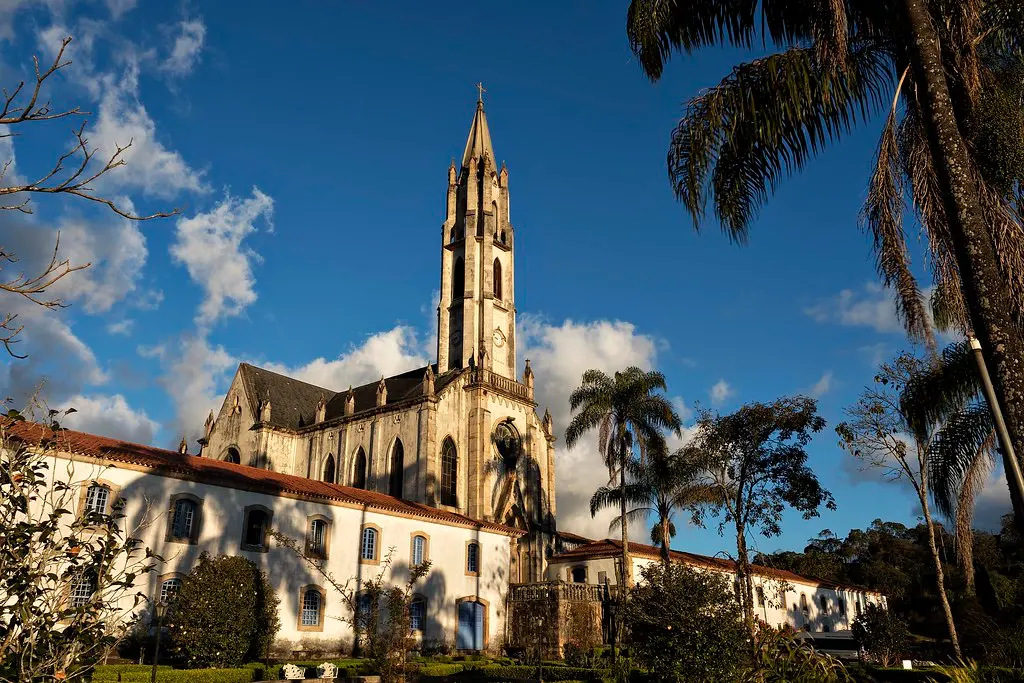
Santuário do Caraça
Catas Altas, Minas Gerais, Brazil
59.9 km away
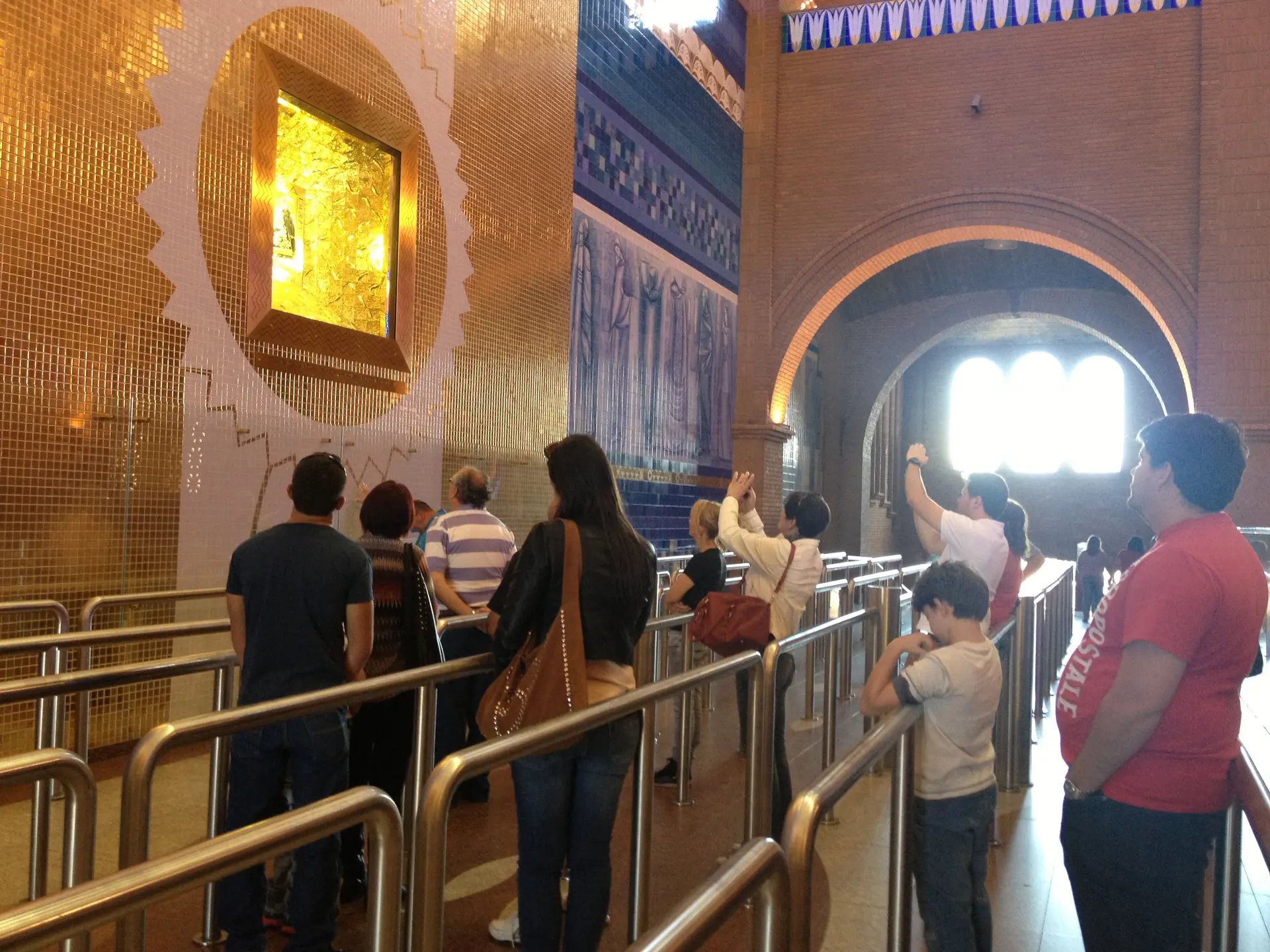
Nossa Senhora Aparecida
Aparecida, São Paulo, Brazil
296.6 km away

Aparecida, Basilica of the National Shrine of Our Lady of Aparecida
Aparecida, São Paulo, Brazil
296.6 km away

Nossa Senhora do Bom Parto Church, Tatuape
São Paulo, Brazil
438.4 km away
References
Sources consulted for this page. Source categories describe the publication, not a guarantee that every claim is verified. Traditional accounts and outside interpretations may differ.
- 01Sanctuary of Bom Jesus do Congonhas — UNESCO World Heritage CentreofficialOfficial UNESCO documentation
- 02Sanctuary of Bom Jesus de Matosinhos of Congonhas do Campo — SmarthistoryacademicAcademic art history resource
- 03Aleijadinho | Biography, Sculptures, & Facts — Encyclopaedia BritannicaencyclopediaComprehensive artist biography
- 04Sanctuary of Bom Jesus do Congonhas, Brazil — Google Arts & Culture / UNESCOSource contextUNESCO partnership content
- 05Aleijadinho (Antonio Francisco Lisboa, 1738-1814) — BlackPast.orgSource contextFocus on Aleijadinho's African heritage
- 06Sanctuary of Bom Jesus do Congonhas: Baroque Art Marvel — LAC GeoSource contextCultural overview
- 07Congonhas sanctuary heritage dossier — IPHANofficialSupports the attributed account or visitor practice in the healing section; not evidence of clinical efficacy.
- 08Historical heritage — Municipality of CongonhasofficialSupports the attributed account or visitor practice in the healing section; not evidence of clinical efficacy.
Photo gallery
3 curated photos
Share a photo
Help visitors recognize Sanctuary of Bom Jesus do Congonhas. Every submission is reviewed before publication.