Salt Cathedral of Zipaquirá
A church shaped from darkness, salt, labor, and prayer
Understand sacred places, explore living traditions, and learn how to engage respectfully with Pilgrim Map.
Access has not been verified. Check current local guidance before planning a visit.
Zipaquirá, Cundinamarca, Colombia
Read the sources
Visit essentials
A quick read before you go
- Duration
- Set aside at least two hours for the core route and more if your ticket includes museums, the…
- Access
- The official address is Calle 1 with Carrera 6, Zipaquirá.
Overview
As daylight narrows, cooler air and echoing footsteps lead through dark recesses, illuminated crosses, and spaces cut from the salt mountain rather than raised upon it. This is not a conventional cathedral underground but a mine remade as Christian contemplation: Stations of the Cross opening toward immense chambers devoted to birth, life, death, and resurrection.
The present church opened in 1995, but devotion began with miners who made small altars in the workings and prayed to Our Lady of the Rosary of Guasá for protection. Faith formed amid danger, exhaustion, and mutual dependence. The carved surfaces therefore remain within mining's material world rather than imitating it.
Sightseers, pilgrims, worshippers, school groups, and families do not always move at the same pace. Contemplation means noticing when attraction becomes sanctuary: voices lower, a procession gathers, or a nave's scale makes its labor briefly imaginable.
Why this place is sacred
Thinness here is architectural rather than remote. The site sits close to a busy city and welcomes large numbers of visitors, yet the underground route changes the body's ordinary references. There is no horizon. Temperature, sound, and distance become difficult to judge. Colored light catches crystalline surfaces, and a brine pool appears deeper than it is because reflection conceals the boundary between water and rock.
Catholic symbolism gives this disorientation a direction. The Stations of the Cross turn physical descent into a meditation on suffering; the naves lead from birth and life toward death and resurrection. In Catholic understanding, the sequence is not simply an artistic theme but a movement through the Paschal mystery. Visitors outside that tradition can still attend to its structure without borrowing devotional claims as their own.
Another layer lies beneath the symbolism: miners entered these workings for labor, not contemplation. Their altars and devotion to the Virgin of Guasá arose from real risk. The place becomes most legible when the beauty of illumination does not erase that history. Salt gleams because human beings cut, carried, prayed, and depended on one another here.
The chambers belong to a salt-mining landscape. Miners created early devotional altars underground before a larger church opened in 1954.
The first large church closed in 1992 because of structural concerns. The present design by Roswell Garavito Pearl opened in 1995 and now functions as both worship space and managed cultural attraction.
Experience and orientation
Begin by letting your eyes adjust rather than rushing toward the first illuminated form. The early crosses are spare, carved through mass and shadow. Notice how little is added: void, edge, and light do much of the work. If a group passes, wait a moment. The tunnel changes when footsteps recede.
At the larger chambers, look back as well as forward. Scale is revealed by people, railings, and distant openings. The central cross can dominate the view, but the surrounding cut surfaces preserve the mine's rougher grammar. At the water mirror, shift your position and watch apparent depth change with the reflection. The effect is engineered, yet knowing that does not diminish its capacity to unsettle perception.
When worship is underway, the experience changes category. Remain behind the congregation unless invited forward, put the camera away, and allow prayer to determine the pace of the room. The building is shared by visitors with very different intentions. Attentiveness is the practice that lets those intentions coexist.
The visit proceeds through descending mine passages and Stations of the Cross toward the principal naves and associated attractions. Follow the marked route and staff instructions; special services may redirect circulation.
Context and lineage
The operating authority traces the sanctuary to small altars made by miners who invoked Our Lady of the Rosary of Guasá before entering hazardous workings. Their desire for a larger temple led to the church inaugurated in 1954. Structural concerns closed that space in 1992, and the current church opened three years later.
The site's lineage moves from a pre-Christian salt landscape through industrial mine devotion into a modern Roman Catholic church and civic heritage complex. These layers are related but should not be collapsed into a claim of one continuous religious tradition.
The miners of Zipaquirá
Created early underground altars and established the site's protective Marian devotion.
Our Lady of the Rosary of Guasá
Marian patron invoked by miners for protection.
Roswell Garavito Pearl
Architect of the present underground church.
Traditions and practice
Miners prayed at small underground altars and sought the protection of Our Lady of the Rosary of Guasá before work. In the present church, the Christian narrative is encountered through the Stations and the naves devoted to Christ's birth, life, death, and resurrection.
Public liturgies and organized pilgrimage celebrations continue, with Holy Week bringing processions, Eucharist, and rites such as the blessing of water and fire. Confirm the current liturgical calendar directly with the cathedral before traveling.
Walk the first passages without headphones. Pause before each cross long enough to notice how it is made from illuminated absence and rock. In the naves, sit where permitted and attend to the interval between tour-group sounds. Let the place disclose its labor history as fully as its symbolism.
Roman Catholic Christianity
ActiveAn active church and pilgrimage destination structured around the life, Passion, death, and resurrection of Jesus Christ.
Mass, Eucharistic celebrations, prayer, Stations of the Cross, processions, and Holy Week rites.
Miners' Marian devotion
ActiveOur Lady of the Rosary of Guasá carries the memory of miners who prayed for protection before entering hazardous workings.
Marian prayer, remembrance of miners, and protective devotion.
Muisca salt-working heritage
HistoricalMuisca extraction and exchange belong to the deeper history of Zipaquirá's salt landscape, preceding the modern Christian church.
Historical salt production and exchange; the research did not establish a continuous Muisca ritual practice inside the modern cathedral.
Perspectives and open questions
The Salt Cathedral can be understood simultaneously as a living Catholic church, a memorial to miners' devotion, a work of modern Colombian architecture, and a managed tourism complex. None of these frames is sufficient alone.
Scholarly perspective
The present interior is modern architecture carved within older mine workings. Its power comes from deliberate spatial sequencing, light, scale, and the reuse of industrial voids. Calling it a natural cave or an ancient sanctuary would obscure both engineering and chronology.
Living and traditional perspectives
In Catholic understanding, the route through the Stations and the naves places Christ's suffering, death, and resurrection within an embodied descent. Miners' devotion centers Our Lady of the Rosary of Guasá as protector amid dangerous labor.
Alternative interpretations
The reviewed research did not establish a distinct esoteric tradition at the site. Claims about healing mineral energy or measurable spiritual force should be identified as personal interpretations, not as Catholic teaching or Muisca tradition.
Open questions
Architecture can reliably alter perception without resolving what a visitor should call the result. Reverence, unease, grief, and wonder may arise from belief, darkness, scale, memory, or their convergence. The site does not require those explanations to be forced into agreement.
Plan your visit
Access and arrival
The official address is Calle 1 with Carrera 6, Zipaquirá. Buses from Bogotá serve Zipaquirá, and the site publishes driving and tourist-train guidance. Wheelchairs are available without charge. Mobile signal underground was not documented in the reviewed sources, so arrange meeting points and save tickets before descending. Contact cathedral staff for current accessibility or emergency arrangements.
Stay in Zipaquirá for an unhurried early visit or use Bogotá as a base. Confirm lodging and return transport directly, especially when relying on the tourist train or attending special liturgies.
Respectful visit
Wear modest layers and closed, stable shoes appropriate to a cool underground route.
General visitor photography is expected, but refrain during liturgy and around people at prayer unless permission is explicit.
Use only designated donation or offering points. Do not leave objects, salt, candles, or written intentions in the mine without authorization.
Stay on the marked route, respect barriers, do not remove mineral material, and obey staff directions during services or special events.
Do not invent rituals with salt, remove mineral material, light candles outside designated areas, or treat worshippers as part of the visual display. Personal contemplative practice should remain quiet, reversible, and secondary to scheduled liturgy.
Location
Map loads as you approach this section.
Pilgrim reflections
A portrait of encounter, not a score
Pilgrims describe what they felt, how present they could become, and whether the place would shape a journey. There are no stars and no ranking of traditions.
No reviewed reflections yet
The first pilgrims can help describe the character of being here.
Share a reflection
Available after an account-backed “Been there.” Every reflection is reviewed before publication.
Nearby sacred places
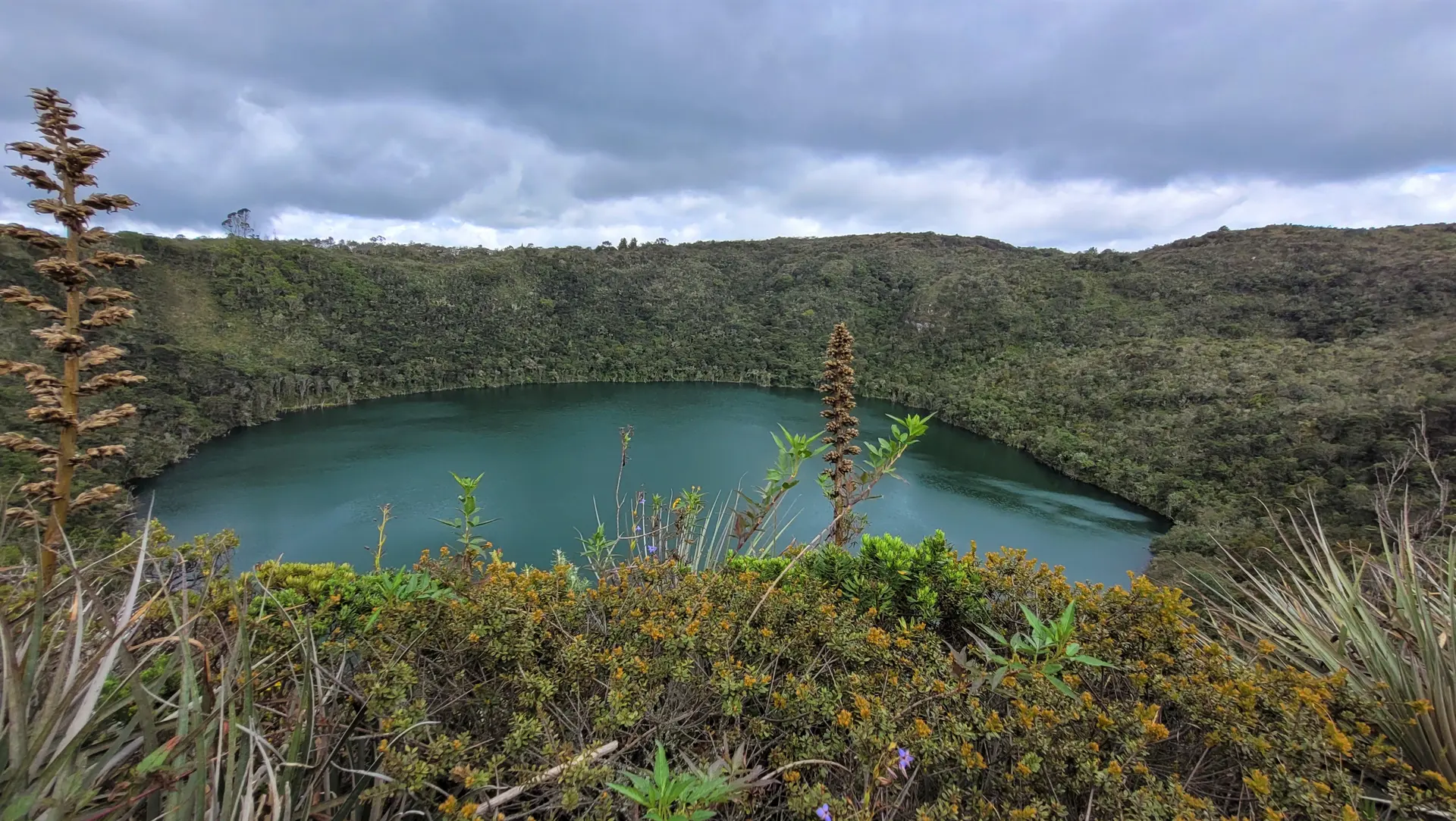
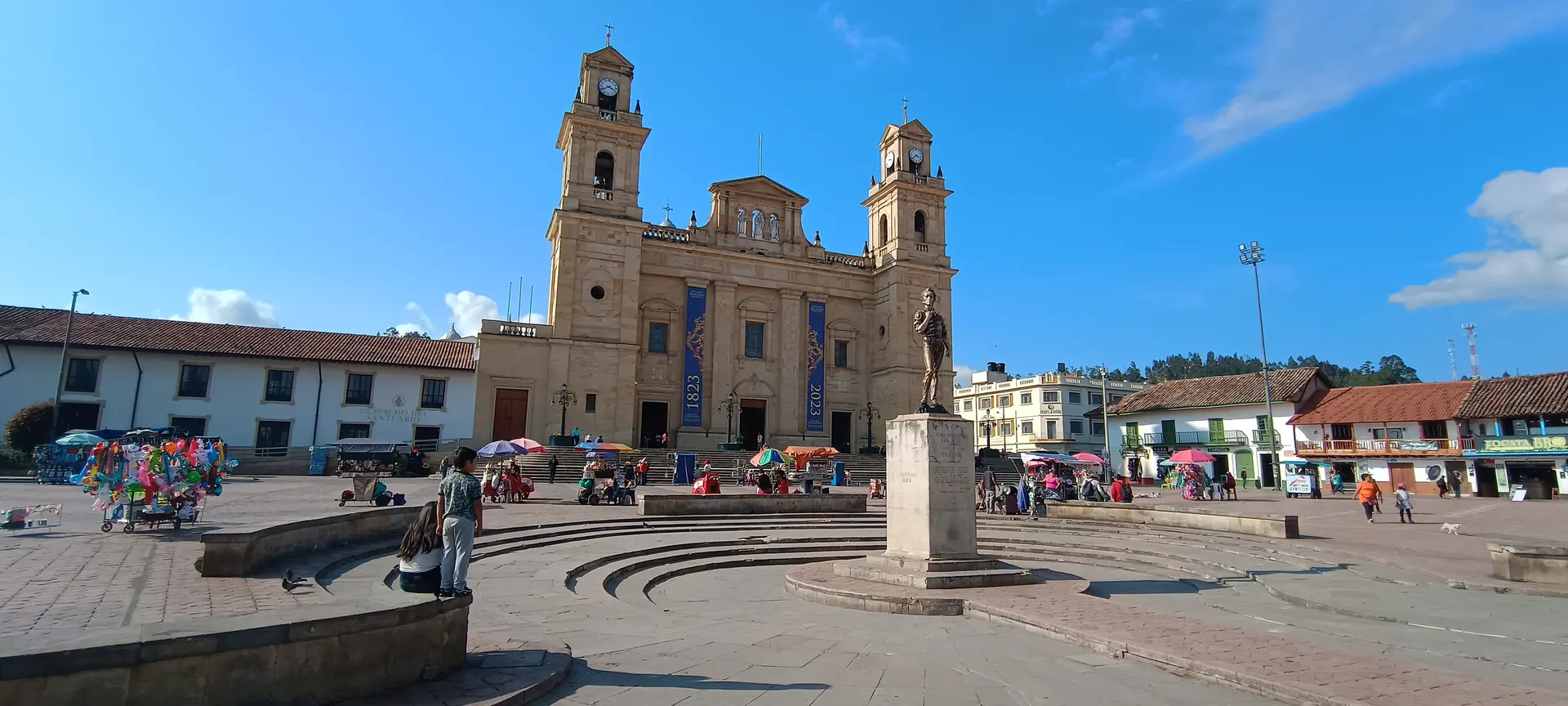
Explore other sacred places in the region. Proximity does not establish access or travel time; check each place’s guidance.


References
Sources consulted for this page. Source categories describe the publication, not a guarantee that every claim is verified. Traditional accounts and outside interpretations may differ.
- 01Empresa — Catedral de Sal Zipaquirá — Catedral de Sal de Zipaquirá S.A. SEMofficialOperating authority; history, Marian devotion, architecture, current contact information and visitor hours.
- 02Tarifas — Catedral de Sal Zipaquirá — Catedral de Sal de Zipaquirá S.A. SEMofficialOfficial access, transport, ticket inclusions, wheelchair availability and contact details.
- 03Semana Santa 2026, Catedral de Sal: donde la fe se convierte en experiencia — Catedral de Sal de Zipaquirá S.A. SEMofficialOfficial Holy Week liturgies and evidence of active worship and pilgrimage.
- 04Catedral de Sal de Zipaquirá — Superintendencia de Industria y Comercio, ColombiaofficialColombian government description of the functioning church, cultural patrimony and non-cathedral canonical status.
- 05Nuevo horario de la Catedral de Sal de Zipaquirá desde julio — Catedral de Sal de Zipaquirá S.A. SEMofficialCurrent daily public opening and last-ticket time.
- 06Espejo de agua — Catedral de Sal Zipaquirá — Catedral de Sal de Zipaquirá S.A. SEMofficialOfficial interpretation of the brine mirror and its visual effect.
- 07Salt Cathedral of Zipaquirá — Wikipedia contributorsSource contextUsed for coordinates and cross-checking geology, spatial organization and historical sequence.
Photo gallery
4 curated photos
Share a photo
Help visitors recognize Salt Cathedral of Zipaquirá. Every submission is reviewed before publication.