Church of Our Lady of the Rosary of the Renewal
The ground where a ruined painting was restored, and where centuries of pilgrims dug a well with their hands
Understand sacred places, explore living traditions, and learn how to engage respectfully with Pilgrim Map.
Access has not been verified. Check current local guidance before planning a visit.
Boyacá, Boyacá, Colombia

Visit essentials
A quick read before you go
- Duration
- Thirty minutes to one hour for the church, well, and museum.
- Access
- Located on the Parque Julio Florez in central Chiquinquira, Boyaca Department, Colombia.
Overview
On December 26, 1586, after months cleaning the abandoned chapel and praying daily before a canvas whose Virgin was barely visible, Maria Ramos knelt with an indigenous woman named Isabel and her young son. The painting radiated light and was completely restored. The Church of Our Lady of the Rosary of the Renovation marks that ground. The painting later moved to the larger basilica built for growing pilgrimages, but this church holds the place where it happened.
Beneath it lies the Pozo de la Virgen, the Well of the Virgin, formed over centuries as pilgrims dug at the miracle site believing the earth holy; each handful removed was an act of faith, and the well filled with water of remarkable purity.
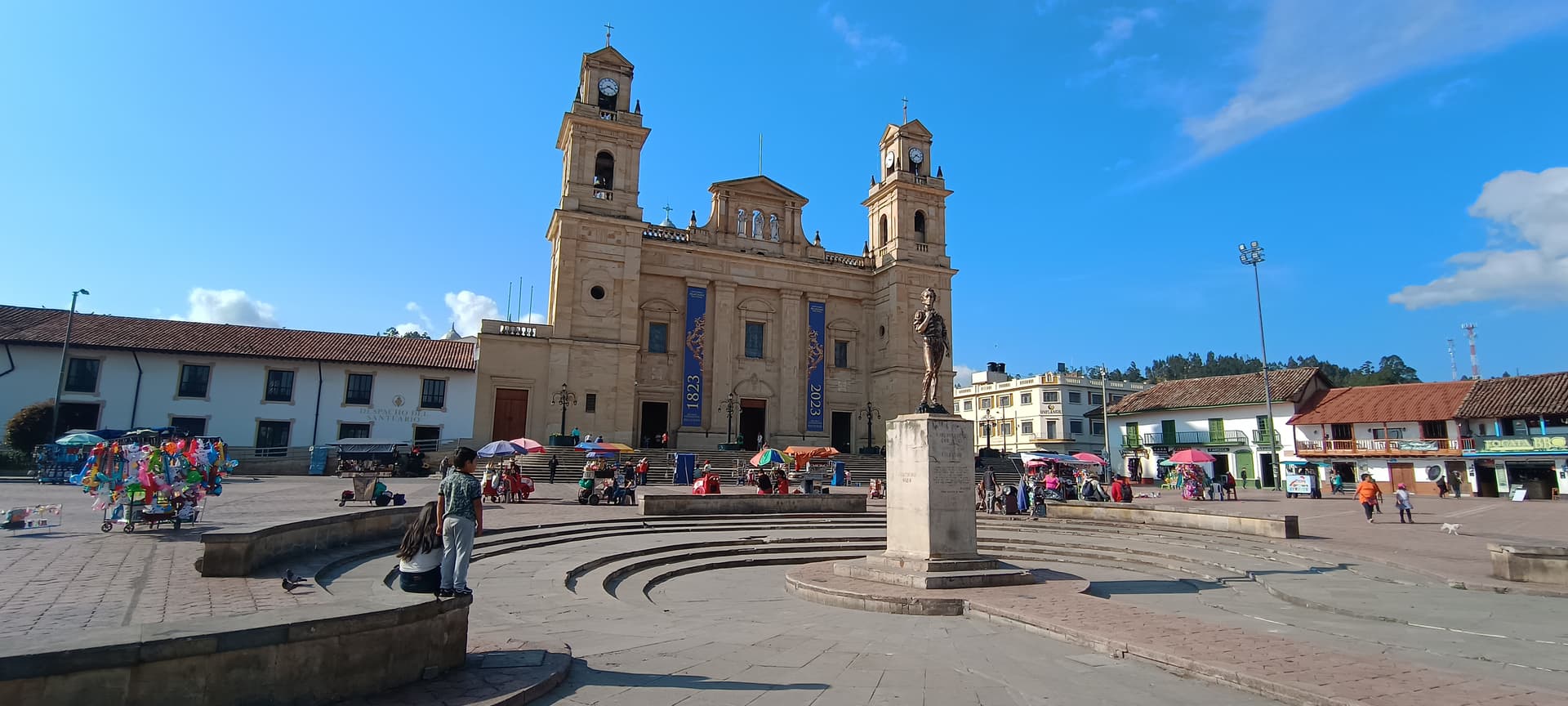
Reconstructed in 1967 on Parque Julio Florez in central Chiquinquira, the current church is smaller, quieter, and less visited than the basilica, offering the intimacy of a woman praying alone rather than grandeur for a national patroness. Its Mariano Museum preserves artifacts and devotional art connected to four centuries of pilgrimage.
Why this place is sacred
There is something instructive about the simplicity of the original miracle. A woman cleaning an abandoned chapel. A deteriorated painting. Daily prayer before an image that, by every practical measure, was past saving. The miracle did not occur in a cathedral or before a crowd of dignitaries. It occurred before three people: a devoted woman, an indigenous mother, and a child.
The Church of the Renovation preserves this scale. Where the basilica speaks the language of institutional Catholicism, the national patroness, the canonical coronation, the papal declarations, this smaller church speaks the language of the original event: persistence, humility, a willingness to pray before something others had abandoned.
The Pozo de la Virgen adds a dimension found at very few sacred sites anywhere. The well was not planned or constructed. It came into being through the accumulated actions of individual pilgrims who, one after another over centuries, removed handfuls of earth from the miracle spot. Each pilgrim believed the ground was charged with grace, and each left the earth slightly deeper than they found it. Eventually, water filled the depression. The water was found to be remarkably pure.
Whether one reads this as divine confirmation or geological coincidence, the well itself is a physical record of cumulative devotion. Each handful of earth was a prayer made material. The water that replaced the earth has been used for baptisms and blessings, completing a cycle: faith created the well, and the well sustains faith.
The site has held continuous prayer for over four hundred and forty years. The chapel that preceded this church, the 1760 formal church, the 1967 reconstruction, all are shells around a continuity of presence that predates and outlasts each structure. What persists is not the building but the ground and the practice.
The original chapel on this site was the location of the miraculous restoration of a deteriorated painting of the Virgin of the Rosary on December 26, 1586. The chapel became a pilgrimage destination immediately after the miracle. The formal church built in 1760 formalized the site's role as a place of devotion complementing the larger basilica.
The progression from humble chapel to formal church to reconstructed parish tells a straightforward story of institutional growth. More interesting is the evolution of the Pozo de la Virgen: what began as pilgrims removing small amounts of earth from the miracle spot gradually became a well, which then became a source of holy water used in sacraments. The site also evolved from being the primary pilgrimage destination to a secondary one after the painting was moved to the basilica.
This shift paradoxically preserved its character: freed from the pressure of large-scale pilgrimage, it retained the intimacy that connects it to the original miracle. The Mariano Museum, established to house devotional artifacts, added an educational dimension. Today the church functions simultaneously as a parish, a pilgrimage complement to the basilica, and a museum, each layer serving a different need.
Experience and orientation
The church sits on the Parque Julio Florez, a short walk from the basilica, and the contrast is immediate. Where the basilica announces itself, the Renovation church simply waits. Its 1967 reconstruction is architecturally modest, which turns out to be appropriate. The original miracle did not happen in a grand space.
Inside, the atmosphere differs from the basilica's institutional solemnity. This is a functioning parish where local residents attend Mass, where the daily rhythms of prayer have continued for over four centuries. Visitors may find themselves the only non-locals present, which creates a different quality of encounter than the pilgrim-filled basilica.
The Pozo de la Virgen is the heart of the experience. Descending to the well beneath the church, one encounters the physical evidence of centuries of devotion. The well is not large or dramatic. It does not need to be. Its power lies in how it came to exist: not through engineering but through the accumulated faith of countless individuals, each removing a small piece of the ground where they believed heaven touched earth.
The water is clear and used for baptisms and blessings.
The Mariano Museum offers a different register: the visual and material culture of four centuries of Marian devotion. Paintings, sculptures, and devotional objects trace the evolution of the Chiquinquira devotion from a local miracle to a national identity.
The complete pilgrimage experience involves both the Renovation church and the basilica. Those who visit only the basilica see the painting but miss the ground. Those who visit only the Renovation church understand the ground but miss the painting. Together, they form a whole: the place where the miracle happened and the place where its object now resides.
Begin at the church itself rather than the museum. Sit in the nave if no service is in progress. Note the scale and the quiet. Then visit the Pozo de la Virgen beneath the church, where the well created by centuries of pilgrims can be seen and holy water collected. The Mariano Museum can be explored afterward, when the historical and devotional context will have more resonance.
If visiting Chiquinquira for the full pilgrimage, consider visiting the Renovation church first, before the basilica. This sequences the experience from origin to culmination: from the ground where the miracle occurred to the basilica that houses the miraculous painting.
Context and lineage
On December 26, 1586, Maria Ramos was praying before a deteriorated painting of the Virgin of the Rosary in a small chapel on this site. She had spent months cleaning the abandoned space and praying daily before the ruined canvas. That morning, an indigenous woman named Isabel and her young son were present. The painting suddenly radiated brilliant light and was completely restored to its original beauty.
The miracle established Chiquinquira as the most important pilgrimage destination in Colombia. The painting was eventually declared the patroness of Colombia, and the devotion spread throughout the country and beyond. As pilgrimages grew, the painting was moved to a larger basilica built to accommodate the faithful. The original miracle site received its own formal church in 1760, preserving the ground where the event occurred.
Over the centuries that followed, pilgrims visiting the site began a practice that would create the church's most distinctive feature: they dug at the spot where the miracle occurred, believing the earth itself held healing properties. This gradual removal of earth eventually created the Pozo de la Virgen, the Well of the Virgin, which filled with water of exceptional purity. The well remains beneath the church today.
The lineage of the Renovation church is one of continuity through transformation. The original chapel, humble and abandoned, was the setting for the 1586 miracle. As the devotion grew, a formal church was built on the site in 1760. The 1967 reconstruction modernized the structure while preserving the sacred ground. Through each iteration, the essential function remained: to mark and honor the place where the miracle occurred.
The Dominican order played an early role in the devotion, and the Mariano Museum preserves artifacts from the colonial period of the pilgrimage. The relationship between the Renovation church and the basilica evolved as well: originally the primary site, the Renovation church became a complement to the basilica after the painting was moved, finding its identity not in housing the miraculous object but in preserving the miraculous ground.
Maria Ramos
witness to the miracle
The devoted woman whose months of prayer before the deteriorated painting preceded and, in the Catholic understanding, occasioned the miraculous restoration. Her persistence in cleaning an abandoned chapel and praying before a ruined image embodies the humility at the heart of the Chiquinquira devotion.
Isabel
witness to the miracle
An indigenous woman present with her young son at the moment of the miraculous restoration. Her presence connects the devotion to Colombia's indigenous communities and to the encounter between European Catholicism and indigenous spiritual experience.
Pope Pius VII
ecclesiastical authority
Declared the Virgin of Chiquinquira patroness of Colombia in 1829, elevating the devotion from a regional miracle to a national identity.
Traditions and practice
Pilgrims have visited this site since 1586, drawn by the ground where the miraculous restoration occurred. The tradition of digging at the miracle spot, which eventually created the Pozo de la Virgen, is centuries old, though the well has long since been formalized and the practice of removing earth has ceased. Collecting water from the well for healing and blessing has been practiced for generations.
Baptisms using the well water maintain a sacramental connection between the miracle site and the initiation of new members into the faith.
Regular parish Masses draw the local community. Pilgrims visiting Chiquinquira include the Renovation church as part of the complete pilgrimage that also encompasses the basilica. The Pozo de la Virgen remains accessible, and water from the well is available for pilgrims. The Mariano Museum houses paintings, sculptures, and devotional objects spanning the history of the Chiquinquira devotion. The church is particularly visited around the July 9 feast day of Our Lady of Chiquinquira.
Visiting the Renovation church before the basilica creates a narrative arc from origin to culmination. At the Pozo de la Virgen, consider the well not as an artifact but as a record of cumulative devotion: each handful of earth removed was someone's act of faith. If the church is quiet, sit in the nave and consider that continuous prayer has been offered on this ground for over four hundred years.
The Mariano Museum rewards slow attention; the devotional objects carry the weight of centuries of personal piety.
Roman Catholicism — Marian Devotion
ActiveThe Church of the Renovation marks the ground where the miraculous restoration of the painting of Our Lady of the Rosary occurred on December 26, 1586, the foundational event of the most important Marian devotion in Colombia. While the painting now resides in the larger basilica, this church preserves the sacred ground and the Pozo de la Virgen, the well created by centuries of pilgrims digging at the miracle spot.
Regular parish Masses, pilgrimage visits to the Pozo de la Virgen, collection of holy water for healing and blessing, baptisms using the well water, and devotional prayer on the miracle site. The Mariano Museum preserves the visual and material culture of the devotion.
Perspectives and open questions
The Church of the Renovation invites interpretation at multiple levels: as a Catholic miracle site, as an example of how collective devotion physically shapes a landscape, and as a study in the relationship between an event and its location. The well created by pilgrims' hands is a phenomenon that speaks across frameworks.
Scholarly perspective
Historians document the 1586 miracle as the foundational event of the Chiquinquira devotion, one of the most important Marian cults in Latin American Catholicism. Art historians note the significance of the Mariano Museum for understanding colonial-era devotional art in Colombia. The Pozo de la Virgen is documented as an unusual example of popular devotional practice creating a physical landscape feature over centuries, a well formed not by geology or engineering but by the accumulated actions of individuals motivated by faith.
The 1967 reconstruction preserved the sacred site while modernizing the structure; how much of the 1760 church survived the reconstruction is not fully documented.
Living and traditional perspectives
For Catholic faithful, this church preserves the holiest ground in Colombia: the exact place where the Virgin chose to manifest her presence through the restoration of her image. The Well of the Virgin is understood as a continuing source of grace, with its pure water carrying the blessing of the miracle site. The simplicity of the original miracle, occurring before a humble woman in an abandoned chapel, speaks to the Catholic understanding that the divine chooses the lowly.
Visiting both the Renovation church and the basilica completes the full pilgrimage, honoring both the place and the painting.
Alternative interpretations
The Pozo de la Virgen presents an interesting case study in the relationship between collective belief and physical reality. Pilgrims dug the earth because they believed it was holy, and the well that formed filled with water of remarkable purity. Whether one interprets this as divine confirmation, geological coincidence, or a phenomenon that resists simple categorization, the relationship between faith and the material world at this site is noteworthy.
The well is, in the most literal sense, an artifact of belief.
Open questions
Several questions remain open. What was the precise layout and appearance of the original 1586 chapel? Why is the well water so pure, and has it been subjected to modern geological analysis? How much of the original 1760 church structure survived the 1967 reconstruction? What is the full extent of the Mariano Museum's collection, and which artifacts date from the earliest period of the devotion?
The 1586 miracle itself, while documented by multiple sources, raises the perennial question of miraculous events: the accounts are consistent, the devotion is genuine, and the painting exists, but the event described lies beyond the reach of historical verification.
Plan your visit
Access and arrival
Located on the Parque Julio Florez in central Chiquinquira, Boyaca Department, Colombia. A short walk from the Basilica of Our Lady of the Rosary. Chiquinquira is accessible by bus from Bogota, approximately two and a half to three hours. Mobile phone signal is available in central Chiquinquira. No specific accessibility information was available at time of writing; check locally for current access arrangements.
Chiquinquira offers a range of accommodation from hotels to guesthouses, concentrated in the town center within walking distance of both the Renovation church and the basilica. The town is geared toward pilgrims and has adequate services.
Respectful visit
Modest dress is expected: shoulders and knees covered, as is standard for Catholic churches in Colombia. No specific color requirements.
Photography is generally permitted outside of services. Check current guidelines for the Pozo de la Virgen and the Mariano Museum. Flash photography should be avoided during services and in the museum where it may damage artifacts.
Candle lighting is customary. Donations support the church and museum. Water from the Pozo de la Virgen is available for pilgrims.
Quiet and reverent behavior expected throughout. The church is not to be entered for tourism during Mass unless the visitor intends to participate in the service. The Pozo de la Virgen should be treated as a sacred space.
The church is an active parish. If Mass or another service is in progress, visitors should either participate respectfully or wait until it concludes. The Pozo de la Virgen is a sacred space, not a curiosity. Photography inside the church and museum should be done quietly and without flash during services. Check locally for current museum hours, as they may vary.
Current practical details
Address
a 16-92,, Cra. 8 #162, Chiquinquirá, Boyacá, Colombia
Phone
Hours
Hours, fees, and access can change — verify on the official source before you travel. Practical details last checked Jun 2026.
Location
Map loads as you approach this section.
Pilgrim reflections
A portrait of encounter, not a score
Pilgrims describe what they felt, how present they could become, and whether the place would shape a journey. There are no stars and no ranking of traditions.
No reviewed reflections yet
The first pilgrims can help describe the character of being here.
Share a reflection
Available after an account-backed “Been there.” Every reflection is reviewed before publication.
Nearby sacred places
Explore other sacred places in the region. Proximity does not establish access or travel time; check each place’s guidance.


Share a photo
Help visitors recognize Church of Our Lady of the Rosary of the Renewal. Every submission is reviewed before publication.