Saints Sergius and Bacchus Church (Abu Serga)
A crypt beneath the altar, believed to have sheltered the Holy Family
Understand sacred places, explore living traditions, and learn how to engage respectfully with Pilgrim Map.
Access has not been verified. Check current local guidance before planning a visit.
Old Cairo, Cairo, Egypt
Read the sources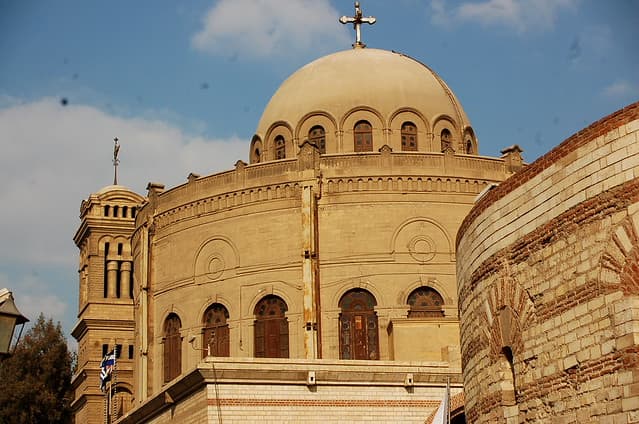
Visit essentials
A quick read before you go
- Duration
- A typical visit, including time in the nave and a descent to the crypt, takes roughly 30-45…
- Access
- Located in Coptic Cairo (Masr al-Qadima / Old Cairo), within the walled Babylon Fortress…
Overview
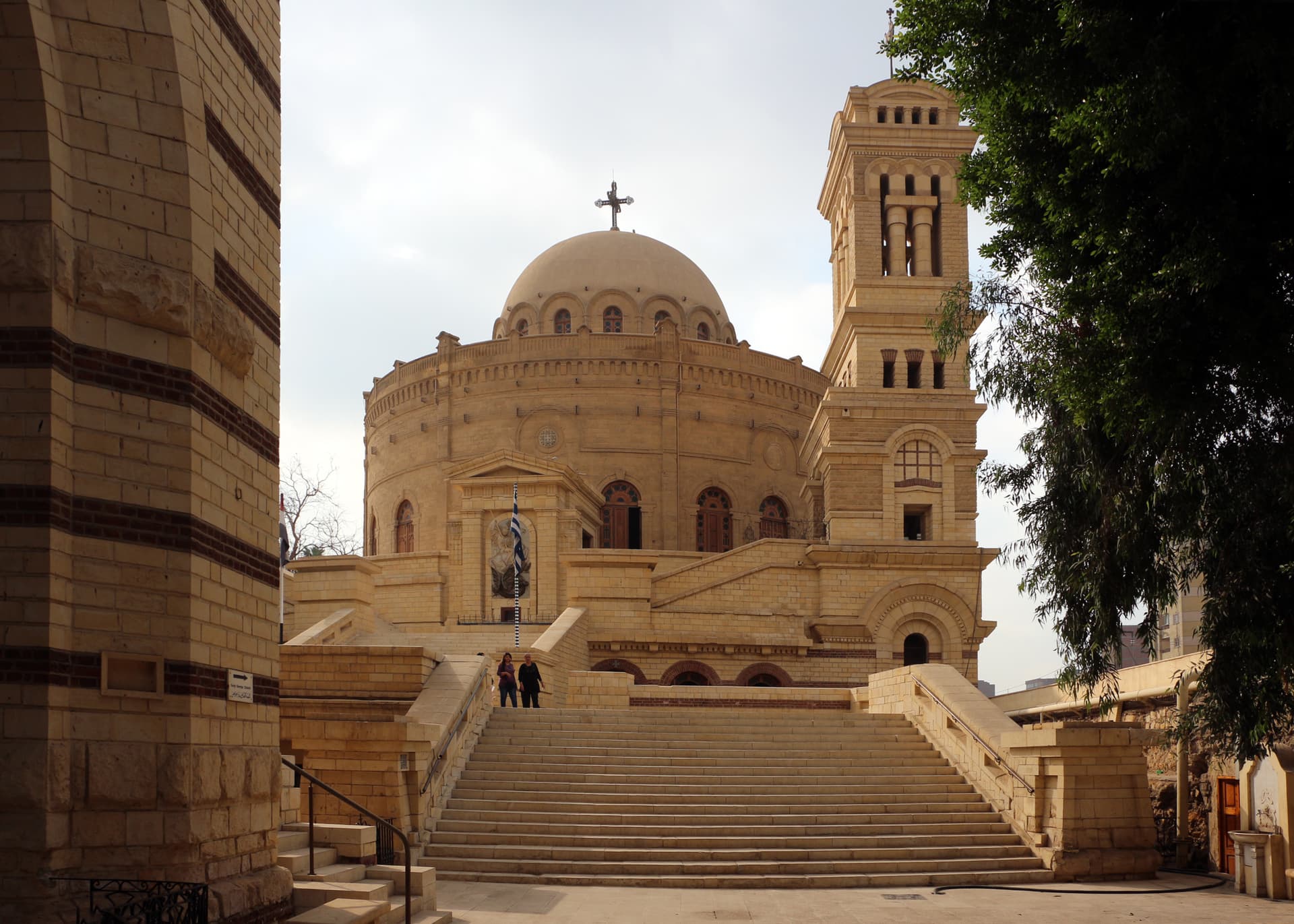
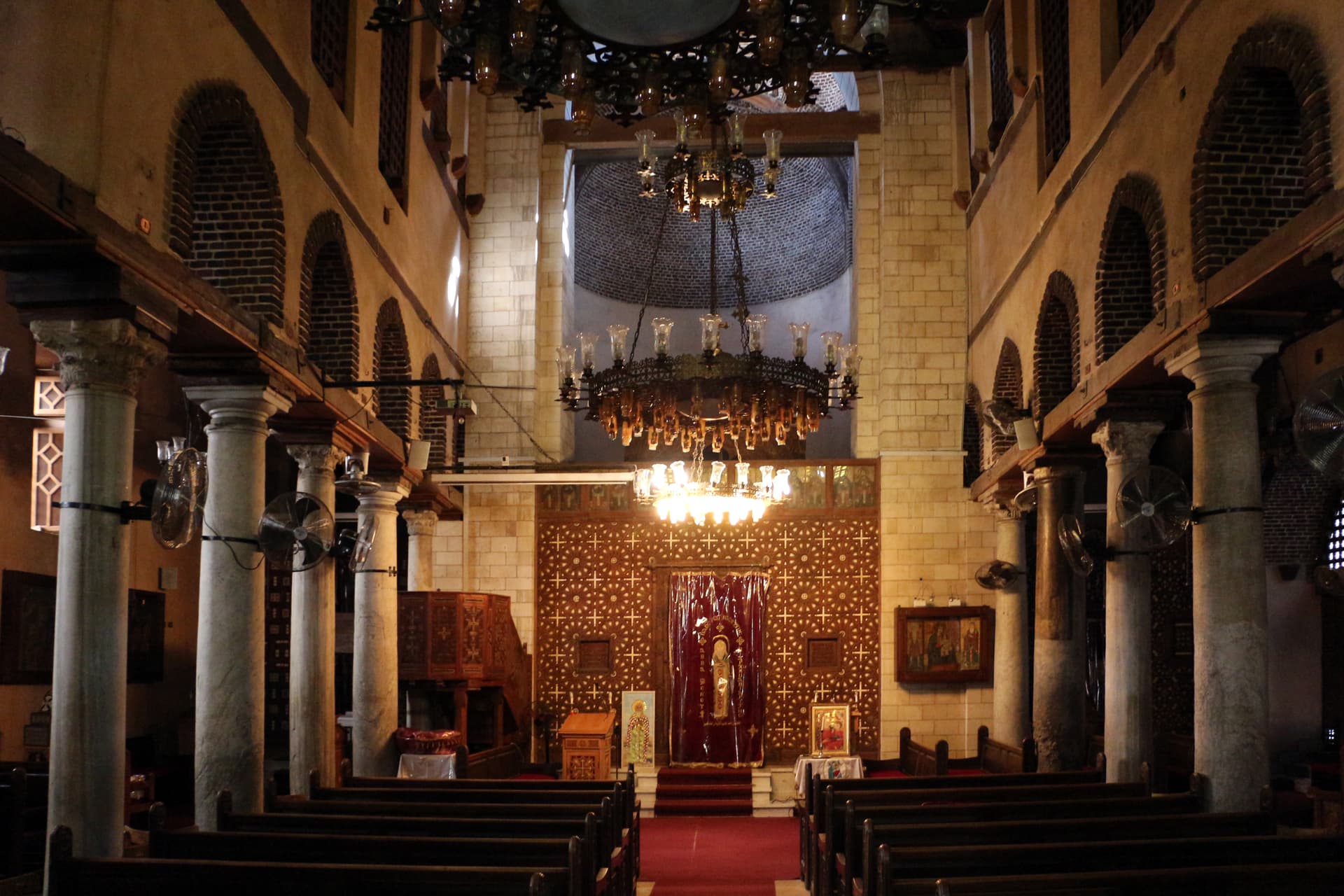
Narrow stone steps at Abu Serga descend to a small chamber roughly 6.5 meters below street level, with a stone bench and altar. Coptic tradition identifies it as the shelter of Mary, Joseph, and the infant Jesus during their flight from Herod. Above, the basilica remains an active parish church, its carved wooden iconostasis and ivory-inlaid doors surrounding worshippers at Divine Liturgy.
Abu Serga takes its common name from the martyred Roman soldier-saints Sergius and Bacchus, to whom it is dedicated. Within Babylon's walled Roman fortress in Old Cairo, it served from the late 7th through mid-11th century as the place where Coptic Orthodox patriarchs and bishops were elected.
The building's age remains genuinely unresolved. Academic sourcing, including Wikipedia's scholarly synthesis, places its foundation in the late 7th century and credits the scribe Athanasius under Umayyad governor Abd al-Aziz ibn Marwan. Popular tradition and Egypt's Ministry of Tourism and Antiquities instead cite a 4th-5th-century origin; that same official page internally conflicts, at one point suggesting as late as the 17th century. No date resolves this: academic consensus leans earlier-medieval, popular tradition ancient.
Why this place is sacred
Two origin narratives converge at this site. The first is the hagiographic martyrdom of Sergius and Bacchus, Roman army officers said to have been executed in Syria under Emperor Maximian for refusing to sacrifice to Jupiter — a Passion narrative that historians such as David Woods regard as a largely fictionalized composition attached retroactively to an already-popular cult.
The second is the Coptic devotional tradition, rooted in the Gospel of Matthew's account of the Flight into Egypt, that the Holy Family sheltered in a cave beneath what is now the church's sanctuary while escaping Herod's persecution.
On the church's own founding date, sources genuinely conflict rather than simply disagreeing on detail. Wikipedia and most academic secondary sources place construction in the late 7th century, around 685-705 CE, attributed to the scribe Athanasius under Umayyad governor Abd al-Aziz ibn Marwan. Popular travel sources, and even Egypt's official Ministry of Tourism and Antiquities page, instead assert a 4th-5th century foundation — with that same official page internally offering a conflicting alternative estimate as late as the 17th century.
This research treats the range as unresolved rather than picking a winner: the 7th-century academic account is better sourced, but the earlier popular tradition is too widely repeated, including by Egyptian state tourism material, to dismiss outright.
The present crypt's architectural form is thought by some scholars to date to the 12th-13th century, built above the remains of an earlier chamber — meaning the crypt pilgrims descend into today may not be architecturally identical to whatever space, if any, existed at the time the Holy Family tradition first attached to the site. Geophysical survey suggests the original chamber lies buried roughly 2 meters below the present floor.
The church is not independently UNESCO-inscribed; it sits within Coptic Cairo, adjacent to but distinct from the core Historic Cairo UNESCO World Heritage Site inscribed in 1979, which primarily covers the medieval Islamic walled city.
Experience and orientation
The layered history of the building — Roman masonry from the fortress of Babylon, early Islamic-era Christian construction, and centuries of Coptic devotional continuity — is visible within a single small footprint, and visitors repeatedly cite that compression as part of what makes the experience distinctive.
The descent into the crypt itself, narrow stone steps leading roughly 6.5 meters underground into a confined, dim space, is described as the emotional center of a visit: a physical, bodily transition from the ordinary daylight of the nave into something older and more enclosed.
For Christian pilgrims, especially those following the Holy Family Trail, entering the crypt is often experienced as a devotional highlight of an Egypt pilgrimage, evoking a direct physical connection to the biblical Flight into Egypt narrative; for secular visitors, the site offers a tangible encounter with the continuous religious history of Old Cairo.
A typical visit, including time in the nave and a descent to the crypt, takes roughly 30-45 minutes; visitors combining Abu Serga with the wider Coptic Cairo complex — the Hanging Church, the Coptic Museum, Ben Ezra Synagogue — often allocate a half-day.
Context and lineage
The church served as the site for the enthronement and election of Coptic Orthodox Patriarchs and bishops from the late 7th century through the mid-11th century, reflecting sustained historical ecclesiastical authority regardless of which founding date is accepted.
Athanasius of Edessa
founder
Christian scribe from Edessa (Syria) in the service of Umayyad governor Abd al-Aziz ibn Marwan, traditionally credited with founding the church per academic sourcing, though this dating is disputed by popular tradition favoring a much earlier origin.
Saints Sergius and Bacchus
saint
4th-century Roman army officers venerated as martyrs after their reported execution under Emperor Maximian for refusing to sacrifice to Jupiter; the hagiographic Passion narrative is regarded by some historians as largely fictionalized.
Traditions and practice
The church historically served as the site for the enthronement and election of Coptic Orthodox Patriarchs and bishops, reflecting its historical ecclesiastical authority.
Regular Coptic Orthodox Divine Liturgy and other sacramental services continue; the annual Feast of the Entry of the Holy Family into Egypt (June 1, or 24 Bashans in the Coptic calendar) is marked with festive vespers on the eve and liturgies on the feast day itself.
Visitors of any faith are generally welcomed to observe the church and descend into the crypt outside active service times, and quiet prayer or reflection in the crypt is customary and accepted regardless of religious background.
Coptic Orthodox Christianity
ActiveAbu Serga is one of the oldest continuously significant churches of the Coptic Orthodox Church, historically serving as the site of patriarchal elections and remaining an active parish church dedicated to the martyr-saints Sergius and Bacchus, with subsidiary altars to Saint George and the Virgin Mary.
Regular liturgical services, veneration of icons of Sergius and Bacchus, Saint George, and the Virgin Mary, and the annual Feast of the Entry of the Holy Family into Egypt on June 1.
Holy Family Flight into Egypt devotional tradition
ActiveThe church's crypt is traditionally venerated as one of the shelters used by the Holy Family during their flight from Herod's persecution, making Abu Serga one of the most visited stations on Egypt's Holy Family Trail and a focal point of Coptic devotional pilgrimage.
Pilgrim visits to the underground crypt for prayer and blessing, devotional recitation tied to the Gospel of Matthew's Flight into Egypt narrative, and inclusion in organized Holy Family Trail pilgrimage itineraries.
Perspectives and open questions
The church's founding date is a genuine open question rather than a settled fact glossed over for convenience — academic scholarship and popular Egyptian tradition, including the country's own tourism ministry, disagree by several centuries.
Scholarly perspective
Historians and archaeologists broadly agree the church was constructed atop the remains of the Roman fortress of Babylon, likely in the late 7th century, and that its present crypt architecture dates to a later medieval period, possibly the 12th-13th century, rather than to antiquity itself. The martyrdom narrative of Sergius and Bacchus is considered largely legendary and hagiographic rather than strictly historical.
Living and traditional perspectives
Coptic Orthodox tradition holds firmly that the crypt sheltered the Holy Family during their flight into Egypt, and the church is treated as one of the most sacred stations on the Holy Family Trail; the Coptic Church, with Egyptian state support, has formally promoted and restored this and 24 other sites since 2014 as an integrated pilgrimage route, endorsed symbolically by Pope Francis's 2017 blessing of an icon of the Flight.
Alternative interpretations
Some popular and blog-level sources describe additional folk traditions of mysteries and miracles associated with the church, though these are lower-reliability, epistemically unverified claims circulating in devotional travel writing rather than documented Church doctrine or academic history.
Open questions
The exact original form and precise dating of the Holy Family crypt remain unresolved; geophysical survey work suggests the visible crypt sits above a now-buried earlier chamber roughly 2 meters below the current floor, meaning the crypt pilgrims visit today may not be architecturally identical to whatever space, if any, existed at the time the Holy Family tradition first became attached to the site.
The precise founding date of the church itself — 4th-5th century per popular and official tourism tradition, or late 7th century per academic consensus — likewise remains disputed rather than resolved.
Plan your visit
Access and arrival
Located in Coptic Cairo (Masr al-Qadima / Old Cairo), within the walled Babylon Fortress complex; reachable via the Mar Girgis Metro station on the Cairo Metro, within walking distance of the Hanging Church and Coptic Museum. The church is open daily, generally from 8:00/9:00 AM to 4:00 PM, though sources vary slightly on exact hours. Free entry, though donations toward preservation are welcomed.
Respectful visit
Shoulders, arms, and legs should be covered; women may be asked to cover their heads, so carrying a scarf is advisable. Shoes are typically removed before entering certain interior areas.
Photography is generally permitted but should be conducted respectfully and without flash, particularly inside the crypt; visitors should avoid photographing worshippers during active services.
No formal offering ritual is documented for tourist visitors beyond the general Coptic custom of lighting candles and making voluntary donations toward the church's upkeep and preservation.
Visitors should avoid disturbing active liturgical services, behave quietly in the confined crypt space, and check locally for possible seasonal crypt closures due to Nile-related flooding.
Participation in liturgical rites themselves is reserved for the worshipping community; visitors should avoid disturbing active services and should check locally for possible seasonal crypt closures due to Nile-related flooding.
Location
Map loads as you approach this section.
Pilgrim reflections
A portrait of encounter, not a score
Pilgrims describe what they felt, how present they could become, and whether the place would shape a journey. There are no stars and no ranking of traditions.
No reviewed reflections yet
The first pilgrims can help describe the character of being here.
Share a reflection
Available after an account-backed “Been there.” Every reflection is reviewed before publication.
Nearby sacred places
Explore other sacred places in the region. Proximity does not establish access or travel time; check each place’s guidance.

References
Sources consulted for this page. Source categories describe the publication, not a guarantee that every claim is verified. Traditional accounts and outside interpretations may differ.
- 01Saints Sergius and Bacchus Church — Wikipedia — Wikipedia contributorsacademicPrimary reference for founding history (Athanasius, late 7th century under Abd al-Aziz ibn Marwan), architecture, patriarchal election history, Roman Amnis Traianus foundations, and crypt dating uncertainty.
- 02Sergius and Bacchus — Wikipedia — Wikipedia contributorsacademicBackground on the 4th-century Roman martyrdom legend of Saints Sergius and Bacchus, including historian David Woods's argument that the hagiographic Passion narrative is a later, largely fictional composition attached to an earlier cult.
- 03Saints Sergius and Bacchus — Encyclopaedia BritannicaacademicCorroborates the traditional martyrdom account and veneration of Sergius and Bacchus as military/soldier-saints in the Eastern and Oriental Orthodox traditions.
- 04Coptic Church to commemorate entry of Holy Family to Egypt — State Information Service (Egypt)officialOfficial Egyptian government source confirming the annual June 1 (24 Bashans) Feast of the Entry of the Holy Family into Egypt, one of seven minor feasts of Christ in the Coptic calendar, and the Coptic Church's advocacy for its wider national recognition.
- 05Church of Saint Sergius and Bacchus — Egyptian Ministry of Tourism and AntiquitiesofficialOfficial government heritage listing; confirms basilica architecture, underground crypt beneath the sanctuary, opening hours; but presents a conflicting/uncertain founding date range (4th-5th century vs. 17th century) at odds with academic consensus, so treated as medium reliability on dating specifically.
- 06Egypt races to restore Biblical sites along the "Holy Family Trail" — CBS NewsSource contextJournalistic coverage of the Egyptian state/Coptic Church joint restoration and promotion of the 25-site Holy Family Trail since 2014, and Pope Francis's 2017 blessing of an icon of the Flight.
- 07The Holy Family Route today: A living itinerary across Egypt — PilgrimapsSource contextDescribes Abu Serga's crypt (~6.5m below street level, reached by narrow steps, small cave with stone bench and altar, seasonal Nile-flood risk) as one of the family's longest-stay stations on the trail, and the role of pilgrims seeking blessings there.
- 08Holy Family in Egypt — See The Holy LandSource contextChristian traditional-authority source summarizing the biblical Flight into Egypt narrative (Gospel of Matthew) and its devotional elaboration across Egyptian Christian tradition.
- 09Abu Serga Church Egypt | Abu Serga Church Coptic Cairo — Egypt Tours PortalSource contextCommercial travel-guide source; used only for corroborating widely repeated visitor-facing claims (crypt flooding at high Nile season, geophysical survey finding on the buried original crypt ceiling ~2m below present floor) alongside higher-reliability sources; treated with epistemic caution given promotional intent.
Photo gallery
3 curated photos
Share a photo
Help visitors recognize Saints Sergius and Bacchus Church (Abu Serga). Every submission is reviewed before publication.