S'Aigua Dolça Dolmen
A small Bronze Age tomb beside Mallorca's Bay of Alcudia
Understand sacred places, explore living traditions, and learn how to engage respectfully with Pilgrim Map.
Access has not been verified. Check current local guidance before planning a visit.
Artà, Balearic Islands, Spain
Read the sources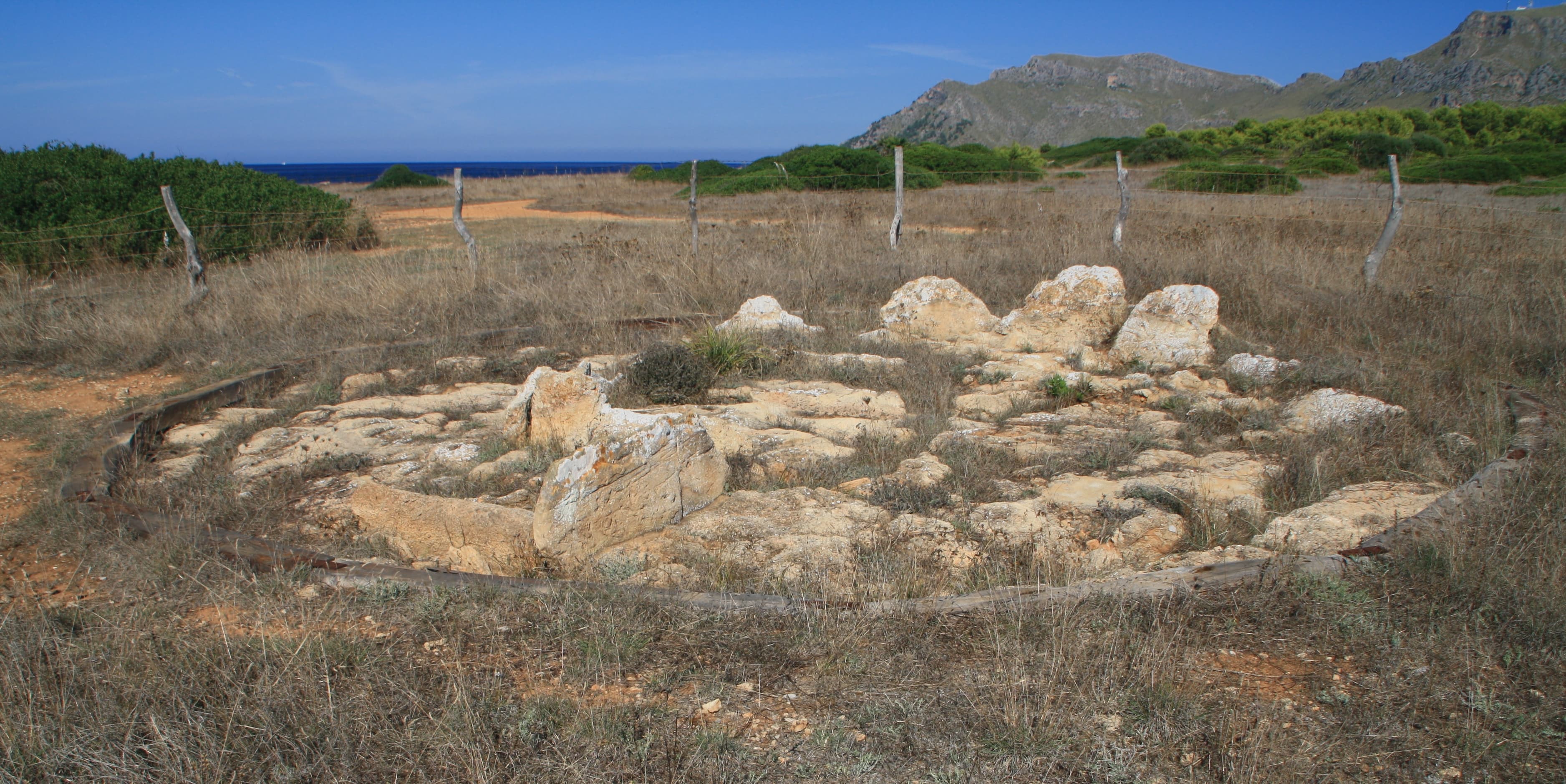
Image of S'Aigua Dolça Dolmen. Image source · Public domain
Visit essentials
A quick read before you go
- Duration
- No official duration is published; allow a short, unhurried visit without entering or circling…
- Access
- Use the official protected-area identity and verify the final approach locally.
Overview
Close to the Bay of Alcudia, a low ring and chamber of stone preserve one of Mallorca's uncommon dolmens. S'Aigua Dolca belongs to the island's pre-Talayotic Bronze Age, earlier than the tower settlements most visitors associate with Balearic prehistory. Its importance comes from excavation: human remains and grave goods identify it as a collective funerary monument.
The chamber received selected bones rather than preserving a simple row of intact burials. That pattern tells archaeologists that treatment of the dead involved more than placing a body once and closing the tomb. It does not, however, reveal a named deity, surviving prayer, or complete sequence of mortuary actions. Published accounts disagree over how many individuals were represented and vary slightly in their dates.
The dolmen is protected within the Cala des Camps archaeological area. It is now an archaeological burial place, not a site of continuing documented worship. Its coastal setting may deepen a visitor's sense of place, but tides, astronomy, and spiritual symbolism should not be added without site-specific evidence.
Why this place is sacred
The monument is modest in scale. That modesty is part of its value: burial evidence survives without the monumental height of a talayot or the elaborate imagery of a later sanctuary. Its chamber created a durable place to return to the dead, and excavation indicates repeated or collective use.
A responsible reading stays close to those facts. The selected state of some remains may reflect secondary burial practices, but the exact preparation, timing, social roles, and spoken meaning are not recoverable. Conflicting counts should remain conflicting rather than being resolved by preference.
A Bronze Age megalithic chamber used for collective funerary deposition, including selected human remains and associated grave goods.
The tomb predates Mallorca's classic Talayotic period. It was archaeologically excavated in 1995 and 1996 and later included in the formal heritage-protection proceedings for the Cala des Camps group of sites.
Experience and orientation
The site does not require an invented ceremony to be meaningful. Its surviving scale makes it possible to study how a small chamber defined a shared place for the dead. Look from the established ground around it and leave the interior undisturbed.
Because current facilities and approach conditions are not authoritatively documented, a map point should not be treated as a promise of maintained access. If fencing, land-use signs, conservation work, or path conditions limit approach, accept those limits.
The heritage record places the dolmen in the Cala des Camps archaeological area near Colonia de Sant Pere and the Bay of Alcudia. Verify the final approach locally; the reviewed official sources do not establish a marked visitor route or parking area.
Context and lineage
No founder or traditional origin story survives. Modern knowledge begins with archaeological recognition and the 1995-1996 excavation, which documented the structure and its contents. The site entered the formal record of the Cala des Camps archaeological zone through heritage proceedings published in 2010.
The monument belongs to a Bronze Age funerary tradition of Mallorca. That archaeological category should not be treated as the name of a fully reconstructed religion or a living community.
Jaume Coll, Victor Guerrero, and Manel Calvo
Archaeologists associated in the reviewed literature with the 1995-1996 excavation
Traditions and practice
Selected bones and skulls were deposited in the chamber with pottery and ornaments according to the excavation-based accounts. The sequence and meaning of preparation remain uncertain, and published individual counts conflict.
Current engagement is archaeological study, heritage protection, and non-invasive visitation. Public interest does not make the burial chamber available for reenactment.
Pause outside the monument, observe its scale and construction, and reflect on collective burial without assigning identities or beliefs to the people interred there.
Bronze Age funerary tradition of Mallorca
HistoricalThe dolmen preserves direct archaeological evidence of collective burial before Mallorca's classic Talayotic period.
Selected human remains and associated objects were placed in the chamber; the exact mortuary sequence is not fully recoverable.
Perspectives and open questions
The site can be discussed through funerary archaeology, heritage protection, and respectful encounter. Personal spiritual response should not be presented as evidence for the Bronze Age community's beliefs.
Scholarly perspective
Excavation supports a Bronze Age collective-burial interpretation and places the monument before the classic Talayotic period. Published secondary accounts vary on individual counts and the narrow radiocarbon range, so those details remain unresolved.
Living and traditional perspectives
No living oral or ritual tradition tied specifically to S'Aigua Dolca was established in the reviewed sources. The people buried here should not be assigned modern identities or beliefs without evidence.
Alternative interpretations
Astronomical alignments, energy claims, and detailed defleshing ceremonies are not presented as fact because the reviewed evidence does not establish them site-specifically.
Open questions
The names of the community, language, divine beings, mortuary words, social identities of those buried, exact number of individuals, and complete sequence of deposition remain unknown or disputed.
Plan your visit
Access and arrival
Use the official protected-area identity and verify the final approach locally. The available public descriptions mention the coast between Colonia de Sant Pere and Betlem, but exact parking and path access remain unconfirmed.
Use established services in Colonia de Sant Pere, Arta, or elsewhere in Mallorca; no accommodation is associated with the monument.
Respectful visit
Wear footwear and sun or weather protection suitable for uneven coastal terrain; no ritual dress requirement is documented.
Use non-invasive personal photography subject to current land and heritage rules. Drone and commercial use require separate confirmation.
No living offering custom is documented. Leave no flowers, candles, coins, food, liquids, shells, or stacked stones.
Heritage controls, land boundaries, fencing, closures, and any on-site instructions take precedence over this guide.
Do not enter the chamber, touch or move stones, handle surface material, leave offerings, expose remains, or imitate a burial rite.
Location
Map loads as you approach this section.
Pilgrim reflections
A portrait of encounter, not a score
Pilgrims describe what they felt, how present they could become, and whether the place would shape a journey. There are no stars and no ranking of traditions.
No reviewed reflections yet
The first pilgrims can help describe the character of being here.
Share a reflection
Available after an account-backed “Been there.” Every reflection is reviewed before publication.
Nearby sacred places
Explore other sacred places in the region. Proximity does not establish access or travel time; check each place’s guidance.


References
Sources consulted for this page. Source categories describe the publication, not a guarantee that every claim is verified. Traditional accounts and outside interpretations may differ.
- 01BOE-A-2010-5429 — Resolución de 15 de marzo de 2010, del Consejo Insular de Mallorca, referente a la incoación de expediente de declaración de bien de interés cultural del conjunto de yacimientos de Cala des Camps, en Artà — Boletín Oficial del Estado / Consell Insular de MallorcaofficialOfficial government gazette record of heritage-protection proceedings naming the Dolmen de S'Aigua Dolça (ARTE 101) as part of the Cala des Camps archaeological zone.
- 02Excavació arqueològica al sepulcre megalític de l'Aigua Dolça, Artà, Mallorca — Dialnet (academic index entry)academicIndexed academic publication on the site's excavation; confirms the site is formally published in Spanish archaeological literature.
- 03Dolmen de Aigua Dolça, Colonia de Sant Pere, Artà (Mallorca) 1995-1996 — Universitat de les Illes Balears (Estudis Baleàrics repository)academicPrimary excavation report reference located via search; PDF could not be fetched directly in this research session (connection error) but is cited as the underlying academic source referenced by the Wikipedia articles.
- 04Dolmen de s'Aigua Dolça — Viquipèdia — Wikipedia contributors (Catalan)academicMost detailed encyclopedic overview: coordinates, excavation team (Jaume Coll, Víctor Guerrero, Manel Calvo), chamber dimensions, dating, findings.
- 05Dolmen von S'Aigua Dolça — Wikipedia — Wikipedia contributors (German)academicIndependent encyclopedic overview with coordinates, structural description ('soul hole' entrance), and differing findings count.
- 06S'Aigua Dolça. Dolménico — Baleares AntiguaSource contextRegional heritage-tourism guide; confirms free/open access, general location off the Alcúdia–Artà road, and construction/defleshing burial practice description.
- 07The Dolmen of s'Aigua Dolça — The Mallorca Photo BlogSource contextFirst-person visitor account naming a local discoverer (Lluís Moragues) not corroborated by other sources; used only for the single uncorroborated claim, flagged in conflicts.
- 08Dolmen de s'Aigua Dolça — megalithicmonumentsofireland.com (international megalith survey site)Source contextListed in search results as a comparative megalith-survey entry; page access was blocked in this research session, so not used for direct claims, included for completeness.
Share a photo
Help visitors recognize S'Aigua Dolça Dolmen. Every submission is reviewed before publication.