Chavín de Huántar
Where Andean shamanism first took stone form, and the underground still speaks
Understand sacred places, explore living traditions, and learn how to engage respectfully with Pilgrim Map.
Access has not been verified. Check current local guidance before planning a visit.
Chavín de Huantar, Ancash, Peru
Read the sources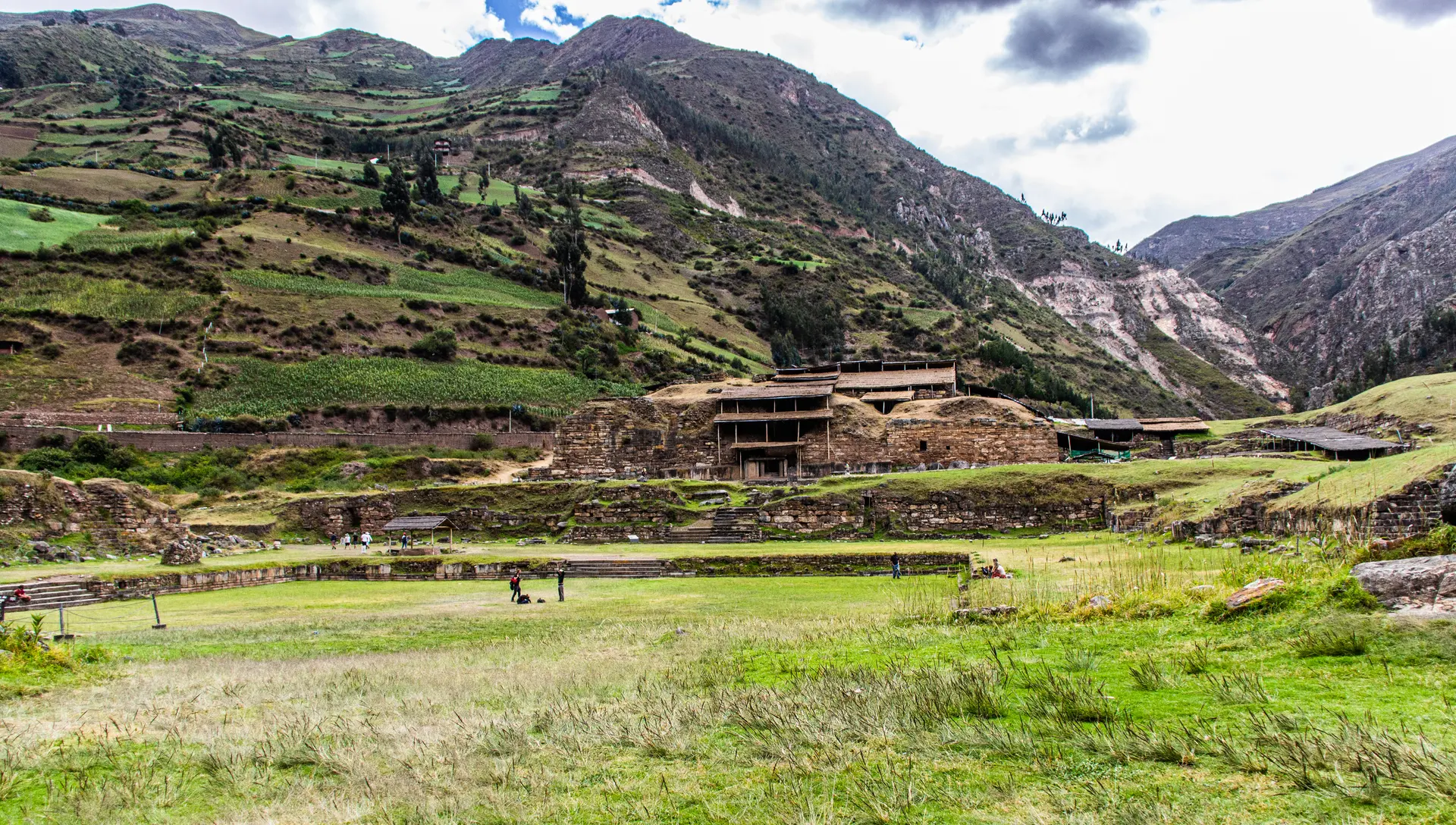
Visit essentials
A quick read before you go
- Duration
- A thorough visit requires 2-4 hours, including the archaeological site and the on-site museum,…
- Access
- Chavin de Huantar lies 434 km north of Lima in Peru's Ancash Region.
Overview
Three thousand years ago, pilgrims crossed mountain passes seeking visions, healing, and counsel from Chavin de Huantar's oracle. They descended by torchlight through labyrinthine galleries and emerged transformed; what they encountered—god, self, or something between—remains an archaeological mystery. At the headwaters of Andean civilization, this earliest complex ceremonial center in South America predates the Inca by two thousand years and stands where the Mosna and Huanchecsa rivers, coastal desert, and Amazonian jungle converge.
Its priests understood consciousness in ways modern neuroscience is only beginning to map, using architecture, sound, water, darkness, and psychoactive plants to create experiences whose influence spread across the Andes for half a millennium. The Lanzon, a 4.5-meter granite pillar carved with a fanged deity, remains exactly where it was placed over three thousand years ago. No ceremonies occur now; galleries are silent and electrically lit.
Yet visitors report that the temple's intention to change those who entered has not entirely faded.
Why this place is sacred
The Chavin understood liminality as power. They built where rivers meet, where mountain and jungle converge, where the sun's path crosses specific stones at specific moments. This was not accident but theology made manifest in site selection.
The confluence of the Mosna and Huanchecsa rivers created a place where waters from different watersheds joined—a phenomenon the Chavin apparently understood as cosmologically significant. Water imagery pervades the site's iconography, and the temple incorporated sophisticated hydraulic channels that may have created roaring sounds audible throughout the complex. Some researchers suggest this was deliberately designed to simulate thundering water or the growl of jaguars, disorienting pilgrims before they entered the sacred precincts.
The underground galleries were engineered for transformation. Multiple passages branch and reconnect, creating a labyrinth that would have been navigated in near-total darkness. Ventilation shafts created airflow that made torches flicker unpredictably. The acoustics amplify and distort sound in ways that scholars believe were intentional—tests with replica strombus shell trumpets produce otherworldly effects that would have filled the galleries with roaring, echoing tones.
At the heart of this designed disorientation stands the Lanzon. This 4.5-meter granite blade, carved with a fanged figure combining human, feline, and serpent attributes, rises through the floor of a cruciform chamber. The chamber lies at the intersection of major gallery systems, making it the literal and symbolic center of the temple. A channel from above once allowed priests—or the deity itself—to speak to pilgrims below, the oracle's voice emerging from stone in the darkness.
The Chavin also employed plant teachers. Stone carvings throughout the site depict figures holding the distinctive ribbed form of the San Pedro cactus (huachuma), whose mescaline content produces profound visions. Archaeological evidence suggests pilgrims entered the galleries in altered states, their consciousness opened to whatever the darkness and the Lanzon had to reveal.
Three thousand years of accumulated sacred intention do not simply evaporate. Whether one attributes the site's persistent effect to geology, psychology, or something beyond measurement, visitors consistently report that Chavin de Huantar retains its capacity to unsettle and transform.
Archaeological evidence indicates that Chavin de Huantar functioned as the primary pilgrimage center and oracle of the pre-Columbian Andes for over five hundred years. The temple complex served multiple purposes within a cosmology that did not separate what we might call religious, political, and practical functions. It was simultaneously a place of worship, a center of priestly authority, a school of esoteric knowledge, and the seat of an influential oracle whose counsel was sought from across the Andes.
The temple's construction spanned centuries. The Old Temple, with the Lanzon at its center, dates to approximately 900 BCE. The New Temple expanded the complex around 500 BCE, adding the rectangular sunken plaza and the portal columns. At its height, Chavin's influence extended from Ecuador to the northern coast of Chile—a cultural rather than military empire, spread through the prestige of its religious system.
Decline came gradually after 500 BCE, as new centers of power emerged. By 400-500 CE, the site was abandoned. A catastrophic landslide in 1945 buried portions of the complex, and excavations continue to reveal previously unknown passages—Stanford archaeologists discovered 35 new underground galleries as recently as 2019.
Today, Chavin de Huantar draws two distinct streams of visitors: those interested in archaeology and ancient civilization, and seekers drawn to the site's connection with the oldest documented use of psychedelic medicine in the Americas. Both find something here that rewards their attention.
Experience and orientation
The experience begins with geography. Chavin de Huantar lies at 3,180 meters in a narrow Andean valley, enclosed by mountains that rise steeply on all sides. The altitude itself creates a subtle shift in awareness—breathing requires attention, thoughts move differently than at sea level. By the time visitors reach the site, they have already been altered.
The ruins above ground impress with their antiquity and engineering. Stone blocks fitted with Inca-like precision predate the Inca by two millennia. The sunken circular plaza, the terraced platforms, the remnants of walls that once rose high above the valley floor—all speak to a civilization of unexpected sophistication.
But it is the underground that transforms. The galleries are not tombs or storage chambers but purpose-built passages for pilgrimage. Even with modern lighting, they disorient. Ceilings lower until you must duck. Passages branch without clear logic. The air is cool and slightly damp. Sound behaves strangely—footsteps echo, voices seem to come from unexpected directions.
Then you reach the Lanzon.
Nothing prepares you for it. The chamber is small, cruciform, barely large enough to stand in. And there, rising from floor toward ceiling, is the god itself—or the image of the god, or both. The face is almost human but emphatically not. Fangs protrude from a mouth that might be smiling or snarling. Serpents form the hair. The eyes gaze upward, toward the channel through which priests once spoke as the deity's voice.
Visitors describe a range of responses: awe, unease, unexpected emotion, a sense of being watched or addressed. Some report the uncanny feeling that the stone is alive, that three thousand years of supplication have left something in the chamber. Skeptics dismiss such reports; those who have stood in that small space often find dismissal harder than expected.
The most profound experiences come to those who take their time. Rushing through the galleries misses the point—they were designed for slow, deliberate, altered passage. Those who sit in silence, who allow their eyes to adjust to the dimness, who breathe with the stone around them, often emerge with something shifted.
Approach Chavin de Huantar as the pilgrims once did: with intention. This is not a site to check off a list but a place designed to produce effects in those who enter it. The architecture still works, even without the psychoactive elements the original experience likely included.
When you enter the galleries, slow down. Let your breathing deepen. Notice how your awareness shifts as the ceiling lowers and the passage turns. The Chavin understood that consciousness is malleable, that environment shapes experience. Allow the environment to work.
At the Lanzon, do not rush. This is the heart of the temple, the reason pilgrims crossed mountain ranges. Spend time with the image. Notice what arises—emotions, sensations, thoughts. You need not believe the stone houses a deity to take seriously what it evokes.
Many visitors find it valuable to carry a question—something genuinely uncertain in their lives. This was, after all, an oracle. The practice of consulting the unknown did not die with the Chavin priesthood. Something here still listens, or seems to.
Context and lineage
The Chavin left no written records. What we know of their beliefs comes from stone—the images they carved, the architecture they built, the placement they chose. From these fragments, scholars have reconstructed a religion centered on transformation: human to animal, ordinary to sacred, visible to hidden.
The founding of Chavin de Huantar appears connected to its liminal location. The site stands where two rivers meet, where ecosystems collide, where natural forces concentrate. The builders seem to have understood this confluence as a place of power, a crack in the ordinary world through which the sacred could be accessed.
Construction began as early as 1500 BCE, with major temple building starting around 900 BCE. The U-shaped Old Temple, with its underground galleries and central Lanzon, established the basic sacred geography that would persist for centuries. Around 500 BCE, the New Temple expanded the complex, adding the rectangular sunken plaza and the famous Raimondi Stela.
The oracle made Chavin de Huantar famous throughout the Andes. Pilgrims brought offerings from vast distances—exotic shells from the coast, tropical bird feathers from the Amazon, precious metals and fine ceramics. In return, they received counsel from a deity who spoke through stone, mediated by priests who had mastered the technologies of transformation: darkness, sound, water, and the San Pedro cactus.
Chavin influence spread across the Andes not through conquest but through religious prestige. The distinctive iconography—fanged deities, serpent imagery, transformation motifs—appears on ceramics and textiles hundreds of miles from the temple, suggesting a network of affiliated communities who adopted Chavin religious practices.
When Chavin's influence waned after 500 BCE, its religious innovations did not disappear but dispersed into the cultures that followed. The Staff God appears at Tiwanaku nearly a thousand years later. The use of San Pedro cactus in ceremony continued and persists today among traditional curanderos. Even the Inca, who built their empire two thousand years after Chavin's height, incorporated imagery and practices that can be traced to this source.
The temple complex fell into disuse around 400-500 CE. Local communities knew of the ruins but did not maintain them. A devastating mudslide in 1945 buried portions of the site, and excavation continues to uncover passages that have been sealed for millennia. UNESCO inscribed Chavin de Huantar as a World Heritage Site in 1985, recognizing its exceptional testimony to a vanished civilization.
The Lanzon Deity
deity
The 4.5-meter granite monolith depicting a fanged figure with human, feline, and serpentine attributes. Whether this represents a supreme deity, a powerful spirit, or a shamanic transformation is debated, but the Lanzon was clearly the central sacred object of the temple complex.
Staff God
deity
Depicted on the Raimondi Stela, a figure holding staffs in each hand with an elaborate headdress of serpents and feline faces. This deity figure persisted in Andean iconography for millennia, appearing later in Tiwanaku and even Inca imagery.
Julio C. Tello
historical
The father of Peruvian archaeology, who began systematic excavation in 1919 and recognized Chavin as the 'birthplace of South American culture.' His work established the site's fundamental importance to Andean prehistory.
Traditions and practice
Historical practices at Chavin de Huantar were designed for transformation. Archaeological evidence and iconographic analysis suggest a ritual process involving multiple elements working together to produce profound altered states.
Pilgrims likely prepared with fasting and offerings before approaching the temple. The ingestion of San Pedro cactus (huachuma) and possibly other psychoactive substances preceded entry into the underground galleries. As pilgrims descended into darkness, priests may have used strombus shell trumpets to create the roaring, echoing sounds the galleries were designed to amplify. Water rushing through hydraulic channels added to the disorientation.
The culmination was the encounter with the Lanzon. In near-total darkness, altered by plant medicine and overwhelming sound, pilgrims confronted the fanged deity at the literal and symbolic heart of the temple. Priests speaking through the channel above may have delivered oracular pronouncements, their voices emerging from the stone itself.
These practices were designed to dissolve the boundary between human and divine, ordinary and sacred. The imagery throughout the site depicts transformation: humans becoming jaguars, shamans with serpent attributes, beings that exist between categories. The temple was a technology for producing these experiences.
No formal ceremonies occur within the archaeological site. However, the lineage of huachuma (San Pedro) ceremony that Chavin may have systematized continues throughout northern Peru and the broader Andes. Traditional curanderos conduct ceremonies in mesa tradition, using the same cactus depicted in Chavin stone carvings three thousand years ago.
Some visitors to Chavin participate in huachuma ceremonies conducted by curanderos in nearby communities or retreat centers, then visit the archaeological site in a contemplative state. This is not encouraged by site management, and ceremonial use of psychoactive substances at the ruins would violate site regulations. But for those who approach Chavin within the context of the living tradition it birthed, the experience carries additional dimensions.
Many visitors engage in quieter forms of practice: sitting in silence in the underground galleries, meditating at the entrance to the Lanzon chamber, approaching the site as pilgrimage rather than tourism. The temple was designed to produce effects in those who entered it—even without psychoactive elements, the architecture continues to work on those who approach with attention.
If you seek more than archaeological interest, consider these approaches.
Before your visit, take time to learn about Chavin cosmology and the tradition of shamanic transformation it represents. The iconography speaks more clearly when you understand its vocabulary of fangs, serpents, and composite beings.
Arrive with the first visitors and make your way to the underground galleries before crowds fill the passages. In the relative quiet, walk slowly. Let your breathing deepen as the ceiling lowers. Notice what happens in your body as space constrains.
At the Lanzon chamber, do not rush. Spend time with the image. Notice what arises in response to its fanged face, its upward gaze. You might carry a question—something genuinely uncertain in your life. This was an oracle; the practice of consulting the unknown is older than categories of belief.
After emerging, sit quietly near the sunken plaza. The transition from underground to open sky was part of the original ritual process. Allow the integration to happen at its own pace.
Chavin Religion
HistoricalThe Chavin religious tradition was one of the earliest and most influential spiritual systems in pre-Columbian South America. For over five hundred years, Chavin de Huantar served as the major pilgrimage center of the Andes, drawing devotees who came to worship, consult the oracle, and undergo transformative rituals. The religion centered on powerful deities depicted with feline, serpentine, and avian attributes, representing the fusion of natural and supernatural realms.
Historical practices included pilgrimage to the temple complex, oracle consultation with priests, ingestion of psychoactive substances (particularly San Pedro cactus and possibly vilca snuff), ritual procession through underground galleries to encounter the Lanzon, sound rituals using conch shell trumpets (pututus), water rituals using the temple's hydraulic system, and offerings of ceramics, exotic goods, and precious materials.
Andean Shamanic Tradition (Huachuma)
ActiveThe use of San Pedro cactus (huachuma) at Chavin de Huantar represents the oldest documented use of psychedelic medicine in the Americas, dating back over three thousand years. Stone carvings at the site depict shamanic figures holding the distinctive cactus. This tradition of plant-assisted transformation continues today among curanderos (healers) throughout Peru and the Andes, representing an unbroken lineage of sacred practice.
Contemporary huachuma ceremonies are conducted by traditional curanderos using mesa ritual format. Ceremonies typically take place at night around a ceremonial altar, involving prayers, chants, and the guidance of the curandero through the medicine journey. The San Pedro cactus is prepared as a drink and consumed in ceremonial context. These practices do not occur at the archaeological site itself but are held by practitioners in communities throughout northern Peru.
Perspectives and open questions
Chavin de Huantar invites interpretation from multiple frameworks, and honest engagement requires holding them together without forcing resolution. Archaeologists, indigenous practitioners, and contemporary seekers each offer genuine insight—and each has blind spots. The site is old enough and strange enough to exceed any single explanation.
Scholarly perspective
Archaeological consensus recognizes Chavin de Huantar as one of the earliest and most influential ceremonial centers in the Americas. Stanford archaeologist John Rick's extensive research has revealed the temple as a sophisticated technology of social control, where an elite priesthood used architectural design, psychoactive substances, and sensory manipulation to create transformative experiences that reinforced their authority and spread their influence across the Andes.
The temple's acoustic properties have been studied extensively. Tests with replica strombus shell trumpets demonstrate that the galleries amplify and distort sound in ways that appear deliberate. The hydraulic channels may have created roaring water sounds audible throughout the complex. These findings support the interpretation of Chavin as an immersive environment designed to produce specific psychological effects.
Scholars debate the exact nature of the religious system—whether it involved a single supreme deity or multiple supernatural beings, what specific rituals occurred, how priests were trained and organized. The absence of writing leaves these questions partially open. What is clear is the sophistication and influence of what the Chavin created.
Living and traditional perspectives
For practitioners of contemporary Andean spiritual traditions, Chavin de Huantar represents the ancestral source of the huachuma (San Pedro) ceremonial lineage. The stone carvings depicting figures holding the distinctive cactus are not merely historical artifacts but evidence of an unbroken tradition of plant medicine that continues today among curanderos throughout Peru.
From this perspective, the Chavin priests were shamans—master practitioners who systematized and transmitted knowledge of transformation through plant teachers and ritual technology. The Lanzon is not merely a statue but a portal, a point of access between worlds that retains power for those who approach with proper preparation and respect.
This understanding does not conflict with archaeological findings but adds dimensions that excavation cannot measure. The living tradition sees Chavin not as a dead civilization to be studied but as an ancestor to be honored, a wellspring from which contemporary practice still draws.
Alternative interpretations
Some researchers and spiritual seekers propose interpretations that extend beyond mainstream archaeology. The sophistication of Chavin engineering—accomplished without metal tools, writing, or the wheel—leads some to suggest lost knowledge or external influences. The acoustic and hydraulic technologies invite speculation about ancient science we have not yet understood.
The site attracts interest from those exploring consciousness, entheogens, and the relationship between architecture and the sacred. Some frame Chavin as a prehistoric consciousness research center, where priests explored the frontiers of human awareness with rigor and intention. The transformation imagery is sometimes interpreted through transpersonal psychology or comparative shamanism.
These interpretations lack archaeological consensus but often emerge from genuine encounters with the site's strangeness. The language of vortexes and energy fields may be attempts to describe something real that resists conventional vocabulary.
Open questions
Genuine mysteries remain. Who exactly were the Chavin—where did they come from, what language did they speak, how did they organize their society? The absence of writing means that fundamental questions may never be answered.
What happened in those galleries? The archaeological evidence points toward shamanic transformation involving psychoactive plants, sensory manipulation, and oracular consultation, but the specific protocols, the training of priests, the cosmology that gave it meaning—all this remains inference.
The temple's acoustic and hydraulic features are increasingly well documented, but their exact purpose and use remain debated. Were the sounds meant to terrify, to awe, to induce trance? All three? The Chavin understood something about the relationship between environment and consciousness that we are still working to recover.
The site continues to yield discoveries. Thirty-five previously unknown passages were found as recently as 2019. What else remains hidden beneath the Andean soil? The complete story of Chavin de Huantar has not yet been told.
Plan your visit
Access and arrival
Chavin de Huantar lies 434 km north of Lima in Peru's Ancash Region. Most visitors approach from Huaraz (2.5-3 hours by road) as a day trip or overnight excursion. From Lima, the journey takes 8-10 hours by road. The route crosses the Cordillera Blanca via the Kahuish Tunnel at 4,516 meters—come acclimatized to altitude. Buses run from Huaraz; alternatively, hire a private driver or join an organized tour.
Basic accommodations exist in the town of Chavin de Huantar. For more options, stay in Huaraz (approximately 110 km away), which offers lodging at all price points along with restaurants and services. Some travelers interested in ceremony connect with curanderos who host visitors in traditional settings; these arrangements require personal research and discernment.
Respectful visit
Comfortable walking shoes with good grip are essential—the terrain is uneven, passages slippery, and stairs require care. Layers accommodate the high-altitude temperature variations. No specific spiritual dress requirements exist, but practical clothing that allows easy movement through low passages serves best.
Photography is permitted throughout most of the site, with restrictions in some underground areas to protect archaeological features. Flash photography is typically prohibited in the galleries. No tripods without special permission. Drones are prohibited. Consider whether constant photography serves your experience—the site rewards attention that cameras often fragment.
Physical offerings are not appropriate at the archaeological site. If you wish to offer something, make it internal: a moment of gratitude, a silent acknowledgment of the countless pilgrims who came before. If ceremony with physical offerings is important to your journey, work with traditional practitioners in appropriate settings outside the ruins.
The site is open Tuesday through Sunday, 9:00 AM to 4:00 PM, closed Mondays. Underground galleries require guided access—solo exploration is not permitted. Standard archaeological site rules apply: no food in protected areas, no smoking, no removal of any materials, no climbing on structures. The site is not fully wheelchair accessible, particularly the underground galleries.
Do not consume psychoactive substances at the archaeological site—this violates site regulations and risks damage to your experience as well as the site itself. If huachuma ceremony is part of your interest in Chavin, work with reputable curanderos in appropriate settings, then visit the ruins in a contemplative but sober state.
Be wary of tour operators or guides who promise shamanic experiences within the ruins. Authentic practitioners do not operate in this way. The tradition of huachuma is living and deserves the respect of approaching it on its own terms, not as archaeological performance.
The underground galleries can trigger claustrophobia in some visitors. Know your limits. There is no shame in viewing the Lanzon briefly and returning to open air.
Current practical details
Address
CR4F+G3M Museo de, Chavín de Huantar 02395, Peru
Hours
Hours, fees, and access can change — verify on the official source before you travel. Practical details last checked Jun 2026.
Location
Map loads as you approach this section.
Pilgrim reflections
A portrait of encounter, not a score
Pilgrims describe what they felt, how present they could become, and whether the place would shape a journey. There are no stars and no ranking of traditions.
No reviewed reflections yet
The first pilgrims can help describe the character of being here.
Share a reflection
Available after an account-backed “Been there.” Every reflection is reviewed before publication.
Nearby sacred places
Explore other sacred places in the region. Proximity does not establish access or travel time; check each place’s guidance.

References
Sources consulted for this page. Source categories describe the publication, not a guarantee that every claim is verified. Traditional accounts and outside interpretations may differ.
- 01Chavin (Archaeological Site) - UNESCO World Heritage Centre — UNESCOSource contextOfficial UNESCO documentation
- 02Chavín de Huántar - WikipediaencyclopediaComprehensive encyclopedic source
- 03Smarthistory - Chavín de Huántar — SmarthistoryacademicArt history educational resource
- 04Chavín de Huántar - Britannica — Encyclopaedia BritannicaencyclopediaAuthoritative encyclopedia
- 05What Lies Beneath - Stanford Magazine — Stanford UniversityacademicStanford archaeological research coverage
- 06Lanzón - WikipediaencyclopediaDetailed information on the Lanzón monolith
- 07Chavín de Huántar - Google Arts & Culture / CyArk — Google Arts & CulturespiritualDigital preservation documentation
- 08Raimondi Stele - WikipediaencyclopediaArchaeological artifact documentation
- 09Chavín de Huántar Ruins Guide - Lost Ruins of the AmericasguideDetailed visitor guide with archaeological context
- 10Who Was The Lanzon - Ancient Origins — Ancient OriginsacademicArchaeological analysis of Lanzón
- 11Chavin de Huantar - How to Peru — How to PeruguidePractical visitor information
- 12Huachuma Introduction - SpiritQuest — SpiritQuestspiritualSan Pedro cactus ceremonial context
- 13The Tello Obelisk - jqjacobs.netacademicDetailed analysis of Tello Obelisk
Photo gallery
3 curated photos
Share a photo
Help visitors recognize Chavín de Huántar. Every submission is reviewed before publication.