Sinaia Monastery, Romania
A Carpathian monastery born from one man's encounter with Mount Sinai
Understand sacred places, explore living traditions, and learn how to engage respectfully with Pilgrim Map.
Access has not been verified. Check current local guidance before planning a visit.
Sinaia, Prahova, Romania
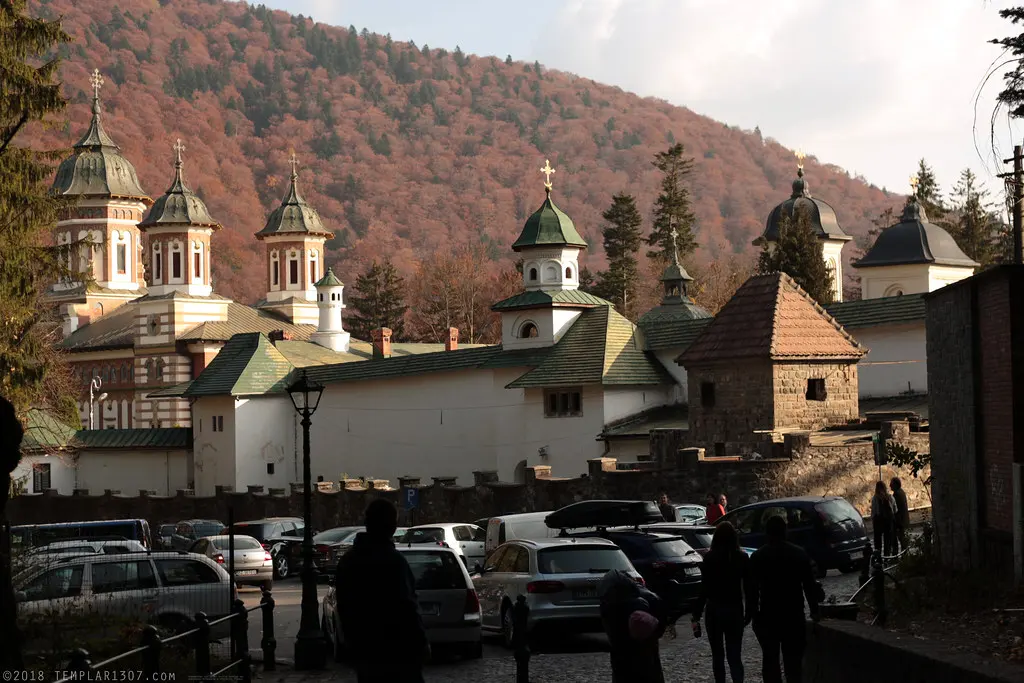
Image of Sinaia Monastery, Romania. Image source
Visit essentials
A quick read before you go
- Duration
- Allow 1-2 hours for a thorough visit including both churches, the monastery grounds, and the…
- Access
- Located in the center of the town of Sinaia, Prahova County, in the Prahova Valley of the…
Overview
Prince Mihail Cantacuzino returned changed from pilgrimage in the Holy Land, especially St. Catherine's Monastery on Mount Sinai, where tradition holds God spoke to Moses from a burning bush. He spent the rest of his life trying to recreate that encounter.
Between 1690 and 1695, at eight hundred meters in the Prahova Valley where the Carpathians rise, Cantacuzino built and named Sinaia Monastery for that mountain. He designed a community of twelve monks after the Twelve Apostles and dedicated its church to the Assumption of the Virgin.
The Old Church retains original frescoes and intricate Brâncovenesc stone carving from the founding era. The grander New Church, built in the 1840s, is dedicated to the Holy Trinity. Between them, the museum holds the first complete Bible printed in Romanian, published in 1688 and foundational to Romanian culture and faith. King Carol I of Romania lived here before Peles Castle was completed, linking the monastery to national destiny.
Its deeper meaning remains the pilgrimage that produced centuries of continuing prayer. Mount Sinai's divine encounter and commandment still resonate in the name every visitor speaks.
Why this place is sacred
The thinness of Sinaia Monastery operates on multiple registers, each reinforcing the others.
First, there is the act of naming. To call a place Sinai is to invoke the mountain where Moses received the Law, where the burning bush spoke, where heaven touched earth in fire and thunder. Whether or not the Carpathian landscape resembles the desert of the original, the name creates an overlay of sacred geography. Every visitor who arrives at Sinaia enters, at least symbolically, a landscape of revelation.
Then there is the weight of devotion. Cantacuzino's monastery was not a gesture of vanity but an act of gratitude. He had survived attack by Ottoman brigands on his return from the Holy Land, and he attributed his survival to divine protection. The monastery was built as thanksgiving, and thanksgiving has a quality that lingers. Three centuries of monastic prayer following from that initial impulse have saturated the walls and courtyards with accumulated intention.
The Old Church offers a particular quality of compression. Its proportions are intimate rather than grand, its surfaces covered in 17th-century frescoes depicting figures of compassion and humility. The Brâncovenesc stone carving around the entrance portal, with the Cantacuzino family coat of arms and its two-headed eagle, speaks of a period when devotion and dynastic pride were inseparable.
The mountain setting completes the effect. At eight hundred meters, surrounded by Carpathian forests, the monastery occupies a landscape that has its own gravity. Mountains have evoked spiritual aspiration across cultures, and the Carpathians carry this quality with particular force. The air is cleaner, the sounds fewer, the sky closer. Whatever Cantacuzino recognized in the landscape of the original Sinai, he found something of it here.
Cantacuzino conceived the monastery as a permanent monument to his Holy Land pilgrimage and a center for Orthodox monastic life in the Prahova Valley. The community of twelve monks, modeled on the Apostles, was intended to maintain perpetual prayer in a place that echoed the sacred geography of Mount Sinai. The monastery also served as a fortified waypoint on the strategic Brasov-Bucharest trade route, combining spiritual purpose with practical necessity.
The monastery's evolution from a small monastic foundation to a major cultural landmark tracks the development of Romania itself. When King Carol I chose to live at the monastery while Peles Castle was under construction, he drew the royal court to the Prahova Valley and transformed Sinaia from a monastic village into a fashionable resort town. The opening of Romania's first religious museum in 1895 added a cultural dimension to the pilgrimage one.
The Great Church, built between 1842 and 1846 through the efforts of the monks themselves and later partially rebuilt in 1903 by architect George Mandrea, doubled the monastery's capacity for worship. Patriarch Justinian Marina's restoration in the 1950s maintained the physical fabric through a period when Communist authorities regarded monasteries with suspicion. Throughout these changes, the essential character of the monastery has remained constant: a place of prayer named after a mountain of divine encounter.
Experience and orientation
Two churches stand within the monastery walls, and the passage between them is a passage between centuries.
The Old Church greets visitors first. Its proportions are human-scaled, its surfaces dense with meaning. The 17th-century frescoes, though restored, retain the quality of their original composition: saints who watch with compassion rather than authority, biblical scenes rendered with a tenderness that suggests painters who took their subjects personally.
The Brâncovenesc stone carving is among the finest of its kind: plant motifs intertwining with geometric patterns around the entrance portal, the work of craftsmen who understood that decoration could be devotion.
Step outside and cross the courtyard to the New Church, and the register shifts. Built in the 1840s, this is a church of confidence rather than intimacy. The interior holds royal furniture, gold-plated sycamore pieces, and chairs used by the Romanian royal family. The scale announces significance.
Yet the icons still watch, the candles still burn, and the liturgical services that fill this space connect it to the same tradition that animated the smaller church a hundred and fifty years earlier.
The museum, housed between the churches, offers its own form of encounter. Seeing the first complete Bible printed in Romanian, published in 1688, is to stand before a foundational moment in a nation's relationship with the sacred. The collection of 17th-century icons, crosses, and Cantacuzino family jewels provides material evidence of the devotion that built this place.
Visitors frequently describe a sense of peace that settles upon entering the monastery grounds, a quality that deepens in the Old Church. Those who know the story of Cantacuzino's pilgrimage often find their encounter with the monastery colored by his, as though the gratitude he felt upon surviving the Ottoman brigands still permeates the stones he raised in thanks.
Sinaia Monastery rewards those who arrive knowing the story of its founding. Before entering, consider Cantacuzino's pilgrimage: his walk through the Holy Land, his encounter with St. Catherine's Monastery, his narrow escape, his resolve to build.
Begin with the Old Church. Let your eyes adjust to the dim interior. The frescoes reveal themselves gradually, and their quality becomes apparent only to those who give them time. Notice the Brâncovenesc stone carving around the entrance, the two-headed eagle of the Cantacuzino family watching from the portal.
Visit the museum with attention to the 1688 Bible. Consider what it meant for an entire language to receive the full text of Scripture for the first time. Then move to the New Church and let its different character speak.
If time permits, attending a liturgical service transforms a visit into a participation. The chanting that fills these churches connects the present moment to three centuries of continuous prayer.
Context and lineage
The founding narrative of Sinaia Monastery is a story of pilgrimage and its consequences. Prince Mihail Cantacuzino, a member of the powerful Cantacuzino noble family, undertook a pilgrimage to the Holy Land with his wife in the late 17th century. They visited Jerusalem and Nazareth, but it was at St. Catherine's Monastery on Mount Sinai that the decisive encounter occurred.
St. Catherine's, one of the oldest continuously operating monasteries in the world, sits beneath the mountain where tradition holds that God gave Moses the Ten Commandments. What Cantacuzino experienced there moved him so profoundly that he resolved to build a monastery in the Carpathians bearing Sinai's name.
The return from the Holy Land tested his resolve. Ottoman brigands attacked the party, and Cantacuzino's survival was attributed to divine protection and the assistance of monks who accompanied them. This escape transformed a pilgrim's inspiration into a vow of gratitude.
Between 1690 and 1695, Cantacuzino raised the monastery in the Prahova Valley, at a strategic point on the trade route between Brasov and Bucharest. He designed the community for twelve monks, a number echoing the Twelve Apostles. The Old Church was built in the Brâncovenesc style, the distinctive Romanian synthesis of Byzantine, Ottoman, and Western Renaissance architectural elements that characterized the era of Constantin Brâncoveanu.
The monastery became the nucleus around which the town of Sinaia eventually grew. A monastic foundation gave birth to a settlement, then a resort, then a royal retreat, each layer adding meaning to what Cantacuzino had begun.
For three centuries, Sinaia Monastery has maintained continuous Orthodox monastic life. The community that Cantacuzino established has weathered Ottoman threats, Habsburg administration, the upheavals of Romanian national formation, and Communist-era restrictions. Each period left its mark: the fortified architecture reflects Ottoman-era insecurity, the New Church reflects 19th-century confidence, the museum reflects a modern impulse to preserve and display.
The monastery was the first church in Romania to use electric lighting, a detail that captures something of its character: traditional in purpose but open to the instruments of its time. Today, the monastery continues to draw both Orthodox pilgrims and cultural visitors, maintaining the dual identity that has defined it since King Carol I first brought the secular world to its doorstep.
Mihail Cantacuzino
founder
Prince and member of the Cantacuzino noble family who founded the monastery upon his return from pilgrimage to the Holy Land. His gratitude for surviving an attack by Ottoman brigands during his journey motivated the construction.
Constantin Brâncoveanu
patron
Prince of Wallachia whose architectural style, the Brâncovenesc, defined the Old Church's design. His era represented a golden age of Wallachian culture that shaped the monastery's aesthetic character.
King Carol I of Romania
patron
Romania's first king, who resided at the monastery before Peles Castle was completed. His patronage elevated Sinaia from a monastic village to a royal resort town.
Patriarch Justinian Marina
restorer
Romanian Patriarch who restored the monastery between 1951 and 1957, preserving its fabric through a period of Communist-era pressure on religious institutions.
Traditions and practice
The monastery was founded for the practice of cenobitic monasticism in the Orthodox tradition. Cantacuzino's community of twelve monks maintained the daily Hours, the Divine Liturgy, and the fasting calendar. The fortified monastery also served a defensive function on the Brasov-Bucharest trade route. During the Russo-Turkish War of 1735-1739, the monks demonstrated resourcefulness under siege, hiding monastery valuables inside a bell before Ottoman forces breached the walls.
The first Romanian Bible, printed in 1688 under the patronage of ruler Serban Cantacuzino, found its home here. Though the Bible was produced before the monastery was completed, its presence at Sinaia created a link between the monastery and the foundational moment when Scripture became available in the Romanian language.
Daily Divine Liturgy is celebrated in both the Old Church and the New Church. The canonical Hours structure the monastic day. The monastery's liturgical calendar marks two patron feasts: the Assumption of the Virgin Mary on August 15, corresponding to the Old Church's dedication, and the Holy Trinity on Pentecost Sunday, the patron feast of the New Church.
The religious museum, opened in 1895 as Romania's first, displays the 1688 Bible, 17th-century icons, processional crosses, and Cantacuzino family treasures. The collection makes visible the layers of devotion and cultural production that have accumulated over three centuries.
The monastery grounds are maintained by the resident monastic community and are open to visitors throughout the year. The proximity to Peles Castle, a ten-minute walk away, creates a natural itinerary that draws cultural tourists into contact with the monastery's spiritual heritage.
If you come seeking more than historical appreciation, consider these approaches. Attend a liturgical service in the Old Church, where the intimate proportions and original frescoes create a particularly contemplative atmosphere. Stand at the back if you are unfamiliar with Orthodox worship, and let the chanting and incense work without requiring explanation.
Light a candle and place it among the others. In Orthodox practice, this simple act carries prayer beyond words. Your candle joins those of three centuries of pilgrims.
Spend time with the 1688 Bible in the museum. Consider what it means for an entire people to receive Scripture in their own language for the first time. The encounter with this object connects you to a moment of cultural birth.
Then step outside and face the Carpathians. The mountains that Cantacuzino chose to name after Sinai still hold whatever he recognized in them. The air at eight hundred meters has a quality of clarity that mirrors the spiritual clarity seekers have found here.
Romanian Orthodox Christianity
ActiveSinaia Monastery represents the devotional tradition of the Romanian boyar class, founded by a prince whose Holy Land pilgrimage moved him to create a permanent monument of gratitude and worship. The dual dedication of the Old Church to the Assumption of the Virgin and the New Church to the Holy Trinity encompasses the breadth of Orthodox devotion. The monastery's housing of the first complete Bible printed in Romanian gives it foundational significance in Romanian Orthodox culture.
Daily Divine Liturgy in both churches; canonical Hours; icon veneration; feast day celebrations for the Assumption of the Virgin (August 15, Old Church) and Holy Trinity (Pentecost Sunday, New Church); maintenance of the religious museum with collections including the 1688 Bible, 17th-century icons, and processional crosses. Candle lighting and personal prayer continue throughout the day.
Holy Land Pilgrimage Connection
HistoricalThe monastery's existence testifies to the transformative power of pilgrimage. Cantacuzino's encounter with St. Catherine's Monastery on Mount Sinai produced a lifelong response, the creation of a spiritual echo of the original sacred landscape in a new setting. The naming transplants one of the most significant sacred geographies of the Abrahamic traditions to the Romanian Carpathians.
The founding act of creating a spiritual replica of the Sinai experience; the design of a community of twelve monks modeled on the Apostles; the ongoing spiritual connection maintained through the monastery's name, which ensures that every reference to the site invokes its Holy Land origin.
Perspectives and open questions
Sinaia Monastery invites interpretation from architectural, historical, theological, and experiential perspectives. Each reveals something genuine about a site that operates simultaneously as active monastery, cultural heritage landmark, and national symbol. Understanding these layers deepens any encounter with the place Cantacuzino built as his answer to the Holy Land.
Scholarly perspective
Scholars recognize the Old Church as an important example of Brâncovenesc architecture, the distinctive Wallachian synthesis of Byzantine, Ottoman, and Western Renaissance elements that reached its peak in the late 17th century. The carved stone entrance portal, with its intricate floral and geometric motifs, is cited as exemplary of the style's ornamental sophistication.
Art historians value the Old Church's 17th-century frescoes as fine examples of late Romanian medieval painting, though subsequent restorations have complicated the assessment of their original character. The monastery's role in housing the 1688 Bible gives it particular importance in the history of Romanian language and literacy.
Historians emphasize the monastery's strategic significance as a fortified point on the Brasov-Bucharest trade route and its role as the precursor to Sinaia's development as a royal resort under Carol I. The relationship between the monastery and the broader Cantacuzino family network, which included the patron of the 1688 Bible, Serban Cantacuzino, connects the site to Romania's cultural and political history.
Living and traditional perspectives
Within Romanian Orthodox tradition, Sinaia Monastery is understood as a place where the sacred geography of the Holy Land was transplanted to the Romanian Carpathians through the piety of its founder. The naming after Mount Sinai connects the monastery to the biblical narrative of divine self-revelation and the giving of the Law.
The monastery's survival through Ottoman attacks, Habsburg administration, and Communist-era challenges is interpreted as evidence of divine protection. The presence of the first Romanian Bible adds a providential dimension: the monastery where Scripture first spoke in Romanian represents a foundational moment in the nation's spiritual identity.
For Orthodox Christians, the continuity of monastic prayer at Sinaia, maintained without interruption for over three centuries, gives the site a weight that transcends its architectural or historical significance. Prayer accumulates, and the accumulated prayers of generations create a presence that the faithful experience as tangible.
Alternative interpretations
Some interpreters have noted the Carpathian mountain setting as significant within broader frameworks of earth energies and the universal association of mountains with spiritual revelation. The Bucegi Mountains adjacent to Sinaia have attracted particular interest from alternative researchers, including claims about ancient civilizations and hidden chambers beneath the mountains, as described in Radu Cinamar's widely read but academically unsupported books. The monastery's connection to both the Cantacuzino and Romanian royal families has been incorporated into various alternative historical narratives.
These perspectives lack scholarly support.
Open questions
The exact motivation behind Cantacuzino's choice of this specific location in the Prahova Valley for his Sinai replica is not fully explained in surviving documents. Whether there were pre-existing sacred associations with the site before the monastery's founding remains unknown. The original appearance and complete iconographic program of the Old Church frescoes before subsequent restorations is not fully documented. The circumstances of Cantacuzino's escape from Ottoman brigands, which he attributed to divine intervention, are not independently verified.
Plan your visit
Access and arrival
Located in the center of the town of Sinaia, Prahova County, in the Prahova Valley of the Southern Carpathians, at approximately 800 meters altitude. Sinaia railway station is immediately below the monastery, with regular train service from Bucharest Nord (approximately 2 hours) and Brasov (approximately 1 hour). Also accessible by car via the DN1 (E60) highway. Sinaia is a well-developed resort town with abundant accommodation, restaurants, and tourist infrastructure. Mobile phone signal is reliable throughout the town center.
No advance booking is required for the monastery itself.
Sinaia is a well-developed resort town with accommodation ranging from budget guesthouses to luxury hotels. Peles Castle and the town's tourism infrastructure make extended stays practical. The monastery itself does not offer accommodation, but the town's proximity means visiting is straightforward from any lodging in Sinaia.
Respectful visit
Standard Romanian Orthodox monastery dress code applies. Women should cover shoulders and wear skirts or dresses below the knee. Men should wear long trousers and covered shoulders. Head coverings for women may be expected during services. Avoid shorts, sleeveless tops, and immodest clothing throughout the monastery grounds.
Exterior photography of the monastery buildings, courtyards, and grounds is generally permitted. Interior photography may be restricted, particularly in the Old Church where the original frescoes are sensitive to light. Museum photography policies should be confirmed on arrival. Flash photography is prohibited near frescoes and icons. Always check for posted signs before photographing inside sacred spaces.
Candles may be purchased and lit in both churches. Donations to support the monastery are welcomed. Religious items and devotional objects may be available for purchase.
Monastic living quarters are completely off-limits to visitors. The museum may require separate admission. Do not touch frescoes, icons, or museum artifacts. Maintain quiet throughout the monastery grounds, particularly near the churches. Follow all instructions from monastery staff regarding access and behavior.
Sinaia Monastery remains an active place of worship, not a heritage exhibit. Services are prayer, not performance. If you attend, maintain silence and reverence throughout. Do not walk around the church during services, and do not leave until a natural break in the liturgy.
The monastic living quarters are off-limits. Do not attempt to enter restricted areas. The frescoes in the Old Church are centuries old and should not be touched. Flash photography near frescoes and icons causes cumulative damage and is prohibited.
Current practical details
Address
Strada Mănăstirii 2, 106100 Sinaia, Romania
Phone
Hours
Hours, fees, and access can change — verify on the official source before you travel. Practical details last checked Jun 2026.
Location
Map loads as you approach this section.
Pilgrim reflections
A portrait of encounter, not a score
Pilgrims describe what they felt, how present they could become, and whether the place would shape a journey. There are no stars and no ranking of traditions.
No reviewed reflections yet
The first pilgrims can help describe the character of being here.
Share a reflection
Available after an account-backed “Been there.” Every reflection is reviewed before publication.
Nearby sacred places
Explore other sacred places in the region. Proximity does not establish access or travel time; check each place’s guidance.
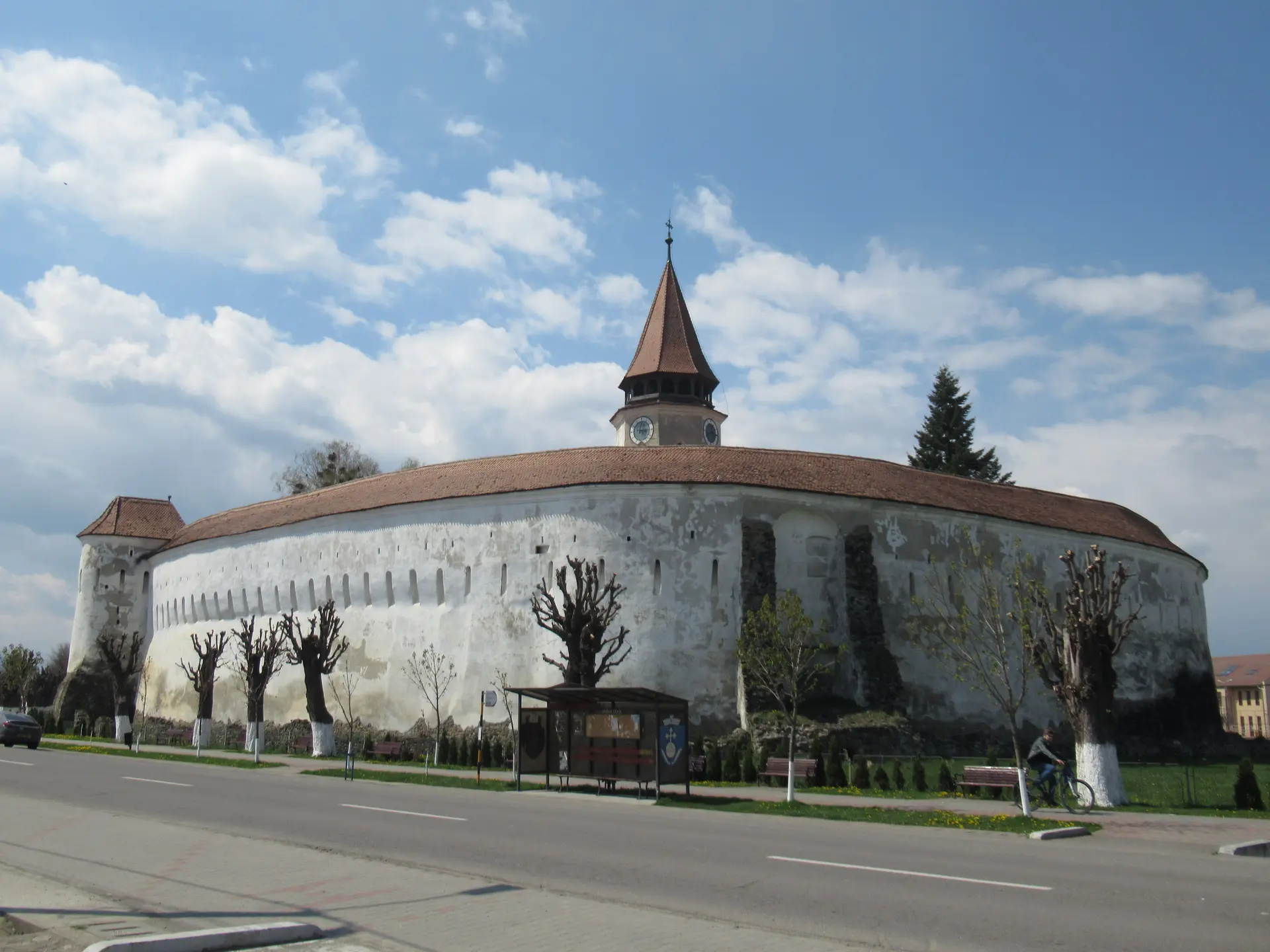
Prejmer Fortified Church and Village Ensemble
Prejmer, Brașov County, Romania
44.4 km away

Rupestra Sinca Veche Monastery, Romania
Șinca Veche, Brașov, Romania
53.6 km away

Sambata Brancoveanu Monastery, Romania
Stațiunea Climaterică Sâmbăta, Brașov, Romania
69.6 km away
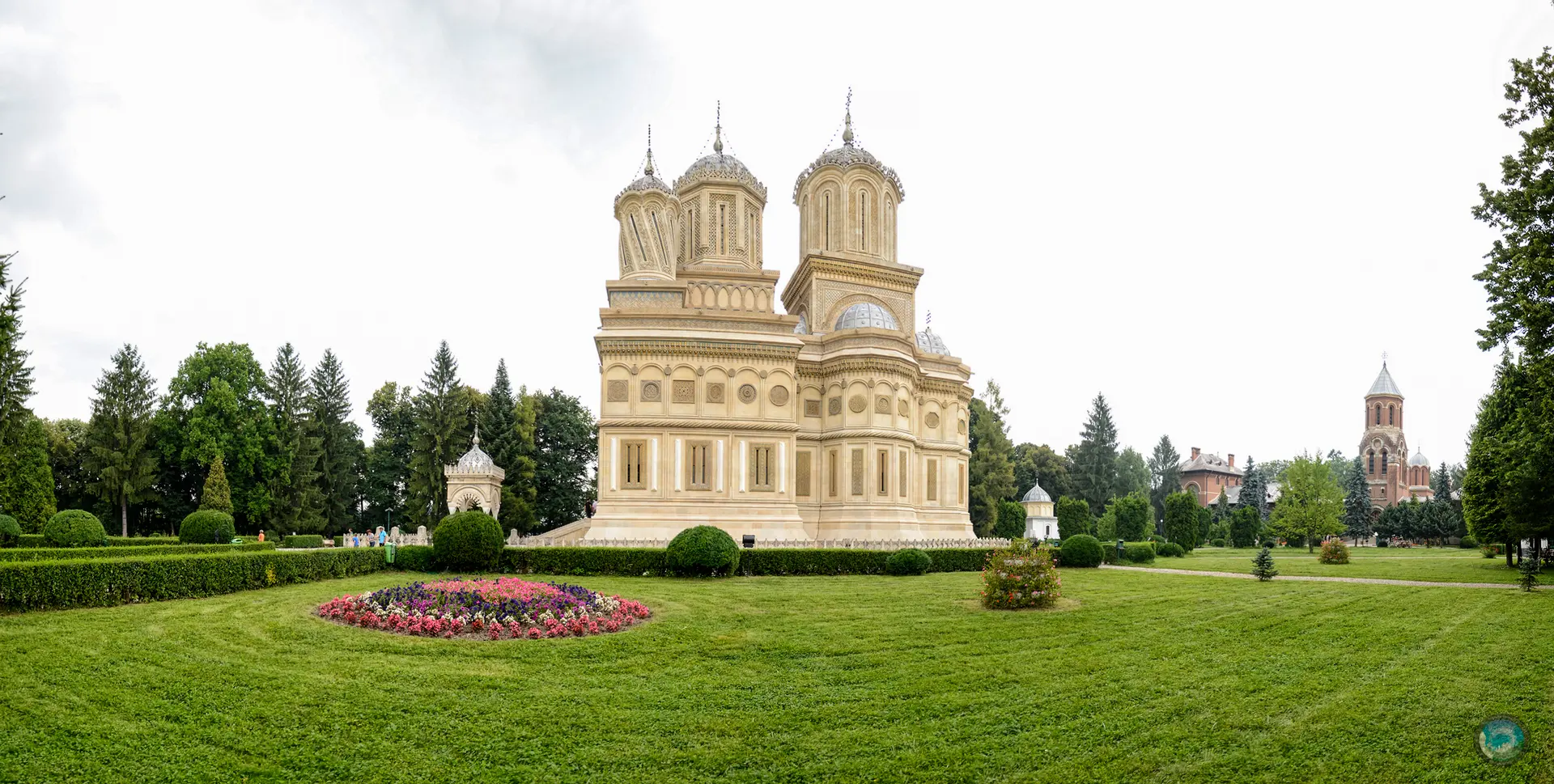
Curtea De Arges Monastery, Romania
Curtea de Argeș, Argeș, Romania
71.9 km away
Share a photo
Help visitors recognize Sinaia Monastery, Romania. Every submission is reviewed before publication.